Passing of the Pioneers

As the Passing of the Pioneer post comes together each month, I often find the pioneers have something in common.  Sometimes it’s their occupations or their birthplace.  This month, five of the twelve pioneers went to the goldfields after arriving in Victoria. It is one of the most common similarities I come across, and not surprising as gold was the big drawcard to Victoria in the 1850s. To read the newspaper obituary for each pioneer, just click on their name.  You can also click on other underlined text in the post to find more information.

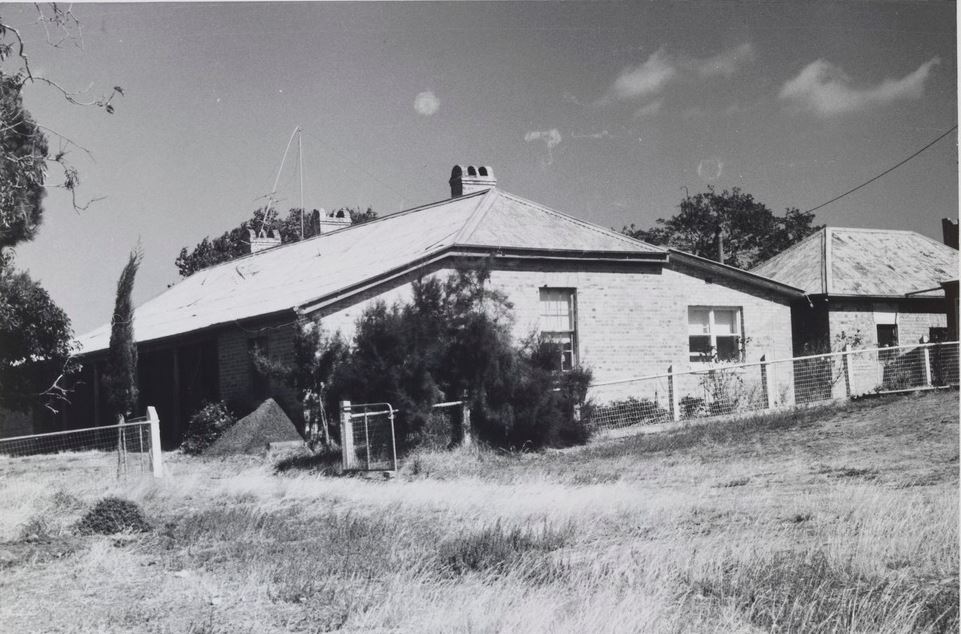
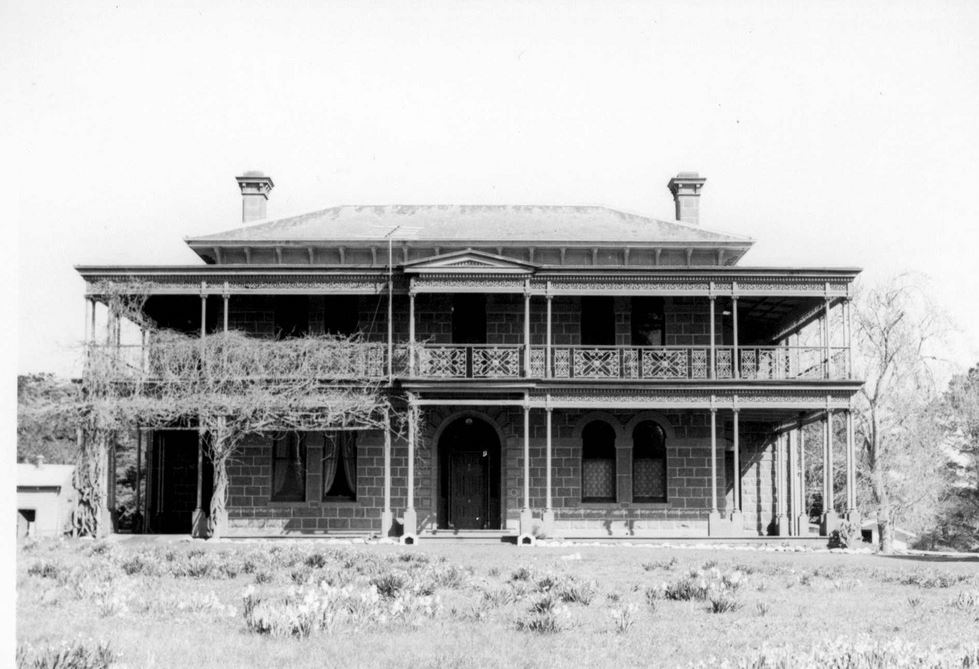
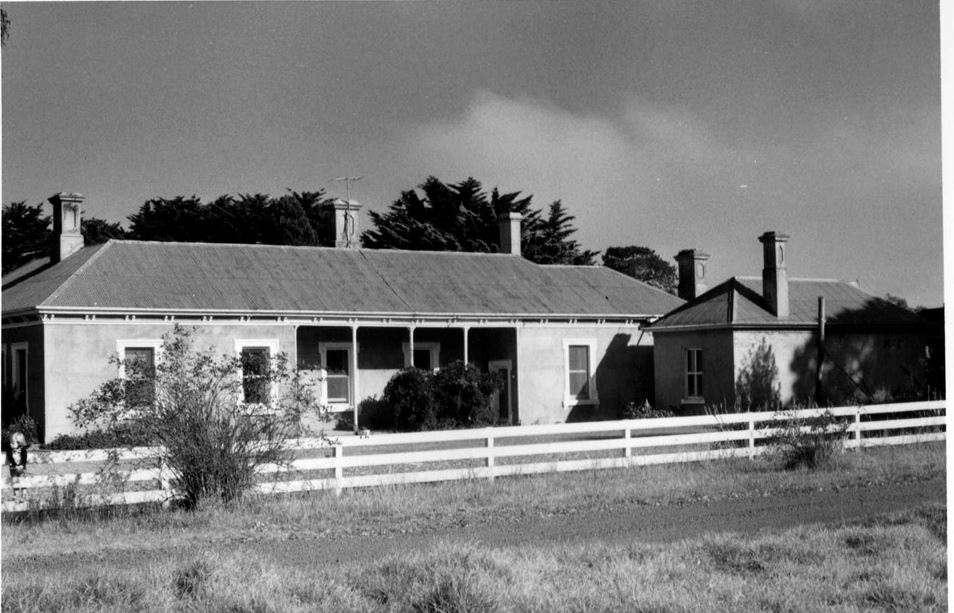
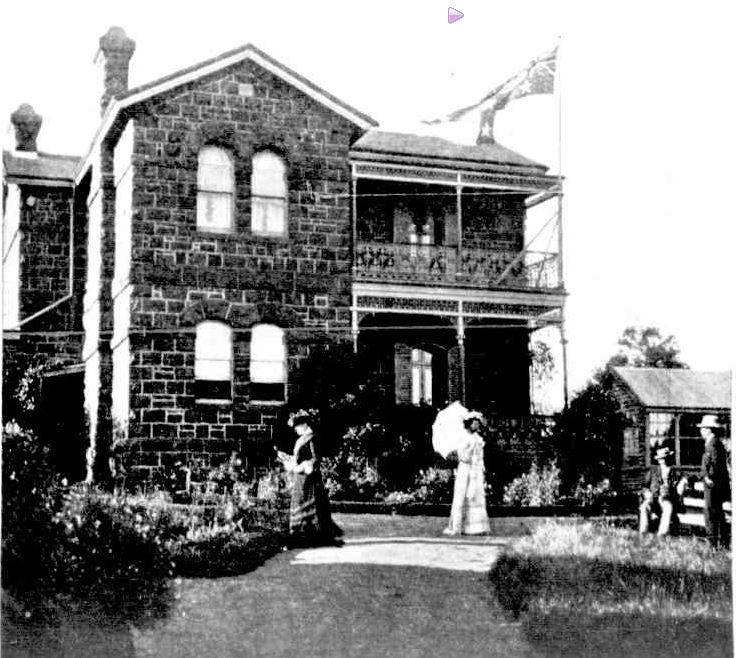
William Henry GUBBINS:  Died 9 August 1905 at Penshurst. William Gubbins was born at Tavistock, Devonshire, England around 1827 and arrived in Victoria in the mid-1850s. After his arrival, he went to the diggings at Creswick then later Clunes. Around that time, William married Mary Ann Down and they had five children.  The family then spent time around the Terang district before purchasing  Burn Brae Estate at Penshurst in 1888.

J.T. Collins Collection, La Trobe Picture Collection, State Library of Victoria. http://handle.slv.vic.gov.au/10381/233170

“BURN BRAE” HOMESTEAD, PENSHURST IN 1978. Image courtesy of the J.T. Collins Collection, La Trobe Picture Collection, State Library of Victoria. http://handle.slv.vic.gov.au/10381/233170

Mary Ann died in 1900 and William stayed on at Burn Brae until his death. William was buried at the Terang Cemetery.

John MILLMAN:  Died 2 August 1914 at Hamilton. John Millman was born in Leamington, Warwickshire, England in 1832.  He and his brother left England together, arriving in Melbourne in 1852.  John worked as a carpenter in Melbourne but his brother went “up country”.  By the time of the Eureka uprising in Ballarat in 1854, John was in Ballarat trying his luck as a miner.  Around 1855, John purchased a three month Miner’s Right for £2 and he later passed the document on to his family.  By 1861, John had arrived in Hamilton where his brother was residing.  It was in Hamilton John married Sarah Jane Knapp in 1878. A member of the Hamilton Rifle Club, John was also a keen horticulturist, competing at the various shows around the district.  Sarah died in 1910.

Mary LORD:  Died 23 August 1914 at Karabeal. Mary Lord was born in Wexford County, Ireland around 1833 and travelled to Portland with her parents around 1850.  They settled in that town and in 1860, Mary married Joseph Brewis.  At the time, Joseph was the manager at Mokanger Station near Cavendish and he returned there with Mary. After working at Mokanger for seventeen years, Joseph Brewis purchased land at nearby Karabeal they called Canridge and remained there for the rest of their lives.  Mary and Joseph had seven sons and one daughter. They were buried at the Cavendish Old Cemetery (below).

THE HEADSTONE OF MARY AND JOSEPH BREWIS OBSCURED BY THE HEADSTONE OF MARY'S PARENTS WILLIAM AND MARY LORD AT CAVENDISH OLD CEMETERY

THE HEADSTONE OF MARY AND JOSEPH BREWIS OBSCURED BY THE HEADSTONE OF MARY’S PARENTS WILLIAM AND MARY LORD AT CAVENDISH OLD CEMETERY

Edward HALL:  Died 8 August 1915 at Malvern.  Edward Hall was born in England around 1830.  He left Liverpool, England for Australia on the Satellite, arriving at Melbourne on 2 August 1851. He then sailed on the Red Rover to Port Fairy.  Edward worked as a tutor for the children of Messrs. Mills and Glare but in 1852 after the discovery of gold, he left for the Ballarat diggings with some other local men. It was short lived with Edward returning to Port Fairy the following year.  He next went to Brighton as a lay reader with the Church of England.  While there he had an encounter with bushrangers in the area where the suburb of Moorabbin is now located.  After that experience, Edward returned to Port Fairy, opening a school at Rosebrook and then teaching at Port Fairy.  He again returned to Brighton and then Nunawading where he remained until his death.

Mary Josephine ROACHE:  Died 24 August 1915 at Hamilton. Mary Roache was born in Ireland around 1860 and arrived in Australia in the mid-1870s.  Mary went to Hamilton and resided at the Town Hall Hotel in Gray Street when it was known as Mackey’s and the licensee was Michael Roache, possibly Mary’s brother.

"VIEW OF HA[?] [?]AM[?]TON VICTORIA." Hamilton Spectator (Vic. : 1870 - 1918) 17 April 1888: 2 (SUPPLEMENT TO THE HAMILTON SPECTATOR). Web. 19 Aug 2016 .

THE TOWN HALL HOTEL, HAMILTON c1888. (“VIEW OF HAMILTON VICTORIA.” Hamilton Spectator (Vic. : 1870 – 1918) 17 April 1888: 2 (SUPPLEMENT TO THE HAMILTON SPECTATOR).

Mary married widowed travelling dentist John Mawson in Melbourne in 1887 and they had one daughter Veronica in 1892. After spending time in Melbourne, they moved back to Hamilton around 1901 and in 1902 John built a practice in Gray Street.  John Mawson died two years after Mary in 1917.

James SPRING:  Died 24 August 1916 at Bochara. James Spring was born in County Meath, Ireland in 1830. When eighteen, James sailed to Sydney, NSW aboard the Royal Saxon.  He then made his way south to Mount Gambier, South Australia. In February 1855, James arrived in Hamilton and settled north of the town at Bochara on the Grange Creek.  During February 1891, bad bushfires swept through the Bochara district impacting on James’ farm.  While his house was saved, he lost a lot of feed and farm machinery.

Thomas WHEATLEY:  Died 11 August 1917 at Terang.  Thomas Wheatley was born in Middlesex, England in 1827.  He joined the Royal Navy and during the 1840s spent time sailing around the South Seas. He joined the crew of the Aberfoyle and in 1854 landed a Geelong.  Thomas was able to take leave of his employment and went to the Ballarat goldfields but arrived in December around the time of the Eureka uprising. With unrest in Ballarat, Thomas continued on north to Creswick.  With no luck on the diggings,  Thomas eventually made his way to the Terang district and married in 1856 to Ellen McLaughlin, born in Kilkenny, Ireland.  He bought a bullock team and set up the first carrying business in Terang. Thomas was a member of the Salvation Army.  Ellen died around 1914 and eight of their children were still living at the time of Thomas’ death three years later.

Mary Ann Coughlan:  Died August 1917 at Caramut.  Mary Ann Coughlan arrived in Australia with her family in 1849.  She later met John Bendall the manager of John Moffat’s Hopkins Hills and The Gums.  They married in 1864 and lived at The Gums.  After that property was sold, the Bendalls ran a General Store and Post Office at Caramut and raised two sons and two daughters.  Mary Ann was widowed for more than thirty years with John dying in 1887 aged forty-seven but she remained in Caramut.

Janet CALDOW:  Died August 1918 at Caulfield.  Janet Caldow was born around 1832 in Ayrshire, Scotland. While still in Scotland she married Joseph Blain and they travelled to Australia aboard the Lord Nelson, arriving in Melbourne in 1855.  They went straight to the Ballarat diggings but soon took up a farm at Coghills Creek near Ballarat.  Around 1865, they moved to Garvoc, running a dairy farm and raising three sons and four daughters.  Joseph died around 1896.  Janet’s immediate family also immigrated from Scotland and lived long lives in Australia.  At the time of her death, the ages of her remaining five brothers and one sister totalled 425 years.

Adam Gordon LAIDLAW:  Died 1 August 1918 at Melbourne. Adam Laidlaw was born at Harrow in 1858 to Walter Laidlaw and Mary Gordon. Adam grew up on his father’s property Mundarra near Edenhope and later attended Hamilton and Western District College and obtained his matriculation.

MUNDARRA Image courtesy of the State Library of Victoria. Image no. H95.200/1068 http://handle.slv.vic.gov.au/10381/230342

MUNDARRA Image courtesy of the State Library of Victoria. Image no. H95.200/1068 http://handle.slv.vic.gov.au/10381/230342

Adam Laidlaw was associated with several properties including Ardachy near Branxholme where he lived for ten years.  He also owned Wootong Vale near Coleraine but in his later years leased the property out.  Never married, Adam was a philanthropist donating much money to charity including the Hamilton Hospital.  During the war years, he donated regularly to the War Loans Fund.  He was also a member of the Coleraine and Hamilton Racing Clubs.  Prior to the war, Adam went on a world trip but returned in 1915 and took up residence at the Melbourne Club in Collins Street.  In July 1918, Adam visited the Western District and returned to the Melbourne Club by the start of August.  On 1 August,  Adam was playing billiards when he fell ill.  He was rushed to hospital but later died.  Adam Laidlaw was buried at the Brighton Cemetery

Robert Ernest McARTHUR:  Died 29 August 1929 at Camperdown.  Robert McArthur was born in 1867 at Camperdown, a son of Margaret McLean and well-known pastoralist Peter McArthur of Meeningoort, Camperdown.  Robert attended Geelong College and was captain of the cricket and football teams and later went to Ormond College at Melbourne University, studying law.  He returned to Camperdown and helped his father manage Meeenigoort before purchasing  Koort Koort Nong (below) where he resided.

J.T. Collins Collection, La Trobe Picture Collection, State Library of Victoria http://handle.slv.vic.gov.au/10381/217051

KOORT KOORT NONG, CAMPERDOWN. J.T. Collins Collection, La Trobe Picture Collection, State Library of Victoria http://handle.slv.vic.gov.au/10381/217051

Robert was an amateur jockey, excelling at cross-country events and enjoyed polo.  In 1897 and 1898, he rode three winners at the Warrnambool Amateur Races. He also won the Melbourne Hunt Club Cup. Robert was a member of the Camperdown Turf Club and honourary starter at the Terang Racing Club and a founding member of the Western District Racing Association.  He was also a councillor on the Hampden Shire from 1898 to 1907. Another obituary for Robert is on the link here.

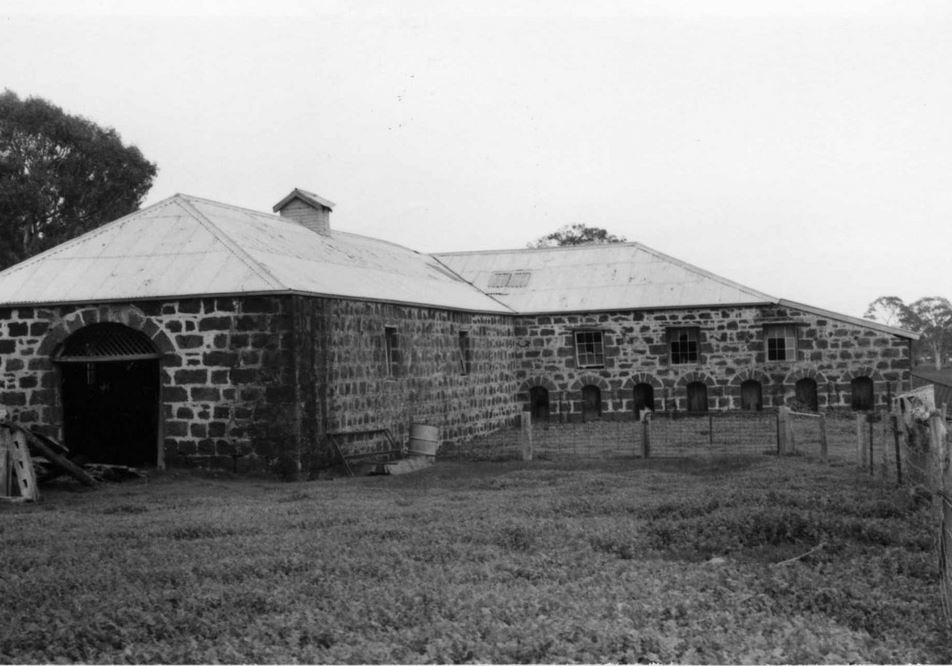
George GEMMELL: Died August 1945 at Camperdown.  Born around 1867 at Mortlake, George Gemmel moved to Cobden around 1880 working as a stonemason.  Works he was involved with included the foundations of Grand Central Hotel at Cobden, the Shire Offices and Poligolet (below) near Derrinallum.

 J.T. Collins Collection, La Trobe Picture Collection, State Library of Victoria. http://handle.slv.vic.gov.au/10381/217239

POLIGOLET J.T. Collins Collection, La Trobe Picture Collection, State Library of Victoria. http://handle.slv.vic.gov.au/10381/217239

George married Elizabeth Porter in 1890 and the family were members of the Camperdown Presbyterian Church.  At the time of his death, George had four sons, one daughter, sixteen grandchildren and two great-grandchildren.



Passing of the Pioneers

This month, Passing of the Pioneers enters its sixth year and the great pioneering stories keep coming. While not intentional, the theme for the month is construction with several of the pioneers having worked as carpenters and masons. Two of those were born a year apart at Taunton, Somerset, England and both started family businesses still in operation today.  As you read through, you can click on the names of the pioneer to read their newspaper obituary or other underlined words for further information.

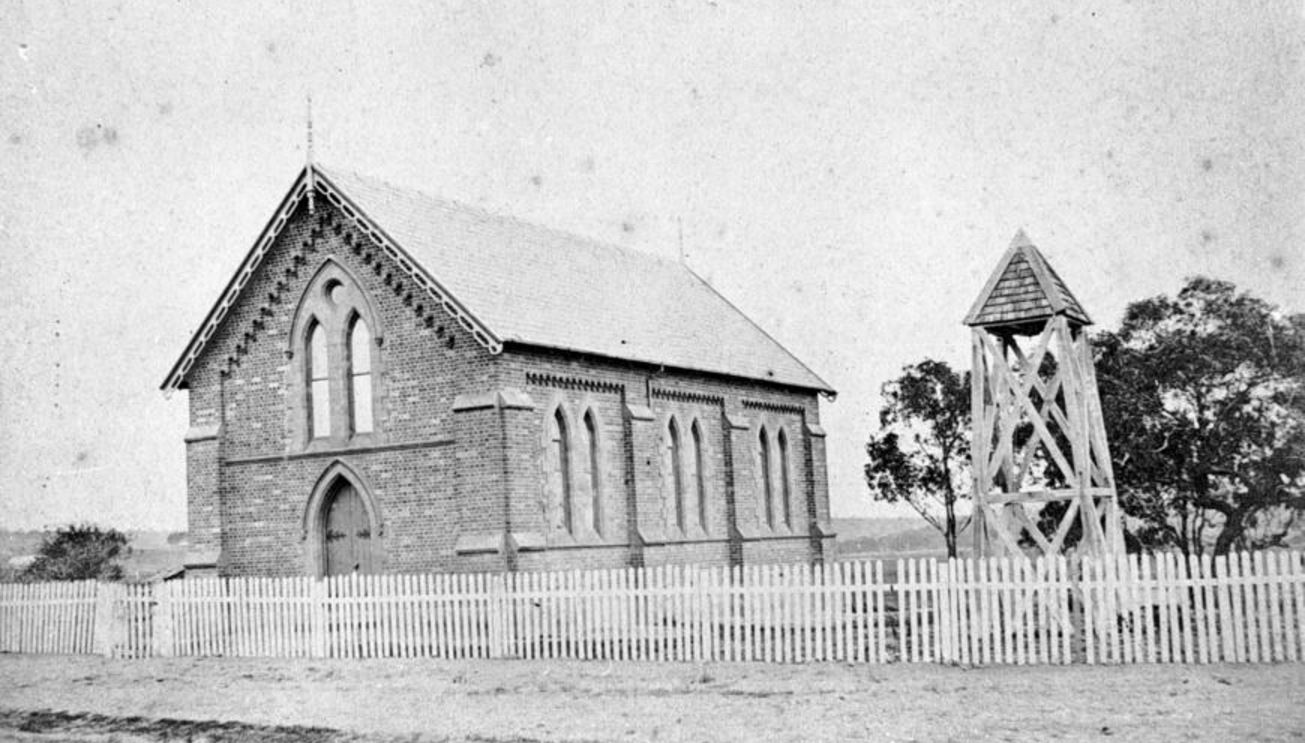
George NORTHCOTT:  Died 23 July 1894 at Merino.  Born in Devon around 1825, George Northcott, his wife, and his children arrived in Portland around 1854. They spent time in Portland before George, a joiner by trade, was engaged by T.H.Clarke to construct some buildings in Merino. He built the Farmers Arms Hotel at Merino around 1855. In 1868, George Northcott and my ggg grandfather William Diwell built the Merino Presbyterian Church (below).

MERINO UNITING CHURCH (former St Andrews Presbyterian Church J.T. Collins Collection, La Trobe Picture Collection, State Library of Victoria. http://handle.slv.vic.gov.au/10381/232204

MERINO UNITING CHURCH (former St Andrews Presbyterian ChruchJ.T. Collins Collection, La Trobe Picture Collection, State Library of Victoria. http://handle.slv.vic.gov.au/10381/232204

In 1865, Northcott and Diwell built the first Casterton Presbyterian Church (below)

Image courtesy of the Museum Victoria Collections http://collections.museumvictoria.com.au/items/766564

FORMER PRESBYTERIAN CHURCH, CASTERTON Image courtesy of the Museum Victoria Collections http://collections.museumvictoria.com.au/items/766564

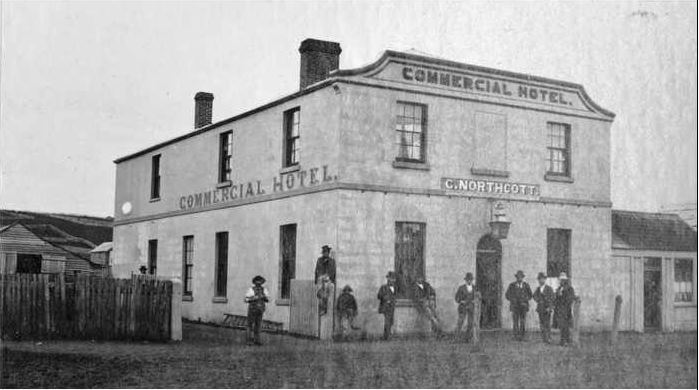
George built the Commercial Hotel at Merino around 1869, the town’s third hotel.  He leased the hotel out but after the second tenant of the hotel died suddenly in 1877, George took over the running of the hotel and attached Cobb & Co station and became quite wealthy as a result.

http://images.slsa.sa.gov.au/mpcimg/22000/B21766_112.htm

COMMERCIAL HOTEL, MERINO. Image courtesy of the State Library of South Australia http://images.slsa.sa.gov.au/mpcimg/22000/B21766_112.htm

A few years before his death, George’s wife died and he gave up the running of the Commercial, passing control to his eldest son Henry.  George did not get over the death of his wife and by the beginning of 1894, his health began to fail before he died on 23 July.

James MALLETT:  Died 3 July 1901 at Merino.  Born around 1834, at the age of eleven James Mallett arrived in Portland from Tasmania.  He went straight on to the Henty’s Muntham Station near Merino where he remained for several years before returning to Portland to start a bootmaking apprenticeship.  He married and by 1864 had returned to Merino and remained there until his death. He left three sons and four daughters, with a fourth son having died several years before.

Stephen NORMAN: Died July 1901 at Hamilton.  Stephen Norman was born around 1794.  On arrival in Australia, he found himself working for the Henty brothers and was one of their first employees after their arrival to Portland Bay in 1834.  Stephen was, according to his obituary, the first man to plough land for the Hentys at Portland.  Reaching the age of 107 without a sick day in his life and still with all his faculties, Stephen suddenly fell ill at his home in Casterton and admitted to the Hamilton Hospital where he died a few weeks later.

George MAHONEY:  Died 13 July 1902 at Dunkeld. Arriving in Victorian in 1841 aboard the Duchess of Northumberland, George Mahoney began his time in Victoria as manager of Glenmore Estate near Bacchus Marsh. He was there several years before moving to Geelong for a short time before settling at Dunkeld.  A farmer, George led a quiet life away from public affairs although he did keep up an interest in politics and current affairs.  George was eighty-two at the time of his death and left a widow and nine children.

Richard William COLLINS:  Died 13 July 1902 at Hamilton.  Richard Collins was born in Brixton, London around 1840 and arrived in Victoria in 1857.  He settled at Hamilton, working as a carpenter.  He later worked at Mr Allen’s timber yard until setting up his own yard, the “Victoria Timber Yard” in 1879.  After selling the timber yard, Richard and his wife returned to England for a visit and on their return purchased a farm at Mountajup. After only a few years, Richard returned to nearby Hamilton setting up a timber yard on the corner of French and Cox Streets and he operated it until he died in 1902.  A member of the Church of England, Richard left a widow but their marriage was childless.  The Hamilton Brass Band played the “Death March” at Richard’s funeral at the Hamilton Cemetery.

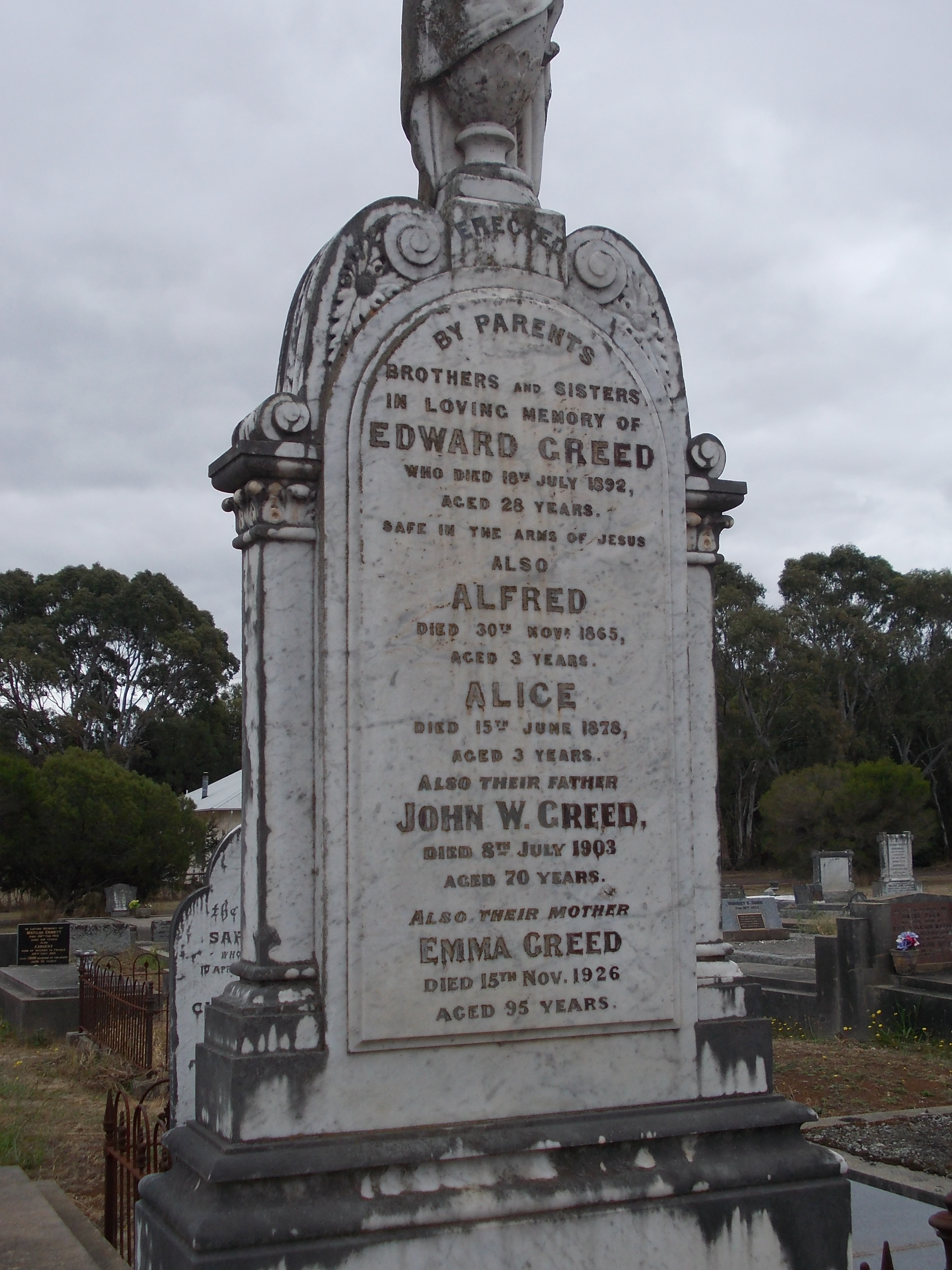
John Weaver GREED: Died 8 July 1903 at Hamilton.  Born in Taunton, Somerset, England in 1834, John Greed married Emma Grinter in 1856.  They continued to live in Taunton with John working as a mason and two daughters were born.  In 1857, John’s parents Charles and Sarah Greed, and his younger siblings left England for Victoria aboard the Balnaguith.  In 1862,  John and Emma and their daughters left England aboard the Lighting for Victoria, and on arrival in June 1862, the family headed straight for Hamilton to join John’s parents who had settled there, with Charles Greed running a glazier’s business from Lonsdale Street.  Hamilton was still in its infancy and John was the first to build on the town’s northern hill, land “dotted” with the mia mias of local aboriginals.

John began a carpentry and contracting business and an early job was to build the fence for the then-new shire offices as reported in the Hamilton Spectator and Grand District Advertiser on 20 May 1864.  Earlier in the month, the same paper published a business directory and by that time there were two undertakers in the town, George Brownless, and John Lobban. From searches of the Spectator from that year, it also seems it was the year when John took up a contract with the Hamilton Hospital and Benevolent Asylum to conduct funerals for them. But it was not until April 1871 that I found the following advertisement for John as both a carpenter and undertaker.

"Advertising" Hamilton Spectator (Vic. : 1870 - 1873; 1914 - 1918) 5 April 1871 .

“Advertising” Hamilton Spectator (Vic. : 1870 – 1873; 1914 – 1918) 5 April 1871 <http://nla.gov.au/nla.news-article196303937&gt;.

Interestingly, from around 1880, John Greed’s advertisements included the words “Established in 1861”, however, both the 1861 England Census and the Victorian Shipping Records prove John was still in England.

"Advertising" Hamilton Spectator (Vic. : 1870 - 1873; 1914 - 1918) 17 April 1880:.

“Advertising” Hamilton Spectator (Vic. : 1870 – 1873; 1914 – 1918) 17 April 1880:<http://nla.gov.au/nla.news-article225490515&gt;.

Hamilton Spectator (Vic. : 1870 - 1918) 17 April 1888: 2 (SUPPLEMENT TO THE HAMILTON SPECTATOR). .

Hamilton Spectator (Vic. : 1870 – 1918) 17 April 1888: 2 (SUPPLEMENT TO THE HAMILTON SPECTATOR). <http://nla.gov.au/nla.news-page22226411&gt;.

The undertaking business tied in well with John’s brother Abraham’s coachbuilding business and one of John’s sons Walter eventually worked for Abraham, a Mayor of Hamilton.  John was a Methodist but converted to the Baptist Church, located close to his home in Collins Street. He was also a member of the Forester’s Lodge and the Oddfellows.  With the latter, he was twice a member of the board of directors. He was also made a Life Governor of the Hamilton Hospital.  Around 1887, John suffered a paralytic seizure reducing his activities and in time leaving him an invalid.  That saw John’s youngest son Frank take over as manager of the business around 1892 when he was twenty.

On 23 June 1903, John Greed was in his room at home with his wife Emma.  She left the room, leaving John standing in front of a fireplace containing a colonial oven.  John fell backwards into the fireplace falling beside the oven but landing on hot iron bars in the fireplace.  He called out to Emma who rushed in to find him in the precarious position.  She managed to get him out and into his bed.  The doctor was called and he treated burns to John’s back, legs, and hands but the shock of the fall saw him fall into a coma like state.  Two weeks after his fall, John Weaver Greed died.  On 12 September 1903, the Hamilton Spectator announced Frank was taking over the business.  F. Greed & Sons was born and still operates under that name today with the Greed family still at the helm.

Greed3

HEADSTONE OF JOHN WEAVER GREED AND FAMILY, HAMILTON OLD CEMETERY

Euphemia McDONALD:  Died 13 July 1907 at Condah.  Euphemia McDonald was born around 1832 at Mull, Argyllshire, Scotland.  She arrived in Victoria in 1852, disembarking at Portland. It’s unclear when Euphemia married Alexander Urquhart, but they did have a son Thomas born in 1858.  In the late 1880s, Alexander took on the management of Samuel Winter Cooke’s property Condah HillsIn 1901, disastrous bushfires swept through a large area south of Hamilton, including Condah.  Euphemia received severe burns to her hands and feet and was only saved by her son John’s actions of lowering her into a well.  She never fully regained her health and Euphemia died at the age of seventy-five.

Samuel VANCE:  Died July 1908 at Bridgewater.  Samuel Vance arrived at Portland in 1855 from Northern Ireland aboard the Cairngorm.  Before his departure, he had served in the British Army.  Samuel worked as a farmer and a contractor for the Portland Shire Council.  During the 1880s, he built the Sea View Hotel at Bridgewater and ran it until the time of his death.

Sarah CAMERON:  Died 8 July 1908 at Geelong.  Sarah Cameron was born in Scotland in 1819 and married Archibald MacDonald and they had three daughters.  Archibald’s fate is not mentioned but Sarah went on to marry Donald Cameron of Southland, New Zealand who himself had five daughters and two sons.  From NSW they travelled overland to the Colony of Victoria, settling first at Campbellfield near Melbourne before moving on to Morgiana near Hamilton, then called the Grange.  Donald’s uncle had taken up the run only a few years earlier and Donald took over the running of the property.  The Camerons of Morgiana were well known in the Hamilton district  Sarah’s is an interesting obituary as it lists early settlers in the Hamilton district.

Anne BELL:  Died 4 July 1909 at Hamilton.  Anne Bell was born in Ireland and travelled with her parents John Bell and Elizabeth Morrow to Victoria in 1841, arriving at Portland.  With them were Anne’s seven siblings.  The family travelled from Portland to Mt Eckersley near Heywood where they settled.  In 1848, Anne married Henry Barr and with the discovery of gold, the couple left for the diggings remaining two years with little success.  After their return to Heywood, Henry bought the Heywood Hotel, and together Ann and Henry ran a successful business. On 19 February 1865, the stables adjoining the Barr’s hotel caught fire.  As a result of his exertion, Henry fell ill and never recovered, dying in July 1866.  Anne and her family moved to Lake Condah where they remained for the next fourteen years.  After the sudden death of her son, Anne returned to Heywood but eventually sold her interests there and went to live with her children, first John at Lyons between Heywood and Dartmoor and then George at Strathkellar near Hamilton.  Anne fell ill in June 1909 and was admitted to the Hamilton Hospital where she died on 4 July.

John PERRY:  Died 8 July 1913 at Coleraine.  Born in Bristol, England in 1818, John Perry looked set for a career as an artist but decided to choose an outdoor pursuit working in agriculture.  He married Elizabeth Holbrook at Bath, England on 3 December 1839, and thirteen years later, the Perrys with four sons left England for Australia.  Sailing on the Priam, the Perrys arrived at Portland in 1852.  John’s stock experience in England held him in good stead for employment and his services were desperately sought after by Edward Henty at Muntham Station.  However, staying loyal to a commitment he made to Mr A. Munro, John went to work for Munro, managing several stations including Dundas and Bassett.  By 1859, John had entered into a partnership and purchased land near Ararat.  However, the death of one of his sons at the property saw him sell and return to Branxholme and later Merino Downs working for Francis Henty.

"Merino Downs" Image courtesy of the Museum Victoria Collections http://collections.museumvictoria.com.au/items/766481

MERINO DOWNS. Image courtesy of the Museum Victoria Collections http://collections.museumvictoria.com.au/items/766481

Over the next twenty years, John managed various large properties throughout the district.  He eventually retired to Digby and in 1886, Elizabeth died.  John continued painting as a hobby throughout his life.

William DUNN: Died 12 July 1914 at Box Hill.  Born in Taunton, Somerset, England around 1833, William Dunn arrived in Victoria in 1855 aboard the Ravenscraig.  He spent time in Geelong before riding on horseback to Hamilton, where he remained for the next forty-four years.  William was a builder and in 1866 entered into a partnership with another builder, William Holden, and together they set about “building” Hamilton.

Holden and Dunn built some of Hamilton’s grandest buildings, and most still stand today.  They included the Bank of Australasia, the Bank of Victoria, the Colonial Bank, and the residences of doctors, including Hewlett House and  Roxburgh House.  They also built the first brick house in Gray Street owned by Mr S. Radley, the Hamilton Goal, and many shops in the CBD of Hamilton, including a strip of shops running from the corner of Gray and Thompson streets.  Looking at the histories of some of the buildings Holden and Dunn constructed, it seems William Dunn has become the forgotten man of the partnership, with Holden given credit alone. However, newspaper articles from the time and William Holden’s obituary confirm their partnership.

In his personal life, William married twice and left a widow and four children at the time of his death.

You can see more about Holden and Dunn and their work in the slideshow below.

This slideshow requires JavaScript.

Richard Thomas CARTY:  Died 24 July 1917 at Hamilton.  Richard Carty was born in Wexford, London in 1842 and at age seventeen arrived in Australia. With little to his name, he tried various jobs before going to the New Zealand gold diggings. After mixed fortunes on the diggings, Richard returned to Australia and took up cattle droving.  He became manager of the Bredelbane Estate near Castlemaine and with that experience, leased Mt Clay Estate near Heywood during the 1860s.  Success from that venture enabled him to lease Bark Hill Estate in 1873.  In was also in that year, Richard married Lucy Hawkins.  In the early 1880s, Wando Vale was subdivided for Closer Settlement, and Richard and Lucy moved there, remaining for three years.  On 1 January 1885, Richard took possession of Brisbane Hill at Byaduk.  Richard and Lucy remained at Brisbane Hill until around 1916 when they moved into Hamilton, residing at Montacue in Kennedy Street until Richard’s death.

170

GRAVE OF RICHARD CARTY AND FAMILY, HAMILTON OLD CEMETERY

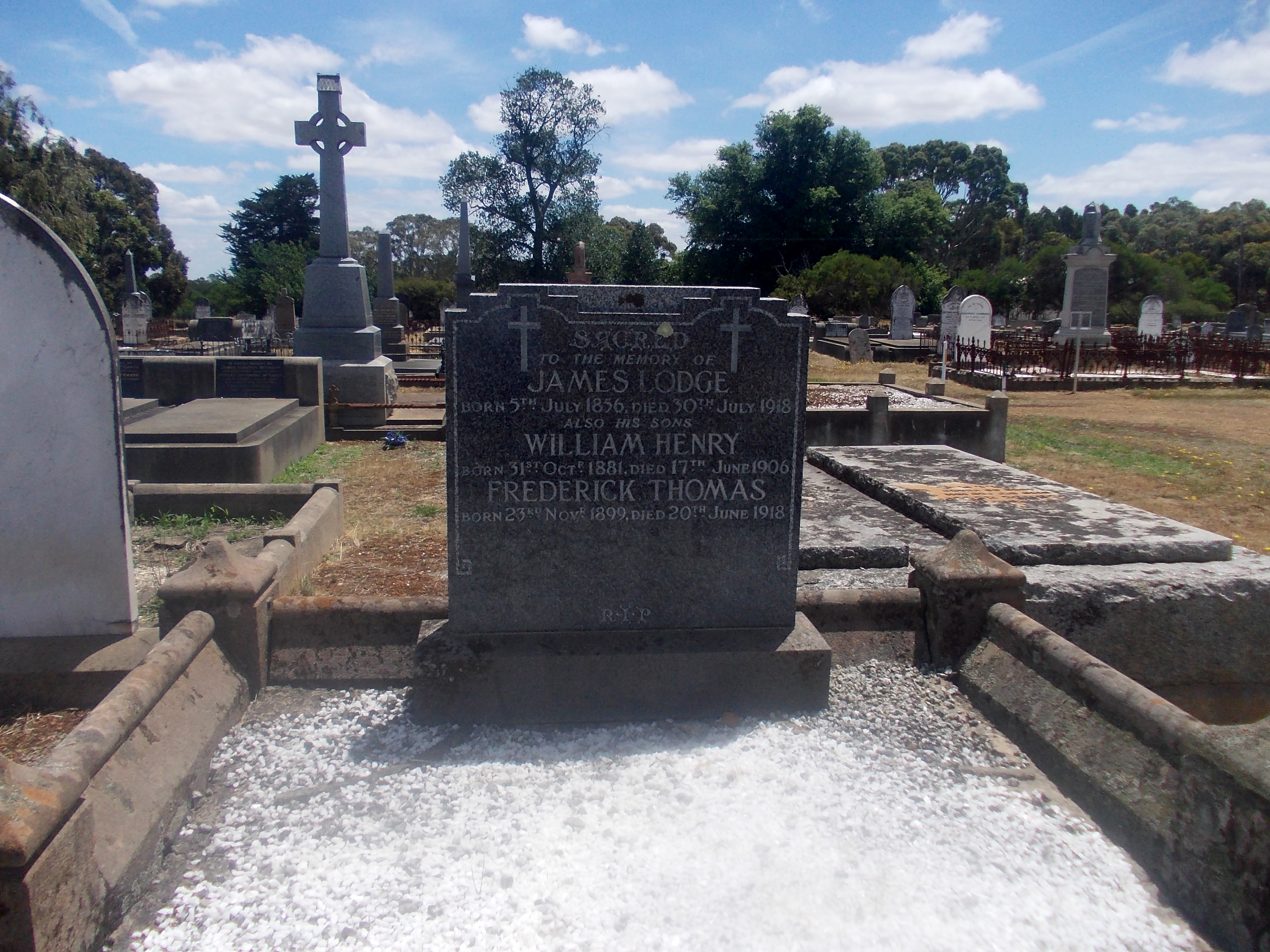
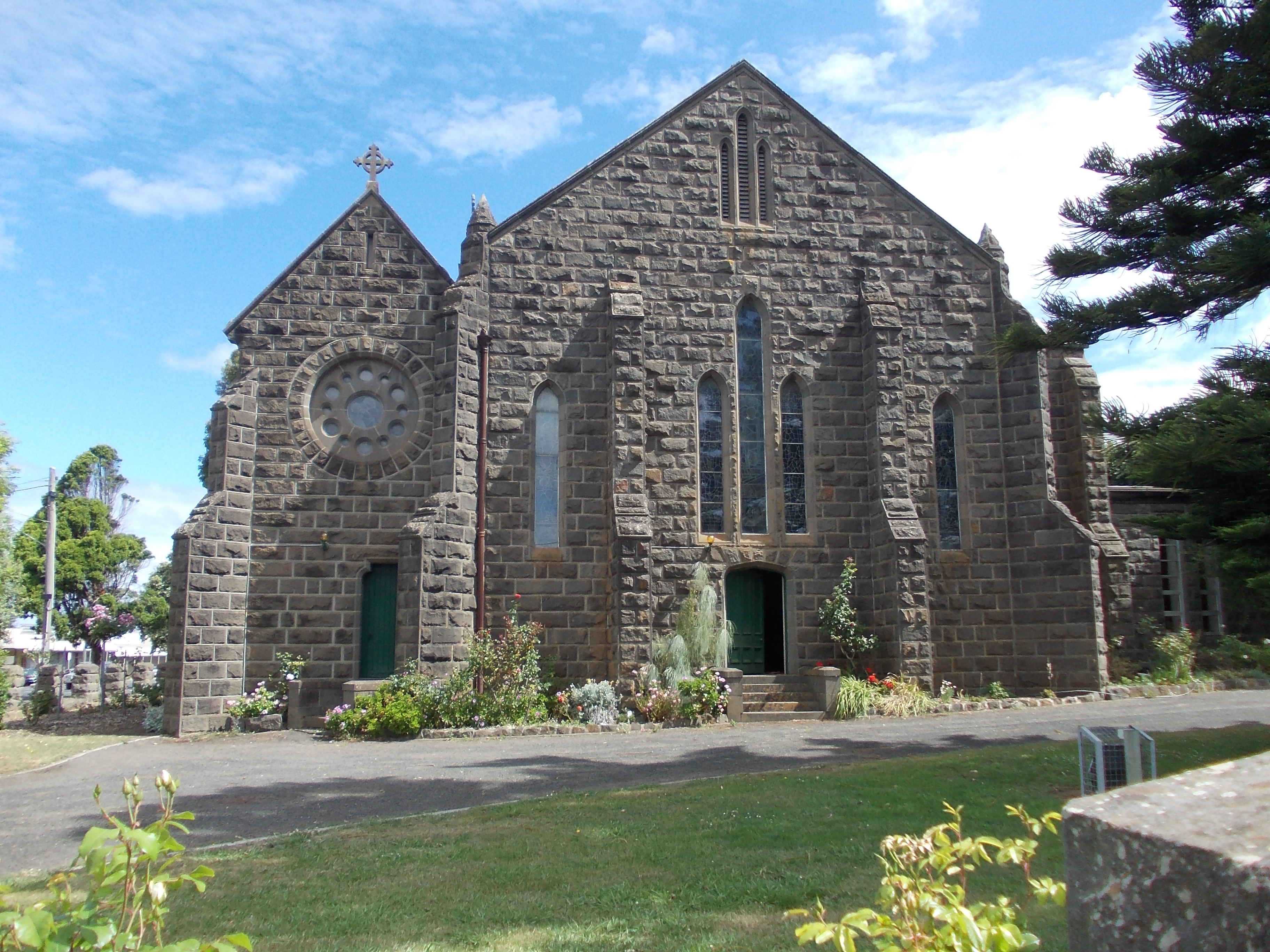
James LODGE:  Died 31 July 1918 at Casterton.  A son of James Clapham Lodge and Hannah Hudson, James Lodge was born in Richmond, Victoria around 1859.  He became an apprentice stonemason and stone cutter and following his apprenticeship, moved to Stawell to work in a stonemason partnership, Lodge and Timmins.  In 1884, James married Ellen Murphy and they went on to have six sons and two daughters. Around 1892, James moved to Hamilton, taking up residence in Clarke Street and one of his first jobs was as clerk of works on extensions of Hamilton’s Catholic church St Mary’s. Later he would add a spire to the church.

http://handle.slv.vic.gov.au/10381/64794

ST. MARY’S CATHOLIC CHURCH, HAMILTON. Image courtesy of the State Library of Victoria. http://handle.slv.vic.gov.au/10381/64794

Churches were James’ specialty, building extensions to Catholic churches in Penshurst, Casterton, and Koroit.  He also built the Tabor Lutheran Church and Tarrington School building.  James’ sons followed him into the business, however, in 1906, eldest son Harry fell ill and died of inflammation of the kidneys on 17 June.

The years of WW1 were difficult for James.  With five sons, James saw his oldest four boys Gus, Frank, James, and Richard enlist. During those years, James won a street channelling contract with the Borough of Hamilton and in June 1918, James and his youngest son Frederick were building the Catholic presbytery at Casterton.  Frederick was eighteen and keen to join his brothers overseas. However, Frederick caught a cold while working on the presbytery and it developed into double pneumonia and he died on 20 June 1918,  While James was worried about his four sons overseas, it was the son under his own watchful eye who would die.  Despite his grief, James continued working on the presbytery but around July 21, he too fell ill with a cold. Within days, James was diagnosed with pneumonia and pleurisy and he died during the afternoon of Wednesday 31 July, and was buried at the Hamilton Old Cemetery.

213

HEADSTONE OF JAMES LODGE AND SONS WILLIAM AND FREDERICK, HAMILTON OLD CEMETERY

Just weeks after James’ death, on 24 August 1918, trees for Hamilton’s Clarke Street Memorial Avenue were planted, with the first tree planted in front of the Lodge home in memory of James followed by another four for each of his enlisted sons.  The Lodge boys all arrived home safely from war, having served with distinction.  Gus was awarded a Distinguished Service Order for conspicuous bravery at Pozieres. Frank was awarded a Military Medal for his efforts at Pozieres and later a Military Cross for his service at Mont St. Quentin in 1918.  Settling into civilian life, the boys returned to stone masonry operating as Lodge Bros. and in 1928 were awarded the contract to build Melbourne’s Shrine of Remembrance, employing returned servicemen as labourers.  The business still operates today.

Passing of the Pioneers

It’s a bumper January Passing of the Pioneers. So much bigger than I’d planned. But I’ve found some interesting pioneers’ obituaries this month, and it was hard not to want to learn a little more about them. The sixteen pioneers are now included in the Western District Families Pioneer Obituary Index.

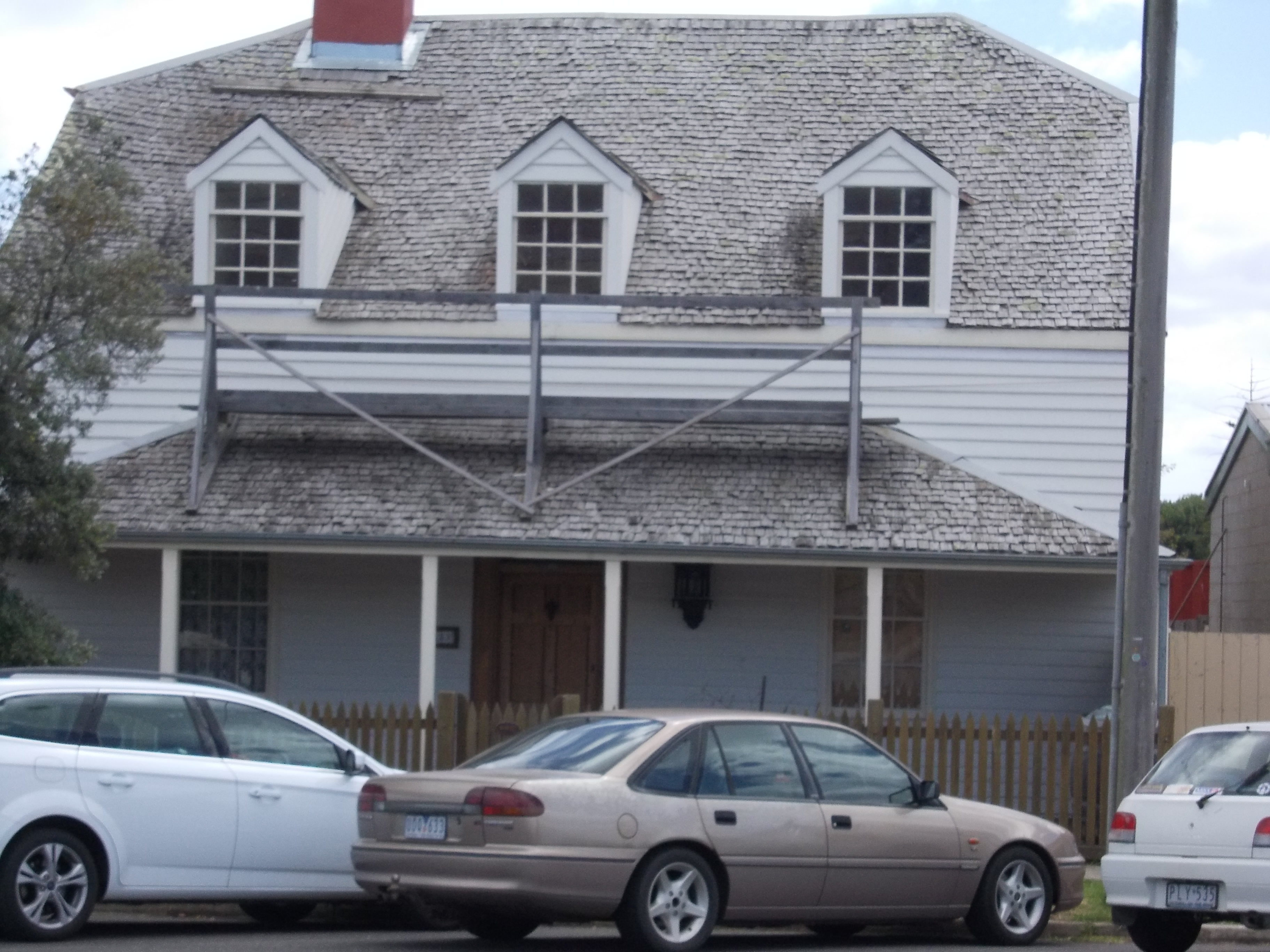
HERBERTSON, Robert – Died 23 January 1879 at Portland.  Robert Herbertson was born in Scotland and travelled to Tasmania in 1830.  He married fellow Scot Isabella Bailey in 1834 in Tasmania, and they arrived in Portland in 1841.  They eventually moved into a house in Julia Street, and Robert worked as a builder and hotel keeper.  Robert built the Steam Packet Inn (below) in 1842, and it is now one of the oldest surviving buildings in the state.

183

STEAM PACKET INN, PORTLAND

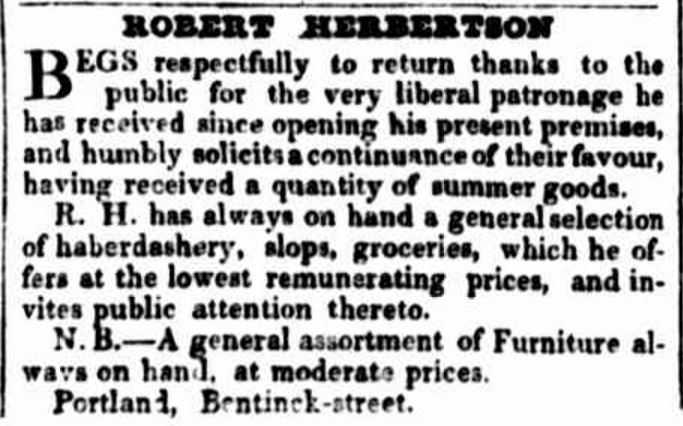
The Herbertsons also ran a drapery store.

"Advertising." Portland Guardian and Normanby General Advertiser (Vic. : 1842 - 1876) 4 Feb 1843: 2. .

“Advertising.” Portland Guardian and Normanby General Advertiser 4 Feb 1843 http://nla.gov.au/nla.news-article71569036

In 1843, Robert opened the Union Inn, and in 1847, the Britannia Inn and built shops and houses in Julia Street. Robert purchased land on the Bridgewater Road and built Briery (below). From Robert’s obituary in the Portland Guardian, that was in 1867, however, the report on the home found at the Victorian Heritage Database gives the date as around 1850.

BRIERY, PORTLAND 1958. Photographer Colin Caldwell. Image courtesy of the State Library of Victoria http://handle.slv.vic.gov.au/10381/72633

BRIERY, PORTLAND 1958. Photographer Colin Caldwell. Image courtesy of the State Library of Victoria http://handle.slv.vic.gov.au/10381/72633

Briery was definitely built by 1867, as Robert had the house and land up for lease.

"Advertising." Portland Guardian and Normanby General Advertiser (Vic. : 1842 - 1876) 16 Jan 1868: 3 Edition: EVENINGS. . .

“Advertising.” Portland Guardian and Normanby General Advertiser 16 Jan 1868 http://nla.gov.au/nla.news-article64689157

In the days before his death, there was a fire on Bridgewater Road near the farm. Robert’s over-exertion helping to fight the fire most likely led to his death.  Isabella Robertson died in Portland in 1883.

WILSON, John – Died 3 January 1906 at Portland. John Wilson was born around 1826 at Glasgow, Scotland and arrived in Portland around 1853.  He went on to the diggings but returned to the Portland district, dairy-farming at Lower Bridgewater.  John’s property The Lagoons was one of the district’s largest and most successful farms.

TWOMEY, Edward – Died January 1907 in Melbourne.  Edward Twomey was born in Ireland around 1836, the son of John Joseph Twomey and Margaret O’Conner.  John Twomey took up large amounts of land around Penshurst, which he divided into Kolor (below), Banemoreand Langulac and passed it on to his sons.

026

LOOKING DOWN ON KOLOR FROM MT. ROUSE NEAR PENSHURST

Langulac, south of Penshurst, came under the charge of  Edward Twomey. In 1885, Edward announced his engagement to New Zealander Mary Ellen Josephine Cantwell, and they married.  They went on to have five children.

"Family Notices." Table Talk (Melbourne, Vic. : 1885 - 1939) 24 Jul 1885: .

“Family Notices.” Table Talk 24 Jul 1885 http://nla.gov.au/nla.news-article145711723

Edward enjoyed horse racing and was one of the earliest trustees of the Hamilton Race Course.  He bred and raced horses, with his greatest success coming with Mermaid, winner of the 1871 Sydney Cup. Mermaid was a daughter of King Alfred, the great Western District sire imported in 1854 aboard the Severn by Rifle Downs owner Richard Lewis.

Edward Twomey was a devout Roman Catholic.  He attended the first mass in the Western District according to his obituary; however, most of the congregation was his own family.  He was also a great supporter of the St. Joseph’s Catholic Church at Penshurst.

http://handle.slv.vic.gov.au/10381/233158

ST. JOSEPH’S CATHOLIC CHURCH, PENSHURST. Image courtesy of the J.T. Collins Collection, La Trobe Picture Collection, State Library of Victoria. http://handle.slv.vic.gov.au/10381/233158

In search of an interesting story about Edward Twomey, I found an article published in the Hamilton Spectator and Grange District Advertiser on 10 December 1864.  It was alleged that Edward rode past the Presbyterian minister lying injured by the roadside without offering help. Edward wrote a lengthy “Letter to the Editor”  denying the claims, and Donald Cameron, presumably the Donald Cameron formerly of Morgiana, also wrote the following letter defending Edward.

"ORIGINAL CORRESPONDENCE." Hamilton Spectator and Grange District Advertiser (South Melbourne, Vic. : 1860 - 1870) 17 Dec 1864: 2. Web. 7 Jan 2016 .

“ORIGINAL CORRESPONDENCE.” Hamilton Spectator and Grange District Advertiser 17 Dec 1864 http://nla.gov.au/nla.news-article194723320

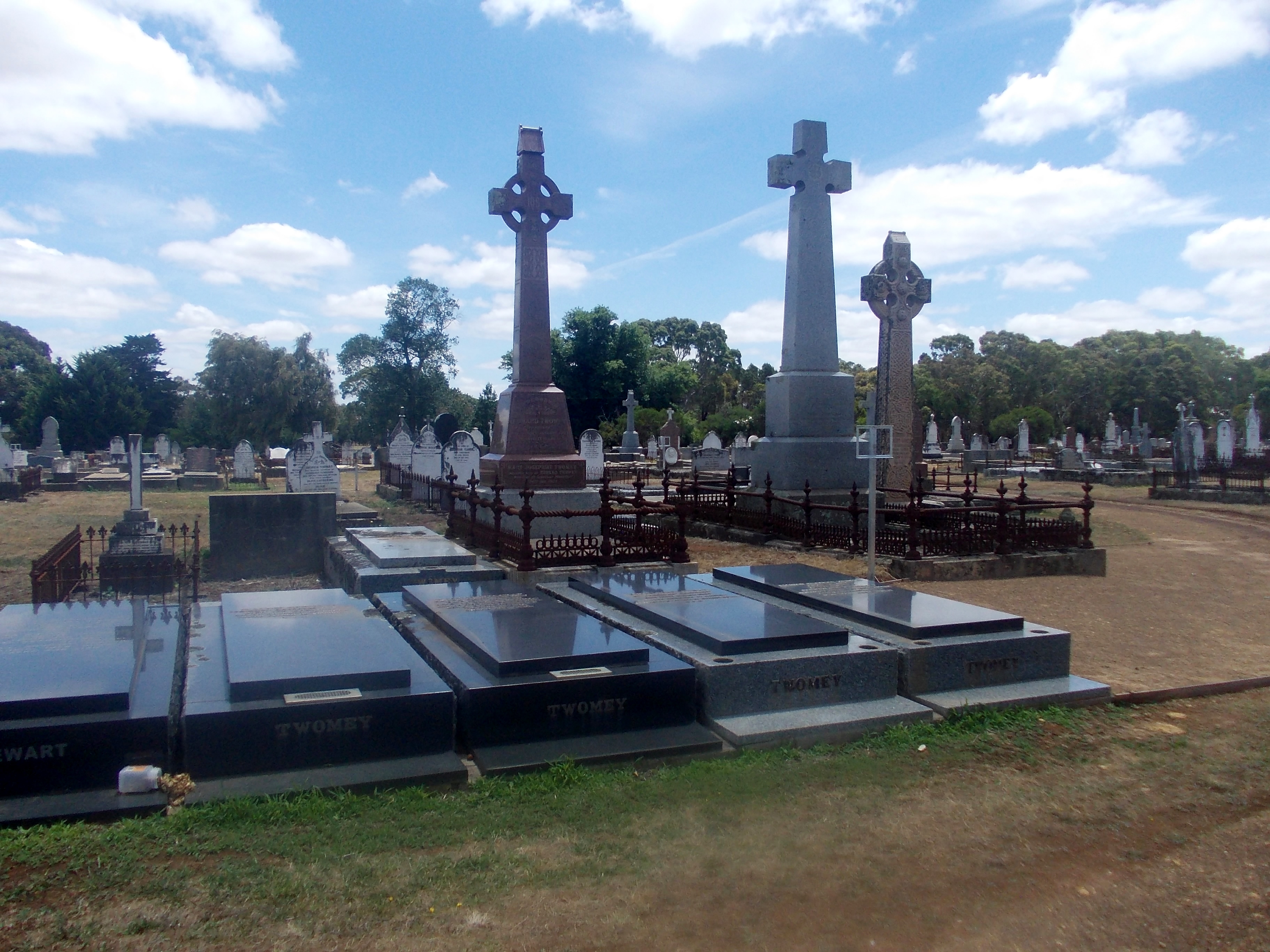
At the age of seventy-one, Edward went to Melbourne for medical treatment.  He died there, and his body was returned to Hamilton for burial at the Hamilton Old Cemetery.  A service was held at Hamilton’s St Mary’s Catholic Church. Mary died in 1926, aged sixty-two, at Penshurst and is also buried at the Hamilton Old Cemetery.

210 (2)

TWOMEY FAMILY PLOT, HAMILTON OLD CEMETERY

EVANS, Edward – Died 6 January 1915 at Ararat.  Edward Evans was the son of Ararat butcher John Pritchard Evans and was born around 1865.  In time, Edward took over his father’s butchery. In 1889, he married Emily Harricks of Ararat.  Edward was a member of the local A.N.A. and a vestryman at Ararat’s Holy Trinity Church of England (below).  He developed Bright’s Disease in 1913, which took his life at age fifty.  Emily, a son and two daughters were left after his death, with Emily dying in 1949, aged eighty-six.

http://handle.slv.vic.gov.au/10381/58321

HOLY TRINITY CHURCH OF ENGLAND, ARARAT. Image courtesy of the State Library of Victoria http://handle.slv.vic.gov.au/10381/58321

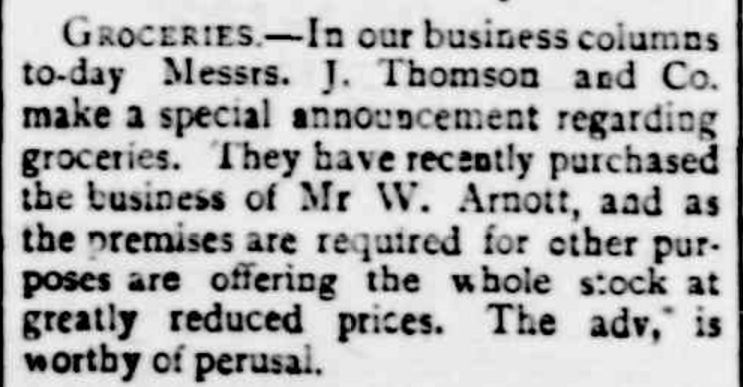
SANDRY, Alice – Died 18 January 1916 at Hamilton.  Alice Sandry was born in Cornwall, England, around 1848.  She arrived at Portland with her parents, William and Anne, and three siblings in 1853 aboard the Eliza.  In 1869, Alice married William Arnott, and they lived in Gray Street, Hamilton. Their residence was most likely at the grocery store William ran close to Thomson’s Iron Store. Alice and William went on to have nine children, and for a time, William was a Hamilton Borough Councillor.

On 9 May 1887, Alice and William’s nine-year-old son Frederick died as a result of an accident.  On the day, he was travelling in the wagonette of Frederick Giles, storekeeper of the Giles & Dunn Beehive Store at Hamilton. Mr Giles was a passenger and, as he often did, he allowed Frederick’s older brother Archie to drive. They were going to the Wannon store of Giles & Dunn. During their journey, the pony stumbled, throwing Archie and Mr Giles from the wagonette.  The pony took fright and bolted with Frederick holding on for his life.

Found with a severely broken leg, and with no witnesses, it was thought Frederick had attempted to jump clear, but his leg wedged between a tree and the wagonette.  Taken to the Wannon Inn, amputation was the only option.  Frederick went into shock as a result of the operation and died at his parents’ home. The Portland Guardian published a lengthy account of the accident on 11 May 1887.  The Horsham Times provided a report on the inquest published on 13 May 1887.

In 1898, William’s grocery store became a part of John Thompson & Co in Gray Street.  The Arnotts then moved to Cox Street, Hamilton.

"Established August 1842. The Portland Guardian,." Portland Guardian (Vic. : 1876 - 1953) 21 Dec 1898: 2 Edition: EVENING. Web. .

“Established August 1842. The Portland Guardian, 21 Dec 1898  http://nla.gov.au/nla.news-article63675021

In 1899, William was declared insolvent owing over £800 and he died the following year.  Alice’s probate file indicates she retained ownership of the Gray Street property and Thomson’s rented it from her.  She also owned her house in Cox Street.

"Family Notices." Hamilton Spectator (Vic. : 1870 - 1873; 1914 - 1918) 19 Jan 1916: 4. .

“Family Notices.” Hamilton Spectator (Vic. : 1870 – 1873; 1914 – 1918) 19 Jan 1916: 4. <http://nla.gov.au/nla.news-article120409938&gt;.

Alice was buried at the Hamilton Old Cemetery with William.  Three of their children were remembered on the headstone: Frederick and two infants, George, who died in 1879 aged six months, and Norman, who died in 1886, two months short of his second birthday.

arnott

O’BRIEN, Patrick – Died 20 January 1916 at Hamilton.  Patrick “Paddy” O’Brien was born in Ireland around 1831. He eventually arrived in Hamilton and became one of the great characters of the town.

"DEATH OF AN OLD HAMILTON RESIDENT." Hamilton Spectator (Vic. : 1870 - 1873; 1914 - 1918) 21 Jan 1916: 4. .

“DEATH OF AN OLD HAMILTON RESIDENT.” Hamilton Spectator 21 Jan 1916 http://nla.gov.au/nla.news-article120410087

Paddy married Mary Harritty* in 1865 and a daughter, Bridget, was born in 1867 at Portland. They then settled at Hamilton, and another daughter, Margaret, was born there in 1871. Paddy worked as a gardener, and the family lived in Cox Street close to the corner of Gray Street.  He was a devout Catholic, attending St. Mary’s Catholic Church (below), and was a member of the local Hibernian Society.

ST MARY'S CATHOLIC CHURCH, HAMILTON. Image courtesy of the State Library of Victoria. http://handle.slv.vic.gov.au/10381/63342

ST MARY’S CATHOLIC CHURCH, HAMILTON. Image courtesy of the State Library of Victoria. http://handle.slv.vic.gov.au/10381/63342

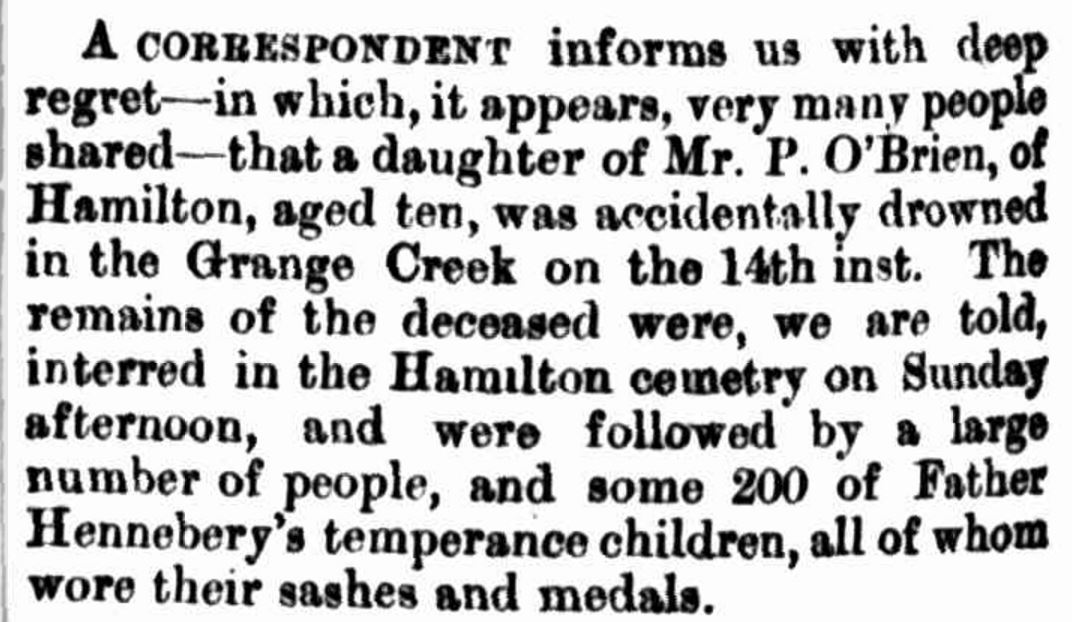
In 1881, tragedy struck the O’Brien family. Ten-year-old Margaret drowned in the local creek, the Grange Burn, on 14 October.  There was a large turnout to follow the funeral cortege to the cemetery.

"A PRACTICAL VIEW OP THE TEMPERANCE MOVEMENT." Advocate (Melbourne, Vic. : 1868 - 1954) 22 Oct 1881: 16. Web. .

“A PRACTICAL VIEW OP THE TEMPERANCE MOVEMENT.” Advocate 22 Oct 1881 http://nla.gov.au/nla.news-article170023451 

Mary died at Hamilton in 1907.  At the time of Paddy’s death in 1916, The Hamilton Spectator wrote, “He may best be described as one of the identities of the town, that being the term generally used where one is well known, and yet perhaps, so so far as his personal history is concerned, not so well known after all.”  How true.

* While searching records for Patrick O’Brien and his wife Mary, I found several variations of Mary’s surname.  The Victorian Marriage Index has Harritty, but I also found Garraty, Haraty, Harty, Harrity, Heroty, and Harety on entries for births and deaths. As Paddy was most likely the informant on those occasions, I suspect his thick Irish brogue resulted in the many variations.

TATLOCK, Thomas Henry – Died January 1918 at Hamilton.  Thomas Tatlock was born in on 13 January 1834 and christened on 23 March 1834 at the British Chaplaincy in Hamburg, Germany.*  His father was Englishman Thomas Marriot Tatlock, and his Scottish mother, Margaret Turner Rolland. Another son, Francis Rolland Tatlock, was born in 1835 and christened in Hamburg the following year.  After their marriage, Thomas Sr and Margaret had moved to Hungary, where Thomas ran a successful pottery works.  Due to unrest in Hungary, the family moved into Austria and then, as the christening records show, on to Germany.

Moving forward around twenty years and Thomas Henry Tatlock arrived in Victoria around 1853 and joined the mounted police force.  He was in Ballarat during the Eureka uprising in 1854 and worked with the Gold Escort. He was later stationed at towns including Casterton, Woodend, and Port Fairy. In 1865, Thomas married Mary Ann Scarsbrick, and a daughter, Ellen, was born at Port Fairy in 1866.  However, Ellen died aged seven months and was buried at the Port Fairy Cemetery. In 1875, while working as a Senior Constable at Casterton, Thomas was appointed Customs Officer with the Customs and Excise department based in Casterton. As Inspector for Licensed Premises and Liquors for the Customs and Excise Department, he based himself at Hamilton around 1880.

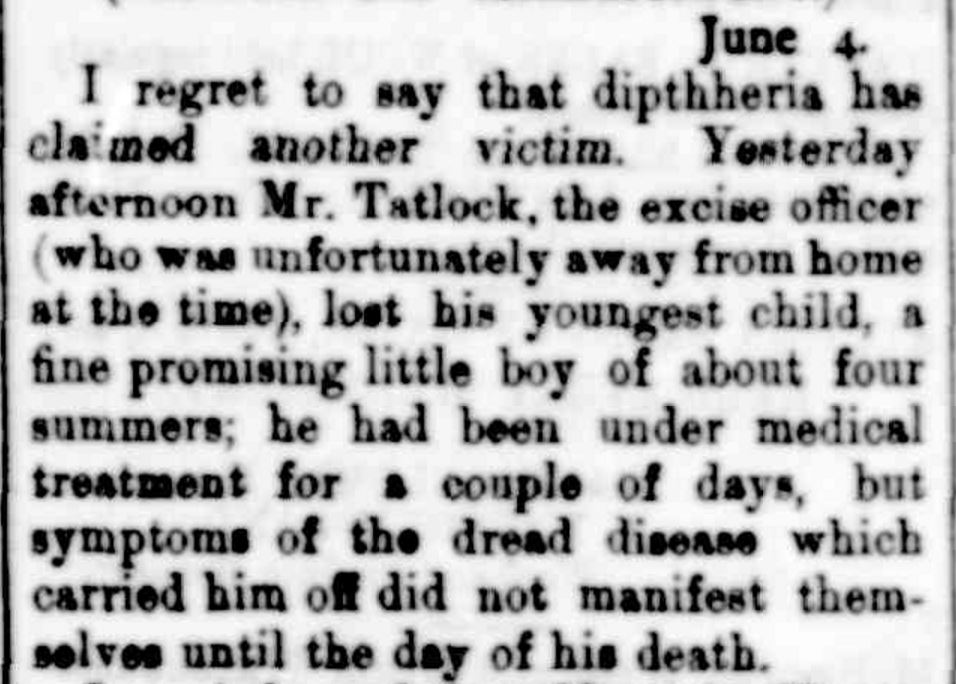
During the 1880s, there were some sad times for the Tatlock family.  Mary Ann died in 1883, aged thirty-eight, from complications due to the birth of twin daughters, Lillie and Daisy. Lillie died in January 1884, aged three months, and Daisy in March, aged five months. On 3 June 1887, Thomas’ son, “of about four summers”, Herbert, died of diphtheria.

 "Hamilton." Portland Guardian (Vic. : 1876 - 1953) 6 Jun 1887: 2 Edition: EVENING. Web. .


“Hamilton.” Portland Guardian 6 Jun 1887 http://nla.gov.au/nla.news-article65408722 

In 1890, Thomas married again to Margery Atchison.  Thomas was a member of the congregation at Christ Church Hamilton and was involved with the Hamilton Pastoral and Agricultural Society.  He was a renowned judge of flowers, poultry, and dogs at district P&A shows and was an importer of Black Orpington poultry.  The Tatlocks lived in Gray Street and later Griffin Street. Thomas’ and Mary Ann’s son Alfred Tatlock, born in Port Fairy in 1868, went on to become one of Hamilton’s leading citizens as a business owner and borough councillor.  Thomas’s second wife, Margery, moved away from Hamilton after Thomas’ death and died in Warrnambool on 7 May 1938.

*”Deutschland Geburten und Taufen, 1558-1898,” database, FamilySearch(https://familysearch.org/ark:/61903/1:1:ND14-PZK : accessed 12 January 2016), Thomas Henry Tatlock, 23 Mar 1834; citing ; FHL microfilm 576,997.

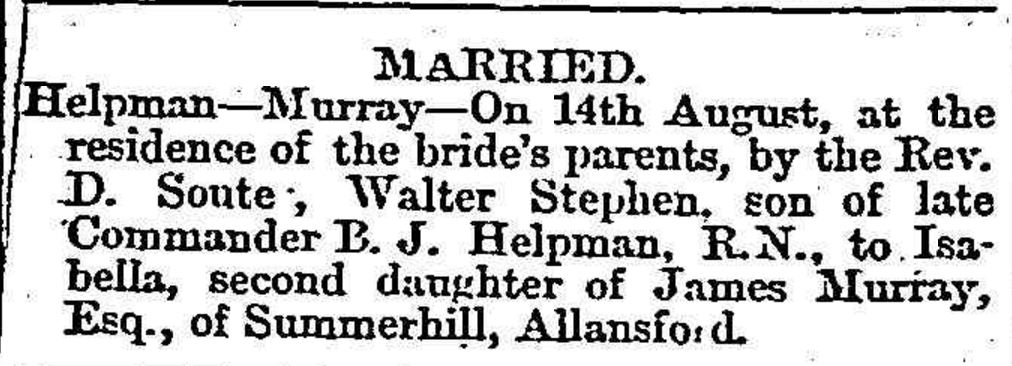
MURRAY, Isabella – Died 27 January 1924 at Warrnambool.  Isabella Murray was born around 1852 at Summer Hill, Allansford, the property of her parents, James Murray and Isabella Gordon. She married Walter Stephen Helpman in 1877, and they lived at Warrnambool.

"Family Notices." Geelong Advertiser (Vic. : 1859 - 1926) 16 Aug 1877: 2. .

“Family Notices.” Geelong Advertiser 16 Aug 1877 http://nla.gov.au/nla.news-article150470511 

Walter was a Colonial Bank manager, running branches at Koroit, Port Fairy, and Warrnambool. Isabella kept herself active in the community.  She was a part of the Ladies Benevolent Society for thirty years, including time as President.  Hospital fundraising and the Red Cross, serving as treasurer for five years, were some of Isabella’s other works.  She was also concerned for the welfare of the Aboriginal community at Framlingham and extended her kindness to them.  As the sister of politician John Murray, who became Premier of Victoria, she had a strong interest in politics, helping to campaign at state and federal levels.

HUNT, Caroline – Died January 1925 at Brighton.  Caroline Hunt was born around 1848 and arrived in Australia in 1853 with her parents. Her father was one of the Wimmera’s first settlers, residing at Rosebrook Station.  In 1866, Caroline married William James Carter. William Carter held North Brighton run until 1888 after purchasing Tarrington Estate in 1886.  William died in 1904, and Tarrington Estate was sold in 1909, but the Carters retained ownership of the Tarrington homestead until after Caroline’s death.

HEDGES, Elizabeth – Died 14 January 1942 at Portland. Elizabeth Hedges was born in Ballarat in 1882.  She became an art teacher and moved to Melbourne.  She married Francis Caine of Bridgewater in 1914, and they lived there until 1921, when Francis purchased land at Kongorong, South Australia, where they established the property Mona Park. While in Kongorong, Elizabeth was the organist at the Kongorong church.  Around the age of fifty, Elizabeth began suffering ill health, and Francis decided to sell Mona Park and buy Cammis near Sandford. The couple enjoyed holidays at Portland.  In 1941, Elizabeth’s health was still failing, and since she always felt better on seaside holidays, Francis bought Burswood at Portland, built by Edward Henty in 1855. Elizabeth only enjoyed the home for seven months before her death. Another obituary for Elizabeth, written by a resident of Kongorong, was published in the Border Watch on 22 January 1942.

http://handle.slv.vic.gov.au/10381/336832

BURSWOOD, PORTLAND. Image courtesy of the State Library of Victoria http://handle.slv.vic.gov.au/10381/336832

FIELDER, Annie Matilda – Died 16 January 1945 at Camperdown.  A daughter of William Fielder and  Matilda Greer, Ann Fielder was born at Cobden in 1877.  In 1903, Annie married William Florence, and they settled at Camperdown.  Annie was a member of the Camperdown branch of the Red Cross and Life Governor of the Royal Victorian Institute for the Blind.   She was also a member of the Camperdown Country Women’s Association and the Camperdown Ladies Auxiliary, among other things.  Annie also attended St. Paul’s Church in Camperdown (below).

stpauls

ST PAUL’S CHURCH, CAMPERDOWN. Image courtesy of the State Library of Victoria. http://handle.slv.vic.gov.au/10381/63204

MONK, Samuel – Died January 1948 at Cobden. Samuel Monk was born at Connewarre in 1861 and arrived at Cobden four years later with his parents, George Monk and Sarah Stenson, early pioneers of that district.  In 1885, Samuel married Patience Silvester.  In his early working days, Samuel made a name for himself working on the roads and was highly sort after by road contractors.  He then turned to farming around 1907 and continued in that pursuit for almost forty years.  Samuel was the oldest surviving member of the original Cobden Football Club and at the time of his death, his son Lesley was the club president. Samuel was a devout Anglican and a member of the Colac Turf Club.

FITZGERALD, John Cunningham – Died 3 January 1950 at Portland.  John Fitzgerald was born at Portland in 1864 to John Bryan Fitzgerald and Mary Birmingham. Mary’s first husband, Walter Birmingham, owned Mullagh near Harrow with David Edgar. Edgar lived at another of their properties Pine Hills, and the Birminghams at Mullagh.  Walter Birmingham died in 1850, and Mary took over Mullagh.  She remarried in 1851 to John Bryan Fitzgerald, and John ran the property.  One of his workers was Johnny Mullagh, who went on to tour England with an Aboriginal team in 1868. Johnny was born at Mullagh around 1841.

The homestead at Mullagh (below) was built around 1864, the year of John Cunningham Fitzgerald’s birth.

http://handle.slv.vic.gov.au/10381/232035

MULLAGH HOMESTEAD, HARROW. Image courtesy of the J.T. Collins Collection, La Trobe Picture Collection, State Library of Victoria. http://handle.slv.vic.gov.au/10381/232035

In 1893, John C. Fitzgerald married Eliza Anne Silvester.  They lived at Mullagh, with John taking over the running of the property from his father.  They eventually moved to Portland.  John was something of an amateur meteorologist and enjoyed contributing rainfall observations to the Portland Guardian. John and Eliza did not have any children.

COWLEY, Albion – Died 1 January 1951 at Tandarook South. Albion Cowley was born at Cowley’s Creek on 25 April 1878 and attended Cowley’s Creek State School. In 1904, he married Mary Ann Love, and in 1911, they moved to a property at Tandarook. Albion was an elder of the Jancourt Church and taught Sunday School there.  Mary Ann, three sons, and five daughters survived him.

DAVIS, Robert George – Died 21 January 1952 at Camperdown. Robert Davis was born at Scotts Creek around 1880 and lived there until he was twenty-one.  He then moved to Jancourt, buying property from the divided Jancourt Estate.  Robert married Emily Dunstone in 1905. He was a member of the Jancourt Presbyterian Church and was a correspondent for the Tandarook State School.  Robert remained at Jancourt until around 1951, when he retired from farming and purchased a property at Camperdown.

SILVESTER, Serena Owen – Died 26 January 1953 at Camperdown. Serena Silvester was born in 1867 at Camperdown to pioneers William Silvester and Harriet Owen. William Silvester built the second house in Cobden, then known as Lovely Banks.  Serena attended the Cobden State School.  In 1886, Serena married William Wilson.  The year before, her sister Patience married Samuel Monk (above). Serena was a congregation member of the Cobden Presbyterian Church and a member of the Ladies Auxiliary and the Presbyterian Women’s Missionary Union. William Wilson died in 1937.


Passing of the Pioneers

Robert Laidlaw becomes the fifth member of the Laidlaw family included in the Pioneer Obituary Index.  Others this month include a man who left Portland at an early age but often returned for a visit and another who lived at beautiful Bridgewater all of his life.  And why not?

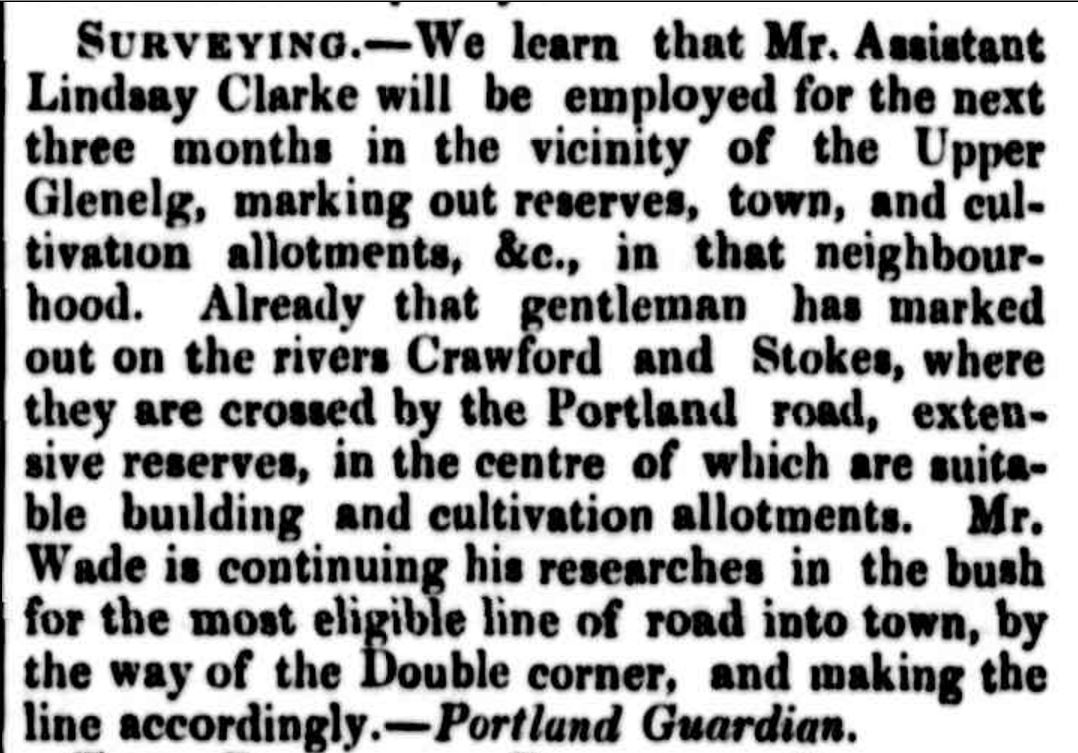
Lindsay CLARKE – Died 16 October 1891 at Portland.  Lindsay Clarke was born in Ireland in 1818 and at the age of sixteen began training as a surveyor.  He arrived in Sydney sometime after 1845 and Portland in 1848.  Lindsay’s role in Portland was as Assistant Government Surveyor.  By 1851, he had done much surveying around Portland and further north.

"PORTLAND BAY." The Cornwall Chronicle (Launceston, Tas. : 1835 - 1880) 15 Jan 1851: 26. .

“PORTLAND BAY.” The Cornwall Chronicle (Launceston, Tas. : 1835 – 1880) 15 Jan 1851: 26. <http://nla.gov.au/nla.news-article65575510&gt;.

Lindsay was promoted to District Surveyor for Portland, Hamilton, and Ararat and spent some time residing in Ararat.  In 1873, Lindsay moved to Hamilton after the closure of the Lands Office there, and he remained there for six years until his retirement in 1879.

Lindsay Clarke was on the committee of the Portland Benevolent Asylum and Hospital and was in the role of President for ten consecutive years.  He was also a member of the Portland Borough Council and declined the Mayoral role when it was offered to him.  Another role was Justice of the Peace acting as Bailiff for the Western area.  He would attend Portland Court (below) every court day to fulfill his role as bailiff.


PORTLAND COURT HOUSE. Image courtesy of the J.T. Collins Collection, La Trobe Picture Collection, State Library of Victoria. http://handle.slv.vic.gov.au/10381/47642

PORTLAND COURT HOUSE. Image courtesy of the J.T. Collins Collection, La Trobe Picture Collection, State Library of Victoria. http://handle.slv.vic.gov.au/10381/47642

Lindsay was also Superintendent of the Sabbath School at the Church of England, a member of the Bowling Club; and Horticulture Society.

Mary MARSDEN – Died 9 October 1909 at Cobden. Mary Marsden was born around 1833 and arrived in Victoria in 1854, living in Ballarat for around thirty years. Around 1887, she and her husband Roger Hirst settled in the Timboon district.  In her last years, Mary and Roger moved to Cobden where Mary died in 1909.

Robert LAIDLAW – Died 28 October 1914 at Beulah.  Born in Scotland in 1831, Robert Laidlaw arrived at Portland in 1851.  He spent time around the diggings before purchasing Lake Roy station near Naracoorte, South Australia.  He sold that property during the 1880s and retired to Geelong.  Two of Robert’s brothers, Thomas and Walter, have been Passing Pioneers in the past.

Richard BARNES – Died October 1915 at Hamilton.  Richard Barnes was born in South Australia around 1852.  He arrived in Penshurst as a child and remained there throughout his life.   Richard was well-known around Penshurst through his community activities.  He was a founding member of the Penshurst P&A Society, a trustee of the racecourse and the recreation reserve. For six years he was  a Councillor with the Mt Rouse Shire (offices below)

PENSHURST SHIRE HALL. Image courtesy of the J.T. Collins Collection, La Trobe Picture Collection, State Library of Victoria. http://handle.slv.vic.gov.au/10381/233458

PENSHURST SHIRE HALL. Image courtesy of the J.T. Collins Collection, La Trobe Picture Collection, State Library of Victoria. http://handle.slv.vic.gov.au/10381/233458

Richard was also known as the “father” of the Penshurst Boxing Day Racing Club and was President of the club for fifteen years.

James Frederick HILL – Died October 1935 at Essendon.  James Hill was born in Portland in 1852 where his father was Principal of one of Portland’s National Schools.  As a young man, James left Portland and obtained a job with the Chief Secretary’s Department.  Despite leaving Portland, he was a regular back to the town of his birth and was well-known by all.

Henry William OSBORNE – Died 20 October 1936 at Malvern.  Henry Osborne was born in 1865 near Amhurst in Central Victoria.  After a couple of newspaper jobs, Henry moved to Warrnambool working as a junior reporter for the Warrnambool Standard in 1886.  He was appointed Shire of Warrnambool secretary in 1898 and held that role for six years before resigning to take up the role of General Manager of the Western District Co-operative and Insurance Ltd.  The company grew under Henry’s management and his job also took him overseas.  In 1920, the Federal Government sent him overseas to negotiate the sale of Australia’s surplus butter.  He was selected to advise the Australian delegation at the Ottawa conference in 1932 and was a member of the Australian Dairy Producers’ Board.   There is an entry for Henry Osborne in the Australian Dictionary of Biography

John James KENNEDY – Died 20 October 1939 at Bridgewater.  The Kennedy family were early settlers at Bridgewater and John Kennedy spent his childhood days roaming the hills surrounding Bridgewater Bay and running on the sandy beach.

132 (2)

BRIDGEWATER BAY

John was born at Bridgewater around 1861 to James Kennedy and Margaret Lennan, and he lived there, following farming pursuits, for his entire seventy-eight years.  In 1939, three family members died at the Kennedy homestead on Blowholes Road overlooking the bay.  Along with John on 20 October, his brother Daniel died on 8 April and an aunt, Frances Ann Kennedy on 21 November.  More information about the Kennedy family and their homestead, now in ruins, is available on the link – Kennedy Family Bridgewater


Passing of the Pioneers

A small group of Western District pioneers join Passing of the Pioneers this month.  Among them are immigrants from Scotland, England, and Canada, and, as usual, each has an interesting story. Their names have now been added to the Western District Families Pioneer Obituary Index.

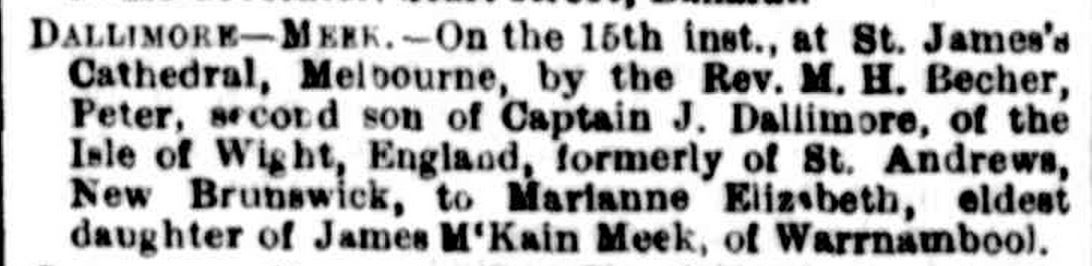
Peter DALLIMORE – Died September 1901 at Warrnambool.  Peter Dallimore was born in New Brunswick, Canada around 1842.  His father Captain Joseph Dallimore was born at the Isle of Wight in 1805.  He went to North America and married Mary Smith of Philadelphia.  They settled at St. Andrews in Charlotte County, New Brunswick, Canada where Peter was born in 1842.  In 1850, Mary Smith died.  Peter arrived in Australia and went to the Warrnambool district in the late 1860s.  He married Marianne Meek on 15 March 1870 at St. James Cathedral in Melbourne.

"Family Notices." The Argus (Melbourne, Vic. : 1848 - 1957) 19 Mar 1870: .

“Family Notices.” The Argus (Melbourne, Vic. : 1848 – 1957) 19 Mar 1870: <http://nla.gov.au/nla.news-article5815488&gt;.

Peter set up a wool-scouring business on the banks of Lake Gillear near Allansford.

 "[No heading]." Hamilton Spectator (Vic. : 1870 - 1873; 1914 - 1918) 21 Dec 1870: 1. .


“[No heading].” Hamilton Spectator (Vic. : 1870 – 1873; 1914 – 1918) 21 Dec 1870: 1. <http://nla.gov.au/nla.news-page22231123&gt;.


In 1876, father  Joseph Dallimore arrived in Victoria aboard the Macduff.  He died at Warrnambool in 1878 and was buried at the Warrnambool Cemetery.

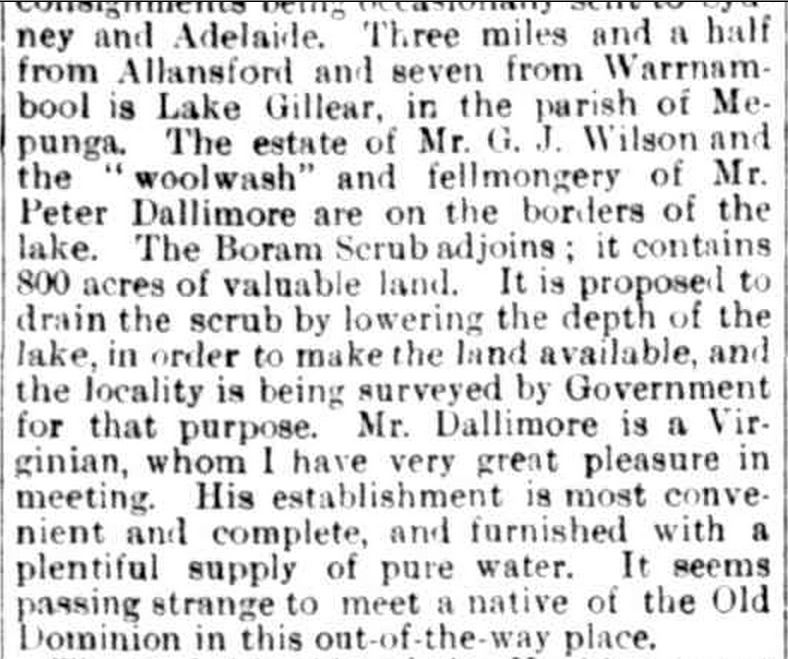
In 1884, when journalist The Vagabond was touring Victoria, he called in on Peter Dallimore.  I  feel that he may have crossed his wires, thinking Peter was a “native of the Old Dominion”…Virginia. Peter was from Charlotte County in New Brunswick in Canada.  There is also a Charlotte County and a Brunswick in Virginia and no doubt Peter had a North American accent further confusing The Vagabond.

"PICTURESQUE VICTORIA." The Australasian (Melbourne, Vic. : 1864 - 1946) 10 Jan 1885: 43. .

“PICTURESQUE VICTORIA.” The Australasian (Melbourne, Vic. : 1864 – 1946) 10 Jan 1885: 43. <http://nla.gov.au/nla.news-article137597580&gt;.

Peter Dallimore was buried in the Warrnambool Cemetery with his father and wife.  I have the Cemeteries of the S.W. USB that includes the Warrnambool Cemetery and a photo of the Dallimore headstone.  It is very informative and includes a memorial to Peter’s mother and all dates and places of birth.

George MARRINER – Died 7 September 1911 at Colac.  George Marriner was born in Fulham, London around 1833 and arrived in Australia around 1857. George was a nurseryman and established the Fulham Nursery in Colac.  He was also a founding member of the Colac I.O.O.F. In 1908, George’s wife Elizabeth was sitting by the fire in their home when her clothing caught alight.  George, in his mid-seventies, returned to the room and tried to douse the flames but to no avail.  Elizabeth died from her burns.  At the time of George’s death, he had three sons and a daughter.

Thomas STAINSBY – Died 26 September 1914 at Warrnambool.  Thomas Stainsby was born in Melbourne in 1848.  He went to Warrnambool and worked as a bootmaker and lived on Raglan Parade.  Thomas took a keen interest in all sports in Warrnambool but cycling and pedestrianism were his preferred sports and he was a handicapper for both.  He was also a sergeant in the Volunteer Militia and was involved with the Church of England men’s society.  Thomas had a shop in Fairy Street, Warrnambool, and rode his bike each day from his home in Raglan Parade.  On the morning of his death, he rode to work as usual but on his return home around lunchtime, he collapsed off the bike and died soon after.  As two of Thomas’ sons were members of the Warrnambool Brass Band, the band did not play at the Saturday afternoon football or the evening pictures on the day of Thomas’ death.

Ellen MAY – Died 27 September 1914 at Ecklin South.  Ellen May was born in Berkshire in 1834.   She arrived in Australia in 1857 aboard the Sir William Fyre and in 1860 she married George Rodgers at Ballarat.  Their first child was born at Smythesdale in 1861.  During the early years of their marriage, George tried gold mining around the Haddon area and operated a grocers at Speciman Hill.  Eventually, they selected land in the Heytesbury forest, near Cobden and named their property Sunny Banks.  Ellen and George had seven children and one of those, Ellen Matilda Rodgers married my 1st cousin 4 x removed, Arthur John Harman, in 1891.  Arthur was a son of Jonathan Harman.

John Hutchinson MURRAY – Died 23 September 1935 at Glenthompson.  John Murray was born at Brighton in 1873 to William Murray and Harriett Hutchinson.  William Murray was the owner of Brie Brie near Glenthompson and had resided there since 1869, breeding fine Merino sheep.  When John was twenty-two, he built a golf course at Brie Brie, after playing the game in Scotland. It was one of the first private golf courses in Victoria.

John Murray was also a keen student of Australian History and had many books on the subject.  He was also interested in the history of Brie Brie with Sir Thomas Mitchell having passed over the same land while exploring Western Victoria in 1836.  In 1909, when that part of Brie Brie was sold off, John removed a tree that one of  Mitchell’s party had marked.  He was concerned bushfires would eventually destroy the tree and history would be lost.  He donated the trunk to the town of Hamilton as a public memorial.  The trunk was positioned in the Hamilton Botanic Gardens with a pair of whale bones.  The display was removed in 1984.  John was buried in the private cemetery at Brie Brie along with his parents and other owners of the property.  More about the Major Mitchell tree trunk is on the following links:      http://nla.gov.au/nla.news-article10702602     http://vhd.heritagecouncil.vic.gov.au/places/1871/download-report

James Patrick DEVLIN – Died 4 September 1942 at Portland.  James Devlin was born at Cape Bridgewater in 1858.  He first worked for John Thomas Edgar at Kadnook near Harrow, then moved to Edgar’s station Thackaringa near Broken Hill.  At Broken Hill, James caught the mining bug and prospected first at Broken Hill and then Kalgoorlie where he spent thirty years.  He was manager of several different mining ventures while in Kalgoorlie.  James was also associated with Sir Sidney Kidman, possibly during their time in Broken Hill, and was good friends with Thomas Browne aka Rolf Boldrewood, author of “Robbery Under Arms”.  In 1891, James married a Portland girl Kate Duffy and they had two children.  In 1908, James returned to Portland residing in a property at North Portland until his death.

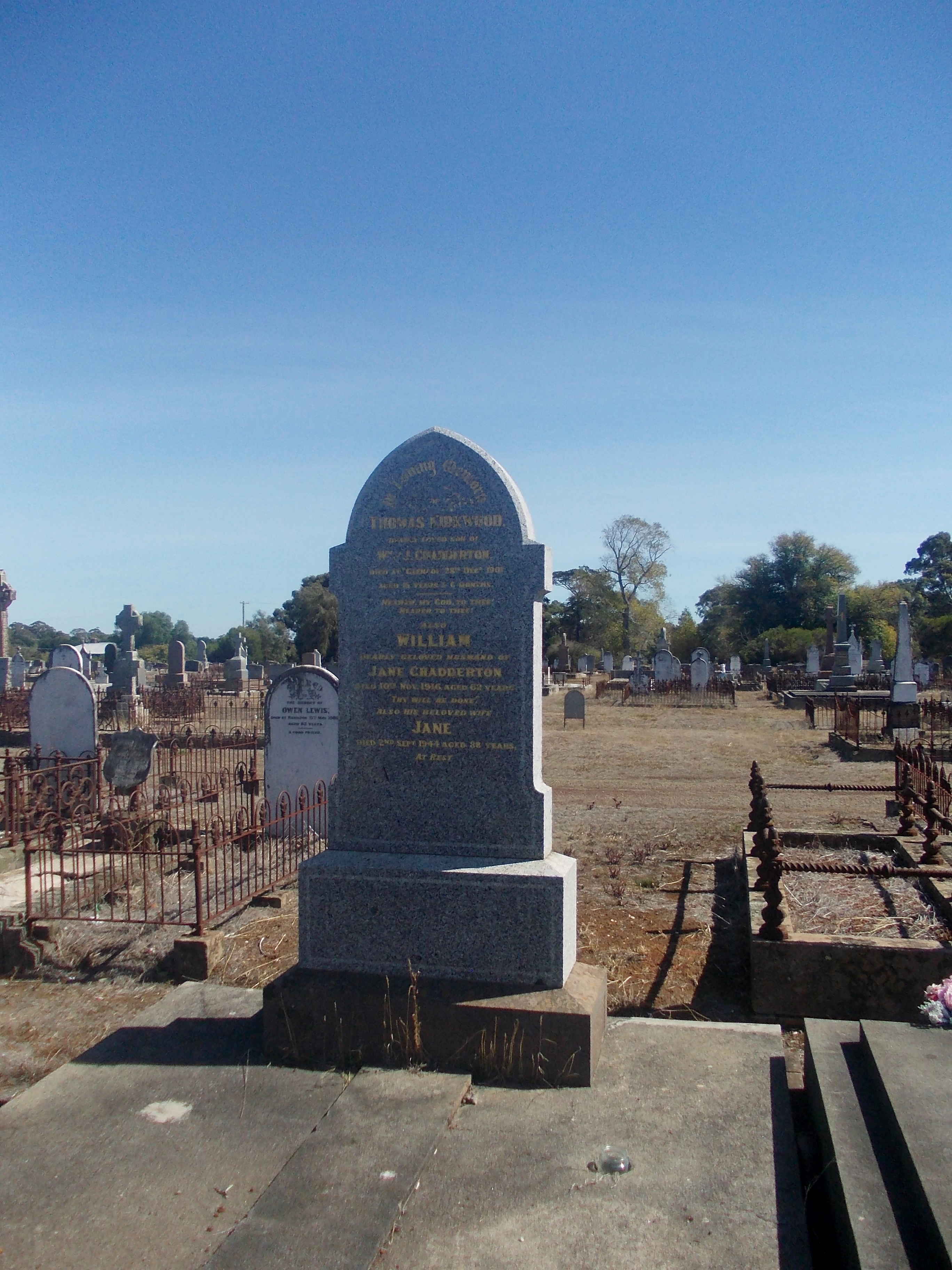
Jane KIRKWOOD – Died 2 September 1944 at Hamilton.  Jane Kirkwood was born at Hamilton in 1856, the daughter of  Scottish immigrants, William Kirkwood and Jane O’May.  The Kirkwoods lived at Buckley Swamp.  In 1885, Jane married William Chadderton and they settled at Glencoe near Bochara.  William was a renowned breeder of Jersey cattle.  After William’s death in 1916, Jane moved into Hamilton to live until her death in 1944.  She was buried at the Hamilton Old Cemetery.

Kirkwood4

GRAVE OF JANE CHADDERTON (nee KIRKWOOD), HAMILTON OLD CEMETERY


Jessie Cairns SPALDING – Died 25 September 1944 at Cobden.  Jessie Spalding was born in Scotland in 1861.  As a baby, she travelled with her parents to Australia, arriving at Geelong.  They then went on to the Ballarat diggings.  From her time at Ballarat, Jessie recalled the visit from the Duke of Edinburgh in 1867 as depicted in the engraving below.

Samuel Calvert, engraver. Image Courtesy of the State Library of Victoria. http://handle.slv.vic.gov.au/10381/235332

Samuel Calvert, engraver. Image Courtesy of the State Library of Victoria. http://handle.slv.vic.gov.au/10381/235332

When Jessie was eighteen, she moved to Camperdown where she met Thomas Fletcher.  They married and raised a family of ten children.  One son was killed fighting during WW1.  At the time of her death, Jessie had thirty-five grandchildren and forty great-grandchildren.

Passing of the Pioneers

August Passing of the Pioneers includes a member of the Victorian Parliament, a publican, and a school principal.  All of this month’s pioneers are now on the Western District Families Pioneer Obituary Index.

Robert HEANEY – Died 20 August, 1890 at Melbourne. Robert Heaney was born in Ireland around 1836.  He married Jane Armstrong and soon after they departed for Australia. The Heaneys arrived on the General Hewitt at Portland Harbour on 9 October 1856.  They spent the first ten years in Victoria at Heywood before moving to Condah Swap, later known as Wallacedale.

Mary Ann COUGHLAN – Died August 1917 at Caramut. Margaret Coughlan was born around 1833 and arrived at Portland on 21 January 1848 aboard the Sir Edward Parry with her siblings to meet up with their parents Jonathan Gordon Coughlan and Jane Richmond who settled in that town.  After some years, during a trip to Caramut, she met John Bendall and they married in 1864.  John was the manager of Hopkins Hill and The Gums, near Caramut for John Moffatt.  After the sale of The Gums, John Bendall operated a store and post office in Caramut until his death in 1887.  Mary Ann remained living at Caramut and was eighty-four at the time of her death.  She left two sons and two daughters.

John THOMSON – Died 3 August 1917 at Melbourne.  John Thomson was born at Warrambeen Station near Shelford in 1853.  His parents were James Thomson and Christian Armstrong.  In 1870,  James Thomson purchased Monivae near Hamilton from the deceased estate of former Police Magistrate Acheson Ffrench.  The family resided in the original homestead built for Acheson Ffrench but a new homestead was completed in 1877.

MONIVAE 1966. Image Couresy of the J.T. Collins Collection, La Trobe Picture Collection, State Library of Victoria. Image no. H97.250/44 http://handle.slv.vic.gov.au/10381/230077

MONIVAE 1966. Image Couresy of the J.T. Collins Collection, La Trobe Picture Collection, State Library of Victoria. Image no. H97.250/44 http://handle.slv.vic.gov.au/10381/230077

John attended Scotch College in Melbourne where he was one of the college’s finest athletes.  After he completed his schooling, John returned to Monivae. Soon after he entered public life, first as a Dundas Shire Councillor.  In 1892 he contested the seat of Dundas in the Victorian State Parliament.  He held the seat from 1892 to 1900 and from 1902 to 1914.  At the age of fifty-six, in 1909 John married Christina Robertson.

Aside from his political life, John was on the management committee of the St Andrews Presbyterian Church and member and onetime president of the Hamilton Racing Club.  He was also a supporter of many of Hamilton’s community and sporting groups, including the P&A Society, the Hamilton Pipe Band and the fire brigade.  John Thomson was attending a public school football match in Melbourne on 3 August 1917, when he died suddenly.  He was buried at the Hamilton Old Cemetery.

In 1919, a fountain was unveiled in the Hamilton Botanic Gardens by the then Victorian Premier, Harry Lawson in memory of John Thomson


022


William DERHAM – Died 16 August 1918 at Port Fairy.  William Derharm was born in County Tyrone, Ireland and arrived in Victoria around 1863.  He first worked at Korongah Station at Rosebrook for Messers Lydiard and Knight. He then turned to onion growing and resided at Korongah Lodge. William left four daughters and two sons.

Robert FRASER – Died 4 August 1918 at Strathkellar.  Robert Fraser was born in Scotland in 1841 and arrived in Adelaide in 1854 on the Joseph Rowan with his parents Archibald and Helen Fraser and his four sisters.  They soon headed for Victoria and resided at Bochara.  In 1865, Robert married Jane Mason and they settled and farmed at Muddy Creek.  Robert died at the home of his daughter at Strathkellar and was buried at the Hamilton Old Cemetery.  Jane died only a few weeks before.

Francis Hazel WRIGHT – Died 18 August 1918 at Hamilton. Francis Wright was born at Broadwater around 1865.  He took up the running of the Grange Hotel (later called George Hotel) in Hamilton around 1914. He was involved with many Hamilton sporting clubs and the gun club.  For thirty years he was part of the Victorian Land’s Department rabbit extirpation branch and served as an inspector for the last five years of his life.  Three weeks before his death, Frank broke his kneecap while climbing into his buggy.  He then contracted pneumonia and died.

Christina Ross LINTON – Died August 1926 at Hamilton.  Born at Inverness, Scotland in 1848, Christina came to Victoria with her parents William Linton and Jean Sinclair and her younger brother John around 1851 aboard the Statesman.  William gave his occupation as shepherd.  In 1868, Christina married Thomas Laidlaw at Wickliffe.  Christina and Thomas moved around between properties, Thomas had interests in and their first stop was Lake Roy in South Australia.  They also lived at Glenburnie, Macarthur, South Wonwondah Station and finally Glencairn just south of Hamilton.

Christina was buried in the Laidlaw family plot at the Hamilton Old Cemetery.


laidlaw6


Rose Hannah HANN – Died 18 August 1935 at Portland.  Rose Hann was born in Somersetshire in 1850 to Paul Hann and Asenath Pitman.  The family arrived at Melbourne in 1852 aboard the Priam and stayed in the area for a time, before travelling to Portland to settle.  Around 1871, Rose married John Marshall.  Early in their marriage, they spent some time at the Bendigo diggings but most of their lives, Rose and John lived at Portland.  They raised a family of eleven  children.
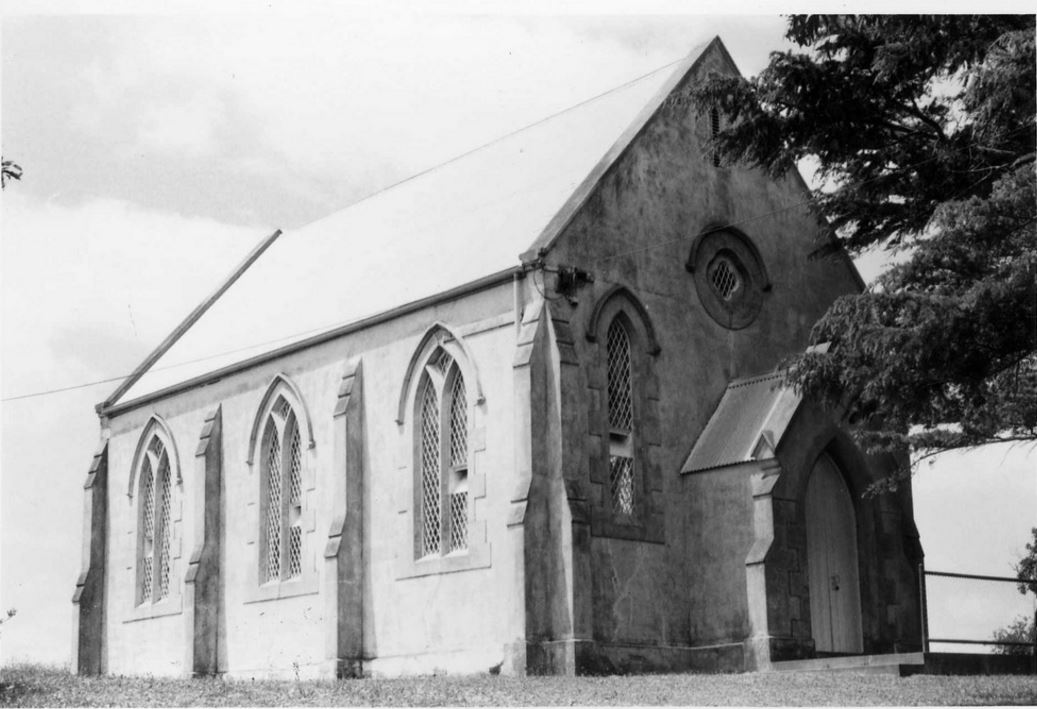
Clara Jex EDRICH – Died August 1937 at Portland.  Clara Edrich was born at Portland in 1855 to Richard Jex Edrich and Eliza Martin and was baptised at St Stephens Church.  In 1877, Clara married John Guy at St Stephens Church, Portland by the Reverend Allnutt.

St Stephens Church, Portland

ST STEPHEN’S CHURCH, PORTLAND

After a year of marriage they took up residence in Barclay Street, Portland, the birthplace of eight of Clara and John’s nine children and where Clara died in 1937.  John passed away four years before Clara.

Mary Arabella “Minnie” HISCOCK – Died 29 August 1941 at Hotspur.  Mary Hiscock, born in 1859 at Hotspur, was the daughter of James Hiscock and Mary Cobb and was known as Minnie. After her birth, the Hiscocks moved to Lower Crawford and Minnie remained there until she was fifty-eight in 1917 when she returned to Hotspur.   In her younger years, Minnie was known as a fine horsewoman and would ride around the countryside to attend balls and other social gatherings.  When she was seven, she rode with her father from Hotspur to Birregurra east of Colac, a distance of around 235 kilometers which took three days. Minnie never married.

Florence Helena LAIDLAW – Died 26 August 1944 at Malvern.  Florence Laidlaw was born at Port Fairy in  1858 to David Laidlaw and Eliza Fraser.  Although Florence was born at Port Fairy, where her grandparents William and Agnes Laidlaw lived, David and Eliza Laidlaw resided in Hamilton where David was a saddler.  David Laidlaw quickly rose to prominence in the Hamilton district and went on to serve five terms as Mayor of the town.  In 1873, David laid the foundation stone for the Alexandra Ladies’ College in Hamilton, of which he was one of the founders.

"TELEGRAPHIC DESPATCHES." The Argus (Melbourne, Vic. : 1848 - 1957) 11 Nov .

“TELEGRAPHIC DESPATCHES.” The Argus (Melbourne, Vic. : 1848 – 1957) 11 Nov <http://nla.gov.au/nla.news-article5875156&gt;.

Florence Laidlaw attended Alexandra Ladies’ College and later became the headmistress.

THE FORMER ALEXANDRA LADIES COLLEGE

THE FORMER ALEXANDRA LADIES’ COLLEGE

On 29 December 1917, the Weekly Times reported on a trip Florence was making to Sydney to stay with her sister and mentioned she was the headmistress at Alexandra College.  However, she appears to have retired soon after.  On 25 July 1919, the Horsham Times reported that Florence was intending to visit Japan with Edith Lansell, daughter of George Lansell of Fortuna, Bendigo. After her return from overseas, Florence moved to South Yarra.

Passing of the Pioneers

It’s four years this month since Passing of the Pioneers began.  Starting out with the Portland Guardian, Horsham Times and the Camperdown Chronicle, the number of newspapers at Trove from which I can now draw obituaries has increased considerably.  This month, it is with great pleasure that I am able to post my first obituary from the newly digitised Hamilton Spectator (1870-1879).  It wasn’t a Hamilton person, rather Thomas Anderson of Portland, with his death reported on by the Spec correspondent.  It’s also the first Passing of the Pioneers with the blog’s new layout.

There are a further fifteen pioneer obituaries included in this post and once again, the stories that come with them are good reading.  The July pioneers have been added to the Western District Families Pioneer Obituary Index taking the total number to 566.

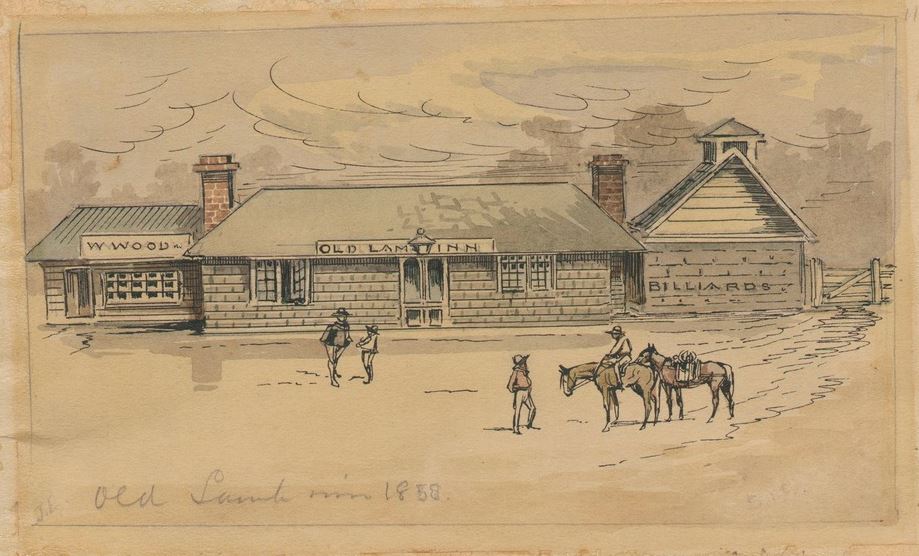
Thomas ANDERSON:  Died 12 July 1870 at Portland.  Thomas Anderson, born about 1805, was an early arrival in the colony with the Hamilton Spectator correspondent believing in 1870 he was the oldest colonist in Portland other than the Hentys.  Prior to moving to Portland, Thomas ran the Old Lamb Inn, Collins Street, Melbourne around 1840 to 1843 as reported in the Spectator of 13 July 1870.

OLD LAMB INN c1858 by George McRae, Image courtesy of the State Library of Victoria.  Image no. H36480  http://handle.slv.vic.gov.au/10381/274274

OLD LAMB INN c1858 by George McRae, Image courtesy of the State Library of Victoria. Image no. H36480 http://handle.slv.vic.gov.au/10381/274274

Thomas’ funeral procession was described on 16 July 1870, as “one of the largest…which has been witnessed in this district”.  Present were magistrates, bankers, the President of the local shire, the Mayor of the Borough of Portland, and “…every class of the community, in carriages, on horseback and on foot, from every part of the district…”.

Jane LAMB:  Died 1 July 1890 at Heywood.   Jane Lamb’s obituary brings together three generations of pioneer obituaries for the Steven family, with Jane joining her daughter Johanna Steven and granddaughter Isabella Reid on the Western District Family Pioneer Obituary Index. I have found with this family they were often listed as both Steven and Stevens. In Jane’s obituary, it was Stevens, however, I do think it is Steven.  Jane married Robert Steven/s in Scotland and they travelled to Victoria with their family.  Robert ran a bakery and confectionary shop in Julia Street and later owned “Wee Station”, as it was known locally, a small property at South Portland.  Robert passed away seven years before Jane.

Robert DONELAN:  Died 25 July 1901 at Karabeal.  Robert Donelan was born in Galway, Ireland around 1833.  He arrived in Victoria to live with his uncle, Hamilton’s first Police Magistrate, Acheson Ffrench of Monivae Estate near Hamilton.  Robert’s obituary said his family appeared in Burke’s Landed Gentry of Ireland.  Indeed, they did, the 1912 edition, for example, sees the Donelan family of Killagh, Galway on page 196.  More information about Killagh with photos is on the following link – Killagh House.

Robert married Bridget Lalley in 1863 and around 1870 they started the Karabeal Inn on the Cavendish/Dunkeld Road.  The couple had ten children, however, not all survived. There is a sad reminder, a couple of kilometres south of Cavendish.  It is the site of the lone graves of two of Robert and Bridget’s children, Eliza and Viola, both dying at age one, Eliza in 1875 and Viola in 1886. A photo of the grave is on the Victorian Heritage Database website.  Robert also sat on the Shire of Dundas and at one stage put his name up for candidature in the Victorian Parliament but later withdrew it.

James SMITH: Died 5 July 1914 at Bringlebert South.  Born in Wiltshire, England around 1833,  James Smith arrived in Victoria aboard the Ugiauah and apparently was one of the last of the early Henty employees to pass.  James spent time at the diggings and then carrying goods along the Portland Road. Then he lived at Sandford before eventually settling at Apsley.  A further obituary is available on the link http://nla.gov.au/nla.news-article129451701.  More about the Smith family is available on theGlenelg & Wannon Settlers & Settlement website 

William Grange HEAZLEWOOD:  Died 10 July 1914 at Portland.  William Heazlewood, it was said, was the first European child born at The Grange (Hamilton) at the time of his birth in 1844.  His father Robert Heazlewood had a blacksmith shop by the banks of the Grange Burn, that ran through the settlement of The Grange.  The map, below, from the interpretative sign at the site of The Grange in Digby Road Hamilton, shows the “Smithy” shop next to Blastock’s Grange Inn to the right.

097 (2)

MAP OF THE GRANGE. Interpretive board, Digby Road Hamilton.

099 (2)

After a few years, the Heazlewood family moved to Portland.  When old enough,  William began a printing apprenticeship with the Portland Guardian.  In 1864, he married Miss G.M.Richards who arrived in Portland ten years earlier aboard the Nestor. William was for a time the Portland pound keeper and was a member of the Sons of Temperance.  He purchased a property, Cherry Grove, in North Portland a planted a large orchard.  He remained on the property until around 1910.  William passed away after collapsing while walking along Henty Street, Portland.

Francis Thomas BEGLIN:  Died 11 July 1914 at Portland.  Frances Beglin died after collapsing while helping to unload the cargo from the SS Casino.   Born about 1849 in Portland, Francis was a cornet player with the Portland Band and was a member of the Portland Battery Garrison Artillery.

SS CASINO.  Image Courtesy of the State Library of Victoria.  Image no. H92.302/23 http://handle.slv.vic.gov.au/10381/195620

SS CASINO. Image Courtesy of the State Library of Victoria. Image no. H92.302/23 http://handle.slv.vic.gov.au/10381/195620

James William PASCOE: Died July 1917 at Terang.  James Pascoe was ninety-eight years and six months old when he passed away in 1917 and he did a lot during that time.  Born in Cornwall in 1819, he worked as a farm hand as a boy then in the Cornish mines.  Word of gold discoveries in Victoria reached Cornwall, and James and a group of other men travelled to the Victorian goldfields, landing at Geelong in 1852 and then travelling on to Castlemaine. James then went on to Ballarat and was there at the time of the Eureka uprising in 1854.

James discovered work as a carrier was more lucrative than looking for gold, and he starting carrying goods from Melbourne to the Bendigo goldfields.  He then settled at Creswick long enough to operate a store there, Pascoe and Thomas.  Next he returned home to Cornwall before going back to the Creswick district and operating a hotel and general store at Newlyn. Around 1887, James moved south to a bush block at Glenfyne, until the early 1890s when he moved to Terang for the last twenty-five years of his life.  That was the most settled period of his life.

James DOWNEY:  Died 13 July 1918 at Koroit. James Downey was born in Tipperary, Ireland around 1822 and arrived in Victoria in 1853.  He settled  in Koroit where he remained for the next sixty-five years.  During his life, James went from a farm labourer to a rich landowner, but he never forgot where he came from.  He enjoyed mixing with his employees and lending a hand when needed.  James married Margaret Moloney in 1864 and they had seven children.  James was a devout Catholic and was a charitable community member.
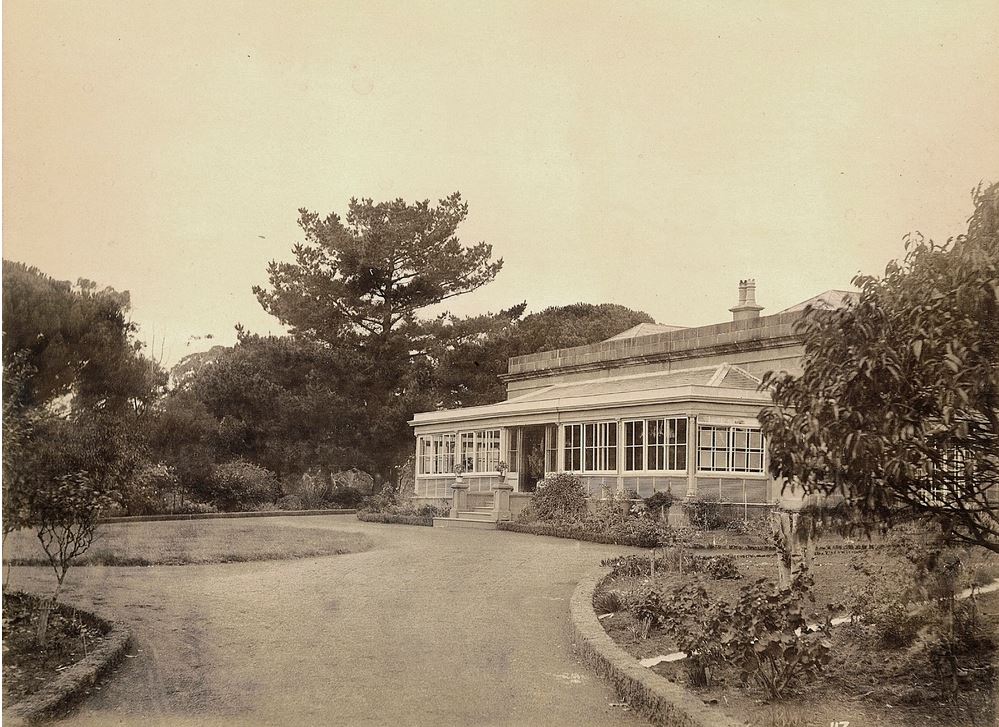
John FLETCHER:  Died 31 July 1918 at Branxholme.  John Fletcher was born around 1842 in Scotland and arrived in Portland as a child of eleven.  He married in 1867 and he and his wife had eleven children.  John worked as a station manager, managing well-known properties including Ardachy, Mundarra and Straun and was considered a fine judge of livestock and an expert on Merino sheep.

mundara

MUNDARRA WOOLSHED. Image courtesy of the J.T. Collins Collection, La Trobe Picture Collection, State Library of Victoria. Image no. H95.200/1079 http://handle.slv.vic.gov.au/10381/230709

William WILSON: Died July 1924 at Geelong.  William Wilson was born in Somersetshire in 1833.  He married in the early 1850s to Jane Clements and in 1855 they sailed to Australia arriving in Geelong.  The couple’s eldest three children were born in Geelong before the family moved to Ballarat hoping for some luck with gold prospecting.  A further eight children were born during their time in Ballarat.  By 1874, William had a selected land in the Heytesbury Forest at Scott’s Creek.  In the early 1880s, William moved into Camperdown, although he did keep his property at Scott’s Creek.  While in Camperdown, he ran a business in Manifold Street.  William was ninety-one at the time of his death.  Jane passed away around twenty-five years before him.

John CROMRIE:  Died 16 July 1927 at Warrnambool.  John Cromrie was born in Northern Ireland and first lived in Melbourne when he arrived in Victoria around 1860.  After about six years, he moved to Warrnambool and remained there sixty years until his death.  He first ran a saddlery business and then moved into coachbuilding.  He was in partnership with Mr A. Purcell and they operated from a large premises in Liebig Street.  John was also the oldest member of the St. John’s Presbyterian Church committee.  He was a widower of around forty years and had a family of five children still remaining at the time of his death.

WARRNAMBOOL PRESBYTERIAN CHURCH 1903.  Photographer Joseph Jordan.  Image Courtesy of the State Library of Victoria.  Image no. H96.160/837   http://handle.slv.vic.gov.au/10381/53807

WARRNAMBOOL PRESBYTERIAN CHURCH 1903. Photographer Joseph Jordan. Image Courtesy of the State Library of Victoria. Image no. H96.160/837

Jane WILSON:  Died 15 July 1934 at Ascot Vale.  Jane Wilson was born in Ballarat in 1860 and was the daughter of William Wilson (above).  After her marriage, Jane lived in Terang for around forty years before moving to Melbourne about 1920.  In 1885, Jane married John George Boyes.  John died in 1902 and Jane raised their three children alone.

Matthew Charles RHOOK:  Died July 1936 at Hamilton.  Matthew Rhook was born at Narrawong in 1854.  His first job was for George Lamb, a Portland butcher and he then worked at various large properties around the Portland and Port Fairy district.  He also spent time gold prospecting in Northern Victoria.  Matthew married Elizabeth Jane Quick in 1878.  They eventually made their way to Hamilton, settling in Eversley Street.  At the time of WW1, two of Matthew and Elizabeth’s sons, Archie and Harry, enlisted.  Harry was killed overseas while Archie returned home.  A profile for Archie Rhook is available on the Hamilton’s WW1 pages.

Angus Stuart REID:  Died 22 July 1937 at Camperdown.  Angus Reid was the son of Stuart Reid and Jessie Craig and was born at Eddington in 1878.  He attended school at Geelong Grammar before working in the mercantile business in Melbourne.  He returned to Eddington to take up the running of the station

EDDINGTON HOMESTEAD, Image courtesy of the J.T. Collins Collection, La Trobe Picture Collection, State Library of Victoria. http://handle.slv.vic.gov.au/10381/216810

EDDINGTON HOMESTEAD, Image courtesy of the J.T. Collins Collection, La Trobe Picture Collection, State Library of Victoria. http://handle.slv.vic.gov.au/10381/216810

In 1916, Angus married Irene Thomson of Hawthorn.

 Weekly Times (Vic. : 1914 - 1918) 8 Jul 1916: 10.  .

Weekly Times (Vic. : 1914 – 1918) 8 Jul 1916: 10. <http://nla.gov.au/nla.news-page13616253&gt;.

In 1918, Stuart Reid and in 1923, Angus’ mother Jessie died.  After the death of his mother, Angus bought out the beneficiaries of her estate, thus owning Eddington outright.  He sold the property in 1931.  Angus’ obituary has a lot of information about the lives of his parents.

Henry HAMMOND: Died 4 July 1941 at Cobden.  Henry Hammond was born in Dandenong around 1859 and during his life he travelled widely throughout Australia from Queensland to Western Australia.  However, in the early 1890s, Henry settled down at Cobden.  He carried timber using his bullock team for construction of the Cobden Pioneer Butter Factory.  He also did fencing for the Heytesbury Shire and ran a butcher shop.  Henry’s wife died around twelve years before him.

Fanny Lea PICKEN: Died 9 July 1941 at Camperdown. Fanny Picken was born in Geelong around 1856 and was the last remaining child of James Picken, a Camperdown legal practitioner.  Fanny never married and devoted much of her time to the St. Paul’s Church of England choir.  Fanny and her sister were members of the choir for many years.

ST. PAULS CHURCH OF ENGLAND, CAMPERDOWN.  Image Courtesy of the  J.T. Collins Collection, La Trobe Picture Collection, State Library of Victoria http://handle.slv.vic.gov.au/10381/216509

ST. PAULS CHURCH OF ENGLAND, CAMPERDOWN. Image Courtesy of the J.T. Collins Collection, La Trobe Picture Collection, State Library of Victoria http://handle.slv.vic.gov.au/10381/216509

Thomas WEBB: Died  19 July 1943 at Cobden.  Thomas Webb took his first steps while sailing with his parents from England to Australia.  He was born in Birmingham around 1869. Thomas was the local Cobden undertaker for forty-four years as well as blacksmith and wheelwright.  In addition to his role as secretary of the Cemetery for many years, he was also a Justice of the Peace and a past Master of the Cobden Freemason’s Lodge.  He also was a regular at the local football.  Thomas’ wife died only a month before him.  They had no children, although there was an adopted son who was missing in action while serving during WW2.

New Pioneer Index

Now it’s even easier to find your Western District pioneer’s “Passing of the Pioneers” entry and obituary.  

The 550 pioneers that have been included in the “Passing of the Pioneers” posts over the last four years are now indexed.  If you navigate to the menu at the top of this page, you will notice a new tab, Pioneer Obituary Index.  Click directly there or navigate straight to the alphabetical listing of your pioneer.  Where possible, I have matched up husbands, wives, children and other relatives.

There hasn’t been a new “Passing of the Pioneers” post since January while I took time to prepare the index, but after reading back through the stories I can’t wait to get back to scanning the Western District newspapers at Trove for obituaries. Look out for a new post in July when “Passing of the Pioneers” will celebrate a fourth birthday, so expect a bumper edition.

While you’re in at the top of this page, why not check out “Hamilton’s WW1” tab.  There are now twenty-six Hamilton soldiers profiled in that section. I will continue to add profiles with an aim to add about three new profiles each week. Maybe by the centenary of the armistice, I will have come close to recording the hundreds of soldiers from Hamilton who volunteered their services.

Happy reading…

Passing of the Pioneers

Writing Passing of the Pioneers is becoming a longer process each month as I get drawn into the stories. I think it all began when I started searching for photos to compliment the obituaries, making the posts more visually appealing. That sometimes takes some extra searching and other information arises that is just too good to let pass.

For the January Passing Pioneers, there is Sarah McDonald one of those pioneering women I read about and think “Wow.” Also another member of the Laidlaw family, a Hamilton publican and a man who had the unenviable task of being called as a witness in a Casterton murder case.

David Wemyss GALLIE: Died 12 January 1868 at Portland. From the first reading of his obituary, David Gallie was simply the long-time bank manager of The Bank of Australasia in Portland. But digging up a bit more about him unearthed some interesting family links.

From the Australian Death Index at Ancestry I discovered David was the son of Hugh and Robina Gallie and was born around 1813. The earliest record I could find of him in Australia was again at Ancestry and the  New South Wales, Australia, Returns of the Colony, 1822-1857.  David was working as a clerk in the Surveyor General’s office.

In 1840, David’s sister, Anna Maria married Edward Henty of Portland at St James Church in Melbourne.

“Family Notices.” The Cornwall Chronicle (Launceston, Tas. : 1835 – 1880) 14 Nov 1840: 2. Web. 27 Jan 2015 .

David Wemyss Gallie himself married in 1842 to Elizabeth Francis Gordon in Launceston.  Elizabeth was the daughter of Captain Donald McArthur.

Family Notices. (1842, June 9). Launceston Advertiser (Tas. : 1829 - 1846), p. 3. Retrieved January 27, 2015, from http://nla.gov.au/nla.news-article84771074

Family Notices. (1842, June 9). Launceston Advertiser (Tas. : 1829 – 1846), p. 3. Retrieved January 27, 2015, from http://nla.gov.au/nla.news-article84771074

Just for interest’s sake, I Googled the said Captain and found a great site called the Telford Family of Ellinbank. The site includes the McArthur family and from there I discovered Elizabeth’s mother. Elizabeth Wemyss. That name was familiar. Of course, Wemyss was David Gallie’s middle name.  What? Yes, David was related to his new bride. In fact, David and Elizabeth were cousins with their mothers, Elizabeth and Robina sisters.

At some point, David began working for the Bank of Australasia, and in 1846, he and Elizabeth travelled to Portland on the Minverva accompanied by David’s brother-in-law Edward Henty. This was possibly the time David took up his position as the manager of Portland’s Bank of Australasia.

“Shipping Intelligence.” Colonial Times (Hobart, Tas. : 1828 – 1857) 2 Jun 1846: 2. Web. 27 Jan 2015 .

The Minerva was owned by the Henty Brothers and Captain Fawthrop her master. The Henty’s used the schooner to transport goods and sheep between the two colonies.

“Advertising.” Portland Guardian and Normanby General Advertiser (Vic. : 1842 – 1876) 24 Sep 1842: 1. Web. 5 Feb 2015 .

The funeral of David Gallie was well attended with “most of the principal gentlemen of the town and district” there to pay their respects. They included brother-in-law Edward Henty and his brother Stephen Henty.

“Family Notices.” Portland Guardian and Normanby General Advertiser (Vic. : 1842 – 1876) 30 Jan 1868: 6 Edition: EVENINGS. Web. 24 Jan 2015 .

William FOSTER: Died 12 January 1896 at Branxholme. William Foster was not as old as the usual pioneers listed here, but his sudden death at thirty-three years of age made headlines around the country. On Sunday 12 January 1896 William, a carpenter by trade, attended his local Church of England, along with his wife and elderly parents. During a hymn, William appeared to have fainted, but upon removing him from the church, he died.

George BAXTER: Died 8 January 1900 at Hamilton. George Baxter has links to two different branches of my family tree. The first was his role as a witness in the murder of the Hunts of Casterton in 1860.  My ggg grandmother, Mrs Margaret Diwell was also a witness in the trial.  George’s second link was via the Holmes family.  His daughter, Elizabeth Jane, married William Tyers Holmes, a brother of George Holmes, husband of my ggg aunt Julia Harman. Julia and Elizabeth both signed the Victorian Women’s Suffrage Petition at Casterton in 1891. For more information on George’s and his family, see the SW Pioneers site.

Adam TURNBULL: Died January 1905 at Coleraine. Adam Turnbull’s parents, Dr Adam Turnbull and Margaret Young travelled to Tasmania from Scotland in 1825 and Adam junior was born around 1827. In 1845, Adam’s father sent him to Victoria to oversee the purchase of the Mt Koroite and Dundas runs. Who accompanied him on that trip varies between the article below and Adam’s obituary, but it was either William Young, Adam’s uncle, or another member of the Young family, George.

“PASTORAL PIONEERS.” The Australasian (Melbourne, Vic. : 1864 – 1946) 17 Aug 1935: 4. Web. 25 Jan 2015 <http://nla.gov.au/nla.news-article141761090&gt;.

The company of Turnbull and Sons also purchased the Winninburn run, where Adam died in 1905. During his time in the district, Adam Turnbull jnr was the first president of the Shire of Wannon and was on the first committee of the St Andrew’s Presbyterian Church at Coleraine. His grandson, Sir Winton George Turnbull of the Country Party, was a member of the House of Representatives as the Federal member for the Wimmera.

THE TALL WHITE MONUMENT MARKS THE TURNBULL FAMILY GRAVE, COLERAINE CEMETERY

Edward WHITE: Died 20 January 1910 at Coleraine. Edward was born around 1837 and arrived in South Australia from Ireland around 1851. In the early 1860s, he moved to Victoria when the family took up the Den Hills run near Coleraine. Edward served on the roads board and was a worthy athlete during his younger years. His wife predeceased him and they had one son. There is more information about the White family on the SW Pioneers site.

Thomas LAIDLAW: Died 12 January 1915 at Macarthur. Thomas Laidlaw was born in Scotland in 1833 and arrived with his brother Robert to Victoria around 1851. He headed to Newlands Station near Harrow to work with his brother Walter Laidlaw,  a Passing of the Pioneers subject last month.  A description of Thomas’ arrival was in his obituary and that of his son Thomas Haliburton Laidlaw, a Passing Pioneer in September 2011.

“THE LATE MR. T. H. LAIDLAW.” Portland Guardian (Vic. : 1876 – 1953) 25 Sep 1941: 2 Edition: EVENING. Web. 5 Feb 2015 .

In 1857, Thomas married Grace McLeod of Wallan however Grace passed away in 1864 but not before five sons were born, including Thomas Haliburton. In 1868, Thomas married Christina Linton and they had a son and a daughter.   Thomas moved to South Australia to farm with his brother Robert before moving to Dunkeld and then Glenburnie at Macarthur. He then purchased South Wonwondah south of Horsham, living there for eighteen years before moving closer to Hamilton, residing at Glencairn.

Daniel Michael SCULLION: – Died 27 January 1915 at Hamilton. Daniel Scullion was born at Garvoc in 1868 to John Scullion and Janet McKeller. He appears to have ventured into the hotel business in his hometown as the licensee of the Yallock Inn which he still owned at the time of his death.  By then, Daniel had been in Hamilton around ten years, first operating the Hamilton Inn and then the Caledonian Hotel that still exists today.  In 1909, Daniel moved to Horsham and took on the license of the Wimmera Hotel. Within a couple of years, he had returned to Hamilton, resuming as licensee at the Caledonian Hotel.

In 1914, Daniel’s sister, Lilias Scullion, a nursing sister, purchased one of Hamilton’s most well-known buildings, St. Ronans, just up the hill from the Caledonian Hotel and previously owned by former Mayor David Laidlaw. Interestingly, the Victorian Heritage Database entry on St Ronans, a report prepared by the Southern Grampians Shire, does not list Sr. Scullion as a former owner. There is an interesting article about the opening of the Sr. Scullion’s hospital and the work that was required to make that possible, on the following link  http://nla.gov.au/nla.news-article119870490

“HAMILTON.” The Australasian (Melbourne, Vic. : 1864 – 1946) 2 May 1903: 27. Web. 25 Jan 2015 .

Daniel was a keen supporter of sport in Hamilton, particularly the North Hamilton Football Club and donated many trophies to the club.

Margaret MEAGHER: Died January 1918 at Port Fairy. A colonist of fifty-eight years, Margaret Meagher arrived in Melbourne with her husband James Prior in 1859 aboard the Sarah Dixon. Originally from Tipperary, Ireland, the Priors moved to Port Fairy the following year and remained there until their deaths. James died around 1911 and when she died, Margaret had two sons and three daughters remaining. Margaret was buried at the Port Fairy cemetery.

John COGHLAN: Died 8 January 1918 at Garvoc.  John Coghlan was an early native of the Colony of Victoria, born at Eastern Hill, Melbourne around 1841. His father, William Coghlan, was a landholder in Melbourne but sold his properties and moved to the Western District, taking up land at Port Fairy. The family next moved to Warrnambool, living at a property on the Merri River, and John’s father continued to farm. After his marriage to Miss Patton, John and his wife moved to Cooramook near Grassmere and then later on to Garvoc around 1878, purchasing the property Pine Hills where he engaged in dairy farming. According to the obituary, John did not live as long as his parents. His father William lived to ninety-seven while his mother apparently lived to 107. John was buried at the Terang Cemetery.

“BREVITIES.” Clarence and Richmond Examiner (Grafton, NSW : 1889 – 1915) 5 Nov 1907: .

John PETTINGILL: Died 23 January 1923 at Yambuk. John Pettingill was born in Suffolk, England around 1843.  When he was nine, he travelled with his parents to Portland aboard the Eliza. John’s father first worked at Castlemaddie Station at Narrawong, owned by Andrew Suter. Mr Suter moved to Yambuk Station and the Pettingill family went along.  When nearby St. Helens was surveyed around 1863, John and his father purchased 200 acres. John remained on that farm for the rest of his life. Around 1870, John married a Port Fairy girl, Miss Bowyer who was still living at the time of John’s death along with five sons and four daughters.

James YOUNG: Died 6 January 1925 at Hamilton. James Young was born around 1851 in Scotland and arrived in Victoria as an infant. The Young family settled in Ballarat and James attended school there before farming at Tatyoon, west of Ballarat. He then joined his brothers in the Wimmera to work with them in their stock and station business. When a branch opened in Hamilton in 1888, James moved south to manage affairs. A successful businessman, James soon built up the trade, also moving into public office as a town councillor for several years. In 1909, he served as Mayor and laid the foundation stone for Hamilton’s new Town Hall in Brown Street (below). Unfortunately, the front section of the Town Hall was demolished in the 1960s and a “modern” façade added.

HAMILTON'S SECOND TOWN HALL - Image Courtesy of the State Library of Victoria. Image no. H32492/2740 http://handle.slv.vic.gov.au/10381/63929

HAMILTON’S SECOND TOWN HALL – Image Courtesy of the State Library of Victoria. Image no. H32492/2740 http://handle.slv.vic.gov.au/10381/63929

043 (2)

James Young passed away at his home Ivanhoe in Chaucer Street, Hamilton.

pp

IVANHOE, HAMILTON. Image courtesy of Google Maps http://tinyurl.com/ot44noa

James was buried at the Hamilton (Old) Cemetery (below)

Sarah McDONALD: Died 25 January 1941 at Hamilton. Born about 1855 in Inverness, Scotland, Sarah McDonald was a true pioneering woman. She travelled to Tasmania as a child in 1857 with her family aboard the Persia. Unfortunately, her father and brother died during the voyage but after a short break in Tasmania, the family continued on to Portland.  Around 1877, while still a single woman, Sarah rode from Branxholme to Horsham, with an overnight stop, to buy 320 acres at Scotchman’s Creek (Telangatuk) at the land sales. It was in that district Sarah met Lachlan Cameron and they married in 1876. Lachlan passed away in 1901 and Sarah stayed on the farm for a further twelve years before moving to Hamilton.

Passing of the Pioneers

The last Passing of the Pioneers for 2014 includes some characters from the early days of Portland, a wealthy grazier and a Swiss born gold-seeker who settled at Heywood.

William CHARTER: Died December 1888 at Portland. “The relentless reaper death has sought another addition to his uninterrupted harvest from amongst the ranks of our oldest residents.” And so began the obituary of William Charter, a Portland resident from the 1850s and one time Portland police sergeant.  He did have some time away from Portland when he operated the Rising Sun Hotel at Hotspur.

pp

“[No heading].” Portland Guardian and Normanby General Advertiser (Vic. : 1842 – 1876) 20 Jun 1864: 3 Edition: EVENING. Web. 26 Dec 2014 .

William returned to Portland and operated a cordial and soda water factory.

“Advertising.” Portland Guardian (Vic. : 1876 – 1953) 8 Jun 1880: 3 Edition: MORNINGS.. Web. 26 Dec 2014 <http://nla.gov.au/nla.news-article63401172&gt;.

Walter LAIDLAW: Died December 1906 at Apsley. Walter Laidlaw was born in Scotland around 1825. He arrived in Victoria in 1850 and with the discovery of gold, he tried his luck on the Bendigo diggings. He then farmed at Broadmeadows before moving to the Western District, farming on the land that became known as Skene at Strathkellar.  He was then appointed overseer of Newland Station at Apsley for James Gordon and in time, married his employer’s sister.  At the time of his death, he owned Ardachy Estate and Melville Forest Estate.

“OBITUARY.” The Horsham Times (Vic. : 1882 – 1954) 29 Dec 1905: 3. Web. 30 Dec 2014 <http://nla.gov.au/nla.news-article72819119&gt;.

Around the time of his marriage, Walter purchased Mundarra (below) near Edenhope.

MUNDARRA Image courtesy of the State Library of Victoria.  Image no. H95.200/1068    http://handle.slv.vic.gov.au/10381/230342

MUNDARRA Image courtesy of the State Library of Victoria. Image no. H95.200/1068 http://handle.slv.vic.gov.au/10381/230342

He was buried at the Newland Station Cemetery with other members of his family.

Theobald FETHERSTONHAUGH: Died 24 December 1909 at Hamilton. Theobald Fetherstonhaugh was the son of Cuthbert Fetherstonhaugh snr an early police magistrate at Hamilton and brother of Cuthbert jnr, the author of “After Many Days” which I have previously posted about.  Cuthbert snr resided at Corragh at Strathkellar and Theobald continued to live there after his father’s death.  Unlike his brother Cuthbert, Theobald seems to have lived a quiet life at Corragh.  While Cuthbert mentions “my brother” many times throughout “After Many Days”, he does not name Theobald as he does his other brother Robert.  Theobald was buried at the Old Hamilton Cemetery with a headstone (below) that gives nothing away about his life.

fetherstonhaugh1

Mary RYAN: Died 11 December 1914 at Hamilton. When Mary Ryan passed away in 1914, the names of her parents were not recorded and it’s unlikely she left anyone behind to pass that information on or even to remember her, so let us remember Mary Ryan of Hamilton.

Mary Ryan ran a registry office for servants in Hamilton for many years, first in Gray Street and later in Brown Street.

“Advertising.” Portland Guardian (Vic. : 1876 – 1953) 17 Apr 1883: 3 Edition: MORNING. Web. 17 Dec 2014 <http://nla.gov.au/nla.news-article71585092&gt;.

Determined to stay independent in old age despite becoming very decrepit, she remained in her home.  Early in the year of her passing, Mary had a fire in her house, the third time she had endured a house fire, herself suffering burns on one occasion.  She wasn’t injured in the 1914 fire, but it may have taken some toll as she passed away eight months later.

pp

“FIRE IN BROWN STREET.” Hamilton Spectator (Vic. : 1914 – 1918) 20 Feb 1914: 4. Web. 30 Dec 2014 <http://nla.gov.au/nla.news-article119823533&gt;.

After checking the headstones of the Old Hamilton Cemetery recorded by Cemeteries of the South-West, there was no record of Mary, so if she was buried there, her grave is without a headstone.

William Gordon JENKINS: Died 28 December 1916 at Hawkesdale. William Jenkins was born in Scotland, a son of a Church of England clergyman. On arrival in Victoria, he worked at flour mills around Hamilton, then went to New Zealand with a survey party. He returned to Victoria and worked in the sawmilling industry. In 1883, he married widow, Jane Walshe (nee Donnelly).  At the time, Jane was operating the Forester Hotel at Myamyn.   After their marriage, William and Jane moved to Portland and operated the Victoria Hotel from 1884 until 1886. William had no family of his own but was living with his step-daughter at the time of his death.

Charles FARR: Died 15 December 1917 at Portland. Born in Wiltshire, England around 1833, Charles Farr, an interesting character, was the proprietor of livery stables in Portland having arrived in the mid-1850s.

“Advertising.” Portland Guardian and Normanby General Advertiser (Vic. : 1842 – 1876) 1 Jan 1875: 1 Edition: EVENING., Supplement: Supplement to the “Portland Guardian”. Web. 24 Dec 2014 .

Charles also ran cabs in Portland, taking parties from Mac’s Hotel to the railway station.

TABLE TALK. (1877, December 19). Portland Guardian (Vic. : 1876 - 1953), p. 2 Edition: EVENINGS.. Retrieved December 27, 2014, from http://nla.gov.au/nla.news-article63340211

TABLE TALK. (1877, December 19). Portland Guardian (Vic. : 1876 – 1953), p. 2 Edition: EVENINGS.. Retrieved December 27, 2014, from http://nla.gov.au/nla.news-article63340211

MAC'S HOTEL, PORTLAND

MAC’S HOTEL, PORTLAND

Although his obituary stated Charles Farr did not involve himself in public affairs, he was often in the public eye especially in the papers, whether advertising his stables or involved in some type of dispute. His following “Letter to the Editor” was either damage control or cashing-in on another stable’s misfortune. Charles’ letter was in response to an article in the Portland Guardian of 10 June 1880.

“Over – charging by a Portland Livery Stable Keeper.” Portland Guardian (Vic. : 1876 – 1953) 12 Jun 1880: 3 Edition: MORNINGS.. Web. 27 Dec 2014 <http://nla.gov.au/nla.news-article63401212&gt;.

Serafino RIGHETTI:  Died 21 December 1917 at Heywood. I first “met” the Righettis of Heywood when I wrote the Trove Tuesday post “Accidental Tourist”. I didn’t realise then that the family was one of the Swiss/Italian families that settled at Hepburn near Daylesford after arriving in Victoria during the 1850s. Serafino was born in Switzerland and arrived in Melbourne in 1854. His brother Battista arrived the following year. A photo of Serafino and Battista appears on the following link – http://tinyurl.com/l4o5k5n

After time operating the American Hotel at Hepburn, Serafino moved to the Heywood district in the late 1870s establishing the merchant business Righetti & Co. He was a shire councillor for twenty years and served as Shire President several times.

“Groups at Swinburne College, Glenferrie.” Punch (Melbourne, Vic. : 1900 – 1918) 10 Jan 1918: 17. Web. 24 Dec 2014 .

An interview with Serafino’s grandson Alan Righetti, with details of the family’s early days, is on the following link –  http://www.3squadron.org.au/subpages/AAWRighetti.htm

Eliza Sarah SEABORNE: Died 9 December 1932 at Portland. Eliza Seaborne was born in Adelaide in 1838 and arrived in Portland with her parent three years later. In 1856 aged eighteen, Eliza married bootmaker James Mallett in the first wedding conducted at St. Stephen’s Church at Portland.  They settled at Merino around 1866 and James ran a bootmaking business in the town.  He died in 1901 and Eliza continued to live at Merino until around 1928 when she moved back to Portland to live with her daughter Mrs Martha Sutchbery.

In May 1931, Eliza celebrated her 93rd birthday and she spent the day with family and friends.

“Birthday Celebration.” Portland Guardian (Vic. : 1876 – 1953) 25 May 1931: 2 Edition: EVENING. Web. 30 Dec 2014 <http://nla.gov.au/nla.news-article64295183&gt;.

Eliza was ninety-four years and seven months old when she passed away in 1932. She left three daughters and three sons with four children having predeceased her. Eliza was buried at the Merino Cemetery. More information about the Mallett family is available on the South-West Pioneers site – http://www.swvic.org/merino/mallett.htm