Spring Fashion

Spring has arrived and a girl’s thoughts turn to a new season’s wardrobe. This was no different in 1940, 1900, and even 1860 with retailers promoting new season’s trends from as early as July.  Ladies in Western Victoria would have required their woollens for a few more months, but a new Spring outfit was necessary for the milder days and social outings.

Mr David Jones was offering a “Grand Show” of spring wear at his shop on Main Road, Ballarat in 1858.

Advertising. (1858, September 15). The Star (Ballarat, Vic. : 1855 – 1864), p. 1. Retrieved August 26, 2012, from http://nla.gov.au/nla.news-article66050200

In 1862, the Old Criterion Store on Main Road Ballarat offered 1000 parasols for sale, perfect for keeping the Australian sun’s harsh rays at bay.

Advertising. (1862, October 13). The Star (Ballarat, Vic. : 1855 – 1864), p. 1. Retrieved August 26, 2012, from http://nla.gov.au/nla.news-article66327869

A sample of spring fashions from 1878.

Spring Fashions. (1878, September 7). Illustrated Sydney News (NSW : 1853 – 1872), p. 7. Retrieved August 26, 2012, from http://nla.gov.au/nla.news-article63335118

Spring fashions for the elegant lady of 1885.
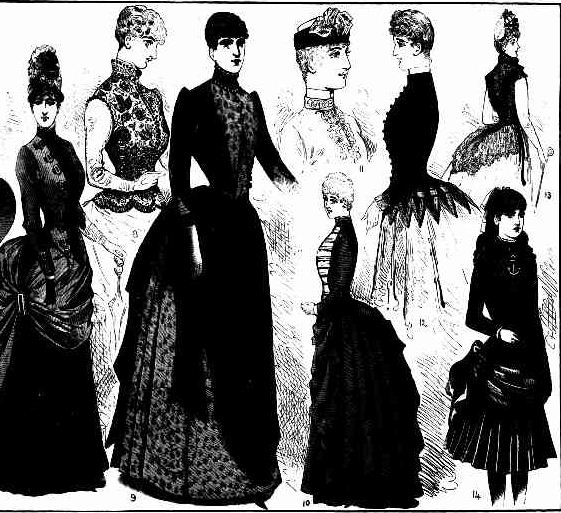
[No heading]. (1885, August 24). The Australasian Sketcher with Pen and Pencil (Melbourne, Vic. : 1873 – 1889), p. 133. Retrieved August 26, 2012, from http://nla.gov.au/nla.news-page5739497

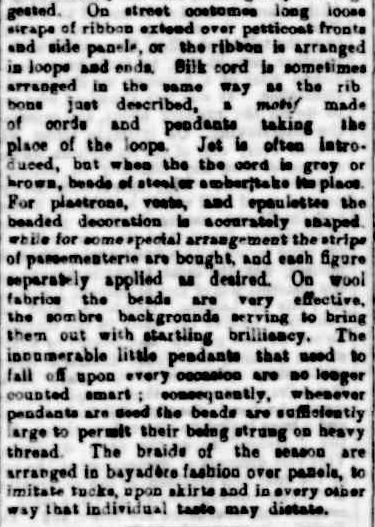
The following article appeared in the Portland Guardian on August 1881 and offered spring fashion tips for the ladies of the Western District.  White, all shades of red and heliotrope were the colours of the season.  Grey was the new black and black was back.  Cashmere and plaid wool fabrics were popular as were ribbons and beading for embellishment.

THE LADIES’ COLUMN. (1888, August 31). Portland Guardian (Vic. : 1876 – 1953), p. 3 Edition: EVENING, Supplement: SUPPLEMENT TO THE PORTLAND GUARDIAN. Retrieved August 26, 2012, from http://nla.gov.au/nla.news-article63589936

The 20th century arrived but fashion was so last century.
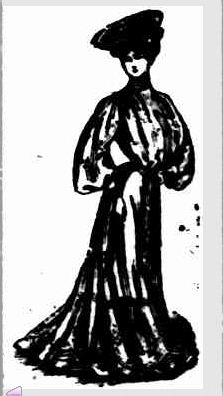
THE LADIES’ COLUMN. (1905, July 25). Camperdown Chronicle (Vic. : 1877 – 1954), p. 6. Retrieved August 31, 2012, from http://nla.gov.au/nla.news-article30351894

Fashion began to evolve during World War 1.  One change was dress length, with hems going up to save material.  An interesting website Fashion Era offers further examples of fashion during this period.

SPRING FASHIONS. (1915, August 4). The Argus (Melbourne, Vic. : 1848 – 1956), p. 12. Retrieved August 31, 2012, from http://nla.gov.au/nla.news-article1544786

T

These dresses from 1918 show traditional styles were still popular.

Spring Fashions. (1916, September 2). The Prahran Telegraph (Vic. : 1889, 1914 – 1918), p. 7. Retrieved August 28, 2012, from http://nla.gov.au/nla.news-article74835347

But things were changing and this dress, also from 1918, is an example of that.

COMING FASHIONS. (1918, July 10). The Argus (Melbourne, Vic. : 1848 – 1956), p. 12. Retrieved August 28, 2012, from http://nla.gov.au/nla.news-article1404142

I love this stylish advertisement for Allans The Drapers of Fibrace street Horsham from 1927.
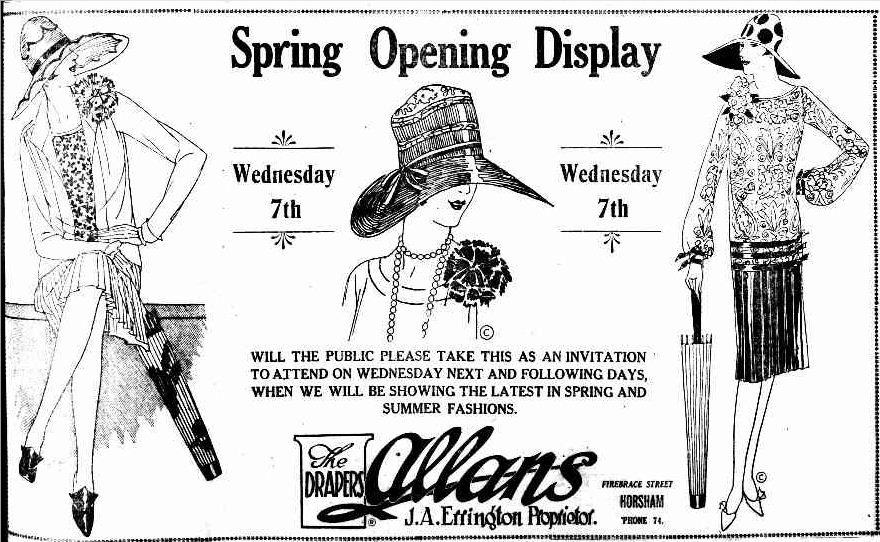
Advertising. (1927, September 2). The Horsham Times (Vic. : 1882 – 1954), p. 5. Retrieved August 29, 2012, from http://nla.gov.au/nla.news-article72996175

Fancy the Phryne Fisher look?
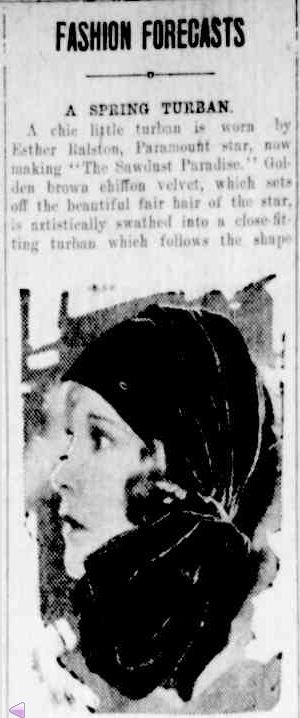
FASHION FORECASTS. (1928, August 3). The Horsham Times (Vic. : 1882 – 1954), p. 8. Retrieved August 29, 2012, from http://nla.gov.au/nla.news-article72676520

I can’t resist sharing more of the wonderful 1920s fashions, again from the Horsham Times.

Advertising. (1929, October 4). The Horsham Times (Vic. : 1882 – 1954), p. 9. Retrieved August 29, 2012, from http://nla.gov.au/nla.news-article72672337

Another stylish look, this time from 1930.

Woman’s Interests. (1930, July 3). Border Watch (Mount Gambier, SA : 1861 – 1954), p. 6. Retrieved August 29, 2012, from http://nla.gov.au/nla.news-article78010734

The Great Depression saw a rise in the number of sewing columns in the newspapers.  This article gave advice on how to recycle a frock.  The full article is here
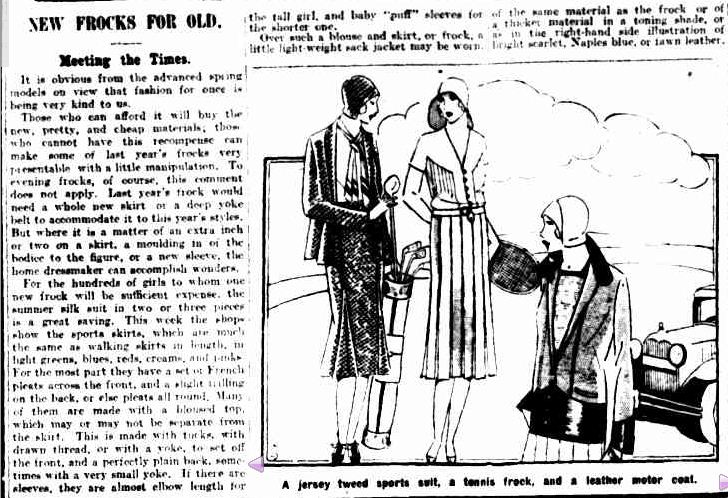
“THE ARGUS” SHOOPING PAGE. (1930, August 8). The Argus (Melbourne, Vic. : 1848 – 1956), p. 12. Retrieved August 26, 2012, from http://nla.gov.au/nla.news-article4104490

Patterns were back for Spring 1935.

Gay Patterns for Spring Frocks. (1935, August 14). The Argus (Melbourne, Vic. : 1848 – 1956), p. 15. Retrieved August 29, 2012, from http://nla.gov.au/nla.news-article11757450

World War 2 saw a dramatic drop in the number of “spring fashion” articles in the papers, more so than the Great War.  The years 1942, 1943 and 1944 had very few and those I found were mostly for sewing patterns.   Families relied on coupons to buy goods, there was rationing of goods including fabrics and the fashion houses of Paris closed.  If a woman wanted to keep up appearances, there was little alternative but to make a frock or remodel one from last season.  The latter half of the 1940s saw a rapid increase in fashion articles as women turned again to the fashion stages of Europe for inspiration and cast aside their drab wartime clothing.

BE CHIC… but coupon canny. (1942, October 17). The Australian Women’s Weekly (1933 – 1982), p. 7. Retrieved August 31, 2012, from http://nla.gov.au/nla.news-article46446873

A few bright notions to cope with a war budget. (1942, January 10). The Australian Women’s Weekly (1933 – 1982), p. 24 Section: Fashion Portfolio. Retrieved August 31, 2012, from http://nla.gov.au/nla.news-article54876753

Shock, horror “Hems to go higher” in 1952.  Just wait until the 60s!
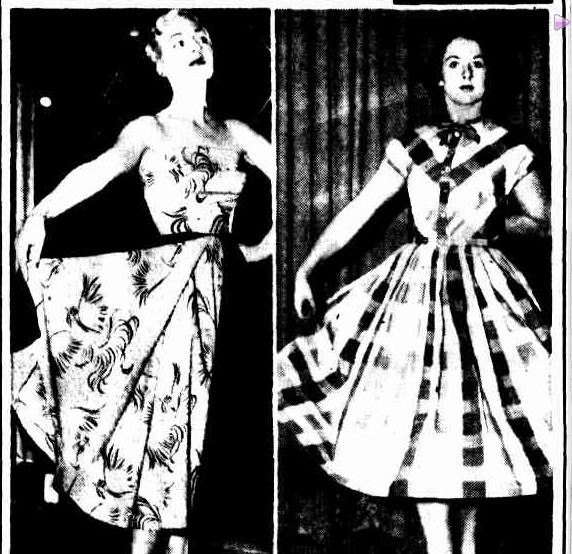
Hems to go higher. (1952, May 21). The Argus (Melbourne, Vic. : 1848 – 1956), p. 5. Retrieved August 26, 2012, from http://nla.gov.au/nla.news-article23197518

I could have continued to the 1960s but that would have gone on for some time as I do like the fashion particularly from the latter half of the decade. I could have gone on to the 70s too.  While fashion from that decade was much maligned during the 1980s, anyone who saw Paper Giants: The Birth of Cleo was reminded of the great fashions of the 1970s.  I think the 1980s would have pulled it up though. Agreed?

Looking at fashions of different eras is beneficial to the family historian especially if you are trying to date photos.  It also gives us some idea of what our female ancestors might have endured for either the sake of fashion or managing with what was available.  The long, impractical dresses of the 19th and early 20th century make me think of my ggg grandmothers on farms, getting in and out of buggies and tending fires for washing and cooking.  Consider how your grandmothers or great grandmothers managed during the Depression when money was tight or  World War 2 with coupons and rationing.  No wonder my Nana was good at sewing, darning and knitting. It was a necessity.

***If you are interested in learning how your female ancestors washed their big dresses during the 1850s, the Sovereign Hill Education blog has great posts on washing, drying, and ironing.

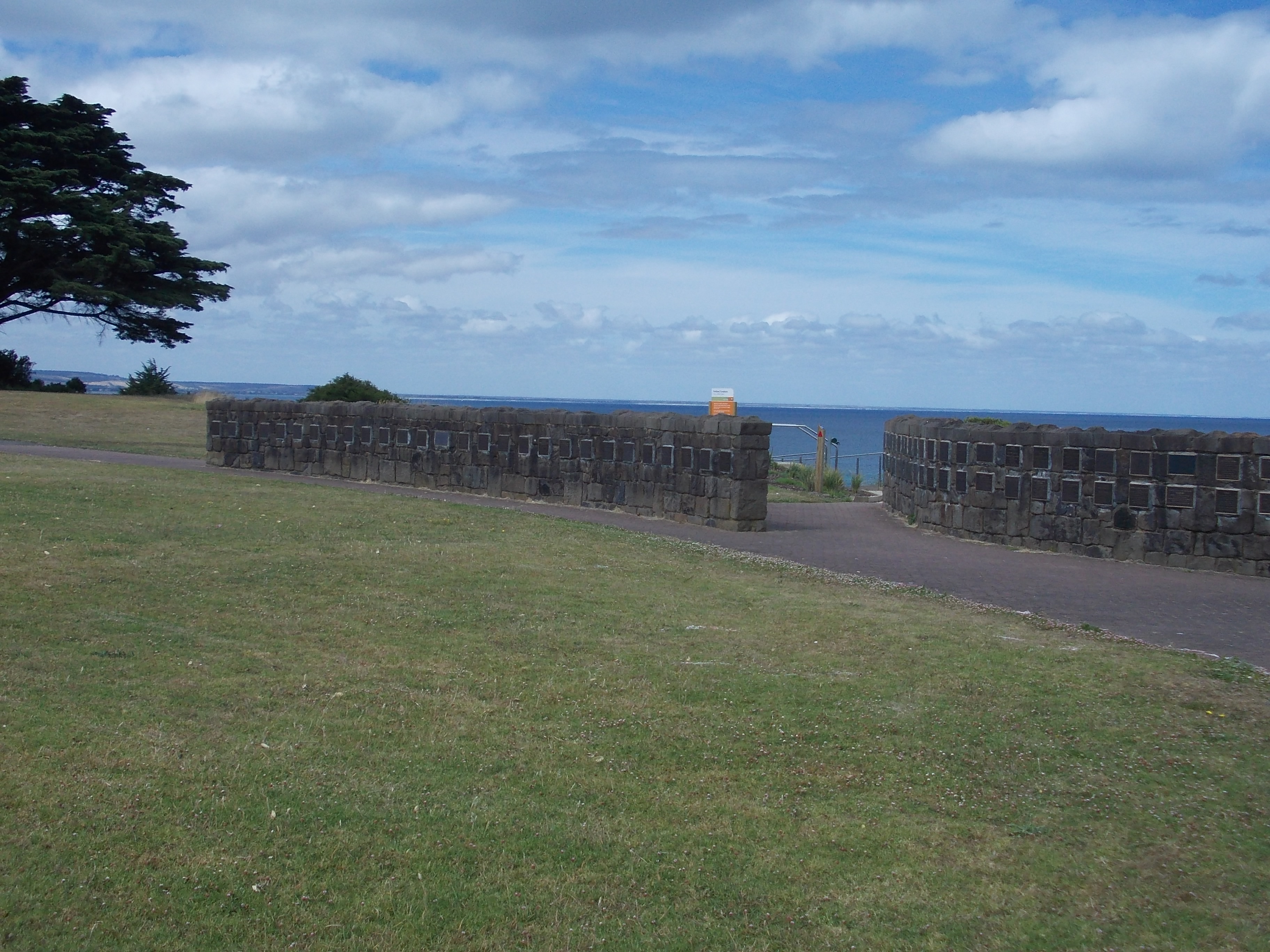
Portland’s Immigration Wall

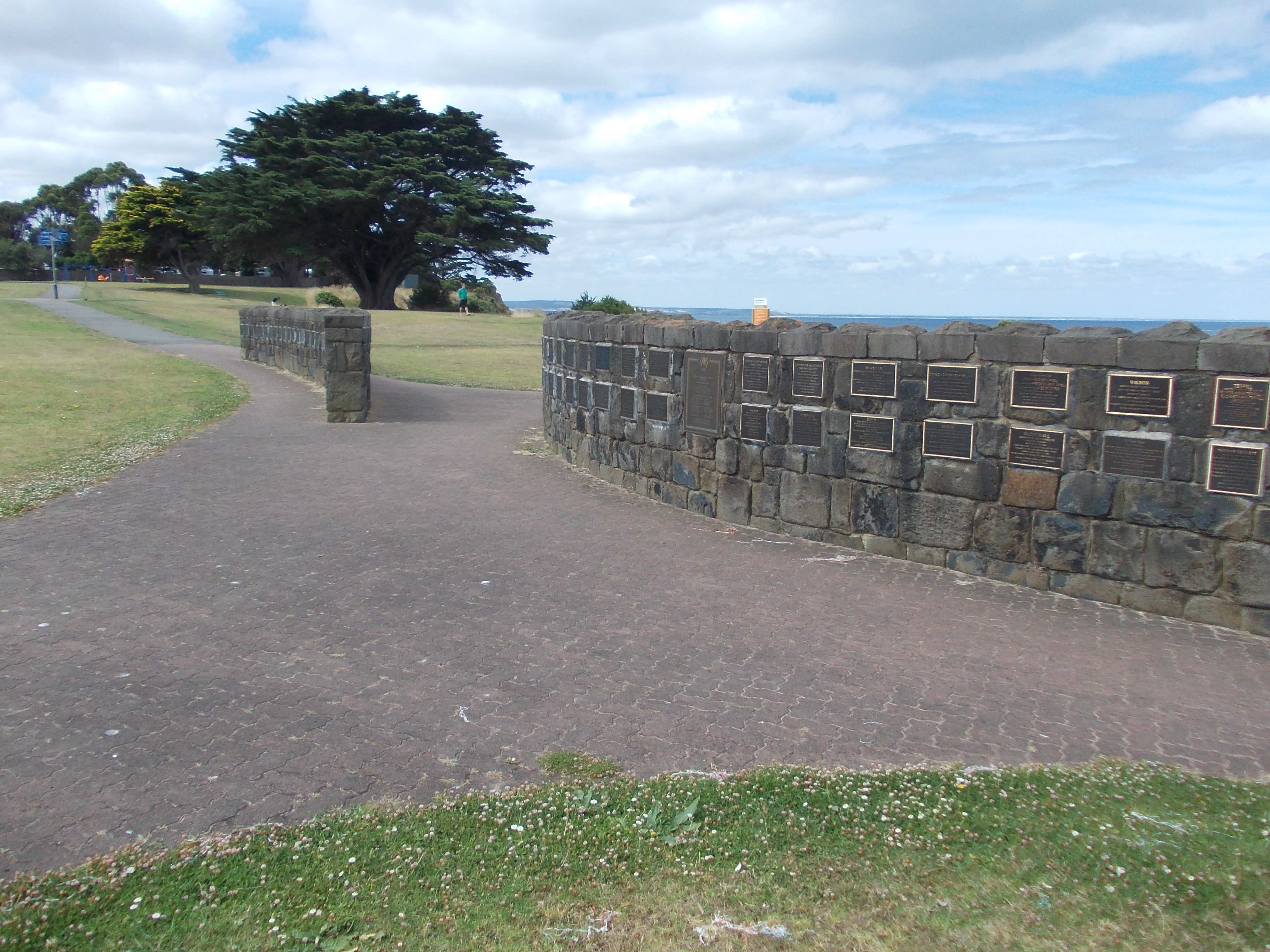
Portland’s Immigration wall is a great way to remember those ancestors who first set foot in Australia at the harbour town.  Located on the “Ploughed Field” opposite the Portland hospital and overlooking Portland Bay, the wall has plaques unveiled by grateful descendants of early pioneers to the south-west of Victoria.

The “Ploughed Field” is where one of Edward Henty’s workers ploughed the first sod of earth in Victoria in 1834 with a single furrowed plough now known as the “Henty Plough” and on display at Portland’s History House.

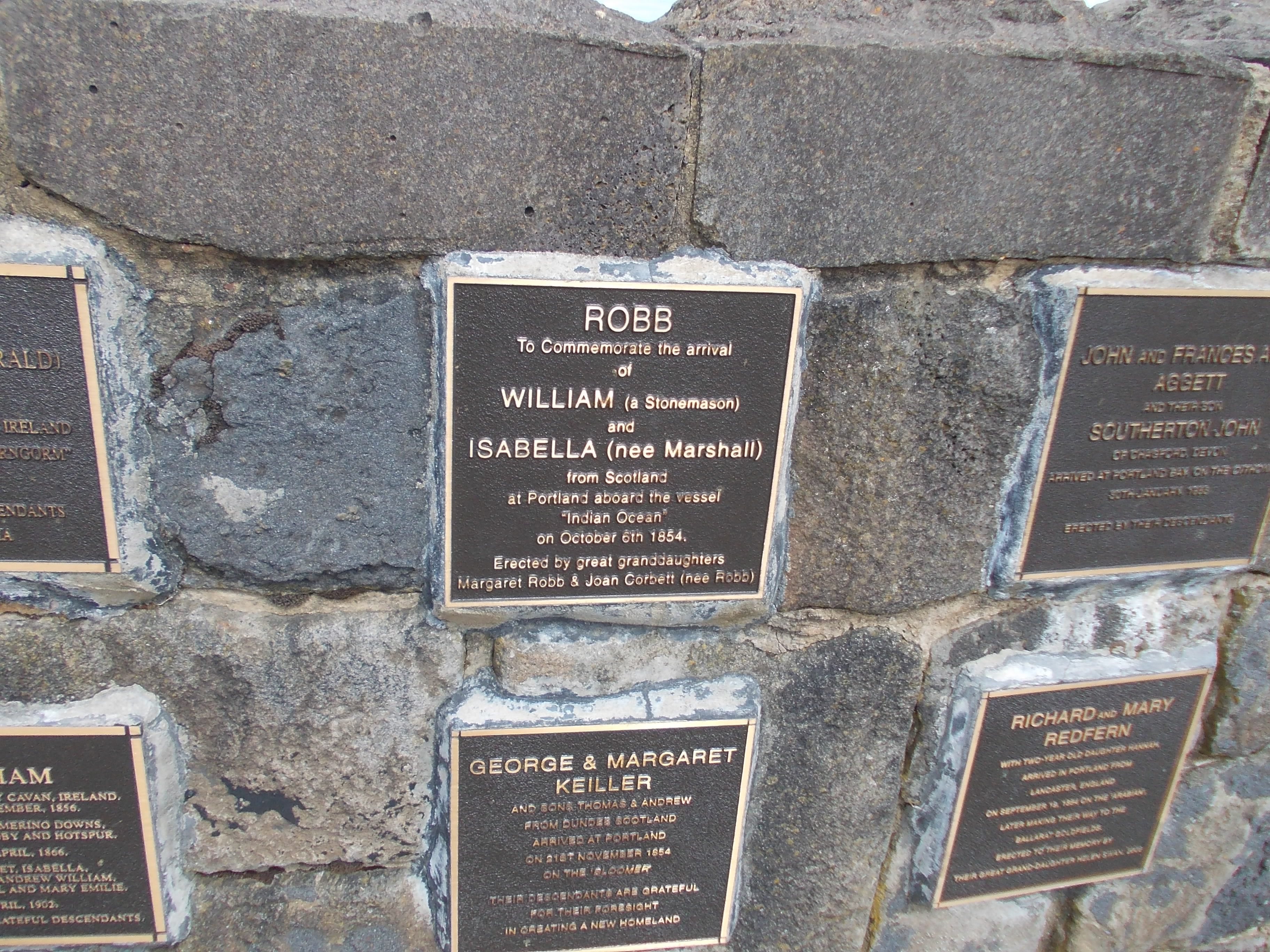
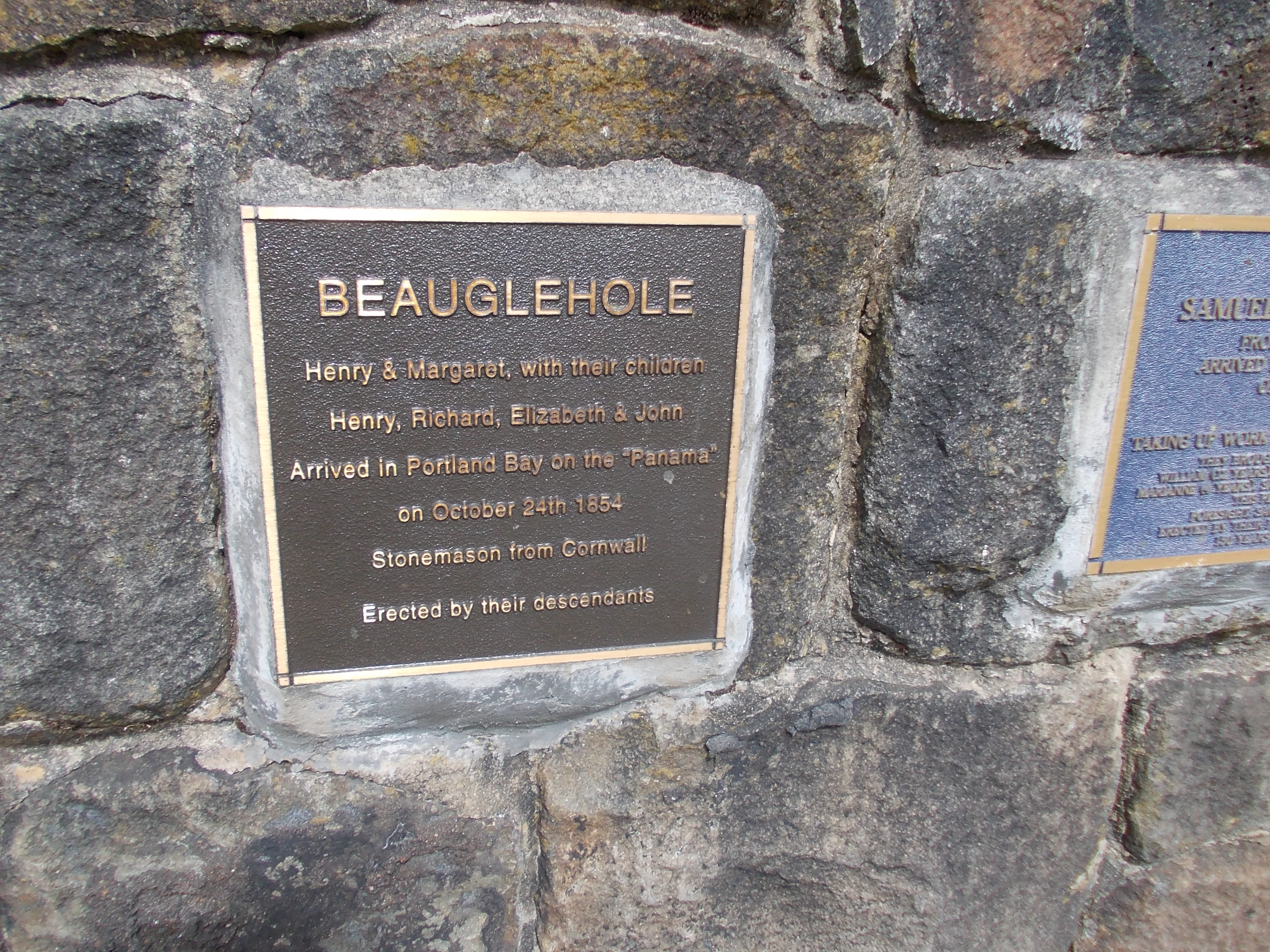
Some of the families remembered on the Immigration wall are :

William and Isabella ROBB were buried at the Old Portland Cemetery.

I know a little of Richard and Jane PRICE thanks to their grandson’s marriage to my first cousin 3 x removed.  Allan James Price married Ada Harman, daughter of Alfred Harman, in 1911.  One of the organisers, Lynn Price, invited me to the unveiling of the plaque and family reunion in 2009.  I met Lynn via the Rootsweb Western District mailing list.  It was disappointing that I was unable to attend as a lot of time has gone into remembering the Price family as seen at the Price family website.   It has photos of the reunion as well as a later event, the unveiling of headstone for Richard and Jane at the Heywood cemetery in 2010.

For more information on how you can see your family on the Immigration Wall, go to the Glenelg Shire website.

I hope one day plaques will be on the wall for my three sets of ggg grandparents who arrived at Portland.  James and Sarah Harman and William and Margaret Diwell and daughters Elizabeth and Sarah Diwell arrived on the Duke of Richmond in 1853 and George and Jane Jelly and their daughter Mary on the Athletae in 1855.

M is for…Methodist

This really should have been a post for the “W” week of the Gould Genealogy Alphabet challenge, but I have another “W” word in mind for that week (guess which word that will be).  To be precise,  “W is for…Wesleyan Methodist” would have been more apt as it is the branch of Methodism that the Harman family followed, but due to an overload of “W”‘s, I’ll turn it upside down and make it “M is for…Methodist”.

What did I know about Methodism before I discovered the Harman’s faith?  Nothing except for a link to temperance.  Therefore, over the years I have tried to find out more about the religion as I think it is definitive in finding out more of what the Harmans were really like, especially James and his brother Walter who were Local Preachers with the church.

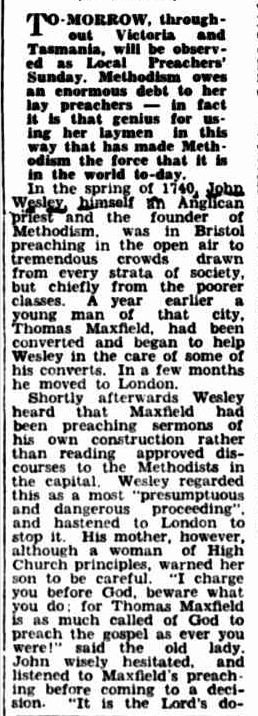
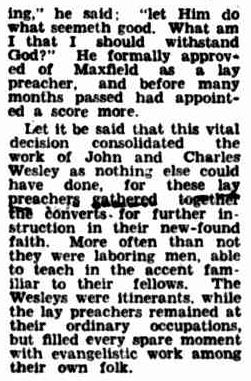
It was the role of a local preacher I discovered was one of the characteristics of Methodism.  This from the Advocate of Burnie on 16 August 1952 gives something of the background:

The Methodist Local Preacher. (1952, August 16). Advocate (Burnie, Tas. : 1890 – 1954), p. 12. Retrieved August 6, 2012, from http://nla.gov.au/nla.news-article69442373

I have also found that James did preach at Hamilton Methodist Church on occasions, found in the history  Uniting we now stand: a history of the Hamilton Methodist Church by Joan A. Smith (1999).  The Hamilton church was originally at 41 McIntyre Street before moving to Lonsdale Street in 1913.  In May this year, a gathering was held recognising 150 years of Methodism in Hamilton.

The Byaduk Methodist Church built 1864, was the first church in the town and a weatherboard Sunday School was added in 1889.  Located on the Hamilton/Port Fairy Road which runs through the town the Byaduk church, along with the Hamilton church,  are now Uniting Churches.  This came about after three churches, the Methodist, Presbyterian and Congregational came together in 1977.

FORMER BYADUK METHODIST CHURCH

Prior to the Byaduk church’s construction services were held in the home of John B. Smith, an early leader of the Wesleyan Methodist Church in Victoria.   In 1866, Smith went to Portland and travelled a circuit which took him throughout the south-west.  His recollections were published in the Portland Guardian of 25 June 1928.  If you have Kittson, Lightbody or Hedditch links, this is worth reading in full.

Early Methodsim. (1928, June 25). Portland Guardian (Vic. : 1876 – 1953), p. 3 Edition: EVENING. Retrieved August 6, 2012, from http://nla.gov.au/nla.news-article64266132

Smith was also a co-author of the book The Early Story of the Wesleyan Methodist Church in Victoria available online.  Of course, there is a lot in the book about John Smith himself who “.. had a clear grasp of the plan of salvation, and a touching and pathetic way of speaking of the “wrath to come”.”(p.269).

Also of Smith:

“The well-worn family Bible used morning, noon, and night for family worship, told of his love for the Psalms and the words of the Lord Jesus and few could use them (even the deep vast words of the fourth gospel), or the plaintive phrases of the Psalms, or the less familiar lines of shaded beauty found in our Hymn Book, with greater feeling and effect” (p269)

The influence of this holy man of God and of other kindred spirits make Byaduk a bright spot in the Hamilton Circuit, while the personal worth and , social standing of Mr. Peter Learmonth as a Christian and a citizen, and the active sympathy and generous help of the Wiggins’ and Learmonths’ on the one hand, and the ungrudging labours of devoted Local Preachers on the other, have served to sustain the cause and comfort the Minister’s heart”(p270)

Peter Fraser in Early Byaduk Settlers, describes an early Methodist service at Byaduk:

“They conducted the services differently from now.  In singing hymns. the preacher read a verse and the congregation sang the verse, then he read another and the congregation sang it and so on to the end of the hymn.  In prayers, most of the congregation knelt; and when the preacher was praying, some in the congregation would sing out AMEN, BE IT SO HALLELUIAH and other words, while others in the congregation would grunt and groan all the time, but it must have been a nuisance to the preacher as the Methodist Ministers stopped it many years ago.” (p. 14)

Peter also names some of the local preachers of which there was an abundance.  They included Mr John Henry Oliver senior, father-in-law of Jonathon and Reuben Harman, and his son John Henry junior.  Also Daniel Love, John Holmes and Samuel Clarke, just to name a few.  George Holmes senior, father in law of Julia Harman, was superintendent of the Sunday School for over forty years.

James and Walter seemed the most devout of the Harman family, with both spreading the word as local preachers. Also, Walter and his wife Lydia established the Sunday School at Ensay and Walter travelled many miles preaching.  Walter’s son Henry was an elder of the Omeo Methodist Church and I have previously told the story of the Omeo Methodist Minister Ronald Griggs.  The church closed ranks around Griggs and continued to support him at the time of his murder trial in 1928.
The post In Search of the Extraordinary Monster looks at the Port Fairy Methodist church.  Port Fairy was the home of the Harman family before they moved to Byaduk

Reuben James Harman, son of James and my gg grandfather,  was buried in the Methodist section of the Ballarat New Cemetery, with the faith continuing on to the next generation.

GRAVE OF REUBEN JAMES HARMAN & EMMA LORDEN – BALLARAT NEW CEMETERY

I know there is so much more to find about the Harman family link to the Wesleyan Methodist Church.  My ggg grandfather was a great servant of the church and saw some changes during its development in Byaduk and Hamilton.   He was still alive when the Hamilton Methodist Church moved to Lonsdale Street, but a major change occurred a year after his death.  In 1917, the Methodist Church of Australia at its Melbourne conference ruled that local preachers were to become known as lay preachers.

METHODIST CONFERENCE. (1917, May 26). Examiner (Launceston, Tas. : 1900 – 1954), p. 6 Edition: DAILY. Retrieved August 7, 2012, from http://nla.gov.au/nla.news-article50927004

A post on the website Gospel Australia has a great post “Poor Old Tom Brown”.  I have included the link but now the site is only working intermittently.   It describes a man who was a Local Preacher in New South Wales and he is very much how I imagine James Harman to have been.

If you have Western District family members who were Methodists, I highly recommend you read The Early Story of the Wesleyan Methodist Church in Victoria.  Various towns throughout the Western District were represented along with many names.  Other areas of Victoria are also covered.

 There is one question about the Harmans and their Methodist faith that I may never have answered.  Why did Joseph Harman, father of James and Walter, change his religion from Methodist to Presbyterian by the time of his death in 1893?  Mentioned in his obituary in Hamilton Spectator it has had me wondering ever since I first read it.


Passing of the Pioneers – A Year On

PASSING OF THE PIONEERS. (1927, November 14). Portland Guardian (Vic. : 1876 – 1953), p. 3 Edition: EVENING. Retrieved July 21, 2012, from http://nla.gov.au/nla.news-article64259147

On July 22, 2011, I posted the first Passing of the Pioneers, and 12 months on I am preparing to post the 13th edition.

There are now over 180 links to Western Victorian pioneer obituaries at Western District Families and the 13th edition will see the total go over 200.

Reading all those obituaries has been a privilege and has taken me on a wonderful journey, not only through the history of the Western District but to places such as game parks in Africa and the silver mines of South America.  The lives I have glimpsed into range from that of the gentry to general hands, but all have shared in making Western Victoria the place it is today.

Some of the pioneers were born during the early days of Victoria,  while others dared their lives aboard immigrant ships in the hope of a better life.  Many travelled from the ports to the Western District by bullock wagon on rough tracks, while enduring unfamiliar conditions.  They built houses on land that would one day see towns such as Penshurst, Hamilton, and Balmoral grow around them.

The women from the pioneering era deserve recognition.   Some were alone among men, left to bear and raise children and turn their canvas tents or slab huts into homes.  Many endured loneliness, but as towns grew some became involved with community activities such as the church.   Despite their hardships, many of these women’s obituaries noted that even in old age they would reminisce about those times.

Obituaries came after the pioneer “crossed the Great Divide”, penned by someone who too had heard the stories but may not have had all the facts.  That is my warning to you while you read obituaries and in the July 2012 Passing of the Pioneers, I will show this with an obituary from my family.

Having said that,  it is the snippets of information within them that make obituaries a worthwhile family history resource.  Names of children and their married names, places of residence, occupations, and immigration details are just some of those snippets which you can then test against the relevant records.

Many of the obituaries I have read have moved me, inspired me, and led me to further research.   I have listed just some of those, not so much for the achievements of the subject but the stories they tell.  Click on the pioneer’s name to go to their original newspaper obituary or the date to go to the Passing of the Pioneers post where the obituary appeared:

Frederick William BILSTON (August 2011)

Mrs Agnes CHEQUER (November 2011)

Thomas Denton CLARKE (October 2011)

Elizabeth COLE (March 2012)

James DAWSON (April 2012)

Alfred Irvine HOGAN (February 2012)

KITTSON family – James (May 2012), James Trotter (December 2011),  Rebecca (January 2012),  Susannah (June 2012) and Mrs Margaret Kittson (May 2012)

MALSEED family – Fanny Ann (February 2012),  Robert J. (May 2012) ,  Mrs E.A. MALSEED (August 2011) and Mary HEDDITCH  (Mrs James MALSEED) (July 2011)

Finlay McPherson PATON (September 2011)

Joseph Bell PEARSON (July 2011)

Mystery Photos

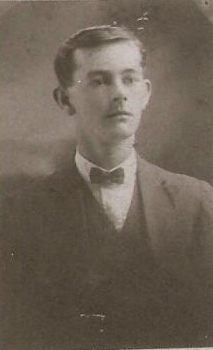
Isn’t  it frustrating when you find old family photos but don’t who the subjects are?  Not long ago Mum found some photos of Nana’s we didn’t know she had. We don’t know who the people are and we have no one to ask.

I was recently contacted by Catherine Simmins, who has family links to the Western District.  She is facing the same dilemma with some photos passed on to her family some time ago.  Some were identifiable but others remain a mystery.

Catherine asked me if I could post the photos in the hope someone may recognise the subjects.  Alternatively,  if anyone is better at dating photos than myself, help in that area would also be appreciated.

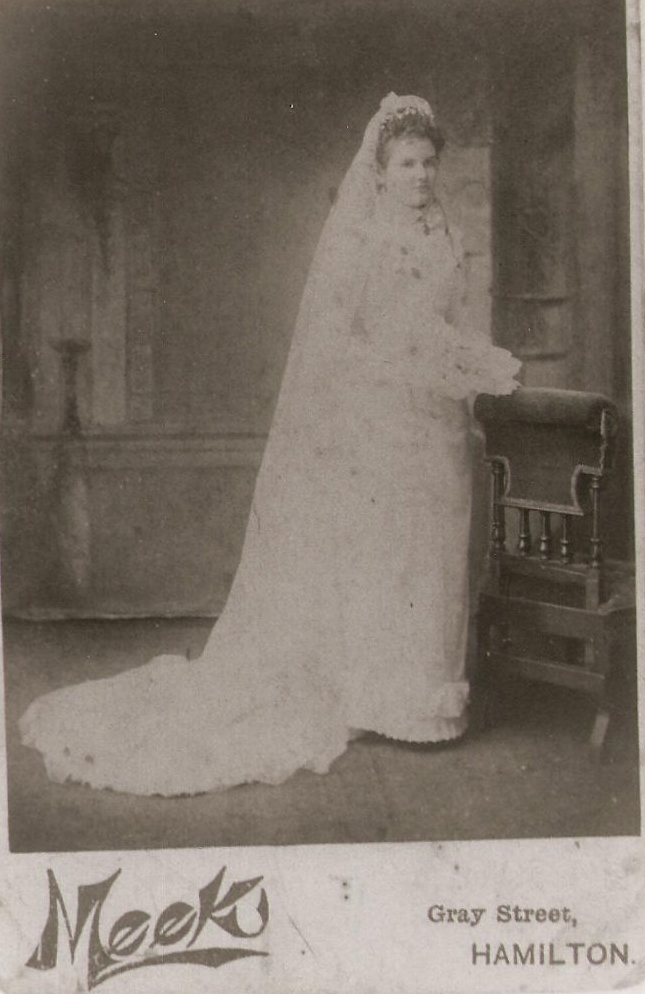
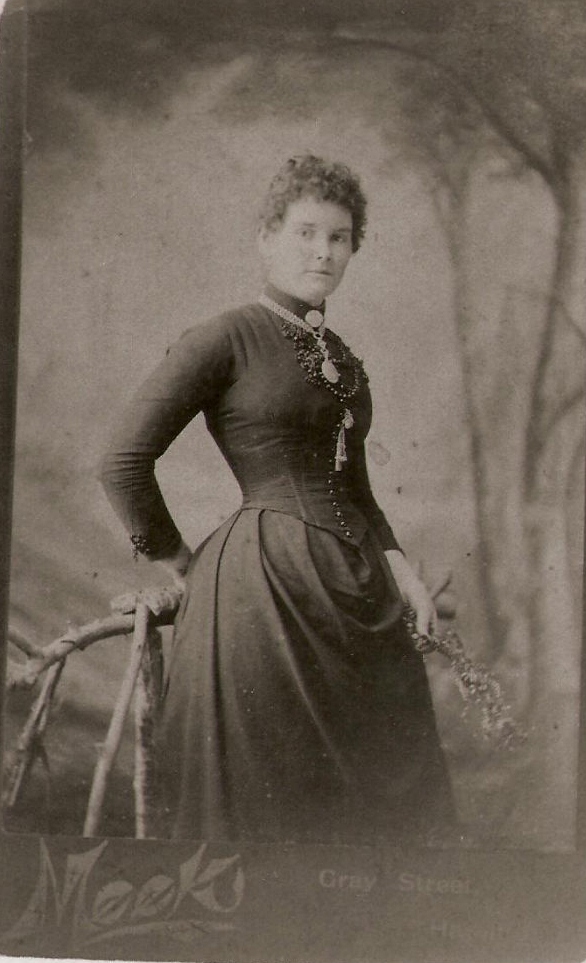
THE PHOTOS

PHOTO 1

Also from Meek’s

PHOTO 2


PHOTO 3

The following three photos go together.

PHOTO 4


PHOTO 5


PHOTO 6

THE CLUES

The Family

Catherine’s family from the Western District included the family names THOMAS, McPHERSON, JONES and McDONALD.

Alfred Charles THOMAS (Catherines great-grandfather) was the son of  William THOMAS and Hannah JONES.  He was born in 1869 at Hamilton.  Alfred married Sarah Ann McPHERSON, the daughter of Angus McPHERSON and Christina McDONALD.

Alfred and Sarah had a large family of 11  children.

Alfred’s obituary lists the names of their children, their married names and locations.

Obituary. (1937, August 5). Portland Guardian (Vic. : 1876 – 1953), p. 3 Edition: EVENING.. Retrieved July 17, 2012, from http://nla.gov.au/nla.news-article64276614

Sarah’s obituary:

OBITUARY. (1940, February 26). Portland Guardian (Vic. : 1876 – 1953), p. 3 Edition: EVENING. Retrieved July 17, 2012, from http://nla.gov.au/nla.news-article64395373

Of course, there is a good chance that the photos are not of this branch of the THOMAS family but have some link.   Catherine has offered a suggestion as to who the family in Photos 3, 4 and 5 could be.

Sarah Ann McPHERSON’s sister, Margaret Jessie McPHERSON married Donald McBEAN in 1891.  They had five known children:

Jessie Christina Jane born 1891 at Hamilton married Arch. NAISMITH

Alexander Angus born 1895 at Hamilton

Mary Monivae born 1900 at Hamilton

Margaret Murial born 1903 at Hamilton married Alfred BONE

Dorothy Jean born 1913 at Portland

This is the Family Notice for Donald McBean:

Family Notices. (1930, March 6). Portland Guardian (Vic. : 1876 – 1953), p. 2 Edition: EVENING. Retrieved July 17, 2012, from http://nla.gov.au/nla.news-article64291722

I think Catherine’s hunch could prove correct given the number of children, their sex and the age differences in the children.  If that is baby Dorothy McBean, the  family photo could be from around 1914.

**My interest piqued when I saw the name Mary Monivae.  Monivae, my former secondary school in Hamilton, named after the Monivae homestead, the school’s first site during the 1950s, was formally owned by Acheson Ffrench and James Thomson.  I wonder if Donald McBean worked at the property or they simply liked the name. I’ll save that one for later!

The Photographer

James Meek, tobacconist and photographer of Gray Street Hamilton took Photos 1 and 2.  The earliest reference I can find of Meek in Hamilton was 1884 when he played a role in the investigations of a well-known murder case of the time “The Pierrepoint Murders”.  Pierrepoint is just out of Hamilton and Meek took a photograph of the murder victim to help with the identification process.  Interestingly a member of my Bishop family found his way into one of the witness statements.

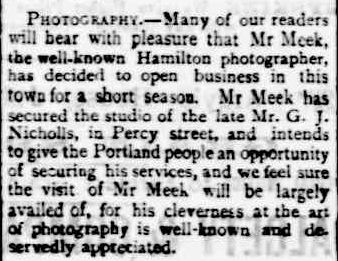
Meek also spent some time in Portland in the mid 1890s

Established August 1842. (1896, February 28). Portland Guardian (Vic. : 1876 – 1953), p. 2 Edition: EVENING. Retrieved July 17, 2012, from http://nla.gov.au/nla.news-article63634459

James Meek appears to have had a studio at Clunes during the early 1900s,  but I have also found references of him in Hamilton up until 1920.  There are a number of  photographs taken by James Meek at Trove

If you think you can help Catherine name the subjects in these wonderful photos, please leave a comment.  It would be much appreciated.

The Hungry Eagle

I had to share this story with you.

John Kirkwood was the father in law of Sarah Ann Reed, the niece of Susan Reed, wife of James Harman.  While checking his rabbit traps, John found a large eagle caught in a trap.  He took the bird to the Hamilton home of Robert Stapylton Bree on North Boundary road.  Bree chained the raptor in the garden to keep other birds away but he got more than he bargained for with the bird’s voracious appetite.

The Portland Guardian, (50th Year of Publication.) With which is incorporated The Portland Mirror. (1892, May 18). Portland Guardian (Vic. : 1876 – 1953), p. 2 Edition: EVENING. Retrieved June 14, 2012, from http://nla.gov.au/nla.news-article65439001

I wonder what happened to the eagle?

Dozens of articles about eagles and hawks caught in rabbit traps abound found at Trove.  Some eagles still flew with the traps attached and one poor bird was reported with a trap attached  for months.

—————————————————

On sad note, 10 years on, in 1902, John Kirkwood succumbed to influenza.  His obituary appeared in The Horsham Times of October 28, 1902.  John had died in the Hamilton Hospital on Wednesday October 22.  On October 31, 1902, the obituary of John’s daughter, 20-year-old Mary Agnes Kirkwood.  She had passed away on  October 26.

OBITUARY. (1902, October 31). The Horsham Times (Vic. : 1882 – 1954), p. 3. Retrieved July 15, 2012, from http://nla.gov.au/nla.news-article72851290


KIRKWOOD GRAVE – OLD HAMILTON CEMETERY

A search of Trove found that in 1902 there were reports of an influenza epidemic.  The Horsham Times reported many cases in the Wimmera area.  Such was the outbreak,  it had an effect on The Horsham Times.

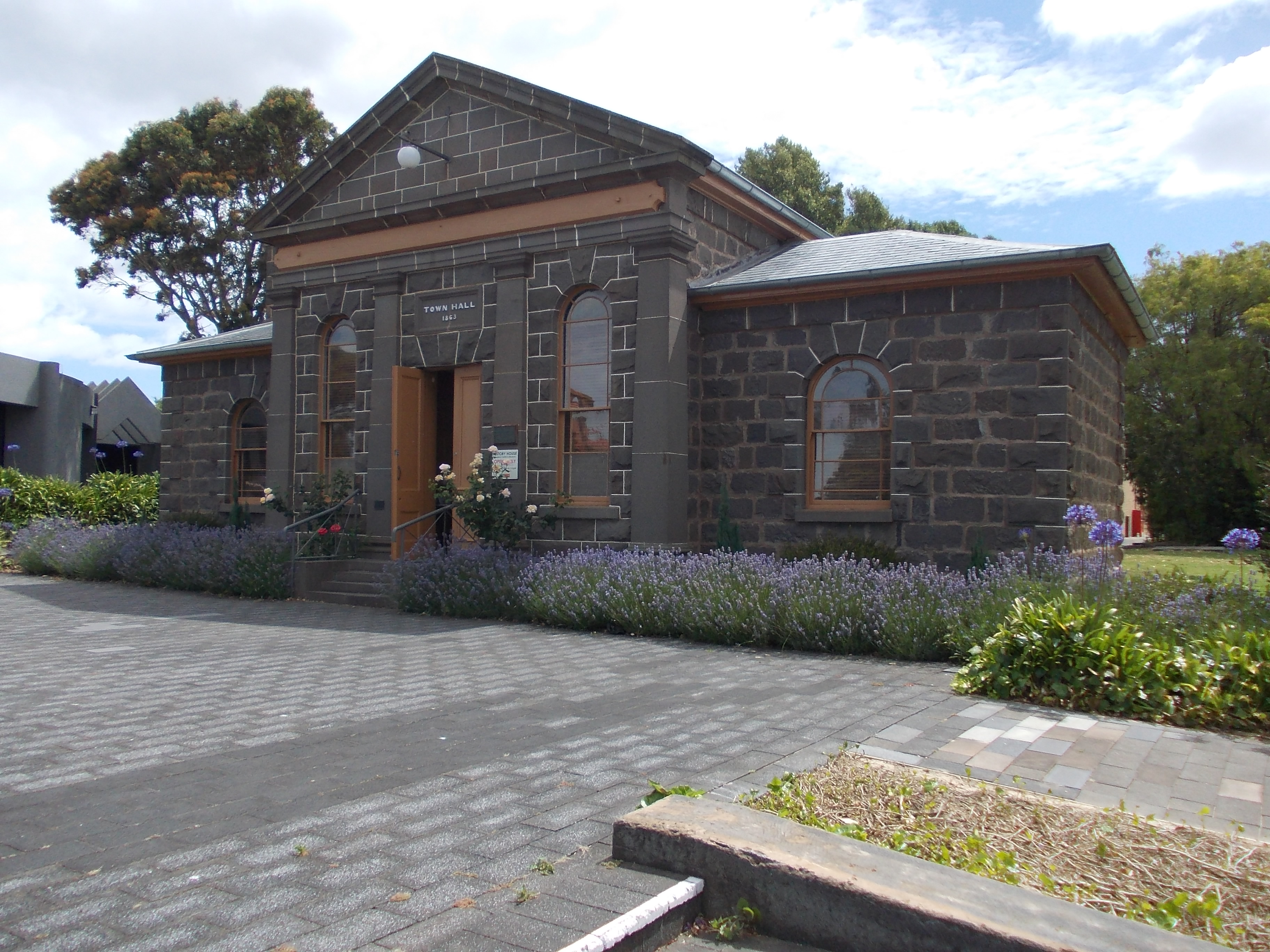
Portland’s History House

HISTORY HOUSE, PORTLAND

History House in Portland is the place to go to search for your ancestors who lived or arrived in the harbour town.  Located in the former Portland Town Hall, History House offers research facilities and a small museum.

The museum has many reminders of Portland’s early history, in particular, the Henty family.

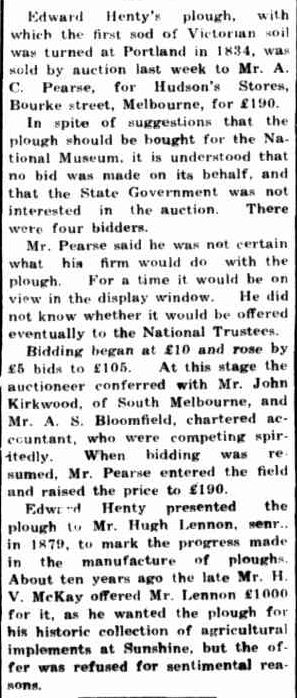
It is not easy taking a photo of a long plough in a narrow room with a fairly ordinary camera, but I had to give it a go as this in the one and only Henty plough.  While it is famous for it being the first plough used in Victoria, its journey since those early days is interesting.

HENTYS PLOUGH

Maybe this picture does the plough more justice than my own.

THE FIRST PLOUGH USED IN VICTORIA, BY THE HENTY BROTHERS, OF PORTLAND. (1910, September 10). Western Mail (Perth, WA : 1885 – 1954), p. 10. Retrieved July 3, 2012, from http://nla.gov.au/nla.news-article38361343

This article from the Portland Guardian of 18 November 1935 described what happened to the plough after it left the Henty’s possession

HENTY’S PLOUGH. (1935, November 18). Portland Guardian (Vic. : 1876 – 1953), p. 3 Edition: EVENING.. Retrieved July 3, 2012, from http://nla.gov.au/nla.news-article64290884

Hugh Lennon, who had the plough on display at his factory in Spotswood, was the manufacturer of the Lennon plough.  This was the plough of choice for ggg grandfather James Harman in local ploughing matches.  It was also the plough of choice for the Kelly gang when making armour.  The plough eventually returned to Portland in 1970.

The is a model of the house occupied by Joseph Henry Porter and his wife, Sarah Herbertson, in Gawler Street, Portland. Joseph constructed the model and Sarah furnished it.  I like the detail, even down to pickets missing off the fence.  Both Joseph and Sarah are part of the Western District Families Pioneer Obituary Index.  Joseph’s obituary mentioned his fine craftmanship.


MODEL OF 42 GAWLER STREET, PORTLAND

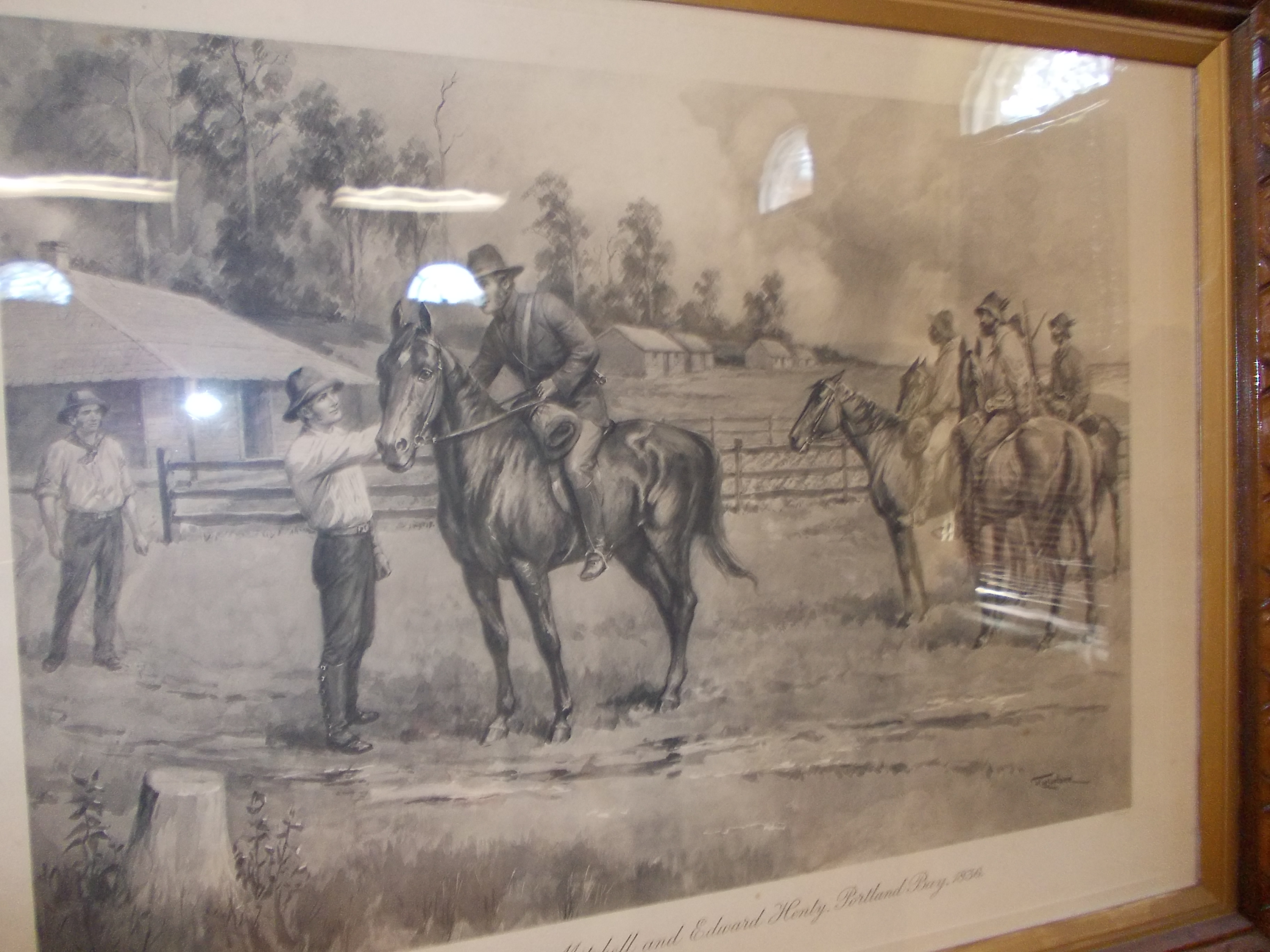
While this isn’t the best photo, I had to share it.  It depicts the meeting of Major Thomas Mitchell and the Henty brothers, a significant time in the history of the Western District.  You can read more about this chance meeting in the post “Major Mitchell Reaches Portland Bay”.

MAJOR MITCHELL AND THE HENTY BROTHERS

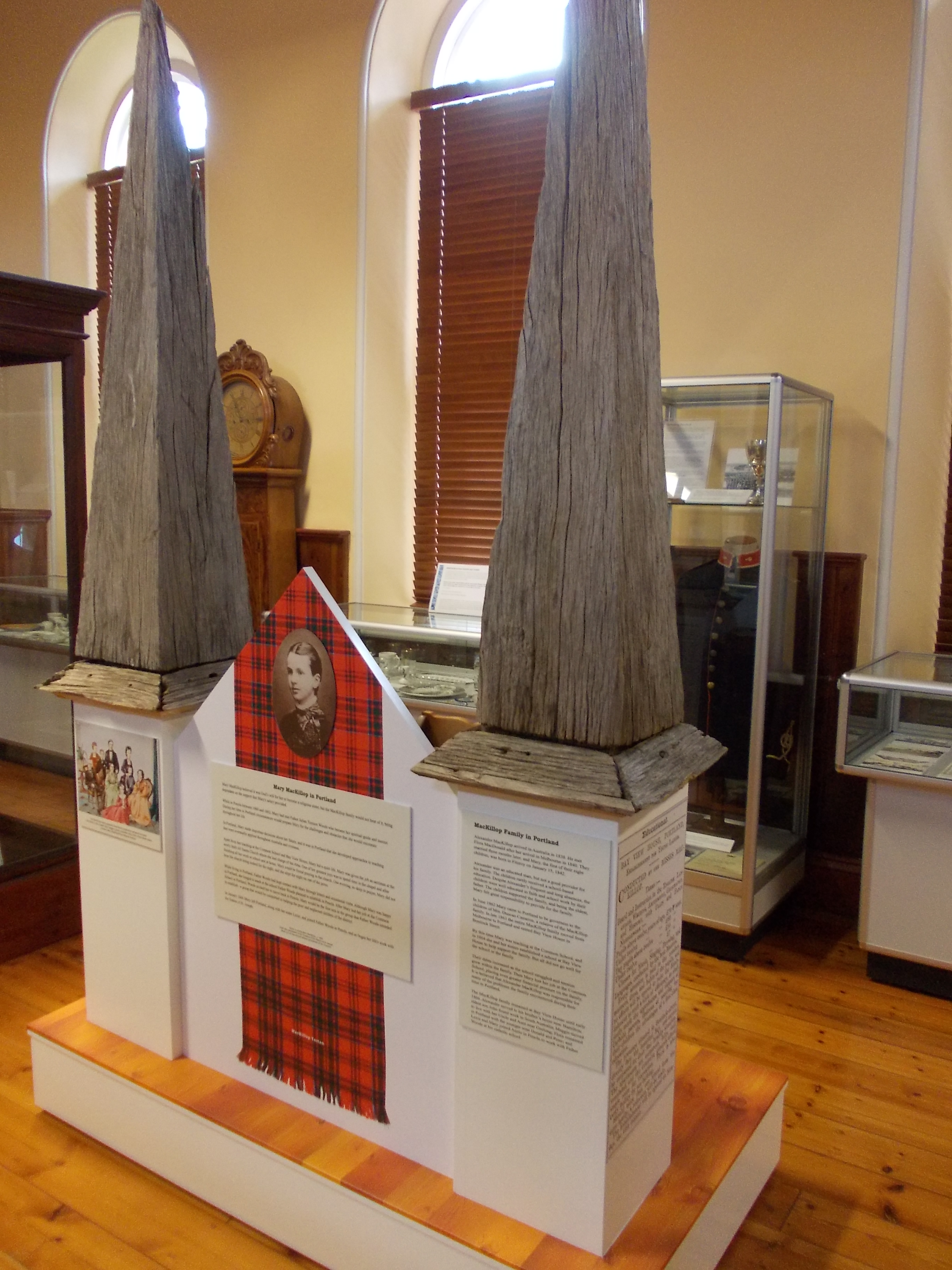
Mary McKillop spent some time in Portland and an exhibit commemorates this, complete with the spires from the original Roman Catholic church in Portland.

MARY MacKILLOP DISPLAY

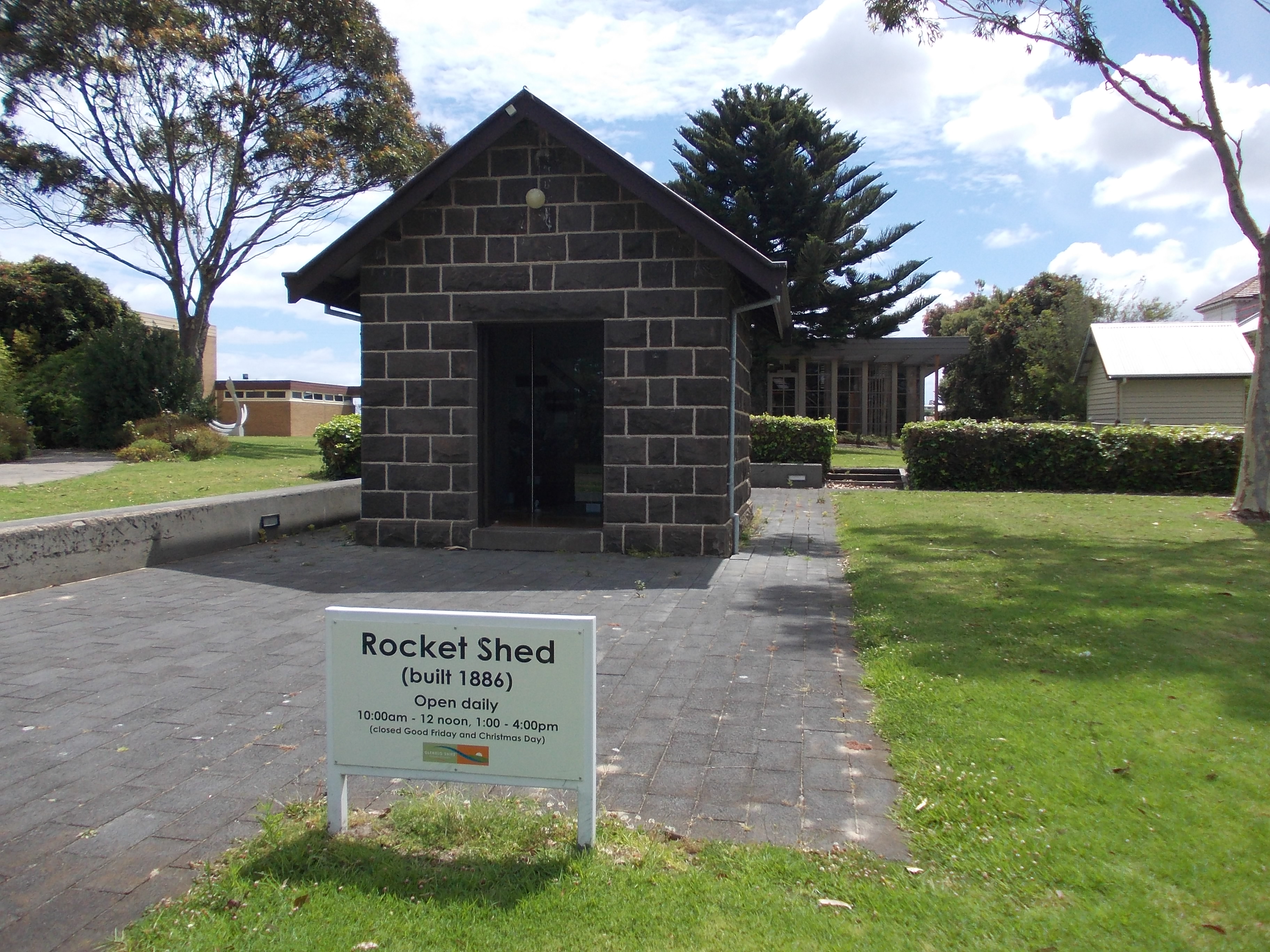
The Portland Rocket Shed is next to History House.  The shed was built in 1886 by George Sedgewick who was the gg grandfather of Ann, a follower of this blog.  Fully restored, the shed has a display inside which includes a rocket launcher used to fire ropes to boats in distress.
ROCKET SHED

For more photos, better than my own, check out ABC South West Victoria’s report on History House’s renovation in 2010 http://www.abc.net.au/local/stories/2010/02/17/2822431.htm.  There was also a report at the time of Mary MacKillop’s canonization http://www.abc.net.au/local/stories/2010/10/12/3035824.htm

In The News – June 22, 1877

Today’s “In the News” is from The Portland Guardian of 22 June 22 1877 with the featured article from the Hamilton correspondent, filed on June 16, 1877.

The weather in Hamilton at the time was not dissimilar to the current weather and the streets and footpaths were muddy.  The cheeky correspondent suggested that the residents of Hamilton would not be thinking well of the town engineer after their foot drenching walk to church on Sunday.

HAMILTON. (1877, June 22). Portland Guardian (Vic. : 1876 – 1953), p. 3 Edition: EVENINGS.  http://nla.gov.au/nla.news-article63338700

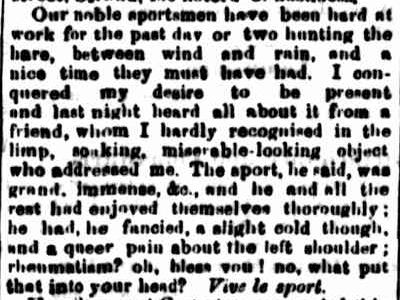
Hare hunting was a popular sport of the time, with the weather not stopping the keen participants.

Australian Rules football was well underway in the Western District by 1877.

The papers reported disease of all types.  Typhoid fever was prevalent in the navvy’s (railway builders) camp by the Grange Burn in June 1877 and conditions were far from comfortable.   Diphtheria had also been reported, however, the source was unreliable having given a false report of typhus fever in the past.

HAMILTON. (1877, June 22). Portland Guardian (Vic. : 1876 – 1953), p. 3 Edition: EVENINGS. http://nla.gov.au/nla.news-article63338700

Volcanoes Revisited

I wrote about the volcanoes of Western Victorian and the South-East of South Australia in the post “Western District Volcanoes – Are They Sleeping?”.  It has been a popular topic so I thought I would share this new video found on YouTube about the volcanoes of Mt. Gambier, South Australia by Geoff Oliver.

This is the first in a series Geoff will present on the Volcanic sites in the area including the south-west of Victoria.  I look forward to seeing if Geoff will visit the Harman Valley.

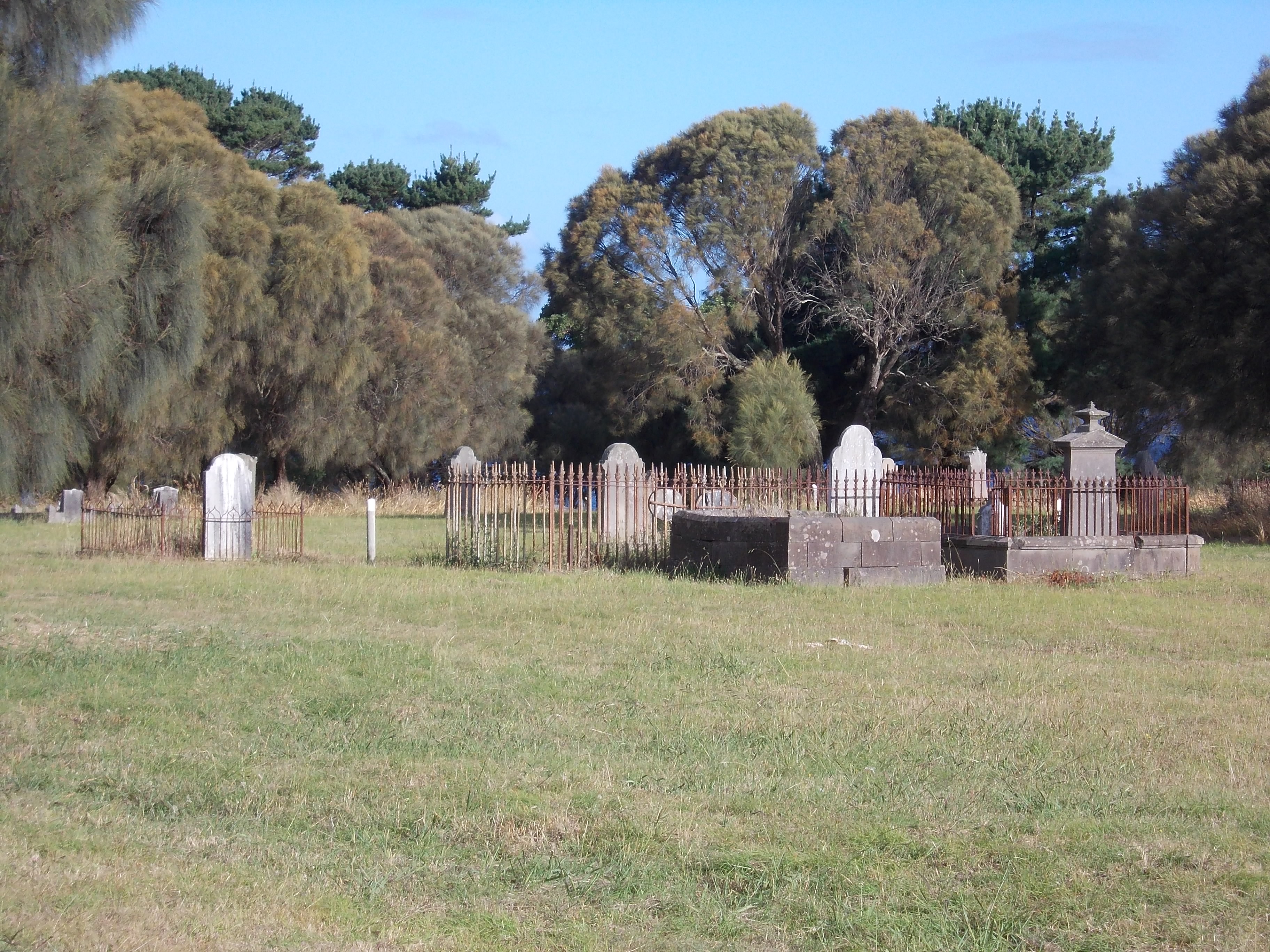
Old Portland Cemetery – Part 2

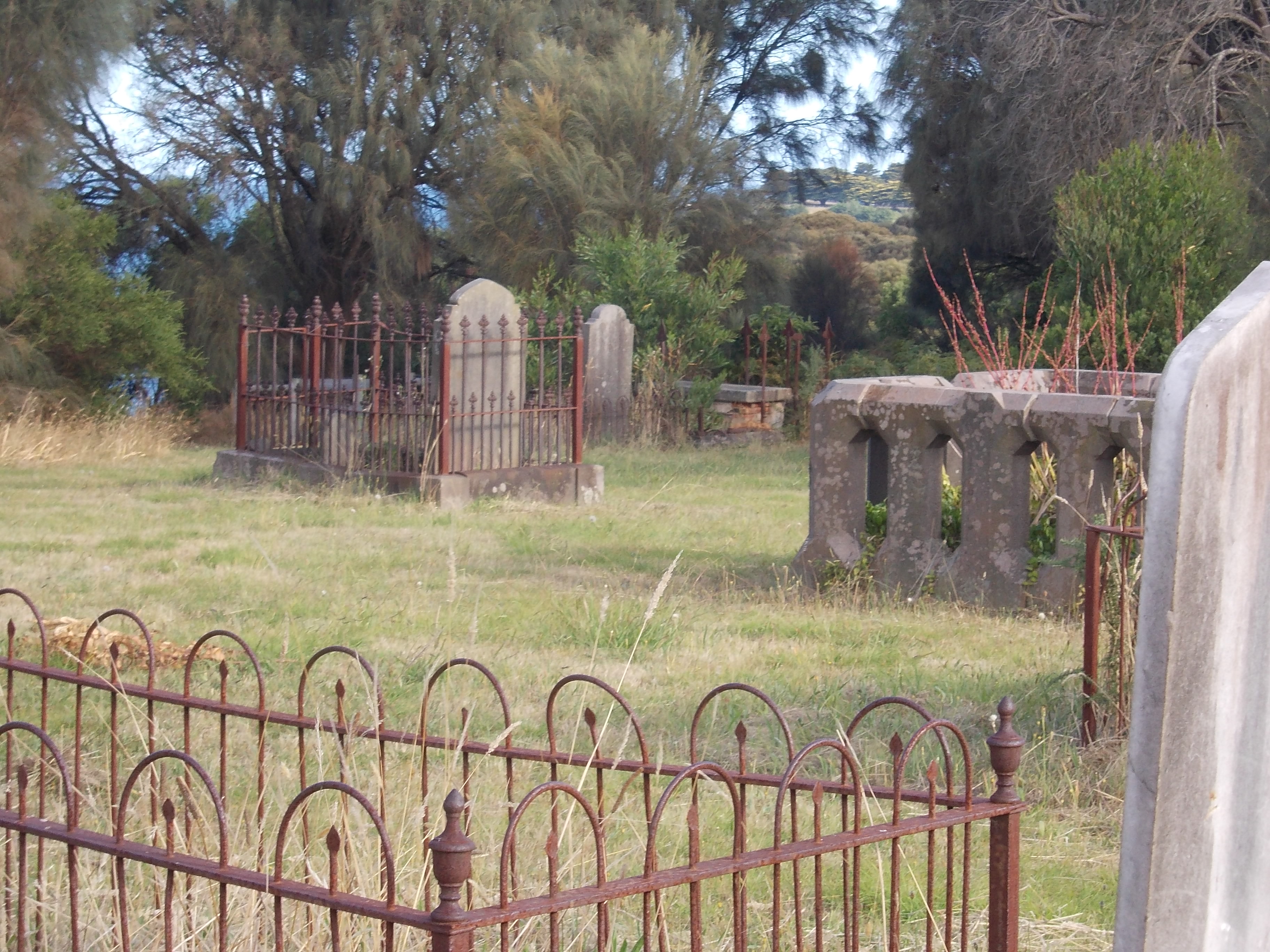
“The Cemetery is the first object to greet the ascending tourist.  

This is charmingly situated on the top of the cliff overlooking the ocean

This quote is not from one of the tourist guides I collected while in Portland earlier this year.  Rather, it was written 155 years earlier by James Bonwick in his book  “Western Victoria: It’s Geography, Geology and Social Condition”: the Narrative of an Educational Tour in 1857″  (p.98)

One of the older graves in the cemetery is that of William Wheeler, who was born in 1776.

HEADSTONE OF WILLIAM WHEELER (1776-1848)

The grave of James Fawthrop was of interest to us.  Earlier in the day, we visited Portland’s Maritime Discovery Centre, housing the Portland Lifeboat captained by James Fawthrop.  Fawthrop and his crew were part of the rescue of the steamer  Admella in 1859.  His heroics are a legendary part of the maritime history of the stretch of coast from the southwest of Victoria to the southeast of South Australia.

After a search of the Victorian Death Index, I found that James Ward was Fawthrop’s stepson.  Fawthrop’s wife, Jane Rosevear, was previously married to James Ward senior, who drowned in Tasmania in 1838.

GRAVES OF JAMES FAWTHROP AND HIS STEPSON JAMES WARD

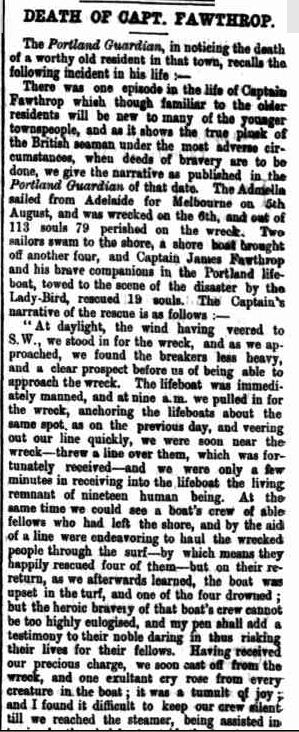
The following is Captain Fawthrop’s obituary from the Border Watch of 20 November 1878.

The DEATH OF CAPT. FAWTHROP. (1878, November 20). Border Watch (Mount Gambier, SA : 1861 – 1954), p. 2. Retrieved June 10, 2012, from http://nla.gov.au/nla.news-article77564021

THE PORTLAND LIFEBOAT CAPTAINED BY JAMES FAWTHROP

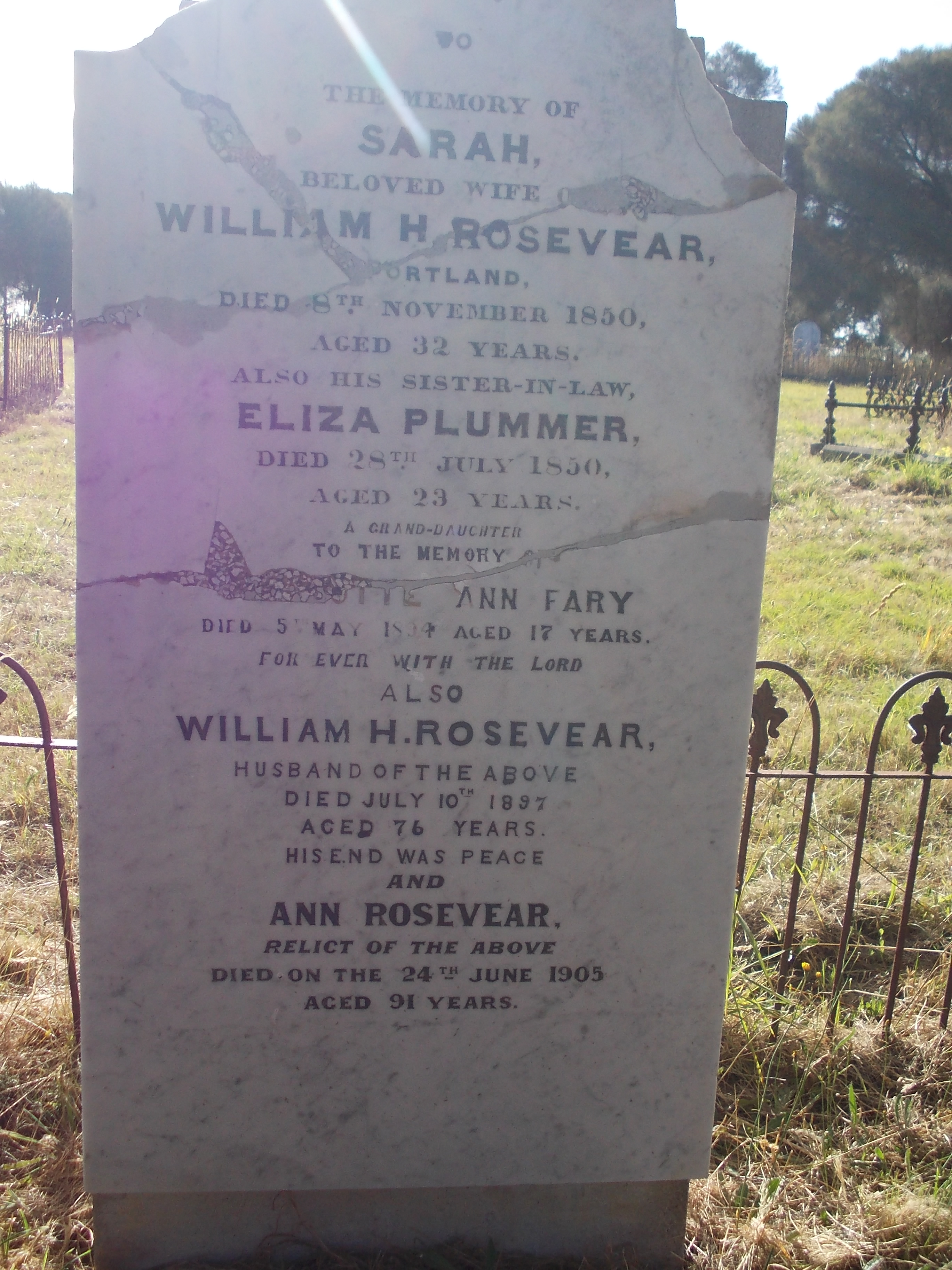
William and Sarah Rosevear were the parents of Jane, wife of James Fawthrop and grandparents of James Ward.  William Rosevear was the coxswain aboard the Portland lifeboat with his son-in-law during the Admella rescue.

ROSEVEAR FAMILY GRAVE

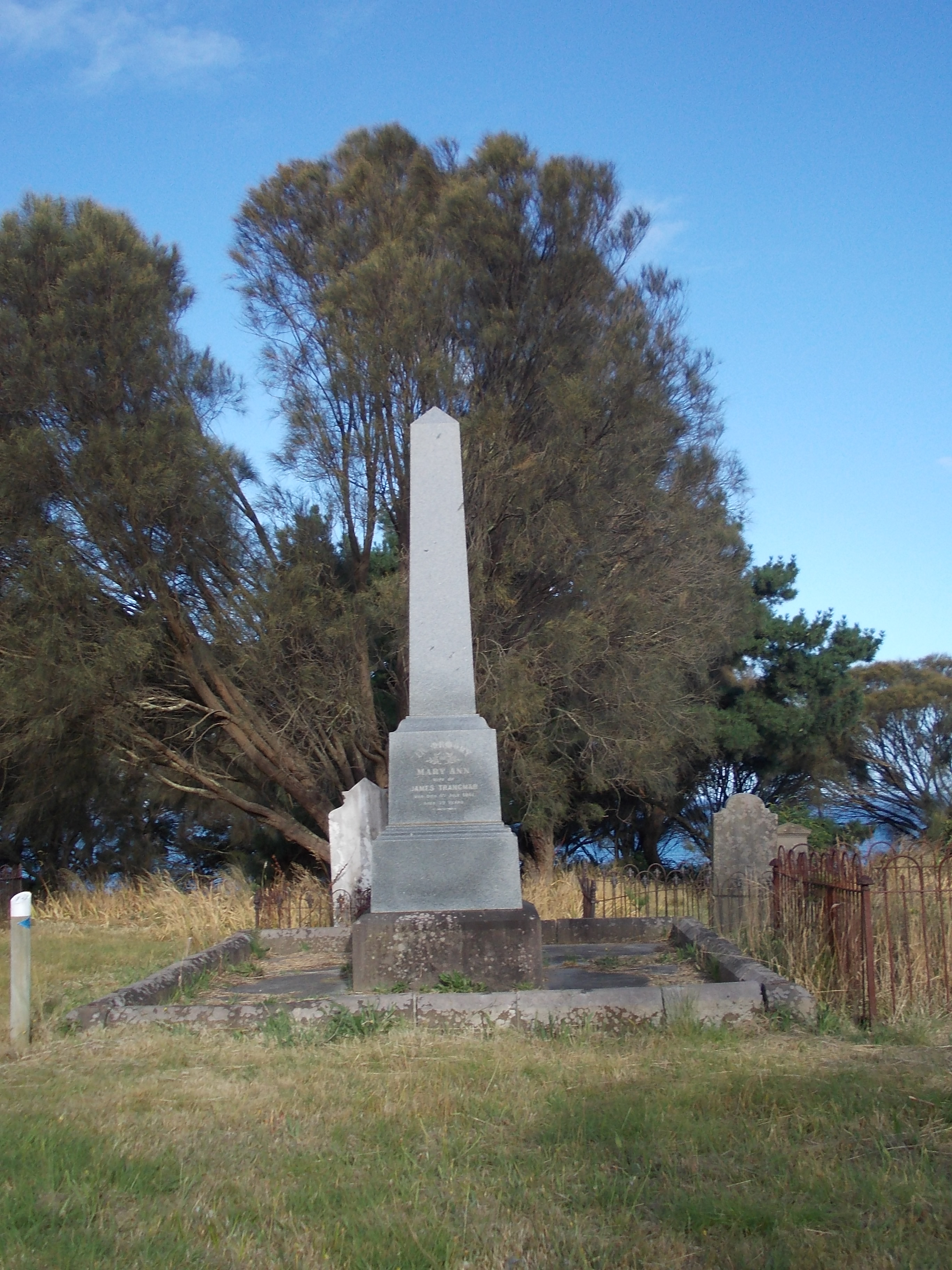
The largest grave in the cemetery belongs to the Trangmar family.  James Trangmar died in 1888 and was a leading Portland identity.  He had been Mayor, a Lieutenant Colonel in the Western Region Artillery, and owned the stations Morgiana, Bochara, and  Violet Creekall near Hamilton.  His home in Portland was  Burswood, bought from Edward Henty

TRANGMAR FAMILY GRAVE