Trove Tuesday-By George

It’s been great to see more Western District papers coming to Trove, the National Library of Australia’s website. Port Fairy papers are among those, and I’ve found them useful in piecing together some Harman family research.

My ggg grandparents, Joseph and Mary Harman, and their children were in Port Fairy from the early 1850s before moving north to Byaduk. One son, George Hall Harman, stayed in Port Fairy. You can read about him in the post Not such an Oddfellow.

I have a wealth of information on George, including a copy of a family history written by his granddaughter, Edna Harman. Edna was a local historian and author from Wangaratta who donated her research about her branch of the family to the Port Fairy Historical Society. She was born in 1909, and much of her information about the Harman family came directly from her father, Herbert, and George himself, who lived until Edna was 22. Edna had visited Port Fairy on numerous occasions, and George had spent time at Edna’s family home in Wangaratta.

Between my research and Edna’s, I thought I knew much of what there was to know about George, but a mystery still remained. On a visit to Port Fairy cemetery, I noticed a monument belonging to the Gibson family with G. Harman in the place where the monument maker leaves his mark.

I knew George had worked as a farm labourer and a gardener, but had never been able to reveal why George’s name came to be on the bottom of the monument, and wondered if this was a one-off attempt at stonemasonry. That was until the new Port Fairy newspapers arrived at Trove and I discovered the following advertisement from 1888.

Advertising (1888, July 3). Belfast Gazette, p. 3. http://nla.gov.au/nla.news-article284462875

The following year, he was dabbling in undertaking.

Advertising (1889, December 6). Belfast Gazette, p. 1. http://nla.gov.au/nla.news-article284463478

It appears to have been a short-lived occupation, with no further advertising, although the last death on the monument was recorded in 1895, but the inscription may have been added later.

I found the discovery most interesting, leaving me thinking that my interest in cemetery research is in my blood. It comes on top of a fairly recent discovery while reading Hamilton Spectators at the Hamilton History Centre. In the 1919 issues, I found my gg grandfather Richard Diwell and sons were offering their services as headstone decorators.

Also in the Port Fairy papers, I found an informative obituary for George’s father, Joseph Harman, more detailed than the one published in the Hamilton Spectator at the time. I also found out George’s daughter, Mary, was the librarian at the Port Fairy Mechanics’ Institute Library (below).

PORT FAIRY MECHANICS INSTITUTE, c1949. Photographer: Colin Caldwell. Image courtesy of the State Library of Victoria http://handle.slv.vic.gov.au/10381/72533

Not only that, George was something of a “Jack of all Trades”. He worked as the Port Fairy dog inspector and in the 1880s was the President of the Wharf Labourers Union. Even better, I discovered he once owned the Port Fairy Skating Rink, around the time of his undertaking venture.
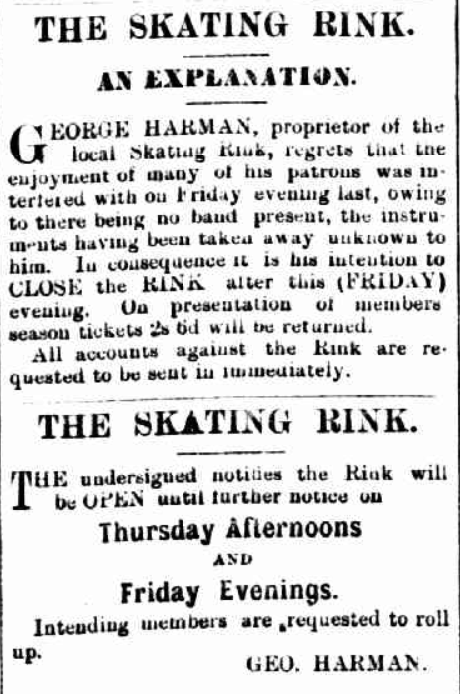
Advertising (1889, August 30). Belfast Gazette, p. 3. http://nla.gov.au/nla.news-article284463319

The Port Fairy newspapers now available at Trove are as follows:

The Portland Mercury and Port Fairy Register (Vic. : 1843 – 1844) Funding thanks to Pamela Marriott

Portland Gazette and Belfast Advertiser (Vic. : 1844 – 1849) Funding thanks to Pamela Marriott

The Banner of Belfast (Vic. : 1855; 1857 – 1864; 1866; 1868 – 1869; 1871 – 1876) Funding thanks to Pamela Marriott

The Belfast Gazette and Portland and Warnambool Advertiser (Vic. 1849; 1851 – 1861; 1864 – 1876) Funding thanks to Pamela Marriott.

Belfast Gazette (Port Fairy, Vic. : 1876 – 1890) Funding thanks to Pamela Marriott, Moyne Shire, and Port Fairy Ghost Stories

Port Fairy Gazette (Vic. : 1890 – 1922) Funding thanks to Moyne Shire Council, Port Fairy Ghost Stories, and Public Record Office of Victoria Local History Grant

Port Fairy Times and Macarthur News (Vic. : 1917 – 1918) Funding thanks to the State Library of Victoria
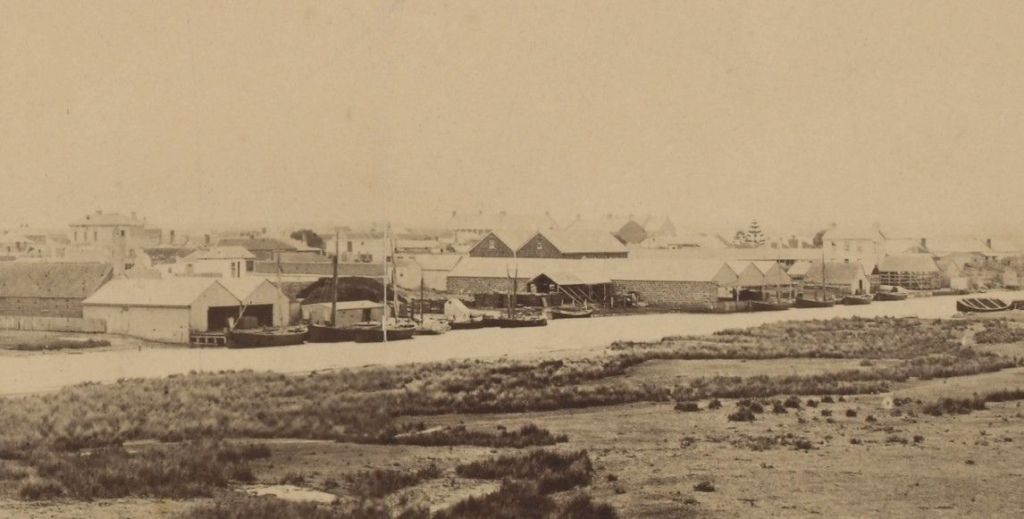
VIEW ACROSS THE MOYNE RIVER, PORT FAIRY c1875

Ancestral Places Geneameme

Yes, I did say in my last post I’m on the move so the chances of me posting in the next month were slim. Just after finishing that post, I read a new post from Alona at the Lonetester blog inviting geneabloggers to take part in a geneameme with the theme, Ancestral Places. The instructions…How many ancestral places can you name using the letters of the alphabet?  I couldn’t resist because one of my favourite things about family history is the places my ancestors lived.  Finding out more about those locations helps us learn more about them it’s a great way to brush up on geography general knowledge.  I’ve listed the main places my direct ancestors resided and added links to earlier posts about some of the families.  If I included 2 x great uncle George Diwell, I could have had a J for Jeparit or 4 x great uncle William Reed, a Y for Yulecart but I managed a place for most letters:

A

Almurta, Victoria, Australia – Combridge

Ararat, Victoria, Australia – Bishop

Aylesbury, Buckinghamshire, England – Cooke, Lane, Piddington, Riddiford

ARARAT, VICTORIA

B

Ballarat, Victoria, Australia – Gamble, Harman, Riddiford

Bass, Victoria, Australia – Combridge, Hunt, White

Bisham, Berkshire, England – Buckland

Bletchley, Buckinghamshire, England – Cooke, King, Richardson

Brighton, Sussex, England – Hughes

Broadstairs, Kent, England – Culmer, Jarman, Pettman, White

Byaduk, Victoria, Australia – Bishop, Harman

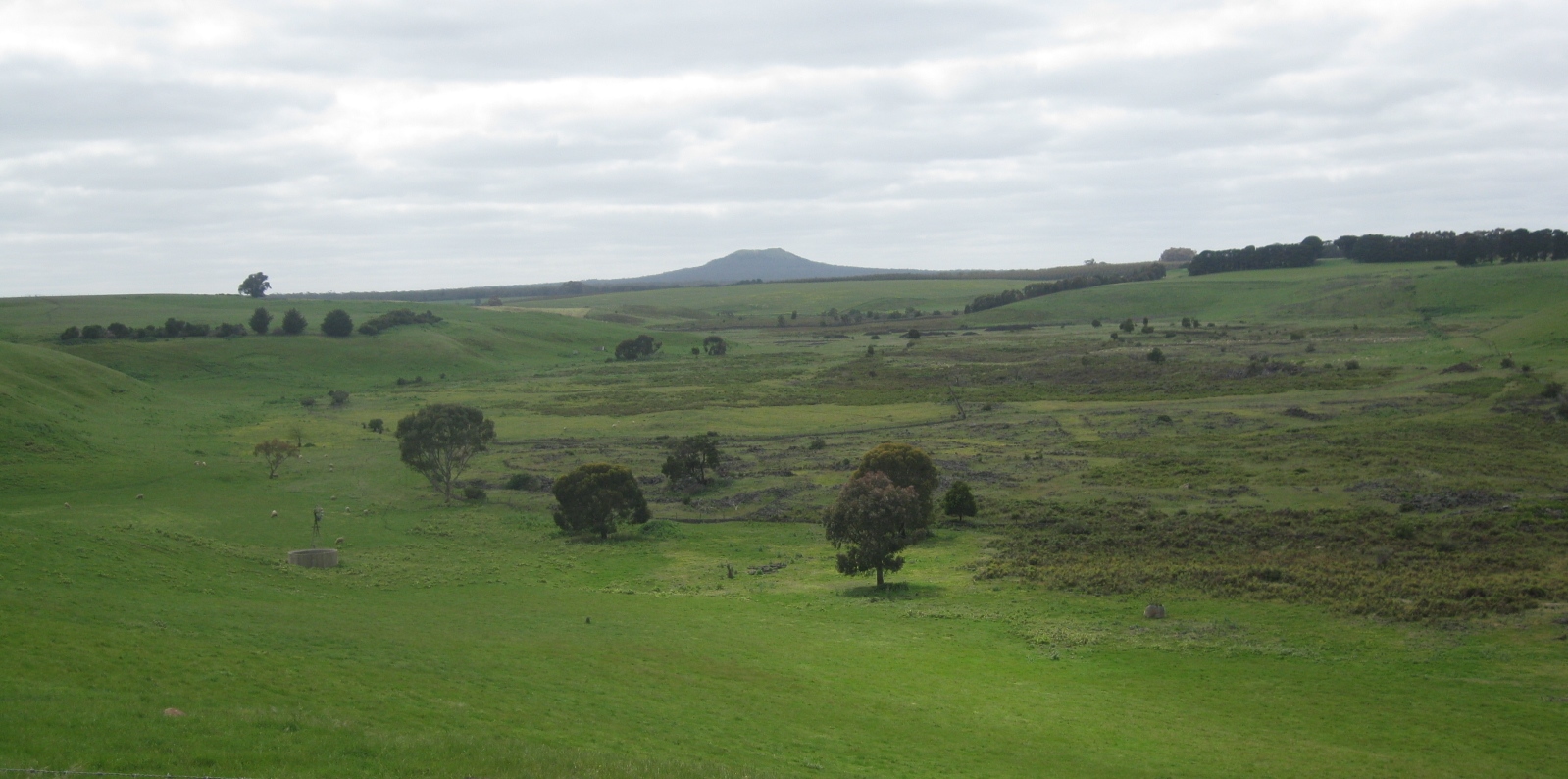
BYADUK, VICTORIA

C

Casterton, Victoria, Australia – Diwell, Jelly

Cavendish, Victoria, Australia – Hadden, Mortimer

Charlton, Wiltshire, England – Young

Cheshunt, Hertfordshire, England – Chapel, Kirkin, Parsons

Clapham, London, England – Webb

Clerkenwell, London, England – Riddiford

Colac, Victoria, Australia – Gamble, Hodgins

Cuddington, Buckinghamshire, England – Lawrence, Piddington, Riddiford, Timberlake, Wall

CAVENDISH, VICTORIA

D

Dover, Kent, England – Trewin

Drumgooland, County Down, Ireland – Jelly

E

East Lothian, Scotland – Calder, Warden

Edmonton, London, England – Riddiford

F

Fenny Stratford, Buckinghamshire, England – Cooke, Riddiford

Fermanagh County, Ireland – Brackin, Hodgins

Frant, Sussex, England – Diwell, Sinnock

G

Geelong, Victoria, Australia – Combridge

Gladsmuir, East Lothian, Scotland – Dobson, Hadden, Kinnaird, Neilson

Glen Alvie, Victoria, Australia – Combridge

Grantville, Victoria, Australia – Combridge, Hunt, White

GEELONG, VICTORIA

H

Haddenham, Buckinghamshire, England – Riddiford

Haddington, East Lothian, Scotland – Dobson, Hadden

Hamilton, Victoria, Australia – Diwell, Gamble, Hadden

Hulme, Lancashire, England – Jelly

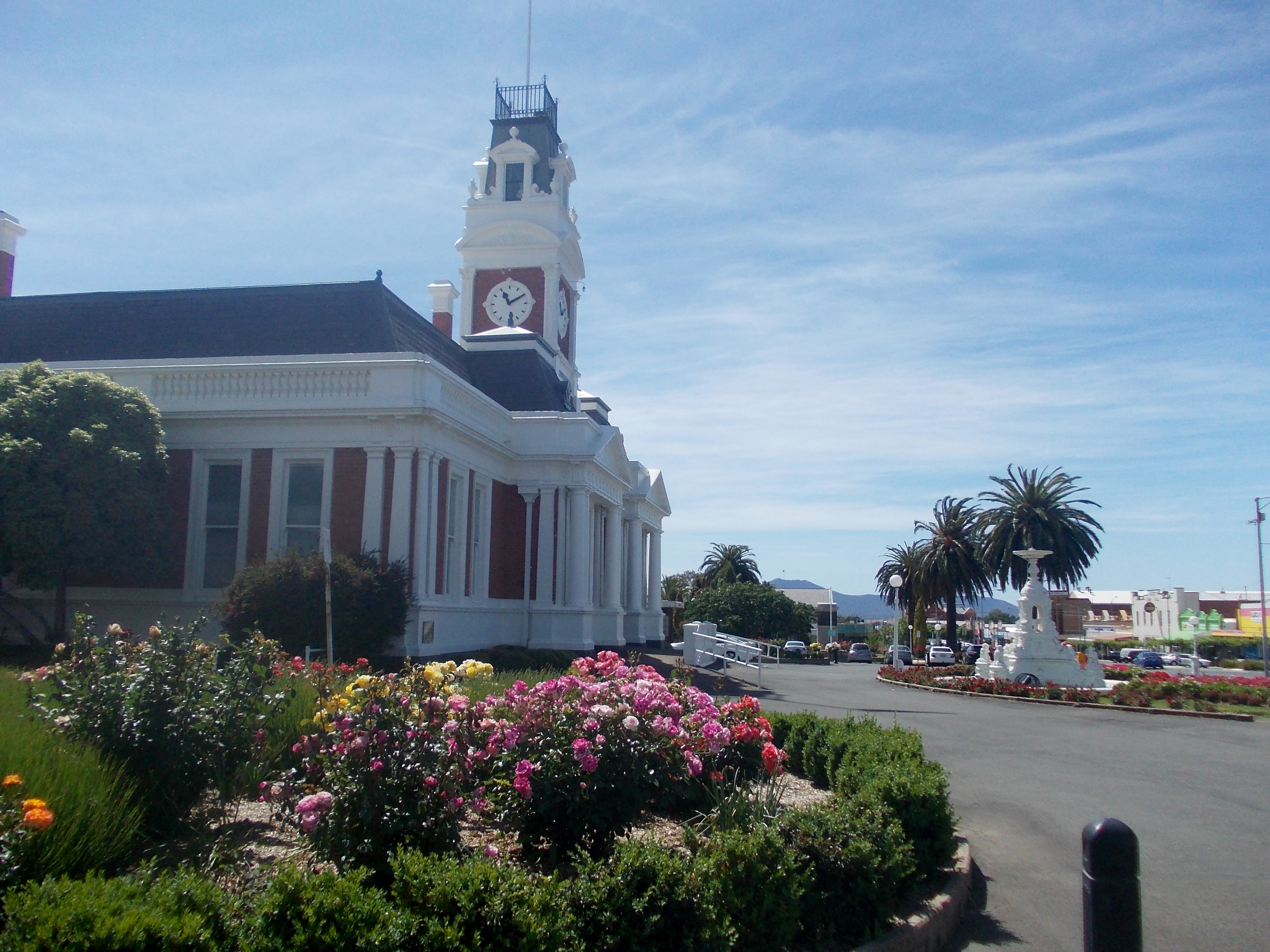
HAMILTON, VICTORIA

I

Ireland – Beaty, Irwin

Islington, London, England – Kirkin

J

K

Kingswood, Gloucestershire, England – Riddiford, Trotman

L

Lambeth, London, England – Kirkin, Riddiford, Webb

Leytonstone, London, England – Riddiford

Longniddry, East Lothian, Scotland – Hadden

Lower Winchendon, Buckinghamshire, England – Lawrence

M

Macarthur, Victoria, Australia – Bishop

Macclesfield, Cheshire, England – Law, Shaw

Manchester, Lancashire, England – Shaw

Melbourn, Cambridgeshire, England – Harman, Mulberry

Merino, Victoria, Australia – Diwell

MERINO c1880 Image courtesy of the State Library of South Australia. Image no. B 21766/113 http://collections.slsa.sa.gov.au/resource/B+21766/113

N

Newington, London, England – Turner

Norfolk, England – Baker, Thurling

North Nibley, Gloucestershire, England – Riddiford, Trotman

O

Oldham, Lancashire, England – Riddiford

Ontario, Canada – Riddiford

P

Poplar, London, England – Hunt, Jewell

Port Fairy, Victoria, Australia – Harman

Portland, Victoria, Australia – Diwell, Harman

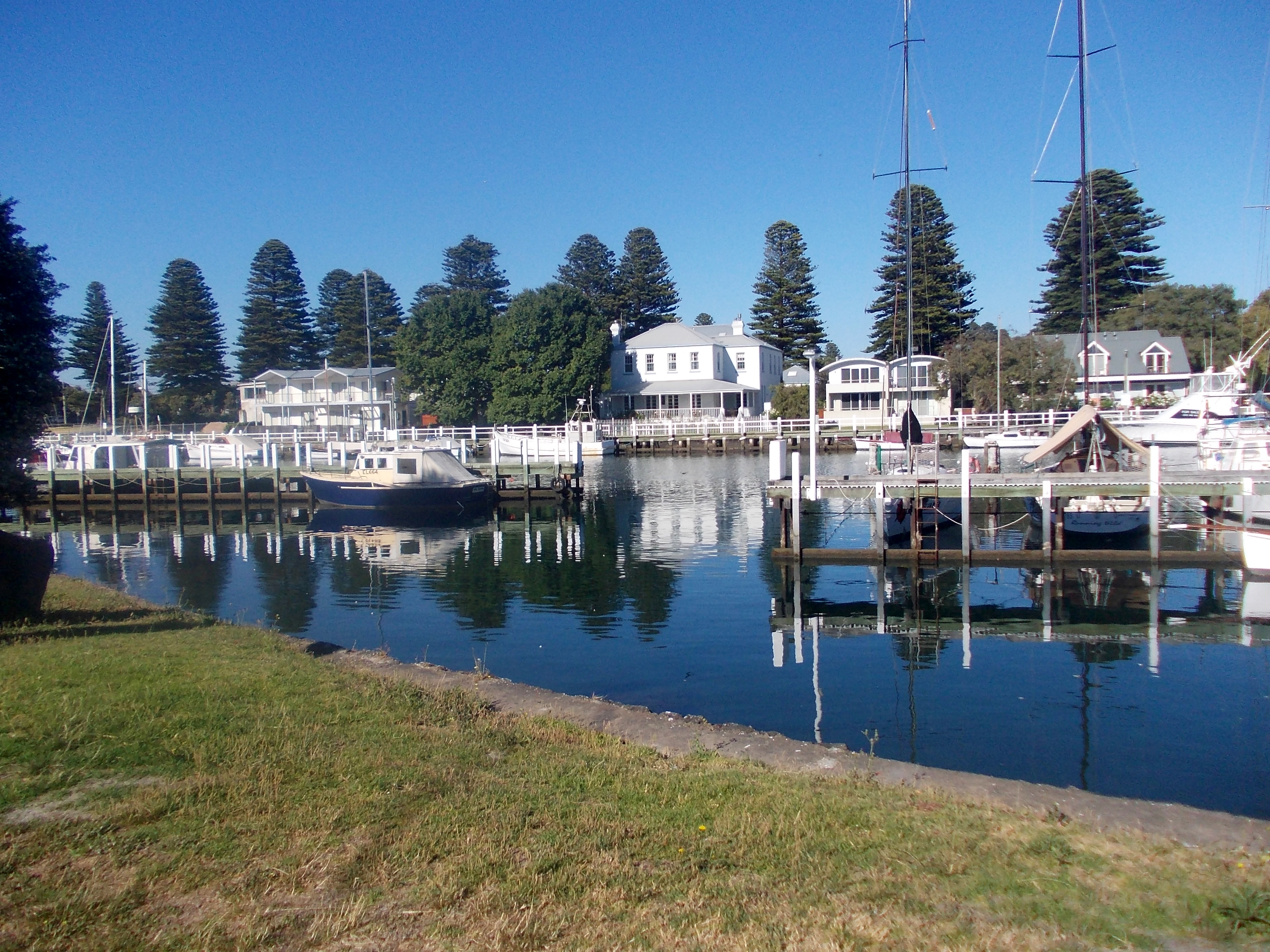
PORT FAIRY, VICTORIA

Q

Queensferry, Victoria, Australia – Combridge

SAWMILL NEAR QUEENSFERY, VICTORIA c1880. Photographer: Fred Kruger. Image courtesy of the State Library of Victoria.

R

Ramsey, Cambridgeshire, England – Combridge

Reading, Berkshire, England – Druce, Mortimer

Rotherfield, Sussex, England – Diwell, Sinnock

Rotherhithe, London, England – Webb

S

Smeaton, Victoria, Australia – Riddiford

St. Peters, Kent, England – Jarman

Steiglitz, Victoria, Australia – Combridge

ANDERSON’S MILL, SMEATON. Image courtesy of the State Library of Victoria

T

Thanet, Kent, England – Culmer, Jarman, Trewin, White

Thornbury, Gloucestershire, England

Tipperary County, Ireland – Barry

Tonbridge, Kent, England – Lawrence

Tudeley, Kent, England – Lawrence

U

Uley, Gloucestershire, England – Riddiford

V

Victoria

W

Water Eaton, Buckinghamshire, England – Cooke, Goodman

Weymouth, Dorset, England – Bishop

Whaddon, Cambridgeshire, England – Read/Reed, Waymant

White Waltham, Berkshire, England – Buckland, Mortimer, Sharp

Wonthaggi, Victoria, Australia – Combridge

Woolwich, London, England – Kirkin

Wotton-Under-Edge, Gloucestershire, England – Riddiford

Wycombe, Buckinghamshire, England – Riddiford

WONTHAGGI, VICTORIA 1925. Image courtesy of the State Library of South Australia. Image no. B 61788/85http://collections.slsa.sa.gov.au/resource/B+61788/85

X

Y

Z


In Memory of James Harman

The following advertisement for the 1916 Hamilton Pastoral & Agriculture (P & A) Show reminded me it was the first Hamilton P & A show my ggg grandfather James Harman was not around for. In turn, it reminded me that today is the 100th anniversary of James Harman’s death.

"Advertising" Hamilton Spectator (Vic. : 1870 - 1918) 29 August 1916: 5. .

“Advertising” Hamilton Spectator, 29 August 1916, p. 5. <http://nla.gov.au/nla.news-article133706580&gt;.

James Harman’s roles with the P & A included exhibitor, judge, and committee member.  Over the years, he exhibited Lincoln sheep, farm produce, and border collie dogs and judged produce and farm machinery.

LINCOLN SHEEP. Image courtesy of the State Library of Victoria. Image No. PRG 280/1/17/796 http://collections.slsa.sa.gov.au/resource/PRG+280/1/17/796

A LINCOLN SHEEP. Image courtesy of the State Library of Victoria. Image No. PRG 280/1/17/796 http://collections.slsa.sa.gov.au/resource/PRG+280/1/17/796

Toward the end of the 1870s, when his oldest boys could take on duties on his farm, James had more “leisure” time, so he threw himself into a few local farm-related activities, and the P & A was one of those. Respected by farmers and graziers alike, James could mix with all men, including Hamilton Spectator owner George Rippon, grazier and politician John Thomson, and businessmen Peter Learmonth and Robert Stapylton Bree, each prominent names in the annals of Hamilton and district.

"PASTORAL AND AGRICULTURAL SOCIETY." Hamilton Spectator (Vic. : 1870 - 1918) 17 May 1883: 4. .

“PASTORAL AND AGRICULTURAL SOCIETY.” Hamilton Spectator, 17 May 1883, p 4 

In 2011, I wrote The Leader of the Pack on the assumption that if all my ancestors came together at one place and time, it would be James Harman who would step to the front and lead the group.  Five years on and knowing so much more about James, I have no doubt.  I first formed my opinion based on his place in the Harman family as eldest son, and also his place in the community as a Wesleyan Methodist Church Local Preacher.  Now, with more issues of the Hamilton Spectator at Trove giving me 250+ tagged articles for James, I know his leadership went beyond the confines of family and the Byaduk community.  

Along with James’ P & A involvement, he was on several occasions President of the Hamilton Farmers Union in the 1880s and the founding president of the Byaduk Farmers Club.  He was also on the Byaduk State School committee, represented the Byaduk community at Dundas Shire meetings, and as a leader in the church, attended Wesleyan Methodist Synods representing the Hamilton circuit, always considering the interests of the local church goers.

jamesharman

JAMES HARMAN AGED AROUND THIRTY-SEVEN (1867). Photo taken from the Byaduk Pioneer photo boards in the Byaduk Hall, compiled by Vern McCallum (website http://www.mccallum-collection.org/)

Throughout, James remained humble and, during his Farmers’ Union presidency, considered himself worthy of leading the organisation.  But James also said if he joined a committee, he gave it everything he had, and he was true to his word.  James’ election to chairman of a meeting in 1881 to discuss a possible extension of the railway from Hamilton to Byaduk was just one occasion when James expressed those sentiments publicly.

"RAILWAY MEETING AT BYADUK." Hamilton Spectator (Vic. : 1870 - 1918) 15 October 1881: .

“RAILWAY MEETING AT BYADUK.” Hamilton Spectator, 15 October 1881: <http://nla.gov.au/nla.news-article226062215&gt;.

Such activities meant James was rarely home, but always waiting patiently until all hours of the night was his wife, Susan.  Susan shared his life from 1852 in Cambridgeshire, through their voyage to Australia as newlyweds, and trusted James when he suggested moving north from Port Fairy to select their own piece of Australia at Byaduk.  It was Susan’s death only four months before his own that saw James’ health slip, taking away the vigour that served him so well for eighty-five years.  As Reverend Guard, the then Byaduk Wesleyan Methodist preacher, said in the obituary he wrote for James, “Earth had not such an interest for him…”

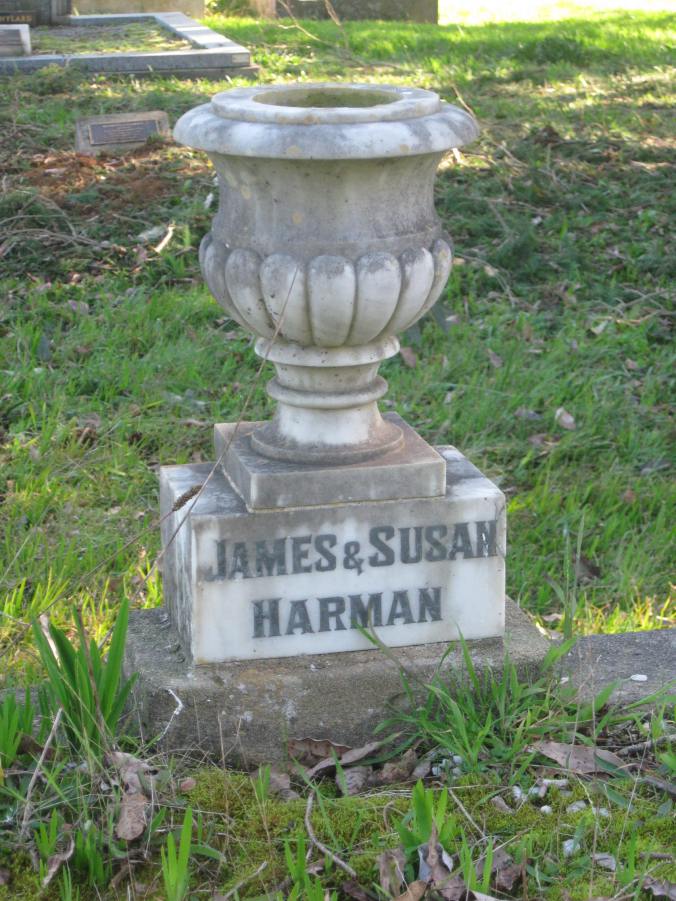
TOGETHER AGAIN. THE GRAVE OF JAMES & SUSAN HARMAN AT THE BYADUK CEMETERY.

In Broad Daylight

A few years ago, I wrote a post about the youngest son of Joseph Harman and Sarah Mulberry of Byaduk and formally of Melbourn, Cambridgeshire. “Alfred Winslow Harman – Stepping out of the Shadows” was so named because research for the post uncovered things about Alfred I hadn’t known.

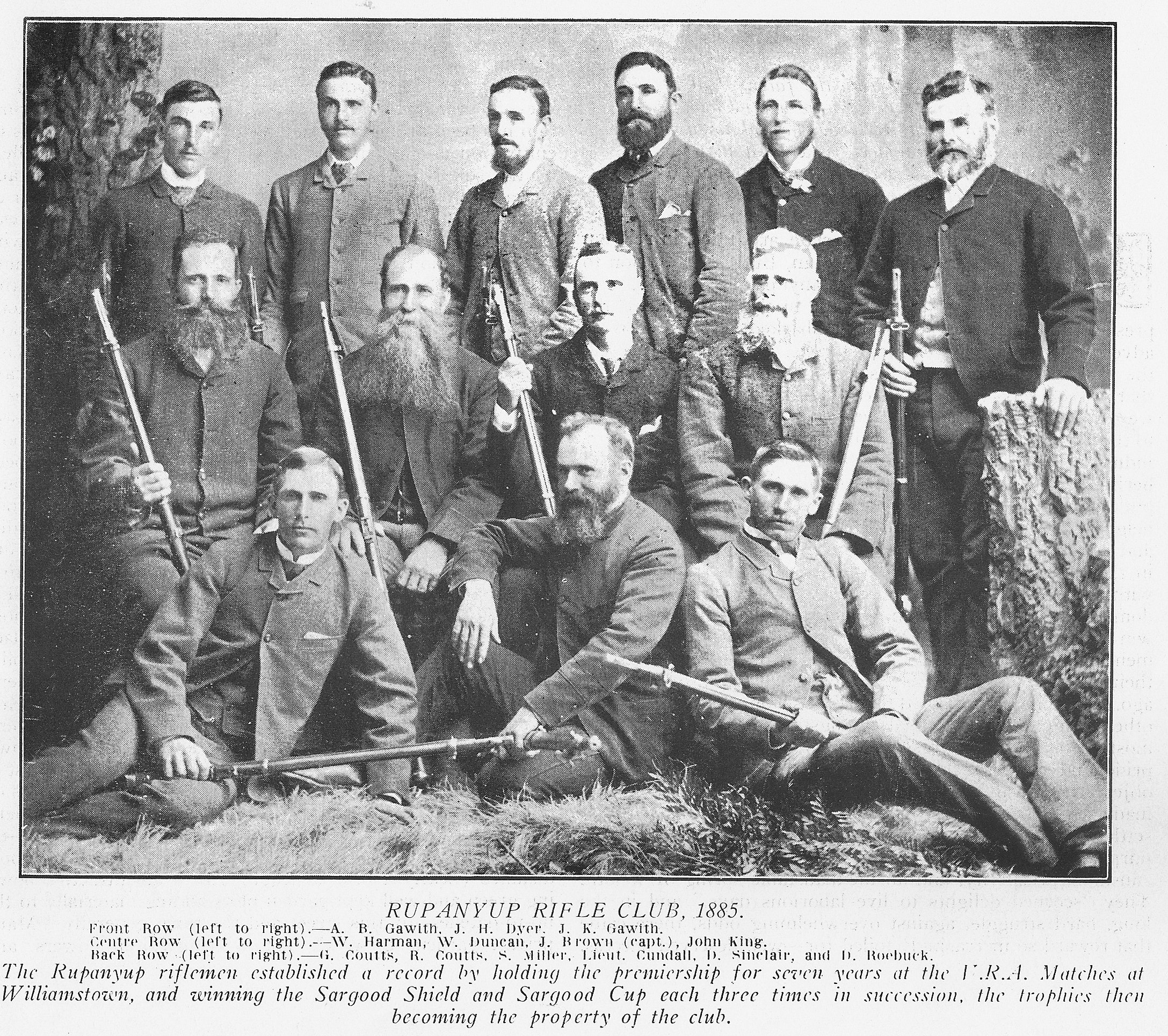
Finding a photo of Alfred was the next aim and I thought I had just one shot at it…a photo of the Rupanyup Rifle Team c1880-90.  Having seen their great Facebook page, I thought I would contact the Rupanyup Historical Society.  I soon heard back from Helen, the society’s Secretary. The society had a meeting the following evening and the President was an expert on the Sargood Shield.   That was great news as the Rupanyup Rifle Club had great success in the Sargood Shield, a highly prized annual competition between Melbourne and country Victorian teams. Alfred was captain of the team in 1886.

Helen came back to me after the meeting and finally I was able to see Alfred Harman, out of the shadows and in broad daylight.  Helen had emailed me a photo of the 1885 Rupanyup Rifle Club. Alfred is the middle row, first on the left in this photo of the 1885.  To give you some idea about where he was in his life,  he was thirty-three years old, married for seven years and father to a six-year-old son.  His brother-in-law Samuel Miller is in the back row, third from the left.  There are some impressive Hairy Mancestors among them.

Image courtesy of the Rupanyup Historical Society.

Image courtesy of the Rupanyup Historical Society.

Thank you so much to the Rupanyup Historical Society.  Please go and check out their wonderful Facebook page on the link – Rupanyup Historical Society Facebook Page.  It was there I found WW1 photos of Alfred Harman’s great-nephews Robert and George Cruikshank, my 2nd cousins, 3 x removed,  who grew up in Rupanyup.  I also found photos of members of the Loats and Starbuck families who had lived in the Muddy Creek area, near Hamilton, and with whom I have family links.


James and the Bushranger

My son is now eleven and thinks he’s a bit too cool for history.  But not all is lost. Often I can get him interested in history without him even realising.  Besides taking advantage of his confinement in the car when travelling through the Western District and imparting snippets of history to him, I know that I can take him anywhere historic if I can capture his imagination.  I knew I could do that at the Port Fairy Cemetery in January.  I was after some more headstone photos and the lure for Lachlan was the chance to see the grave of a bushranger.


267

The story of “Dick” the Bushranger unfolded just up the road from the cemetery, in front of the St Patrick’s Catholic Church on the Port Fairy/Yambuk Road, now known as the Princes Highway. We visited the church in 2014 and Lachlan took the following photo.

ST. PATRICK'S CATHOLIC CHURCH, PORT FAIRY.

ST. PATRICK’S CATHOLIC CHURCH, PORT FAIRY.

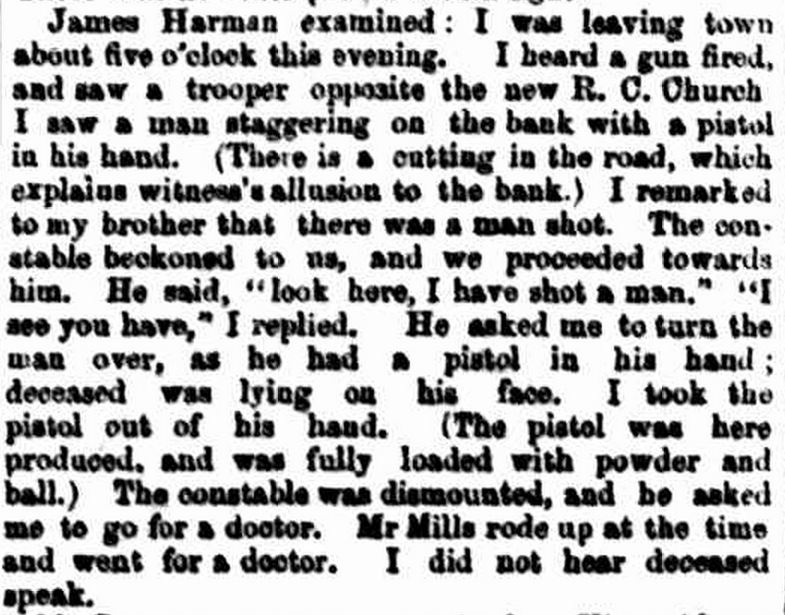
It was 12 February 1859 and the local constabulary had heard two bushrangers were approaching the town.  With only three local mounted police, they split up to make sure all roads into town were covered.  Constable Wigmore came face to face with the alleged bushrangers at 5.00pm near St. Patrick’s church.  After some questioning, he attempted to arrest them and warned them he would shoot if they continued walking toward the town’s centre.  One of the men refused and produced a pistol and Constable Wigmore felt he had no choice but to follow through with his warning and he shot the man.  The following report appeared in The Age of 24 February 1859.  Another report was published in the Geelong Advertiser of 23 February 1859.

db

“A BUSHRANGER SHOT.” The Age (Melbourne, Vic. : 1854 – 1954) 24 February 1859: http://nla.gov.au/nla.news-article154837960

The name of the dead man was not known.  His companion, William Darcy, said he only knew him as “Dick” and said they had met at the Yambuk Hotel where they allegedly stayed the night before.


YAMBUK HOTEL

YAMBUK HOTEL

William Darcy was charged with highway robbery by Portland police in the days after, as reported in the Portland Guardian and Normanby Advertiser on 2 March and stood trial in May 1859. Darcy was found guilty and sentenced to five years hard labour for assault and highway robbery as reported by the Portland Guardian and Normanby Advertiser on 13 May 1859.  Witness statements at the committal hearing published on 2 March would suggest both men were guilty and they didn’t support Darcy’s claim that he and “Dick” were at the Yambuk Inn, rather camped by the road.  But many questions remain and it was only the word of the defendant against the two witnesses, that led to Darcy’s charges.  “Dick” had no opportunity to give his side of the story.

A search of the Central Register of Male Prisoners at the Public Record Office of Victoria (PROV VPRS 515) found that William Darcy (no. 4481), a Presbyterian, was just twenty-three and had arrived in the colony alone and had no relatives in the colony.  He was sent to Pentridge Prison. Beyond William Darcy’s personal information, there was little else to take from the file.

“Dick” was buried in the Port Fairy Cemetery in a grave marked with rocks.  In recent years, in addition to the grave is a headstone, with the words “Did He Deserve This?”.  I’ve been on one of Maria Cameron’s wonderful Port Fairy cemetery tours and she believes from her research, that “Dick” was Frederick, but the mystery remains as to his true identity.

The story of “Dick” the bushranger is unlike any other bushranger story I could share with Lachlan.  As the dying man took his last breath, Lachlan’s gggg grandfather James Harman was present.


"A BUSHRANGER SHOT." The Age (Melbourne, Vic. : 1854 - 1954) 24 Feb 1859 .

“A BUSHRANGER SHOT.” The Age (Melbourne, Vic. : 1854 – 1954) 24 Feb 1859 <http://nla.gov.au/nla.news-article154837960&gt;.

It was no surprise to learn that James and his brother, possibly Jonathan Harman, were heading out of town toward Yambuk.  Although I am yet to fully establish James’ movements from the time he disembarked from the Duke of Richmond at Portland harbour in 1854 until he arrived in the Byaduk area around 1861, I do know that James was first employed at Boodcarra between Port Fairy and Yambuk.  I took this photo of Boodcarra from a moving car, simply because the road at that point is not good for stopping.

266

By 1859, James may have resided at Port Fairy, o he would be visiting Yambuk.  A reason for a visit was to see good family friends and later extended family, the Olivers who were living at Yambuk around that time.  Jonathan and Reuben Harman later married two of the Oliver girls.  They were also church friends of the Harmans, another reason James, a Wesleyan Methodist local preacher, may have headed out the Yambuk Road.  Perhaps there was a prayer session at a the home of another Wesleyan Methodist.  When there was not a local Methodist church, gatherings were held at private homes, by candlelight, and often running late into the night.  Whatever the reason, I am sure it was a trip James and his brother never forgot.

So mission accomplished, Lachlan learnt something of his family history and I got more headstone photos to add to my collection.   You can see some of those photos in my two Port Fairy cemetery posts to date – Port Fairy Cemetery Part One and Port Fairy Cemetery Part Two.


Trove Tuesday – Rebecca’s Trees

Trove is great for finding photos, and it was the Trove picture search I headed to recently, looking for the home of George Hall Harman and his wife, Rebecca Graham, formerly of James Street, Port Fairy.  I knew the house no longer existed, and with the help of a family history written by George and Rebecca’s granddaughter Edna Harman,  I thought I had roughly found the location of the house while visiting Port Fairy in January 2014.

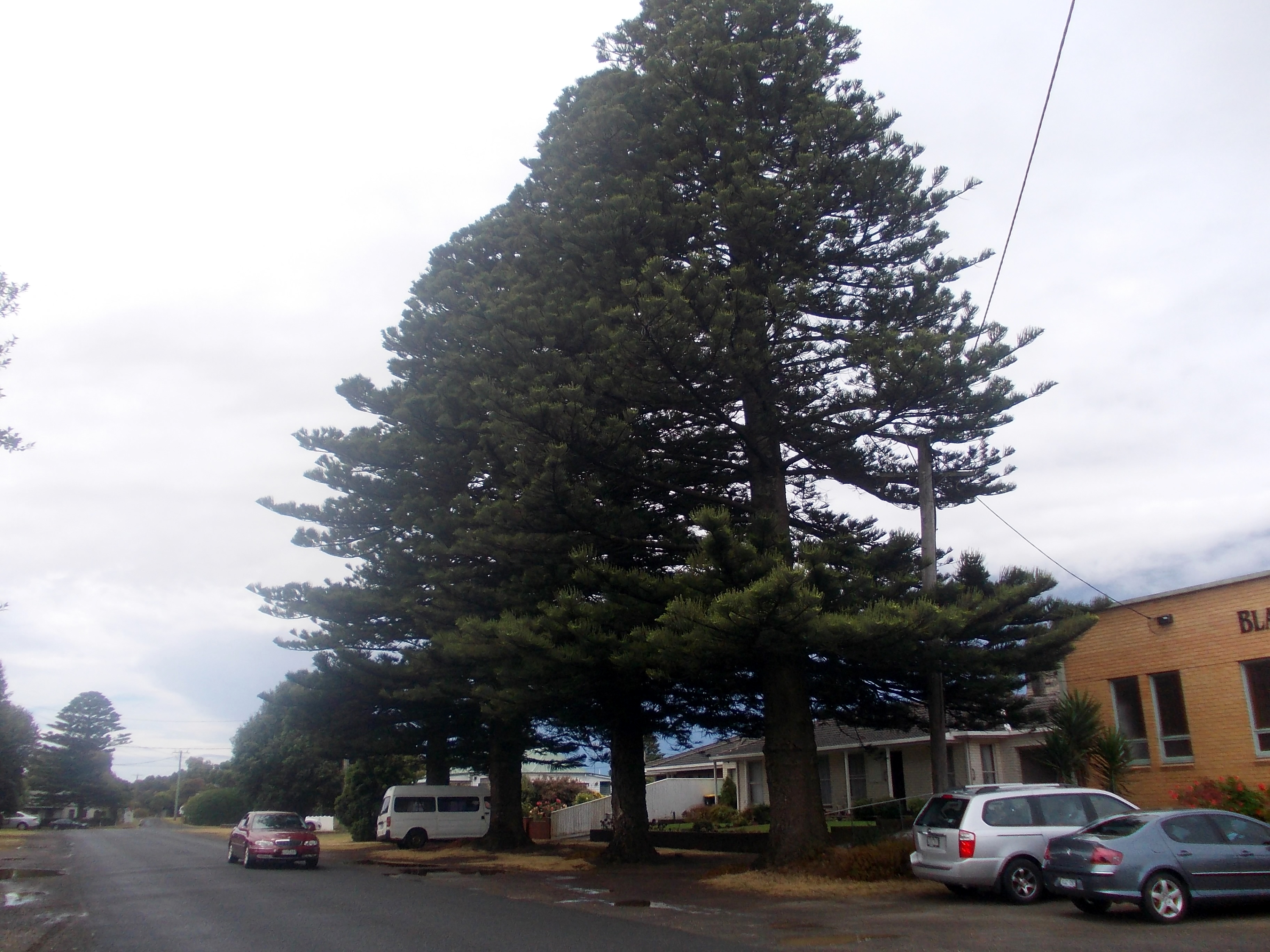
During the past year, more information has been forthcoming when Mike Harman contacted me.  Mike is my Nana Linda Hadden’s first cousin, both grandchildren of Reuben James Harman, a nephew of George Hall Harman.  Mike passed on some of the work his sister Joan had done on the history of the Harmans, and the information about George Hall Harman caught my eye.  Apparently, when Rebecca passed away in 1902, grieving George planted four Norfolk Pines in front of their home in James Street.

Armed with that knowledge, while visiting Port Fairy in January, I headed to James Street.  Port Fairy has many Norfolk Pines lining its streets, but in the Harman’s block of James Street, there are just four, all in a row and only a few doors up from where I previously visited.  I thought if George did plant the trees, those standing before me had to be “Rebecca’s trees.”

233

Once home, I went in search of an old photo of James Street.  The State Library of Victoria’s (SLV) collection was the likely place to find one, but instead of searching directly at the SLV site, I chose Trove, my preferred ‘search engine’.  I seem to get better results when I search Trove, I like the filters that aid the search, and I can tag my results or add them to one of my many lists.  I searched for “James Street Port Fairy,”  and toward the top of the search results was a photo from the Lilian Isobel Powling collection at the SLV.  It was of James Street from 1958, and it gave me more than I expected.

JAMES STREET, PORT FAIRY.  Image courtesy of the State Library Collection.  Photo by Isobel Powling, 1958.  Image no.  H2008.75/102 http://handle.slv.vic.gov.au/10381/95700

JAMES STREET, PORT FAIRY. Image courtesy of the State Library Collection. Photo by Lillian Powling, 1958. Image no. H2008.75/102 http://handle.slv.vic.gov.au/10381/95700

The photo was looking right at the house that once stood behind the pines, presumably that of George and Rebecca Harman.  The top of St. John’s Anglican Church is visible in the background.

I did take a photo from a similar angle to the 1958 version, but a little further back.

230

Although it is hard to see, the top of the church is now obscured by pines, and an electricity pole stands in the same spot as in 1958.

Recently, on the Victoria Genealogy Facebook group’s feed, there was a discussion about family stories becoming family “fact” so I would like to make sure Rebecca’s trees are more than a family story.  I have a lot of Harman information from the Port Fairy Historical Society, but there is no information about the trees. The Port Fairy Gazette is a possibility, but my first step will be to confirm exactly where the Harman’s lived in James Street.  However, I’m a little “Harmaned out” at the moment and would like to focus on some of my tree’s other branches, so in-depth research will have to wait for now.

Called by God

While writing the history of the Harmans of Byaduk, I immersed myself in the family’s daily lives and at times felt as though I was there with them.  With my ggg grandfather James Harman, I was among the congregation at the Byaduk Methodist Church and traversed the countryside as he conducted his Local Preacher duties. I attended sheep and Pastoral and Agriculture (P&A) shows and learnt the finer points of tilling the soil at ploughing matches.  I  felt James’ pride in 1907 as he stood with his fellow pioneers and friends for a photograph before his beloved Byaduk Methodist Church (below) and shared his satisfaction when he won a Lincoln ram at the Hamilton P&A show.

BYADUK PIONEER DAY - March 27, 1907. JAMES HARMAN (Back Row, 6th from right), JONATHAN HARMAN (Back Row, 5th from right), ELIZABETH OLIVER, widow of REUBEN HARMAN (Front row, 2nd from right). Photo courtesy of the Hamilton History Centre.

BYADUK PIONEER DAY – March 27, 1907. JAMES HARMAN (Back Row, 6th from right), JONATHAN HARMAN (Back Row, 5th from right), ELIZABETH OLIVER, widow of REUBEN HARMAN (Front row, 2nd from right). Photo courtesy of the Hamilton History Centre.

The post False Alarm, revealed my ongoing frustration of not having an obituary written about James Harman, my favourite ancestor. One such as those written for his brothers Jonathan and Walt, lengthy, information-packed tributes which told me much about the type of men they were.  An obituary for James in the Hamilton Spectator came close but I wanted more.

Just a few weeks before my thesis was due, the Spectator and Methodist Chronicle (Melbourne 1914-1918) came online at Trove and there was an obituary for James. Unfortunately, the article was still undergoing quality control checks so the wait was on.  My “Electronic Friend” would send an email when the article was ready to go but no amount of checking my inbox made the article arrive.  The submission date for my thesis came and went and still, the article was unavailable.  Until yesterday.

The obituary was signed “W.H.G” and knowing something of the Byaduk Methodist Church helped me name the author as the Reverend William Herbert Guard who presided over the church at the time of James’ death.  His tribute answered one of my questions about James.  When did he become involved with the Wesleyan Methodist Church?  Was it when he arrived in Port Fairy in 1852?  Or when the family spent some time at Muddy Creek before going to Byaduk.  Muddy Creek had a strong Methodist community of Wesleyans, Primitives and Reformers who had arrived via Port Fairy.  But, according to Reverend Guard, James’ commitment to Methodism began before leaving Cambridgeshire.

Reverend Guard visited James in his last days and recounted those visits but most powerful were his recollections of James’ final hours. “I’m going home,” a weakening James told him. Then in his last moments, James raised his hand and uttered his last word “Coming” and with that, he was gone. James was ready to meet his God. Many obituaries describe the last moments of a person’s life but often in a clinical fashion. W.H.G.’s description was spiritual.  Such was James’ devotion it couldn’t be any other way.

James was not just “going home” to God. His beliefs gave him the faith to believe he was also joining his wife Susan Reed.  The obituary confirmed the bond he shared with Susan, forged over sixty-four years.  Susan died on 10 April 1916 and James on 13 August in the same year.  I have always thought the few months apart was too long a time for James. He had lost the woman who gave him strength and after only four months they were reunited at the Byaduk Cemetery.

TOGETHER AGAIN

TOGETHER AGAIN

There is little information about Susan’s life besides her birth, death and children in-between.  But she was with James when they left Melbourn, Cambridgeshire as newlyweds and endured a forgettable voyage on the Duke of Richmond.  She travelled with him from the port of Portland to Port Fairy for James’ first employment in Victoria and together they endured the pioneering life at Byaduk.  No doubt she sat up late into the night waiting for James to return from church meetings and sheep shows in neighbouring towns.

Reverend Guard brought to my attention something about Susan I did not know and it was sad to read of her blindness in her last years.  That is now obvious when I look at her in this treasured photo passed on to me by James and Susan’s great-grandson Mike Harman.

JAMES & SUSAN HARMAN. Photo courtesy of Mike Harman & family.

JAMES & SUSAN HARMAN. Photo courtesy of Mike Harman & family.

On reaching the end of Reverend Guard’s tribute, chills had come over me and tears filled my eyes.  Since that first reading, I have thought often of those last hours of James’ life with sadness. After feeling many emotions while researching James’ life, for the first time, I was feeling grief.  It is the only time I have felt that emotion about my long departed ancestors.  Usually, such discoveries evoke feelings of jubilation such as the revelation my ggg Grandmother Ellen Barry died in a house fire caused by her insobriety or learning my gg aunt Ellen Harman dropped dead on the floor while cooking breakfast for her son.  While I did feel sad for their unfortunate passing, always in the back of my mind was the thought “That will be good for the family history”.  But the tears that came to my eyes when reading about James weren’t because this useful information missed my thesis, it was because I felt like I was saying goodbye.

Snapping back to reality, I reminded myself the never-ending journey of family history will bring new stories of James and I can once again join him on his life’s adventures.

james

jh3

"In Memoriam." Spectator and Methodist Chronicle (Melbourne, Vic. : 1914 - 1918) 11 Oct 1916: .

“In Memoriam.” Spectator and Methodist Chronicle (Melbourne, Vic. : 1914 – 1918) 11 Oct 1916: <http://nla.gov.au/nla.news-article154270437&gt;.


In the Social Pages

A former Melbourne newspaper  Table Talk (1885-1939), a weekly social publication, had its release online at Trove at few months ago.  It  quickly went on my list of favourite newspapers for the photos, the fashion and the insight into the social life of Victorians, particularly the upper classes.   There was no need for Facebook in those days.  Socialites just had to share their status with Table Talk and friends could read with envy of trips to London, extended stays in fine Melbourne hotels or a day at the local fox hunt.

In a Trove Tuesday post in June, I lamented that I had been unable to find any family members in Table Talk.  I dug a little deeper and finally I found a photo of a 2nd cousin 2 x removed, Pauline Florence Marchant.


GEELONG NOTES. (1933, November 16). Table Talk (Melbourne, Vic. : 1885 - 1939), p. 48. Retrieved July 19, 2014, from http://nla.gov.au/nla.news-article147259192

GEELONG NOTES. (1933, November 16). Table Talk (Melbourne, Vic. : 1885 – 1939), p. 48. Retrieved July 19, 2014, from http://nla.gov.au/nla.news-article147259192

Pauline was the daughter of Percival “Percy” John Marchant and Elsie Annie Hughes of Geelong.  On her paternal side, Pauline was a granddaughter of Samuel Thomas Marchant, a well-known optician from Geelong and later Melbourne, and Emily Jane Entwistle.  On her maternal side, she was the granddaughter of Frederick Charles Hughes and my ggg Aunt Martha Harman of Hamilton.  Pauline was photographed at St Claire, her families’ residence near the Geelong Botanical Gardens.  St Claire is a lovely home and still stands today.  Pauline’s father Percy was also an optician as was her maternal uncle Russell Hughes of Hamilton.

Table Talk is full of Western District people so check it out.


Maniacs and Milestones

It’s been awhile since I let you know what I’ve been up to.  In just under two weeks (or hopefully before) I will submit a thesis, a history of the Harman family, to the Society of Australian Genealogists for assessment.  It’s been a crazy 12 months and if I had known some of the things life was going to throw at me over the year, I would probably would not have started it.  But I did and I’ve almost made it and I know it will be worth it.

Mania has made its presence felt lately and that’s not just me as I  finish my Harman history.  Rather, the two mystery children of my ggg uncle Jonathan Harman have bestowed their mania upon  me.  A few months back I wrote about Looking for Mary Ann.  Well I found her.  She did not die as a baby as many Harman researchers have assumed, including myself.  Instead, in the years after her mother’s death in 1884, Mary Ann sunk into a deep depression before her admission to the Ararat Asylum in 1893 where she was a patient for six years.  Thirty two years later her brother Jonathan was also admitted and remained there for 15 years.


ARARAT ASYLUM

ARARAT ASYLUM. Image Courtesy of the State Library of Victoria, Image no. H32492/2366 http://handle.slv.vic.gov.au/10381/63814

Since my suspicions were confirmed I have felt so sad for their father Jonathan.   Despite the death of his wife Mary Oliver at age 41, 46 years before his own death, two children dying as babies and one as a teenager, two children in the Ararat Mental Asylum and an illegitimate grandchild, he was a kind man with a happy demeanor.  I’ve actually grown quite fond of him.   I’ve also been struck at how his life evolved so differently to his brother’s, my ggg grandfather James Harman.  Both settled and farmed in Byaduk until old age and each had 10 children but that’s where the similarities ended.  Yet Jonathan appears to have accepted his lot in life and maybe his Methodist beliefs enabled him not to have feelings of regret or envy toward his brother.  Instead they were close to the end.

While there have not been  many new posts in the past few months , Western District Families has still been passing a few milestones.

Image courtesy of the State Library of Victoria J.T.Collins collection.  Image no. H98.252/296 http://handle.slv.vic.gov.au/10381/235053

Image courtesy of the State Library of Victoria J.T.Collins collection. Image no. H98.252/296 http://handle.slv.vic.gov.au/10381/235053

Recently the blog passed 100,000 page views and is now well on the way to 110,000.  There are now  162 of you following the Western District Families blog and 264 people “like” the Facebook page.  Thank you to everyone who has subscribed to the blog or liked the page.  I’ve been  delighted with Western District Families’ rise this year and I think the Facebook page has a lot to thank for that.  While I may not have time to write a blog post, I can always find a moment to share a photo or link or post one of the 300 posts from the past three years.

During August and September I have posted regular articles from the Hamilton Spectator to the Western District Families Facebook page.  The articles are about WW1  but not news from overseas. Rather they are about the war related happenings in Hamilton during that time.  I’m interested in the residents’ first responses,  their changes in attitude toward the war and toward the many people of  German descent living in nearby towns such as Tabor and Hochkirch .  I do know that anti-German sentiment did grow resulting in a change of name for Hochkirch to Tarrington, a safe Anglo-Saxon name taken from the nearby estate once owned by Stephen George Henty.  I’m also keen to see how The Hamilton Spectator reported those matters.

In around two weeks I hope to hit the ground running with some new blog posts and I can’t wait.  I’ve missed it but I have 20 draft posts in various stages of completion and I’m itching to share them.  For “Trove Tuesday” fans, there is also a long list of “Trove Tuesday” type articles ready to go.  So thank you for hanging in there and I’ll be back with you soon.


Looking for Mary Ann

A week ago, Karen Annett of the Annett Family Australia Facebook group, posted on another group, Victorian Genealogy, about a missing family member, Frances Annett (born 1840, Seven Oaks, Kent).  As a member of the Annett Family group, I had previously read about the search for Frances, one of those elusive women we often come across in our family trees.  Frances had arrived with her parents William and Mary and siblings to Portland in 1853 and that is the last record of Frances’ being.  In reply to Karen, I posted a message of support that she shouldn’t give up hope of finding Frances, giving her a brief summary of my search for Mary Ann Harman.

For my 300th Western District Families post, this is the extended version of  the story of Mary Ann Harman who I thought was…


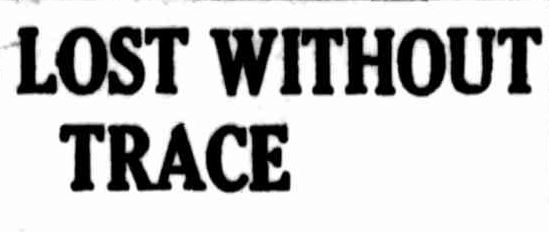
LOST WITHOUT TRACE. (1931, December 10). Chronicle (Adelaide, SA : 1895 - 1954), p. 62. Retrieved June 2, 2014, from http://nla.gov.au/nla.news-article90636449

LOST WITHOUT TRACE. (1931, December 10). Chronicle (Adelaide, SA : 1895 – 1954), p. 62. Retrieved June 2, 2014, from http://nla.gov.au/nla.news-article90636449


Mary Ann Harman has always been a mystery.  I have accounted for all the first generation Harmans of Byaduk, their births, death and marriages.  Except for Mary Ann, the daughter of Jonathan Harman and Mary Oliver.

Born in 1869, the sixth child of Jonathon and Mary, Mary Ann drops off the radar after birth.  I’ve checked and double checked her birth record and yes she was definitely born.  Over the 20 years I’ve researched the Harmans, I reached the conclusion she had died as an infant.  Not that unlikely since her younger siblings Joseph and Sarah died during the 1870s, Joseph as a baby and Sarah aged six.

My pursuit of Mary Ann has not been a desperate one because. as she was a child of my ggg uncle, I thought I could live with the fact she was missing.  However, because I’m writing a Harman family history I considered I would have to get some of the records I have refrained from getting before.  Recently I received a copy of Jonathan Harman’s will from PROV via Archival Access, and the mystery deepened because there in black and white was the name of Mary Ann.  At the time of his death in 1930, Jonathan had four daughters, besides Mary Ann, and two sons,  Arthur a farmer from Byaduk and Jonathan, a man I considered  the black sheep of the family.  No surprise to me, he was not named in his father’s will.

Jonathan snr. left his ready money and money in the bank to all his daughters, with a proviso that it did not include Mary-Ann.  He bequeathed the net profit of one of his properties to his daughters…except Mary Ann.  Arthur was to receive the balance of Jonathan’s estate “but subject to and charged with the payment by him of the annuity of twenty pounds to my daughter Mary Ann during her life…”.

So Mary Ann wasn’t dead, rather 61 years of age in 1930, but why was she treated differently to her sisters and Arthur?  Was she untrustworthy or did her father think she was not worthy of a share of his property?  Why did was left an annuity instead?  Was she not capable of supporting herself?  The discovery in Jonathan’s will certainly raised more questions than it answered.

But it meant I could begin searching for her again with renewed confidence.  I went straight to the Victorian Death records and searched for “Mary Ann Harman” (assuming she never married) and found the closest match – Mary Ann Harman born about 1873, died Ararat 1948, parents unknown.  If  that is my Mary Ann,  the fact she died in Ararat possibly answers some of my questions.  The reason being there was a lunatic asylum in Ararat (Aradale).

A search of Trove only found a Law Notice from 1951 declaring the said Mary Ann Harman intestate, however it confirms to me that the Mary Ann who died in Ararat was a spinster.

Advertising. (1951, February 8). The Argus (Melbourne, Vic. : 1848 - 1957), p. 18. Retrieved June 2, 2014, from http://nla.gov.au/nla.news-article23036219

Advertising. (1951, February 8). The Argus (Melbourne, Vic. : 1848 – 1957), p. 18. Retrieved June 2, 2014, from http://nla.gov.au/nla.news-article23036219

Now I have some new leads.  I’ll follow-up probate records and check for an inquest, with the latter helping me confirm if the said Mary Ann was in Ararat Asylum.  But maybe Mary Ann was merely the female black sheep of her family and moved away from the fold and it’s possible that the male black sheep was living with her.  My reason for that thought is that my only other Harman connection to Ararat was Mary Ann’s brother Jonathan jnr. further supporting my case that I’m on the right track with Mary Ann.

After Jonathan jnr. married Hannah Keyte of Arapilis in 1904,  they moved to Kingaroy, Queensland.  Hannah appears to have remained in Queensland but Jonathan disappeared after 1913 reappearing again at the time of his death in 1941 at Ararat.  I do know that after Jonathan’s death there was an inquest, raising the possibility he was in Ararat Lunatic Asylum and a copy is now a must.  To think I have driven past the imposing building of Aradale, on a hill east of Ararat, hundreds of time, looking up and wondering what when on behind its walls.  Now I’m a few steps closer to discovering if members of my family knew exactly what life was like as an inmate.

ARARAT ASYLUM c1880.  Image courtesy of the State Library of Victoria.  Image no. H1887 http://handle.slv.vic.gov.au/10381/151015

ARARAT ASYLUM c1880. Image courtesy of the State Library of Victoria. Image no. H1887 http://handle.slv.vic.gov.au/10381/151015

Writing the Harman family history has  helped me get to know Jonathan Harman snr.  better than I did before and it would be tragic if either or both Mary Ann and Jonathan jnr. were inmates at the Ararat Asylum.  Between 1871 and 1886, he saw the passing of three of his 10 children and his wife Mary at just 43. Then, one by one, his remaining children moved away from Byaduk leaving him alone, while his brothers’ children continued on in the town, growing and prospering.

So in conclusion,  to all of you, including the Annett family researchers, never give up hope that you will one day find your Mary Ann.


**Tours are now held within Aradale, during the day by the Friends of J Ward (a hospital for the criminally insane also in Ararat) and ghost tours by night,conducted by Eerie Tours .Aradale operated from 1867 until 1998.