Passing of the Pioneers

A new Passing of the Pioneers post is long overdue. So getting 2024 started, I bring you January Passing of the Pioneers, the obituaries of early Western Victorians who died during the month of January. The men and women in the post come from the Camperdown district, Port Fairy, Coleraine, Carpendeit, and Hamilton. Don’t forget to click on the names to read the newspaper obituary of each person, and click on other links throughout for further information. You can find previous obituaries on the link-Obituary Index

EWING, James-Died 9 January 1892 at Hamilton. James Ewing was born in Peterhead, Scotland, in 1809. He and his wife, Jane Pirie, arrived in Victoria in the early 1850s and in Hamilton by 1860. James was a plasterer by trade. He was initially in business with John Thomas, then later went out on his own.
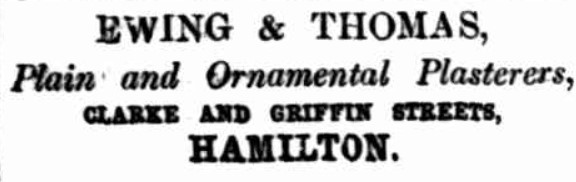
“Advertising” Hamilton Spectator and Grange District Advertiser, 12 April 1862, SUPPLEMENT TO THE HAMILTON SPECTATOR, p. 31 http://nla.gov.au/nla.news-article194859870

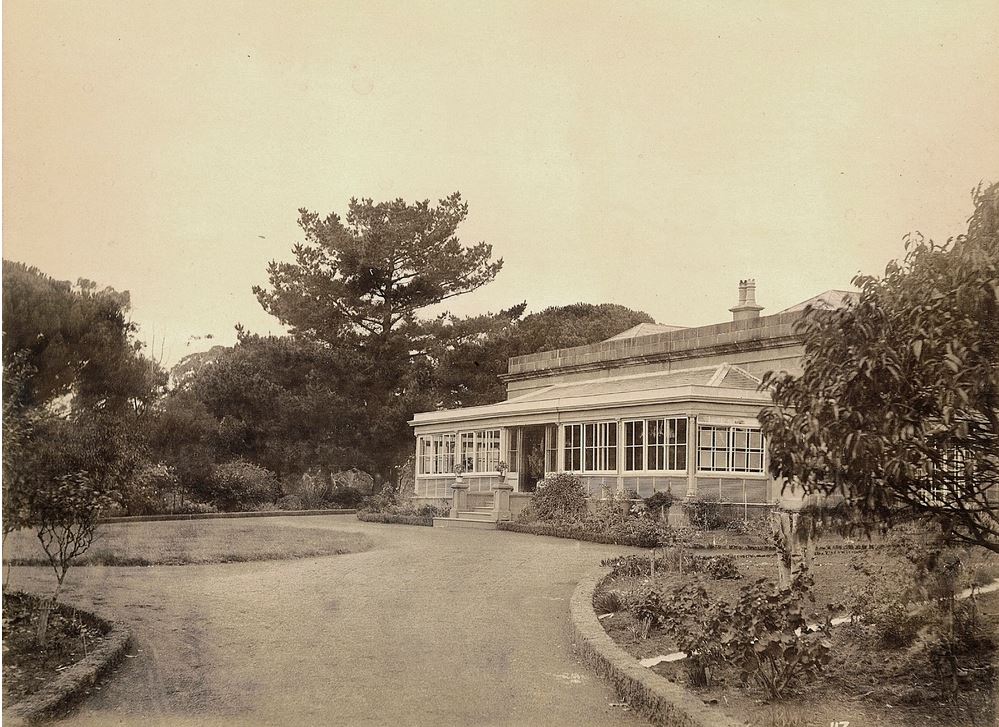
James worked on the construction of several large homes in Hamilton, such as Roxburgh House, built for Doctor Wylie in 1873 (below),
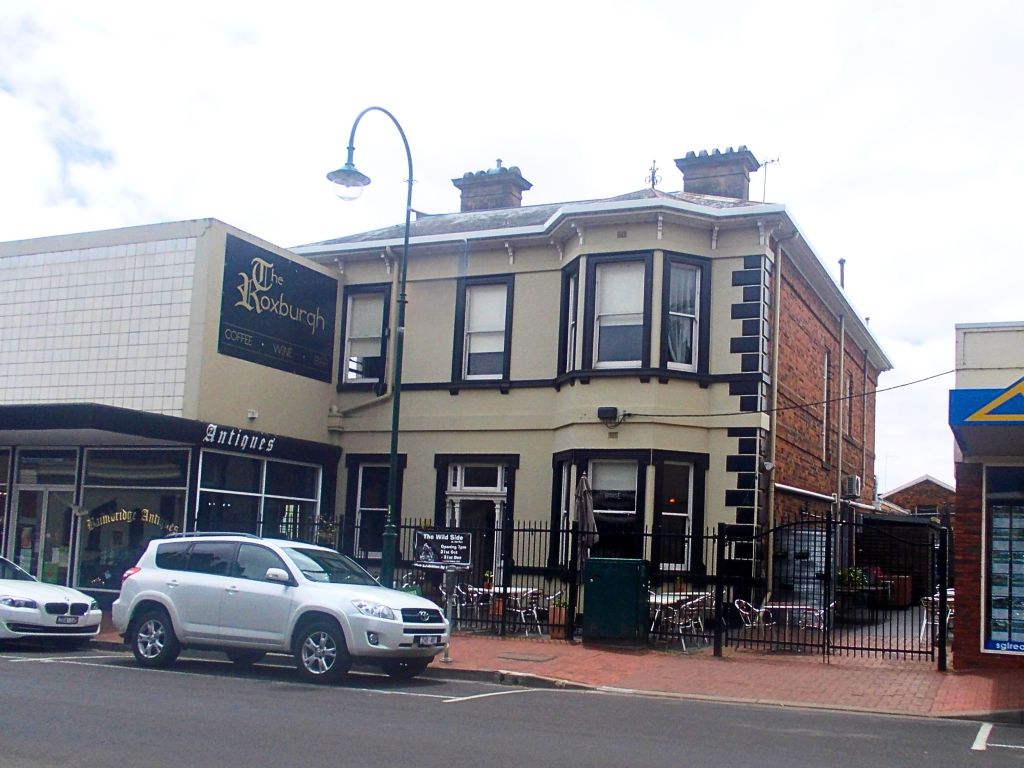
ROXBURGH HOUSE, HAMILTON

Also, Hamilton’s first Wesleyan Methodist Manse, and the Hamilton and Western District College (below)

HAMILTON & WESTERN DISTRICT COLLEGE c1910. Image courtesy of the State Library of Victoria http://handle.slv.vic.gov.au/10381/399043

James died in 1892 and was buried at the Hamilton Cemetery. His wife Jane died ten years later.

GRAVE OF JAMES AND JANE EWING, HAMILTON GENERAL CEMETERY

HAMMETT, Richard-Died 10 January 1911 at Hamilton. Richard Hammett was born in Devonshire, England around 1849. He arrived in Portland and started work as a butcher for William Lewis in that town and nearby Heywood.

When he first arrived in Hamilton, Richard worked for the well-known Hamilton butcher, Thomas Brown. He soon went into partnership with Mr Willett, before operating on his own, which he did for many years.

“Advertising” Hamilton Spectator, 23 August 1884, p.3 http://nla.gov.au/nla.news-article226049933

In 1891, Richard, with the help of his wife Bridget, operated the refreshment rooms at the Hamilton Railway Station, something they did for several years.

“Items of News.” Hamilton Spectator,12 December 1891, p. 2 http://nla.gov.au/nla.news-article226166810

Twice married, Richard lived in Goldsmith Street. He was fond of horse racing and also terrier coursing for which had some success.

HENRY, Eliza Jane-Died 14 January 1911 at Hamilton. Eliza Henry was born in Monaghan, Ireland, and arrived in Victoria in 1844 aboard the Wallace. She headed for Pleasant Creek (Stawell West), then part of the Concongella run, where she married butcher Daniel Bourke in 1845.1 Daniel, Eliza, and their family arrived in Hamilton in the 1860s and settled in Digby Road. In October 1888, Daniel died of strychnine poisoning.
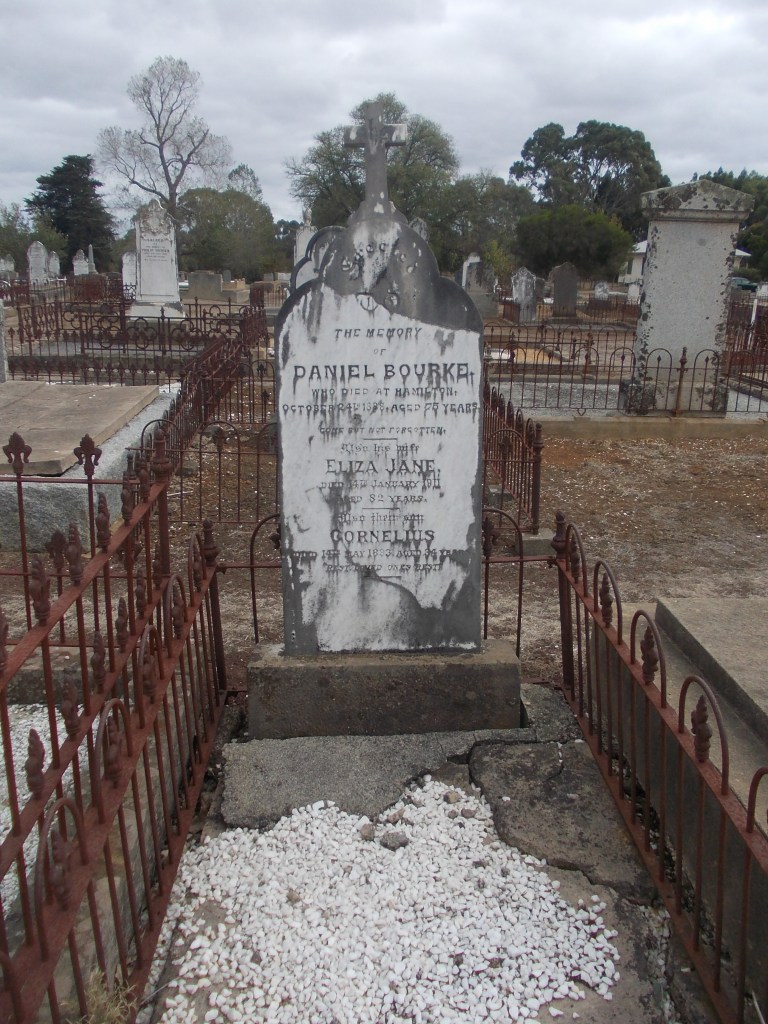
BOURKE FAMILY GRAVE, HAMILTON GENERAL CEMETERY

SILVESTER, Eugene-Died January 1912 at Malvern. Eugene Silvester was born at Balmoral around 1858 and educated at Hamilton College. Known as “Sunny Face” at school, his popularity as a child continued into adult life. He was successful academically and in sports. His academic achievements saw him eyeing a career in law and after his studies, he spent a year as an articles clerk for Anglelo Palmer, a Hamilton solicitor.

The death of Coleraine solicitor Arthur Wade in March 1881 left an opening for a solicitor in the town and in 1882 Eugene opened his own practice in the town, keeping the name of his predecessor in the business name Wade and Silvester.
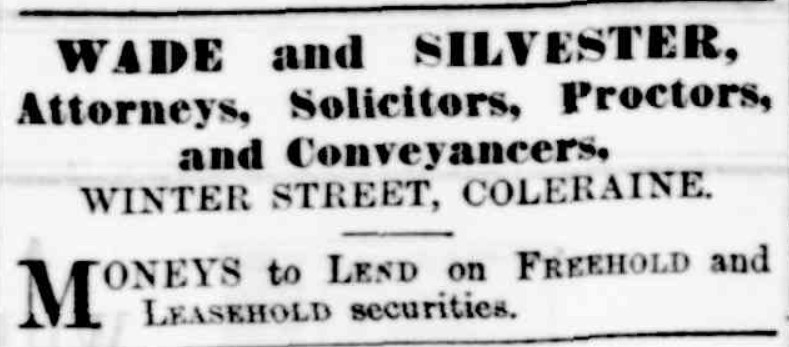
1881 ‘Advertising’, Hamilton Spectator, 28 April, p. 2., http://nla.gov.au/nla.news-article225489685

The same year, Eugene married Ethel Archer.2 They had three sons, Grenville, Eric, and Clive.

Eugene’s talent as a solicitor soon shone through and, as well as gaining many private clients, four nearby shires appointed him as their legal advisor. He later opened an office in Casterton, which his son Grenville took over when he finished his studies. The firm became known as Silvester and Silvester.

1907 ‘Advertising’, Hamilton Spectator, 28 February, p. 4., http://nla.gov.au/nla.news-article226129951

Away from work, Eugene was a vestryman of the Holy Trinity Church at Coleraine (below) and then a Church Warden.

HOLY TRINITY CHURCH, COLERAINE. J.T. Collins collection, State Library of Victoria http://handle.slv.vic.gov.au/10381/216987

Eugene was a Wannon Shire councillor, representing the Balmoral Riding and then the Coleraine Riding. He was the first president of the Coleraine Progress Association, the trustee of the Coleraine Showgrounds, a director of the Coleraine Butter Factory, a freemason, a member of the Mechanics’ Institute, and a member of the Hamilton College Old Boys Association. He also continued his love of sport. He was a champion tennis player and once captained the Hamilton Football team in a game in Ballarat. He also played golf and cricket. His sporting ability saw him called “Pocket Hercules”.

In 1911, heart troubles began for Eugene. After falling ill on a trip to Melbourne for business, he fell he was admitted to Dr. Murray’s Private Hospital. His condition gradually deteriorated, until the sad news reached Coleraine that Eugene Silvester was dead aged 54.

At Hamilton, the flag flew at half mast at the Hamilton & Western District College and in October 1913, the school unveiled a tablet in his honour. In 1916, when the Coleraine Recreation Reserve opened, it received the name “Silvester Oval” in honour of the town’s popular resident. That name remains today.

SILVESTER OVAL, COLERAINE, c1919. Image courtesy of the Museums Victoria Collections https://collections.museumsvictoria.com.au/items/766352

ANSON, Mary-Died 4 January 1914 at Carpendeit. Mary Anson was born in England around 1841 and arrived in Victoria as a girl with her parents. The Anson family settled at Birregurra, east of Colac. It was there Mary met Robert Scouller and they married. Robert operated a flour mill at Birregurra in partnership with his brother John until 1866.
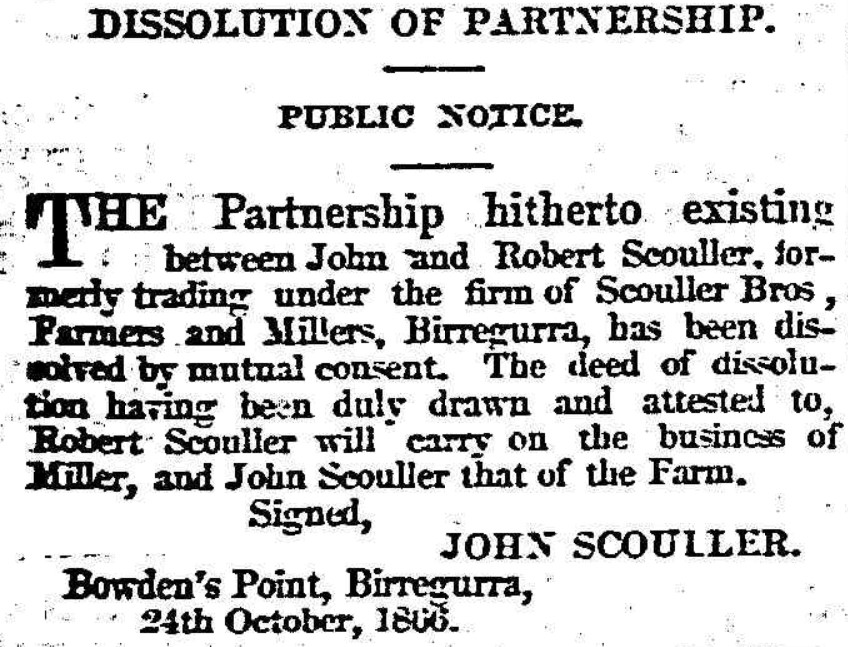
Advertising” Geelong Advertiser,  27 October 1866, http://nla.gov.au/nla.news-article148784672.

Within a few years, Robert and Mary moved to Carpendeit, between Colac and Cobden. Robert moved from a flour miller to a saw miller.

Although Mary had some illness in the years before her death, her passing came relatively suddenly while sitting at the breakfast table at her son’s home. She left nine children at the time of her death. Mary was buried at the Warrncoort cemetery on 6 January 1914.

PRIOR, Margaret-Died 5 January 1918 at Port Fairy. Margaret Prior was born in Cashel, Ireland around 1831. She married James Prior in Ireland and arrived in 1859 on board the Sarah Dixon. They settled in Port Fairy and remained there for the rest of their lives. James was a curator of the Port Fairy Botanic Gardens for 37 years.
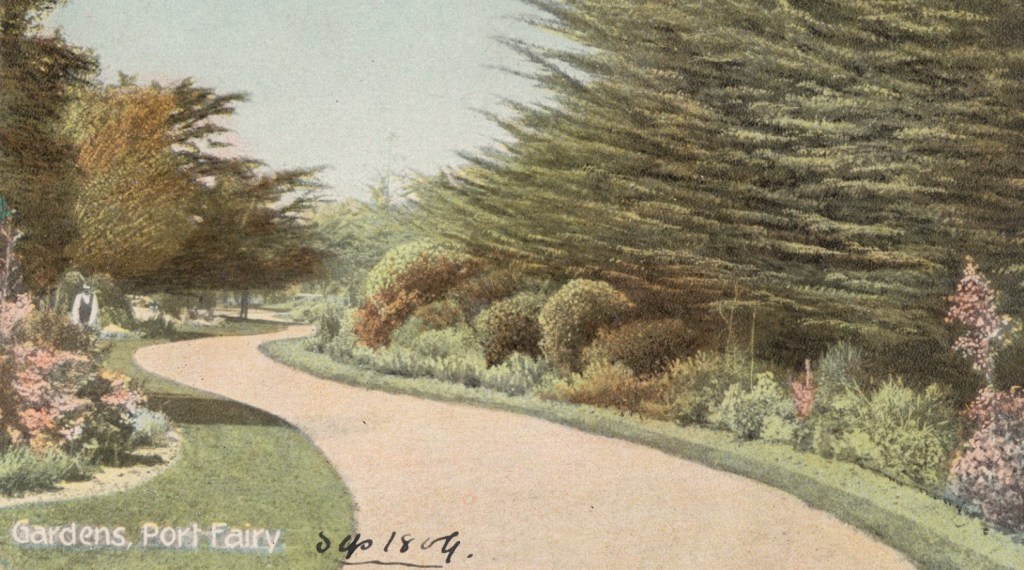
PORT FAIRY BOTANIC GARDENS. Image courtesy of the State Library of Victoria http://handle.slv.vic.gov.au/10381/385235

James died in 1911and after a long illness, during which her family cared for her, Margaret died in 1918. Two sons and three daughters survived her. Margaret’s obituary described her as “…a woman of upright principles and the possessor of a very charitable disposition. She was a most entertaining and interesting personality.”

GELLIE, James Wilson-Died 10 January 1938 at Camperdown. James Gellie spent his 91 years in the Camperdown district. He was born around 1847 at Chocolyn estate on the banks of Lake Colangulac, just north of Camperdown, and died in 1938 in Camperdown. 

On arrival in Victoria, James’ father William secured work at Chocolyn and he and his wife Hannah moved to the district after spending some time in Melbourne. William Gellie selected land after a trip to the diggings in the 1850s, including a property on what is now Gellie Street, between the town and the racecourse.

James first worked for his father, but in 1870, he purchased a team of bullocks. He traversed the district carting with his bullocks. He also went to South Australia, droving cattle and horses. In 1874, James married Margaret McKenzie at Belmont. The couple settled first at Lake View near Camperdown, a property of William Gellie. Later, they moved into town and James ran a livery stable in Manifold Street. 
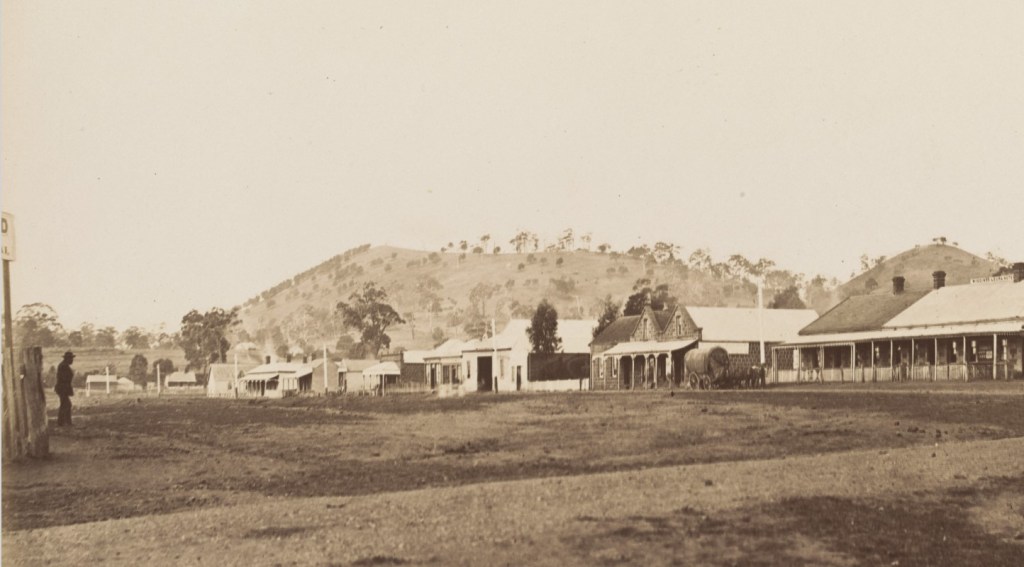
EARLY CAMPERDOWN, c1878. Image courtesy of the State Library of Victoria http://handle.slv.vic.gov.au/10381/307684

His interest in horses extended to racing and James himself trained several horses, with Rigmarole and Postboy among the best. James attended the Melbourne Cup each year and was a member of the Camperdown Racing Club. He was also a member of the Camperdown Pastoral and Agricultural Society. James was buried at the Camperdown Cemetery.

In 1932, James shared memories of his life with the Camperdown Chronicle. He recalled a visit to Mount Gambier on one of his droving trips in the 1870s. It was significant for James as he was a fan of the poet Adam Lindsay Gordon. Even in his mid-eighties, James could recite Gordon’s poem “The Sick Stockrider”,

For good undone and gifts misspent, and resolutions vain,
Tis somewhat late to trouble. This I know-
I should live the same life over, if I had to live again;
And the chances are I go where most men go.

From ‘Bush Ballads and Galloping Rhymes’ (1870).

LUCAS, William Horace-Died 12 January 1943 at Stonyford. William Lucas was born at Marida Yallock in 1866 to Richard Lucas and Harriet Prestage.3 Harriet died just two years later in 1868 and William went to live with his grandparents in Camperdown while his father continued working and later settled at Pomborneit. Richard Lucas had a carting contract with the Colac Rabbit Factory and William, while still a lad, would help his father.
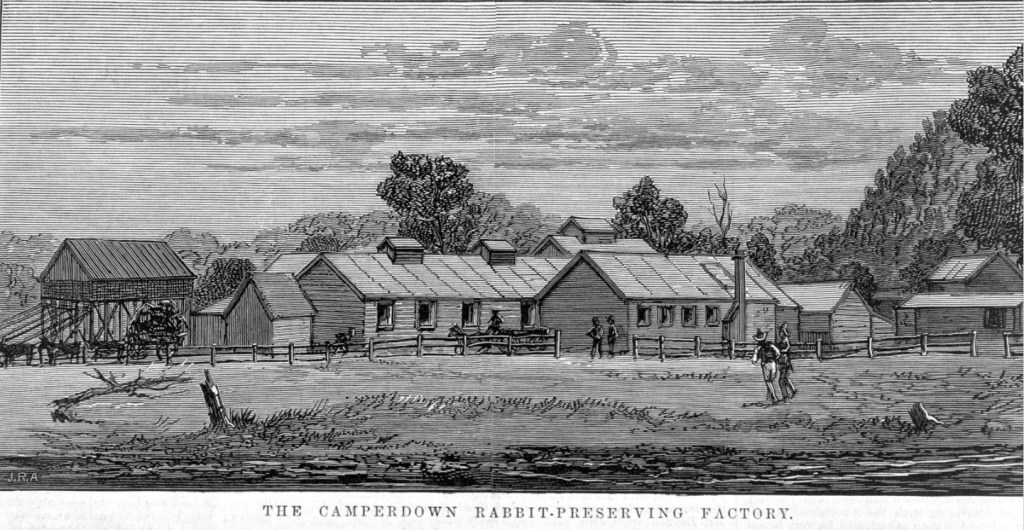
Image courtesy of the State Library of Victoria http://handle.slv.vic.gov.au/10381/257504

When William was older, he worked as a dairy farmer at Stonyford, southeast of Pomborneit. He married Ann Scouller in 1897.4 Ann gave birth to six children, but three died as infants. William and Ann are pictured below with Ila and Horace c1906.

THE LUCAS FAMILY OF ROCKY RIDGE, STONEYFORD. Image courtesy of the Museums Victoria Collections https://collections.museumsvictoria.com.au/items/769557

William was a foundation member of the South Purrumbete Debating Society and was often called on to chair meetings. He also played competitive draughts locally and in Melbourne.

William died in 1943. His funeral was large, with many floral wreaths. He left his widow Ann, two sons and one daughter, also two grandchildren who carried a wreath to his grave.

Additional Sources

  1. Victorian Marriage Index, Department of Justice, Victoria, Eliza Henry, 1845, Reg. No.: 4953/1845
  2. Victorian Marriage Index, Department of Justice, Victoria, Eugene Silvester, 1882, Reg. No. 4964/1882
  3. Victorian Birth Index, Department of Justice, William Horace Lucas, 1866, Reg. No. 20048/1866
  4. Victorian Marriage Index, Department of Justice, Victoria, William Horace Lucas, 1897, Reg. No. 3346/1897

Passing of the Pioneers

It’s a bumper January Passing of the Pioneers. So much bigger than I’d planned. But I’ve found some interesting pioneers’ obituaries this month, and it was hard not to want to learn a little more about them. The sixteen pioneers are now included in the Western District Families Pioneer Obituary Index.

HERBERTSON, Robert – Died 23 January 1879 at Portland.  Robert Herbertson was born in Scotland and travelled to Tasmania in 1830.  He married fellow Scot Isabella Bailey in 1834 in Tasmania, and they arrived in Portland in 1841.  They eventually moved into a house in Julia Street, and Robert worked as a builder and hotel keeper.  Robert built the Steam Packet Inn (below) in 1842, and it is now one of the oldest surviving buildings in the state.

183

STEAM PACKET INN, PORTLAND

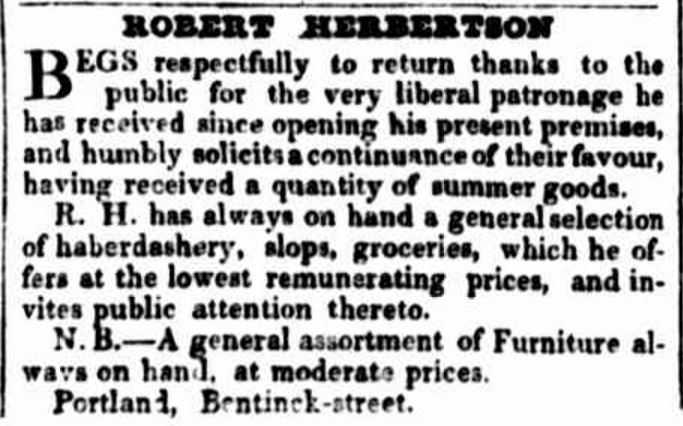
The Herbertsons also ran a drapery store.

"Advertising." Portland Guardian and Normanby General Advertiser (Vic. : 1842 - 1876) 4 Feb 1843: 2. .

“Advertising.” Portland Guardian and Normanby General Advertiser 4 Feb 1843 http://nla.gov.au/nla.news-article71569036

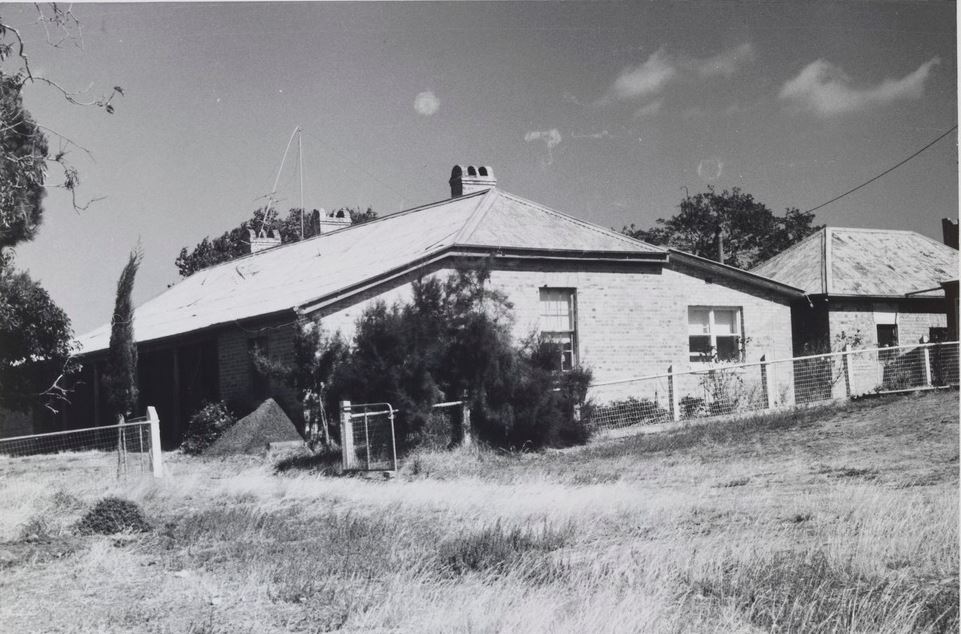
In 1843, Robert opened the Union Inn, and in 1847, the Britannia Inn and built shops and houses in Julia Street. Robert purchased land on the Bridgewater Road and built Briery (below). From Robert’s obituary in the Portland Guardian, that was in 1867, however, the report on the home found at the Victorian Heritage Database gives the date as around 1850.

BRIERY, PORTLAND 1958. Photographer Colin Caldwell. Image courtesy of the State Library of Victoria http://handle.slv.vic.gov.au/10381/72633

BRIERY, PORTLAND 1958. Photographer Colin Caldwell. Image courtesy of the State Library of Victoria http://handle.slv.vic.gov.au/10381/72633

Briery was definitely built by 1867, as Robert had the house and land up for lease.

"Advertising." Portland Guardian and Normanby General Advertiser (Vic. : 1842 - 1876) 16 Jan 1868: 3 Edition: EVENINGS. . .

“Advertising.” Portland Guardian and Normanby General Advertiser 16 Jan 1868 http://nla.gov.au/nla.news-article64689157

In the days before his death, there was a fire on Bridgewater Road near the farm. Robert’s over-exertion helping to fight the fire most likely led to his death.  Isabella Robertson died in Portland in 1883.

WILSON, John – Died 3 January 1906 at Portland. John Wilson was born around 1826 at Glasgow, Scotland and arrived in Portland around 1853.  He went on to the diggings but returned to the Portland district, dairy-farming at Lower Bridgewater.  John’s property The Lagoons was one of the district’s largest and most successful farms.

TWOMEY, Edward – Died January 1907 in Melbourne.  Edward Twomey was born in Ireland around 1836, the son of John Joseph Twomey and Margaret O’Conner.  John Twomey took up large amounts of land around Penshurst, which he divided into Kolor (below), Banemoreand Langulac and passed it on to his sons.

026

LOOKING DOWN ON KOLOR FROM MT. ROUSE NEAR PENSHURST

Langulac, south of Penshurst, came under the charge of  Edward Twomey. In 1885, Edward announced his engagement to New Zealander Mary Ellen Josephine Cantwell, and they married.  They went on to have five children.

"Family Notices." Table Talk (Melbourne, Vic. : 1885 - 1939) 24 Jul 1885: .

“Family Notices.” Table Talk 24 Jul 1885 http://nla.gov.au/nla.news-article145711723

Edward enjoyed horse racing and was one of the earliest trustees of the Hamilton Race Course.  He bred and raced horses, with his greatest success coming with Mermaid, winner of the 1871 Sydney Cup. Mermaid was a daughter of King Alfred, the great Western District sire imported in 1854 aboard the Severn by Rifle Downs owner Richard Lewis.

Edward Twomey was a devout Roman Catholic.  He attended the first mass in the Western District according to his obituary; however, most of the congregation was his own family.  He was also a great supporter of the St. Joseph’s Catholic Church at Penshurst.

http://handle.slv.vic.gov.au/10381/233158

ST. JOSEPH’S CATHOLIC CHURCH, PENSHURST. Image courtesy of the J.T. Collins Collection, La Trobe Picture Collection, State Library of Victoria. http://handle.slv.vic.gov.au/10381/233158

In search of an interesting story about Edward Twomey, I found an article published in the Hamilton Spectator and Grange District Advertiser on 10 December 1864.  It was alleged that Edward rode past the Presbyterian minister lying injured by the roadside without offering help. Edward wrote a lengthy “Letter to the Editor”  denying the claims, and Donald Cameron, presumably the Donald Cameron formerly of Morgiana, also wrote the following letter defending Edward.

"ORIGINAL CORRESPONDENCE." Hamilton Spectator and Grange District Advertiser (South Melbourne, Vic. : 1860 - 1870) 17 Dec 1864: 2. Web. 7 Jan 2016 .

“ORIGINAL CORRESPONDENCE.” Hamilton Spectator and Grange District Advertiser 17 Dec 1864 http://nla.gov.au/nla.news-article194723320

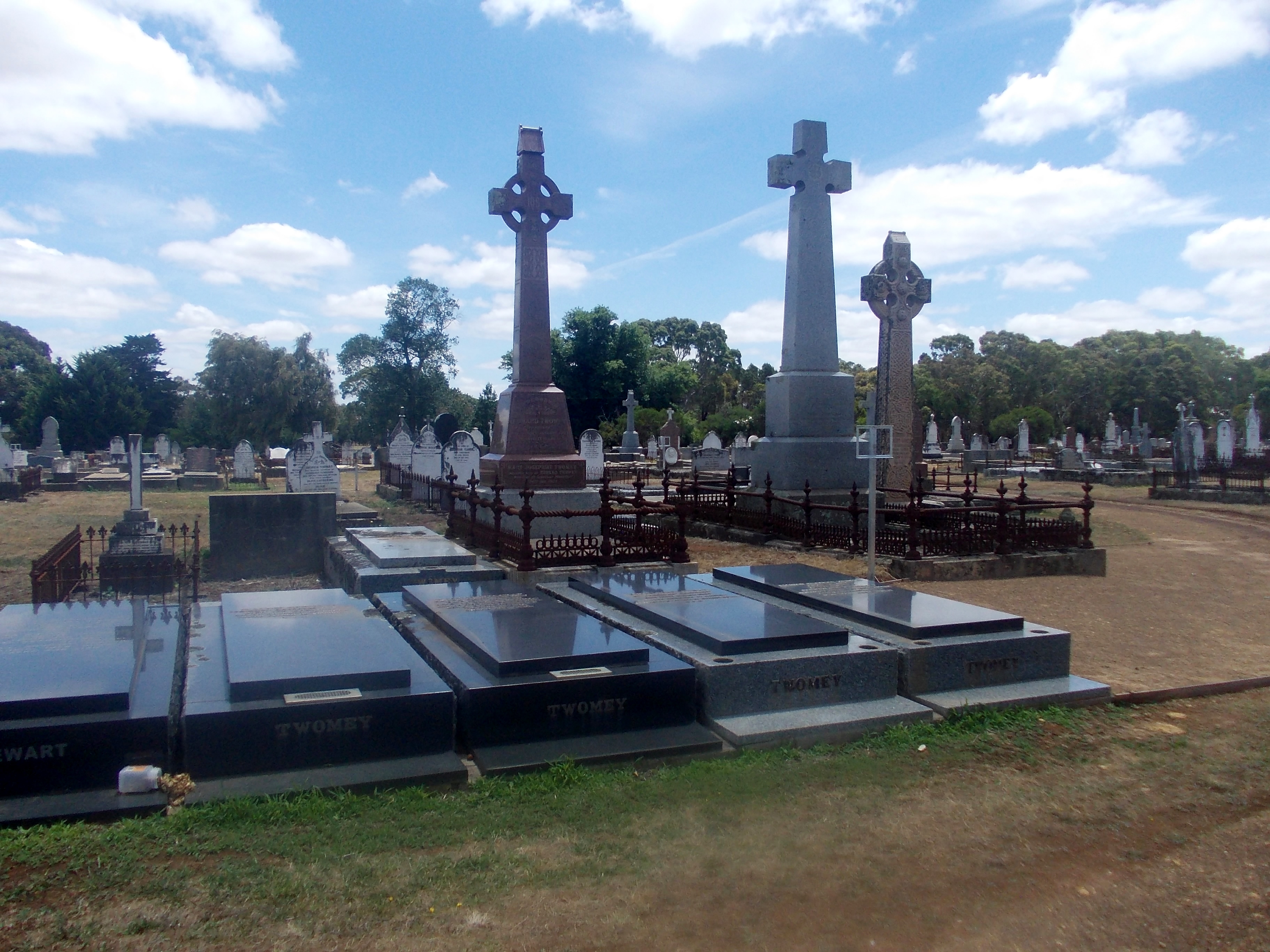
At the age of seventy-one, Edward went to Melbourne for medical treatment.  He died there, and his body was returned to Hamilton for burial at the Hamilton Old Cemetery.  A service was held at Hamilton’s St Mary’s Catholic Church. Mary died in 1926, aged sixty-two, at Penshurst and is also buried at the Hamilton Old Cemetery.

210 (2)

TWOMEY FAMILY PLOT, HAMILTON OLD CEMETERY

EVANS, Edward – Died 6 January 1915 at Ararat.  Edward Evans was the son of Ararat butcher John Pritchard Evans and was born around 1865.  In time, Edward took over his father’s butchery. In 1889, he married Emily Harricks of Ararat.  Edward was a member of the local A.N.A. and a vestryman at Ararat’s Holy Trinity Church of England (below).  He developed Bright’s Disease in 1913, which took his life at age fifty.  Emily, a son and two daughters were left after his death, with Emily dying in 1949, aged eighty-six.

http://handle.slv.vic.gov.au/10381/58321

HOLY TRINITY CHURCH OF ENGLAND, ARARAT. Image courtesy of the State Library of Victoria http://handle.slv.vic.gov.au/10381/58321

SANDRY, Alice – Died 18 January 1916 at Hamilton.  Alice Sandry was born in Cornwall, England, around 1848.  She arrived at Portland with her parents, William and Anne, and three siblings in 1853 aboard the Eliza.  In 1869, Alice married William Arnott, and they lived in Gray Street, Hamilton. Their residence was most likely at the grocery store William ran close to Thomson’s Iron Store. Alice and William went on to have nine children, and for a time, William was a Hamilton Borough Councillor.

On 9 May 1887, Alice and William’s nine-year-old son Frederick died as a result of an accident.  On the day, he was travelling in the wagonette of Frederick Giles, storekeeper of the Giles & Dunn Beehive Store at Hamilton. Mr Giles was a passenger and, as he often did, he allowed Frederick’s older brother Archie to drive. They were going to the Wannon store of Giles & Dunn. During their journey, the pony stumbled, throwing Archie and Mr Giles from the wagonette.  The pony took fright and bolted with Frederick holding on for his life.

Found with a severely broken leg, and with no witnesses, it was thought Frederick had attempted to jump clear, but his leg wedged between a tree and the wagonette.  Taken to the Wannon Inn, amputation was the only option.  Frederick went into shock as a result of the operation and died at his parents’ home. The Portland Guardian published a lengthy account of the accident on 11 May 1887.  The Horsham Times provided a report on the inquest published on 13 May 1887.

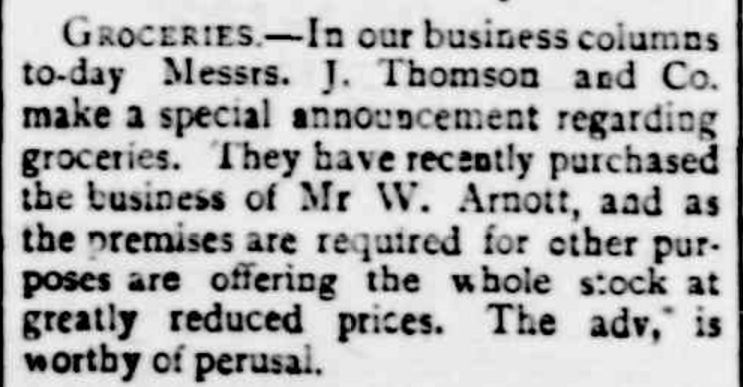
In 1898, William’s grocery store became a part of John Thompson & Co in Gray Street.  The Arnotts then moved to Cox Street, Hamilton.

"Established August 1842. The Portland Guardian,." Portland Guardian (Vic. : 1876 - 1953) 21 Dec 1898: 2 Edition: EVENING. Web. .

“Established August 1842. The Portland Guardian, 21 Dec 1898  http://nla.gov.au/nla.news-article63675021

In 1899, William was declared insolvent owing over £800 and he died the following year.  Alice’s probate file indicates she retained ownership of the Gray Street property and Thomson’s rented it from her.  She also owned her house in Cox Street.

"Family Notices." Hamilton Spectator (Vic. : 1870 - 1873; 1914 - 1918) 19 Jan 1916: 4. .

“Family Notices.” Hamilton Spectator (Vic. : 1870 – 1873; 1914 – 1918) 19 Jan 1916: 4. <http://nla.gov.au/nla.news-article120409938&gt;.

Alice was buried at the Hamilton Old Cemetery with William.  Three of their children were remembered on the headstone: Frederick and two infants, George, who died in 1879 aged six months, and Norman, who died in 1886, two months short of his second birthday.

arnott

O’BRIEN, Patrick – Died 20 January 1916 at Hamilton.  Patrick “Paddy” O’Brien was born in Ireland around 1831. He eventually arrived in Hamilton and became one of the great characters of the town.

"DEATH OF AN OLD HAMILTON RESIDENT." Hamilton Spectator (Vic. : 1870 - 1873; 1914 - 1918) 21 Jan 1916: 4. .

“DEATH OF AN OLD HAMILTON RESIDENT.” Hamilton Spectator 21 Jan 1916 http://nla.gov.au/nla.news-article120410087

Paddy married Mary Harritty* in 1865 and a daughter, Bridget, was born in 1867 at Portland. They then settled at Hamilton, and another daughter, Margaret, was born there in 1871. Paddy worked as a gardener, and the family lived in Cox Street close to the corner of Gray Street.  He was a devout Catholic, attending St. Mary’s Catholic Church (below), and was a member of the local Hibernian Society.

ST MARY'S CATHOLIC CHURCH, HAMILTON. Image courtesy of the State Library of Victoria. http://handle.slv.vic.gov.au/10381/63342

ST MARY’S CATHOLIC CHURCH, HAMILTON. Image courtesy of the State Library of Victoria. http://handle.slv.vic.gov.au/10381/63342

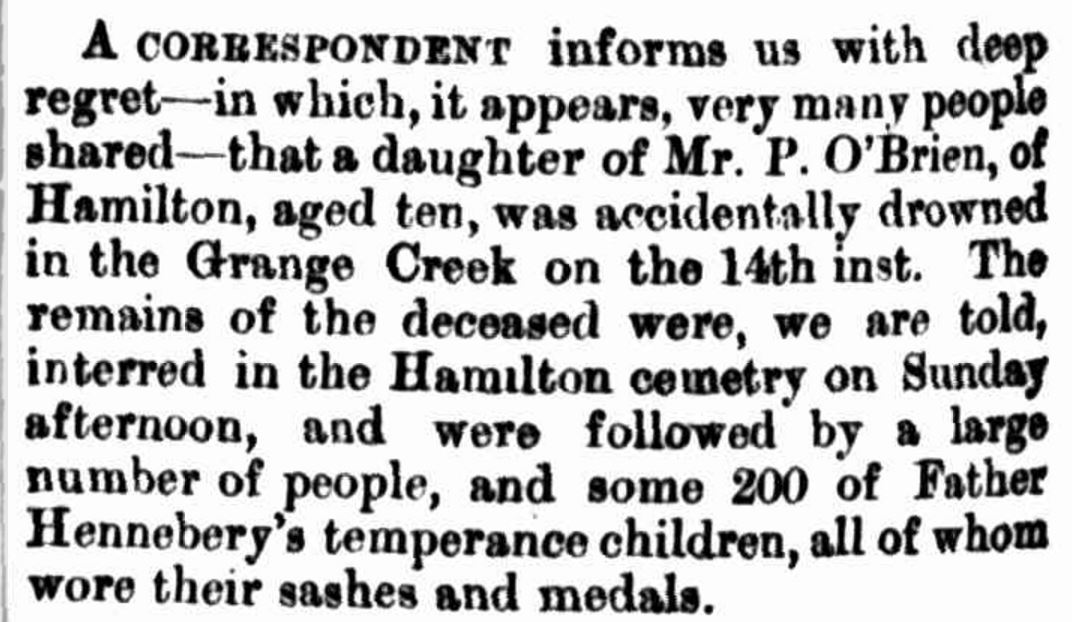
In 1881, tragedy struck the O’Brien family. Ten-year-old Margaret drowned in the local creek, the Grange Burn, on 14 October.  There was a large turnout to follow the funeral cortege to the cemetery.

"A PRACTICAL VIEW OP THE TEMPERANCE MOVEMENT." Advocate (Melbourne, Vic. : 1868 - 1954) 22 Oct 1881: 16. Web. .

“A PRACTICAL VIEW OP THE TEMPERANCE MOVEMENT.” Advocate 22 Oct 1881 http://nla.gov.au/nla.news-article170023451 

Mary died at Hamilton in 1907.  At the time of Paddy’s death in 1916, The Hamilton Spectator wrote, “He may best be described as one of the identities of the town, that being the term generally used where one is well known, and yet perhaps, so so far as his personal history is concerned, not so well known after all.”  How true.

* While searching records for Patrick O’Brien and his wife Mary, I found several variations of Mary’s surname.  The Victorian Marriage Index has Harritty, but I also found Garraty, Haraty, Harty, Harrity, Heroty, and Harety on entries for births and deaths. As Paddy was most likely the informant on those occasions, I suspect his thick Irish brogue resulted in the many variations.

TATLOCK, Thomas Henry – Died January 1918 at Hamilton.  Thomas Tatlock was born in on 13 January 1834 and christened on 23 March 1834 at the British Chaplaincy in Hamburg, Germany.*  His father was Englishman Thomas Marriot Tatlock, and his Scottish mother, Margaret Turner Rolland. Another son, Francis Rolland Tatlock, was born in 1835 and christened in Hamburg the following year.  After their marriage, Thomas Sr and Margaret had moved to Hungary, where Thomas ran a successful pottery works.  Due to unrest in Hungary, the family moved into Austria and then, as the christening records show, on to Germany.

Moving forward around twenty years and Thomas Henry Tatlock arrived in Victoria around 1853 and joined the mounted police force.  He was in Ballarat during the Eureka uprising in 1854 and worked with the Gold Escort. He was later stationed at towns including Casterton, Woodend, and Port Fairy. In 1865, Thomas married Mary Ann Scarsbrick, and a daughter, Ellen, was born at Port Fairy in 1866.  However, Ellen died aged seven months and was buried at the Port Fairy Cemetery. In 1875, while working as a Senior Constable at Casterton, Thomas was appointed Customs Officer with the Customs and Excise department based in Casterton. As Inspector for Licensed Premises and Liquors for the Customs and Excise Department, he based himself at Hamilton around 1880.

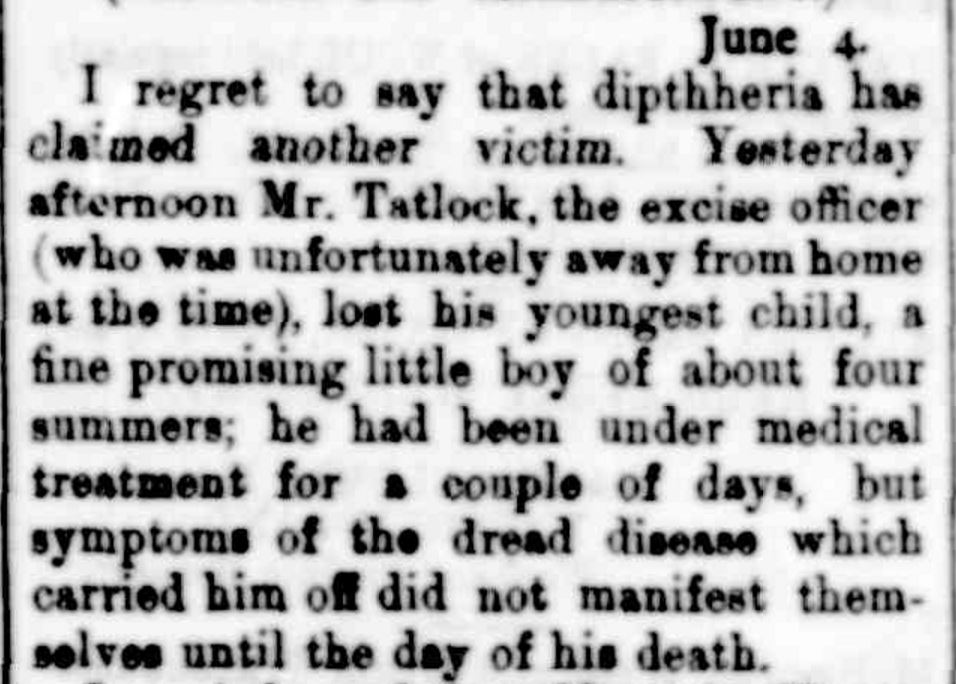
During the 1880s, there were some sad times for the Tatlock family.  Mary Ann died in 1883, aged thirty-eight, from complications due to the birth of twin daughters, Lillie and Daisy. Lillie died in January 1884, aged three months, and Daisy in March, aged five months. On 3 June 1887, Thomas’ son, “of about four summers”, Herbert, died of diphtheria.

 "Hamilton." Portland Guardian (Vic. : 1876 - 1953) 6 Jun 1887: 2 Edition: EVENING. Web. .


“Hamilton.” Portland Guardian 6 Jun 1887 http://nla.gov.au/nla.news-article65408722 

In 1890, Thomas married again to Margery Atchison.  Thomas was a member of the congregation at Christ Church Hamilton and was involved with the Hamilton Pastoral and Agricultural Society.  He was a renowned judge of flowers, poultry, and dogs at district P&A shows and was an importer of Black Orpington poultry.  The Tatlocks lived in Gray Street and later Griffin Street. Thomas’ and Mary Ann’s son Alfred Tatlock, born in Port Fairy in 1868, went on to become one of Hamilton’s leading citizens as a business owner and borough councillor.  Thomas’s second wife, Margery, moved away from Hamilton after Thomas’ death and died in Warrnambool on 7 May 1938.

*”Deutschland Geburten und Taufen, 1558-1898,” database, FamilySearch(https://familysearch.org/ark:/61903/1:1:ND14-PZK : accessed 12 January 2016), Thomas Henry Tatlock, 23 Mar 1834; citing ; FHL microfilm 576,997.

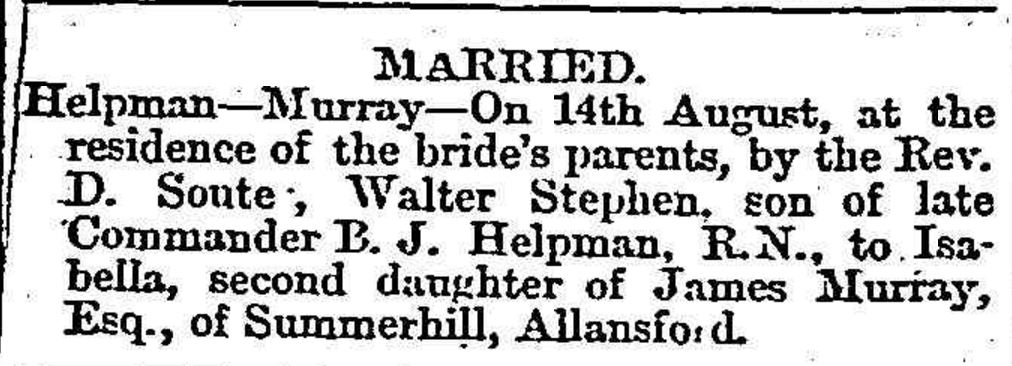
MURRAY, Isabella – Died 27 January 1924 at Warrnambool.  Isabella Murray was born around 1852 at Summer Hill, Allansford, the property of her parents, James Murray and Isabella Gordon. She married Walter Stephen Helpman in 1877, and they lived at Warrnambool.

"Family Notices." Geelong Advertiser (Vic. : 1859 - 1926) 16 Aug 1877: 2. .

“Family Notices.” Geelong Advertiser 16 Aug 1877 http://nla.gov.au/nla.news-article150470511 

Walter was a Colonial Bank manager, running branches at Koroit, Port Fairy, and Warrnambool. Isabella kept herself active in the community.  She was a part of the Ladies Benevolent Society for thirty years, including time as President.  Hospital fundraising and the Red Cross, serving as treasurer for five years, were some of Isabella’s other works.  She was also concerned for the welfare of the Aboriginal community at Framlingham and extended her kindness to them.  As the sister of politician John Murray, who became Premier of Victoria, she had a strong interest in politics, helping to campaign at state and federal levels.

HUNT, Caroline – Died January 1925 at Brighton.  Caroline Hunt was born around 1848 and arrived in Australia in 1853 with her parents. Her father was one of the Wimmera’s first settlers, residing at Rosebrook Station.  In 1866, Caroline married William James Carter. William Carter held North Brighton run until 1888 after purchasing Tarrington Estate in 1886.  William died in 1904, and Tarrington Estate was sold in 1909, but the Carters retained ownership of the Tarrington homestead until after Caroline’s death.

HEDGES, Elizabeth – Died 14 January 1942 at Portland. Elizabeth Hedges was born in Ballarat in 1882.  She became an art teacher and moved to Melbourne.  She married Francis Caine of Bridgewater in 1914, and they lived there until 1921, when Francis purchased land at Kongorong, South Australia, where they established the property Mona Park. While in Kongorong, Elizabeth was the organist at the Kongorong church.  Around the age of fifty, Elizabeth began suffering ill health, and Francis decided to sell Mona Park and buy Cammis near Sandford. The couple enjoyed holidays at Portland.  In 1941, Elizabeth’s health was still failing, and since she always felt better on seaside holidays, Francis bought Burswood at Portland, built by Edward Henty in 1855. Elizabeth only enjoyed the home for seven months before her death. Another obituary for Elizabeth, written by a resident of Kongorong, was published in the Border Watch on 22 January 1942.

http://handle.slv.vic.gov.au/10381/336832

BURSWOOD, PORTLAND. Image courtesy of the State Library of Victoria http://handle.slv.vic.gov.au/10381/336832

FIELDER, Annie Matilda – Died 16 January 1945 at Camperdown.  A daughter of William Fielder and  Matilda Greer, Ann Fielder was born at Cobden in 1877.  In 1903, Annie married William Florence, and they settled at Camperdown.  Annie was a member of the Camperdown branch of the Red Cross and Life Governor of the Royal Victorian Institute for the Blind.   She was also a member of the Camperdown Country Women’s Association and the Camperdown Ladies Auxiliary, among other things.  Annie also attended St. Paul’s Church in Camperdown (below).

stpauls

ST PAUL’S CHURCH, CAMPERDOWN. Image courtesy of the State Library of Victoria. http://handle.slv.vic.gov.au/10381/63204

MONK, Samuel – Died January 1948 at Cobden. Samuel Monk was born at Connewarre in 1861 and arrived at Cobden four years later with his parents, George Monk and Sarah Stenson, early pioneers of that district.  In 1885, Samuel married Patience Silvester.  In his early working days, Samuel made a name for himself working on the roads and was highly sort after by road contractors.  He then turned to farming around 1907 and continued in that pursuit for almost forty years.  Samuel was the oldest surviving member of the original Cobden Football Club and at the time of his death, his son Lesley was the club president. Samuel was a devout Anglican and a member of the Colac Turf Club.

FITZGERALD, John Cunningham – Died 3 January 1950 at Portland.  John Fitzgerald was born at Portland in 1864 to John Bryan Fitzgerald and Mary Birmingham. Mary’s first husband, Walter Birmingham, owned Mullagh near Harrow with David Edgar. Edgar lived at another of their properties Pine Hills, and the Birminghams at Mullagh.  Walter Birmingham died in 1850, and Mary took over Mullagh.  She remarried in 1851 to John Bryan Fitzgerald, and John ran the property.  One of his workers was Johnny Mullagh, who went on to tour England with an Aboriginal team in 1868. Johnny was born at Mullagh around 1841.

The homestead at Mullagh (below) was built around 1864, the year of John Cunningham Fitzgerald’s birth.

http://handle.slv.vic.gov.au/10381/232035

MULLAGH HOMESTEAD, HARROW. Image courtesy of the J.T. Collins Collection, La Trobe Picture Collection, State Library of Victoria. http://handle.slv.vic.gov.au/10381/232035

In 1893, John C. Fitzgerald married Eliza Anne Silvester.  They lived at Mullagh, with John taking over the running of the property from his father.  They eventually moved to Portland.  John was something of an amateur meteorologist and enjoyed contributing rainfall observations to the Portland Guardian. John and Eliza did not have any children.

COWLEY, Albion – Died 1 January 1951 at Tandarook South. Albion Cowley was born at Cowley’s Creek on 25 April 1878 and attended Cowley’s Creek State School. In 1904, he married Mary Ann Love, and in 1911, they moved to a property at Tandarook. Albion was an elder of the Jancourt Church and taught Sunday School there.  Mary Ann, three sons, and five daughters survived him.

DAVIS, Robert George – Died 21 January 1952 at Camperdown. Robert Davis was born at Scotts Creek around 1880 and lived there until he was twenty-one.  He then moved to Jancourt, buying property from the divided Jancourt Estate.  Robert married Emily Dunstone in 1905. He was a member of the Jancourt Presbyterian Church and was a correspondent for the Tandarook State School.  Robert remained at Jancourt until around 1951, when he retired from farming and purchased a property at Camperdown.

SILVESTER, Serena Owen – Died 26 January 1953 at Camperdown. Serena Silvester was born in 1867 at Camperdown to pioneers William Silvester and Harriet Owen. William Silvester built the second house in Cobden, then known as Lovely Banks.  Serena attended the Cobden State School.  In 1886, Serena married William Wilson.  The year before, her sister Patience married Samuel Monk (above). Serena was a congregation member of the Cobden Presbyterian Church and a member of the Ladies Auxiliary and the Presbyterian Women’s Missionary Union. William Wilson died in 1937.


Passing of the Pioneers

Most of the pioneer obituaries found in the newspapers are for men which is unfortunate because we are always searching for more information about our female ancestors. For the month of October, the obituaries for pioneering women outnumber the men.  And great pioneers they were, making great contributions within their communities and all living to very old age. But none lived longer than Margaret Walker (nee Brown) of Hamilton. Passing away in 1939, Margaret reached the age of 104 and remained healthy almost to the end.

Mark NICHOLSON: Died 27 October 1889 at Warrnambool. Mark Nicholson was born in Gloucestershire in 1818 and arrived at Port Phillip in 1840. Rather than practice his profession of law, Mark chose to run cattle at various stations across the colony. In 1848, Governor LaTrobe selected him to act as a Justice of the Peace at Warrnambool and in 1853 he was elected as the Warrnambool and Belfast (Port Fairy) representative in the Victorian Legislative Council. In the following years, Mark spent time in England but returned to Warrnambool to settle in 1873. A full biography of Mark Nicholson is available at the Australian Dictionary of Biography.

John BEST: Died 9 October 1907 at Portland. John Best was born in Ireland in 1835 and arrived at Portland in 1857 aboard General Hewitt. He travelled with his parents William and Letitia Best and his six siblings. The family settled at Heywood and John took up work as a carrier. Later he built bridges and roads for the local Shire. He purchased a farm at nearby Mt. Clay and he remained there until his death. He left a widow and seven children.

William SCOTT: Died 7 October 1909 at Wallan. William Scott arrived in Victoria for the gold rushes and settled in Camperdown around 1860. He took an active role in local politics, serving on the Hampden Shire Council. He was also secretary of the Camperdown P&A Society. There was barely an organisation around Camperdown that did not have William Scott on the committee. His obituary read,

In him has passed one of the rugged pioneers who came magnificently equipped physically, and with the indomitable energy and capacity for sustained effort responsible for the remarkable development that has marked the brief history of this country.

Williams remains were returned from Wallan by train and he was buried at the Camperdown Cemetery.

Euphemia McLEOD: Died 3 October 1914 at Purnim.  Euphemia McLeod was born in Scotland around 1826 and travelled to Australia on the Edward Johnston around 1854. She eventually settled at Purnim with her husband George Crowe and she lived there for fifty years. Euphemia left three daughters and a son.

Ann Rebecca EAGAR: Died 12 October 1917 at Hamilton. Ann Eager was born in Devon, England around 1832 and sailed to Adelaide in the mid-1850s. It was there she married George Rowe and they made their way to Victoria, settling at Wickliffe. They remained there for around thirty years before taking up residence at Hamilton.

Only six months before her death, Ann and George had celebrated their diamond wedding anniversary.  An article appeared in the Ballarat Star of 14 April 14, 1917 reporting on the couple’s anniversary. It told of George’s work as a builder. He worked on several notable buildings in the district including the Coleraine Catholic Church and the Argyle Arms Hotel in Hamilton. During the war years, Ann supported the cause, knitting socks for soldiers and by the time of her wedding anniversary, she had knitted 120 pairs of socks. Ann and George had three sons and two daughters, twenty-eight grandchildren, and seventeen great-grandchildren.

Margaret BROWN: Died October 1939 at Hamilton. Margaret Brown was a great Hamilton pioneer living until the grand age of 104. In her last years, her life was documented as she reached milestone birthdays.  Margaret was born in Launceston in August 1835 with her parents having come from Scotland in 1830. The family sailed to Victoria around 1840 aboard the City of Sydney and in 1852 Margaret married Thomas Walker at Portland. During the mid-1860s, they settled at Hamilton where they remained. They had eight children, but two died as infants.

When Margaret was ninety-eight, she was given a walking stick but she had not used it by the time of her ninety-ninth birthday in 1934. That was also the year of the Portland Centenary and Margaret attended the town’s celebrations. During that year, she had also produced seventeen pieces of eyelet linen work. In 1935, Margaret’s 100th birthday celebration was held at the Hollywood Cafe in Hamilton with the Mayor of Hamilton, Cr. Stewart, in attendance. She also planted a commemorative tree for Victoria’s centenary celebrations. For her 101st birthday, twenty-five friends and family gathered at Margaret’s home at 5 Shakespeare Street. The highlight was a birthday cake with 101 candles. The next three birthdays were celebrated quietly at home. but Margaret continued in good health. That was until only weeks after her 104th birthday when Margaret became more fragile, eventually passing away in October. During her life, Margaret saw the reign of six British monarchs.

Margaret’s birthday articles 90th Birthday    99th Birthday  100th Birthday   101st Birthday   104th Birthday

Elizabeth SILVESTER: Died 7 October 1940 at Noorat. Elizabeth Silvester was born in England around 1852 and arrived in Cobden with her parents as a two-year-old. She ran a business in Cobden for fifty years and attended the Cobden Methodist Church. Married to William Gilham, Elizabeth left two sons at the time of her death, one of whom she lived with at Noorat for the last year of her life. She was buried in the Cobden Cemetery.

Robert Thomas SILVESTER: Died 7 October 1943 at Portland. Robert Silvester was born in Merino in 1862 but as a young man, he moved to Portland and trained as a solicitor. He worked in the partnership Lynne, Silvester, and Fielding before going into practice alone. From 1910-1920, Robert was president of the Portland Racing Club and was also president and captain of the Portland Golf Club.  Robert was also a member of the Portland Bowling Club and the following link is for an obituary from the club –   http://nla.gov.au/nla.news-article64386872

Catherine McCLURE: Died 29 October 1952 at Camperdown. Catherine McLure was born at Mepunga in 1866, the daughter of James and Eliza McLure, early pioneers of the Warrnambool district. In 1885, Catherine married  Benjamin Jeffers at Warrnambool and they moved to Strathbogie. They later returned to the Western District and lived at Timboon, Kellambete, and finally, Chocolyn where they resided for forty years. Catherine enjoyed making toys with her five grandchildren and ten great-grandchildren and telling stories of days past.