Jim’s Gone A-Droving

In the 1970s, I visited a Western District drovers’ camp with my father.   I remember the weathered stockmen, their battered caravan, and wiry dogs.  It was not uncommon in those days to drive up behind a mob of sheep being slowly moved along the grassy roadsides.

Then, drovers moved stock to find feed when grass was scarce, but in the early years of settlement, the only way to get stock to and from market or from the ports was to use a drover. Known for their hard-drinking and foul mouths they were often away for months at a time.

My ggg grandfather James Bishop was of those hardy breeds.  He herded cattle from Adelaide to the Western District and moved sheep for the local stations for around 30 years.

Jim was born in Dorset in about 1825.  I am still to find how he came to Australia, but I first catch up with him in this country when he married Sarah Hughes on October 26, 1852, at Adelaide.  They had one child in Adelaide, Mary Elizabeth, but she died aged two.

James and Sarah then moved to Ararat, where James tried his luck on the goldfields.  Charles was born in 1856 in Ararat, followed by my gg-grandmother Elizabeth on September 12, 1857.  Her birth certificate shows James’ occupation as a miner.  James and Sarah had one more child at Ararat, George in 1859.

Not long after, the Bishops moved back to South Australia with two children born in Mt Gambier.  Peter Fraser mentions in Early Byaduk Settlers that James Bishop went to Byaduk around 1865.  This is backed by the birth of Mary Bishop at nearby Macarthur in 1865.   In 1870, Jim selected 16 acres of land at Warrabkook between Byaduk and Macarthur.   Robert, Louisa, and Alice were born at Macarthur, and William was born at Byaduk.

CHILDREN OF JAMES BISHOP & SARAH HUGHES

Mary Elizabeth – Born: 1853 Adelaide, SA.  Died: 1855 Thebarton, SA

Charles – Born: 1856 Ararat, Victoria.  Died: 1916 Macarthur, Victoria; Married:  Sarah DANCER

Elizabeth– Born: 1857 Ararat, Victoria.  Died: 1890 Byaduk, Victoria; Married:  Reuben James HARMAN

George – Born: 1859 Ararat, Victoria.  Died: ?; Married:  Mary HUGHES

Harriet – Born: 1860 Mt Gambier, SA.  Died: 1922 Merino, Victoria; Married:  James ELSTON 1882

Ellen– Born: 1862 Mt Gambier, SA.  Died: 1931 Byaduk, Victoria; Married:  Frederick Watson HINDES 1885 Married:  Abraham CLARKE 1905

Mary– Born: 1865 Macarthur, Victoria.  Died: 1889 Byaduk, Victoria

Robert– Born: 1867 Macarthur, Victoria. Died: 1945 Port Fairy, Victoria; Married:  Edith HARMAN 1901

Louisa – Born: 1870 Macarthur, Victoria.  Died:  1915 Strathmerton, Victoria; Married:  Jonathan Thomas REEVES 1892

Alice – Born: 1872 Macarthur, Victoria.  Died: 1894 Byaduk, Victoria

William James – Born 1874 Byaduk, Victoria. Died:  ?

Peter Fraser tells of  Jim droving cattle overland to the Adelaide market and I have found several references to Jim’s droving in The Argus.  “Pastoral Intelligence” notes in The Argus updated readers on the weather, crops, and stock movements, among other things.  Jim is mentioned on August 4, 1890, droving fat cattle from Muntham, between Coleraine and Casterton to Warrnambool.  The same article mentions the weather as being very cold with constant heavy rain over the previous 24 hours.   Tough conditions for a drover of any age, but at 65 Jim must have found it incredibly tough.

A month after the Argus article, Jim’s eldest daughter Lizzie (Elizabeth) died of consumption (TB) aged just 33.  Only a year before, daughter Mary also died at age 24.  Of 11 children born, Jim had lost three of his daughters.  Also, his wife of 33 years, Sarah,  died in 1885 at only 51 years.  Another daughter, Alice, died before Jim’s own death.

Jim just kept droving.  In October 1892, he was moving cattle from the property of the Powers at Byaduk to Framlingham near Warrnambool this time in humid conditions.  Two months later he was moving heifers during a cold December.
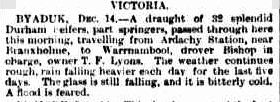
PASTORAL INTELLIGENCE. (1892, December 16). The Argus (Melbourne, Vic. : 1848-1954), p. 6. Retrieved July 12, 2011, from http://nla.gov.au/nla.news-article8493210

The last article I find about Jim is on February 15, 1893.  He had taken horses from William Melville’s Weerangourt station at Byaduk through to Ballarat.

Jim died just two years later in 1895 at Hamilton, aged 70, leaving behind four sons and three daughters.



Byaduk’s First Shoemaker

The Harmans arrived in Byaduk around 1863, one of the early families in the area.   Peter Fraser’s Early Byaduk Settlers credits family head, Joseph as the first shoemaker in Byaduk.  He may not have been alone for long as Bailliere’s Victoria Post Office Directory of 1869 lists both Joseph Harman and John Hurrell as shoemakers in the town. Joseph had worked as a shoemaker in Melbourn, Cambridgeshire as well as an agriculture labourer.

Joseph Harman was born in Melbourn around 1805 and married Sarah Mulberry in 1827.  Their first son James died as a baby, but Sarah had another 12 babies over the next 22 years.  The 1841 and 1851 Census both show the family living in Drury Lane, Melbourn.  In 1852, they said goodbye to their newly married son James and his wife Susan who were sailing for  Australia.  In 1854, they again said their farewells as their next three sons, George, Jonathan, and Reuben followed the path of James and Susan to Australia.  However, by the time the boys arrived in Sydney, Joseph along with Sarah and youngest children Sarah (10), Walt (9), and Alfred (2) were themselves sailing for Sydney.

The Harman family sailed on the “Queen of England” on September 30, 1854.  To that point, there are four children I cannot fully account for, Mary Ann (born 1829), Arthur (born 1842), Ann (1848) and Elizabeth (1849).  I have found death records for two other children of Joseph and Sarah, but not these four.  I do feel confident I may find Mary Ann and am now following a lead on her.

The Queen of England arrived in Sydney in early January 1855.  The five Harmans disembarked and reunited with the three boys who had been in New South Wales for two months.  I lose them for a couple of years, although Joseph’s death certificate states he resided in  New South Wales for two years.  I am looking around the Maitland area for them.  By 1858 they had reached Port Fairy and, after six years, the family reunited.

Joseph died at Byaduk in 1893 at the ripe old age of 89.  Sarah had died 13 years earlier.  Joseph’s obituary in the Hamilton Spectator perhaps gives some insight into Joseph’s character and maybe even relations between him and his sons.  It stated that Joseph was a Methodist, who became a Presbyterian.  Considering James and George’s standing in the Methodist church, I wonder how this decision by Joseph was accepted.

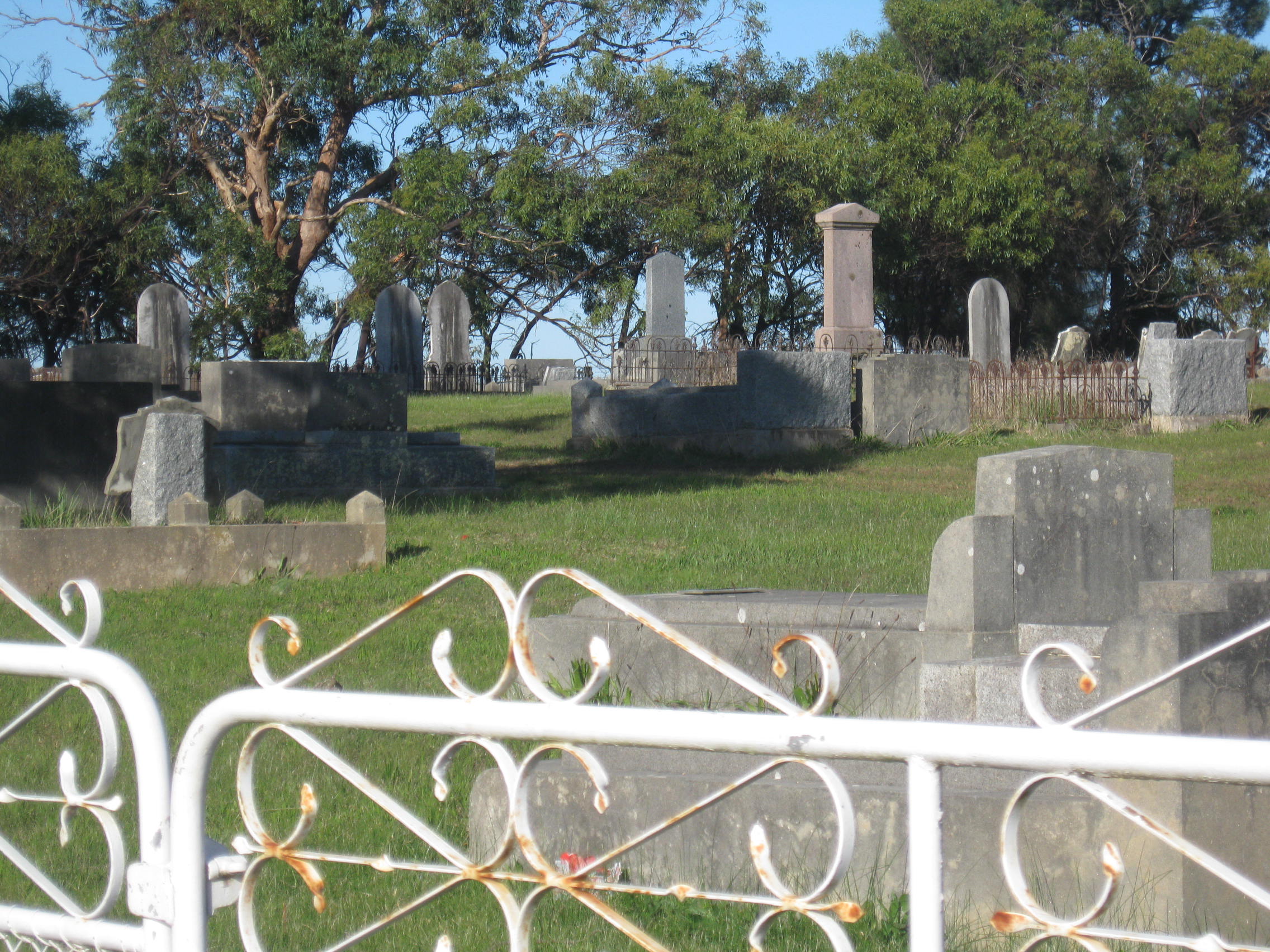
Both Joseph and Sarah were buried at the Byaduk Cemetery. While there is no visible headstone for the pair, there is a large plot enclosed by a rusted wrought iron fence I believe is their resting place.  It is surrounded by graves of other Harman family members in a picturesque corner of the cemetery.

A View of the Byaduk Cemetery

Colonial Ploughing Matches

BYADUK PLOUGHING MATCH

The Byaduk Farmers Club held their annual ploughing match on June 14, 1881. The venue was the farm of the Christie brothers and 13 competitors displayed their finest ploughing techniques.

James Harman was a keen competitor of ploughing competitions and on the day won the Champion class.  His plough of choice was the Lennon made in North Melbourne by Hugh Lennon.  Only the year prior the Lennon plough had made news with the capture of the Kelly Gang.  The armour forged for the gang had been made out of Lennon plough boards.

Reuben Harman, James’ younger brother won the B class.  Reuben was 41 at the time and died only two years later.  He was also a fan of the Lennon.  Another Harman, Arthur came second in the C class with a Hornsby plough and along with his uncle Reuben won a prize for best crowns.

“BYADUK PLOUGHING MATCH.” The Australasian (Melbourne, Vic. : 1864 – 1946) 18 June 1881: <http://nla.gov.au/nla.news-article137816092&gt;.

Other notable Byaduk residents to win prizes were William and Alexander Christie and Peter Fraser.  Thanks to Peter Fraser, then an 18-year-old, we now have the book Early Byaduk Settlers, a recollection of his life in Byaduk.  Following the match, the participants enjoyed the annual dinner at Hardy’s Temperance Hotel.  As the Harmans were staunch Methodists, the venue would have been seen as most appropriate.

Ploughing matches were a popular activity for farmers in the late 19th century.  They were an opportunity to display skill, show off the latest farming implements and to gather socially with other farmers.  The first ploughing match was held in the Portland area in the 1850s and they appear to have peaked in the 1880s when Inter-Colonial Ploughing Matches were held at Werribee Park and Ballarat.  The sketches below depict the 1882 event at Werribee Park where 3000 spectators were attendance, including several parliamentarians.  Farmers came from New South Wales, South Australia and Tasmania.

INTERCOLONIAL PLOUGHING MATCH. (1882, August 5). Illustrated Australian News (Melbourne, Vic. : 1876-1889), p. 120. Retrieved June 15, 2011, from http://nla.gov.au/nla.news-article63185745

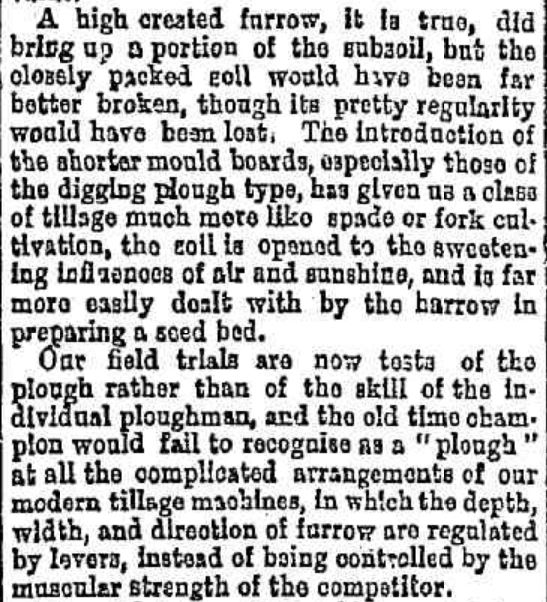
By the mid-1890s, the papers were lamenting the demise of the ploughing match.  This was put down to a number of reason including the move of young people off the land and more advanced implements.  The writer sees horse racing as no match to the social and competitive nature of the ploughing match, which were also free of the “curse of Australia”, gambling.  In the 20th century, the rise of the tractor meant ploughing by horse became almost unknown.  The skill required to plough was not as great as that of horse ploughing and there was no longer a need to demonstrate one’s abilities.  Field days today, allow for the display of the latest farming equipment and techniques filling a void left by the end of ploughing matches.  The following article from The McIvor Times & Rodney Advertiser but was also published in the Portland Guardian.

“Ploughing Matches.” The McIvor Times and Rodney Advertiser (Heathcote, Vic. : 1863 – 1918) 23 January 1896: 1 (Supplement to the McIvor Times.). Web. 1 http://nla.gov.au/nla.news-article90151643

Ploughing match results offer another insight into the lives of our Western District families.  They often have a comment on the highlight of the day and list the farmers’ place of residence.

In Search of the Extraordinary Monster

The cold snap this week has given me a chance to revisit the book by James Bonwick Western Victoria, It’s Geography, Geology and Social Conditions: The Narrative of an Educational Tour in 1857.  Although I have read the book several times, I still enjoy flicking through to my favourite parts.  One of those is the description of the Belfast (Port Fairy) Methodist Church

“…this building has come in for it’s share of carvings, in the shape of wreaths, flowers, vases, etc.  There is John Wesley’s benignant countenance regarding his incoming followers, and a noble shell expands over the front doorway.  An extraordinary monster is beheld crouching beneath the shell.  What he is, and what he does there, is a solemn mystery, known only to the artist.  Guesses as to character and description seem to run into one line, that it (is) neither more no less than the representation of the Arch One, who certainly looks uncomfortable with the shell and John Wesley over his head.   The mason may have intended it to exorcise the neighborhood, or to terrify little children into good behavior at chapel” (p84)

When I first read this book I penciled in a visit to the church when next in Port Fairy.  The fishing port town of Port Fairy is one of my favourite places in Victoria and is a summer playground for many in the Western District.  I  didn’t know on my many visits to Port Fairy in the 1980s, that I had a link with the town.  The Harman family had lived there in the 1850s and as Wesleyan Methodists would have no doubt attended sermons in the church.

While spending a few days there a couple of years ago, my small research assistant and I, walked to the church. I was keen to see the carvings as described by Bonwick and I was pleased to see they lived up to his description.  It is a little difficult to make out in the photo, but the “extraordinary monster” is in the bottom centre of the shell, its mouth is most easily seen.  John Wesley is depicted in the stone above the shell.  The carving directly above the door cannot be clearly seen here. Wire netting had been placed over the carvings in an attempt to protect them.

We were lucky enough to run into a church volunteer doing repairs and he allowed us to go inside the church.  The interior is still in its original condition.  I allowed myself to imagine the sermons of the 19th century with a  preacher placing the fear of God into his parishioners with talk of fire and brimstone.

The church was new when Bonwick visited.  On September 5, 1855, The Argus ran an article from the Belfast Gazette.  It reported the laying of the foundation stone for the Wesleyan church on August 21.  Many townspeople gathered for the occasion, with the Reverend Hart beginning proceedings with prayer, scripture reading, and song.  The ceremony then proceeded to the laying of a time capsule.  That honour was given to William Witton a long-term resident of the colony.  Witton was about 45 at the time and had been a builder in Melbourne before taking up the life of a grazier in the Western District.  His obituary credits him as the builder of the first Melbourne offices of the Bank of Australasia and for being one of the driving forces behind the foundation of Wesleyan churches throughout the colony.   

According to the Gazette, a bottle containing “the  Belfast Gazette and Banner of the week, and an inscription, of which the following is a copy:  “The foundation stone of James street Wesleyan Church, Belfast, laid by William Witton, Esq., on Tuesday, August 21,1855. Minister, Rev. R. Hart; chairman of the district, Rev. D. J. Draper; president of the Conference; Rev. W. B. Boyce: building committee, Messrs. Tillotson, McMahon, Bellett, Cole, and Scott; treasurer, W. W. Watson, Esq. ; secretary, W. N. Hosking, Esq. ; contractors, Messrs. Barnes, McGut, and Trevaskis.”  I thought it was unusual that local sculptor Walter McGill was not mentioned among the contractors, but I now believe that Mr McGut is in fact Mr McGill.  McGill was an interesting character who was not only a sculptor and stonemason but also a phrenologist and has been credited for making the death mask of Captain Moonlight.

Next time I visit the church I am going to look for the foundation stone, and hopefully get some better photos!  The church is now classified by the National Trust, which describes it as “one of Port Fairy’s finest buildings”.  I would have to agree with them.

ENDNOTE:  My small research assistant, now seven, has since resigned from his position.

In the News – May 9, 1910

Recently the National Library of Australia released digital copies of The Portland Guardian onto their Trove website.  This is very exciting for those researching family links in the Western District and along with the Camperdown Chronicle, Trove users have an opportunity to find out more about their families.

I thought it right that today’s In the News should feature articles that appeared in The Portland Guardian on May 9, 1910.

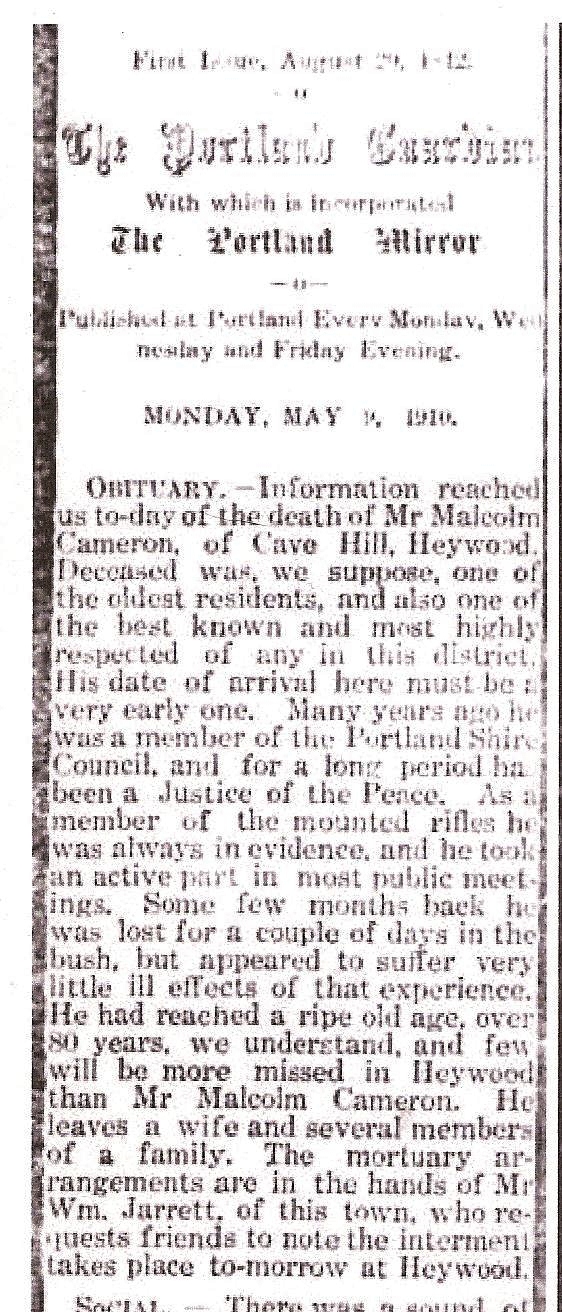
On page 2, the lead story is an Obituary for a long-time Heywood resident Malcolm Cameron.  I have some interest in Malcolm Cameron as he is the father in law of my first cousin four times removed, Emily Harman.

Obituary of Malcolm Cameron First Issue, August 20, 1842. The Portland Guardian. (1910, May 9). Portland Guardian (Vic. : 1876-1953), p. 2 Edition: EVENING. Retrieved May 9, 2011, from http://nla.gov.au/nla.news-article63977026

Malcolm was born in Perthshire, Scotland in around 1823.  There is a record for a Malcolm Douglas arriving on the “Glen Roy” in 1854.  Malcolm married fellow Scot Elizabeth Douglas in Victoria in 1860 and they had their first child, Fanny in 1861 at Heywood.  They had a further nine children over the subsequent 21 years.

From the obituary, it can be seen that Malcolm Cameron was active in the community as a JP and Councillor.  It mentions Malcolm was lost in the bush a few months earlier.  An article about this appeared in The Portland Guardian and other papers including The Argus on December 8, 1909

Malcolm’s son Malcolm Douglas Cameron was born in 1864 at “Cave Hill” near Heywood and married Emily Harman in 1900.  They had two sons, Oliver and Alan.

DEATH OF THE KING

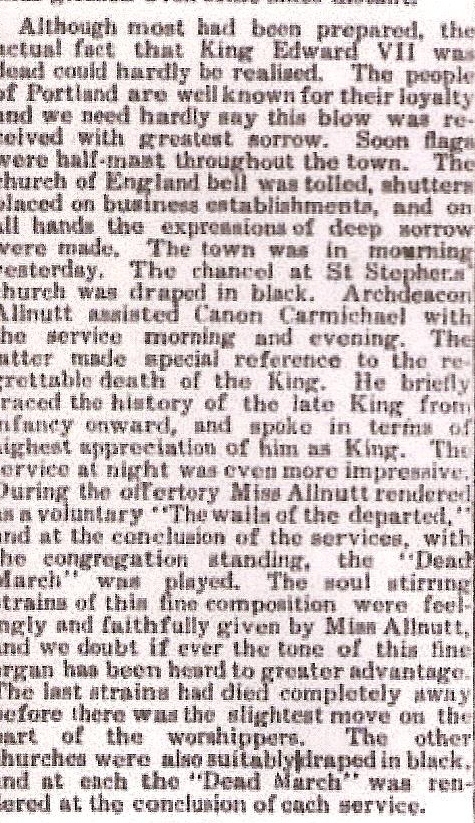
An article on page 2 gives a hint on some major international news of the time.  The Portland Post office would be closed the afternoon of May 9 out of recognition of a day of mourning which had been announced throughout the Commonwealth on the passing of King Edward VII on May 7, 1910.

Death of King Death of the King. (1910, May 9). Portland Guardian (Vic. : 1876-1953), p. 3 Edition: EVENING. Retrieved May 9, 2011, from http://nla.gov.au/nla.news-article63977030

On page 3, the headlines proclaim, “Death of the King” with details of the king’s death and further on, the reaction of the Portland residents.

The people of Portland were sent into deep mourning according to this article with flags at half-mast and church bells tolling. Miss Allnutt, the organist who is mentioned in the article was a daughter of the minister of St Stephens Church at the time. Arch Deacon Allnutt was Minister for over 30 years.

THE UPS AND DOWNS OF SKATING

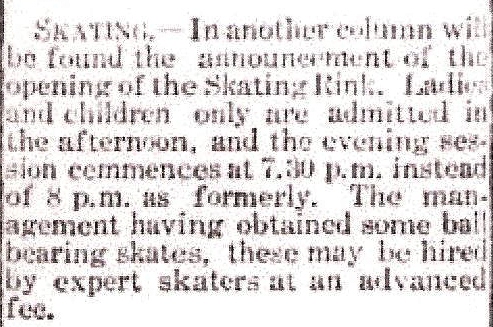
Skating appears to be a popular pastime of the late 19th Century and early 20th Century.  Two articles about skating appear on page 2, one announcing the opening of the Portland Skating rink and the second demonstrating the dangers of the sport.

The advertisement on the same page reveals skating was being held at the Free Library Hall and entry was sixpence.  Unless of course one was an expert and wished to try the more advanced ball-bearing skates!

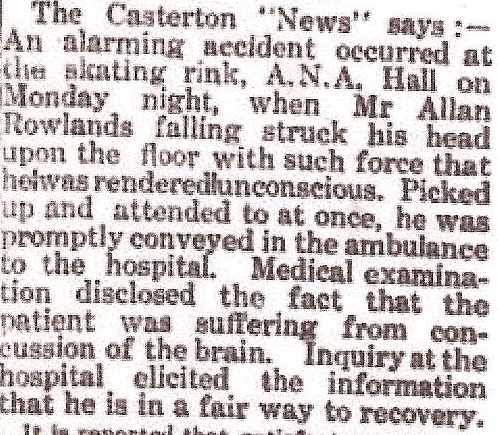
The second article relates to a skating accident at Casterton which resulted in a nasty concussion for Mr Allan Rowlands.  If one considers the size of the average country hall, the thought of skaters hurtling around is rather hair-raising.  No wonder women and children were only allowed to skate in the afternoon when hopefully it would have been a more refined pastime.

Skating Accident at Casterton First Issue, August 20, 1842. The Portland Guardian. (1910, May 9). Portland Guardian (Vic. : 1876-1953), p. 2 Edition: EVENING. Retrieved May 9, 2011, from http://nla.gov.au/nla.news-article63977026


The Harmans of Byaduk

I grew up in Hamilton, with Byaduk only about 20 kilometres from my home.  I passed through it on trips to coastal Port Fairy, visited the nearby dormant volcano Mt Napier with school and heard stories about the Byaduk caves.  Never for a minute did I know that I had any link to the small town with its drystone fences and rocky paddocks.

I  had heard of the Harmans from the conversations of my great uncles and aunties,  but when I asked who they were Nana would just say they are “cousins”, so I figured they were not that closely related.  It was not until I started finding out more about my family tree and Nana told me all the names she knew, I discovered that her mother Sarah was a Harman.

My Great Grandmother Sarah Elizabeth Harman

When first researching, I would look through records for certain family names and would often come up with very little. That was until I started on the Harmans.  There was loads of information and they soon became my favourite family, and not just for the ease of researching them.  I discovered an upstanding, religious family that always dotted the i’s and crossed the t’s.  A family that got involved in the community whether it be building schools, ploughing competitions, the Methodist church, or the Farmers Union.  Back in the late 1800s and early 1900s,  they were a well-known family in the district.

Coming to Australia in three separate groups, Joseph and Sarah Harman and their mostly grown-up children, reunited in Port Fairy during the mid-1850s.  They established themselves in the town, but with the land opening up in 1861 they moved to newly settled Byaduk around 1863.  Joseph was the first bootmaker in the town, while sons James, Jonathon, and Reuben began farming the stony land.  George, who was second eldest, seemed to have no wish to farm and by the late 1860s had returned to Port Fairy where he worked for the local council.

The family grew and by the turn of the century, another generation of Harmans were raising families with the union of marriage linking them to other well-known families in the district, including the Kinghorns, Bishops, and Olivers.  The family was also beginning to branch out to other parts of the state, including Gippsland. In 1907, three members of the Harman family appear in a photograph of Byaduk pioneers, James, Jonathan, and Reuben’s wife Elizabeth.

Byaduk Pioneers 1907

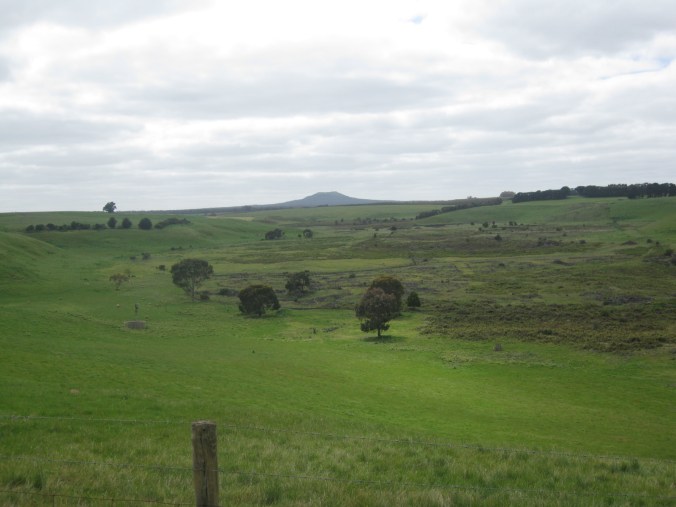
I eventually left Hamilton and did not return to Byaduk until the 1990s to visit the cemetery.  By this time I knew something of the Harman’s standing in the community but had not realised that there was so much recognition of it.  While not that surprised to find a road named after them, I was surprised the Byaduk Caves had the names, Harman’s Cave No 1 and Harman’s Cave No 2 and that the volcanic lava flow that runs from Mt Napier to Byaduk is called “Harman Valley”.  Also, the Byaduk area has been recognised as part of the Kanawika Global Geopark

The Harman Valley, Byaduk

The name of Harman is not common in  Byaduk today but I am proud that ongoing recognition of their presence there is ensured.

The “Duke of Richmond”

On 20 October 1852, the barque Duke of Richmond sailed from Birkenhead, England, bound for Portland Bay, Victoria, Australia.  Among the 236 passengers on board were two couples, each from different parts of England, one with small children.  They were my great, great, great grandparents, James and Susan Harman, and William and Margaret Diwell.  William and Margaret, from Kent, had two daughters under five.  Another daughter had passed away before the journey.  James and Susan were from Cambridgeshire and had been married only two months.

One of the passengers, Ann Maria Taylor, wrote in a letter home,

The weather was then so hot that people could not sleep on their berths. They were lying on the open deck…the captain who has been such for thirteen years, said he never experienced such weather.  Indeed I never expected to see land again.  Two nights were awful…lamps smashed…barrels of water capsized. (State Library of Victoria, Letter, Taylor, Ann Maria, 7 March 1853, MS 13313,   http://search.slv.vic.gov.au )

After around 140 days, Captain Thomas Barclay sailed the Duke of Richmond into Portland Bay on 4 March 1853.

portlandbay

PORTLAND BAY, 1856. Illustration by S.T.Gill, courtesy of the State Library of Victoria http://handle.slv.vic.gov.au/10381/303521

The Portland Herald reported on 11 March 1853, that Captain Barclay and Dr Webbers, the Surgeon Superintendent, had attempted to ensure all immigrants were comfortable and happy. However, the voyage was also reported as arduous, with much illness and over twenty deaths.  Measles claimed many of those who died.

The Diwell family disembarked and stayed in Portland for another five years before moving to the Casterton area.  William was a bricklayer and left the ship on his own account.  James Harman was engaged by  Mr Robertson at Boodcarra between Port Fairy and Yambuk for six months with wages of £50. They also spent time at Portland and Port Fairy before moving north to Muddy Creek, southwest of Hamilton, by the end of the 1850s. By 1863, James had selected land at nearby Byaduk

It is doubtful the two families came together again until 1945 when my grandparents, William Gamble and Linda Hadden, were married in Hamilton.

I have done some extra research on the other passengers aboard the Duke of Richmond.  Among them were Thomas and Mary Loats. Thomas was a neighbour of the Harman family in Drury Lane in Melbourn, Cambridgeshire. His older brother married James Harman’s oldest sister, Mary Ann. Thomas and Mary also moved to Muddy Creek. A number of the passengers moved to the Byaduk area. Some of the family names include Clarke, Everett, Gibbons, Looker, McIntyre, Merry, Patman, and Spong.