Trove Tuesday – Early Hamilton Sport

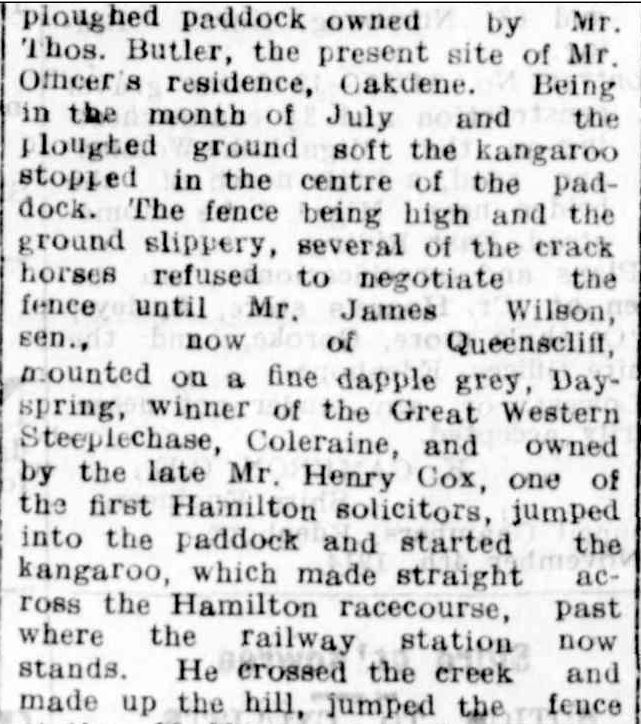
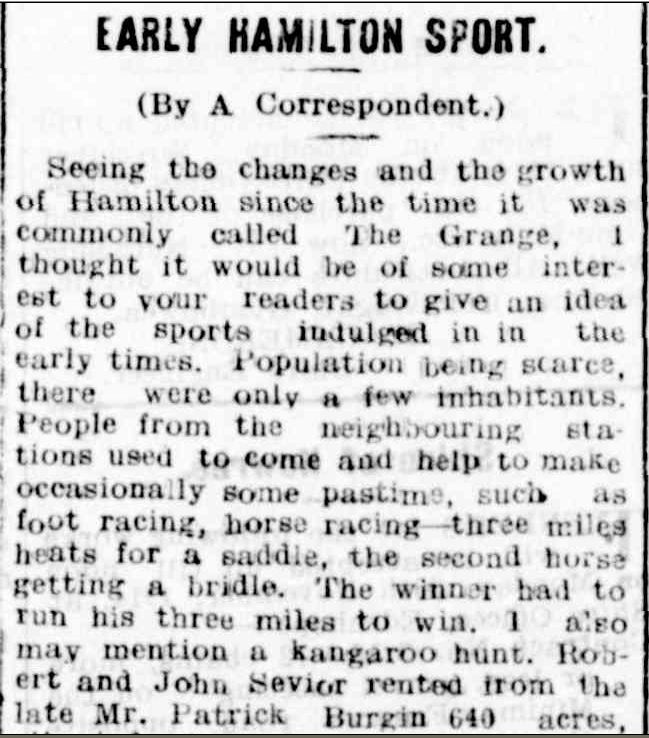
What do you know?  It’s another animal story for Trove Tuesday.  This time we go back to the early days of my hometown, Hamilton and a guide to early sporting activities.  Although the population was sparse, residents from surrounding stations would travel for foot racing and horse racing.  But it was an early kangaroo hunt that captured the Spec’s correspondent’s attention.    The article appeared in the Hamilton Spectator in 1914, but the story comes from long before, when Hamilton was known as The Grange.

I have tried to put an approximate date on the said kangaroo hunt and it must have been after 1852 when the Hamilton Inn, opened.  The Botanic Gardens were first gazetted in 1853 but not planted out until 1870.  The first races in Hamilton were held in 1851 at the sight refered to in the article.  Later the racecourse moved slightly north-east to beside what is now Ballarat Road, before moving to the current location on the other side of town. (The Hamilton History Centre Grange Burn Walk Guide p.8)

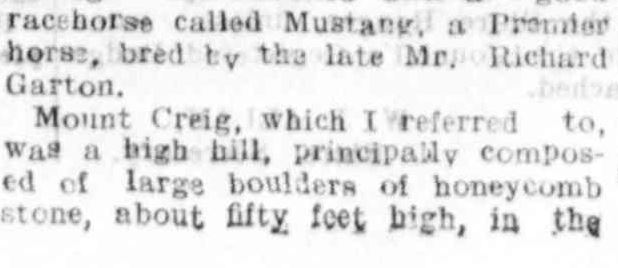
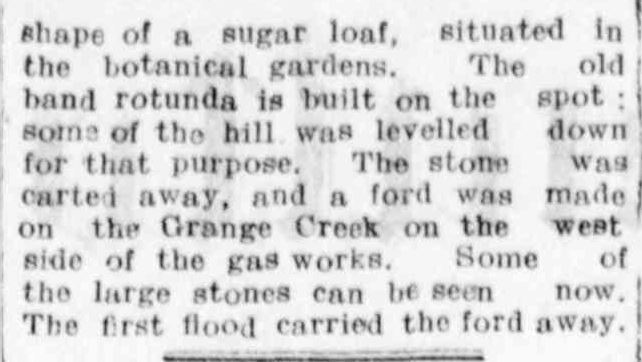
Another interesting landmark was Mount Craig, a large stone hill on the gardens site.  It was also known as “Shepherd’s View”.  Information from the Hamilton History Centre refers to Mt. Craig and the spring that ran from it, providing water for the locals.  It was located near the current Thompson Street entrance.

Along with the many landmarks that created a clear picture in my mind of the hunt’s route, the article mentions many of those involved with the hunt, some of whom still have descendants in the Hamilton district today.

tt17tt18tt19tt20tt21

EARLY HAMILTON SPORT. (1914, November 25). Hamilton Spectator (Vic. : 1914 - 1918), p. 6. Retrieved October 2, 2013, from http://nla.gov.au/nla.news-article119872739

EARLY HAMILTON SPORT. (1914, November 25). Hamilton Spectator (Vic. : 1914 – 1918), p. 6. Retrieved October 2, 2013, from http://nla.gov.au/nla.news-article119872739

After Many Days

To really get a feel for a time in history, there is nothing better than a diary, letter, memoir or personal account.  Some of my favourite Western District history books are those from pioneer times, such as “The Diaries of Sarah Midgley and Richard Skilbeck” and James Bonwick’s educational tour of Western Victoria in 1857.  There is another on the list that I haven’t shared with you before, “After Many Day’s” being the reminisces of Cuthbert Fetherstonhaugh.  Even better, the book is available online. (See link at end of the post)

Cuthbert Fetherstonhaugh, born in Ireland in 1837, published his memoir in 1918 when he was 81, written, he claims, after much prodding from his wife, Flora, and friends particularly a friend from the later part of his life, writer Walter G. Henderson of Albury.   Many thanks must go to them because their persuading resulted in a 414 page rollicking yarn, packed with places, names and stories from the first half of Cuthbert’s life with illustrations.

“AFTER MANY DAYS:” The Memories of Cuthbert Fetherstonhaugh — A Fascinating Book of Adventures in the Australian Bush. (1918, April 10). Sydney Mail, p. 14. http://nla.gov.au/nla.news-article159027098

This is not just a story of the Western District, but of life in Ireland and Germany during Cuthbert’s childhood.  There is also a wonderful description of his passage on a second-class ticket to Melbourne aboard the “Sussex” in 1853.  Cuthbert spent some time in Melbourne before he went to the Henty’s Muntham station (p.90) in the Western District, and his account brings 1850s Melbourne to life.

He outlines his friendship with Thomas Browne/Rolf Boldrewood author of “Robbery Under Arms “(p 40).  He includes the obituary of his father, Cuthbert Fetherstonhaugh, who spent time as a Police Magistrate at Hamilton (p.52).  During his time there, Cuthbert Snr, resided at  Correagh at Strathkeller, just north of Hamilton.  (Today, Correagh is in excellent condition and was featured in an issue of Home Life magazine, available online). Cuthbert Snr and his wife Susan and daughter Adelaide are buried at the Hamilton (Old) Cemetery (below).

There are stories of horse breaking, bushrangers, colonial racing and more.

Some of the Western District identities he met included members of the Henty family, Samuel Pratt Cooke, Acheson Ffrench and the Learmonths.  But there were also stockmen, horse breakers and crack riders.

He associated with Adam Lindsay Gordon (p.165), a person he admired for his riding skill and poetry, and there are several extracts of ALG’s verse.

Cuthbert devoted several pages to George Waines (p177) and the trial, that saw Waines convicted and sentenced to hang for the murders of Casterton couple Robert and Mary Hunt.

After Muntham, Cuthbert travelled to Queensland via Sydney.  On the way, he dropped in at the Chirnside’s Mt William station at the foot of the Grampians.  It is was there he saw the “western mare” Alice Hawthorne, in the days when she was beginning her Cinderella story, transforming from station hack to champion racehorse.

After lengthy reminisces of his time in Queensland, past Rockhampton, Cuthbert then focused on his life in N.S.W where he spent two years as an Anglican minister.  He died in Wellington, N.S.W. in 1925, aged 88, remembered as a pastoral leader.

What the critics said:

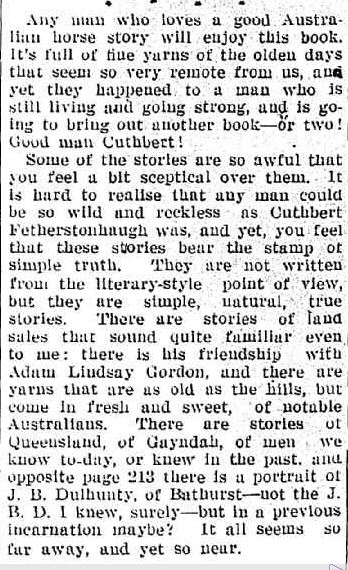
At the time of the book’s release, the Sydney Stock and Station Journal described the book as “pure Australian”

GOSSIP. (1918, April 12). The Sydney Stock and Station Journal (NSW : 1896 - 1924), p. 3. Retrieved October 13, 2013, from http://nla.gov.au/nla.news-article124218838

GOSSIP. (1918, April 12). The Sydney Stock and Station Journal (NSW : 1896 – 1924), p. 3. Retrieved October 13, 2013, from http://nla.gov.au/nla.news-article124218838

When Cuthbert died in 1925,  Walter Henderson wrote of his friend and the book he persuaded Cuthbert to write.

CUTHBERT FETHERSTONHAUGH. (1925, July 15). The Sydney Morning Herald (NSW : 1842 - 1954), p. 12. Retrieved October 13, 2013, from http://nla.gov.au/nla.news-article16210414

CUTHBERT FETHERSTONHAUGH. (1925, July 15). The Sydney Morning Herald (NSW : 1842 – 1954), p. 12. Retrieved October 13, 2013, from http://nla.gov.au/nla.news-article16210414

Read “After Many Days: being the reminiscences of Cuthbert Fetherstonhaugh” online

Trove Tuesday – Let it Snow

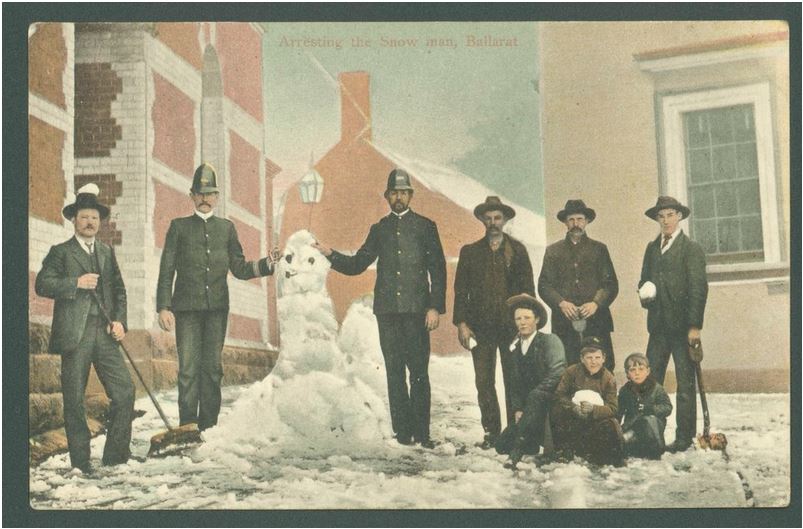
Since Western Victoria is experiencing a cold snap with snowfalls around Ballarat and the Grampians in the past 24 hours, I thought a snow theme for Trove Tuesday appropriate.

This treasure found at Trove is a postcard from Ballarat in 1909.

tt

Snowfalls on the hills around Ballarat and surrounding districts are not uncommon, but the snow rarely settles in the town.  Mt William, the highest peak in the Grampians gets a snow cap some winters, but for a short time only.  Further west, it is less likely to snow in Hamilton and from memory, in the eighteen years I lived there, it may have snowed once, but it was closer to sleet than snow.  I have never known it to snow as it did in July 1901, when snow fell for around nine hours in Hamilton.  It would have been a beautiful sight.

HEAVY SNOW IN THE COUNTRY. (1901, July 29). The Argus (Melbourne, Vic. : 1848 - 1957), p. 6. Retrieved August 20, 2013, from http://nla.gov.au/nla.news-article10563557

HEAVY SNOW IN THE COUNTRY. (1901, July 29). The Argus (Melbourne, Vic. : 1848 – 1957), p. 6. Retrieved August 20, 2013, from http://nla.gov.au/nla.news-article10563557

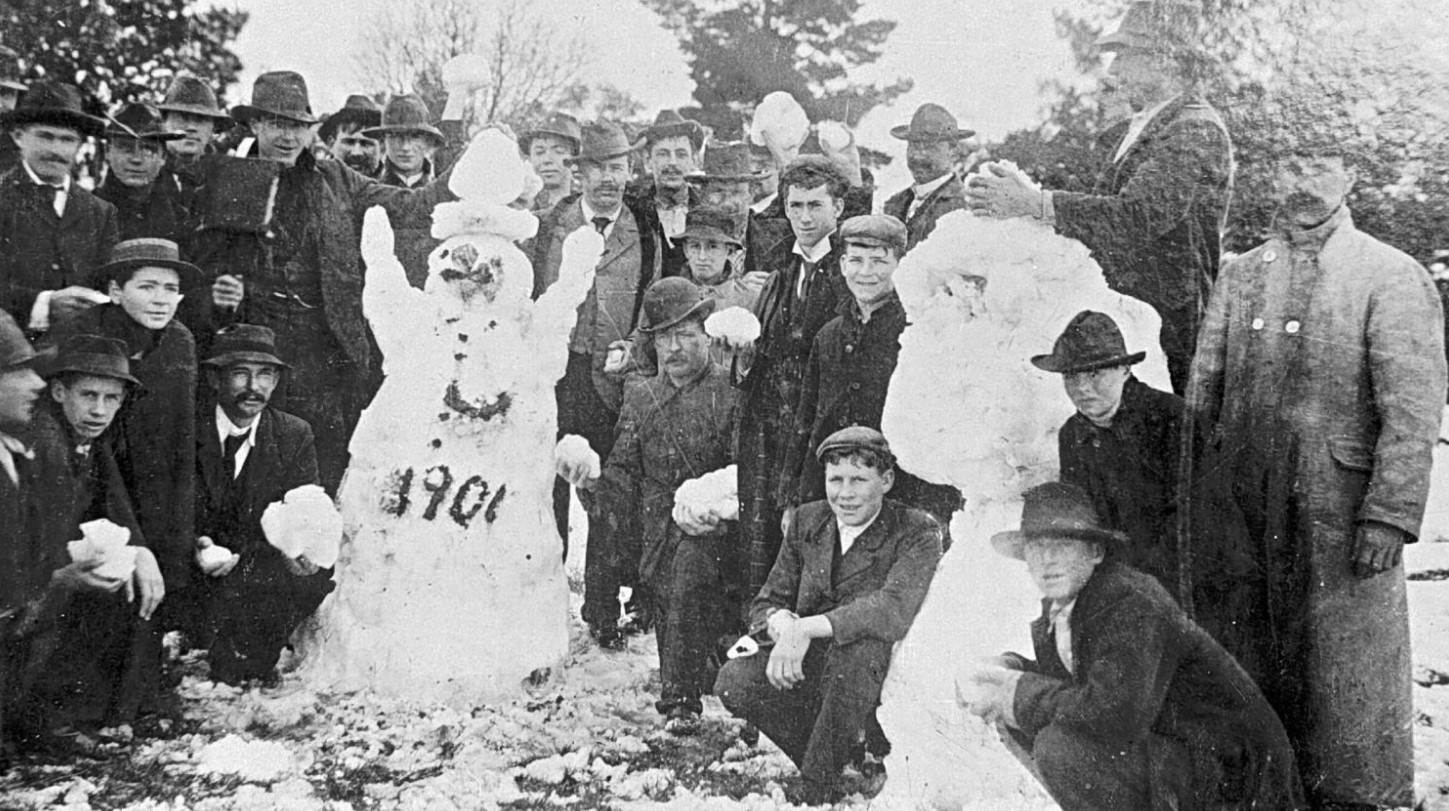
With Trove’s help, I found a photo of a snowman built at Hamilton in 1901, held by Museum Victoria.

HAMILTON 1901. Image courtesy of the Museums Victoria Collections https://collections.museumsvictoria.com.au/items/765795

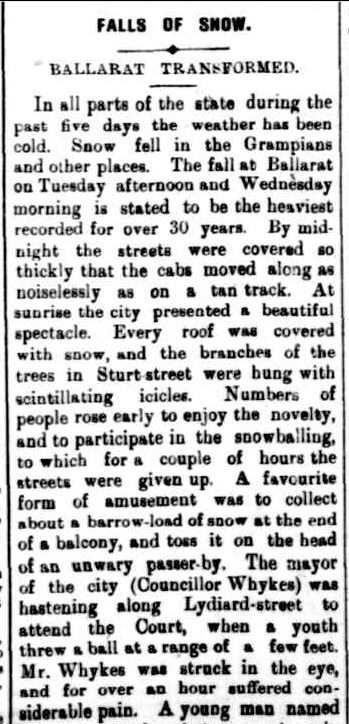
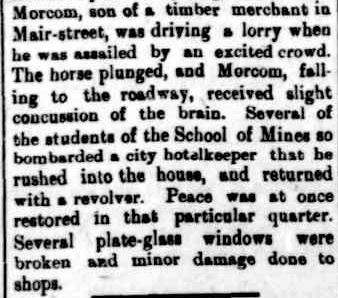
In 1905, heavy snow saw high jinx in the streets of Ballarat that got out of hand resulting in a revolver wielding publican and the Mayor, Councillor Whykes suffering concussion

tt2

FALLS OF SNOW. (1905, September 8). The Horsham Times (Vic. : 1882 - 1954), p. 3. Retrieved August 20, 2013, from http://nla.gov.au/nla.news-article72817822

FALLS OF SNOW. (1905, September 8). The Horsham Times (Vic. : 1882 – 1954), p. 3. Retrieved August 20, 2013, from http://nla.gov.au/nla.news-article72817822

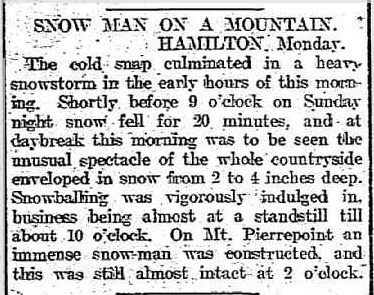
In 1910, Hamilton saw another heavy snowfall.  Such was the novelty, snowballing in the streets took priority over opening the shops.  A large snowman was built on nearby Mt Pierrepoint.

SNOW MAN ON A MOUNTAIN. (1910, October 11). The Border Morning Mail and Riverina Times (Albury, NSW : 1903 - 1920), p. 2. Retrieved August 20, 2013, from http://nla.gov.au/nla.news-article111390335

SNOW MAN ON A MOUNTAIN. (1910, October 11). The Border Morning Mail and Riverina Times (Albury, NSW : 1903 – 1920), p. 2. Retrieved August 20, 2013, from http://nla.gov.au/nla.news-article111390335

Well, this post is my 52nd Trove Tuesday post.  I did it.  I managed to post every Tuesday since Amy Lehmann launched Trove Tuesday on August 28  last year.  Next week, we celebrate Trove Tuesday entering a second year and I will share some of the most popular posts from the past 52 weeks.


Trove Tuesday – When the Sea Covered Hamilton

Since I have just written about the Reeds of Muddy Creek, I will continue the Muddy Creek theme for Trove Tuesday.

Around 1931, Walter Greed of Hamilton discovered a cowry shell on the banks of Muddy Creek, near Hamilton and passed it on to the National Museum.  Walter was the husband of Jessie Harman, daughter of Reuben Harman of Byaduk, and was a member of the Greed family, funeral directors of Hamilton.

Maybe that doesn’t seem that unusual, but a cowry shell is a seashell and the nearest sea to Muddy Creek is around eighty kilometres away.  The shell Walter found was a fossil from a time when the area surrounding Muddy Creek, including Hamilton, was one hundred fathoms under the sea.  That is around 182 metres.

Muddy Creek and the river it flows into, the Grange Burn, are well-known fossil sites, recorded in Australia’s Fossil Heritage: A Catalogue of Important Australian Fossil Sites.

WHEN THE SEA COVERED HAMILTON. (1931, June 26). The Horsham Times (Vic. : 1882 - 1954), p. 2. Retrieved June 16, 2013, from http://nla.gov.au/nla.news-article72635176

WHEN THE SEA COVERED HAMILTON. (1931, June 26). The Horsham Times (Vic. : 1882 – 1954), p. 2. Retrieved June 16, 2013, from http://nla.gov.au/nla.news-article72635176

Trove Tuesday – Hamilton Then and Now

This week, Trove Tuesday is all about photographs.  If you are looking for photos, Trove is the place to go.  One search can find photos from the various State Libraries, Museum Victoria and Flickr, to name a few.  To go straight to the Trove Photos search page, follow the link – TROVE PHOTOS

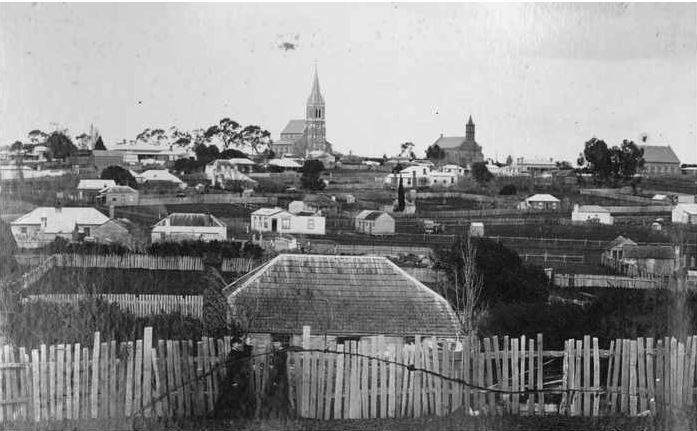
I found two photos of Hamilton from the 1880s held at the State Library of South Australia.  They were going to be the only subjects of this post, but as usual, I couldn’t stop at that.  With the help of Trove, Google Maps and some of my own photos, we can look at Hamilton then and now.

The first photo, probably taken from around Scoresby Street, looks toward what is known as Church Hill.  On the left is the Christ Church(1868) and the right, St Andrew’s Presbyterian Church (1858).  The photo tells so much about Hamilton in 1880, the buildings, the style of houses, and roofing materials.  Even what the ladies were wearing.  I wonder what they were talking about?

VIEW OF HAMILTON, 1880. Image Courtesy of the State Library of South Australia Image No. B2176/55 http://images.slsa.sa.gov.au/mpcimg/22000/B21766_55.htm

VIEW OF HAMILTON, 1880. Image Courtesy of the State Library of South Australia Image No. B2176/55 http://images.slsa.sa.gov.au/mpcimg/22000/B21766_55.htm

The shot from Google Maps shows how densely populated this part of town has become over the years.

The year 1880 was an eventful one in Hamilton.  From the Maitland Mercury & Hunter River General Advertiser, of February 14, 1880, comes a story from The Hamilton Spectator of February 7.  Two days earlier, the Shire Secretary, Henry J. Bloomfield and a local storekeeper J.H. Cooke had a public fight that ended with the firing of Cooke’s revolver.  The evening before, Cooke had been horsewhipped by a female relative of Bloomfield.  Scandal. Maybe that was what the ladies were talking about.

In September 1880 The Duke of Manchester visited Hamilton.  Met at the station by a large crowd, he went on to give a speech at a packed Commercial Hotel.

The event that caused “a profound sensation”, not just in Hamilton but beyond, was an outbreak of Diphtheria that lee to deaths including that of Archdeacon Innes.

Obituary. ARCHDEACON INNES. (1880, April 17). Australian Town and Country Journal (NSW : 1870 - 1907), p. 17. Retrieved June 11, 2013, from http://nla.gov.au/nla.news-article70943080

Obituary. ARCHDEACON INNES. (1880, April 17). Australian Town and Country Journal (NSW : 1870 – 1907), p. 17. Retrieved June 11, 2013, from http://nla.gov.au/nla.news-article70943080

An inquiry was held, as reported in the Evening News (Sydney) with the finding that the disease had originated in nearby Hochkirch (now Tarrington).  Several children had died in that town, but because of a belief that disease was not contagious, it was able to spread unchecked.  It was then transmitted to Hamilton and the result was the death of the Archdeacon and others.

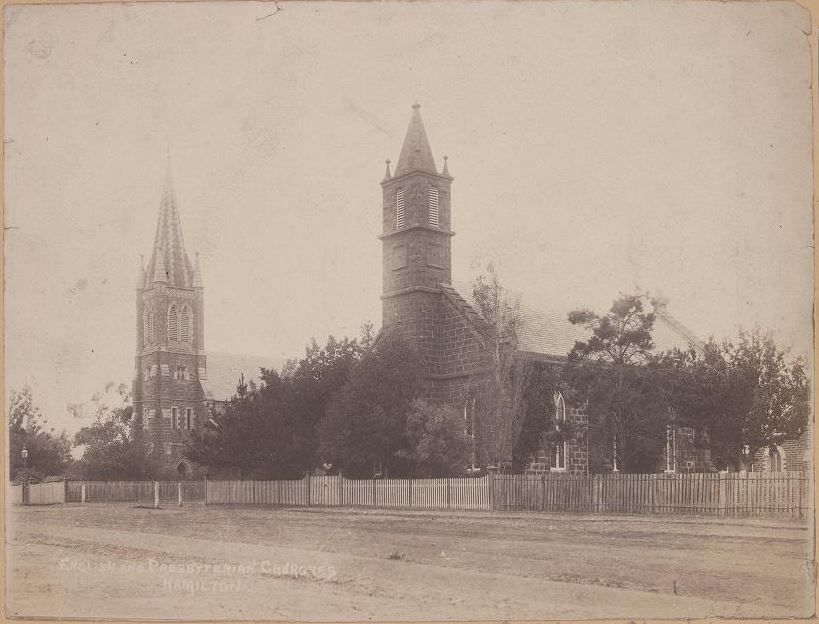
Back to the churches.  In the early 1900s, the St Andrews Presbyterian Church was pulled down and a new church built.  The following photo of the original church is from 1890.

ST ANDREWS PRESBYTERIAN CHURCH & HAMILTON ANGLICAN CHURCH c1890 Image Courtesy of the State Library of Victoria. Image no. H11827 http://handle.slv.vic.gov.au/10381/69513

ST ANDREWS PRESBYTERIAN CHURCH & HAMILTON ANGLICAN CHURCH c1890 Image Courtesy of the State Library of Victoria. Image no. H11827 http://handle.slv.vic.gov.au/10381/69513

Today the two churches stand tall on Church Hill, their steeples visible from many parts of town. Below is the Christ Church in the foreground and St Andrews in the background, taken in 2012.

HAMILTON CHRIST CHURCH CATHEDRAL & ST ANDREWS PRESBYTERIAN CHRUCH, 2012

HAMILTON CHRIST CHURCH CATHEDRAL & ST ANDREWS PRESBYTERIAN CHURCH, 2012

The “new” Presbyterian Church as seen in 2012.

001

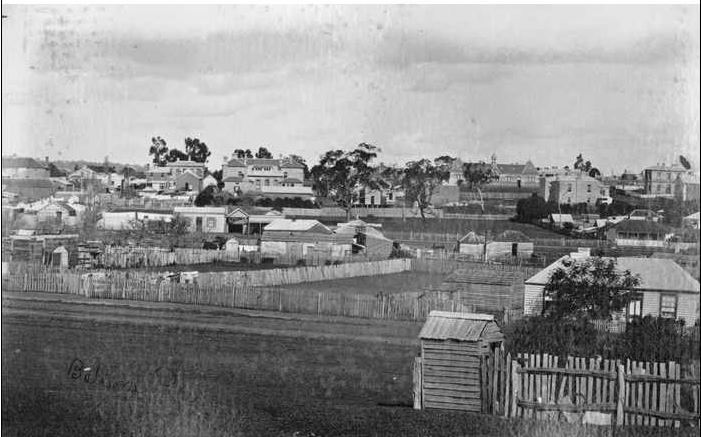
The following photo, from 1880, was taken a little further east to the earlier shot, presumably by the same photographer.  The Gray Street Primary School, then the National School is seen in the top right quadrant.

VIEW OF HAMILTON, 1880. Image Courtesy of the State Library of South Australia. Image no. B21766/54 http://images.slsa.sa.gov.au/mpcimg/22000/B21766_54.htm

VIEW OF HAMILTON, 1880. Image Courtesy of the State Library of South Australia. Image no. B21766/54 http://images.slsa.sa.gov.au/mpcimg/22000/B21766_54.htm

The current school was built in 1876, four years before the above photo, replacing a small wooden school built in 1852.  The photo from the 1880s shows a turret on the centre of the school roof.  It is no longer there as seen in this photo from 2012.

HAMILTON STATE SCHOOL, 2012

HAMILTON STATE SCHOOL, 2012

I wanted to identify more of the buildings in the second 1880s photo, particularly those on the extreme right, near the school.  It is difficult to work out where Gray Street actually was, but taking into consideration the great depth of the schoolyard, I was able to establish that the building closest to the school is Hewlett House (below), on the corner of Gray and Kennedy Streets.  The three windows on the upper level of the building are visible in the original photo.  The home was built in 1876 by Dr Viallis, but he died in 1879 aged 32.

HEWLETT HOUSE, HAMILTON

HEWLETT HOUSE, HAMILTON

The building to the front of Hewlett House must then be the former Temperance Hall in Kennedy Street built, 1876.  From Google Maps, a snap of the building in more recent years.

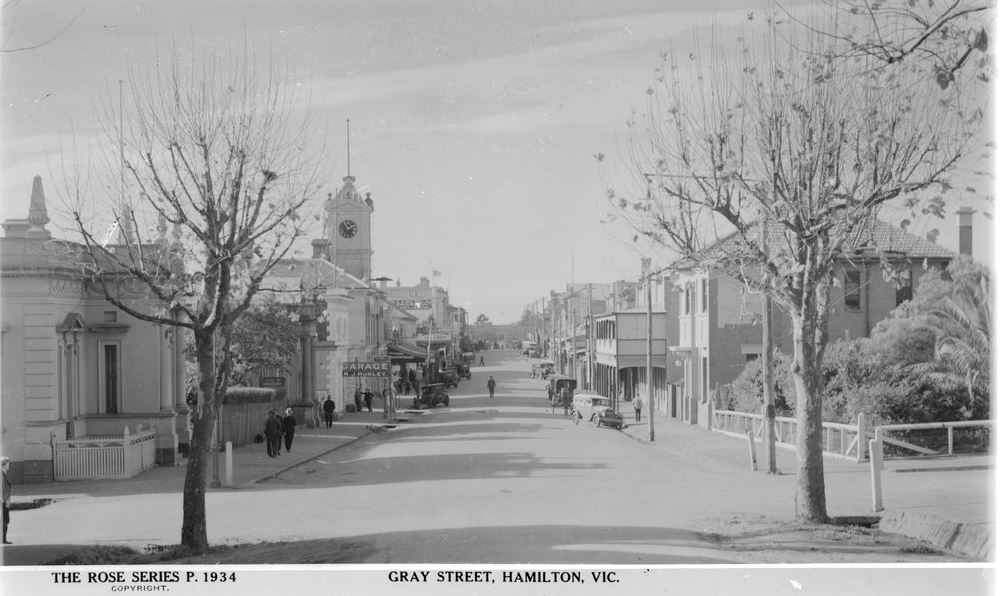
In the 19th century, the western end of Gray Street was the epicentre of town. The Town Hall, Post Office, National School, Mechanics Institute, The Hamilton Spectator and the Hamilton Club were all is this small section of the street.  The photo below is from a Rose postcard.  The postcard collection I found doesn’t have specific dates, only the general date range 1920-1954.

GRAY STREET, HAMILTON. Image Courtesy of the State Library of Victoria, Image No. H32492/2731

GRAY STREET, HAMILTON. Image Courtesy of the State Library of Victoria, Image No. H32492/2731 http://handle.slv.vic.gov.au/10381/63083

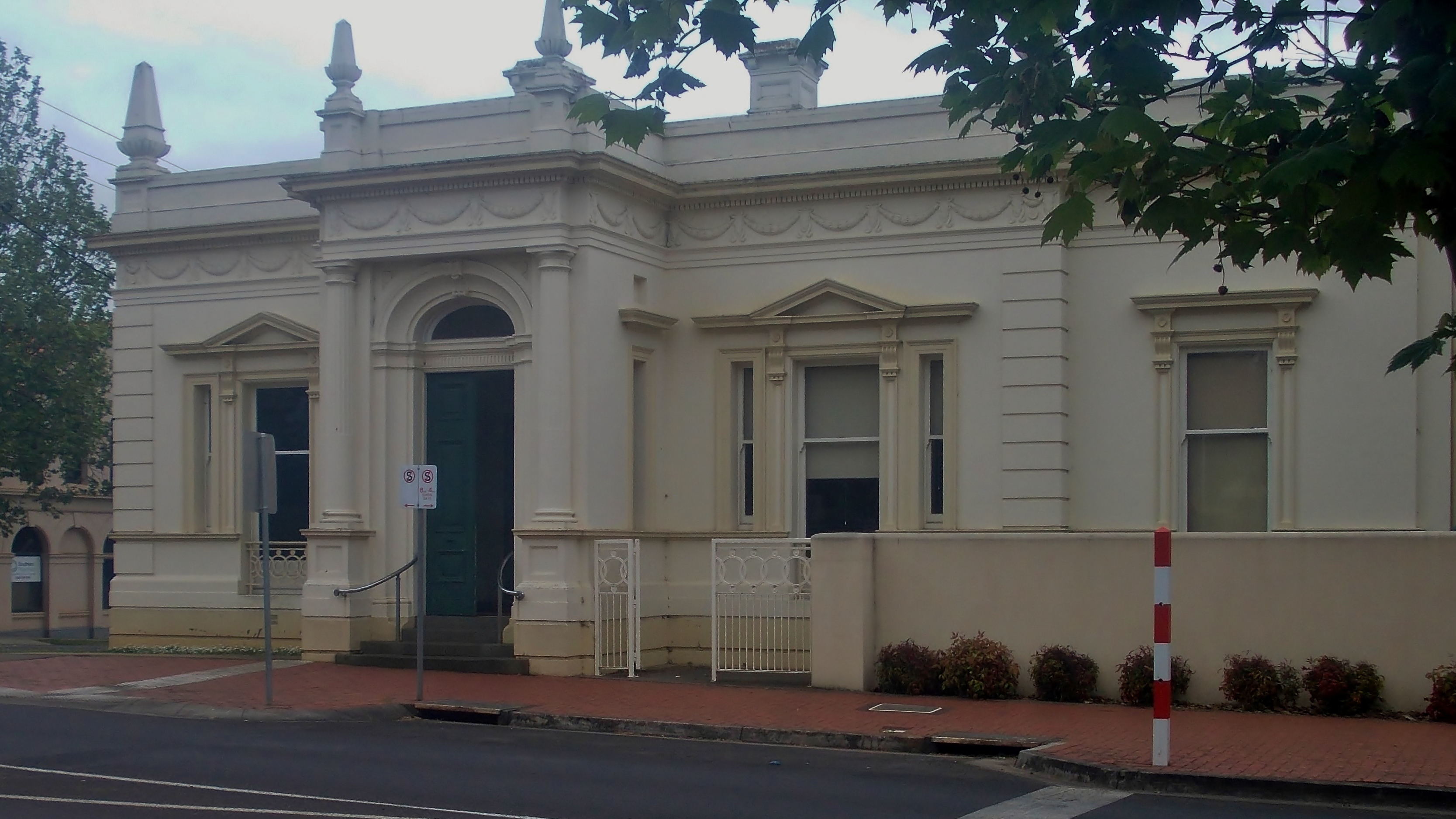
The Hamilton Club, built in 1876  is the first building on the left side of the street.  Opposite is the school, by then Gray Street State School.  The building next to the school, was demolished in 1986.  It was the State Savings Bank of Victoria at the time of the photograph.  Further on, the building with the enclosed verandah would be the former Town Hall Hotel.  It was later known as the Hamilton Hotel and today is the home of the Hamilton Baptist Church.  Below is the Hamilton Club as seen in 2012.

THE HAMILTON CLUB, HAMILTON

THE HAMILTON CLUB, HAMILTON

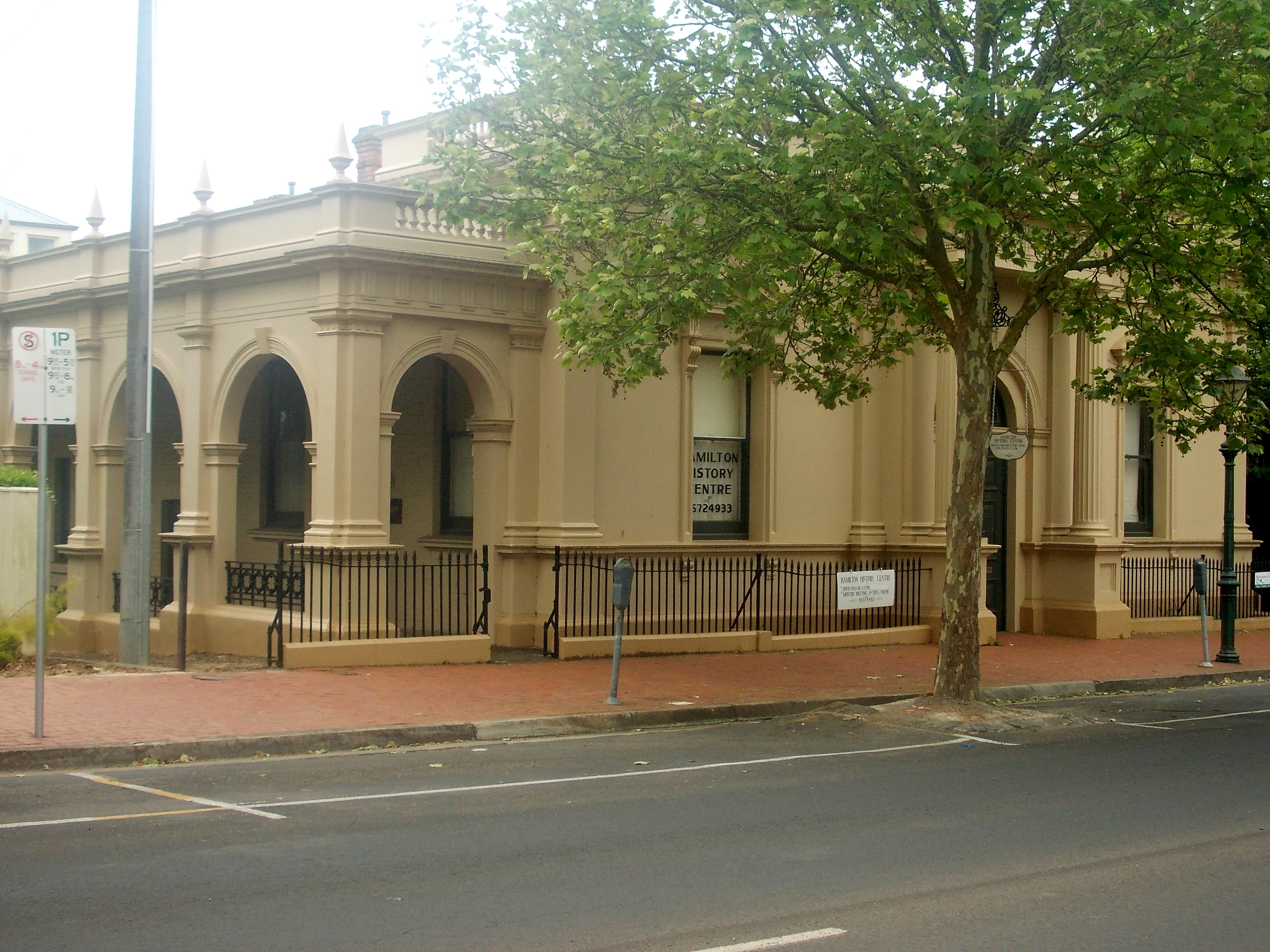
In the original 1880s photo, a fence and hedge runs between the Hamilton Club and the next building, the Mechanics Institute, built 1865.  It is now the home of the Hamilton History Centre.

HAMILTON HISTORY CENTRE, FORMALLY MECHANICS INSTITUTE.

HAMILTON HISTORY CENTRE, FORMALLY MECHANICS INSTITUTE.

Further on from the Mechanics Institute, in the original photo, there is a “Garage” sign.  This was the former Town Hall, built 1873.  A new Town Hall was built in Brown Street in 1909 and the original building sold.  In 1969, the building was demolished and is now a car park for postal employees.

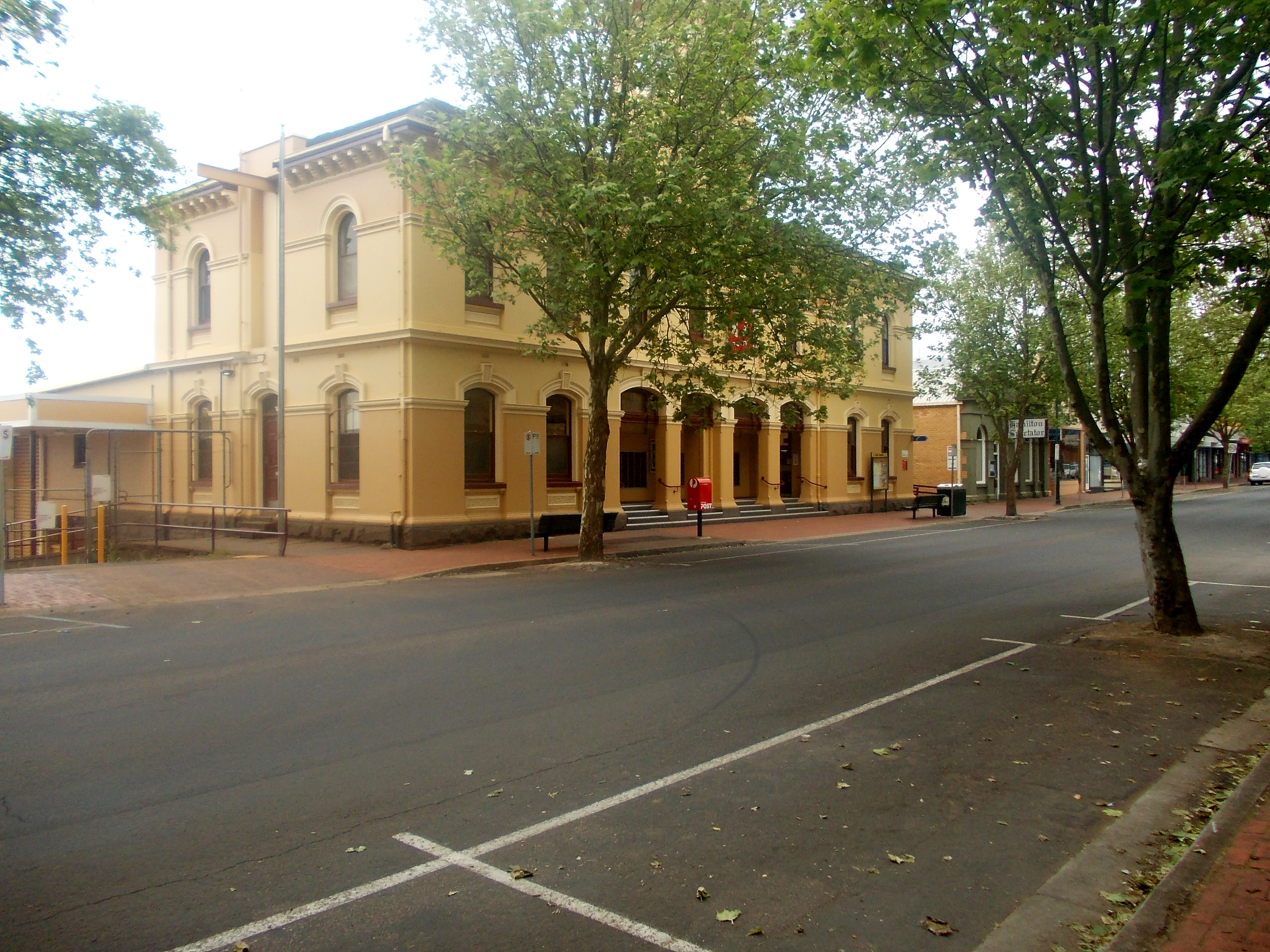
The Hamilton Post Office was built in 1878 and the clock tower added in 1890.  The Hamilton Spectator office is further along the street.

HAMILTON POST OFFICE. Image Courtesy of the State Library of Victoria. Image no. H32492/3788 http://handle.slv.vic.gov.au/10381/61503

HAMILTON POST OFFICE. Image Courtesy of the State Library of Victoria. Image no. H32492/3788 http://handle.slv.vic.gov.au/10381/61503

The Post Office clock tower still exists, it’s just obscured by a plane tree.

HAMILTON POST OFFICE

HAMILTON POST OFFICE

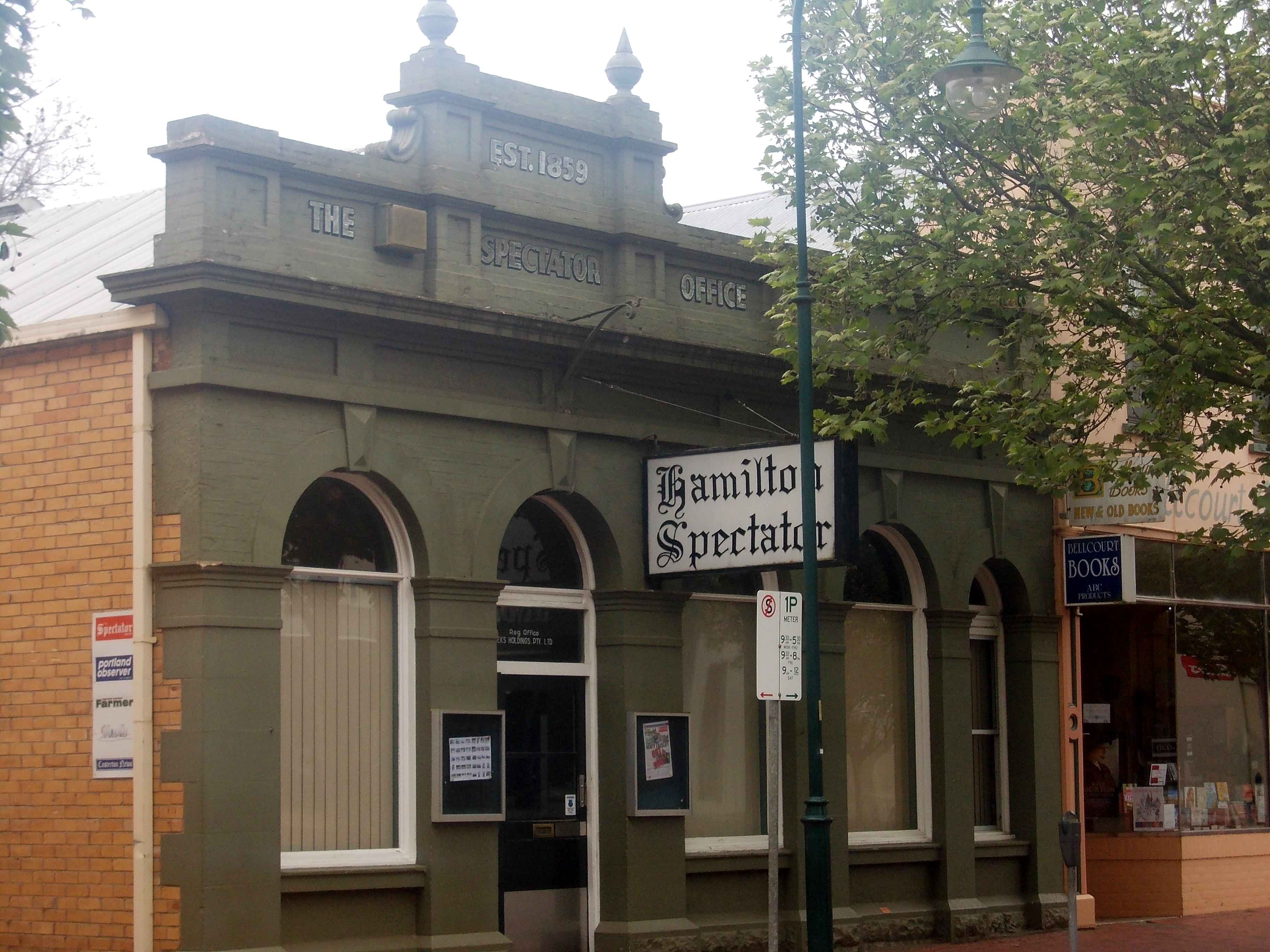
The Hamilton Spectator office, below,  in 2012.  George Robinson established the paper in 1860.  Robinson built the current home of the Spec in 1873.

THE HAMILTON SPECTATOR OFFICE, HAMILTON

THE HAMILTON SPECTATOR OFFICE, HAMILTON

Below is the front of Melville Oval from a Rose Postcard sometime after WW1.  The War Memorial is in the foreground, grandstand in the background and a band rotunda to the left of the grandstand.

MELVILLE OVAL, HAMILTON. Image Courtesy of the State Library of Victoria. Image No.H32492/2800 http://handle.slv.vic.gov.au/10381/63848

MELVILLE OVAL, HAMILTON. Image Courtesy of the State Library of Victoria. Image No.H32492/2800 http://handle.slv.vic.gov.au/10381/63848

Below is a similar view from 2011.  The band rotunda is no longer beside the grandstand.  It found a new home in 1988.

MELVILLE OVAL, HAMILTON

MELVILLE OVAL, HAMILTON

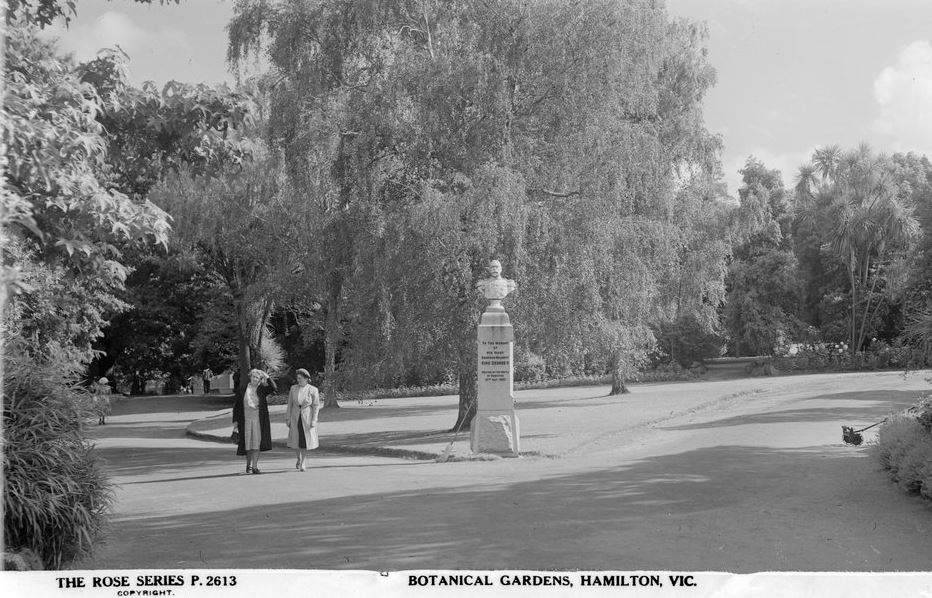
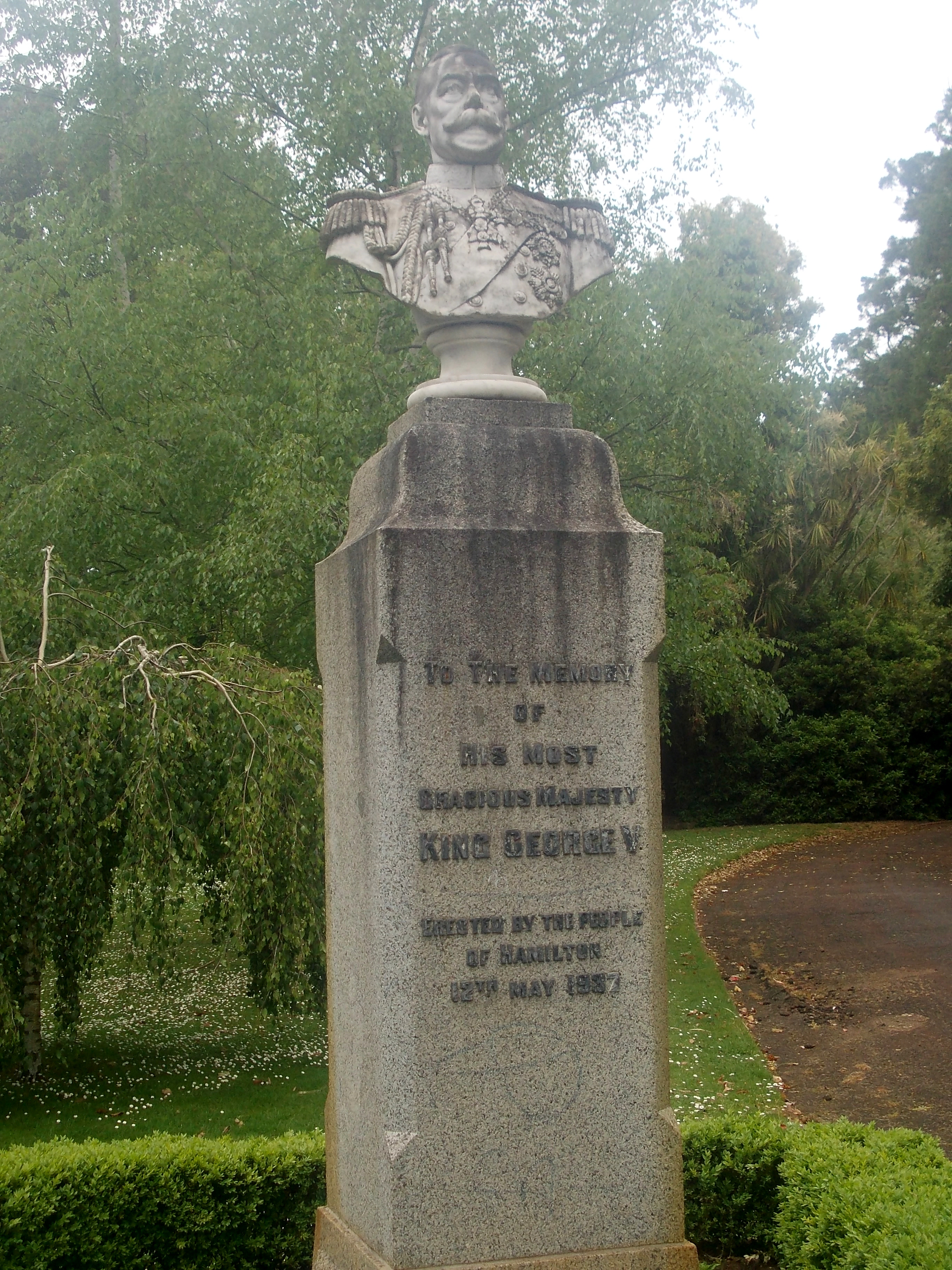
The Hamilton Botanical Gardens is one of my favourite places in Hamilton.  This is the view from the entrance on the corner of Thompson and French Streets.  The bust of George V was erected after the King’s death in 1936.

HAMILTON BOTANICAL GARDENS Image Courtesy of the State Library of Victoria. Image no. H32492/3783 http://handle.slv.vic.gov.au/10381/60784

HAMILTON BOTANICAL GARDENS Image Courtesy of the State Library of Victoria. Image no. H32492/3783 http://handle.slv.vic.gov.au/10381/60784

This is George today.  If only he could talk. He would have seen some sights in his 70 or so years in the gardens.

KING GEORGE V MEMORIAL, HAMILTON BOTANICAL GARDENS

KING GEORGE V MEMORIAL, HAMILTON BOTANICAL GARDENS

The John Thomson Memorial Fountain was erected in 1919 in memory of the pastoralist and MLA. John Thomson.  Thomson was a member of the Racing Club, Presbyterian Church and the Fire Brigade and more.

JOHN THOMSON MEMORIAL FOUNTAIN, HAMILTON BOTANICAL GARDENS. Image Courtesy of the State Library of Victoria. Image no. H32492/2808 http://handle.slv.vic.gov.au/10381/63460

JOHN THOMSON MEMORIAL FOUNTAIN, HAMILTON BOTANICAL GARDENS. Image Courtesy of the State Library of Victoria. Image no. H32492/2808
http://handle.slv.vic.gov.au/10381/63460

The fountain today, with the band rotunda, formally at Melville Oval, in the background.  Relocated in 1988,  the gardens are a perfect spot for it.

JOHN THOMSON MEMORIAL FOUNTAIN, HAMILTON BOTANICAL GARDENS

JOHN THOMSON MEMORIAL FOUNTAIN, HAMILTON BOTANICAL GARDENS

This post was so much easier thanks to several booklets I have, written by Margaret Gardner and Val Heffernan of the Hamilton History Centre.  Under the general title of “Exploring Hamilton” they offer several walking and driving tours of Hamilton packed full of history and include the Church Hill walk, CBD – Gray Street walk and the Grange Burn walk.  There are histories of prominent landmarks, shops and homes.  There are eight walking tours and three driving tours in total and are available from the Hamilton History Centre for $5.00 each.  I have six so far and they are a wonderful resource.

Trove Tuesday – A Hare Raising Tale

Enough of  Ladies of the Night, Dancing Girls, Husband’s Commandments, Bottom Drawers and Whispering Wedding Bells.  It’s time to go back to one of my favourite Trove Tuesday themes, animal stories.

The Argus of August 5, 1873 published an article from the Hamilton Spectator, relating a story of a hare that had the writer confirming Darwin’s Theory of Natural Selection.  The hare may not have agreed.  No amount of adaptation could save her from a band of men with sticks and dogs.

coursing coursing1

COURSING EXTRAORDINARY. (1873, August 5). The Argus (Melbourne, Vic. : 1848 - 1957), p. 6. Retrieved May 27, 2013, from http://nla.gov.au/nla.news-article5868695

COURSING EXTRAORDINARY. (1873, August 5). The Argus (Melbourne, Vic. : 1848 – 1957), p. 6. Retrieved May 27, 2013, from http://nla.gov.au/nla.news-article5868695

The following image from the State Library of Victoria depicts scenes from a coursing outing in 1883, however the bunny sketch could have come straight out a Peter Rabbit story.

COURSING.  Image Courtesy of the State Library of Victoria.  Image no. A/S07/05/83/85  http://handle.slv.vic.gov.au/10381/156341

COURSING. Image Courtesy of the State Library of Victoria. Image no. A/S07/05/83/85 http://handle.slv.vic.gov.au/10381/156341

Passing of the Pioneers

Welcome to a bumper May Passing of the Pioneers. So many interesting pioneers passed in the month of May, I had to leave some for next year. Those that remain had such great stories that it was necessary to share some extra bits and pieces found about them. Some just passed through the Western District from time to time, others lived there only for a short period while others were residents for over fifty years, but they all left their mark in some way. They include army captains, ship captains, a dentist, and a naturalist.

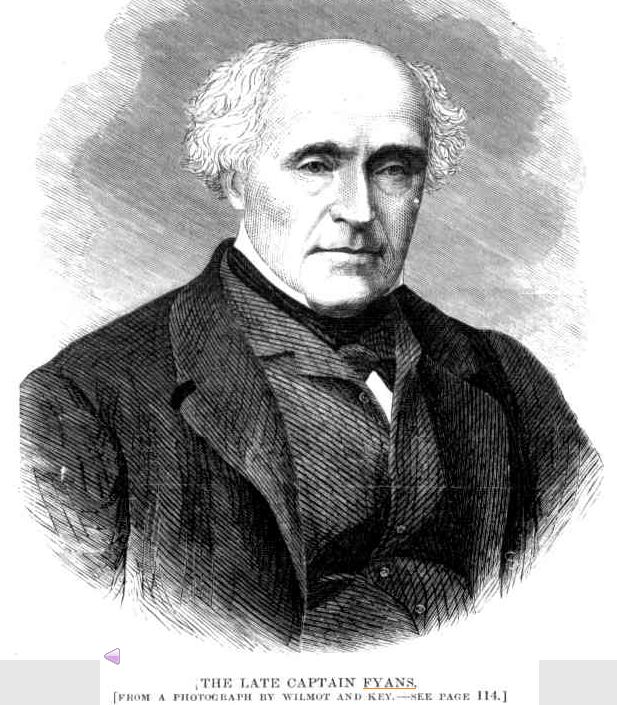
Captain Foster FYANS:  Died 23 May 1870 at Newtown. Western Victorian historian, Margaret Kiddle, wrote in her book Men of Yesterday: a social history of the Western District of Victoria (1834-1890) “the story of  Foster Fyans’ commissionership is a joy to historians” (p.50) . Born in Dublin, Ireland, Foster Fyans was an army captain. He enlisted in 1816 and served with different regiments of the British army including a stint in India. On arrival in Australia in 1833, he became the captain of the guard on Norfolk Island and remained there for two years. In 1837, he left the army and headed to Port Phillip to become the first police magistrate at Geelong.

From 1840, Foster Fyans held the important position of  Crown Lands Commissioner for the Portland Bay area.  A squatter taking up land had to seek permission from the Commissioner and pay an annual fee. The Commissioner’s word was law and there was no arguing with Foster Fyans, a man with a temper.  He tangled with many squatters including the Hentys.  Governor  La Trobe had his moments with Fyans and Kiddle cites La Trobe declaring Fyans “secured to him the chance of a duel once at least in the week as long as he may live” (p.50).

As commissioner, Fyans would ride great distances from Geelong through to Portland and into the Wimmera, a formidable task but his skills marking out selections may not have been as great according to Richard Bennett’s Early Days in Port Fairy (edited by Jan Critchett).  Fyans’ marking of runs “amounted to almost a farce” as Bennett  described the technique used by Fyans:

They were usually laid off in ten mile blocks, measured with a compass in his hand, and timing his horse.  A blackfellow followed, and notched a tree line.  When the Commissioner had travelled what he considered the distance, he notched a corner tree with a broad arrow, and then rode off again at right angles to the next corner, and so on round the block.  Captain Fyans was a bluff old gentleman…” (p.26).

Despite his ways, Fyans was kept on as Commissioner because there was no one else qualified to do the job.

THE LATE CAPTAIN FYANS. (1870, June 18). Illustrated Australian News for Home Readers (Melbourne, Vic. : 1867 - 1875), p. 114. Retrieved May 19, 2013, from http://nla.gov.au/nla.news-article60449034

THE LATE CAPTAIN FYANS. (1870, June 18). Illustrated Australian News for Home Readers (Melbourne, Vic. : 1867 – 1875), p. 114. Retrieved May 19, 2013, from http://nla.gov.au/nla.news-article60449034

Foster Fyans died at Balyang (below) in the Geelong suburb of Newtown and while the house was demolished in 1896, the site is now a part of the Balyang sanctuary. Around the Geelong area the Fyans name is still present with Fyans Street and the suburb, Fyansford. Around the Grampians, there is Lake Fyans and Fyans Creek.

BALYANG, RESIDENCE OF FOSTER FYANS c1851. Image courtesy of the State Library of Victoria Image no. H88.21/107 http://handle.slv.vic.gov.au/10381/71805

William CARMICHAEL:  Died May 1890 at Macarthur. William lived at Harton Hills, near Macarthur. According to his obituary, William purchased the property in 1843 from squatter James Hunter.  However, the Macarthur Historical Society website states William bought the property from the Bolden brothers in 1842.  Any wonder William’s obituary notes there were “many and varied stories” about how he acquired Harton Hills.

Captain Alexander CAMPBELL:  Died 25 May 1890 at South Yarra.  Alexander Campbell was born in 1803 in Argyleshire, Scotland and followed his brothers to Tasmania in 1825. After farming for a few years, Alexander left for Sydney in 1831. The following year a position in charge of the whaling station at Portland was offered to him but he didn’t take up the role until 1836.  In the meantime he went whaling, sailing as far as Japan. After Portland, he went on to Port Fairy where he stayed for about fifteen years.  In that time he built at least two cottages, one occupied by his sisters. In 1851, he became a harbour master and later moved to Gippsland where he returned to farming.  In his last years, Alexander and his wife moved to Caroline Street, South Yarra where he died aged 87.

Captain David FERMANER:  Died May 1893 at Newport. Earlier this year I wrote a Trove Tuesday post entitled Gilding the Lily.  Captain David Fermaner may have been guilty of just that.  At the time of his death, Fermaner, a whaler, was credited as being Victoria’s earliest colonist and that he was standing on the beach at Lady Bay when the ship carrying the first Henty’s reached the Victorian coastline. However, after reading Jenny Williams Fawcett’s account of David Fermaner and his link to the legend of the Mahogany Ship, it became obvious telling the truth was not one of his strong points.

CAPTAIN DAVID FERMANER. Image courtesty of the State Library of Victoria Image no. H2889/85 http://handle.slv.vic.gov.au/10381/68327

After his time in the south-west, Fermaner later became pilot and harbourmaster at Port Albert in Gippsland.

William Thomas PILE:  Died 25 May 1901 at Portland. William Pile was born in Devonshire, England, and as a boy served an apprenticeship in the fishing industry at Hull.  With an urge to see the world, he became a sailor and in 1852, his ship Cossepore arrived at Portland, but he travelled on to Geelong and like many other ships’ crew he left and headed to the diggings.  The thrill of the high seas and travel was a greater lure and he returned to England. It was not until 1854 on a return visit to Portland, he decided to settle.

William’s working life in Portland started as a fisherman and in 1869 after a trip home to England, he returned with a new type of gun to harpoon whales.  He bought into a wattle bark business with Stephen Jarrett that proved lucrative. In 1876 William became a Portland Councillor and then Portland Mayor in 1880 and 1886.

Stephen DUDDEN:  Died 2 May 1903 at Hamilton. Stephen Dudden was born in Somersetshire around 1819 and arrived in Victoria in the 1860s. Stephen showed some entrepreneurial skills setting up a refreshment tent opposite the Hamilton Lands office, in Brown Street, during the rush to buy land after the passing of the Land Act in 1860. He later went to Portland working as a stonemason and then retired to Myamyn. In the month prior to his death, a dehydrated and disheveled Stephen was found by a Hamilton policeman and taken to the Hamilton Hospital where he remained until he passed away from senile decay.

Janet MILLAR:  Died 3 May 1910 at Portland. Janet’s obituary named her only as Mrs. Browning, so I turned to the Australian Death Index to find her birth name, Janet Millar. Janet and her husband John Browning arrived in Victoria in 1849 and headed to Portland to set up a school. With the discovery of gold, the school was abandoned and the Brownings headed for the diggings. They returned to Portland and eventually, John set up another school, John Browning’s Boarding School for Boys.

Janet was eighty-eight at the time of her death and had kept relatively good health and was still tending her home.  However, it was a once in a lifetime chance to see Halley’s Comet in 1910 that led to her demise. She had been out early on cold mornings trying to catch a glimpse of the comet and developed a chill, too much for her weak heart.

Laurence FINN:  Died 24 May 1914 at Port Fairy. Laurence Finn from Tipperary, Ireland arrived in Melbourne with his parents in 1841 and in 1843 they settled in Port Fairy. In 1858, Laurence married Ellen Crowe and they took up residence at Comely Banks, Port Fairy. Laurence’s father ran the Belfast Inn for a time until he let the lease lapse. As a the only child from his father’s second marriage, Laurence and his children inherited a large amount of land. Laurence was a Justice of the Peace and was a member of the Port Fairy Agriculture Society.  Laurence was buried at the Port Fairy Cemetery, below.

John McCOMBE: Died 7 May 1916 at Casterton. Fourteen-year-old, John McCombe arrived in Melbourne aboard the Champion of the Seas in 1854. His family headed directly to Portland but John soon moved on to the Casterton district taking up work at Dunrobin and Nangeela. He purchased a bullock team and began a carrying business and moved to Sandford around 1861 after he married. Four years later he bought land at Deep Creek, Corndale and he remained there until his death.

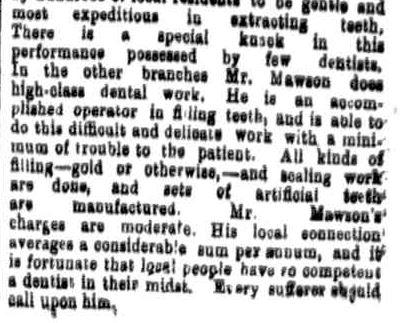
Frederick Sunderland Wood MAWSON:  Died 19 May 1916 at Geelong. Frederick Mawson was a dentist and he travelled the Western District and Mt. Gambier inspecting the teeth of the residents.  Born around 1843, Frederick studied dentistry in England and practiced in Yorkshire.  After acquiring the necessary qualifications for Australia, Frederick set up practice in Geelong and for a few years had a practice in Mt Gambier.

DENTISTRY. (1914, April 2). The Casterton News and the Merino and Sandford Record (Vic. : 1914 - 1918), p. 1 Edition: Bi-Weekly. Retrieved May 23, 2013, from http://nla.gov.au/nla.news-article74760513

DENTISTRY. (1914, April 2). The Casterton News and the Merino and Sandford Record (Vic. : 1914 – 1918), p. 1 Edition: Bi-Weekly. Retrieved May 23, 2013, from http://nla.gov.au/nla.news-article74760513

This “advertorial” from the Border Watch gives a good description of Frederick Mawson and his dentistry.

dentist1

F. J. Mawson,. (1899, April 5). Border Watch (Mount Gambier, SA : 1861 - 1954), p. 4 Supplement: Supplement to the BORDER WATCH. Retrieved May 23, 2013, from http://nla.gov.au/nla.news-article81713460

F. J. Mawson,. (1899, April 5). Border Watch (Mount Gambier, SA : 1861 – 1954), p. 4 Supplement: Supplement to the BORDER WATCH. Retrieved May 23, 2013, from http://nla.gov.au/nla.news-article81713460


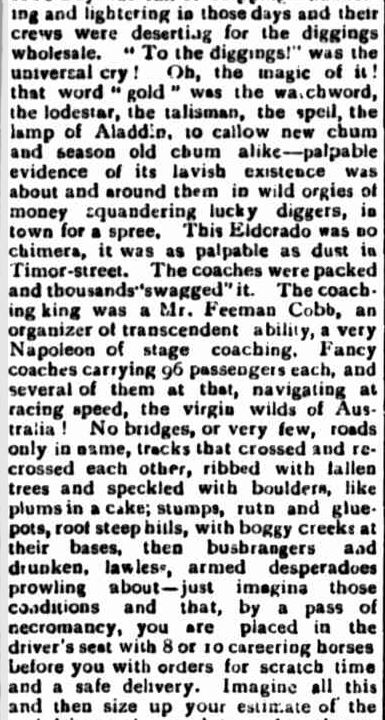
George Deihl McCORMICK: Died 29 May 1916 at Warrnambool.  Born in Toronto, Canada, George McCormick arrived in Victoria in 1852. He farmed and apparently became a part-owner of Cobb & Co. coaches. While I can’t find evidence of this claim, George did know a lot about Cobb & Co. as recorded in his reminisces from 1902 with a writer from the Warrnambool Standard. The article also appeared in the Portland Guardian of January 20, 1902

mccorm mccorm1 mccorm2

This is a perfect opportunity to show a Cobb & Co. coach and the Leviathan coach, introduced in 1862, was the height of madness. Smaller coaches would have been scary enough to ride in as they hurtled along unmade roads. But a coach for 89 passengers. What were they thinking? George’s account above mentions the perils facing the Leviathan coach, but it was not the risk that proved them unsuccessful. Rather, the driver’s whip could not reach the front horses, so a bag of stones was carried to throw at the leaders.

COBB & CO COACH WITH 89 PASSENGERS. Image courtesy of the State Library of Victoria Image No. H4051 http://handle.slv.vic.gov.au/10381/72175

COBB & CO COACH WITH 89 PASSENGERS. Image courtesy of the State Library of Victoria Image No. H4051 http://handle.slv.vic.gov.au/10381/72175

George became a police magistrate in 1882 and purchased Bournfield Park Estate at Woodstock near Whittlesea and in 1889 he arrived in Warrnambool.  He remained there until his death.  He left a wife, Barbara Waddell and five sons and four daughters.

John James VILLIERS:  Died May 1917 at Warrnambool. London born John Villiers was a talented man. He arrived in Victoria in 1858 aged around seventeen and headed to the diggings. In the early 1860s, he went to Warrnambool and his obituary in the Argus on 12 May 1917 said he ran a painting and decorating business in Liebig Street and imported crockery.  John’s interest in painting went beyond house painting.  He enjoyed painting landscapes in oils and watercolors and once he presented a painting to the Warrnambool Art Gallery.

A man of the arts, John was also an amateur dramatic and vocal performer and organised dramatic events to raise money for the likes of the Warrnambool Hospital and the Mechanics Institute. John was a part of the earliest known sound recording in Australia by Warrnambool shoe shop owner, Thomas Rome on one of the first Edison phonographs. John Villiers sang The Hen Convention and if you click on the link, you can hear the song. More information about Thomas Rome and John Villiers and their recordings can be found in a story by ABC Southwest from 2010.

Sarah BARKER: Died May 1917 at Ararat. Most months I can find a pioneer that I have even just a tenuous family link to.  This month it is Sarah Barker. Sarah was the mother of Stephen Ward. Stephen married Isabella Harman, daughter of James Harman. I didn’t know that Sarah Jerrett, as she was in her obituary, was formally Sarah Ward and Sarah Baker.  When I read the obituary, however, it mentioned the Ward connection and her son Stephen.

Sarah, from Norfolk, England, and her first husband James Ward, arrived at Portland in 1852.  She was twenty-three.  Sarah remained there until the late 1890s when she moved to Ararat. Prior to that  Sarah and James had seven children. including second youngest Stephen in 1867. James died in 1879 and Sarah married Francis Jerrett in 1883.

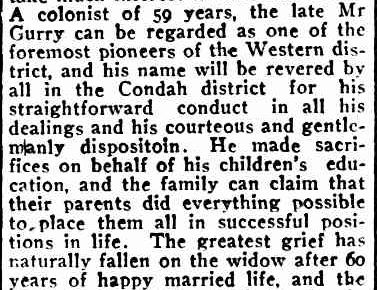
John GURRY:  Died 24 May 1917 at Condah. John Gurry and his wife left Ireland for Portland in 1857. They tried Harrow and Branxholme, running the Western Hotel there, then settled in Condah where John ran a farm. In their later years, they moved into the Condah township. John was buried in a family grave at Portland.

OBITUARY. (1917, May 28). Port Fairy Gazette (Vic. : 1914 - 1918), p. 2 Edition: EVENING. Retrieved May 23, 2013, from http://nla.gov.au/nla.news-article88021627

OBITUARY. (1917, May 28). Port Fairy Gazette (Vic. : 1914 – 1918), p. 2 Edition: EVENING. Retrieved May 23, 2013, from http://nla.gov.au/nla.news-article88021627

Adam EDGAR:  Died 8 May 1941 at Tapanui, New Zealand.  At the age of six, Adam arrived in Portland aboard the Severn in 1857 with his parents, James and Isabella, and his eight siblings. The family went straight to Pine Hills  Harrow the property of James Edgar’s brother, David. Like his cousins and siblings, he was educated at the private school David Edgar had established at Pine Hills.  In 1871,  Adam married Margaret Huston and in 1875, they left for New Zealand where they stayed for the rest of their lives. One of Adam and Margaret’s sons was the Reverend James. Huston Edgar, an explorer, missionary, and author who spent much of his life in China. His obituary is below. Adam’s sister Jean Edgar was a Passing Pioneer from March 2012.

MR. J. H. EDGAR DEAD. (1936, April 6). The Courier-Mail (Brisbane, Qld. : 1933 - 1954), p. 14. Retrieved May 26, 2013, from http://nla.gov.au/nla.news-article36803018

MR. J. H. EDGAR DEAD. (1936, April 6). The Courier-Mail (Brisbane, Qld. : 1933 – 1954), p. 14. Retrieved May 26, 2013, from http://nla.gov.au/nla.news-article36803018

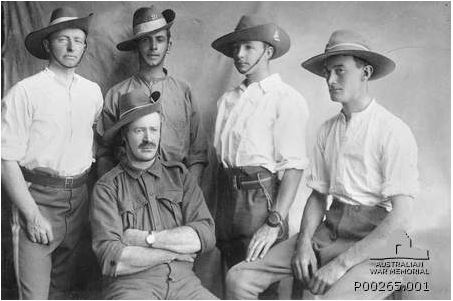
Captain Robert Ernest BAKER: Died 4 May 1943 at Larpent. What an interesting character Captain Baker was. Not a ship’s captain, but a captain in the AIF during WW1 he served with the 8th Light Horse. Reading his eighty-eight-page service record, I found that Baker was actually a Lieutenant when delisted and was only a temporary Captain for a short time during his service. “Captain” does have a better ring to it.

This wonderful photo from the Australian War Memorial has a real Western District flavour but sadly only one, Robert Baker, returned.  Captain Baker is seated on the left.  He was forty-one at the time of enlistment.  The other men are seated right:  Keith Allan Borthwick of Armadale. Standing from left: Major Thomas Harold Redford of Warrnambool, Lt Edward Ellis Henty of Hamilton, Lt Eliot Gratton Wilson of Warrnambool.

Edward Ellis Henty was the grandson of Stephen George Henty. He, Borthwick, Redford, and Wilson joined up on the same day, 21 September 1914 and all died on the same day, 7 August 1915 at the battle of The Nek at Gallipoli.  Robert Baker’s war was plagued with illness, including dysentery and lumbago, but it probably saved his life.  On 7 August 1915, he was in the No 1 Australian Stationary Hospital on Mudros.

Image Courtesy of the Australian War Memorial P00265.001 http://www.awm.gov.au/collection/P00265.001

Image Courtesy of the Australian War Memorial P00265.001 http://www.awm.gov.au/collection/P00265.001

After the war, Captain Baker transformed his property at Larpent into a sanctuary for the native fauna.  He often contributed to the Nature Notes in the Argus.

NOTES FOR BOYS. (1930, September 9). The Argus (Melbourne, Vic. : 1848 - 1957), p. 9. Retrieved May 26, 2013, from http://nla.gov.au/nla.news-article4189243

NOTES FOR BOYS. (1930, September 9). The Argus (Melbourne, Vic. : 1848 – 1957), p. 9. Retrieved May 26, 2013, from http://nla.gov.au/nla.news-article4189243

In 1936, he offered kangaroos from his own sanctuary to the Healesville sanctuary.  Healesville Sanctuary was in its first years as it was officially opened in 1934.

Healesville Shire Council. (1936, May 2). Healesville and Yarra Glen Guardian (Vic. : 1900 - 1942), p. 3. Retrieved May 26, 2013, from http://nla.gov.au/nla.news-article60453763

Healesville Shire Council. (1936, May 2). Healesville and Yarra Glen Guardian (Vic. : 1900 – 1942), p. 3. Retrieved May 26, 2013, from http://nla.gov.au/nla.news-article60453763

Herbert Edward RIPPON:  Died 19 May 1954 at Hamilton. Herbert Rippon was the son of George Rippon, part-owner of the Hamilton Spectator.  Herbert lived at Edradour, a house on Ballarat Road, Hamilton I must have passed a thousand times.  Photos of Edradour can be seen on a Hamilton real estate agency listing.  Herbert inherited ownership of the Hamilton Spectator in 1899. The Victorian Heritage Database has a short bio on Herbert and he was one of the original backers of Sir Reginald Ansett, then a Hamilton resident. He also was a director of John Thompson & Co department store of Hamilton.  Herbert is pictured below at the Hamilton races, third from the left.

WESTERN DISTRICT PICNIC RACE CLUB’S ANNUAL MEETING, HELD ON THE HAMILTON (V.) RACECOURSE ON WEDNESDAY, DECEMBER 12. (1923, December 22). The Australasian p. 58.  http://nla.gov.au/nla.news-article140831487

He was buried at the Hamilton (Old) Cemetery with other members of the Rippon family.

RIPPON FAMILY GRAVE, HAMILTON (OLD) CEMETERY
Burial Sites

Family historians love a cemetery, but how do you find the cemeteries where your ancestors have been laid to rest?  If you are lucky enough to have Western District Families, there are two great sites available to help the search.

BYADUK CEMETERY
BYADUK CEMETERY
CEMETERIES OF S.W. VICTORIA

I have used this site, created by Ian Marr, for years and it has done much to help me track down my family members.  Ian has visited what seems like every cemetery in the Western District, from the big ones such as Warrnambool and Hamilton to little ones in paddocks.  He has recorded the details from the headstones and compiled them in an easy to use website.  Not only that, Ian describes each cemetery, gives directions, facilities available and contact details.

The small cemeteries are interesting.  There are Aberfoyle Station, Casterton Swamp and McNeil’s Paddock cemeteries, each with one or two burials on private property.  Some of the names are great such as Lemon Springs and Moonlight Head cemeteries.

The site allows searches by surname or cemetery name.  If you choose a surname search, click on the relevant letter then scroll the names to find your own.  All cemeteries where the name appears are listed beside each surname and you can click through to the cemetery from there.

The 16  largest cemeteries lists are not available online, but Ian has compiled  a range of DVDs and USBs of the entire collection or individual cemeteries  to buy.  These also have photos of headstones from many of the cemeteries.  The name search results on the website will still show a surname match for any of those 16 cemeteries.

If you prefer to browse by cemetery, simply click the cemetery name and a list of names will appear.  Click on your surname and it will go to all matching surnames at that cemetery.

Some of the headstones have researcher links too, so you could find someone else researching your name.  Or add your own contact details on a headstone as I have done for James Harman in the Byaduk Cemetery and William Hadden in the Cavendish Cemetery.

KIRKWOOD HEADSTONE-HAMILTON OLD CEMETERY

KIRKWOOD HEADSTONE-HAMILTON OLD CEMETERY
CAROL’S HEADSTONES

Carol’s Headstones offers photographs from cemeteries from mostly Victoria, but also N.S.W., South Australia, Tasmania and Western Australia.  The main page lists the available cemeteries.  Click on a cemetery and a list of headstones will come up.  If you email Carol, she will kindly return a photo of your selected headstone.

I have made use of this fantastic service offered by Carol and received headstone photos of Julia Holmes (nee Harman) from Casterton Cemetery and Amelia Bell (nee Harman) from the Heywood Cemetery.

While there are common cemeteries to Cemeteries of  S.W. Victoria, what you can’t find on one you may find with Carol.  Also it is possible to see a headstone list for Camperdown and Casterton, for example, that are only available on the DVD/USB version of Cemeteries of  S.W. Victoria.

Carol’s Headstones has a War Memorial Index too.  Some of the Western District memorials include Branxholme and Hotspur and there plenty of new entries.

Carol has a blog, Carol’s Headstone Photographs so you can keep track of cemeteries or War Memorials as they become available.

What strikes me about both websites is the amount of work Ian and Carole put in to deliver us a fabulous free service.  Thank you to both of them.

OLD PORTLAND CEMETERY
OLD PORTLAND CEMETERY

Passing of the Pioneers

April Passing of the Pioneers includes members of some of Western Victoria’s well-known pioneering families including Bell, Learmonth, Trigger, Kittson, and Coulson. There is also the great character of Thomas Tattersall of Ararat, a train driving pioneer.

Edwin CUMMINGS:  Died 2 April 1892 at Portland. Edwin Cummings, originally from Tasmania, had only been in Portland around sixteen years but in that time he worked hard to improve his lot. On his arrival in Portland, he ran a successful saw-milling/cabinet-making business. Edwin then moved to farming pursuits. Using modern farming methods, he was able to improve his holding. Edwin also lost several adult children to consumption.

Thomas TATTERSALL: Died 24 April 1894 at Ararat. Lancashire born Thomas Tattersall died from fish poisoning on his birthday. He was a pioneering engine driver and his death was recognised by the  Governor of Victoria who sent a telegram of condolence to the Ararat railway station. Thomas drove the first train from Melbourne to Bendigo and was one of the first drivers to Portland. He had also driven the train for many dignitaries including the Governor and the Premier of Victoria.

Thomas BROWN: Died April 1903 at Hamilton. Thomas Brown went to Hamilton with his parents, after their arrival in Victoria from Scotland in 1852.  Thomas was an elder of the Hamilton Presbyterian Church and a long-time member of the Sons of Temperance and was also involved with other temperance movements. Active in many charities, his obituary noted that the poor of Hamilton had lost a friend in Thomas Brown.

Alfred COWLAND:  Died 27 April 1908 at Casterton. Alfred Cowland was born in Kent, England, and arrived in Victoria around 1858 aged twenty-two  He travelled with his parents, and Alfred and his father began farming at Greenwald.  Alfred married the widow of Fred Spencer, but they did not have any children.

Sophia Styche COLBY: Died 8 April 1915 at Port Fairy. Sophia Colby’s husband Harry Osmond was a partner in Osmond Bros., hotel keepers, and butchers. Sophia was the hostess at the Market Hotel, Port Fairy, and considered a most popular landlady in the Western District and if the races were on, she was there.

Thomas Ferry PEARSON:  Died 24 April 1915 at Port Fairy. Thomas Pearson was born at Newcastle-on-Tyne, England, and arrived in Portland in 1852. He married Jane Strachan there before moving to Port Fairy in 1855.  He went to work on the pilot boats under Captain Mills and then for 13 years was the keeper of the Griffiths Island lighthouse.

GRIFFITHS ISLAND, PORT FAIRY.

GRIFFITHS ISLAND LIGHTHOUSE, PORT FAIRY.

Francis Stubbs COULSON: Died 10 April 1916 at Hamilton. Francis Coulson was the husband of my gg aunt Harriet Martha Diwell. He was the son of Christopher Coulson and Mary Frances Stubbs and was born in Yorkshire, England in 1842.  He married Harriet in 1873 and they had thirteen children. Francis ran a carrying business between Portland and the inland towns. He also farmed at Rosebank Dwyers Creek and hard work saw him turn it into a “nice property”.

Mary Ann ANDREWS: Died 23 April 1918 at Port Fairy. Mary Ann Andrews was born in Somersetshire, England, and arrived in Victoria in 1852. Soon after she married Joseph Digby.  They had a large family of nine sons and daughters.  She was eighty-eight at the time of her death.

Kate CUE: Died 23 April 1917 at Port Fairy. Kate Cue was from the Casterton district. Her brother  Tom Cue, a miner, had the town Cue, Western Australia named after him. Kate married William Sutherland McPherson of Nangeela station, Casterton. They took up residence in Port Fairy and had seven children.

James MAHONEY: Died 27 April 1918 at Port Fairy. James Mahoney of Killarney was a member of one of the oldest families in the district. He was the son of Mrs Quirk and had three brothers and a sister living at the time of his death aged sixty-nine. James had travelled extensively throughout Australia and never married.

James BELL: Died April 1923 at Mt. Eckersley. James Bell was a member of the well-known Bell family of Mt Eckersley near Heywood. James, his parents, and siblings arrived in Victoria in 1841 and they settled at Mt Eckersley. He was the last surviving member of the original family known for their longevity. James was ninety-seven at the time of his death and his father John Bell lived to 101.

Jonathan HARMAN:  Died April 1930 at Heywood. Jonathan Harman, my ggg uncle was also from a family known for longevity. He died at the home of his daughter, Amelia, wife of the nephew of James Bell (above). Jonathan was ninety-two years old and a colonist of seventy-six years. Johnathon was buried with his wife Mary Oliver at the Byaduk Cemetery.

GRAVE OF JONATHON HARMAN, BYADUK CEMETERY

Kate Isabella HILL: Died April 1934 at Wodonga. Kate Hill was the daughter of John and Isabella Hill of West Portland.  She was better known as “Kitty Hill” and she and sister Lizzie were household names in their early days. John Hill was a local school teacher. Kitty married William Smith of Wodonga and was seventy-five years old when she died.

Alexander MOTT:  Died 12 April 1934 at Casterton. Alexander was born in Millicent, South Australia, and went to the Casterton district in the early 1900s. He farmed at Carapook and Bahgallah before settling in the Casterton township. His wife predeceased him and he left seven sons and daughters.

Mary Simpson LEARMONTH: Died 2 April 1939 at Hamilton. Mary Learmonth was from one well-known Hamilton family and married into another when she wed David Fraser Laidlaw in 1899. Mary was the daughter of Peter Learmonth of Prestonholme Hamilton. David’s father was David Laidlaw, a saddler who arrived in Hamilton with no money and become one of the town’s most prominent citizens.

Mary was quite the sportswoman and was seventeen times female champion of the Hamilton Golf Club. This was according to her obituary in the Portland Guardian, however, her obituary in The Argus of April 4, 1939 states she was club champion nineteen times.  She was also a talented tennis and croquet player. Other than sport, Mary was president of the Australian Women’s National League prior to her death and was a member of the Hamilton Horticulture Society.

Mary died at her home Eildon on the corner of Thompson and French Street Hamilton. Everyone who has lived in Hamilton will know the Laidlaw’s former home, just on the edge of the CBD and overlooking the Hamilton Botanic Gardens.  The house, designed by Ussher and Kemp, was sold after Mary’s death to the Napier Club, a club formed by the female counterparts of the Hamilton Club.  The club, formed around 1931, still occupies Eildon today.

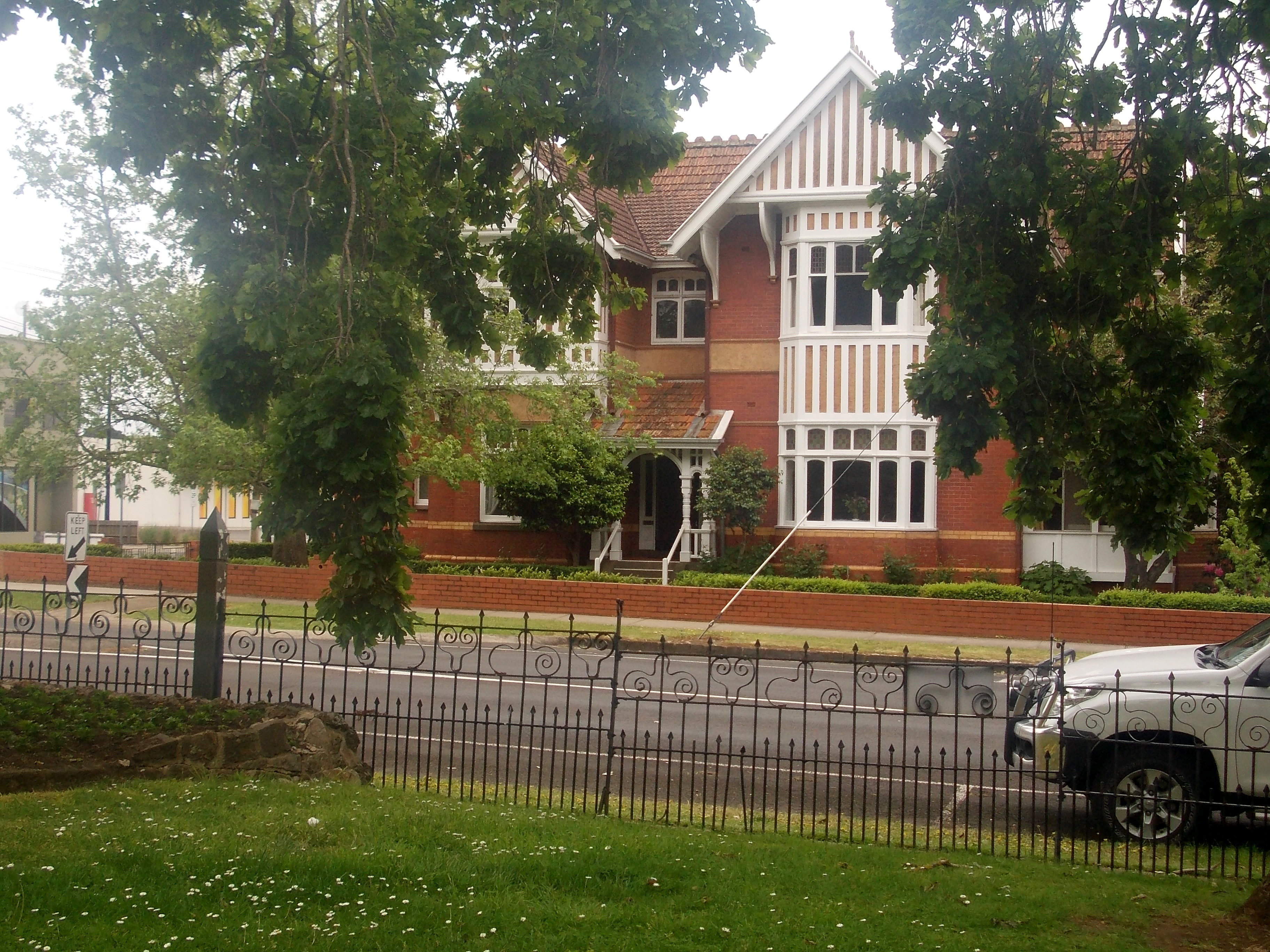
“Eildon”, Hamilton

Alice Maria WYATT:  Died 23 April 1940 at Hamilton. Alice Wyatt, the daughter of Mr and Mrs Thomas Lewis Wyatt, spent her childhood in Portland before moving to Hamilton around 1878 when she was twenty. She did spend some time in Melbourne working for Sir Edward Miller and his wife Lady Mary Miller. Sir Edward was a politician who made his money in finance and pastoral pursuits.  Alice spent the last twenty-five years of her life in Hamilton.

Irwin BELL: Died April 1940 at Hamilton. Irwin Bell of Dartmoor was a son of James Bell (above). Irwin was born in Portland around 1874 and lived at Mt Eckersley until the Bell family property was sold. He married Ann Letts of Heywood and together they led a life dedicated to the Church of England. They established the first Sunday School at Dartmoor and prepared parishioners for their first communion. Irwin also worked for the Department of Forestry and in later years was a Justice of the Peace. He died at KiaOra Hospital in Hamilton and was buried at Heywood cemetery.

James TRIGGER:  Died 25 April 1945 at Macarthur. James Trigger was the son of Samuel and Eliza Trigger of Warrabkook near Macarthur. Born in 1859, James selected land at Mt Eccles at a young age and he farmed there for the duration of his life.

OBITUARY. (1945, May 24). Portland Guardian (Vic. : 1876 - 1953), p. 3 Edition: EVENING. Retrieved April 27, 2013, from http://nla.gov.au/nla.news-article64404393

OBITUARY. (1945, May 24). Portland Guardian (Vic. : 1876 – 1953), p. 3 Edition: EVENING. Retrieved April 27, 2013, from http://nla.gov.au/nla.news-article64404393

James was interested in horse racing and was the owner of a number of horses. He left a widow and a son and daughter.

Robert Steven KITTSON: Died 8 April 1948 at Lower Cape Bridgewater. Robert Stephen Kittson was the son of James Kittson and Catherine Trotter and the last surviving member of the first family of Kittsons to arrive at Cape Bridgewater. A deeply religious man, he was involved in many church activities. Having had two sons serve in WW1, Robert showed an interest in returned servicemen and with his passing “ex-servicemen have lost a loyal friend”

Mary Ann ALLSOP:  Died 10 April 1953 at Port Campbell. Mary Ann was the daughter of Mr and Mrs Samuel Allsop, pioneers of the Port Campbell district. She married Thomas Wiggens at Purrumbete. After the death of Thomas, Mary Ann moved to Camperdown.  She left one son and three daughters and was buried at the Camperdown cemetery.

Trove Tuesday – Hometown Rivals

This Trove Tuesday, we are off to my hometown Hamilton.

Take two rival football clubs, the Hamilton Football Club and the Hamilton Imperials Football Club, merge them and what do you get?  The beginning of a new chapter in the town’s sporting history when the Hamilton Kangaroos make their debut in Round 1 of the 2013 season this Saturday 13 April.  Also, the new club will be entering a different league, the Hampden League, after both were founding members of the Western Border Football League in 1964.

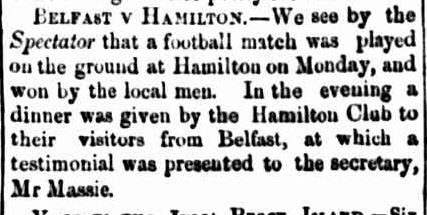
Of the two teams, the Hamilton Football Club had the longest history.  While the club may not have officially been formed at the time of this article from 1868,  it is the earliest article I can find at Trove of football played at Hamilton.

TABLE TALK. (1868, November 12). Portland Guardian and Normanby General Advertiser (Vic. : 1842 - 1876), p. 2 Edition: EVENINGS.. Retrieved April 8, 2013, from http://nla.gov.au/nla.news-article64691122

TABLE TALK. (1868, November 12). Portland Guardian and Normanby General Advertiser (Vic. : 1842 – 1876), p. 2 Edition: EVENINGS.. Retrieved April 8, 2013, from http://nla.gov.au/nla.news-article64691122

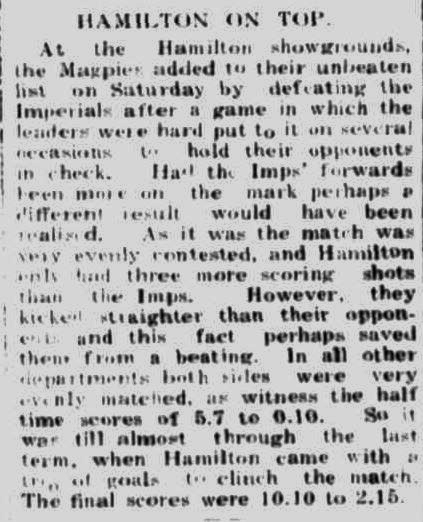
In 1948, a club formed by a breakaway group from the Hamilton Football Club made its debut in the Western District Football League.  The Hamilton Imperials Football Club was born.  In June of that year, the Magpies (Hamilton) and the Bulldogs (Imperials) met for the first time, beginning a rivalry that would endure for the next 64 years.  Hamilton easy winners.

HAMILTON ON TOP. (1948, June 10). Portland Guardian (Vic. : 1876 - 1953), p. 4 Edition: EVENING. Retrieved April 8, 2013, from http://nla.gov.au/nla.news-article64415146

HAMILTON ON TOP. (1948, June 10). Portland Guardian (Vic. : 1876 – 1953), p. 4 Edition: EVENING. Retrieved April 8, 2013, from http://nla.gov.au/nla.news-article64415146

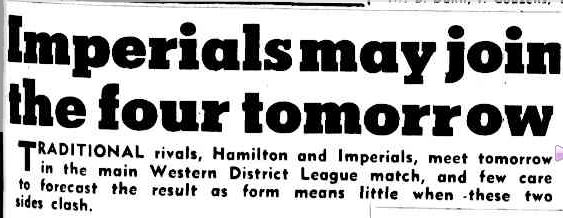
In the 1950s, they used to say that the form guide could be thrown away when Hamilton and the Imperials met.  The following headlines, all from The Argus during the 1950s, show how the rivalry had grown in just a short time.

Traditional clash in Western League HAMILTON HAS EDGE ON OLD RIVALS. (1953, July 3). The Argus (Melbourne, Vic. : 1848 - 1956), p. 10. Retrieved April 8, 2013, from http://nla.gov.au/nla.news-article23253913

Traditional clash in Western League HAMILTON HAS EDGE ON OLD RIVALS. (1953, July 3). The Argus (Melbourne, Vic. : 1848 – 1956), p. 10.  http://nla.gov.au/nla.news-article23253913

tt23

TRADITIONAL RIVALS FIGHT IT OUT. (1955, May 13). The Argus (Melbourne, Vic. : 1848 - 1956), p. 22. Retrieved April 9, 2013, from http://nla.gov.au/nla.news-article71882081

TRADITIONAL RIVALS FIGHT IT OUT. (1955, May 13). The Argus (Melbourne, Vic. : 1848 – 1956), p. 22. http://nla.gov.au/nla.news-article71882081

tt25

Imperials may jain the lour tomorrow. (1956, May 11). The Argus (Melbourne, Vic. : 1848 - 1956), p. 23. Retrieved April 9, 2013, from http://nla.gov.au/nla.news-article71802250

(1956, May 11). The Argus (Melbourne, Vic. : 1848 – 1956), p. 23. http://nla.gov.au/nla.news-article71802250

Here’s to a successful future for the Hamilton Kangaroos, but may the history of the two clubs that came before be maintained so future generations know their role, not only in Hamilton’s sporting history but its social history.

Where did my heart lie?  With the mighty Imps of course!