Passing of the Pioneers

Another catch-up Passing of the Pioneers post.  This one is for May and has seven pioneer obituaries. Among them are a Cobb & Co coach driver, an old mariner and a brother and sister.  There are also two men who were involved with many organisations in their communities and made lasting contributions.  Click on the name of a pioneer to read their newspaper obituary or click on any of the underlined text throughout the post for more information on a subject.

MINOGUE, Daniel – Died 18 May 1912 at Heywood. Daniel Minogue was born in County Clare, Ireland around 1836. When he was five, he arrived on the Agricola at Port Phillip with his parents.  His father Simon took up Wattle Hill at Portland.  Daniel took up farming with his father but for a while was running a bullock team to the diggings with a friend.  He also rode in races at the Portland racecourse., He married Anne Hussey in 1862 and they took up land at Drik Drik.  Daniel sold up after some misfortune and moved to Drumborg.  Anne died in 1902 and Daniel in 1912.  Daniel was buried at Heywood

MELVILLE, William – Died 8 May 1926 at Malvern.  William Melville was born on 19 August 1859 at the home of his parents in Drummond Street, Carlton. It was a difficult birth and William’s mother Ann died a week later.

“Advertising” The Age (Melbourne, Vic. : 1854 – 1954) 27 August 1859: 4. Web. 5 Sep 2018 .

When William was eight his father William remarried to Annette Bayles and they made their home at Weerangourt south of Byaduk. At the age of ten, William was sent to Melbourne to attend Scotch College and from around 1876, Melbourne University where he studied law and then a Masters degree.  He played football and cricket for both Scotch College and Melbourne University, captaining the Scotch team. He was secretary of the University Athletic Association.  In 1884 at the age of twenty-four, William was admitted to the bar.

MELBOURNE. (1884, July 9). Geelong Advertiser (Vic. : 1859 – 1929), p. 3. Retrieved June 10, 2019, from http://nla.gov.au/nla.news-article150159418

Around 1886, William went back to the district of his childhood and practised as a solicitor at Hamilton, setting up an office in Thompson Street around May 1886. Over the next thirty-four years his leadership, vision, generosity and passion did much to benefit Hamilton.

William was soon giving lectures around the district.  He gave the following lecture at Macarthur in 1886, and in 1889 presented the same topic at the Hamilton Mechanics Institute.

Advertising (1886, May 29). Hamilton Spectator (Vic. : 1870 – 1918), p. 3. Retrieved June 10, 2019, from http://nla.gov.au/nla.news-article225775510

But his repertoire didn’t end there, in 1896 for example, he delivered two lectures at Hamilton entitled “Australians As Others See Us” and “How The Men Propose”.

William married Minnie Florence Scowcroft at the home of Minnie’s uncle Peter Learmonth on 2 April 1890. 

Family Notices (1890, April 11). Table Talk (Melbourne, Vic. : 1885 – 1939), p. 12. Retrieved June 13, 2019, from http://nla.gov.au/nla.news-article147281771

The couple made their home at Braeside at the eastern end of Gray Street, Hamilton They had six children, two daughters and four sons.  William’s father died in September 1897 and more sadness came four years later when  William and Minnie’s eldest daughter Annie Olive died on 7 June 1901 aged eight. She had been unwell so it was arranged for her to go to Echuca for the warmer air, but she died of heart failure two weeks later.

In September 1895, William was a candidate for the Hamilton Borough Council elections and won in a walk-over. On 31 August 1897, he was elected Mayor but resigned from the position in July 1897 wishing to retire from “municipal life”. He returned to the council in September 1907 and served as a councillor until 1912.

Throughout William’s time in Hamilton, he was on the committee of just about every sporting and community organisation around, most times heading up those committees.  I’ll outline some of those beginning with the Hamilton YMCA which was formed in 1911.  William was on the founding committee.  A building was built in 1914 on the corner of Gray and Kennedy Streets to house the YMCA activities and William laid the foundation stone on 19 September 1914.  William contributed financially to the building and also donated several trophies for the various sporting activities of the YMCA.

FOUNDATION STONE, FORMER YMCA BUILDING, HAMILTON

In addition, William was

  • a committee member of the Hamilton Water Trust for around fifteen years, a founding committee member appointed at the trust’s first meeting in  January 1899 
  • Vice President of the Hamilton Horticultural Society 
  • Honourary Secretary of the Presbyterian Church 
  • made an  Honorary Life Member of the Hamilton Mechanic’s Institution in 1898 in recognition of his service 
  • a member of the Hamilton Recruiting Committee during WW1
  • Chairman of the Telephone Committee proposing a telephone exchange in Hamilton which opened in 1901 
  • President of the Hamilton Brass Band from 1904 until at least 1918 and often dipping into his own pocket to help out the band’s finances 
  • at the first meeting to propose a scout pack in Hamilton in 1909 and provided funding for uniforms 
  • a founding committee member of the Hamilton branch of the St John’s Ambulance Association

He was also a generous contributor to Hamilton College and Alexandra Colege.  He was elected President of the Hamilton Fire Brigade from 1899 after the death of past president George Rippon. William was one of the driving forces behind the building of a new fire station.  The new Hamilton Fire Station was opened in 1901 and William contributed a large amount of his own money towards the construction.  
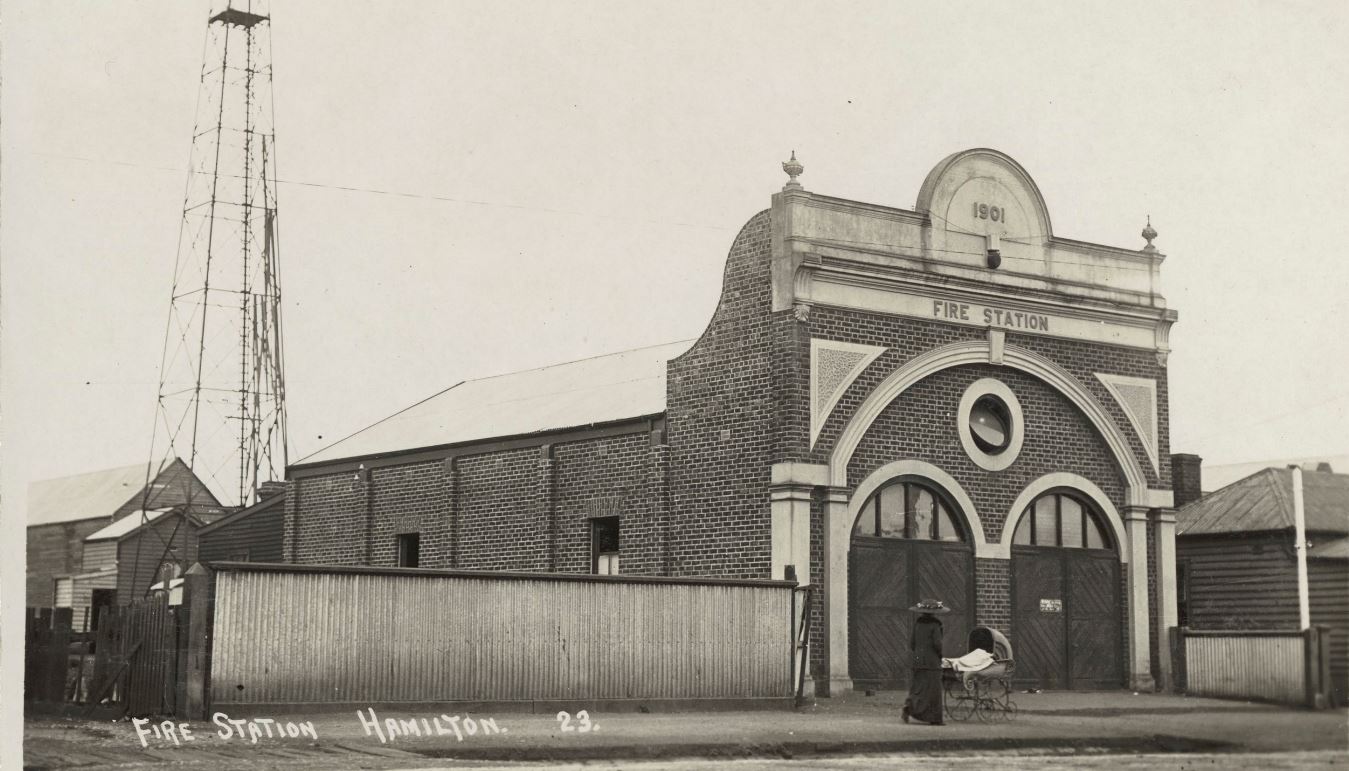
HAMILTON FIRE STATION. Image courtesy of the http://handle.slv.vic.gov.au/10381/399013

William’s great lover of sport.  He was involved with the Hamilton Bowling Club and at one stage was the sole member of the grounds committee.  He even had his own bowling green at Braeside which he made available for tournaments.  He played with and served on the committee of the Hamilton Cricket Club and was a President of the Hamilton Football Association. He was on the committee of the Hamilton Rifle Club and was one of those instrumental in the construction of a Minature Rifle Range in 1908. He was also President of the Miniature Rifle club.  He was a President of the Hamilton Angling Club (below). Members of the tennis, rifle, athletics, and golf clubs all competed for trophies donated and named after William.

HAMILTON ANGLING SOCIETY. (1905, September 2). Hamilton Spectator (Vic. : 1870 – 1918), p. 4. Retrieved June 10, 2019, from http://nla.gov.au/nla.news-article226178465

The Hamilton Golf Club formed in 1896 and played on land leased by the club. William became the  Honorary Secretary of the club.  In 1905, the land used by the golf club became available for sale and William along with Thomas and James Robertson purchased the land. In doing so they secured the future of the golf club and enabled improvements to be made including a fine new clubhouse.
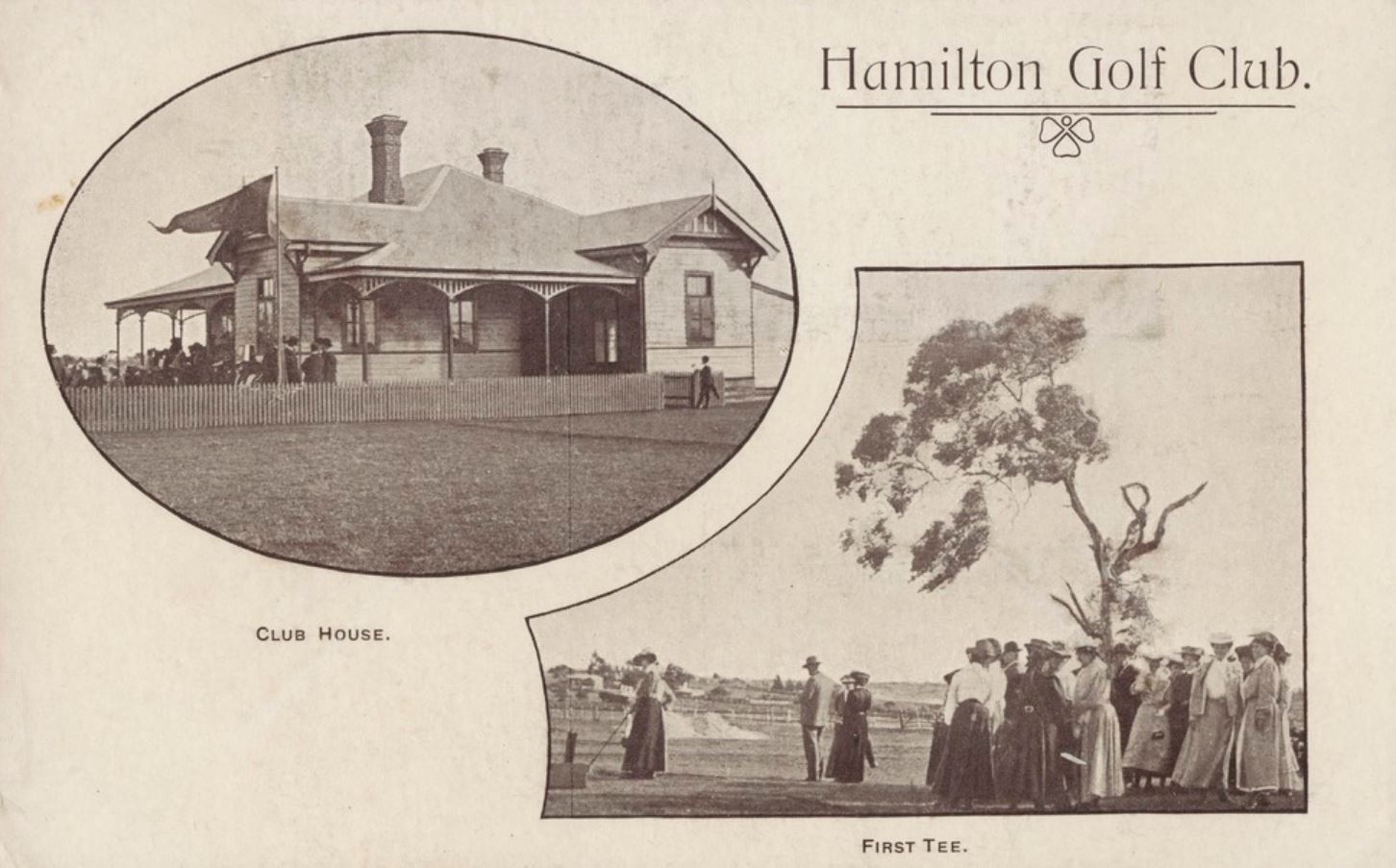
HAMILTON GOLF COURSE c1906, Image courtesy of the State Library of Victoria https://trove.nla.gov.au/work/167675114

William even sowed grass seed on the course and cut holes for the pins for tournaments.  The following article from 1905 when William was club secretary is an example of William’s energy and passion –

COMPLEMENTARY GOLF AFTERNOON. (1905, September 26). Hamilton Spectator (Vic. : 1870 – 1918), p. 4. Retrieved June 12, 2019, from http://nla.gov.au/nla.news-article226183623

William didn’t forget the little township of Byaduk, the location of his late father’s property Werrangourt. He showed great interest in events at Byaduk where the people affectionately called him Willie. He was a supporter of the Byaduk Presbyterian Church and in 1905, he opened the Byaduk Mechanics Institute. He was thanked for his “kindly interest and practical sympathy’ during the construction of the building. In 1907, the pioneers of Byaduk gathered for a celebration and a photo.  William sitting front right (below), was responsible for making the day happen.  He was also a regular exhibitor at the annual Byaduk Flower Show.

BYAYDUK PIONEERS 1907. WILLIAM MELVILLE IS FRONT RIGHT.

Probably William’s greatest contribution to Hamilton had its beginning around 1902 when William devised a plan for a piece of land in central Hamilton known as Market Square. It had been reserved for the purpose of a saleyard but was never used for that and became something of an eyesore. William had a vision for Market Square to become a leisure and recreation ground.  After much hard work lobbying and fundraising by Melville, the new recreation reserve was opened in September 1909. William paid for the surrounding fence.

MELVILLE OVAL. Image courtesy of the State Library of Victoria http://handle.slv.vic.gov.au/10381/305825

It was suggested the new recreation reserve be named after William Melville, maybe Melville Park or Melville Square.

THE RECREATION RESERVE– A SUGGESTION. (1909, July 13). Hamilton Spectator (Vic. : 1870 – 1918), p. 3. Retrieved June 12, 2019, from http://nla.gov.au/nla.news-article225036959

William in his modest way refused to accept the honour. 

NAMING THE NEW RESERVE. (1909, August 21). Hamilton Spectator (Vic. : 1870 – 1918), p. 4. Retrieved June 12, 2019, from http://nla.gov.au/nla.news-article225047793

The council were having none of it.  And so it became Melville Park better known as Melville Oval.  William humbly thanked the council for their recognition.

“MELVILLE PARK” (1910, November 11). Hamilton Spectator (Vic. : 1870 – 1918), p. 4. Retrieved June 17, 2019, from http://nla.gov.au/nla.news-article225675658

Melville Park was soon a popular venue for all manner of sports.

LAWN TENNIS TOURNAMENT AT MELVILLE OVAL, HAMILTON, PLATED JANUARY 26. (1914, February 14). The Australasian (Melbourne, Vic. : 1864 – 1946), p. 57. Retrieved June 17, 2019, from http://nla.gov.au/nla.news-article143316960

William remained a great supporter of his old school Scotch College.  He led a group called the Hamilton Old Scotch Collegians and instigated the beginnings of the Old Scotch Collegians sitting on the first committee.  In 1911, he offered £500 towards a new assembly hall for the college.  In recognition of his support, the school named one of their sporting fields after William, Melville Oval.

Around 1918, William and Minnie moved to Melbourne, taking up residence at Weerona in Huntingtower Road, Malvern. In late 1920 he captained a Hamilton XI in a game against East Melbourne Cricket Club at East Melbourne. He did go back to Hamilton. One example was in 1924, when the Hamilton Rifle Club presented him with an album of photos of prominent club members, thanking him for his hard work and generosity with the club,

William died at his home in Moorhouse Street, Malvern on Saturday 8 May 1926 aged sixty-six.  He was buried at the Melbourne General Cemetery. The principal of Scotch College W.S.Littlejohn remembered him as follows,

He was not merely a good lawyer, he was a good citizen. He made a lasting impression on the educational, social, civic, and church life of the community. Hamilton has been the recipiant of many generous gifts from his hands, He was a man of strong convictions. He firmly believed that his time, his talents, his means were gifts from the Almighty to he used in the servicé of others and that he must be prepared to give an account of his stewardship; and so he gave himself to the service of his fellows.  (The Argus 10 May 1926)

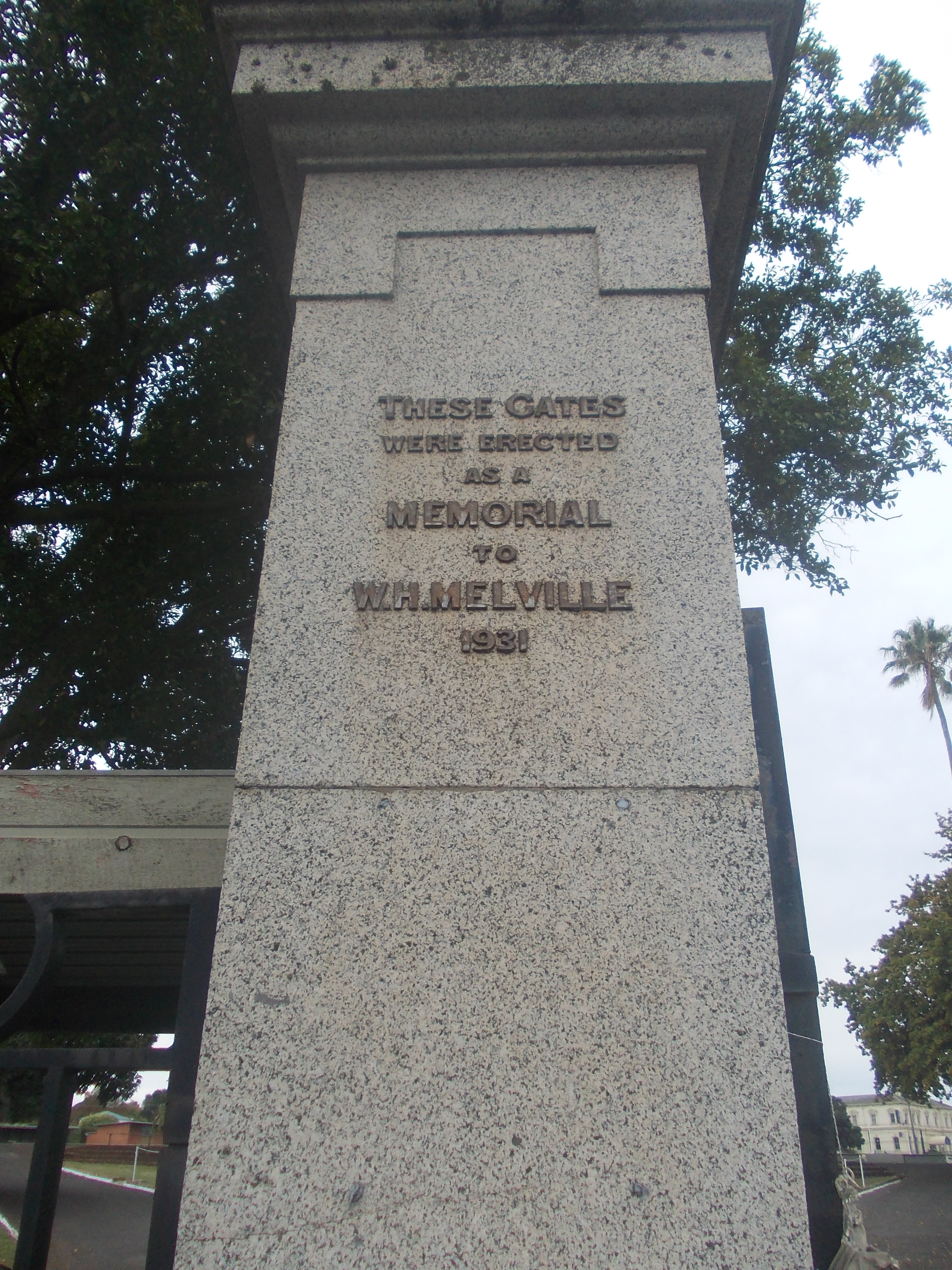
After Williams death, it was thought he should be appropriately remembered for contribution to Hamilton and memorial gates were constructed at the main entrance of Melville Oval. A collection was taken up in 1927 but it was 1931 before they came to fruition.
MELVILLE OVAL. Image courtesy of the State Library of Victoria http://handle.slv.vic.gov.au/10381/63848

LEAR, Benjamin – Died 21 May 1928 at Branxholme. The deceased was one of the oldest nautical personalities in Victoria, and during an active seafaring life, had visited almost every country, and most of the world’s ports. And so began the obituary for Benjamin Lear. He was born at Devonshire, England around 1842 and arrived in Victoria around the 1860s. He spent his working life at sea and was known for his knowledge of nautical matters, particularly along the south-west coast of Victoria. He was best known for his work as a steward on the SS Dawn a steamer between Portland and Melbourne which he did for many years.

Benjamin’s most prized possession was a medal he received from the United State government for the part he played in discovering the wreck of Eric the Red during one of his coastal trips on the SS Dawn on 4 September 1880.  It was 4.00am somewhere off Cape Otway when Benjamin heard the faint sounds of people calling out. Soon the SS Dawn picked up three sailors clinging to a wrecked lifeboat. A rescue party from the Dawn was sent to locate the remaining crew. All were saved but the cargo was lost.  The ship had been sent from New York with exhibits for the 1880 Centennial Exhibition in Melbourne.

WRECK OF ERIC THE RED. Image courtesy of the State Library of Victoria http://handle.slv.vic.gov.au/10381/296673

Benjamin married Mary Ann Dusting in 1871.  Mary died in 1874 aged twenty-three. Benjamin was working on the SS Julia Percy during that time and that’s where he met Jeannie Sage Crabbe in 1877.  Jeannie was employed to take care of the welfare of the female passengers on the steamer. They married in 1877.  Benjamin died at the home of his daughter at Branxholme in 1928 leaving his widow Jeannie, five sons and his daughter Mrs Dahlitz.

LYALL, William – Died May 1931 at Melbourne.  William Lyall was born in Warrnambool around 1851. William was a good rider and from the time he was a lad, William worked for Thomas Cawker.  He was employed as a driver on Cawker’s Cobb & Co mail coach Portland to Hamilton and Portland to Casterton.  He also travelled the route from Casterton to Mount Gambier.   In 1871, William married Catherine “Kate” Agnes King and they had several children in the Harrow and Edenhope districts.

Later, William worked as a groom at the Ardno mail stables and at the Nine-Mile Creek stables owned by Thomas Cawker.  He then worked for Thomas’ son James Cawker on the Mt Gambier Road at Casterton. He had been working there for around ten years when in May 1931, he decided to take a holiday to Melbourne.  Tragically he was hit by a tram and killed in Bridge Road Richmond. He died of his injuries in the Melbourne Hospital. William was deaf and it was thought he didn’t hear the tram.  Aged eighty, William was survived by his widow Kate, son and two daughters.

THOMSON, Mary – Died 20 May 1939 at Hamilton.  Mary Thomson was born at Maryvale Harrow around 1860.  In 1870, the Thomson family moved to the Monivae estate, south of Hamilton.  Mary was sent to the school of Misses Singleton, Ormiston Ladies College in East Melbourne (below)
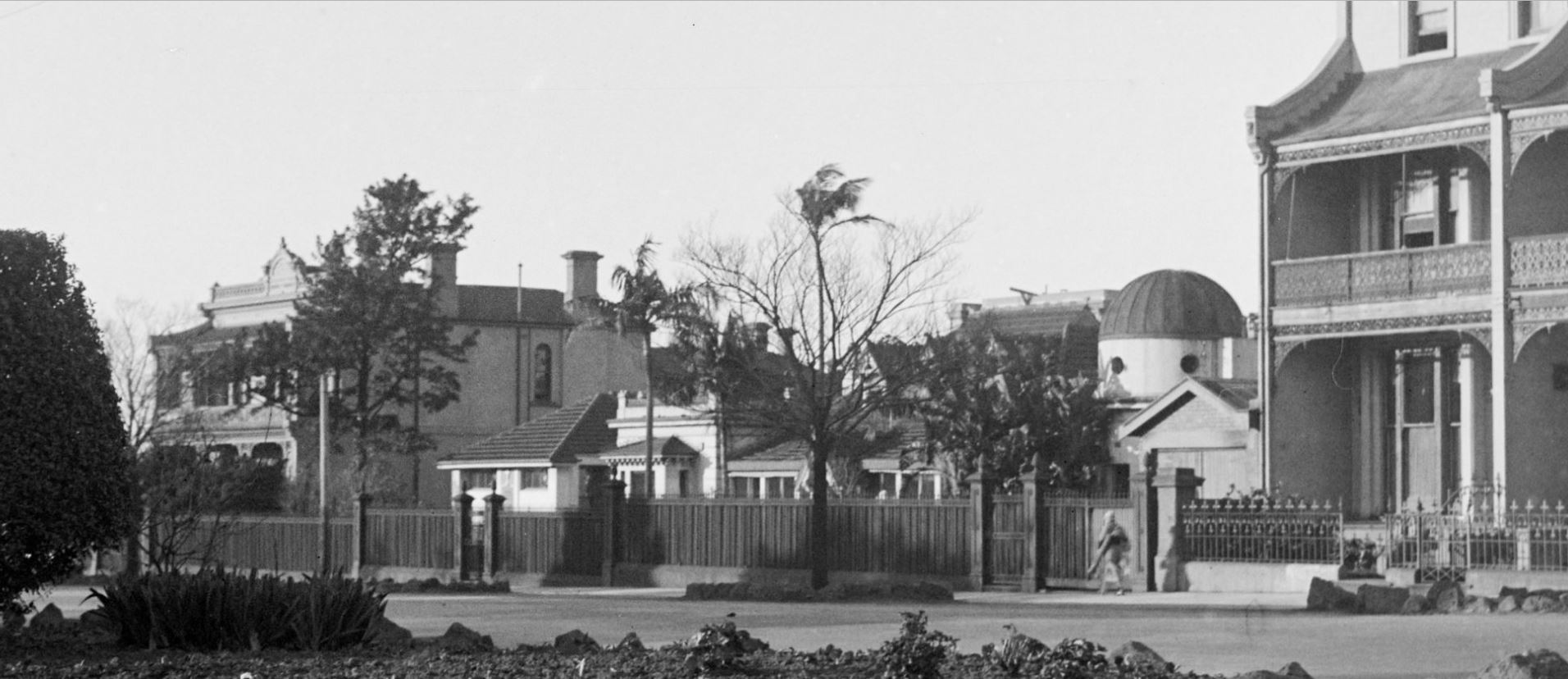
STANFORD HOUSE (WITH DOME), EAST MELBOURNE FORMERLY ORMISTON LADIES COLLEGE Image courtesy of the State Library of Victoria http://handle.slv.vic.gov.au/10381/15415

Mary and her sister Christina never married and stayed on at the family home Monivae.  They were devout members of the congregation of the Hamilton Presbyterian Church.  Mary’s mother Christian died in 1906 and father James in 1910.  Mary and Christina stayed on at Monivae after their father’s death.  In 1914, Christina died suddenly at Monivae on 9 November with Mary at her side.  Mary then spent time in Malvern living with her sister Elizabeth. After Elizabeth died, Mary moved into Kilora (below), sharing the home with her widower brother-in-law Thomas Laidlaw, husband of Margaret Thomson who had died in 1932. Mary lived at Kilora until her death on 13 May 1939 aged seventy-nine

“KILORA”, HAMILTON

Mary is buried with other members of her family at the Hamilton (Old) Cemetery.

THOMSON FAMILY PLOT, HAMILTON (OLD) CEMETERY

THOMSON, William Armstrong – Died 3 May 1943 at Portland.  William Thomson was the youngest child of James Thomson and Christian Armstrong. and was born in September 1876 at Monivae estate, south of Hamilton.  Soon after, William’s father had a new homestead built on the property to accommodate his large family.
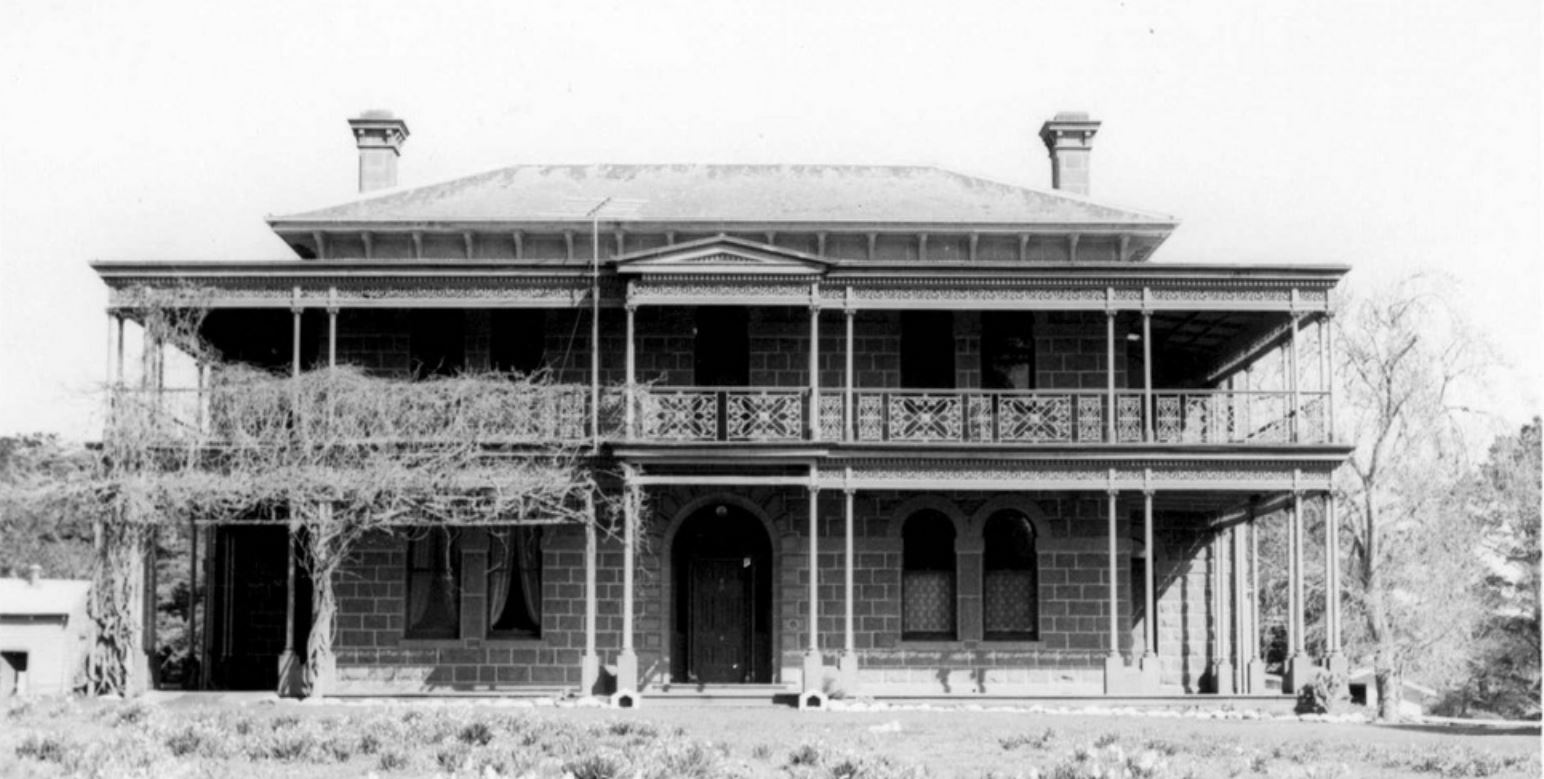
“MONIVAE” Homestead (1966). Image courtesy of the J.T. Collins Collection, La Trobe Picture Collection, State Library of Victoria. http://handle.slv.vic.gov.au/10381/230077

William attended the Hamilton Academy (below).

HAMILTON ACADEMY. Image courtesy of the State Library of South Australia https://collections.slsa.sa.gov.au/resource/B+21766/58

He remained at Monivae until around the time of his father’s death in 1910.  William then moved to Portland.  Around 1914, he went on a world tour and visited Russia and China. William, who never married, died on 2 May 1943  at Portland aged sixty-six.  His body was taken to Hamilton and the funeral cortege left Monivae then the home of his brother Alexander, for the Hamilton Cemetery  William bequeathed £100 to the Port Fairy Hospital.  He had owned several properties in the town.  

DALZIEL, Robert John – Died May 1946 at Carpendeit. Robert Dalziel was born at Lethbridge around 1865. His father Alexander Dalziel was a bootmaker there.  The family moved to Bannockburn then to Carpendeit around 1885. Robert is one of the older boys in the photo below with his parents Alexander and Elizabeth.

ALEXANDER AND ELIZABETH DALZIEL WITH THEIR SONS. Image courtesy of the Museums Victoria Collections https://collections.museumvictoria.com.au/items/765729

In his younger days, Robert was something of an athlete and was “hop, step and jump” champion of the Western District. In 1894, he married Margaret Scouller. Robert was very active in the local community.  He was instrumental in the construction of a hall at Carpendeit and was President of the hall committee.  It was also due to Robert’s work which saw a school was built and Carpendeit receiving daily mail services and telephone services. 

Robert was a foundation member of the South Purrumbete Racing Club and was on the Carpendeit Cricket and Tennis club committees and supported the South Purrumbete Football Club  He also served on the school committee and was a trustee of the recreation reserve.  Robert was involved with patriotic efforts in the district during WW1 and supported the Methodist church. He appeared in The Age in 1938 with his son Alex and a grandson.  Robert was seventy-two at the time.
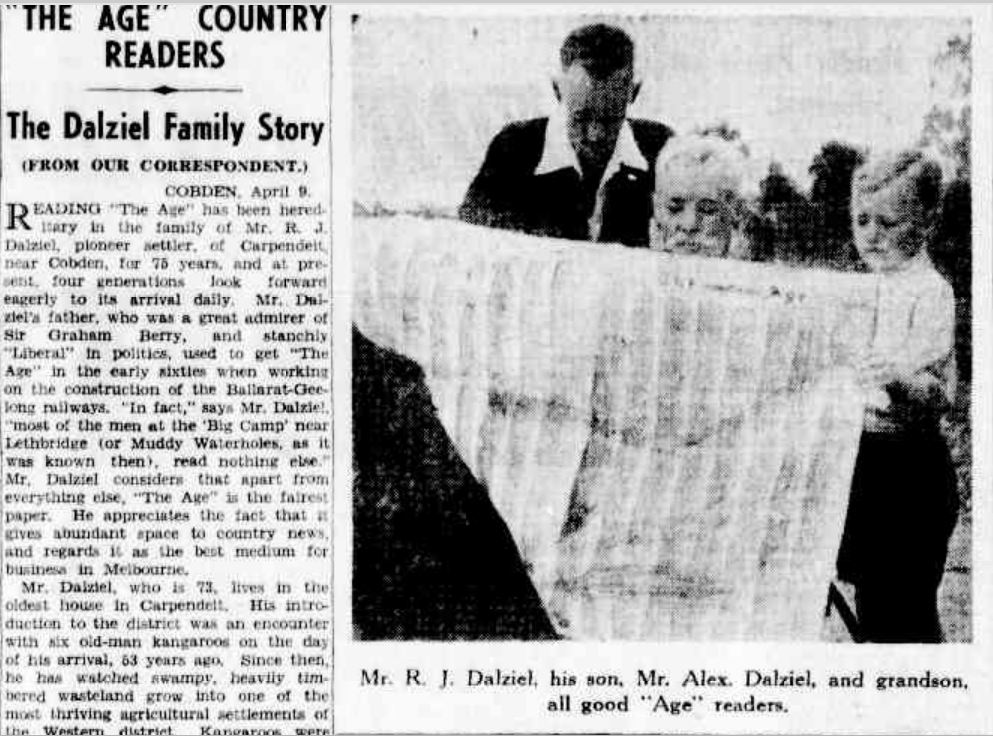
“THE AGE” COUNTRY READERS (1938, April 12). The Age (Melbourne, Vic. : 1854 – 1954), p. 14. Retrieved June 16, 2019, from http://nla.gov.au/nla.news-article205928186

Robert died eight years after the photo at the age of eighty. At the time of his death, he left his widow Margaret and six children. 

Passing of the Pioneers

If you caught my last post, the March edition of Passing of the Pioneers, you will know the PP posts are running behind.  This is a very late April edition  There are just four pioneers but two led very full and interesting lives, one of those being among the earliest Australian Rules footballers in the state.  One of the other men was among the Wendish settlers who trekked from Adelaide to the Western Victoria in 1852.  I did try to find a woman to add to the mix but unfortunately, my April list of obituaries is currently men only.  Click on the links on the underlined text for further information about a subject.  They include a link to the very interesting Wendish  Heritage website,

CHIRNSIDE, Andrew Spencer – Died 30 April 1890 at Colac

ANDREW CHIRNSIDE. Image courtesy of the State Library of Victoria http://handle.slv.vic.gov.au/10381/153089

Andrew Chirnside was born at Berwickshire, Scotland, around 1817. He arrived in Melbourne in 1839 and met up with his older brother Thomas who was already in the colony. The brothers went on to Sydney to buy stock to take overland to Adelaide to sell. They then took up a run on the Loddon River in 1840, passed and named by Major Thomas Mitchell only four years before. From the Lodden, Thomas and Andrew followed the path of Mitchell again towards the Western District and in 1842 they found before them the highest peak in the Grampians named Mount William by Major Mitchell. The land appealed to the brothers, and they established a station named after the nearby peak.

LOOKING TOWARDS MOUNT WILLIAM

The brothers ran Merino sheep and cattle at Mount William and a large woolshed (below) with twenty stands was built in 1865. Thomas and Andrew went on to buy Mokanger station on the Wannon River near Cavendish in 1843 and in the years after, acquired properties such as Mount Emu Creek and Carranballac near Skipton (below) and Kenilworth South and Victoria Lagoon near Cavendish. From 1849, Thomas began acquiring land at Wyndham, west of Melbourne and he soon built up an estate of 80,000 acres known as Werribee Park.  By 1870 between them, they had acquired around 250,000 acres of land in Victoria.

The Chirnside name was soon connected with horse racing in the colony.  The Chirnsides were racing horses they’d bred, and it was Mount William station bred Alice Hawthorn in the late 1850s who brought them their first notable success.  Andrew was interested in the racing side, while Thomas preferred the breeding side of the business. Many of the horses raced in Andrew’s name, including 1874  Melbourne Cup winner Haricot (below).

MR. A. CHIRNSIDE’S HARICOT, THE WINNER OF THE MELBOURNE CUP. (1874, December 2). Illustrated Australian News for Home Readers (Melbourne, Vic. : 1867 – 1875), p. 193. Retrieved May 22, 2019, from http://nla.gov.au/nla.news-article60447659

In 1850, Andrew returned to Scotland and married Mary Begbie. Children were born at Carranballac and the Chirnside’s Point Cook station. Andrew and Mary lived at Carranballac (below) for a number of years.

CARRANBALLAC HOMESTEAD. Image courtesy of the J.T.Collins Collection, State Library of Victoria http://handle.slv.vic.gov.au/10381/233699

They then moved to Werribee, where Thomas had built a large mansion (below). In 1887, Thomas Chirnside died at Werribee.

WERRIBEE MANSION AT WERRIBEE PARK. Image courtesy of the State Library of Victoria http://handle.slv.vic.gov.au/10381/155659

In 1889, Andrew funded the establishment of a half battery of horse artillery at Werribee. He paid for the horses, their feed, uniforms, and instruction. Forty men turned up for the first meeting at the Werribee Club Hotel.  The battery was commanded by Andrew’s son, John.  Andrew was also the founder of the Wyndham Racing Club and the president of the Wyndham Shire Council. In his last years, Andrew went on trips to Queensland and Tasmania, but he was in poor health.  He died at Irrewarra, Colac, the home of his daughter Maggie Calvert. Aged seventy-three, he left his widow Mary, four sons, and two daughters.  Mary died in 1909.

You can find more information about Andrew Chirnside on the following links:

Biography of Andrew Chirnside from the Australian Dictionary of Biography

Alice Hawthorn – The Western Mare

RIPPON, George Reynolds – Died 26 April 1899 at Hamilton.  George Rippon was born in Berkshire, England, on 17 September 1838. His father, John James Rippon, was a successful manufacturer with several large factories.  George completed his schooling in France, giving him competency in the French language. He arrived in Australia in 1857 aboard the James Baines and worked for a surveyor at Geelong, thought to be surveying the railway routes through the Western District.  He then worked as an accountant.

By the 1859/1860 cricket season, George was playing for the Corio Cricket Club and was among the team’s better players with bat and ball. In February 1860, he top-scored in a shortened match against Emerald Hill.

CORIO INNINGS. (1860, February 27). Geelong Advertiser (Vic. : 1859 – 1929), p. 2. Retrieved May 22, 2019, from http://nla.gov.au/nla.news-article148789089

In 1862, George was selected in a squad of twenty-two from Geelong and the Western District to play an All-England team, but unfortunately, he went out for a duck in the first innings of the match on 20 January 1862 and for eleven in the second innings. By 1863, he was captain of the Corio side. George went to Sydney in 1866 as a member of a Victorian team for an intercolonial match, however, poor form in lead-up games saw him dropped from the side. 

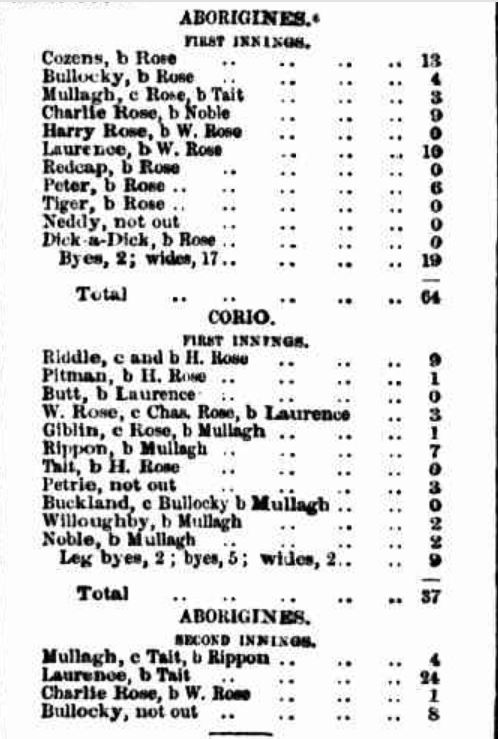
In October 1867, the Corio Cricket Club played two matches against an Aboriginal XI months before they departed for an English tour. On the Corio team was Tom Wills, considered the father of Australian Rules football and the original coach of the Aboriginal team before Charles Lawrence took over. Wills captained the Corio team in the first match, and the Aboriginal XI was led by Lawrence. George Rippon captained the Corio side in the second match. He was clean bowled by Johnny Mullagh for seven runs, one of five wickets for Mullagh. In the second innings, Johnny Mullagh was caught out off George’s bowling for four runs. 

CRICKET At GEELONG. (1867, October 19). The Argus (Melbourne, Vic. : 1848 – 1957), p. 6. Retrieved May 30, 2019, from http://nla.gov.au/nla.news-article5781100

In his last season playing cricket in Geelong, George took eight wickets for twenty runs in a match against the Kardinia Cricket Club during January 1876,  

Australian Rules Football was emerging as a sport during George’s first years in Geelong. The Geelong Football Club was formed in 1859, and not only was George one of the first players for the club, but he also served as club president in 1859 and 1860. In 1861, George was the leading goalkicker for Geelong. Another highlight was when he kicked a goal to seal the game for Geelong against Melbourne in a challenge match on 12 September 1863 at the Richmond Paddock (below).

FOOTBALL AT RICHMOND PADDOCK IN 1866. Image courtesy of the State Library of Victoria http://handle.slv.vic.gov.au/10381/111640

In June 1865, the Geelong Racing Club was established, and George was unanimously elected as secretary of the club. By that time, he was one of the best sportsmen in Geelon,g playing cricket, football, rope quoits, billiards, and rowing. Just one of his achievements was topping the bowling averages for Geelong Cricket Club in 1870/71. He was also involved in coursing, including serving as secretary of the Geelong Coursing Club.  In 1872, he was the Vice president of the Geelong Football Club.  

On 24 November 1864, George married at Geelong to Maria Smith, and a son, John James Rippon, was born the following year. George and Maria lived in Moorabool Street with further children born at their home, sons George in 1867 and Herbert in 1869, followed by daughters Martha in 1870, Emma in 1872, and Alice in 1874.

Aside from sport, George’s literary and writing skills caught the attention of the Geelong Advertiser, and he was employed by the newspaper around 1864 and remained there until July 1876, when he moved to Hamilton.  He was thirty-eight.  There were several testimonials for George in Geelong. his home for more than fifteen year,s including one conducted by the Geelong Football Club,

GEELONG FOOTBALL CLUB. (1876, July 8). Geelong Advertiser (Vic. : 1859 – 1929), p. 3. Retrieved May 6, 2019, from http://nla.gov.au/nla.news-article150633093

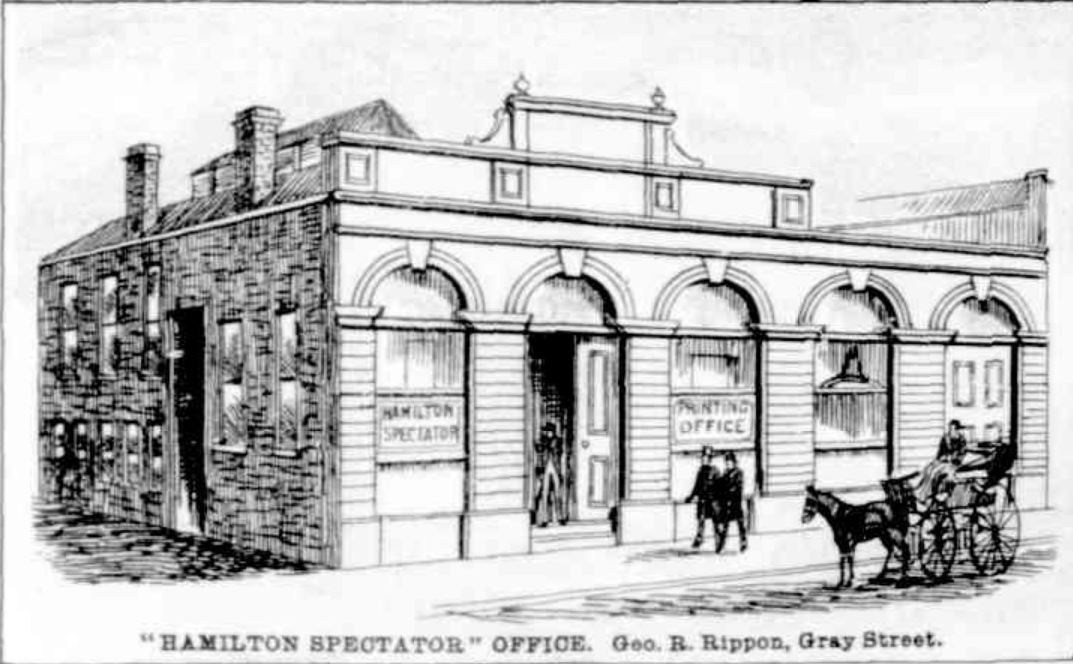
George and his family were off to Hamilton because George had purchased a share of the local newspaper, the Hamilton Spectator. In July 1876, George entered a partnership with George Mott and George Robinson. Robinson took up a retiring role in the paper and left the proprietorship in 1879.

Advertising (1876, July 12). Hamilton Spectator (Vic. : 1870 – 1918), p. 2. Retrieved May 26, 2019, from http://nla.gov.au/nla.news-article226037595

George wasted no time getting involved with town activities. As soon as the 1876/1877 season came around, he was playing with the Hamilton Cricket Club.   And when the 1877 football season started, he was involved with the Hamilton team but in a non-playing role as a judge. By the 1878 football season, George was vice-president of the Hamilton Football Club. His wide-ranging sporting prowess continued in Hamilton where he left off in Geelong. He was part of a team to play in the Murray Challenge Cup in cricket. George was still playing cricket in 1890 at the age of fifty-one, playing a match at Portland with his sons Herbert and George.  His obituary mentioned his last cricket match when he played with his sons, and the three of them had a combined score of 179. George was the president of the Hamilton Cricket Club for many years. He was one of the best rope quoits and billiards players in the Western District.  He continued his interest in coursing in Hamilton and was a president of the Hamilton Bowls Club. He was a member of the Hamilton Racing Club and acted as a judge and did the same at Penshurst. 

Away from sport, on 7 May 1879, George’s father John James Rippon died at Altham Hall, Accrington, Lancashire, England, aged seventy-nine. George’s home Altham Lodge in Hamilton on the corner of Collins and Dryden Street was similarly named to the home of his father. George and Mott built up the Hamilton Spectator and by 1876 it was published three times a week and was a leading voice in Western Victoria. In 1885, George Mott sold his share of the Spectator to George Rippon, who became the sole proprietor of the newspaper.

VIEW OF HAMILTON VICTORIA. (1888, April 17). Hamilton Spectator p. 1 (SUPPLEMENT TO THE HAMILTON SPECTATOR). http://nla.gov.au/nla.news-article225809074

George was a member of the Hamilton Hospital committee, president of the Hamilton Fire Brigade for eighteen years, and vice president of the Hamilton Pastoral and Agriculture Society.  He was a member of the Freemasons Lodge and was a Past Grand Registrar. He was also a Justice of the Peace and a member of Melbourne’s Yorick Club founded by Marcus Clarke in 1868 for men with literary interests. Among other members was Adam Lindsay Gordon.

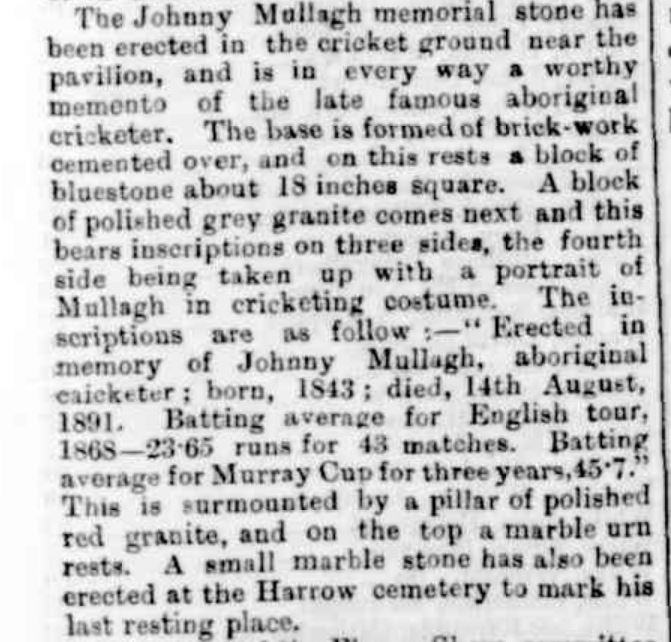
On 12 March 1888, George and Maria’s eldest son John died aged twenty-two. In August 1891, Johnny Mullagh who was part of the Aboriginal Cricket XI tour of England died. George Rippon called for a monument for his grave at Harrow and opened subscriptions to fund it. It was twenty-three years since George and Johnny were on opposing teams in Geelong. 

THE LATE JOHN MULLAGH. (1891, August 18). Hamilton Spectator (Vic. : 1870 – 1918), p. 3. Retrieved May 29, 2019, from http://nla.gov.au/nla.news-article226082134

There was plenty of support for George’s proposal, and in late 1892, a memorial stone was erected at the Harrow cricket ground and a smaller monument on Johnny Mullagh’s grave.

HARROW. (1892, December 13). Hamilton Spectator (Vic. : 1870 – 1918), p. 1 (SUPPLEMENT TO THE HAMILTON SPECTATOR.). Retrieved May 29, 2019, from http://nla.gov.au/nla.news-article225182122

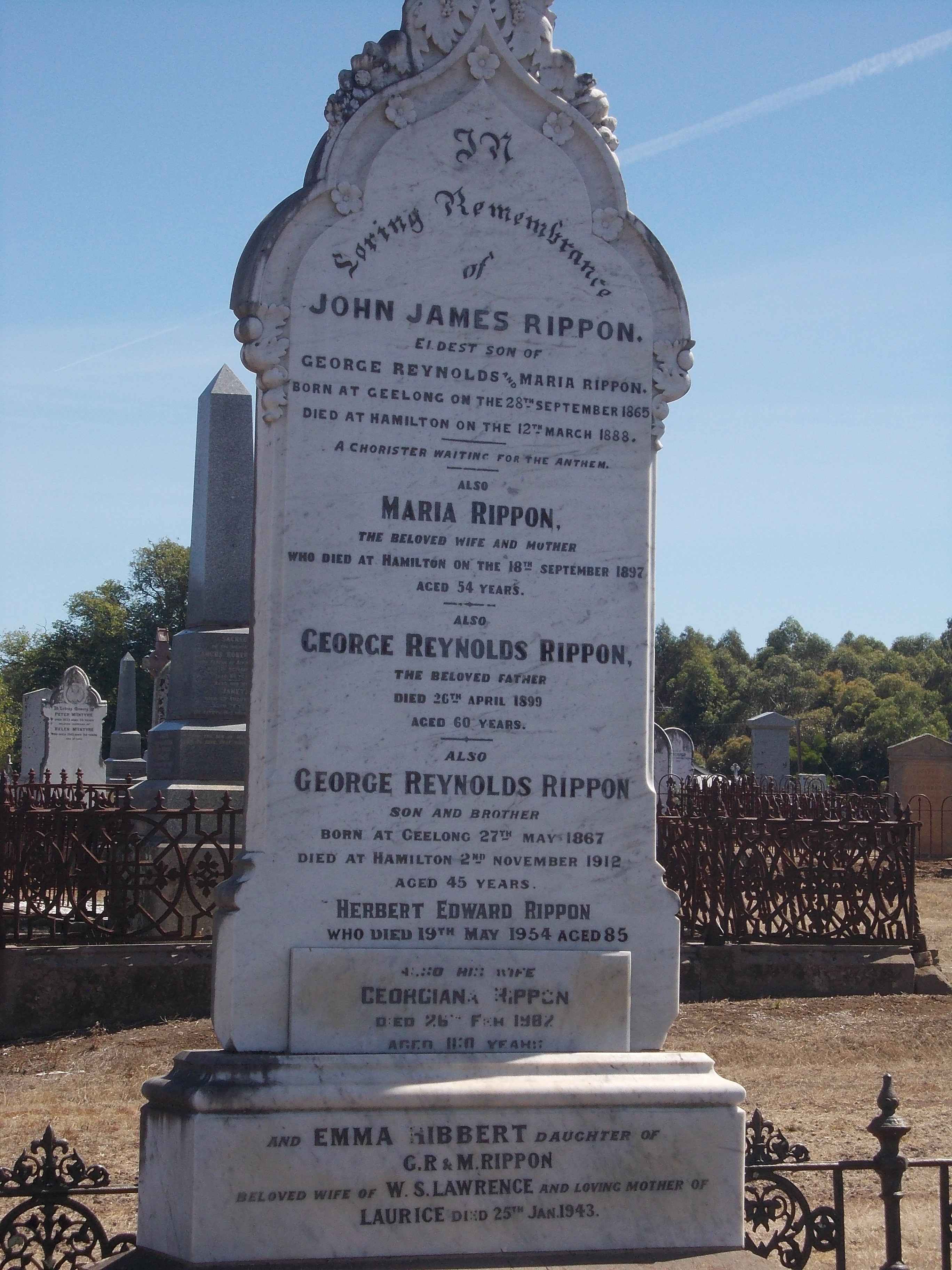
George’s wife Maria, died on 18 September 1897, aged fifty-four.  George died at  Altham Lodge on 26 April 1899, aged sixty-one.  He was buried with his son John and wife Maria at the Hamilton (Old) Cemetery. 

RIPPON FAMILY GRAVE, HAMILTON (OLD) CEMETERY

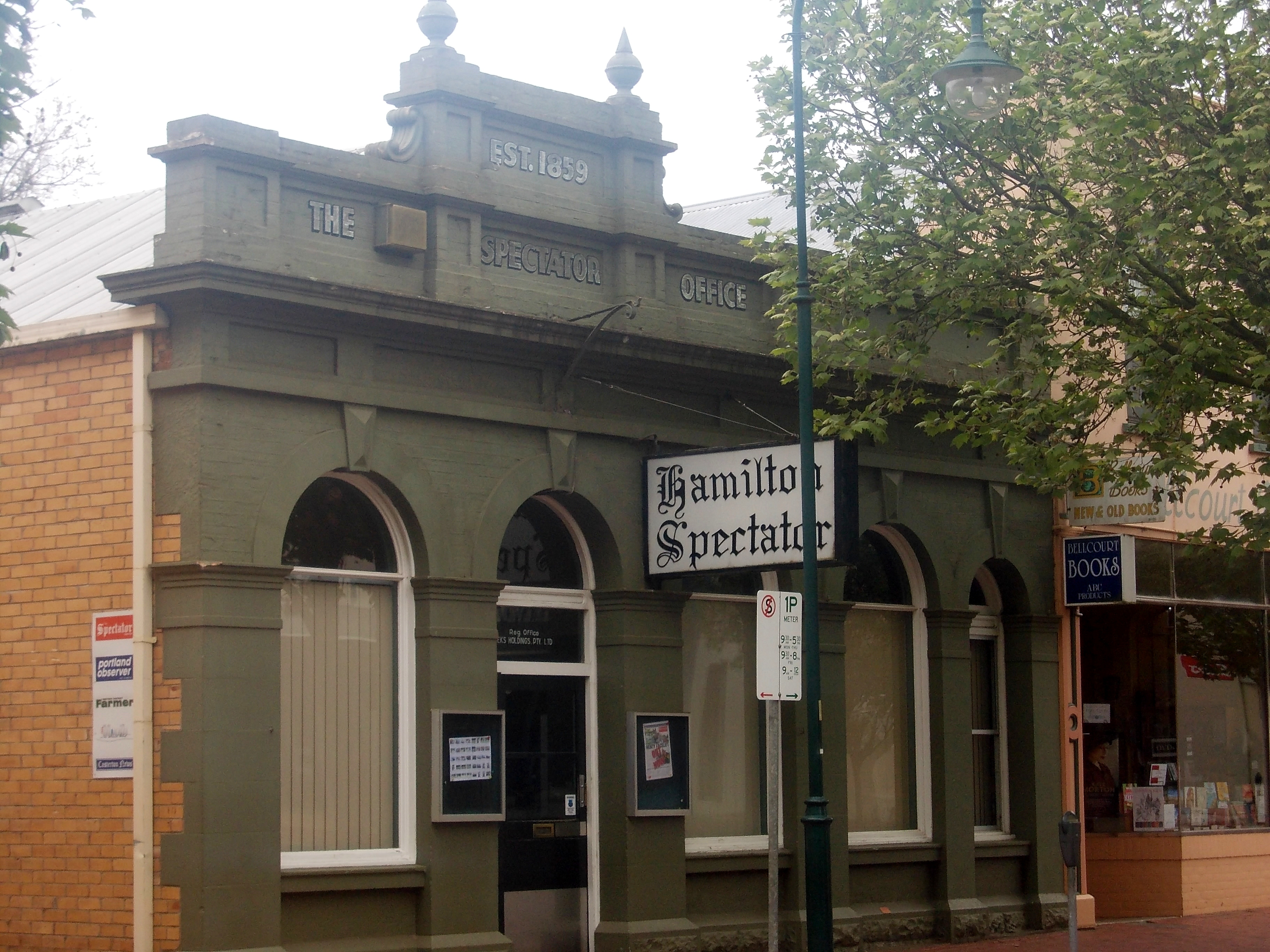
George’s son Herbert took over the Hamilton Spectator, owning it for fifty-five years.  Another son, George, wrote sports reports for the paper.  After Herbert died, his son George Reynolds Rippon formed the Hamilton Spectator Partnership and was managing partner until the 1970s. Herbert’s daughter, Clarice, was the office manager of the paper for three decades. The paper is still in publication today.

HAMILTON SPECTATOR

Additional Sources:

Hay, Roy and EBSCOhost Aboriginal people and Australian football in the nineteenth century: they did not come from nowhere. Cambridge Scholars Publishing, Newcastle upon Tyne, UK, 2019.

Kirkpatrick, Rod and Victorian Country Press Association, (issuing body.) The bold type: a history of Victoria’s country newspapers, 1840-2010. The Victorian Country Press Association, Ascot Vale, Vic, 2010 p233.

RENTSCH, Johann – Died 14 April 1909 at Byaduk. Johann Rentsch was born in Germany around 1834.  When he was seventeen, he arrived in Adelaide aboard Helena in 1851 with several other Wendish families. The following year, the families set off for Victoria.  Their journey took four weeks, and they arrived in Portland on 26 May 1852.  In May 1854, Johann purchased land in South Hamilton, on what is now the north-eastern side of Ballarat Road and Hillers Lane in an area with several other German settlers. The area was known as Hochkirch on the Grange. In 1856, Johann married Magdalena Burger. The Burgers were another of the Wendish families who travelled from South Australia. The couple went on to have seven children.  Johann selected land at Byaduk around 1860, and he and Magdalena settled there for the rest of their lives. They were members of the Byaduk Lutheran Church. Johann was buried at the Byaduk Lutheran Cemetery.  
You can read more about the Wendish settlers in the Western District on the following link – Wendish Heritage 

MORRISSEY, Michael – Died 12 April 1913 at Branxholme. Michael Morrissey was born in Limerick, Ireland around 1853 and arrived at Portland with his parents the following year about New Zealander.  The family settled at Port Fairy.  When Michael was a young man, he took up land at Broadwater, naming his property Cloverdale.  In 1881, Michael married Anne Purcell. During his time at Broadwater, Michael was one of the selectors behind the Eumerella Drainage Scheme involving the drainage of the Eumerella Swamp with work beginning in 1906.  In 1912, Michael purchased a property at Mount Eccles and built a home.  The intention by Michael and Anne to live out their lives there was short-lived when in April 1913, Michael fell ill and went to Branxholme for medical treatment.  He died there at the age of sixty.  Michael was buried in the Macarthur cemetery.


Passing of the Pioneers

The Passing of the Pioneer posts are getting a little behind. To fix that I intended to do a March/April/May edition but it was too long so I changed to a March/April edition to be followed by a May/June edition, however, March/April got too long.  Instead, I’ll post March, closely followed by April and then a May/June combined edition.  Hopefully, by July I’ll be back on track with a monthly post again.  This edition with seven pioneers includes early residents of Glenthompson and Hamilton and a woman who had thirty-five grandchildren and thirty-five great-grandchildren when she died and a man who had forty-one grandchildren and forty-eight great-grandchildren at the time of his death. Imagine how many descendants those two have today.  Click on any underlined text to read further information about a subject.

HUTCHESON, John – Died 27 March 1870 at Hamilton.  John Hutcheson was born around 1819 in Abernethy, Perthshire, Scotland descending from a long line of millers.  After his father David died, John’s mother Isabella took John and his brothers to Tasmania to be close to relatives.  The Hutcheson boys, John, George, and David heard about the rich pastoral area of the Western District of Victoria and decided to see for themselves.  After arriving at Port Phillip, they took up Runnymede station near Sandford and in 1849 Mount Straun station near Digby. 

John and George bought land on the northern banks of the Grange Burn to the west of the Hamilton township. They planned to farm as well as follow in the footsteps of their ancestors and open a mill.  They had the machinery built in Melbourne and by February 1854, it was ready to transport by ship to Portland and then overland to Hamilton.  It was a slow process getting the mill components to Hamilton and constructing the building to house them.  Finally, in December 1855 the mill was close to completion.

PORTLAND. (1855, December 21). The Age (Melbourne, Vic. : 1854 – 1954), p. 6. Retrieved May 21, 2019, from http://nla.gov.au/nla.news-article154861185

And by February 1856 it was ready to go.

Advertising (1856, February 22). Portland Guardian and Normanby General Advertiser (Vic. : 1842 – 1843; 1854 – 1876), p. 1 (SUPPLEMENT TO THE PORTLAND GUARDIAN.). Retrieved May 10, 2019, from http://nla.gov.au/nla.news-article71573744

George died in 1857 at Runnymede after he was kicked by a horse but John continued on with the mill. Opposition came in 1859 when Peter Learmonth opened a mill on the Grange Burn on the eastern side of the township. Aside from opening the first mill, John was the first person in the district to own a steam operated thresher.  He was also a founding member of the Dundas Roads Board in 1857.   

Sometime after his arrival in Victoria, John married Ann Robertson, sister of George Robertson of Warrock near Casterton.  Ann died in 1860 at South Hamilton. They had no children. In 1861, John married Mary McDonald.  

John was fifty-one at the time of his death.  He left his widow Mary, four sons and one daughter. His obituary read,

He was well read and held opinions in advance of his time. This, to some, made him appear somewhat eccentric, but those who knew him intimately were charmed with his conversation, and while admiring the man for his selfwill and robust turn of mind, they knew how soft a heart was covered by anapparently brusque exterior, and that many a family have had their flour ground or a bag of flour sent to them when they most wanted It, and no charge made, When a disastrous bush-fire ruined half the people on the creek a few years ago, Mr Hutcheson was the first to move in getting up subscriptions in their aid, and we are justified in saying that when the committee left the distribution of the funds to him, all were satisfied. Mr Hutcheson was a very retiring man; he loved the hum of his mill more than the bustle of the town,…He was a fine mechanic and could make anything in wood or metal, the old Hamilton Mill remaining a monument of his skill in that direction. (Hamilton Spectator 30 March 1870 p. 2)


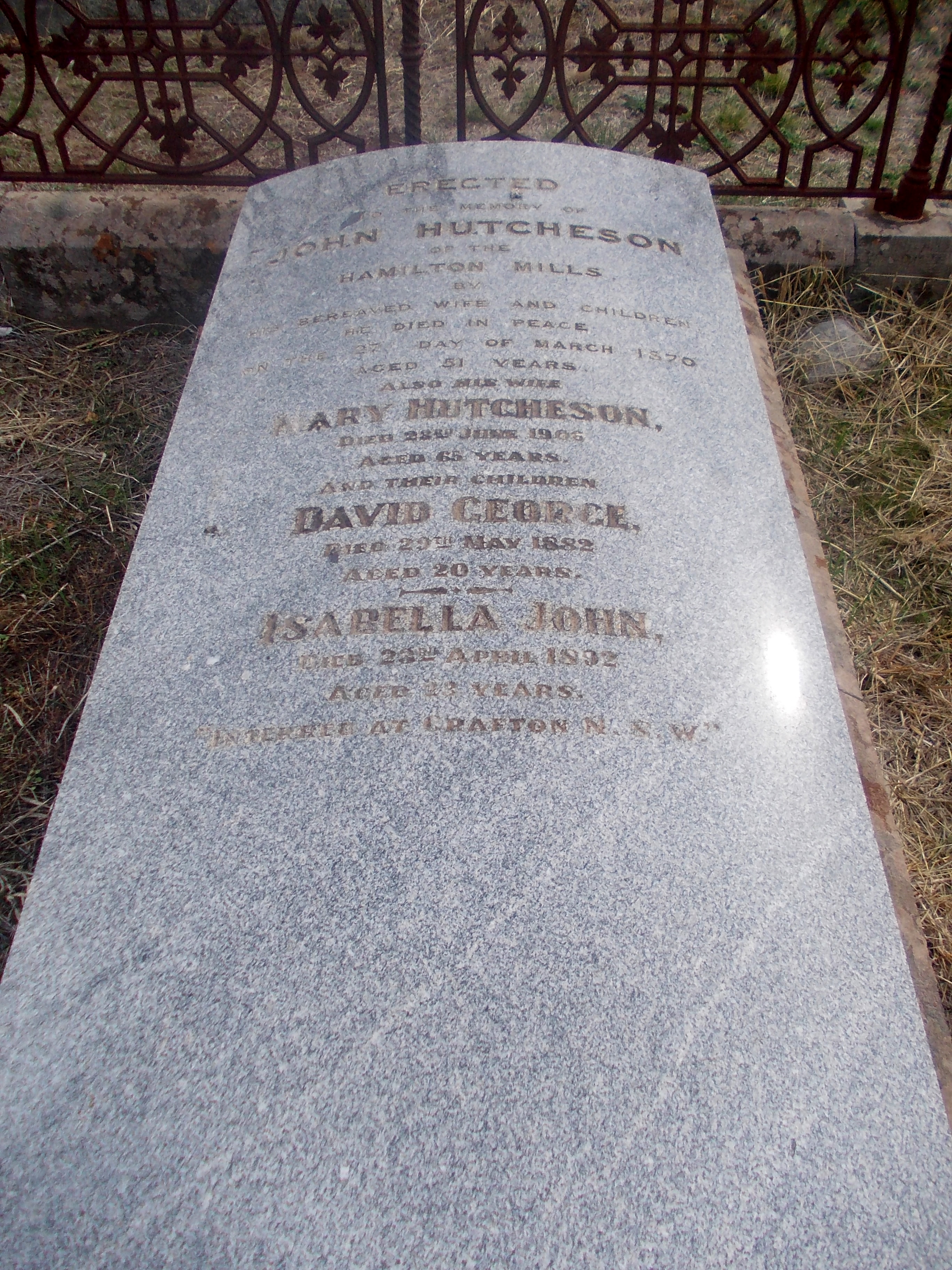
GRAVE OF JOHN HUTCHESON AT HAMILTON (OLD) CEMETERY

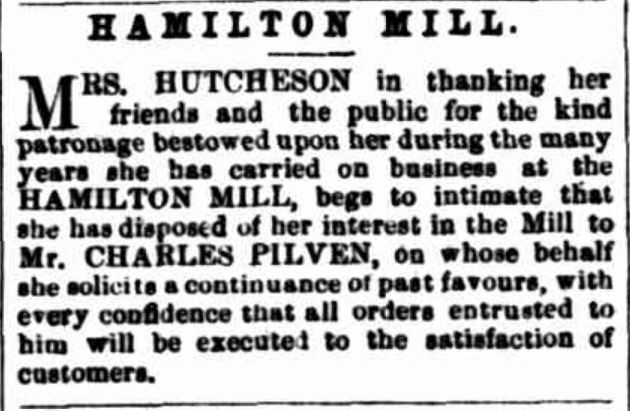
John was buried at the Hamilton (Old) Cemetery. After John’s death, Mary continued to run the mill until 1877 when she sold it to Charles Pilven of the Commercial Hotel. In something of a trade, Mary purchased the Commerical Hotel. 

“Advertising” Hamilton Spectator (Vic. : 1870 – 1918) 5 April 1877: 3. Web. 21 May 2019  http://nla.gov.au/nla.news-article226041685

The mill became a Rabbit Preserving Factory in 1892. John’s mother Isabella lived at Coleraine and died on 10 June 1876.  

PEARSON, John – Died 10 March 1885 at Portland. John Pearson was born near Edinburgh, Scotland around 1801. In 1832, he married Mary Simpson and four children were born. They left their home at Leigh, Scotland for Tasmania in early 1840 after John inherited Douglas Park at Campbell Town from his older brother Dr Temple Pearson who died on 1 October 1839. They set off on 24 January 1840 aboard the North Briton but during the voyage, she ran aground on the Goodwin Sands off the English coast near Kent and was put into Ramsgate Harbour. That delayed the journey a month and they departed again on 17 February. Back on course, as the ship rounded the Cape of Good Hope on 30 April 1840, Mary gave birth to a son, Joseph.  They finally arrived in Tasmania on 17 June 1840.

The Pearsons remained in Tasmania until 1846 when John sold Douglas Park and they travelled to Victoria aboard the Minerva captained by Captain Fawthrop on 30 May 1846.  With them were servants and all their household furniture.  On another ship John chartered, the Lady Mary Pelham were horses, cattle and farming implements.  It took two weeks to make the trip to Portland Bay.  Four nights were spent anchored at King Island due to rough weather.  Since there was no pier at Portland at the time, the horses and cattle swam ashore and John’s family were carried through the surf to shore.

John purchased Retreat station on the Glenelg River near Casterton and built a house and a woolshed. During their time at the station, the Pearsons saw the impact of the Black Thursday bushfires on 6 February 1851. Such was the fire’s intensity, birds and wildlife sought refuge at the homestead. Two days later on 8 February 1851, John’s wife Mary died. Her body was transported to the Portland North Cemetery for burial.  John sold Retreat soon after, taking up Yambuk Station in July 1851.  After three years he bought Mount Shadwell estate near Mortlake.  In 1855, John purchased the Glenorchy station near Merino. John decided to retire to Melbourne but lasted six months returning to the Western District in 1857 to reside in Percy Street, Portland. It was also in 1857, John brought new sheep bloodlines to the Western District.

PROBABILITIES OF A NEW AURIFEROUS DISTRICT. (1857, August 3). The Argus (Melbourne, Vic. : 1848 – 1957), p. 5. Retrieved May 27, 2019, from http://nla.gov.au/nla.news-article7136358

John continued buying properties and in 1859 purchased the Rifle Range station near Coleraine. He was an avid reader and a keen gardener and was known for his floral displays and introduced new plants to Portland.  He formed his own opinions and more than once was encouraged to stand for a seat in the Legislative Assembly but he could not agree with the policies of parties requesting his nomination. He did serve as a chairman of the District Roads Board. John died at his home in Percy Street at the age of eighty-four and was buried at the North Portland Cemetery.  In his will, he left £50 for the widows of Portland.

McLENNAN, John – Died 4 March 1907 at Glenthompson. John McLennan was born in Scotland around 1832.  He arrived at Yuppeckiar, just west of what is now Glenthompson in 1862 to run the Cobb & Co changing station located at what was known as the “mail tent”. The changing station consisted of two tents, one for John and one for the horses.  The “post office” was a hole in a red gum tree with a flap of hide to protect the mail from the weather. 

A township was surveyed and when land became available, John purchased acreage and built the first house in the town which would become Glenthompson He also built a hotel on the main road but when the railway came through, he built a second hotel opposite the station.  In time, it became Mac’s Hotel (seen below, it was renovated in the 1920s). John also operated a store which was profitable for him. 

MAC’S HOTEL GLENTHOMPSON

John married Jessie Roderick in 1872. In 1883, John announced his intention to retire

Advertising (1883, November 20). Hamilton Spectator (Vic. : 1870 – 1918), p. 3. Retrieved May 13, 2019, from http://nla.gov.au/nla.news-article226049701

In 1884, John did retire and turned to wool-growing. He was given a testimonial at Glenthompson led by Charles Gray of Nareeb Nareeb.   

PRESENTATION AT GLENTHOMPSON. (1884, September 16). Hamilton Spectator (Vic. : 1870 – 1918), p. 4. Retrieved May 13, 2019, from http://nla.gov.au/nla.news-article225662520

Jessie died on 26 November 1895.  When John died in 1907, he left a son and a daughter. He was buried at the Glenthompson Cemetery.

GRAVE OF JOHN McLENNAN AND FAMILY AT GLENTHOMPSON CEMETERY

NICOL, Gideon – Died 20 March 1908 at Merino. Gideon Nicol was born near Aberdeen, Scotland around 1836. When he was fifteen, Gideon began working on ships, sailing first to Calcutta, India in 1851.  He then went on several voyages including to South America and then to Sevastopol to deliver horses for use in the Crimean War. Despite all his time at sea, Gideon managed to be in England in 1852 to witness the funeral of the Duke of Wellington.

Gideon arrived in Victoria in 1858 at the age of twenty-two aboard the Greyhound and set off for Warrnambool.  He secured work on stations as a bullock driver until heading for the New Zealand gold diggings in 1861.  When he returned, he selected 300 acres of land at Mount Warrnambool near Panmure in 1865. He also selected 600 acres at Tahara. In 1866, John married Ellen Dunne.

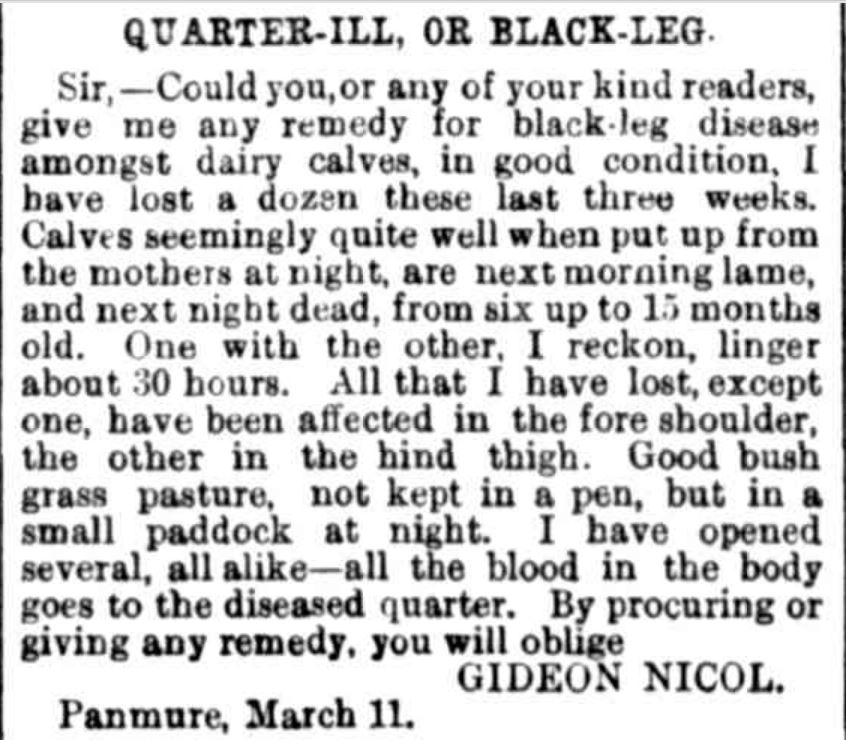
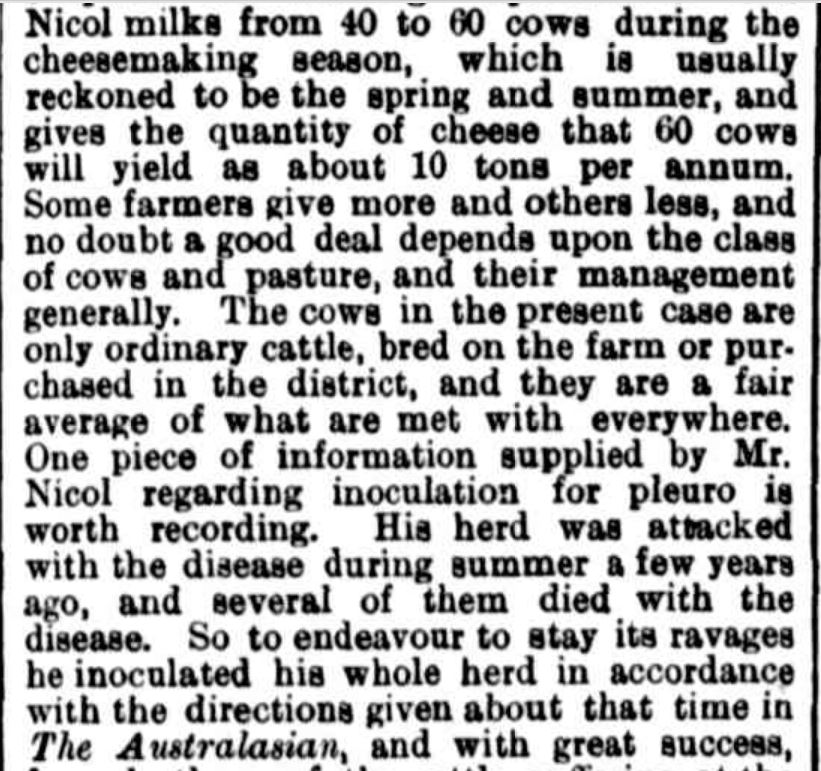
Farming was tough and in 1871, he was losing calves so he wrote a letter to The Australasian newspaper requesting advice.

QUARTER-ILL, OR BLACK-LEG. (1871, March 18). The Australasian (Melbourne, Vic. : 1864 – 1946), p. 24. Retrieved May 25, 2019, from http://nla.gov.au/nla.news-article138081853

The correspondent from The Australasian provided a solution to Gideon’s problem and it must have held him in good stead.  By the time a correspondent from The Australasian visited the district in 1881, he found Gideon was running a successful farm.

A TOUR IN THE WARRNAMBOOL DISTRICT. (1881, July 16). The Australasian (Melbourne, Vic. : 1864 – 1946), p. 25. Retrieved May 25, 2019, from http://nla.gov.au/nla.news-article137816975

Gideon mentioned to the correspondent the problems he had with his calves ten years before and was still singing the praises of the solution offered by The Australasian

A TOUR IN THE WARRNAMBOOL DISTRICT. (1881, July 16). The Australasian (Melbourne, Vic. : 1864 – 1946), p. 25. Retrieved May 25, 2019, from http://nla.gov.au/nla.news-article137816975

Gideon was one of the first directors of the Farnham Cheese and Butter Factory Company and was a Warrnambool Shire Councillor for twenty-seven years including two terms as President.  He represented the Shire at the opening of the Federal Parliament in Melbourne in 1901.  At the time of his death, Gideon was a director of the Merino Butter Factory.  He was buried at the Tower Hill cemetery leaving his widow Ellen, one son and two daughters.  Ellen died in January 1914.

JENNINGS, John – Died 18 March 1910 at Hamilton.  John Jennings was born in England around 1819.  He arrived in Portland about 1846 and two years later he went to Hamilton then called The Grange.  Around 1849, John went to Adelaide where he married Bridget Priscilla Talbot. A daughter Catherine was born in Adelaide in July 1851. Back in Victoria around 1852, John and Bridget took up residence at Violet Creek to the south of Hamilton.   

JOHN JENNINGS -HAMILTON PIONEER. (1912, January 13). Leader (Melbourne, Vic. : 1862 – 1918, 1935), p. 32. http://nla.gov.au/nla.news-article198127055

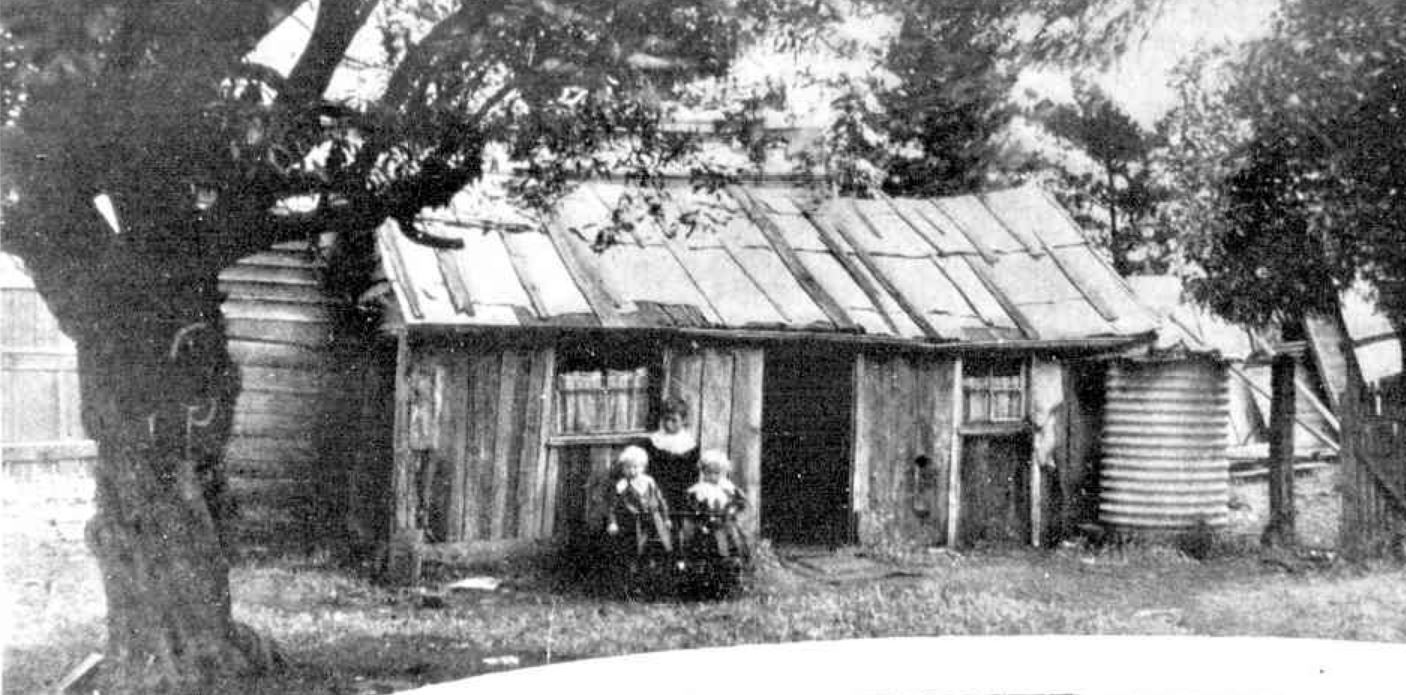
John worked as a shepherd at Violet Creek but wanted a change in career and since there was a demand for timber in the growing town of Hamilton, he took up timber splitting at Victoria Valley in the Grampians. The timber he split was used to build the Hamilton Inn and the Victoria Hotel.  He then set up sawmill below Billy Goat Hill which overlooked the area which would more than fifty years later become Melville Oval. To accommodate his growing family, John built a house on Billy Goat Hill from timber he collected nearby.  It had slab walls and a clay floor and is pictured below.

JENNINGS FAMILY HOME – HAMILTON PIONEER. (1912, January 13). Leader (Melbourne, Vic. : 1862 – 1918, 1935), p. 32. Retrieved March 30, 2019, from http://nla.gov.au/nla.news-article198127055

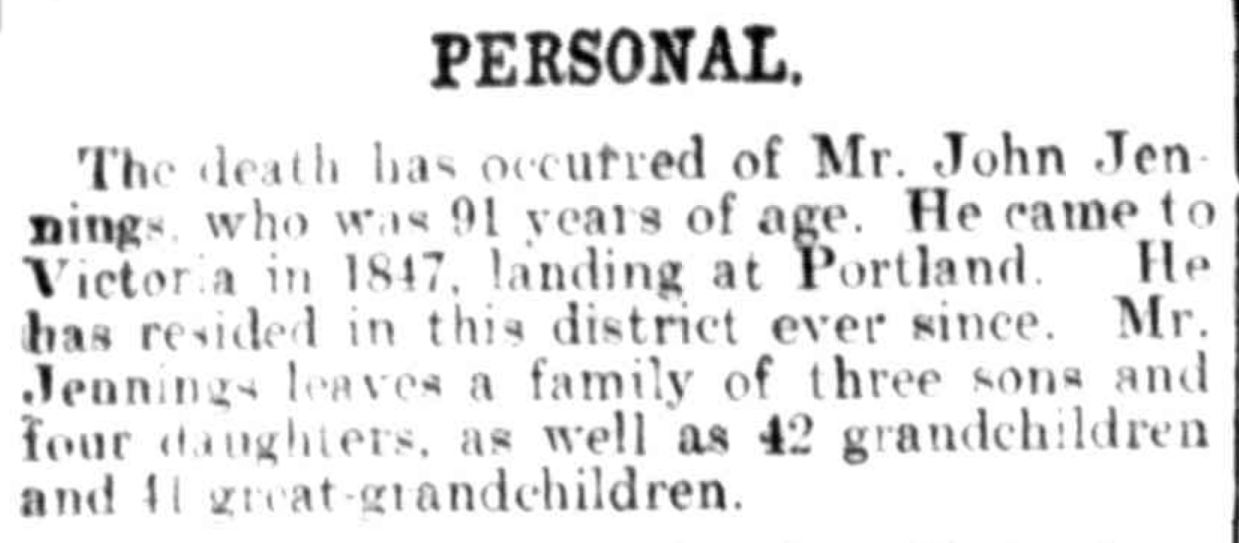
Bridget died at Hamilton in 1904.  John continued living at his home until his death in 1910.  He left forty-eight grandchildren and forty-one great-grandchildren at the time of his death.

jennings

PERSONAL. (1910, March 26). The Australasian (Melbourne, Vic. : 1864 – 1946), p. 39. http://nla.gov.au/nla.news-article142923081

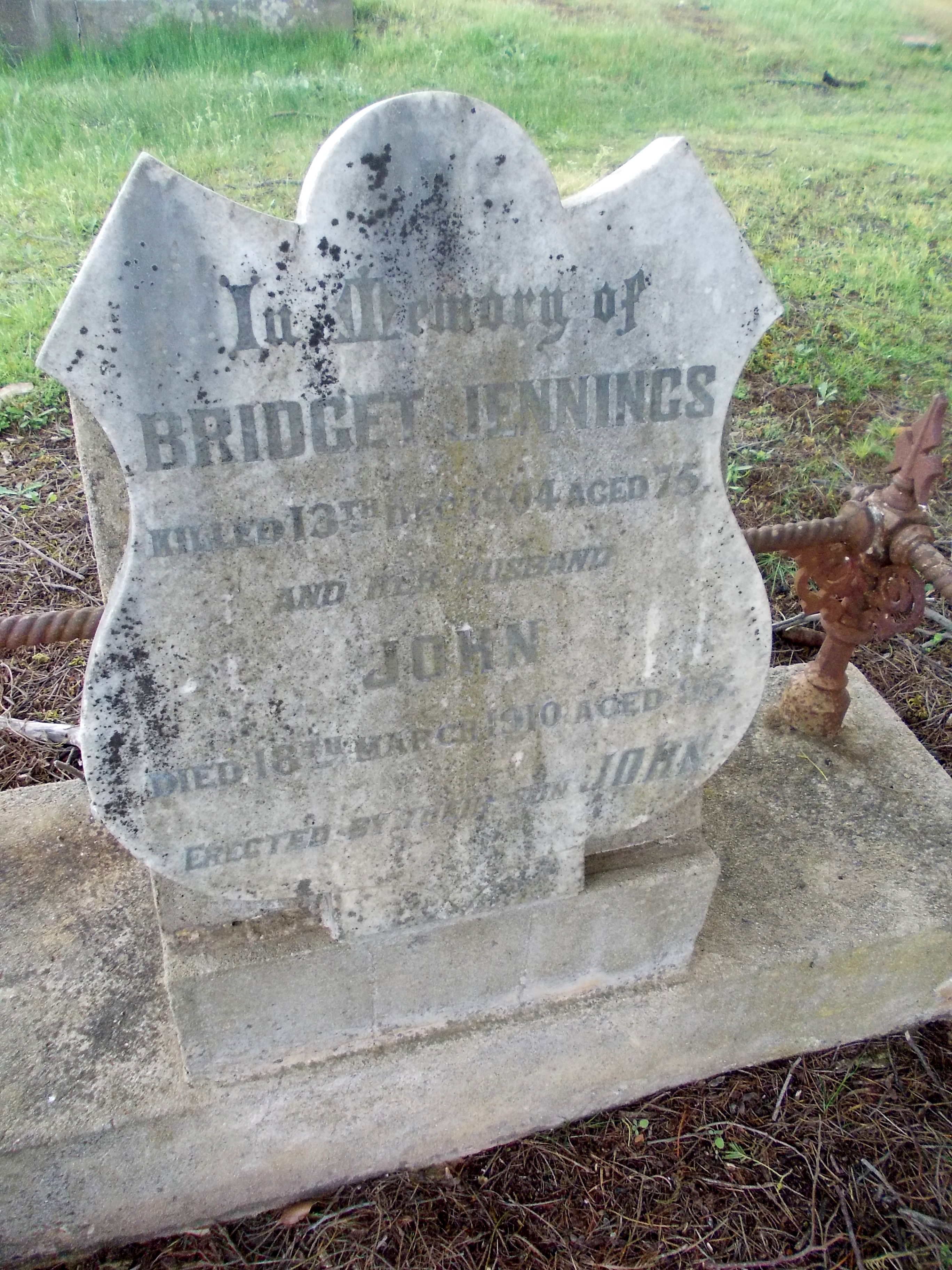
GRAVE OF JOHN AND BRIDGET JENNINGS, HAMILTON (OLD) CEMETERY.

John and Bridget’s son Jack and his wife Emma contributed eighteen of the grandchildren. After John’s death, his home of fifty years which had never been altered was dismantled and a new house built.    
HAMILTON PIONEER. (1912, January 13). Leader (Melbourne, Vic. : 1862 – 1918, 1935), p. 32. Retrieved May 13, 2019, from http://nla.gov.au/nla.news-article198127055

In 1912, some of his family came together and are seen below.

DESCENDANTS OF JOHN AND BRIDGET JENNINGS – HAMILTON PIONEER. (1912, January 13). Leader (Melbourne, Vic. : 1862 – 1918, 1935), p. 32. Retrieved March 30, 2019, from http://nla.gov.au/nla.news-article198127055

Vanda Savill in her book Dear friends, now know ye: Hamilton District, wool centre of the world. Part one  (p180) stated by 1940, John and Bridget’s son John “Jack” Jennings had 183 living descendants consisting of nine children, 50 grandchildren, 49 great-grandchildren and six great-great grandchildren. Further, it says Jack was born in a tent on the site of the current Gray Street Primary School in 1853, however, his birth was registered in 1855.     
SCULLION, John – Died 8 March 1919 at Garvoc. John Scullion was born at County Antrim, Ireland around 1827.  When he was around seventeen, he went to England and worked for around five years in a foundry.  He left England at the age of twenty-two and sailed for Portland.  He worked as a bullock teamster travelling to and from the diggings.  In 1861 he married Janet MacKellar. 

John took up land at Wangoom near Warrnambool before going to Garvoc around 1864 and became a dairy farmer. In 1909, he lost his home in a fire.  It had nine rooms, three of stone and six of timber.  At the time John estimated his monetary loss was £800.  At the age of ninety-two, John died at his home Mount View, Garvoc, leaving his widow Janet and five daughters and three sons.  He was buried at the Terang Cemetery.

ANDREWS, Mary Ann – Died 31 March 1940 at Colac.  Mary Ann was born at Muntham station near Casterton around 1855.  She married Thomas Rhodes at Coleraine in 1873 and they moved to Lower Gellibrand between Lavers Hill and Princetown around 1885.  Thomas died four years after their arrival there on 8 December 1889 aged thirty-nine. Mary continued on at their dairy farm.  At the time of her death, Mary Ann had four daughters and two sons, thirty-five grandchildren and thirty-seven great-grandchildren.
 

VAFHO Family History Expo Guest Speakers

The VAFHO has announced the guest speakers for the Hamilton Family History Expo on 1 June.  The first talk is at 10.15am with AFL statistician and Geelong Football Club historian Col Hutchinson speaking on researching the footballers in your family. He will also look at some of those from the Hamilton district who have gone on to play VFL/AFL football. You can read more about Col on the link – Col Hutchinson.

THE CASTERTON FOOTBALL CLUB, PREMIERS IN 1927. Image courtesy of the Museums Victoria Collections https://collections.museumvictoria.com.au/items/766108

Next, Ancestry’s Jason Reeve will speak about using Ancestry.com for family history with an introduction to Ancestry DNA. You can read more about Jason on the following link – Jason Reeve.

THE ELIJAH FAMILY OF HAMILTON c1919. Image courtesy of the Museums Victoria Collections https://collections.museumvictoria.com.au/items/766117

Then after a break for lunch and time to check out the exhibits, Rob Hamilton will talk about Genealogy and Freemasons.  You can read more about Rob on the link – Rob Hamilton.

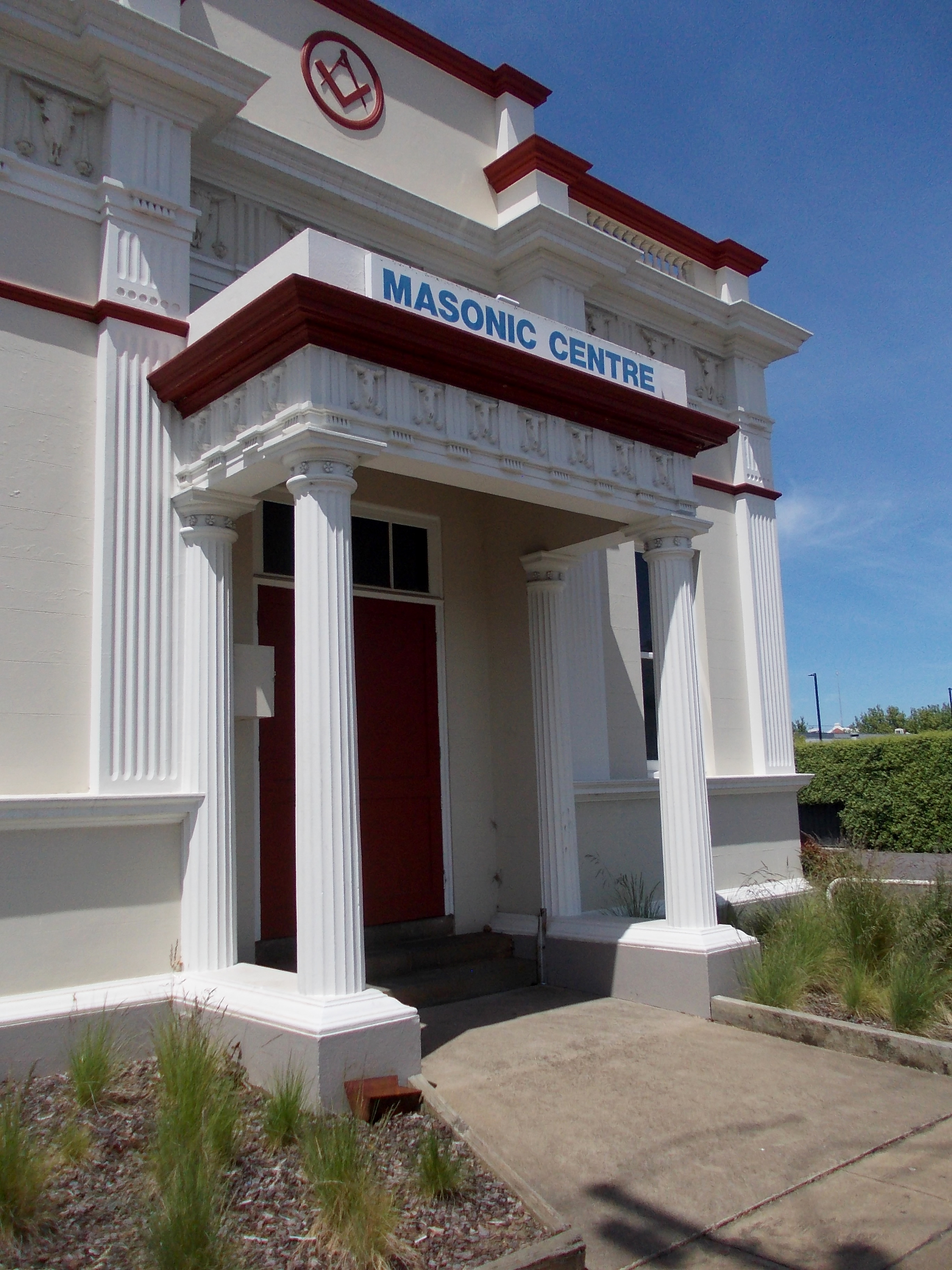
HAMILTON MASONIC CENTRE, LONSDALE STREET

The day will conclude with the Hamilton History Centre taking us for a “visual stroll” through Hamilton’s history.

GRAY STREET, HAMILTON c1920. Image courtesy of the State Library of Victoria http://handle.slv.vic.gov.au/10381/399049

You can find out more including the times of each talk on the link to the VAHFO website – Hamilton Family History Expo.

I’m counting the days now.  Maybe I’ll see you there.

Belated Birthday

Over the weekend I was suddenly struck by a thought…I had forgotten Western District Families’ 8th Birthday!  It was 12 April but I was so busy writing biographies for Hamilton’s WW1, it completely slipped my mind.  So this is a quick post to thank you for following Western District Families both here and at the WDF Facebook page.  The number of visitors to each continues to grow as each year passes giving me the incentive to reach a double-figures birthday.

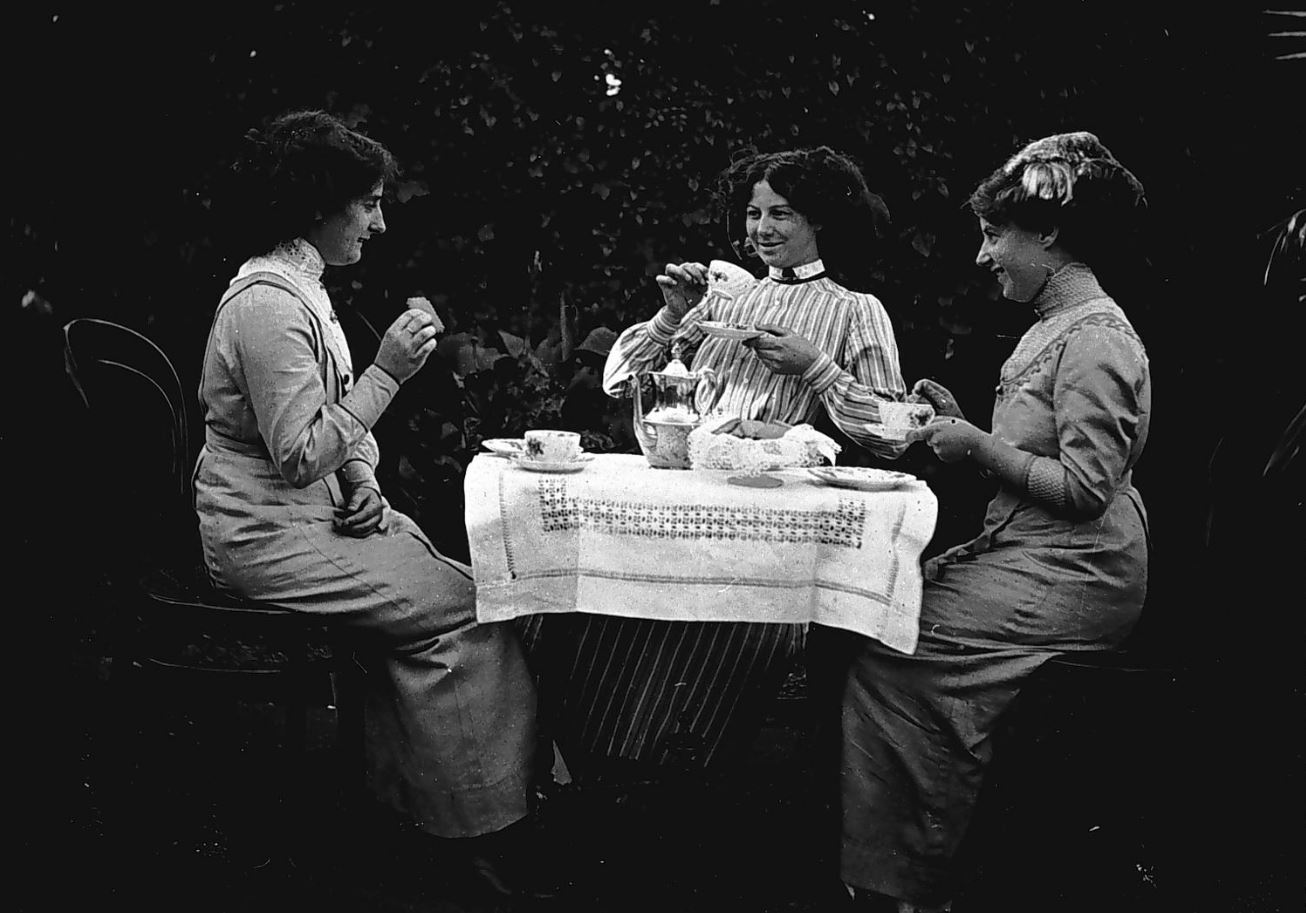
A tea party would be a proper way to celebrate WDF’s 8th birthday so this is one of my favourite photos from the past year.  It was the Facebook page cover photo during Women’s History Month in March and is held by the Museums Victoria Collection.  There are no names or a place but that doesn’t matter, it’s a great photo.

Image courtesy of the Museums Victoria Collections https://collections.museumvictoria.com.au/items/769771

VAFHO Family History Expo Exhibitors

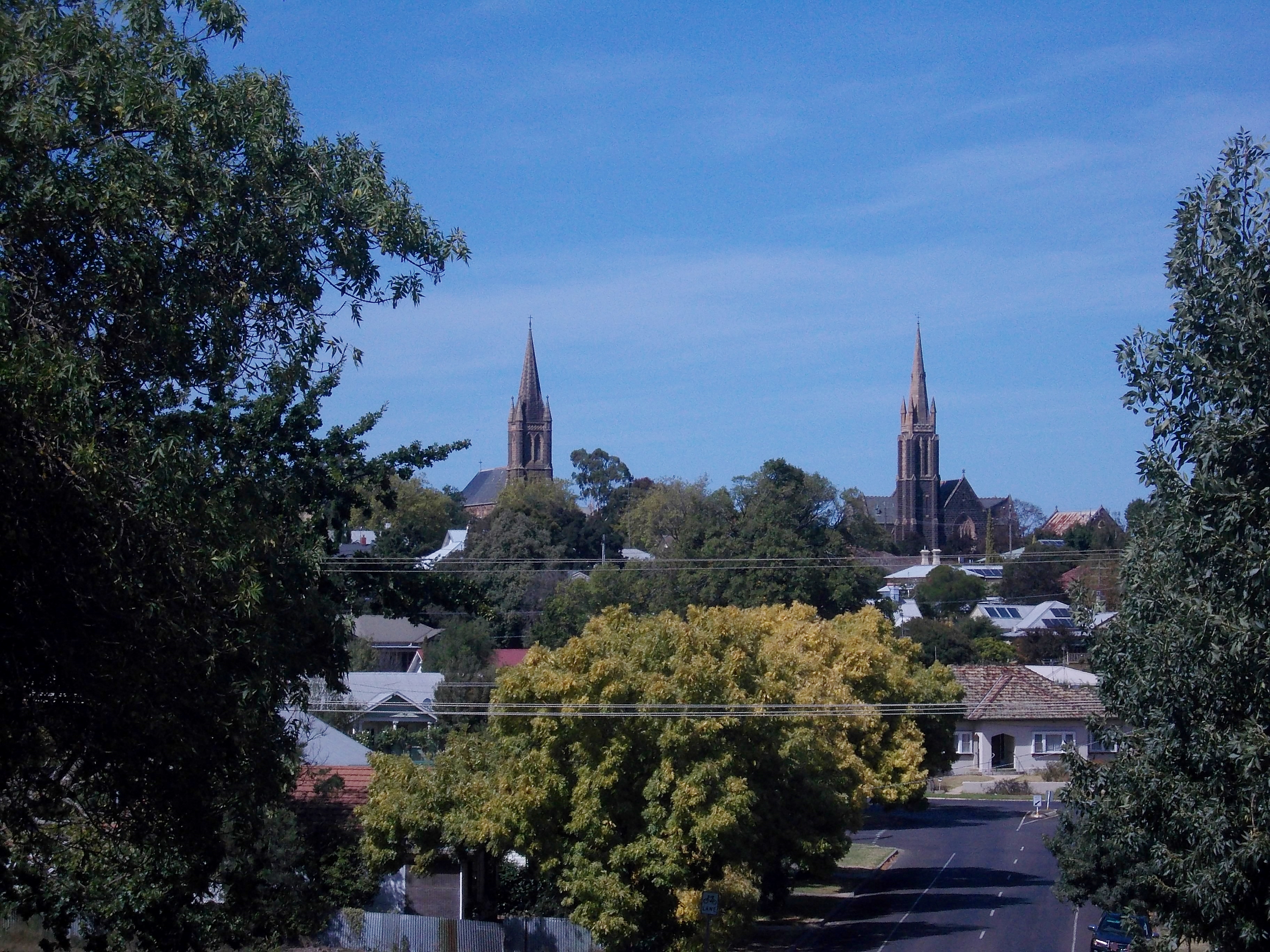
VIEW TO CHURCH HILL, HAMILTON

The Victorian Association of Family History Organisations (VAFHO) has released a list of thirty exhibitors for the Hamilton Family History Expo on Saturday 1 June.  The expo is not just for those interested in Hamilton family history and the list of exhibitors is indicative of that.  For example, the Terang & District Family History GroupWest Gippsland Genealogical Society and Bendigo Family History Group will be there among others  There will also be Ancestry Australia, Port Phillip Pioneers and Gould Genealogy and more. You can see a full list at the VAFHO website on the link – Hamilton Family History Expo Exhibitors.

I’m really looking forward to the Expo because it’s in my beautiful historic hometown of Hamilton and the venue is the Chevalier Centre at Monivae College, my old school.  It’s always good to see events on in Hamilton which will bring people to the town to experience what we Hamiltonians past and present love.

HAMILTON BOTANIC GARDENS


“NUCLEUS”, A KINETIC SCULPTURE AT THE INTERSECTION OF GRAY & BROWN STREETS.


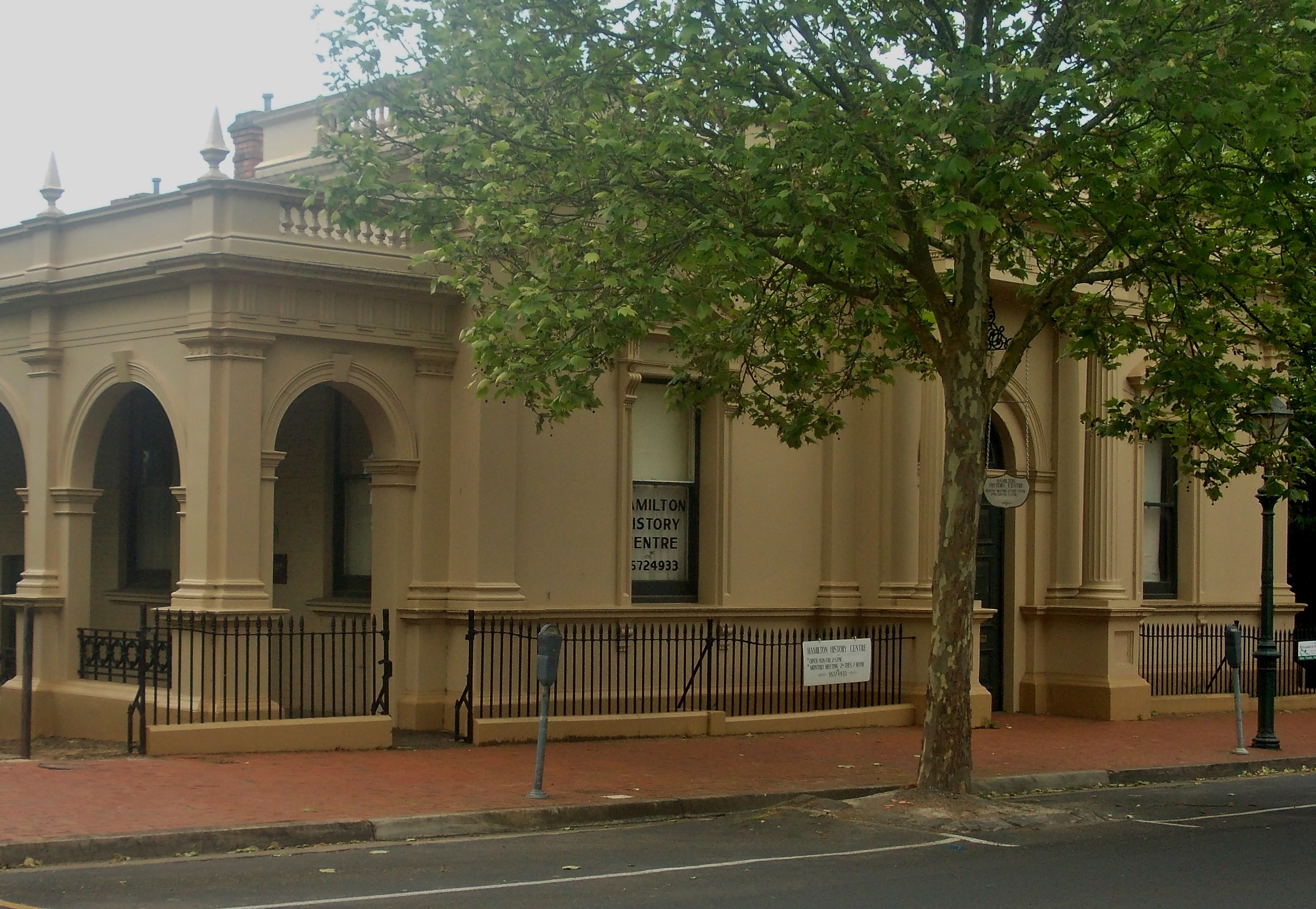
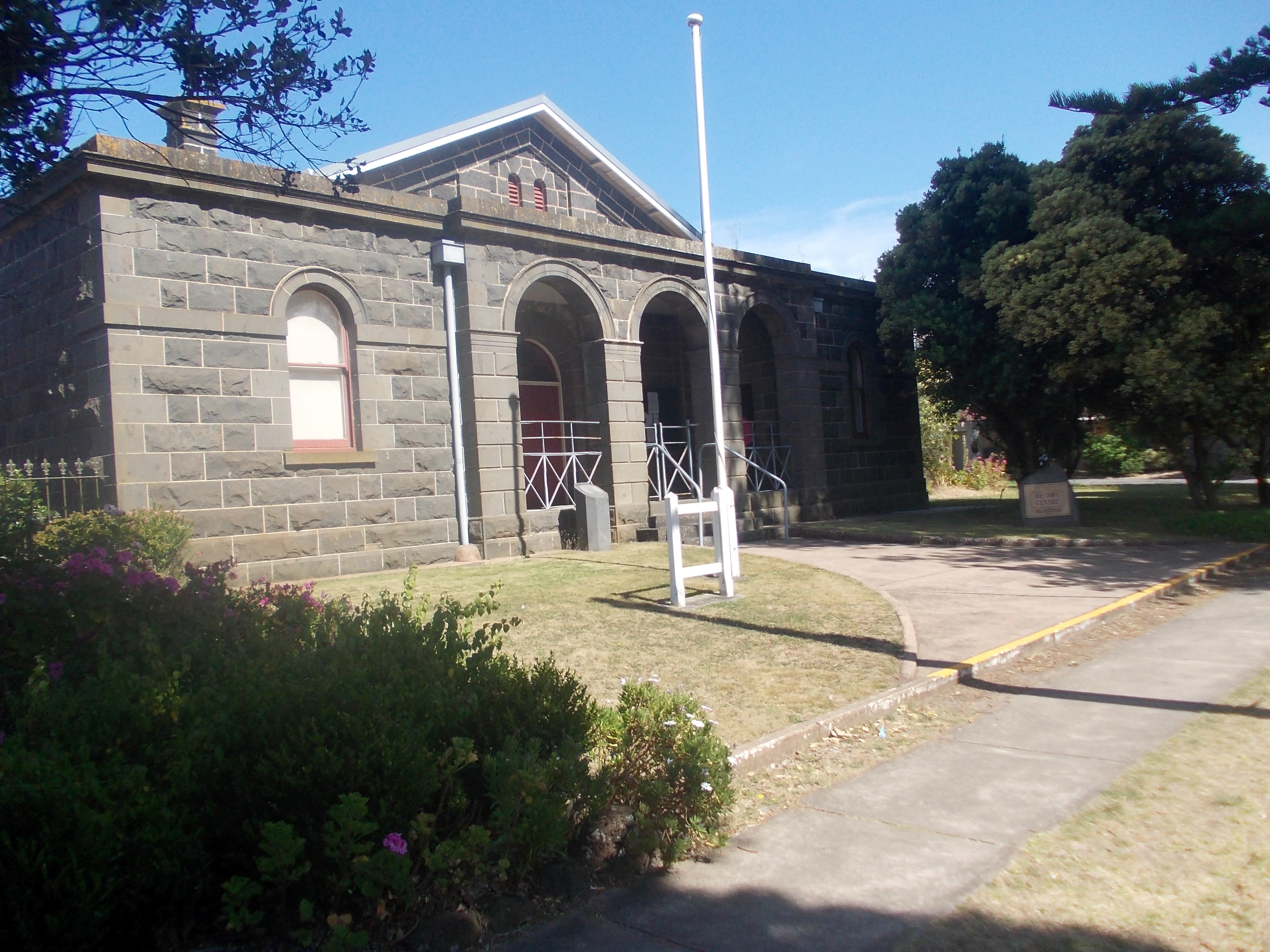
THE HAMILTON HISTORY CENTRE IN THE FORMER MECHANICS INSTITUTE

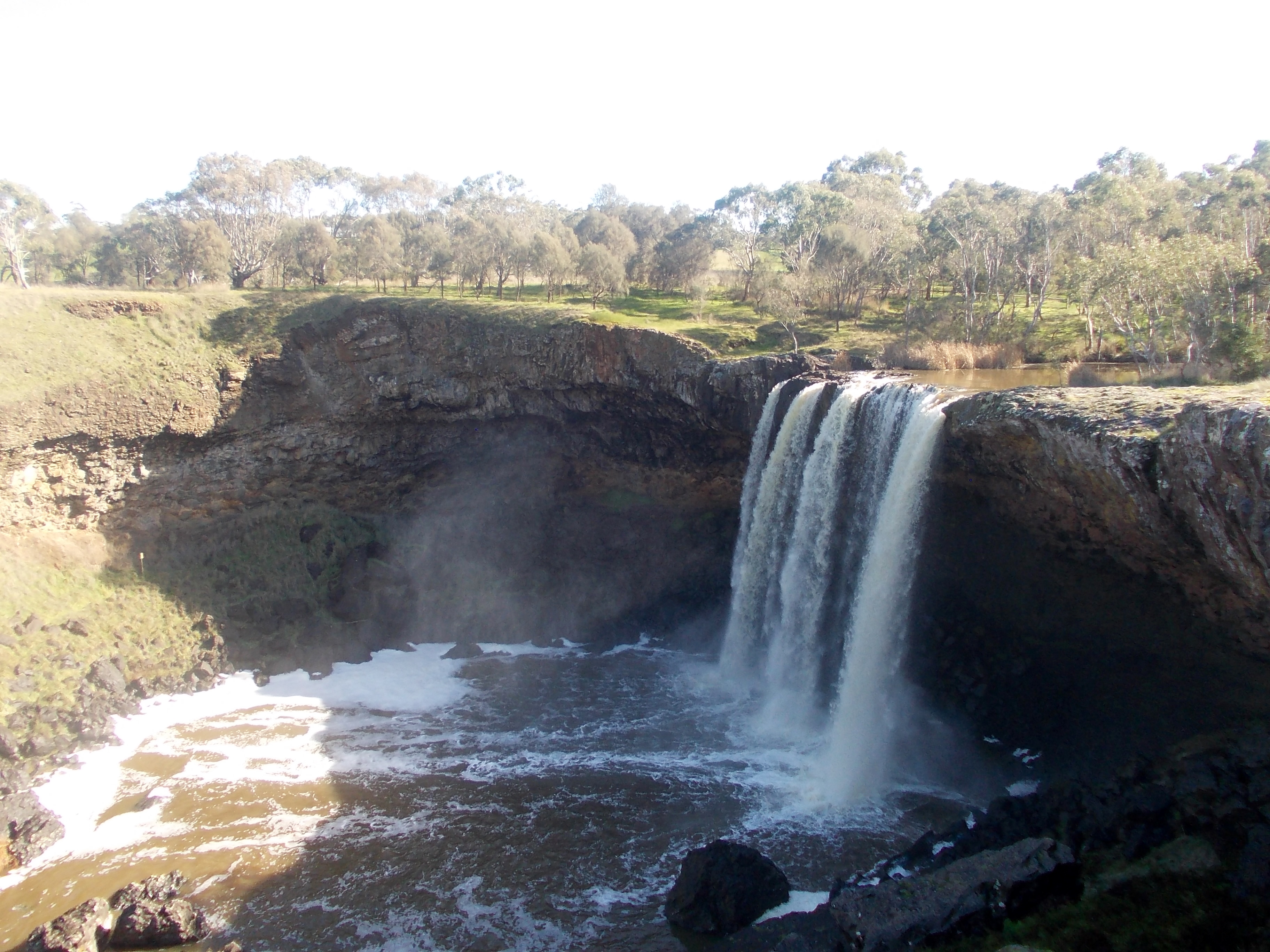
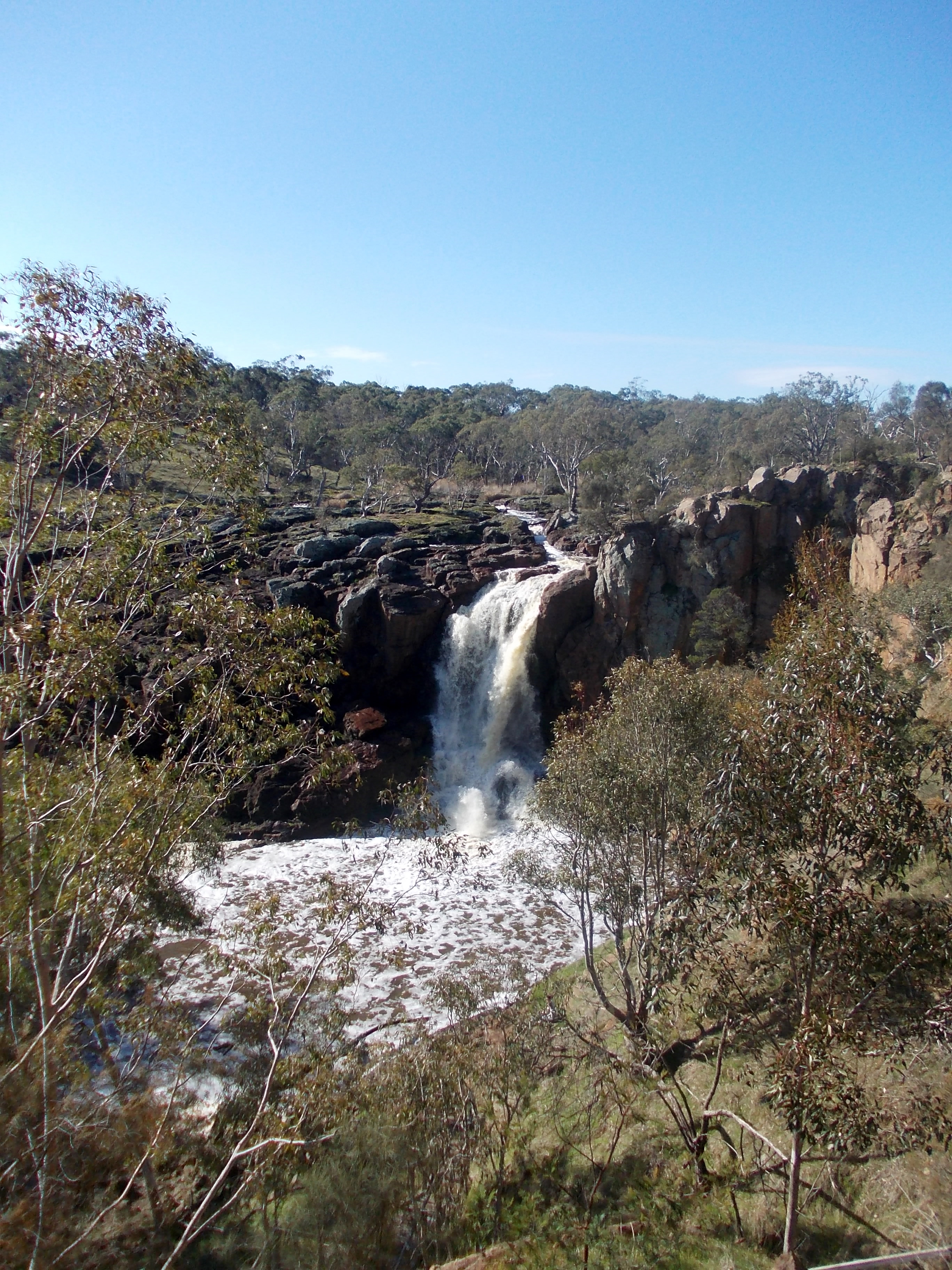
Hopefully we will finally get some rain in the next month giving visitors to the expo the chance to experience some waterfall action too.


Hamilton’s WW1…An Update

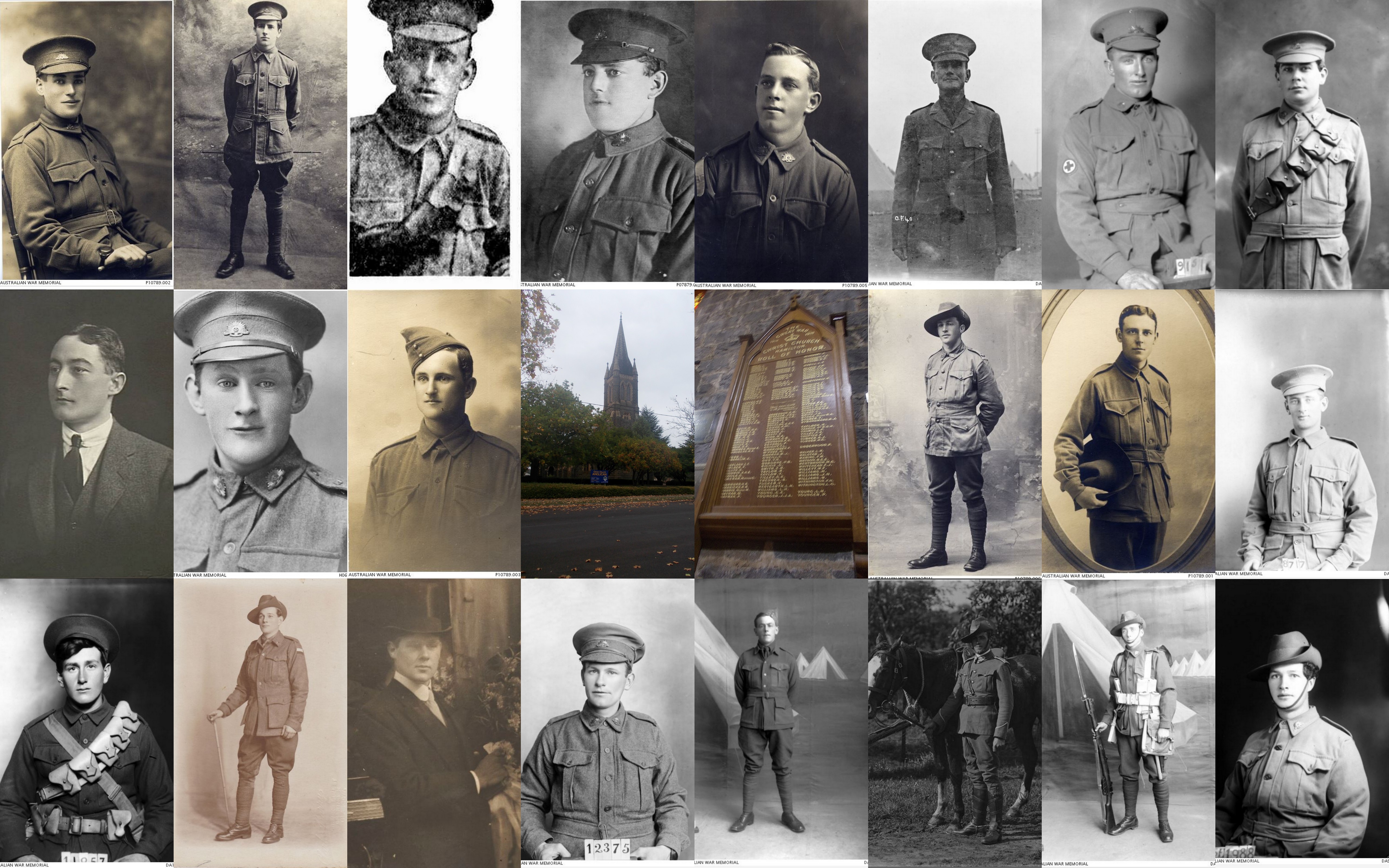
In time for ANZAC Day, I have added the Hamilton’s Christ Church Anglican Church Roll of Honour to Hamilton’s WW1. You can find it on the following link – Christ Church Honour Roll  

There are 163 names, 156 men and seven women. Thirty-two of the men did not return from the war. I’ve included their rank, unit from the Nominal Roll and any honours.  You can also read the biographies of thirty-six of the men and women.

Five of those named on the board were children of three consecutive Archdeacons of the Hamilton Anglican church, William Tucker (1894-1898), Reginald Hayman (1898-1906) and Charles Harris (1906-1917). Virgil Tucker and Percy Beaumont (step-son of Charles Harris) did not return from the war.

There are sixty names on the Christ Church board which are not on another of the honour rolls I’ve added in recent months, the Borough of Hamilton WW1 Honour Roll.  That roll has 411 names, 406 men and five women. The stories of 102 of those men and women are now completed.  You can find the names on the following link – Borough Honour Roll.

I have now completed a total of 155 biographies for Hamilton’s WW1, 145 men and ten women.  The most recently completed biographies are listed below. There are four more very close to publishing and I had hoped to have them completed before tomorrow.  You never know, I might get there yet. You can click on the names below to go to a biography.

William Handfield Anderson

Margaret Delahenty

Alice Donnes

Percy O’Connor Friend

Hubert Stanley Graves

Fanny May Harris

Francis Charles Johnson

Lillian Martha Malster

Evangeline Ameilia Rountree

Norma Norham Scott.

Thomas Henry Taylor

Virgil Tucker

MEN OF THE BOROUGH OF HAMILTON WW1 HONOUR ROLL. Images courtesy of the Australian War Memorial and Trove Digitised Newspapers.


MEN OF THE CHRIST CHURCH ANGLICAN CHURCH ROLL OF HONOUR. Images courtesy of the Australian War Memorial

Wonderful Western District Women Part 5

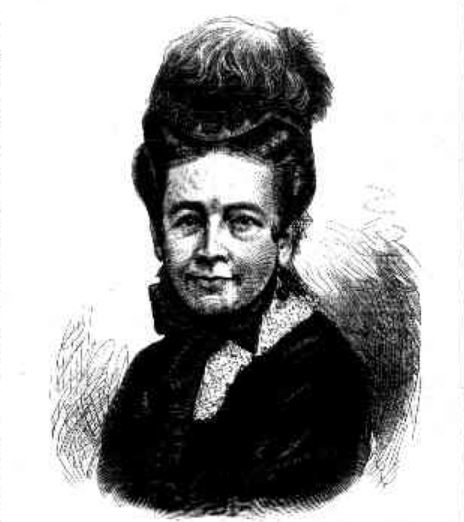
This is the fifth edition of Wonderful Western District Women but the first with just one subject.  It is also the first with a woman who hasn’t been part of the WDF Pioneer Obituary Index.  I came to know Elizabeth Sharp when I wrote the Passing of the Pioneers entry for her husband Charles Gray leaving me thinking she was way more interesting than Charles (although he was far from dull). I discovered Elizabeth was a strong, independent woman who was musically and artistically gifted. She embraced the beauty of her surrounds and in doing so she charmed a Prince and earned praise from a Queen.  Click on the underlined text throughout for further information about a subject.

SHARP, Elizabeth (c1822-1903) Also known as Elizabeth Sharpe and Elizabeth Gray

Elizabeth Sharp was born in Dublin, Ireland in 1822, a daughter of watchmaker Christopher Sharp and Catherine Rankin. She had an older brother Richard (later a member of the Royal Irish Academy) and an older sister Catherine “Kate” and younger sisters Emily and Flora. On 4 January 1842, Kate married Thomas Doolan of Tipperary in Dublin (Dublin Morning Register, Thursday 06 January 1842, p. 2). Ten years later the Doolans and their children left for Portland, Victoria on the Runnymede, arriving on 3 June 1852.

As for Elizabeth’s arrival in Australia, it is generally accepted she spent time in Sydney up until 1857. That acceptance seems to come from artworks by Elizabeth depicting Sydney including this work showing Sydney Harbour (below) and another of the Sydney Heads which have been dated 1857.

SYDNEY TOWN AND SYDNEY HARBOUR c1857 Image courtesy of the State Library of Victoria http://handle.slv.vic.gov.au/10381/401521

The earliest I found Elizabeth in Australia is March 1855 but not in Sydney rather Portland, Victoria the destination of Elizabeth’s sister Kate and family. Dr Allison of Portland opened a museum in Gawler Street in 1855 and the first exhibition was in March 1855 with items of natural history and human art. Drawings in chalk by Elizabeth Sharp were part of the exhibition.  In December 1856, world-famous soprano Madame Anna Bishop (below) performed a concert at Portland. Elizabeth Sharp joined Madame Bishop for one of the pieces.  The Portland Guardian and Normanby General Advertiser on 24 December 1856 said Elizabeth, who had a “musical reputation” performed the piece with Madame Bishop to “very good effect.”

MADAME ANNA BISHOP. The Sydney Mail and New South Wales Advertiser p. 1017. http://nla.gov.au/nla.news-article164387353

The following year, Elizabeth and her sister Kate opened a school for young ladies at Portland with drawing and music on the curriculum.

Advertising (1857, January 21). Portland Guardian and Normanby General Advertiser (Vic. : 1842 – 1843; 1854 – 1876), p. 3 (EVENING.). Retrieved March 16, 2019, from http://nla.gov.au/nla.news-article64567605

On 19 March 1857 Elizabeth married at Portland to squatter Charles Gray (below) of Nareeb Nareeb, south of Glenthompson.

CHARLES GRAY. Image courtesy of the State Library of Victoria http://handle.slv.vic.gov.au/10381/294252

Elizabeth was around thirty-five and Charles thirty-nine.  Charles’ property was relatively isolated with Hamilton the closest large town, however, it was well established with Charles having settled there seventeen years before and no doubt there were servants making life more comfortable.

THE HOMESTEAD BUILT BY CHARLES GRAY AT NAREEB NAREEB ON THE BANKS OF THE GREEN HILLS CREEK. Image courtesy of the State Library of Victoria http://handle.slv.vic.gov.au/10381/294239

A daughter Annie was born to Elizabeth and Charles at Portland, on 17 April 1858 and another daughter Emily was born in 1860 at Nareeb Nareeb. On 15 March 1862, a son was born at Nareeb Nareeb but he sadly died before he could be named. Possibly on doctor’s advice, Elizabeth then forty spent some of her next pregnancy at Neptune Cottage, (below) in Gellibrand Street, Queenscliff where a daughter Elizabeth was born on 13 February 1863. The family would visit Queenscliff often over the coming years including the Christmas of 1866.

NEPTUNE COTTAGE, QUEENSCLIFF IN 1983 Image courtesy of the J.T. Collins Collection, La Trobe Picture Collection, State Library of Victoria. http://handle.slv.vic.gov.au/10381/233621

Six days after daughter Elizabeth’s birth, two new lighthouses at Queenscliff, one black and one white were lit for the first time on 19 February 1863. Elizabeth would have seen the construction of the lighthouses in the lead up to the birth of her daughter as she looked at the coastline which inspired her to paint.  She created several watercolour drawings of Queenscliff including the one below dated 1863. Elizabeth drew the old sandstone lighthouse where the black lighthouse now stands which could be easily viewed close to Neptune Cottage.  The old lighthouse was demolished in March 1863.

VIEW OF QUEENSCLIFF SHOWING OLD LIGHTHOUSE c1863. Image courtesy of the State Library of Victoria http://handle.slv.vic.gov.au/10381/401523

The Queenscliff black lighthouse…

THE BLACK LIGHTHOUSE QUEENSCLIFF

The year after her time in Queenscliff, Elizabeth sent five pieces, watercolour drawings and etchings to the 1864 Annual Exhibition of Fine Arts in Melbourne. One was a “view of the coast” at Queenscliff.  Another Western District exhibitor was Elizabeth’s sister Kate Doolan.  The sisters received excellent critiques for their works.

Local News. (1864, April 22). Hamilton Spectator and Grange District Advertiser (South Melbourne, Vic. : 1860 – 1870), p. 2. Retrieved March 17, 2019, from http://nla.gov.au/nla.news-article194723963

In 1866, Elizabeth exhibited at the Melbourne Intercolonial Exhibition. Her watercolours included a view of Schnapper Point, a view of the Queenscliff lighthouse, possibly the one below, and a view of Queenscliff including the house of Mr Fellows.  She also exhibited a set of doilies with landscapes etched in ink on to the linen.  She received a medal for her doilies.

OLD QUEENSCLIFF LIGHTHOUSE c1863. Image courtesy of the State Library of Victoria http://handle.slv.vic.gov.au/10381/401592

This is an amazing photo of the Fine Arts display at the 1866 Melbourne Intercolonial Exhibition where Elizabeth and Kate’s works were displayed.

THE FINE ART GALLERY, MELBOURNE INTERCOLONIAL EXHIBITION 1866/7. Photographer: Thomas Ellis & Co. Image courtesy of the State Library of Victoria http://handle.slv.vic.gov.au/10381/156175

During 1867, Queen Victoria’s son Prince Alfred, the Duke of Edinburgh arrived in the colony.

HRH PRINCE ALFRED c1866 Image courtesy of the State Library of Victoria http://handle.slv.vic.gov.au/10381/246564

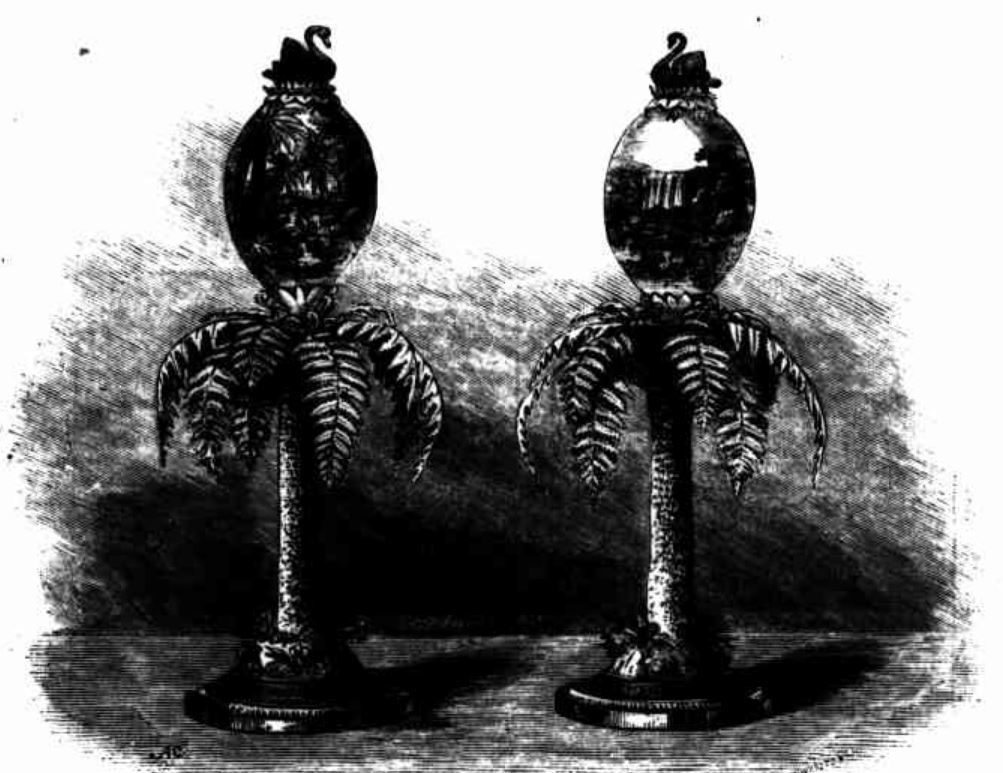
In December 1867, Prince Alfred spent a weekend at Hopkins Hill, the neighbouring property to Nareeb Nareeb, as the guest of John Moffat. Charles and Elizabeth were invited to Sunday lunch with the Prince. The girls also went along.  Elizabeth, with help from one of her daughters, presented His Royal Highness with two vases featuring etched Black Swan eggs. Delighted with his gift, Prince Alfred seated Elizabeth next to him at lunch.

RECEPTION OF THE PRINCE. (1867, December 18). The Age (Melbourne, Vic. : 1854 – 1954), p. 6. Retrieved March 22, 2019, from http://nla.gov.au/nla.news-article185503900

So impressed was Prince Alfred, in January 1868 while still in Australia he sent Elizabeth a letter. He wrote “sincere thanks for the beautiful and useful presents”. He continued he “admired them so much” could he commission her to make another pair of vases for his mother, Her Majesty Queen Victoria.  Elizabeth set to work and even visited Ferntree Gully for research. The following is a pen and ink sketch depicting Ferntree Gully showing the intricacy of Elizabeth’s work

FERNTREE GULLY BY ELIZABETH GRAY. Image courtesy of the State Library of Victoria http://handle.slv.vic.gov.au/10381/294226

Elizabeth created four pieces for Queen Victoria decorated with scenes the Prince saw during his visit to Victoria, something they must have talked about at lunch. There were two small vases each with carved black swan eggs. One featured the Wannon Falls near Hamilton, (below right) and a view at Ferntree Gully (below left).

“VASES PRESENTED TO HER MAJESTY THE QUEEN.” Illustrated Australian News for Home Readers (Melbourne, Vic. : 1867 – 1875) 15 August 1868: 12. Web. 7 Feb 2018 .


WANNON FALLS NEAR HAMILTON

She also created two tazzas (bowls) with ostrich eggs etched with various scenes including Mount Sturgeon near Dunkeld and Port Phillip Heads.  Some reports suggested they were emu eggs.

VASES PRESENTED TO HER MAJESTY THE QUEEN. (1868, August 15). Illustrated Australian News for Home Readers (Melbourne, Vic. : 1867 – 1875), p. 12. Retrieved March 26, 2019, from http://nla.gov.au/nla.news-article60450420


MOUNT STURGEON NEAR DUNKELD

Each piece was mounted in silver by Kilpatrick & Co., jewellers of Collins Street, Melbourne and displayed in the jeweller’s window before departure for England.  Elizabeth oversaw the display, with the vases arranged with variegated seaweed of all colours she collected at Queenscliff. The Hamilton Spectator and Grange District Advertiser gave a full description of Elizabeth’s pieces available on the link http://nla.gov.au/nla.news-article194474565

On 27 April 1870, a benefit concert was planned for Mrs Munro and her children who lost their home in Thompson Street, Hamilton to fire.  A week prior to the concert, the organizing committee was still looking for vocalists.  Elizabeth, her sister Kate and Miss Bunce offered to help out much to the enjoyment of the 500 people who crammed into the Hamilton Lands Office. Elizabeth accompanied singers on the piano and performed two piano duets with Kate.  The Hamilton Spectator wrote they imparted “to the performance an amount of fine execution seldom witnessed in amateurs”.  Miss Bunce sang several solo pieces.

Items of news. (1870, April 30). Hamilton Spectator (Vic. : 1870 – 1918), p. 2. Retrieved March 23, 2019, from http://nla.gov.au/nla.news-article196305962

In 1872, Elizabeth exhibited sketches of Aboriginals at Narreb Nareeb at the Victorian Intercolonial Exhibition in Melbourne, receiving an honourable mention and they later were sent on to the 1873 London International Exhibition.

WEDNESDAY, DECEMBER l8, 1872. (1872, December 18). The Argus (Melbourne, Vic. : 1848 – 1957), p. 5. Retrieved March 16, 2019, from http://nla.gov.au/nla.news-article5844603

Later in the year, the Exhibition of Victoria showcased exhibits which would be sent on to the 1874 London International Exhibition. Elizabeth sent more of her vases to the London International and she was awarded a medal  

By the end of 1873, the Grays had decided to travel to Europe on what Charles described as a holiday.  They planned to leave by the February mail ship. Charles held a clearance sale of the household furniture and harness in December 1873.  On 26  February 1874, Charles, Elizabeth and the three Misses Gray did indeed leave by the mail ship RMS Bangalore.  Elizabeth was around fifty-one at the time.

SHIPPING. (1874, February 27). The Age (Melbourne, Vic. : 1854 – 1954), p. 2. Retrieved March 25, 2019, from http://nla.gov.au/nla.news-article199384026

In 1875, Elizabeth’s eldest daughter Annie received an invitation to attend the Queen’s first “Drawing Room” of the year at Buckingham Palace. A ‘drawing room” was a formal function held at intervals throughout the year which saw young ladies presented to Queen Victoria in her drawing room. An invitation to a drawing room was highly sought after.  Elizabeth’s early brush with royalty was said to have “broken the ice”.

DEBUTANTS PREPARE TO BE PRESENTED TO QUEEN VICTORIA. The Sydney Mail and New South Wales Advertiser (NSW : 1871 – 1912), p. 315. http://nla.gov.au/nla.news-article162191070

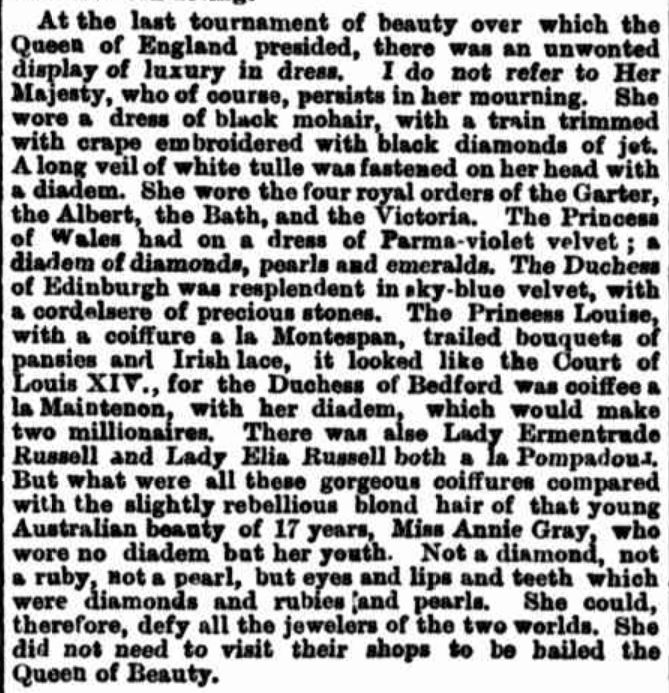
Elizabeth chaperoned Annie who captivated the overseas press who described her as an “Australian Beauty”. Her dress was “rich white satin; train, trimmed with bouillonnees and ruches of tulle, with sprays of lilies of the valley and roses; jupe of rich white grosgrain, trimmed the same; headdress, tulle veil with a spray of lilies. Some of their quotes included, “This young lady, who is not yet seventeen, is a very elegant and bewitching blonde, and bids fair to, be one of the belles of the season” and from the San Francisco correspondent of the New Zealand Herald, “amid all the diamonds and patrician beauties of a Royal drawing-room recently, the most .conspicuous person in the throngs was a young Australian girl of seventeen, who wore no jewels but her own incomparable beauty. She is Miss Annie Gray.” They were describing the same girl who rode on kangaroo hunts with her father at Nareeb Nareeb.

The Parisian correspondent for the New York Tribune wrote an article defining beauty inspired by the Australian girl with slightly rebellious blond hair.  The following is an extract from that article,

LADIES’ COLUMN. (1875, July 31). Australian Town and Country Journal (Sydney, NSW : 1870 – 1907), p. 25. Retrieved March 25, 2019, from http://nla.gov.au/nla.news-article70584172

Elizabeth didn’t go unnoticed with the Court Journal writing…” the toilette worn by Mrs Gray was remarkably rich and chaste.” With her hair done in the style of Madame de Montespan and a dress in the fashion of those worn by Madame de Pompadour with a “train, corsage, and upper skirt of rich ruby Lyons velvet, lined with white duchess satin, trimmed with richest white Brussels lace, velvet bows, and variegated moss roses; petticoat of white duchess; satin, trimmed with tulle, satin, and showered with bouquets of variegated moss roses; head-dress, feather, flowers, lappet, and veil; ornaments, diamonds and rubies.”  She was given credit for employing dressmaker Miss Scotter who had gone from working as a seamstress for David Jones of Ballarat to her own successful dressmaking business in Bond Street, London. The Hamilton Spectator wrote, “It is pleasing to find this kindly remembrance of one colonist by another, and is highly creditable to all concerned.”

In November 1875, Elizabeth, Charles and Annie attended a Grand Country Ball at Brighton. Soon after Charles was making plans to return to Australia. In early 1876, he left London and travelled to New York and then on to the Philadelphia Exhibition before embarking at San Francisco for Sydney arriving in June 1876.  He then made his way south to Nareeb Nareeb. Elizabeth and the girls extended their stay in England.  

Elizabeth was still creating pieces of art and in May 1880, she exhibited china plates with similar etchings to those on Queen Victoria’s eggs, at Howell & James in London. HRH Princess Christian visited the exhibition and had high praise for Elizabeth’s work. (Morning Post (London) Thursday 27 May 1880 p. 3).  On 16 November 1880, Annie married Charles Rowe at St Jude’s Church, South Kensington, London (London Evening Standard – Thursday 18 November 1880 p.1).

Charles continued on at Nareeb Nareeb until December 1886 when he put the property up for auction.  I had thought Charles returned to London at this time but in September 1888 he was seen walking along Collins Street Melbourne.  It was during the time of the 1886 Melbourne Exhibition and Elizabeth was exhibiting a series of photographs of her etchings. As usual, she received high praise, “This lady, whose talent for pen and ink work attracted royal notice made some wonderfully minute ethnological drawings of Aboriginals”.  After his death, Charles’ Victorian Probate referred to him as being late of St Kilda.  It’s not known when Charles returned to London or if Elizabeth ever returned to Victoria.

Emily Gray married on 3 July 1889 at Lancaster Gate, London to Leonard Sedgewick. Youngest daughter Elizabeth “Ebie” Gray had also married to John Murray but sadness came when Ebie died on 2 October 1892 at Eccles, Manchester aged twenty-nine. It was a sad year for Elizabeth as her sister Kate died at St Kilda on 24 May 1892.

In 1901, Elizabeth and Charles with four servants were living at 169 Cromwell Road, Kensington.  On Sunday 29 March 1903, Elizabeth died in London aged eighty-one. Her funeral was held at St Luke’s Earls Court, Redcliffe Square, London.

Elizabeth left two daughters, Annie Rowe by then a widow and Emily Sedgewick, and two grandsons Felix Rowe and Keith Murray. Charles died in 1905 at the age of eighty-seven. He was living at 18 Iverna Gardens, Kensington at the time of his death.  In his will, Charles left £100 to parlor maid Mabel Annie Ball “in recognition of her care of his late wife” (Dundee Courier – Friday 03 March 1905 p. 5)

The two vases given to Prince Alfred are now part of the Royal Collection located at Osborne House, the summer house of Queen Victoria on the Isle of Wight. A photograph of the vases is available on the link to the Royal Collection.

Additional Sources

Design and Art Australia Online – Biography of Elizabeth Gray              

Ireland Select Births and Baptisms, 1620–1911, Elizabeth Anna Sharpe, Birth date, 1822, FHL Film No. 100238

Irish Genealogy 

Current & Upcoming Events in the Western District

UPDATED 23 March –

We are really spoilt for choice over the coming months because some more history related events have come to light since I published this post on Monday. You’ll find the three new events added below…


Some great history related events are either happening or coming up in the Western District over the next few months.

Running now until 28 April at the Port Fairy Museum and Archives is a travelling exhibition “Submerged” about shipwrecks along the south-west coast and Australia wide.  Port Fairy is a good place to host an exhibition about wrecks with fourteen wrecks recorded within Port Fairy bay alone.  You can find out more at the museum’s Facebook page Port Fairy Museum and Archives or website.

PORT FAIRY MUSEUM & ARCHIVES, GIPPS STREET.

The Glenelg Shire Council Cultural Collection exhibition “Gone But Not Forgotten…The Lost Buildings of Portland” is now on at the Portland Arts Centre until 26 April. The exhibition includes a display of photos and other items on the long-gone buildings of Portland.

An exhibition curated by the Casterton RSL will look at the Centenary of the RSL will begin on 2 April at the Casterton Town Hall foyer.  You can find out more at the shire’s Facebook page Glenelg Shire Council Cultural Collection.

Near Lake Bolac on 28 April will be an unveiling of a plaque at the former Mellier State School. The plaque will remember the 100th anniversary since the school was moved to Norbank Road, Lake Bolac.  You can find out more on the Historic Lake Bolac Facebook page.

On the weekend of 18 & 19 May is the Hamilton Pastoral Museum May rally.  You can see some of the sights…and sounds of the museum in this video from my visit to the October 2018 rally.  Look for further rally information on the museum’s Facebook page Hamilton Pastoral Museum Inc or the museum website.

Also on 18 May, the Warrnambool Family History Group are holding a seminar with four guest speakers each with great topics including Ken Flack, a genealogist and historian from Horsham speaking on taking a different approach to research; Janet McDonald, the President of the Warrnambool and District Historical Society talking about using local records to research land and houses around Warrnambool; Kate Moneypenny from the State Library of Victoria talking about researching family history at the SLV. You can find out more on the groups Facebook page Warrnambool Family History Group or their website.

For those interested in DNA and Family History, the Colac & District Family History Group is hosting a workshop on Friday 31 May from 1pm to 3pm with a representative from Ancestry. This must be a Western District first on such a topic so take the chance to attend. The Colac & District Family History Group are doing some great things. For further updates, check out the group’s Facebook page Colac & District Family History Group and website.  It’s a new website too so definitely take a look.  

The following day, Saturday 1 June is the 2019 VAFHO (Victorian Association of Family History Organisation) Expo at the Chevalier Centre, Monivae College in Hamilton from 10.00am to 4.00pm.  Take the opportunity to hear some of the best family history speakers right here in the Western District. I’ll keep you updated with details including guest speakers as they come to hand or you can check out the VAFHO Facebook page VAFHO – Victorian Association of Family History Organisations or website.

THE VIEW TOWARDS CHURCH HILL, HAMILTON

Yambuk Cemetery

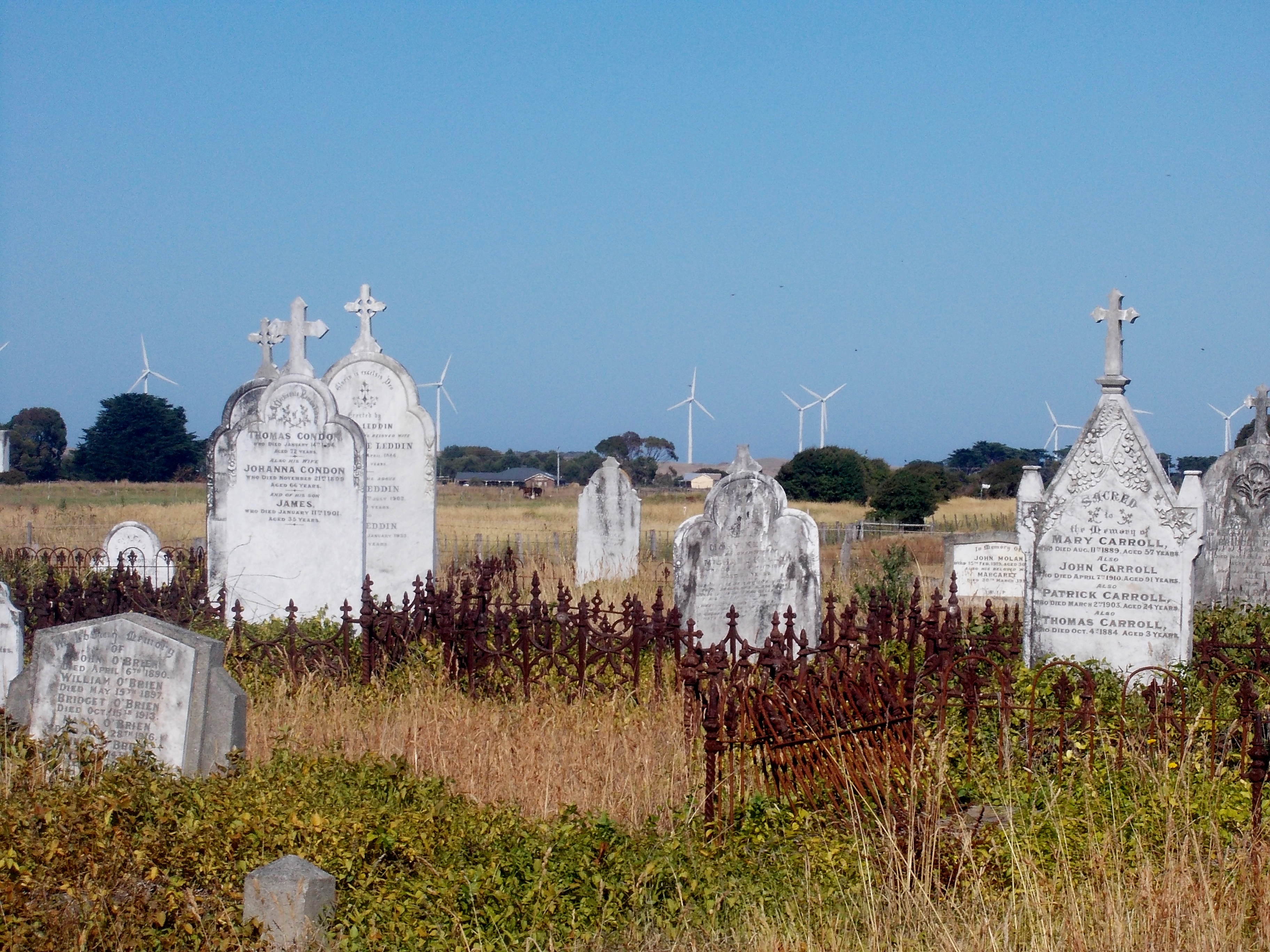
Back in 2015, I stayed a few nights in Yambuk, west of Port Fairy, in a house just down the road from the Yambuk cemetery.  Set on flat land, the headstones at the cemetery were clearly visible from the kitchen window.  Of course, I visited not once but twice. The first time was in the evening but as the headstones all face east, it wasn’t a good time for photos.  I went back just before 10am the next morning with the sun shining on to the front of the headstones. As you scroll through this post, you will guess which photo was taken in the evening. 

While the cemetery was generally clear, around the graves wasn’t and it was difficult to get close to the headstones.  I’ve since seen photos taken by Carol Judkins posted on her Carol’s Headstones Photos Facebook page in 2018 and I’m pleased to say, the graves were at least then, clear to walk around. 

058

The view of the turbines at the nearby Codrington Wind Farm with the headstones in the foreground contrasts the old with the new.

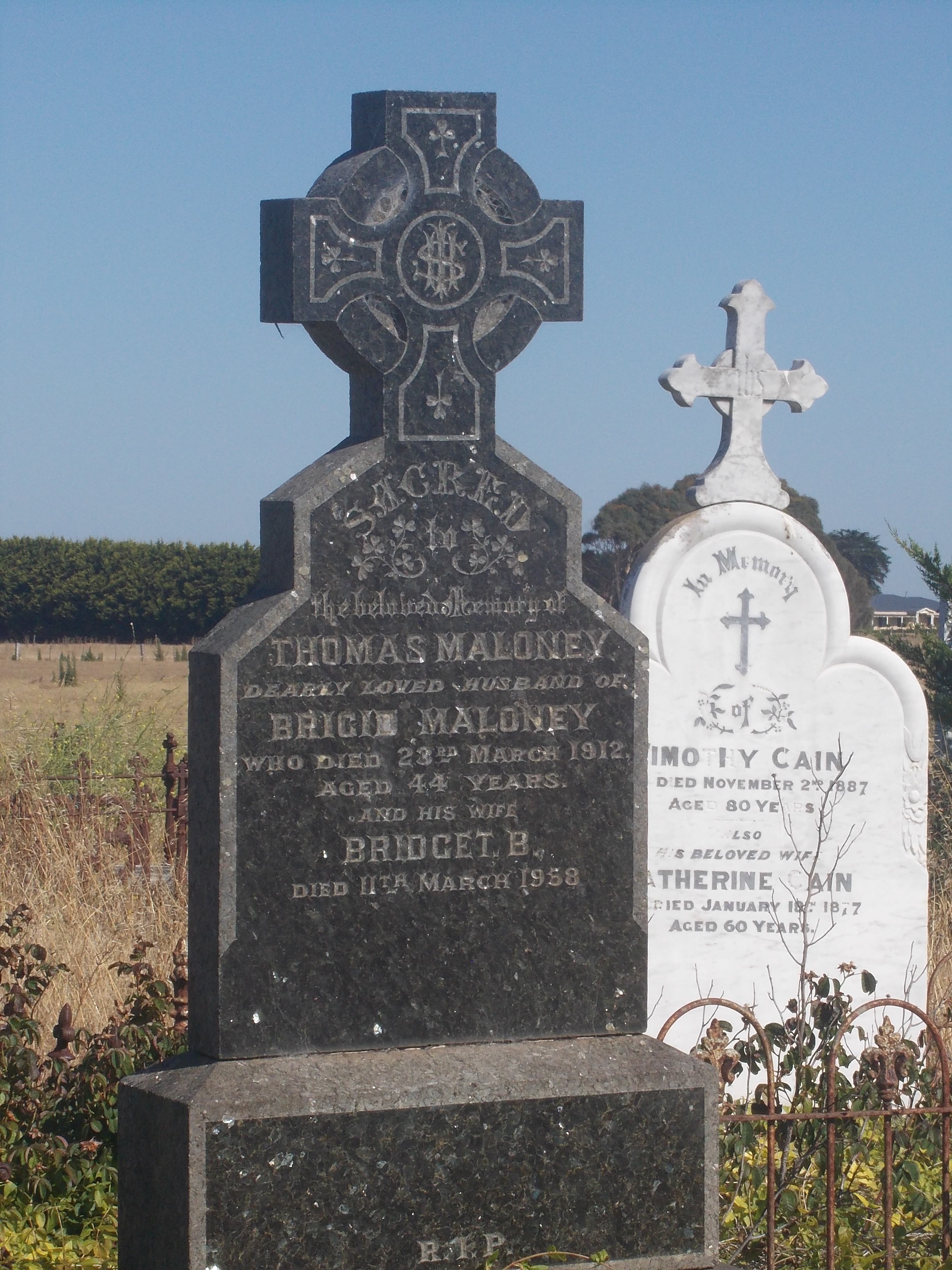
Below you will find the stories behind some of the headstones.   I started writing these stories not long after I got home from Yambuk four years ago with intending to share my post soon after.  However, it wasn’t long before I realised it wasn’t going to be that easy. Those buried in the cemetery are mostly of Irish descent, common for cemeteries in this part of the south-west. There were many people living in the same district with the same or similar name along with variations in spelling. Also, very few of those I chose to write about had newspaper obituaries to help work out who was who.  Also, because I worked off the information on the headstones and not burial records, I can’t guarantee all of those memorialized are buried in the cemetery, I can only assume. It’s not uncommon to find a loved one remembered on a headstone even though their final resting place is elsewhere.

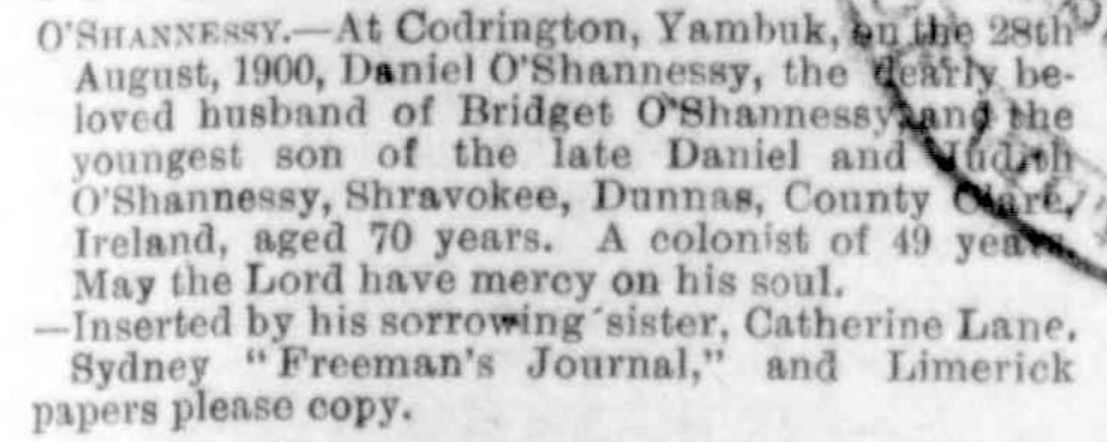
John LEDDIN and his wives Catherine O’SHANNESSY and Mary CARROLL

072

John Leddin was born in Limerick, Ireland around 1842, a son of William Leddin and Johanna Condon.  He arrived at Port Fairy with his parents on Chance in 1857 when he was fifteen, unable to read or write.  In 1866, he appears to have gone to New Zealand.  John was in Victoria in 1876  when he married Catherine O’Shannessy a daughter of John O’Shannessy and Johanna Hurley.  Catherine was born at Yambuk in 1857.  John and Catherine Leddin had five children, the first William in 1878 followed by a further two boys and two girls. The last was Johanna Magdalene Leddin in 1885.  Catherine O’Shannessy died in 1886 aged thirty and was buried at the Yambuk Cemetery, leaving John with five small children, the youngest still a baby.

In 1888, John Leddin remarried to Mary Anne Carroll, a daughter of John Carroll and Mary Crowe. She was born in Victoria in 1851.  John and Mary had three children together, one girl and two boys.

In 1902, while travelling to Port Fairy, John Leddin was thrown out of his buggy landing on the metal road on his head.  He was taken to the Port Fairy Hospital with paralysis, cuts and bruises and died of inflammation of the spinal cord. He was sixty years old.  John was buried with his first wife Catherine at the Yambuk Cemetery.

At the time of his death, John left his widow Mary, six sons, and two daughters.  In 1917, Patrick Leddin, a son of John Leddin and Catherine O’Shannessy was killed in France. In 1933, Mary Carroll died at Crossley and was also buried in the Leddin plot at Yambuk.

I think I came across every possible variation of O’Shannessy while researching this grave.  Catherine’s Victorian BDM’s Birth Index entry has her as Catherine O’Shaughnessy as did the entry for her sibling Matthew.  When Catherine’s brother Daniel died, he was O’Shannassy.  When Catherine died, her father’s name was given as O’Shannessy.   

Daniel and Bridget O’SHANASSY and their grandson Thomas MALONEY

Just as with Catherine O’Shannessy, there were variations in the spelling of Daniel’s surname.  His grave shows O’Shanassy, but his Victorian BDM’s Death index entry, Marriage entry and PROV Probate File show O’Shaughnessy.  Considering Catherine’s (above) birth was registered as O’Shaughnessy we could probably assume O’Shaughnessy was the original spelling for both Daniel and Catherine.

Daniel was born in 1830 in County Clare, Ireland, a son of Daniel O’Shaughnessy and Judith Haden.  Daniel and Bridget settled at Codrington, just west of Yambuk.  Daniel died in 1900 aged seventy.

Family Notices (1900, September 8). Advocate (Melbourne, Vic. : 1868 – 1954), p. 17. Retrieved February 16, 2019, from http://nla.gov.au/nla.news-article169868264

Bridget died in 1907, and like her husband, I can’t be sure of her surname.  Her Death Index entry shows her father was Dryer and her mother unknown, while her daughter Mary’s entry has her mother as Bridget Dwyer.  However, son Daniel Thomas O’Shaughnessy and daughter Frances Judith O’Shaughnessy have Bridget’s maiden name as O’Dwyer on their Birth Index entry.

Thomas Maloney, a grandson of Daniel and Bridget, was born in Port Fairy in 1906. He was a son of John Maloney and Mary O’Shannessy.  He died two weeks later. As mentioned, his mother Mary’s birth was registered as O’Shaughnessy but on Thomas’ birth index entry, Mary was an O’Shannessy.  It’s likely John Maloney was the same John Maloney born to Thomas Maloney and Catherine Ryan in 1870 at Yambuk. More about them next…

Thomas MALONEY, son William MALONEY and mother in law BRIDGET RYAN

maloney3

Thomas Maloney was born in County Clare, Ireland around 1843.  On 9 January 1865, Thomas married Catherine Ryan at Six Mile Bridge, Clare. They left for Victoria in the months after aboard Chariot of Fame arriving at Port Phillip heads on 2 December 1865.

Thomas and Catherine settled at Yambuk and went on to have fourteen children.  Thomas Maloney was forty-eight when he died at Yambuk in 1891. At the time, there were still four children under the age of ten.  Catherine stayed on at Yambuk before moving to James Street, Port Fairy around 1911 to live with her son Daniel. That is where she died in 1916, aged seventy-two. Catherine was buried at the Port Fairy Cemetery.

Thomas and Catherine’s son William was born at Yambuk in 1881. William had been in Wagga spending time with his brother Michael with a view to settling there.  After a couple of months, William was struck down by gastritis and died at the Wagga Hospital in 1912 aged thirty-one. His body was returned to Port Fairy by train and former Port Fairy residents then living in Wagga including members of the Leddin family, were at the station to see his body off.

Also named on the headstone is Bridget Ryan who was Bridget Keogh, Catherine’s mother who died in 1880 aged seventy-two.

Thomas and Bridget MALONEY

maloney2

Thomas Maloney was born in 1867 at Yambuk, a son of Thomas Maloney and Catherine Ryan (above).  He married Bridget Beatrice Devereaux in 1910.  Bridget was born at Port Fairy in 1870. Thomas died on 23 March 1912 at the age of forty-four.  Bridget died in 1958.  There appears to have been no children from the marriage.

John and Bridget RYAN

ryan

John Ryan was a son of Thomas Ryan and Bridget Keogh and brother of Catherine Maloney (nee Ryan) above.  John Ryan was born at County Clare around 1837 and arrived on Eutopia to Adelaide in 1857. He went to Melbourne around 1860 before heading to Yambuk two years later.  In 1867, John married Bridget Ryan.  Bridget was a daughter of Michael Ryan and Hanora Barry and was born in Tipperary, Ireland.  Bridget died in 1895 at the age of fifty-six.  John died on 26 October 1918 aged eighty-one leaving one son, Thomas Ryan.
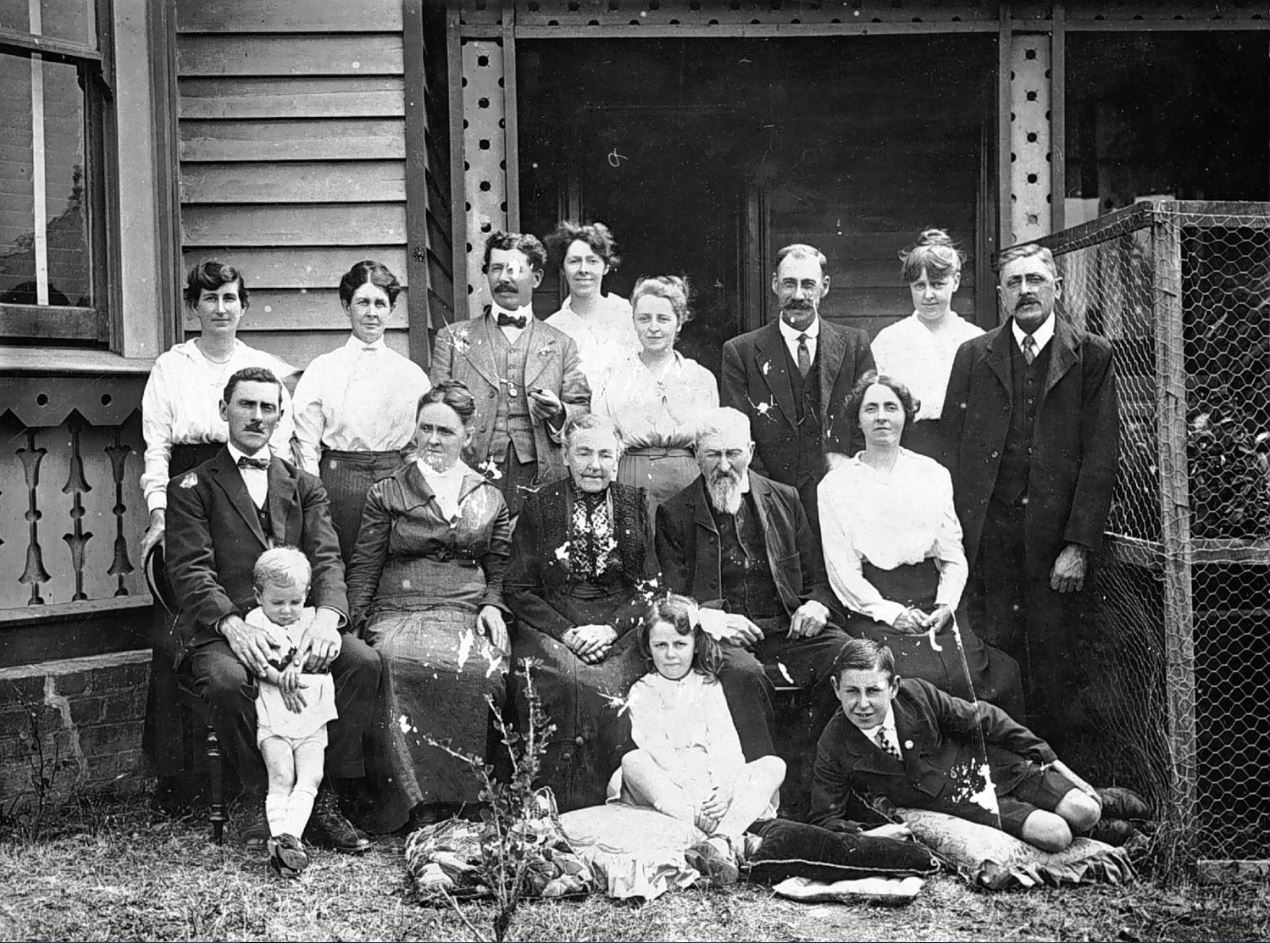
James and Johanna GLEESON and children James, Sarah, William, and Cornelius GLEESON and Mary THOMPSON

gleenson

James Gleeson was born in Ireland around 1841, a son of James Gleeson and Mary Carroll.  He married Johanna O’Donnell in Victoria in 1868. Johanna was also born in Ireland in 1847, a daughter of Michael O’Donnell and Mary Corcoran.  James and Johanna Gleeson had eight children, with five of those remembered on their headstone. Cornelius died in 1891 at Yambuk aged eighteen and William Joseph Gleeson died in 1895 aged seventeen also at Yambuk. Sarah Agnes died in 1899 aged twenty-four at Yambuk.

Mother Johanna died at Yambuk on 23 April 1907.  Five weeks later, the Gleeson family were mourning again.  Son James died in 1907 at Merino aged thirty-two. He was working on a ballast train between Hamilton and Grassdale.  He presented to a Merino doctor with severe stomach cramps after eating tinned fish. He died two days later on 30 May 1907 of food poisoning. He was thirty-two.

Also named on the headstone is a married daughter Mary Gleeson, born in 1869 at Yambuk.  She married Alexander Thompson in 1897 and died in 1902 aged thirty-two.  Mary and Alexander had four children during their short marriage.  Their firstborn Mary died as an infant.  Three further children were born, the last being Agnes in 1901.

James Gleeson died at Port Fairy on 7 July 1911.

Michael and Mary GLEESON and daughter Mary Eileen GLEESON

gleeson2

Mary Gleeson (nee O’Donnell), was a sister of Johanna Gleeson (above).  She was born in 1850 at Kilbane, County Clare, Ireland and arrived in Australia with her parents Michael O’Donnell and Mary Corcoran in 1870.  Mary married Michael Ryan in 1884 and according to Mary’s obituary, they moved first to Gippsland and then on to Melbourne where Michael ran a greengrocer store in Spencer Street.  They had one son William Michael Ryan, born in 1885. Michael died in 1888 aged around sixty-four. 

After Michael Ryan’s death, Mary married Michael Gleeson in 1890 and they took up land at Yambuk. Michael Gleeson was born around 1831.  His Death Index record shows he was a son of James Gleeson and Elizabeth Carroll but seeing as James Gleeson above was a son of a James Gleeson and Mary Carroll, it may well be Mary Carroll was also Elizabeth meaning Michael and James Jr. were brothers…who married sisters…now I’m confused and no doubt you are too.

Michael and Mary had a daughter, Mary Eileen who was born in 1891 but died sixteen days later.  A son Michael was born in 1902. Michael Gleeson Sr died in 1910.  Mary lived in Fingerboard Road, Yambuk the same road as the cemetery.  She died on 18 February 1951 at Warrnambool the age of 100.  She was photographed in 1947 with another old resident of Yambuk, Michael O’Brien (below).

Yambuk and Tyrendarra (1947, May 7). Weekly Times (Melbourne, Vic. : 1869 – 1954), p. 18. http://nla.gov.au/nla.news-article223916656

gleeson1

Being a glutton for punishment, I’m writing a Yambuk Cemetery Part 2 post and it’s proving no easier than this one.  Hopefully it won’t take four years to write though so keep an eye out for it in the (hopefully near) future.