Trove Tuesday – The Hamilton Ghost

I have previously written about paranormal activities in Hamilton for Trove Tuesday when residents thought War of the Worlds had come to town.  Now I bring you the story of the Hamilton ghost.  Well, actually four stories but not all of the same ghost, and on one occasion, the Hamilton apparition drifted out of town to Macarthur.

What I like about these stories is that the ghosts were not the transparent style of apparition, but rather the classic white sheet type made popular by 19th-century theatre.  There is a varying amount of tongue-in-cheek used in the reporting, but on each occasion, several people were scared out of their wits.

1941

hg

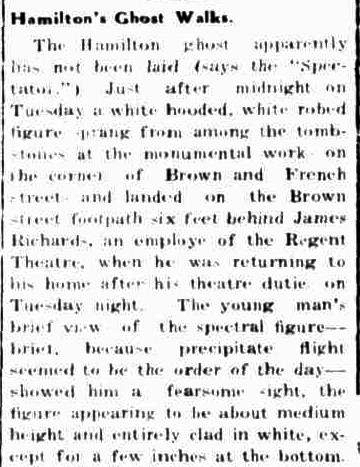
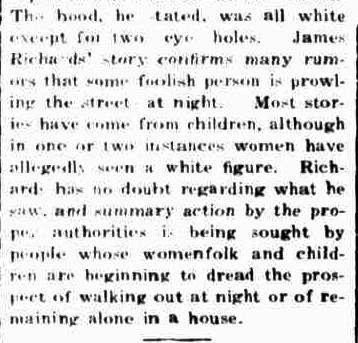
Hamilton's Ghost Walks. (1941, July 21). Portland Guardian (Vic. : 1876 - 1953), p. 2 Edition: EVENING. Retrieved February 18, 2013, from http://nla.gov.au/nla.news-article64401002

Hamilton’s Ghost Walks. (1941, July 21). Portland Guardian (Vic. : 1876 – 1953), p. 2  http://nla.gov.au/nla.news-article64401002

1922

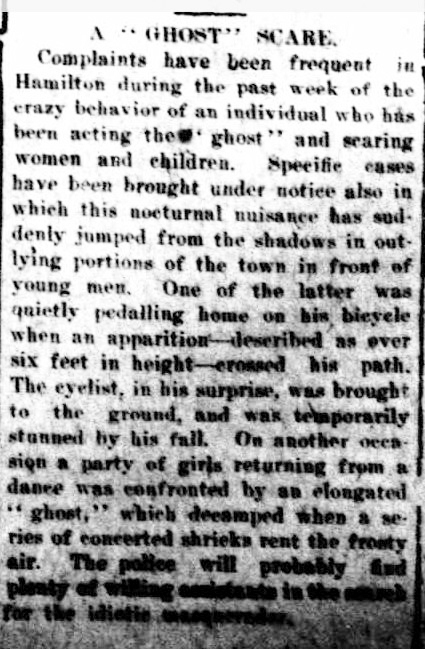
A "GHOST" SCARE. (1922, June 6). The Horsham Times (Vic. : 1882 - 1954), p. 4. Retrieved February 19, 2013, from http://nla.gov.au/nla.news-article72732250

A “GHOST” SCARE. (1922, June 6). The Horsham Times (Vic. : 1882 – 1954), p. 4.  http://nla.gov.au/nla.news-article72732250

1904

PLAYING THE GHOST. (1904, December 29). Hamilton Spectator (Vic. : 1870 – 1918), p. 2.  http://nla.gov.au/nla.news-article225883919

1898

Established August 1842. (1898, September 14). Portland Guardian (Vic. : 1876 - 1953), p. 2 Edition: EVENING. Retrieved February 19, 2013, from http://nla.gov.au/nla.news-article63674221

 (1898, September 14). Portland Guardian (Vic. : 1876 – 1953), p. 2  http://nla.gov.au/nla.news-article63674221

Trove Tuesday – Bush Valentine

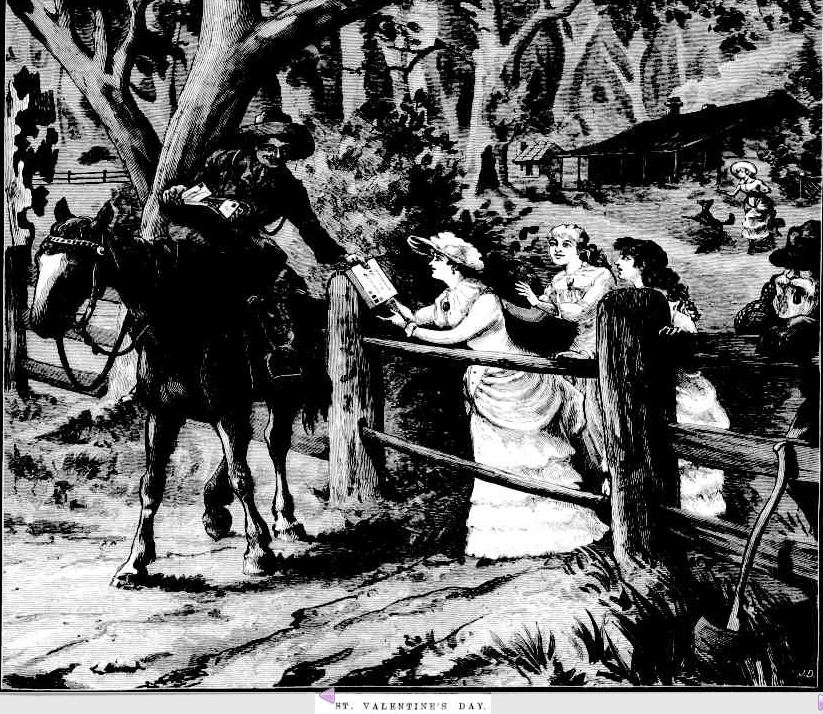
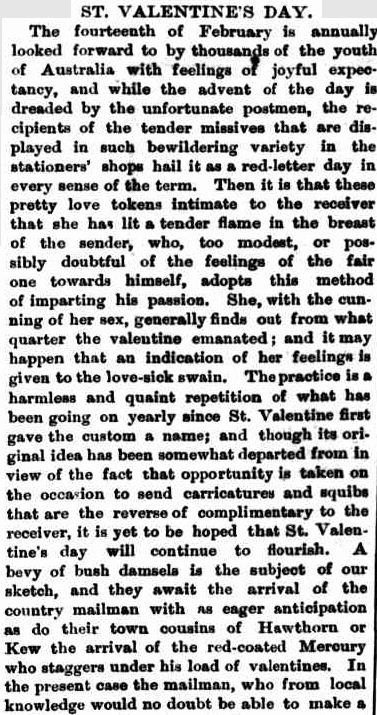
It’s two days early but this week’s Trove Tuesday has a Valentine’s Day theme.  From the Illustrated Australian News of 21 February 1883, comes “Bush Valentine”.  Valentine’s Day was not the postman’s favourite day of the year as his workload increased significantly but whether he came by horse or bicycle, his arrival caused great excitement.

OUR ILLUSTRATIONS. (1883, February 21). Illustrated Australian News (Melbourne, Vic. : 1876 - 1889), p. 17. Retrieved February 10, 2013, from http://nla.gov.au/nla.news-article63186253

OUR ILLUSTRATIONS. (1883, February 21). Illustrated Australian News (Melbourne, Vic. : 1876 – 1889), p. 17. Retrieved February 10, 2013, from http://nla.gov.au/nla.news-article63186253


valday1

valday2

“OUR ILLUSTRATIONS.” Illustrated Australian News (Melbourne, Vic. : 1876 – 1889) 21 Feb 1883: http://nla.gov.au/nla.news-article63186253

Trove Tuesday – Gilding The Lily

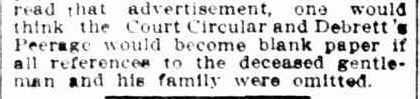
This week’s Trove Tuesday article first came to my attention in The Ararat Advertiser.  It was barely legible but luckily the Gippsland Mercury ran the same story on February 24, 1914.

obit

OBITUARY FRILLS. (1914, February 24). Gippsland Mercury (Sale, Vic. : 1914 - 1918), p. 4. Retrieved February 2, 2013, from http://nla.gov.au/nla.news-article88665863

OBITUARY FRILLS. (1914, February 24). Gippsland Mercury (Sale, Vic. : 1914 – 1918), p. 4. Retrieved February 2, 2013, from http://nla.gov.au/nla.news-article88665863


Trove Tuesday – Longevity

From the Portland Guardian of January 4, 1951, comes some longevity facts.

One of the families in the article are the Guthridges of Carapook and Charam.  It was the story of the patriarch of this family,  Richard Charles Guthridge, that inspired me to hit the microfiche readers around 20 years ago and begin the search for my family.  The Herald-Sun ran an article about Richard and his long-lived family.  Nana cut it out as it mentioned the married names of the Guthridge girls with Hadden, Nana’s maiden name, one of them.

Of course, we thought we must be related to this great pioneer in some way.  Well we weren’t.  My Haddens were from Scotland and the Hadden boys, James and William, that married into the Guthridge family were from Ireland.  Maybe the Irish Haddens could have been originally Scots, but as I would have to go back to the early 1800s,  I don’t think I’m that desperate to find a distant link.

The article gives the total age of ten members of the Guthridge family as 768 years.  It also mentions the Humphries family of Hamilton with an average age of 60.


LONGEVITY IN FAMILIES. (1951, January 4). Portland Guardian (Vic. : 1876 - 1953), p. 3 Edition: MIDDAY.. Retrieved January 28, 2013, from http://nla.gov.au/nla.news-article64427264

LONGEVITY IN FAMILIES. (1951, January 4). Portland Guardian (Vic. : 1876 – 1953), p. 3 Edition: MIDDAY.. Retrieved January 28, 2013, from http://nla.gov.au/nla.news-article64427264

There is no doubt that the Guthridge family, with all 10 siblings alive when the youngest was 68 ( Richard lived to 95), was a big effort, but is the Humphries family average remarkable?

When I look at my families, most of them have had siblings that died at a young age and as far we know, all the Humphries were alive in 1951, with the youngest 50.

When I  averaged the ages of  the Harman children that came to Australia, using their age in the year of  brother James Harman’s death, aged 86, I get an average age of 75.  Fantastic, but I cheated because Reuben died in 1883 and I didn’t count his age or the siblings that died before the family left England.  The Harmans have, however, also had an article published about their longevity.

    Family's Longevity. (1929, September 10). Advocate (Burnie, Tas. : 1890 - 1954), p. 5. Retrieved December 19, 2011, from http://nla.gov.au/nla.news-article67674788

Family’s Longevity. (1929, September 10). Advocate (Burnie, Tas. : 1890 – 1954), p. 5. Retrieved December 19, 2011, from http://nla.gov.au/nla.news-article67674788

The Hadden family is a little more accurate.  If I average the ages in the year the first sibling  passed away, Margaret in 1927, I get an average age of 69.  That’s really good.  The ages were 80, 77, 74, 66, 63, 55.   My gg grandfather William was the 80-year-old and he was still working at Mokanger Station at that time.

Have I sent you scurrying for the calculator?  Let me know your best average age.

Trove Tuesday – Snake Tales

Browsing my Trove tags for this week’s post, the tag “Snake sixteen feet” attracted my attention.  The item was this snippet from The Argus of 29 February 1864 (obviously a leap year).

CRIMINAL SESSIONS. (1864, February 29). The Argus (Melbourne, Vic. : 1848 - 1956), p. 6. Retrieved January 22, 2013, from http://nla.gov.au/nla.news-article5744916

CRIMINAL SESSIONS. (1864, February 29). The Argus (Melbourne, Vic. : 1848 – 1956), p. 6. Retrieved January 22, 2013, from http://nla.gov.au/nla.news-article5744916

Since I’ve seen two snakes this season after going many years without having seen one, the sixteen-foot snake seemed like an appropriate Trove Tuesday subject.  I searched Trove for “snake sixteen feet”.  I then narrowed the results down to 1864 but first I noted how many articles came up with the words “snake sixteen feet”.  A lot actually, making me think that just like hailstones are always the “size of golf balls”, snakes were once always sixteen feet long.

I did find more about the snake that was making its presence felt at Mount Fyans Station north of Mortlake.

THE GOVERNMENT GAZETTE. (1864, February 23). The Star (Ballarat, Vic. : 1855 - 1864), p. 4. Retrieved January 22, 2013, from http://nla.gov.au/nla.news-article72513798

THE GOVERNMENT GAZETTE. (1864, February 23). The Star (Ballarat, Vic. : 1855 – 1864), p. 4. Retrieved January 22, 2013, from http://nla.gov.au/nla.news-article72513798

I wonder if they ever did get to measure the “monster”?


Trove Tuesday – Aladdin’s Cave

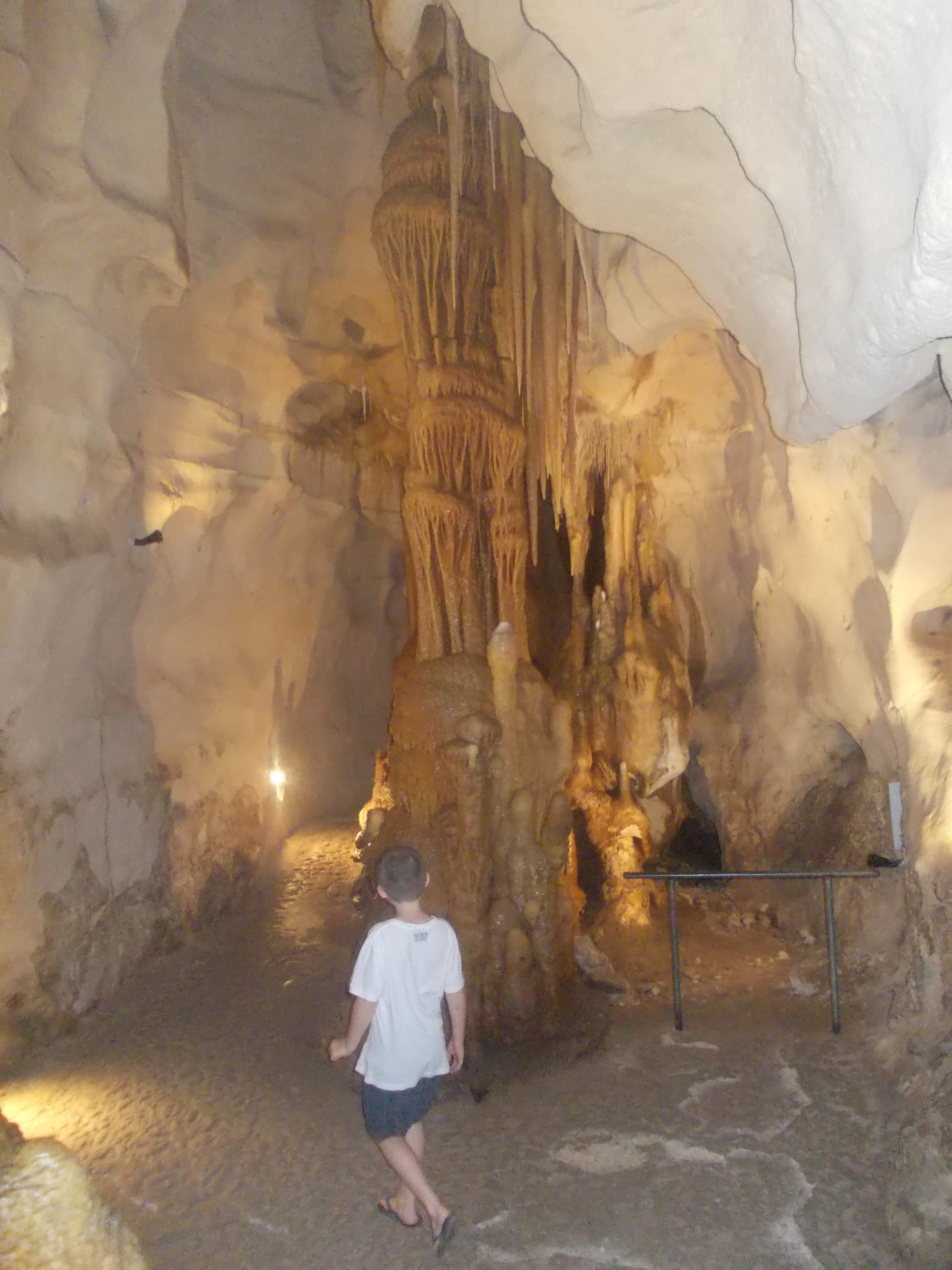
While holidaying at Nelson recently, we went on a guided tour of the nearby Princess Margaret Rose Cave.  It is a fascinating collection of stalactites and stalagmites formed over millions of years from water seepage from the Glenelg River.

008 (2)

The story we heard of the discovery of the caves could have been straight from a Boys Own Annual.  It was found in 1936 by two young men.  One was lowered into a 17 metre dark hole with only a candle, matches and string.  When he returned to the top his comment was something like “I think I have found Aladdin’s cave” .

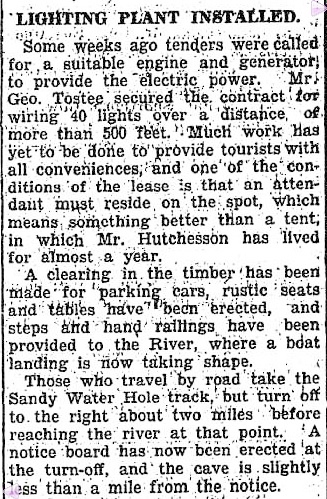
Because it is such a great story, I though I would search Trove for articles from the time of the cave’s opening to the public in 1941.  I found two worth sharing from the Border Watch of Mt Gambier and the Horsham Times.

pmrcpmrc1pmrc2pmrc3pmrc4

pmrc6

New Cave Opened Near Sandy Water Hole. (1941, January 18). Border Watch (Mount Gambier, SA : 1861 – 1954), p. 3. Retrieved January 15, 2013, from http://nla.gov.au/nla.news-article78138417

034

The story from the Horsham Times, claims Jack and Keith as Horsham men, but that is not indicated at all in the Border Watch article that states Jack Hutchesson had lived all his life at Caroline, near Nelson.   I did check the Electoral Rolls and there were Hutchessons living in Horsham over the years.   The Horsham Times does give a good account of the discovery of the caves.

pmrc9

pmrc10

GLENELG RIVER HAS ATTRACTIVE CAVES. (1941, February 14). The Horsham Times (Vic. : 1882 – 1954), p. 1. Retrieved January 14, 2013, from http://nla.gov.au/nla.news-article72689203

What I did learn from the articles was that Jack and Keith were quite a bit older than the impression given on the guided tour.  We left with a picture of two lads, maybe 15 or 16,  when in fact they had Jack’s sons with them.   Otherwise it was a fun and informative tour and highly recommended.

Trove Tuesday – In the News

The newspaper articles I have shared each week for Trove Tuesday are similar to those I choose for the spasmodic “In the News” posts.  There are now 21 in total (TT is drawing close with 19 posts), so I thought I would share a few of my favourites for this week’s Trove Tuesday.

September 23, 1870 – Fire swept through Hamilton’s main street, Gray Street.

The Bushfire series – February 8-13 1901, January 13, 1905, January 19, 1944

December 8, 1909 – The Grampians Bunyip

November 16, 1929 – Less than 12 months after my gg uncle, Charles James Harman flew on the airship R101, it crashed over France.

June 16, 1881 – Ploughing matches from Byaduk and beyond.

Trove Tuesday – Happy New Year

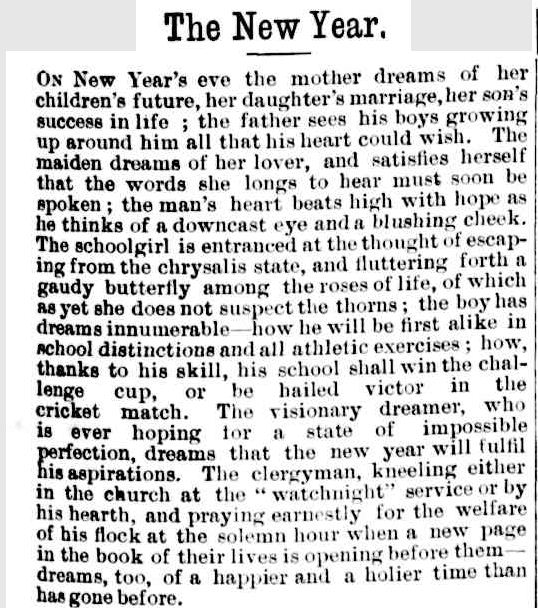
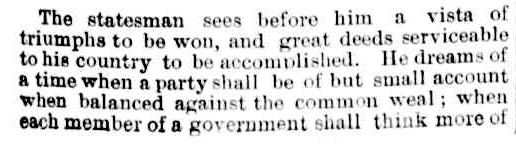
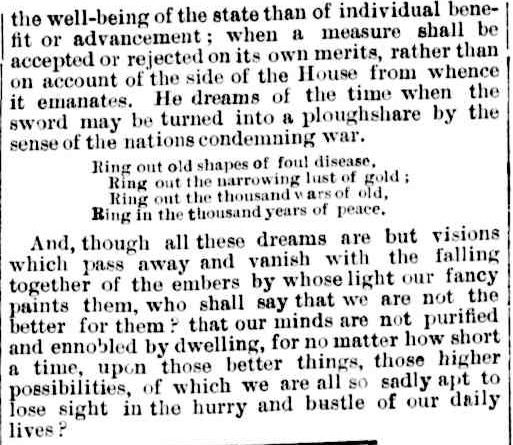
Christmas Day last week, New Year’s Day this week, so keeping to the theme the focus of Trove Tuesday today is the arrival of a New Year, thanks to the  Australian Town and Country Journal of December 29, 1877.

tt13tt14tt15

tt12

The New Year. (1877, December 29). Australian Town and Country Journal (NSW : 1870 - 1907), p. 17. Retrieved December 28, 2012, from http://nla.gov.au/nla.news-article70611654

The New Year. (1877, December 29). Australian Town and Country Journal (NSW : 1870 – 1907), p. 17. Retrieved December 28, 2012, from http://nla.gov.au/nla.news-article70611654

Trove Tuesday – Happy Christmas

It’s Christmas Day and Trove Tuesday so of course I had to find a Christmas treasure.  It seems right the two share a day as every day researching at Trove is like Christmas Day!

Although I have spent the past two weeks presenting Christmas from the 1900s to the 1950s with the help of newspapers articles from Trove, there are still many Christmas treasures waiting to be found.  I narrowed it down to two favourites and since it is Christmas, I thought I would share both.

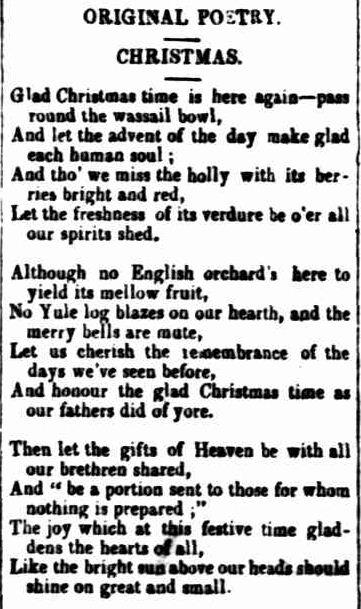
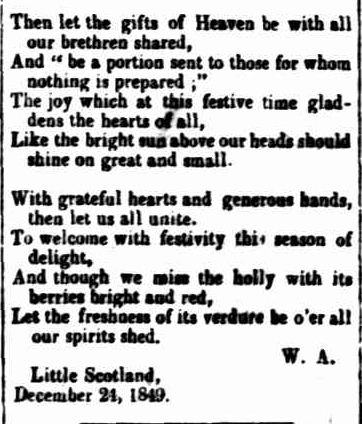
The first item is a poem from the Geelong Advertiser of December 26, 1849.  The poet, “W.A” was from Little Scotland, Geelong.  Little Scotland later formed what is Geelong West today. During the 1840s the  Gamble family lived in nearby Kildare, which also became Geelong West.


tt10

ORIGINAL POETRY. (1849, December 26). Geelong Advertiser (Vic. : 1847 - 1851), p. 2 Edition: MORNING. Retrieved December 24, 2012, from http://nla.gov.au/nla.news-article93137755

ORIGINAL POETRY. (1849, December 26). Geelong Advertiser (Vic. : 1847 – 1851), p. 2 Edition: MORNING. Retrieved December 24, 2012, from http://nla.gov.au/nla.news-article93137755


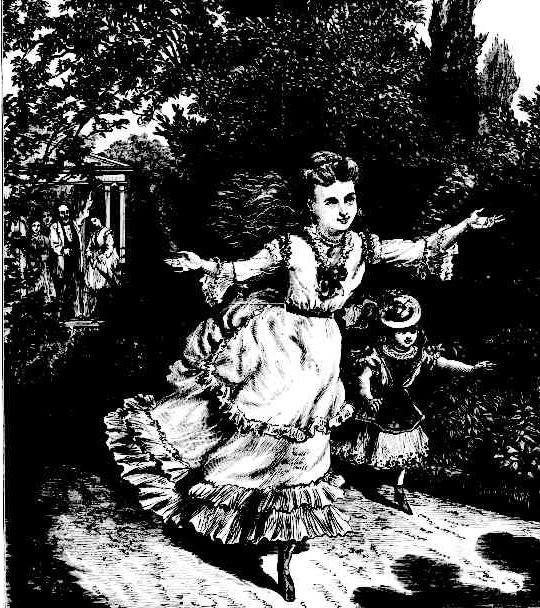
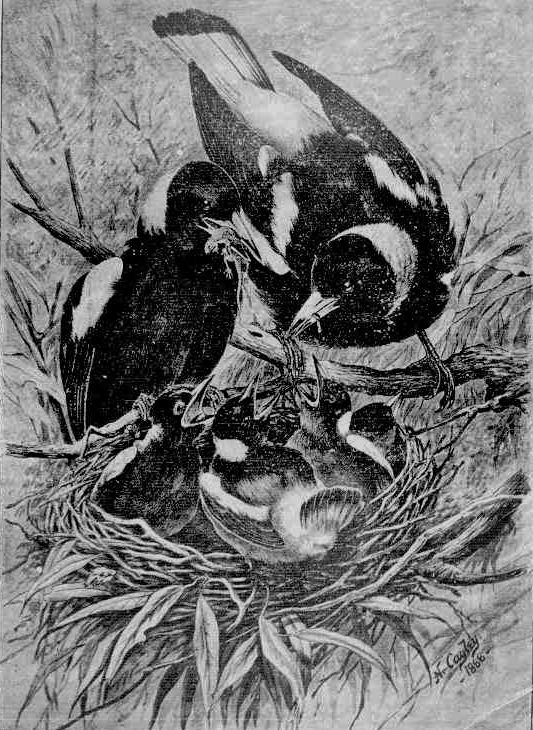
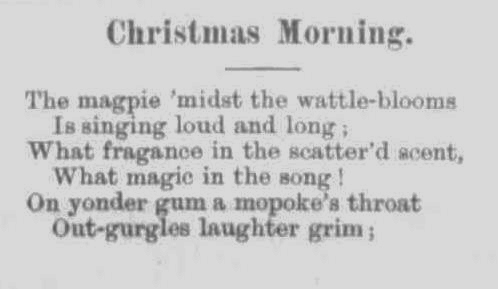
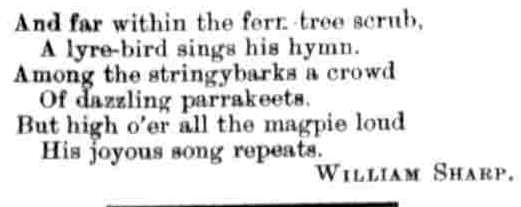
As one of my favourite Trove Tuesday posts was about a magpie and they are one of my favourite birds, I couldn’t go past this next item from the Australian Town and Country Journal (NSW) of December 22, 1888.  A beautiful drawing and a Christmas poem to match.


tt5tt8

Christmas Morning. (1888, December 22). Australian Town and Country Journal (NSW : 1870 - 1907), p. 23. Retrieved December 23, 2012, from http://nla.gov.au/nla.news-article71105801

Christmas Morning. (1888, December 22). Australian Town and Country Journal (NSW : 1870 – 1907), p. 23. Retrieved December 23, 2012, from http://nla.gov.au/nla.news-article71105801


MERRY CHRISTMAS

Trove Tuesday – Buried Treasure

For a family historian, great-great-grandfather Culmer White is good value because he liked to write a letter.  On  Trove Tuesday 2 October, I shared a letter Culmer wrote to the papers thanking the Reverend who married him to Alice Hunt.

Only months before his death, an article in The Argus of 13 January 13 1938, stirred up memories from almost sixty years before when he was only twenty-two. His memory may have failed him a little as you will discover.

Firstly some background into the story.  In July 1877, a Martin Wiberg stole over 5,000 freshly minted gold sovereigns from the steamer Avoca on a trip from Sydney to Melbourne.  He was not initially suspected and was able to cart the sovereigns, hidden in bars of soap, close to Inverloch, Gippsland.

In October 1878,  police captured him, only to have him escape again while supposedly leading them to his stash of sovereigns.  In May 1879, police caught up with him again  and he served out his term in Pentridge, which was only around four years.  He was then believed to have drowned in the sea off Inverloch after his boat was found.  In 1897, his name hit the papers again when a Melbourne resident on holiday, made conversation with him in  Sweden.

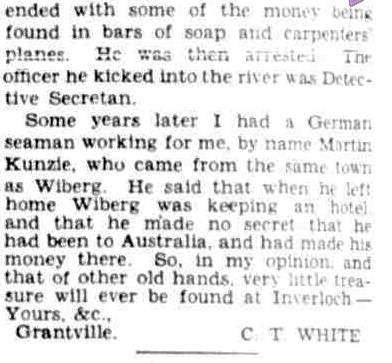
And so to Culmer’s letter published in The Argus on 22 January 22 1938.  It was one of two letters on that day devoted to Wiberg’s case.
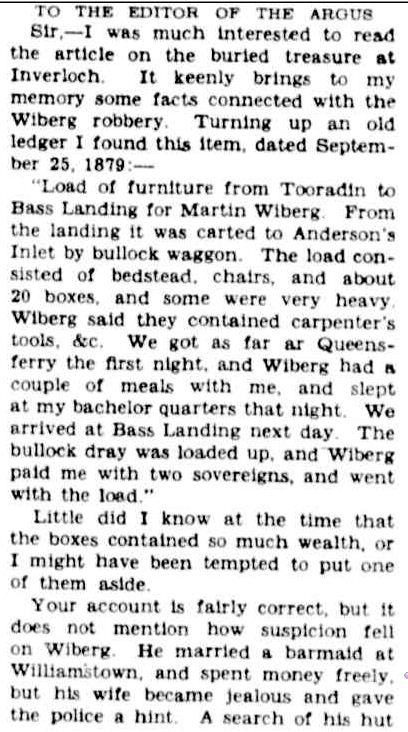
cw3

LETTERS FROM THE EDITOR'S POST-BAG. (1938, January 22). The Argus (Melbourne, Vic. : 1848 - 1956), p. 20 Supplement: The Argus Week-end Magazine. Retrieved December 17, 2012, from http://nla.gov.au/nla.news-article11142515

LETTERS FROM THE EDITOR’S POST-BAG. (1938, January 22). The Argus (Melbourne, Vic. : 1848 – 1956), p. 20 Supplement: The Argus Week-end Magazine. Retrieved December 17, 2012, from http://nla.gov.au/nla.news-article11142515

Culmer wrote when he checked back in his ledger of 25 September 1879 he found the job for Martin Wiberg.  On this date, Wiberg would have been in Pentridge after his recapture.  Maybe it was an error while writing the letter and he really he meant 1878 at which time Wiberg was still at large as he was arrested for the first time in October 1878.  Prior to his first arrest, Wiberg would have moved the sovereigns, but it is unlikely he would have done that during his second stint on the run in 1879.

While I was going back over this letter for the purpose of this post, I thought I would check if there were more “Letters to the Editor” on the Wiberg matter, hoping there may have been a rebuttal to Culmer’s letter in the following weeks.  A rebuttal did come on February 12 from J.T.M. of Canterbury.  He began by criticising the other letter published on the same day as Culmer’s.  He then turned his attention to Culmer:
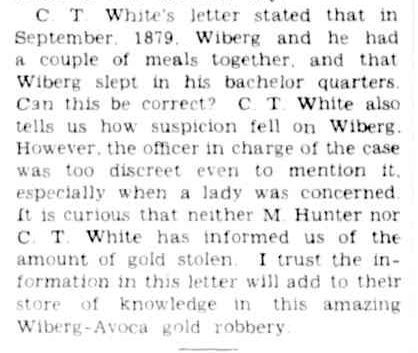
THE EDITOR'S POST-BAG. (1938, February 12). The Argus (Melbourne, Vic. : 1848 - 1956), p. 18 Supplement: The Argus Week-end Magazine. Retrieved December 17, 2012, from http://nla.gov.au/nla.news-article11148112
THE EDITOR’S POST-BAG. (1938, February 12). The Argus (Melbourne, Vic. : 1848 – 1956), p. 18 Supplement: The Argus Week-end Magazine. Retrieved December 17, 2012, from http://nla.gov.au/nla.news-article11148112

This story has so many twists and turns and newsletters from the Inverloch Historical Society in 2000, state that a local man, Samuel Laycock, may have been an accomplice to Wiberg.  One day, some day, when I have time, I will put all the articles about this case on a Trove list.

It doesn’t matter that Culmer’s memory may have been fuzzy, the article once again demonstrates his lovely style of letter writing and good on him for keeping ledgers for over sixty years.  I wonder where they got to?  It also confirmed for me his presence in Gippsland during the late 1870s.  He married Alice in 1881 at Fern Hill, Gippsland.  Before I found the letter, I didn’t know where he was prior to 1881 or when he arrived in Australia from Kent.  I have found some newspaper articles that have lead me to believe he may have “jumped ship” in 1875, but I’ll save that for another Trove Tuesday.

Of course, when I found Culmer’s letter I sent a copy to his granddaughter, my great-auntie Jean and like the previous letter, it brought back fond memories of her grandfather.