Take A Photo – Old Nugget

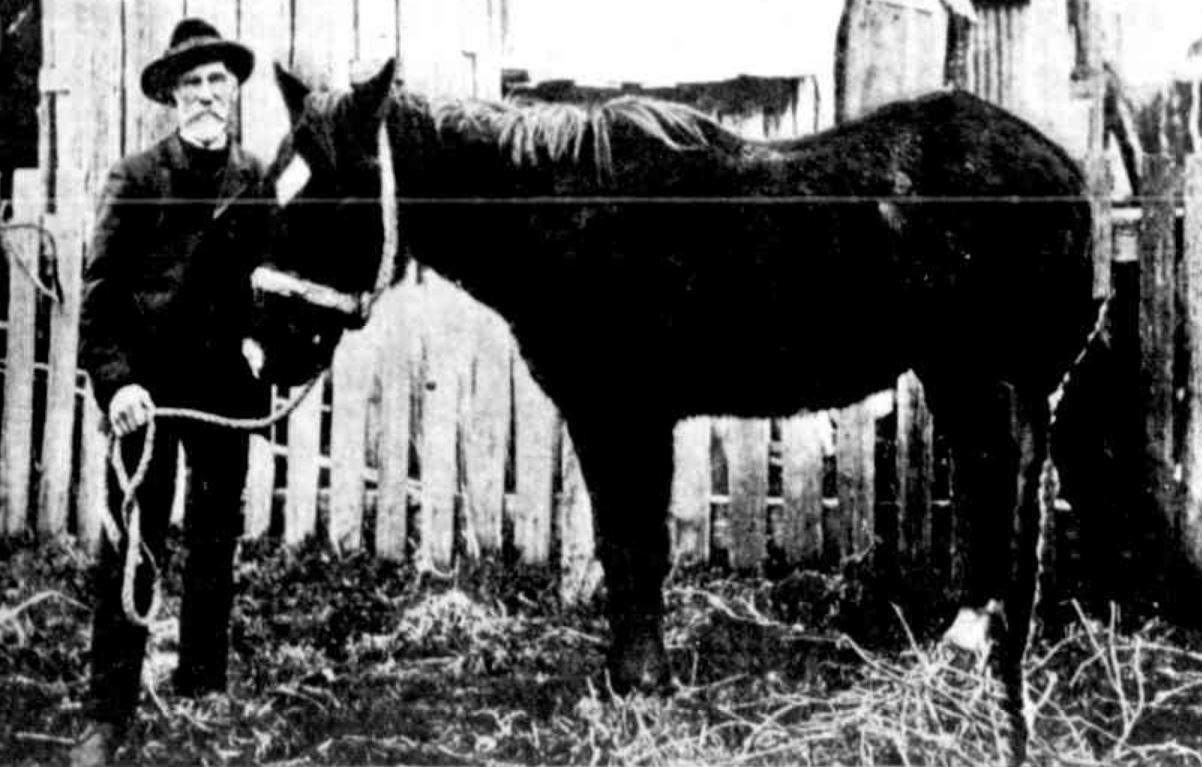
Welcome to another Take a Photo post about a man and his horse. The State Library of Victoria holds the photo below, taken on 14 February 1905. It reveals a wonderful story about a horse called Nugget and its owner, Richard Heath.

Image courtesy of the State Library of Victoria http://handle.slv.vic.gov.au/10381/280870

What caught my eye about the photo was that Nugget was a son of thoroughbred King Alfred, one of the most prolific sires in the Western District in the 1850s and 1860s.
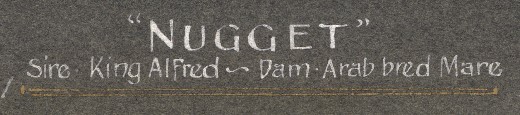
I also noticed Nugget’s age at his death was forty-six, way past the average life expectancy of a horse and placing him among the oldest horses to have lived in Australia.

King Alfred sired horses for racing, hunting, harnessing, and hacking. Within a few decades, many horses in the Western District and beyond had King Alfred’s bloodlines. Richard Lewis of Rifle Downs near Casterton imported the horse that arrived on the Severn and docked at Portland on 30 December 1854. Led from a small boat, he swam ashore with Clydesdale stallion Agronomer, another Richard Lewis purchase, who also left his mark in the Western District. King Alfred stood at Rifle Downs during the next breeding season for fifty guineas per mare.

“Advertising” Portland Guardian and Normanby General Advertiser, 20 August 1855, p 1 http://nla.gov.au/nla.news-article71572677

“KING ALFRED.” Australian Town and Country Journal  12 November 1870, p. 24. http://nla.gov.au/nla.news-article70463151

King Alfred‘s progeny became acclaimed throughout the colony. Poet and steeplechaser rider Adam Lindsay Gordon wrote of him in his 1867, publication Sea Spray and Smoke Drift in the poem The Fields of Coleraine,

Alfred ought to be there, we all of us swear By the blood of King Alfred, his sire; He’s not the real jam, by the blood of his dam, So I shan’t put him down as a flyer.

And again in a poem Verses inspired by My Old Black Pipe, apparently unpublished…

What cheers for King Alfred’s white-faced son Were heard when the Western chase was done,

King Alfred died in 1873, and news of his death reverberated around the country. His most famous offspring was the mare Mermaid, who won the 1871 Sydney Gold Cup for Edward Twomey of Penshurst. And then there was Nugget.

There are two stories of how dentist Richard Heath of Geelong came to own a King Alfred colt. One was that he owned an Arab mare in foal to King Alfred. He sold the in-foal mare to Dr Foster Shaw, the Geelong coroner, with the agreement being Richard would keep the foal. The other story was that while caring for the mare, owned by E.C. Moore, Mr. Moore insisted Richard take possession of the progeny.

However it came to be, Richard was likely the first person to see the foal, born on 17 November 1860, whom he named Nugget. And there began a forty-year relationship.

Richard and Nugget went everywhere together. When Richard was in his role as commander of the Geelong Volunteer Artillery Corps, it was on Nugget. He rode or drove Nugget from Melbourne to Shepparton several times and used him to muster cattle. One exception was yachting, a great love of Richard, but something he and Nugget couldn’t share. Richard was, at one time, the vice-commodore of the Royal Yacht Club.

By the 1880s, Richard and Nugget lived in Apollo Bay, at Heathfield estate on the Barham River flats overlooking Mounts Bay.
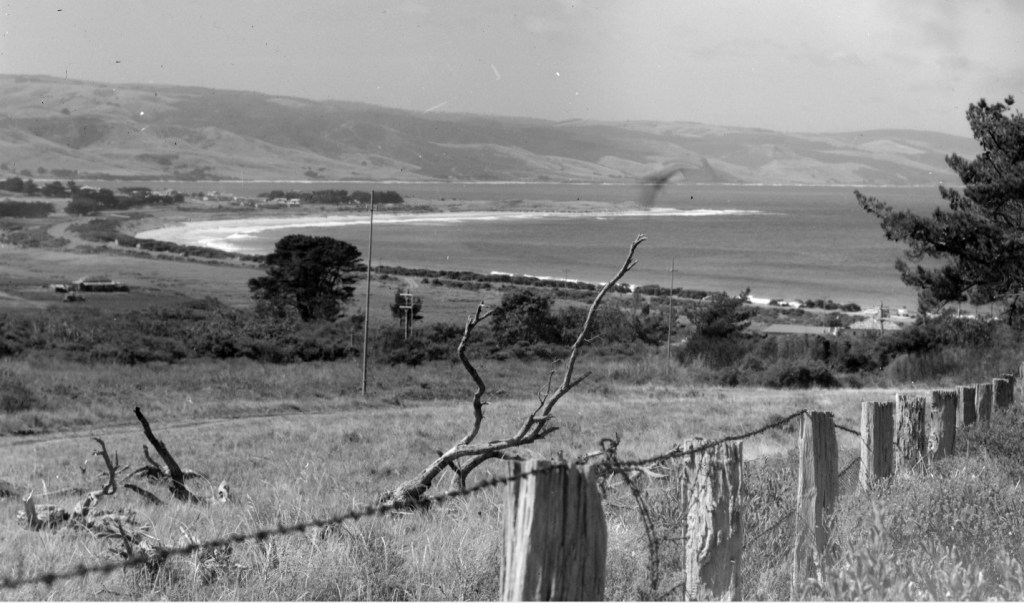
MOUNTS BAY FROM CEMETERY HILL. Image courtesy of the State Library of Victoria http://handle.slv.vic.gov.au/10381/66827

Richard selected the land in 1860 after walking along the coast from Barwon Heads to Apollo Bay. You can see “R. Heath” on his allotment on the parish plan below, along with current-day uses for the land.
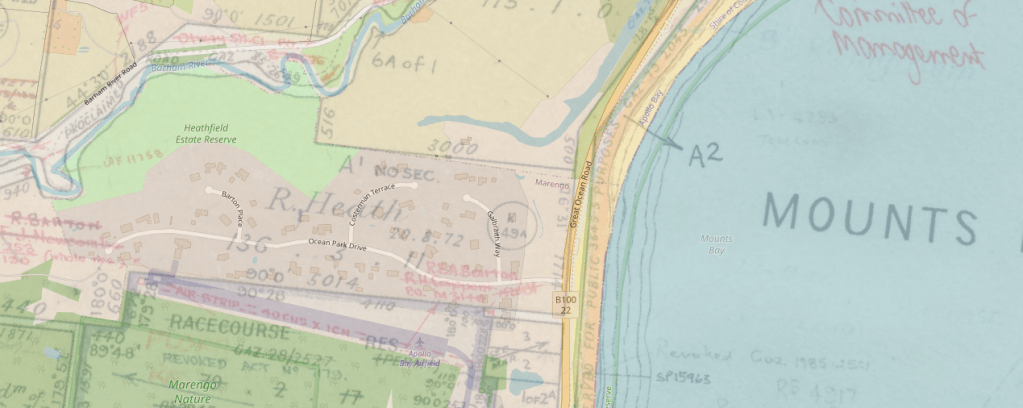
KRAMBRUK PARISH PLAN. Public Record Office of Victoria, VPRS 16171,

Nugget reached 44 in 1904 and was attracting some attention.

No title (1904, October 17). The Ballarat Star, p. 2. http://nla.gov.au/nla.news-article208512144
LIEUTENANT-COLONEL HEATH AND HIS HORSE NUGGET. (1905, February 4). The Australasian, p. 33 http://nla.gov.au/nla.news-article140779415

Nugget’s long life ended on 29 August 1906, less than three months short of his 46th birthday. Richard’s friends knew his attachment to the horse and arranged a photo as a special memento, and that photo is the subject of this post.
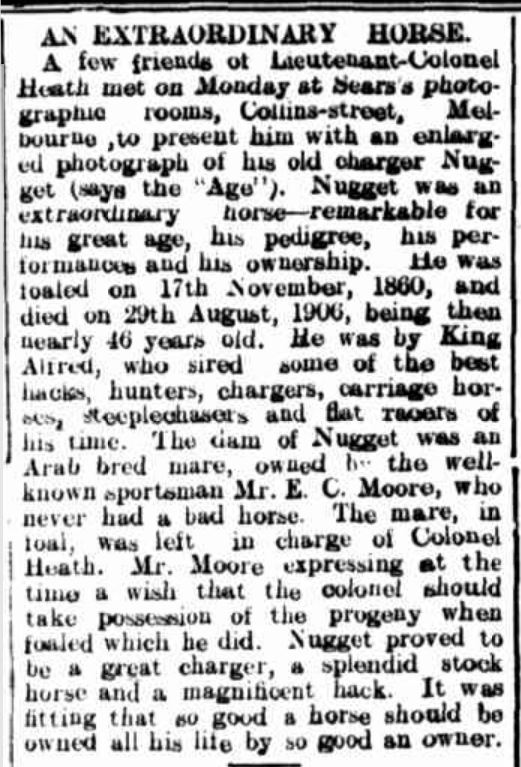
AN EXTRAORDINARY HORSE. (1906, November 3). Wagga Wagga Express , p. 2. http://nla.gov.au/nla.news-article142125717

The back of the commemorative photo is interesting, with the names of those who subscribed to a copy of the photo.
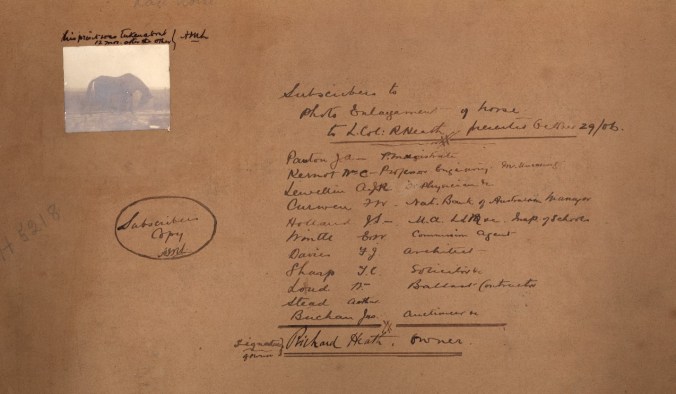
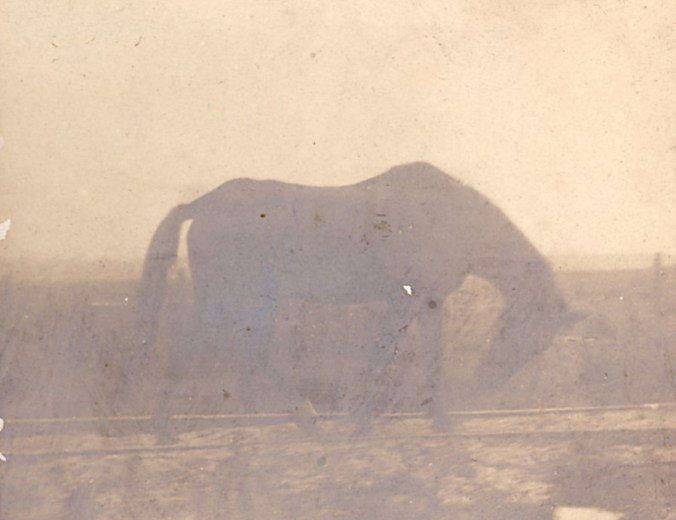
It includes Richard’s signature and a small photo of Nugget, with the caption, “This print was taken 12 mos. (sic) after the other”.
After a spell of hot weather, Richard Heath died on 27 December 1917 at home on Flemington Road, North Melbourne. His life had headed aged 86, but the story of “Old Nugget” and Richard lived on as this article from 1933 attests, despite the facts being slightly stretched.
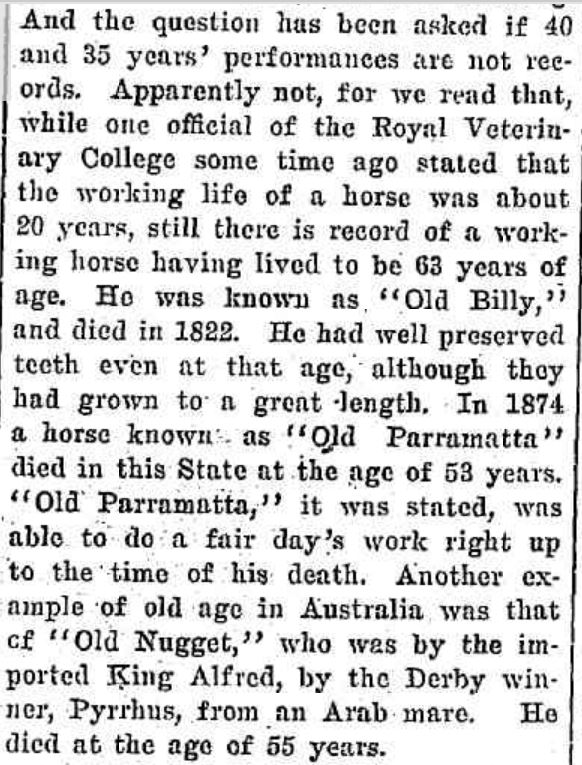
LONG LIVED EQUINES (1933, February 17). The Richmond River Herald and Northern Districts Advertiser, p. 5. http://nla.gov.au/nla.news-article127175164

Previous “Take a Photo” posts:

Take A Photo-Bazil & Ran

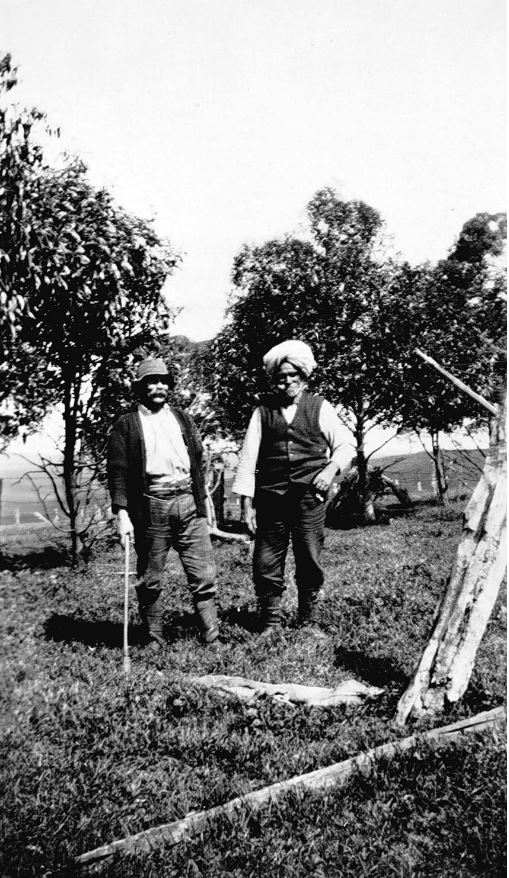
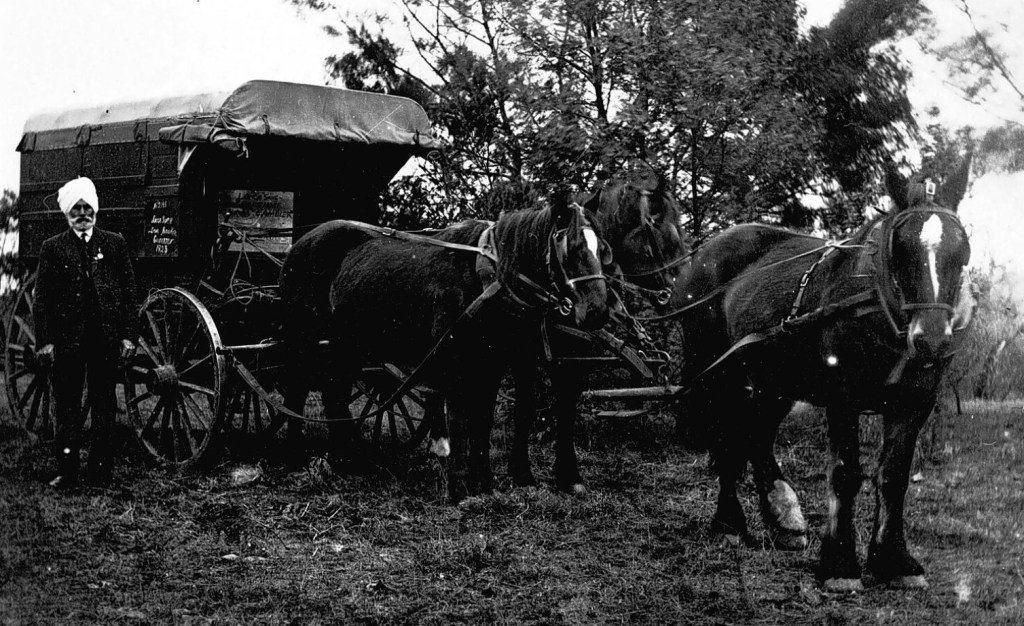
The following photo from the Museums Victoria Collection was one I posted on the WDF Facebook page while featuring photos from Carapook. The description with the photo reads, “Indian hawker and farmer on farm”. The names given are Basil Pearce and Rahn (sic) Singh and the location and date of the photo, Carapook 1924.

BAZIL PEARCE AND RAN SINGH. Museums Victoria Collections https://collections.museumvictoria.com.au/items/766446

I set about looking for more about the two gentlemen. First Bazil, who was born at Gritjurk, northeast of Coleraine, in 1870,1 a son of William Pearce and Ann Watts. Basil married Mary Ellen King in 1904.2 They lived at Muntham, Carapook, and finally, Coleraine.

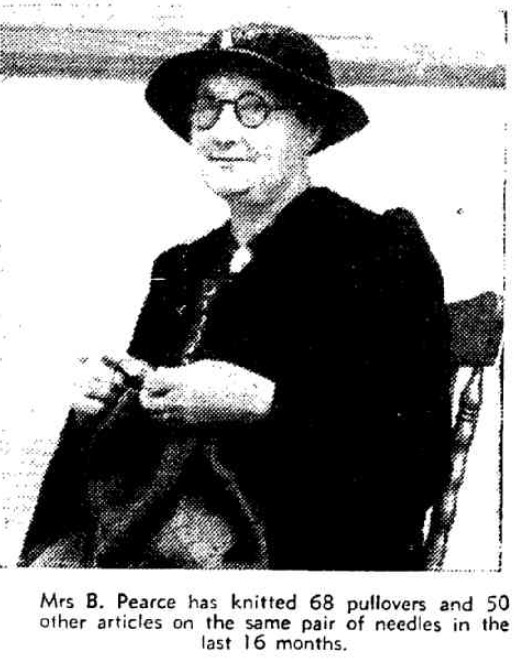
This is Mary, Bazil’s wife, knitting up a storm in 1941 for the war effort, all done on a single pair of knitting needles.

“Meet The People of Coleraine” Weekly Times, 13 December 1941, p 7 http://nla.gov.au/nla.news-article224829707

Bazil and Mary’s married son Bazil junior enlisted only a month after the publication of Mary’s photo. He went to New Guinea with the 2/12 Australian Infantry Battalion and died from wounds there in February 1943.

“MR WILSON REPLIES TO MR FADDEN” The Argus, 3 March 1943, p. 3 http://nla.gov.au/nla.news-article11337335

Bazil Pearce senior died in 1958 at Coleraine, aged eighty-eight.3 Mary died in 1980 at Coleraine, aged ninety-four.4

An increase in migration from India to Victoria in the 1880s saw an influx of Indian hawkers in the Hamilton district by the early 1890s. Trading from carts, or on foot, they made their way around isolated properties in the west of the state selling their wares, including pots and pans, drapery, and clothing.

Each December, hawkers were required to apply for a license. In 1892, because of a rise in complaints to authorities, the government introduced additional conditions to the Hawkers’ and Pedlars’ Act including the need to display a license number.

“HAWKERS’ LICENSES.” Hamilton Spectator 15 December 1892, p. 3. http://nla.gov.au/nla.news-article225175579

That didn’t discourage anyone, with forty-three license applicants at the Hamilton Court on 13 December 1892, an increase from twenty-six in 1891.

HAMILTON COURT HOUSE. State Library of Victoria http://handle.slv.vic.gov.au/10381/40638

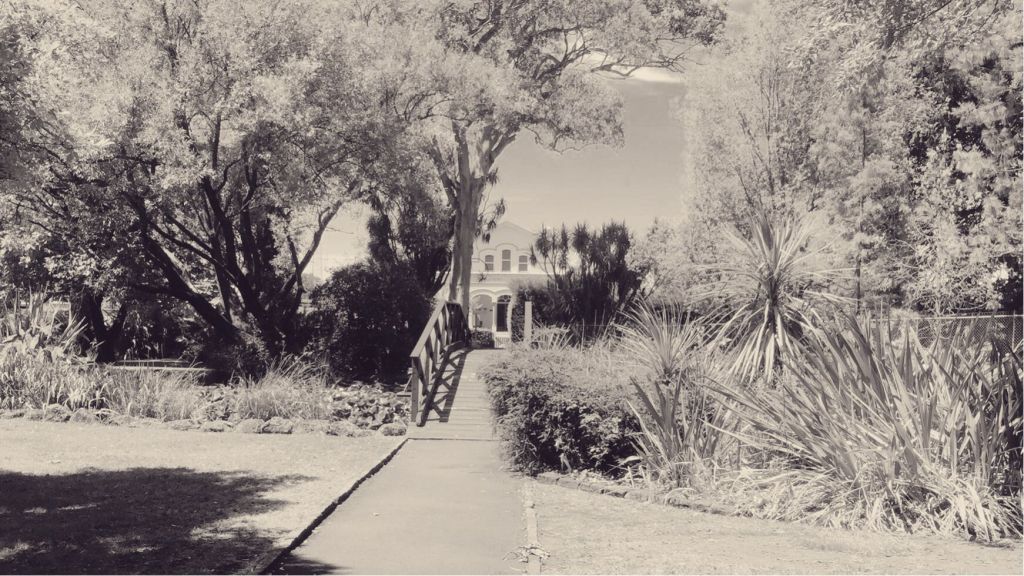
In December 1893, close to fifty Indian hawkers, mostly Sikh, gathered near the Martin Street gate of the Hamilton Botanic Gardens (below), waiting for their time before the magistrate. In December 1894, there were around seventy. In both years, local photographer John Arnest captured the colourful scene.

VIEW TO THE HAMILTON COURT HOUSE FROM THE BOTANICAL GARDENS

The Indian hawkers were incredibly generous and, like clockwork, each year when they paid their license fee, they also made a contribution to the local hospital. In 1894, Sukbi Nand Verma, the “interpreter for Indian residents in the colony,” wrote to Charles Wiggins, the secretary of the Hamilton Hospital and Benevolent Asylum, requesting acknowledgment of a donation of £11 12s 3d by the local hawkers. One of those he mentioned as having contributed to the donation was R. Singh. An extract of Sukbi’s letter is below,

We, the undersigned Indian hawkers, beg to present our poor and humble donation in aid of the charitable Hospital, Hamilton, with the simple view of encouraging and furthering this laudable public cause. We are not inclined to think that we should get any praise for our so doing, but on the other hand, a sense of universal brotherhood and a sympathy and feeling for the helpless sufferers actuated us to alleviate the sufferings of the poor patients by taking a step in this direction. The sum offered, no doubt, is trifling, considering the solid and substantial benefits which the Asylum confers upon general masses, but, however, let it be understood that it is the outcome of grateful and feeling hearts. Our religion teaches us to always extend a helping hand to those who really stand in need of it, and after giving a fair and deep consideration to this problem, we found none more worthy of our attention and help than this Asylum… (Hamilton Spectator 11 December 1894)

HAMILTON HOSPITAL. State Library of Victoria http://handle.slv.vic.gov.au/10381/399067

Ran Singh was in Hamilton in December 1896 when he received a license to sell goods on foot, and again in 1897. In 1898, the number of license applications decreased, but Ran Singh received a foot license. However, in 1899, the magistrate did not grant him a license.

Items of News, Hamilton Spectator, 14 December 1899, p. 2. http://nla.gov.au/nla.news-article226133814

In 1902, Ran again received a license to hawk on foot. It seems he then moved to the west of Hamilton. In 1914, Ran was among the gift givers for the marriage of John Quigley and Evelyn King at Merino. In December 1915, Ran and fellow hawkers, including Lucca Singh, donated to the Casterton Hospital after paying for their licenses at Casterton.

Casterton News, The Casterton News and the Merino and Sandford Record, 16 December 1915, p. 2 http://nla.gov.au/nla.news-article74767293

This is Lucca Singh, with his van photographed somewhere in the Casterton district, around 1925.

LUCCA SINGH. Museums Victoria Collections https://collections.museumsvictoria.com.au/items/769328

It appears Ran’s circuit was between Coleraine to the east and Casterton to the west, and between Carapook to the north (where he met Bazil) and Merino, to the south. There is a photo of Ran at Henty c1925, a location between those places, on the link …Ran Singh at Henty.

By the 1930s, Ran was in his seventies and had suffered some ill health. Locals had suggested he go to a hospital for medical treatment, but he refused. On Wednesday 9 October, Ran drove his horse-drawn van into Coleraine and set up camp in his usual place, a vacant block in McLeod Street. Around 4.30pm that afternoon, Ran went to Trangmar’s store in Whyte Street Coleraine (below).

TRANGMAR’S STORE, COLERAINE

Shop assistant John Brens served Ran, just as he had done many times over the previous fifteen years. Ran purchased a bottle of brandy and Uneeda biscuits. He was very frail and appeared unwell. John helped him down the steps of the store (below).

STEPS OF TRANGMAR’S STORE c1910. Museums Victoria Collections https://collections.museumsvictoria.com.au/items/769226

Ran returned to McLeod Street, and about 5.00pm he went to the home of Henry Hutchins who lived to the rear of the block where Ran camped. Henry had known Ran for about thirty years since he first started camping in McLeod Street. Ran boiled his billy on Henry’s stove and made a pot of tea. He left but returned at 7.00pm and spent an hour with Henry before announcing he was off to bed. Ran returned to his van and arranged the bags he used as a curtain at the front of the van while he slept.

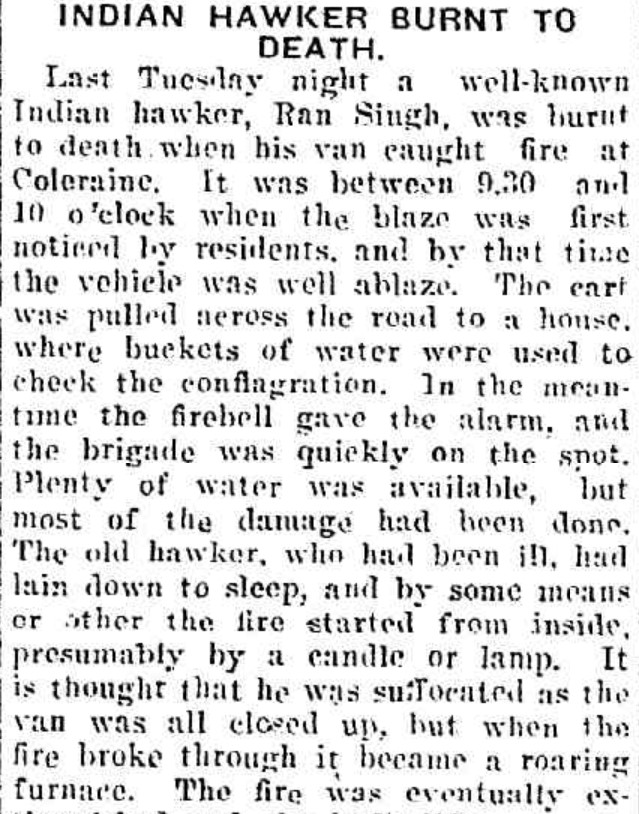
Around 9.45pm, John Heron stepped out into his backyard and saw a glow coming from McLeod Street. He rushed to the front of his house and saw Ran’s van on fire. John tried to prise open the doors, but the heat forced him back. Others, including Henry Hutchins, arrived on the scene with buckets of water, but to no avail. By the time the fire brigade arrived shortly after, it was too late.

“INDIAN HAWKER BURNT TO DEATH.” The Horsham Times 16 October 1934, p. 4 http://nla.gov.au/nla.news-article72639321

Ran’s body was removed to the Coleraine Police Station and his friend Lucca Singh was called in to identify his body. Lucca confirmed he had known the almost 80-year-old Ran since he arrived in Victoria from Punjab, India around 40 years before.

An inquest found Ran had died because of a heart attack and asphyxiation from the smoke. However, the coroner was unsure if the heart attack occurred before the fire. John Heron heard no sound coming from the van when he tried to open the doors, and when Constable John Duffy recovered Ran’s body, there were no signs of a struggle. It’s possible Ran suffered a heart attack and an unattended candle started the fire.

There are few reminders of the time when Indian hawkers were commonplace in the Western District. At the Hamilton (Old) Cemetery, there is a memorial for Gungah Singh. He died of consumption aged 45 and his friends sought permission to cremate his body on the cemetery grounds. The Central Board of Health and cemetery trust approved the request, and the cremation took place on Saturday 7 September 1901. Gungah’s ashes were returned to India to disperse in the Ganges River.

Further Reading

Name variations of early Indians in Australia at Chinese Australian Family Historians of Victoria 

Sikh Pioneers of Australia at Sikh Wiki.

Sources

  1. Registry of Birth, Deaths, and Marriages, Victoria, Bazil Pearce, Birth Reg. No. 22181/1870
  2. Registry of Birth, Deaths, and Marriages, Victoria, Bazil Pearce, Marriage Reg. No. 2038/1904
  3. Registry of Birth, Deaths, and Marriages, Victoria, Bazil Pearce, Death Reg. No. 26612/1958
  4. Registry of Birth, Deaths, and Marriages, Victoria, Mary Ellen Pearce, Death Reg. No. 28226/1980

Take a Photo-Down the Street

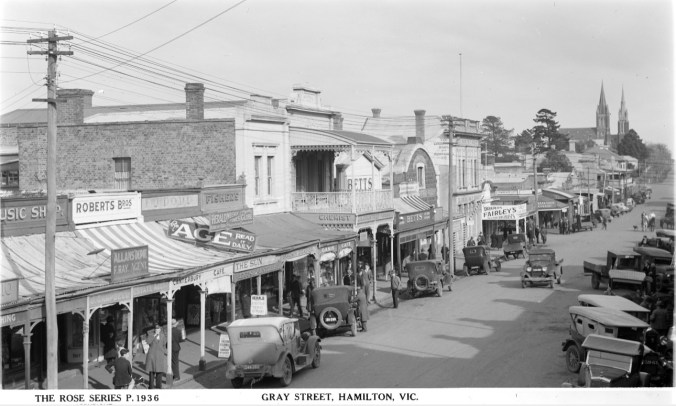
A photo from a place and time your ancestors lived is always interesting. You get a feel for their daily life, the transport of the time, and the fashion. You can see a place as it would have looked through their eyes. If it’s a streetscape, the photo is useful from a local history perspective. This photo, a Rose Postcard held by the State Library of Victoria (SLV) depicting the main street of Hamilton, ticks all those boxes.

GRAY STREET, HAMILTON. Image courtesy of the State Library of Victoria http://handle.slv.vic.gov.au/10381/63785

The Hamilton streetscape has changed somewhat, but it’s instantly recognizable by the twin steeples on Church Hill toward the end of Gray Street. There are various postcard shots of Gray Street, but I particularly like this one for the stripy verandah of the Canterbury Cafe owned by the Roberts brothers, and the Fairleys sign. The photo tells several tales, ranging from a global story to a personal family story.

Rose postcards come undated, but you can narrow down the period. Car makes and models and even the format of the registration plate can help. Shops are useful too. If a digitised version of the local newspaper is available at Trove, search the business names and narrow down the period they operated. Sometimes ladies’ fashion, particularly hats and dress lengths, point to a period in time, but this photo comprises mostly men. Their fashion is harder to date.

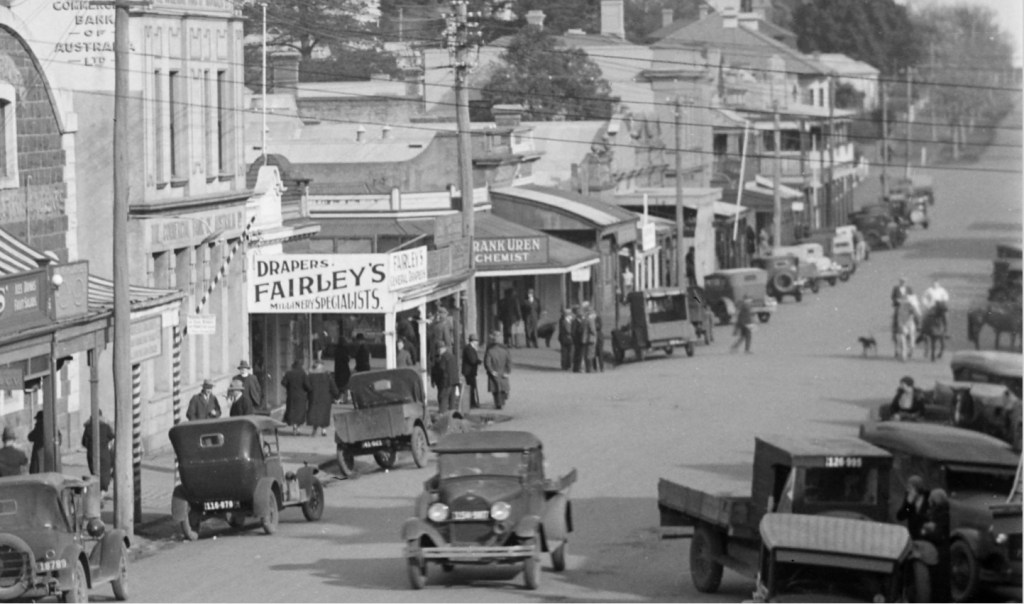
This photo has an extra clue at the front of the newsagent. The SLV photo viewer has a great zoom function and if we zoom in, this is what we find.

The headline in The Herald newspaper on the day of the photo was “World Flier Gassed in Plane”. Trove has digitised editions of The Herald, so I searched the headline and found the edition. The date was Friday 9 June 1933.

The Herald, 9 June 1933, p. 1 http://nla.gov.au/nla.news-page26876435

Knowing the date adds more to the story. The world was amid the Great Depression, and aviator James J. Mattern from the United States was attempting to break the world record to circumnavigate the globe, which then stood at just over 8.5 days. He survived the mishap, but his chances of breaking the record were dashed.

On a local level, it was a Friday, explaining the number of men in the street.

In many larger towns, Friday was the day the country folk came to town for supplies. An article in the Horsham Times from May 1951 bemoaned the traffic jam of people on the Horsham footpaths on a Friday. It was no different in Hamilton.

“FRIDAY: SHOPPING OR TALKING DAY?” The Horsham Times,15 May 1951, p. 3 http://nla.gov.au/nla.news-article72792119

It was also a popular day for townspeople to head “down the street” and catch up with friends, some back in town for a weekend visit. Hamilton’s own Victoria Cross hero, Ted Kenna, said from the Heidelberg Repatriation Hospital in 1945, he was looking forward to returning to Hamilton to see the crowds of people “down the street” on a Friday. Almost the whole town turned out, he said. He was reminiscing with a former Hamilton girl, Roma Rainford who visited Ted, and they laughed as they recalled the often-used phrase, “I’ll be at home in Gray Street on Friday”.

“Back To Hamilton Views — At Heidelberg” The Herald, 12 September 1945, p. 5 http://nla.gov.au/nla.news-article245656838

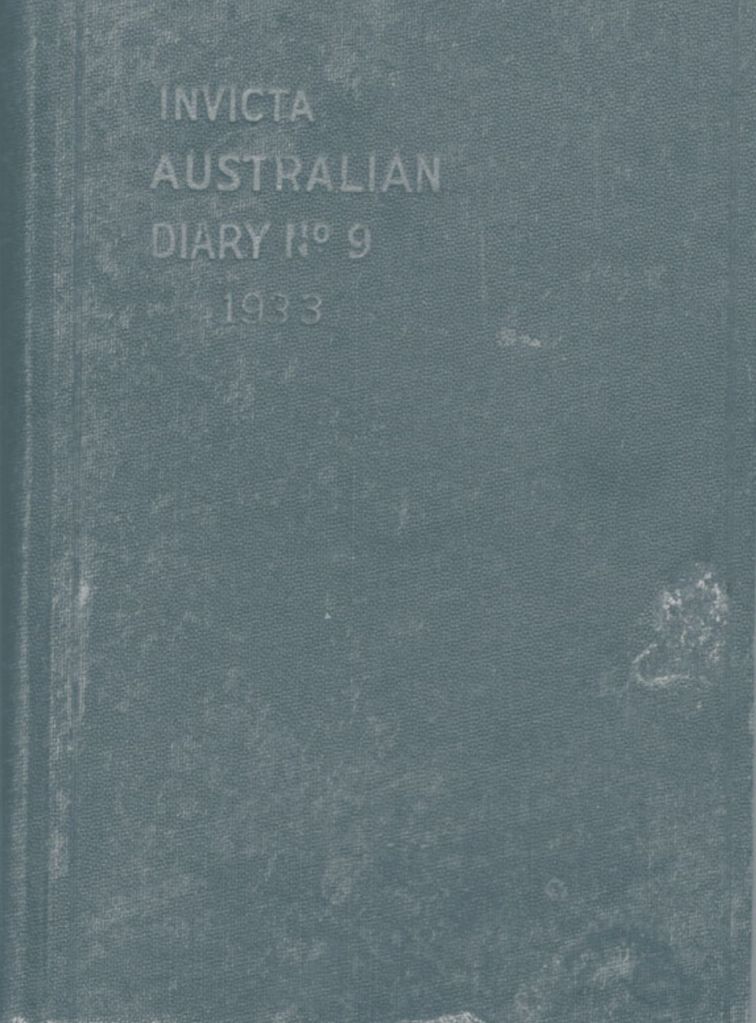
There is something else significant about 1933. My grandfather kept a diary in that year which was kept by Nana.

Bill Gamble turned twenty-two in 1933. By then, his father, Joseph Gamble, had left the family after about a decade of coming and going. Bill was the breadwinner and had been for some years. With Bill’s help, his mother, Edith, raised Bill’s six siblings. The youngest in 1933 was Shirley, aged five. Bill started as a delivery boy while still at Hamilton Higher Elementary School, before moving into the shop and learning the butchering trade.

BILL GAMBLE

From Bill’s diary, I found work was inconsistent in 1933. He was picking up bits and pieces at the abattoir, the butcher shop, and wood carting.

HAMILTON ABATTOIR, c1933. Photographer: Bill Gamble

Bill was also a keen photographer and developed films for friends, probably to cover his own photography costs. According to his diary, on 1 April 1933, he and his mate Charlie Stevenson developed five films for Ted Hodges. Then they went to the pictures at the Regent Theatre in Brown Street.

“Advertising” The Age  5 March 1937, p. 15. http://nla.gov.au/nla.news-article205602215

When Bill was not at home or working, he was with Charlie, camping, fishing, shooting, and riding motorbikes. He also spent a lot of time at the home of Charlie’s parents in Digby Road and went there most Fridays for milk. Following his maternal uncles, Bill and George Diwell, Bill played cornet with the Hamilton Brass Band.

Bill also enjoyed going down the street. On Friday 31 March, his entry was “Went down the street for the evening”. He also noted he bought a toothbrush for 2/-. On Friday 21 April, he again went down the street to the bank and Laidlaws (department store). On Friday 5 May, Bill was down the street playing with the Hamilton Brass Band in front of Walker’s Boot and Shoe store in Thompson Street.

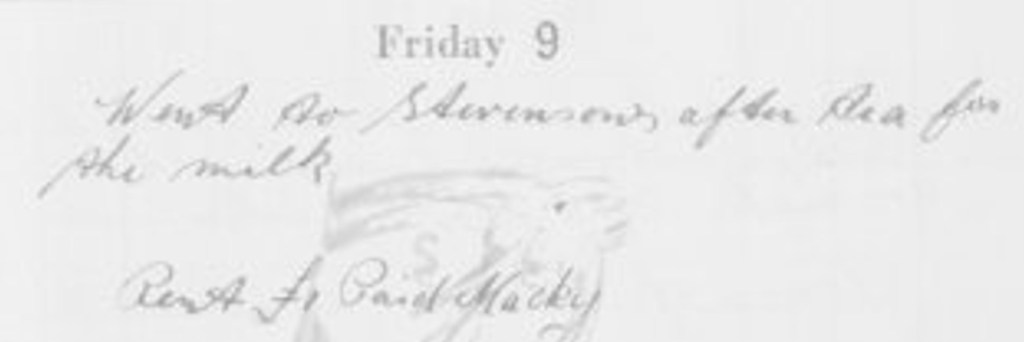
I wondered if Bill went down the street on Friday 9 June 1933. I turned the page… no. But he went to Stevenson’s for milk.

The Fairly’s sign mentioned earlier is in the next photo. This is Bill (on left) at Brown Bros. butchers in Gray Street, close to where the feature photo was shot. The Fairly’s sign is reflected in the window.

BROWN BROS. BUTCHERS, GRAY STREET, HAMILTON 1930s

Fairley’s was a drapery run by John Fairley and his wife Lillian. John died in 1939, two years after this advertisement.

The Argus, 9 March 1937, p. 12 http://nla.gov.au/nla.news-page579762

The streetscape changed in 1944 when a fire destroyed George Bretnall’s music store and damaged the shops nearby.

“DAMAGE TO 5 SHOPS IN HAMILTON FIRE” The Argus 20 April 1944, p. 4 http://nla.gov.au/nla.news-article11820268

The strip of shops was owned by the estate of Annie Destree who died in 1917. Annie inherited them when her husband, watchmaker Adolphus Destree died suddenly in 1875. She also owned Fairley’s building. It was nothing new for the Destree family, with fire destroying their shop and residence in 1870.

The shops were rebuilt as shown on another great postcard of Gray Street, taken only a few years after the fire.

GRAY STREET, HAMILTON Image courtesy of the State Library of Victoria http://handle.slv.vic.gov.au/10381/61540

The Canterbury Cafe was still open for hot dinners and grills.

“Advertising” The Age,  5 March 1937, p. 15 http://nla.gov.au/nla.news-article205602215

The strip of shops still exists, as seen in this more recent photo taken in a similar spot as the older photos. Plane trees planted in the later part of the 20th century don’t make comparison with the older photos easy. And no longer is the street identified by the iconic twin steeples.

You can read more from the Take a Photo series on the link-Take a Photo

© Merron Riddiford 2023

Take A Photo-The Swimming Hole

It’s some time since my last “Take A Photo” post, so if you are joining me for the first time, the idea behind the theme is to take an out-of-copyright photo from the Western District and delve into the story behind it.

Summer is a perfect time to share one of my favourite Western District photos. It comes from the collection of Gabriel Knight held by the State Library of Victoria (SLV). Gabriel was the principal at the Cressy State School from 1909 to 1915. He arrived as the town was entering a period of growth, including the construction of a larger school. Gabriel’s lens captured the change.

The photo comes with the title, “Children playing in the local swimming hole, Cressy” (c1909-1915). The swimming hole looks like it could be a dam.

CRESSY SWIMMING HOLE. c1909-1915. Image courtesy of the State Library of Victoria. http://handle.slv.vic.gov.au/10381/38973

It is in fact, a section of the Woady Yallock River that meanders past Cressy.

BRIDGE OVER THE WOADY YALLOCK RIVER. c1909-1915. Photographer: Gabriel Knight. Image courtesy of the State Library of Victoria. http://handle.slv.vic.gov.au/10381/33657

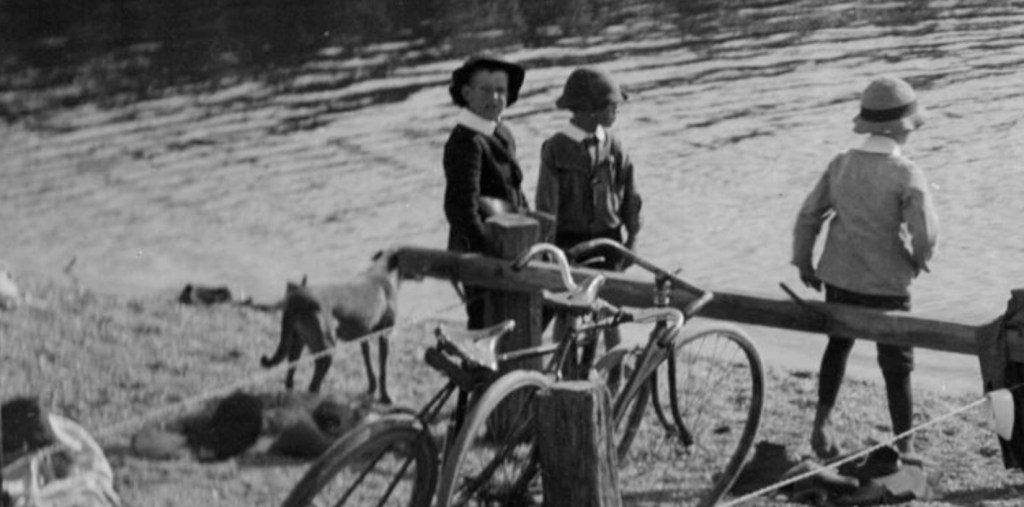
I love viewing SLV photos because you can zoom in to see more. We can look closer at the boys on the bank. Notice the boy coming in from the water with a hat? To view the photo at the SLV, follow the link-Cressy Swimming Hole.

Zooming a little more, we can see the bikes, and one boy has spied the camera. There’s always one in a crowd. Of course, there is a dog. The best photos seem to always have a dog.

A pile of clothes, shoes, and hats lay dumped on the bank.

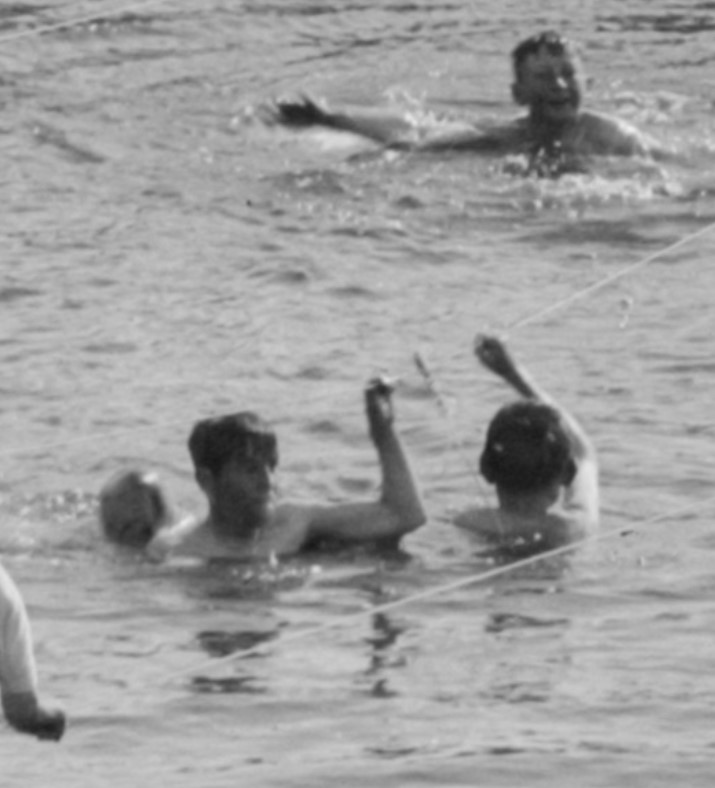
In the water is Gabriel Knight himself. Unless he used a timer and was a fast runner, it’s unlikely he took the photo himself.

We know what Gabriel looks like from a staff photo taken when the new Cressy State School opened.

STAFF OF CRESSY STATE SCHOOL, 1913. Image courtesy of the State Library of Victoria. http://handle.slv.vic.gov.au/10381/38766

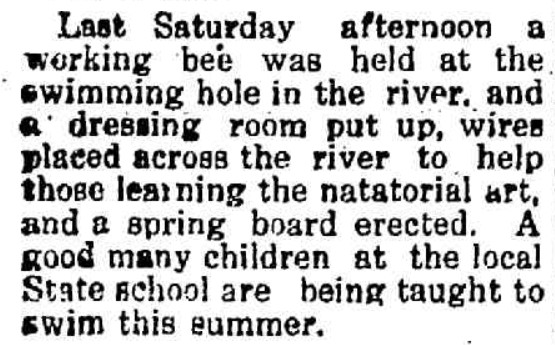
Also evident in the photograph are four wires strung across the river.

They were for unconfident swimmers who could move along the wires between banks.

Sadly, the wires didn’t help 15-year-old William Leslie Hellier during the summer of 1913 at the Cressy swimming hole. He set off in the morning, telling his father he was going fishing with friends. It was a hot day, and with little shade along the river, the water was tempting. William, known as Leslie, was a non-swimmer, although he had told his father otherwise. He thought he’d be safe close to the wires. Holding on, he made it to the other side.

His mate, Douglas Thornton, last saw Leslie on the opposite bank. Time passed and suddenly Douglas wondered where Leslie was. He looked around and called out, “Les!”, alerting others who started a search. Joseph Parker ran to inform Constable Edgar Taylor, who raced to the swimming hole, stripped down, and joined the search in the water. A further five to ten minutes passed before Richard Middleton called out. He had found Leslie. About 45 minutes had elapsed since Douglas first noticed him missing.

Constable Taylor attempted resuscitation on the unshaded riverbank for around ten minutes, then loaded Leslie’s lifeless body into a gig. He drove to the police station where Gabriel Knight met him. Gabriel suggested first aid continue until the doctor arrived from Beeac. On arrival, Doctor Hicks pronounced Leslie deceased.

The witness statement provided by Weering onion grower, Joseph Parker, described the wires across the river, “I saw four wires stretched across the creek and they were fixed to posts on both sides of the river, the wires were about one to two feet above the water.” The inquest heard the river was ten feet at its deepest.

You can read the findings into Leslie’s death online at the Public Record Office of Victoria on the link-Inquest of William Leslie Hellier.

WOADY YALLOCK RIVER, CRESSY. c1909-1915. Photographer: Gabriel Knight. Image courtesy of the State Library of Victoria.

The next reference I found about the swimming hole was from March 1915. To coincide with the examination of the school’s swimming class, Gabrielle Knight organised a swimming demonstration at the “school swimming hole”. It was open to men and boys, with a special event for ladies. The competitions included a prize for the longest dive, but significant was a demonstration of “rescue and release” with one child completing a mock rescue of Gabrielle Knight.

It was not long after, in June 1915, that the people of Cressy farewelled Gabriel Knight and his family. Gabriel had received a transfer and his departure was a great loss to the town.

A final mention of the swimming hole comes from January 1918.

Cressy and Lismore Pioneer and Western Plains Representative, 2 January 1918 http://nla.gov.au/nla.news-article132681416

We know there were wires across the river in January 1913 when Leslie Hellier drowned and we know Gabriel Knight wasn’t in Cressy beyond mid-1915, so it leaves me with some questions. Did the swimming hole move after the death of Leslie or in 1918, were they simply replacing the original wires?

To end, I’ll leave you with another of Gabriel’s beautiful photos. This time, two local boys watering their horses at the Woady Yallock River.

BY THE WOADY YALLOCK RIVER. Photographer: Gabriel Knight. Image courtesy of the State Library of Victoria http://handle.slv.vic.gov.au/10381/38767

You can read two previous “Take a Photo” posts on the link-Take A Photo.

Take a Photo – A Moment in Time

The next “Take a Photo” pic was part of the Western District Families Facebook page theme “Along the Hamilton Highway” in 2017 and is a favourite photo of mine.  From the Museums Victoria Collection, the caption reads “A woman, Christina Park (sic), drying apples.” The date was given as c1931, the place depicted as Lake Linlithgow, and the creator of the photo, Myrtle Sharrock. 

Christina looks as though she could have been drying apples at Lake Linlithgow near Penshurst all her life, however, I found the photo depicted just a short moment in time in a long life.

CHRISTINA PARKE DRYING APPLES NEAR LAKE LINLITHGOW, CROXTON EAST. Image courtesy of the Museums Victoria Collections https://collections.museumvictoria.com.au/items/769626

Christina was born Christina Arbuthnot in 1855 in the Geelong district, the second eldest child of Alexander Arbuthnot and Elizabeth McKenzie (1) ). It appears she grew up in the Blakeville district north of Ballan.  In 1875 aged twenty, she married Frank Parke (2). Frank built a house at Blakeville and they went on to have ten children over the next twenty years with most born around Blakeville.  In 1883, while working as a sawyer for Mr Blake’s mill at Blakeville, Frank badly cut his hand and was taken to Ballarat Hospital.  In 1885, baby Agnes was born at Barry’s Reef near Blackwood but died a month later. (3) (4).   

BARRY’S REEF c1900
Image courtesy of the State Library of Victoria http://handle.slv.vic.gov.au/10381/401042

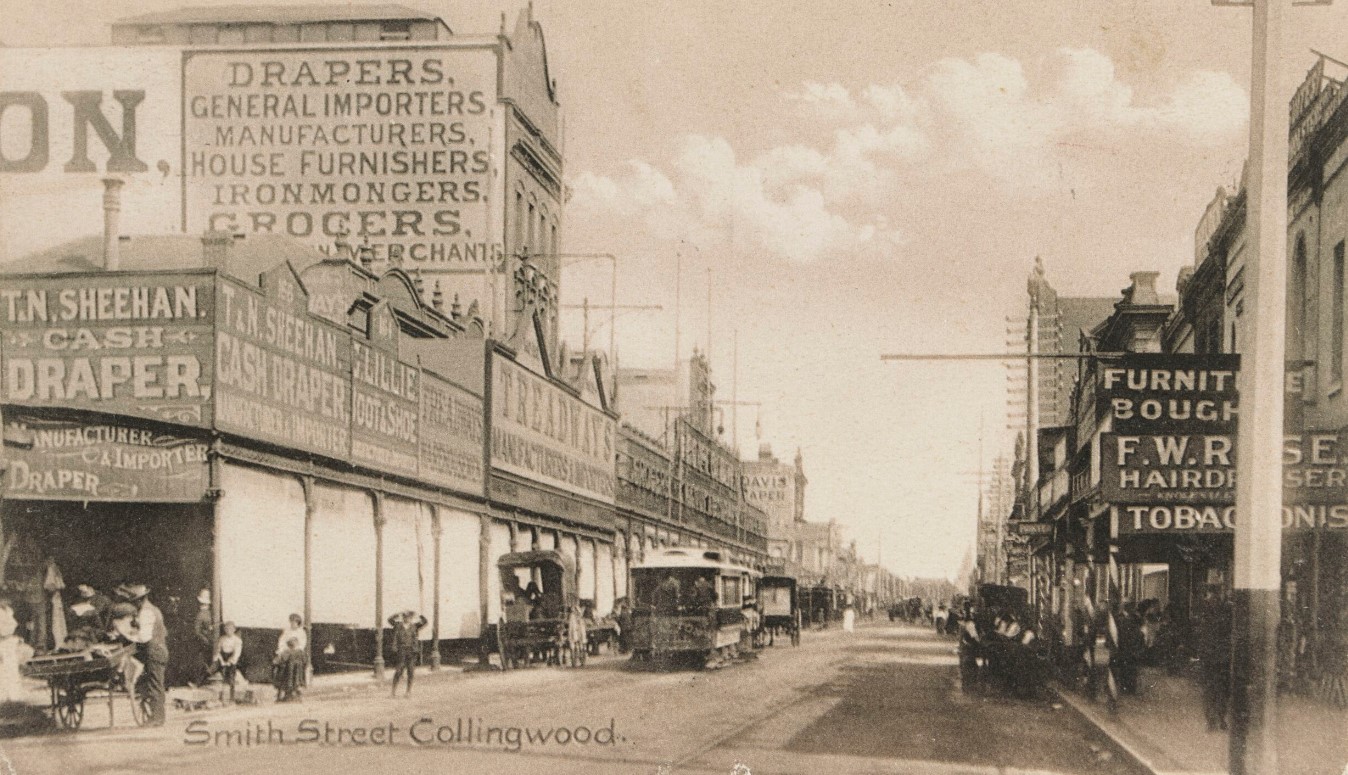
After thirty-five years, Christina moved away from the area she had known most of her life when the Parke family went to Warragul. Baby Charles born there in 1891 (5). But it was around the time she turned forty, Christina’s life saw the greatest change when the family moved to the Melbourne suburb of Collingwood.  Rate books from 1896 show they were living at 90 Reilly Street (now Alexandra Parade) in a rented brick home owned by Arthur Taylor (6). Frank’s occupation was given as sawyer however later records show he was working as a bootmaker, possibly at one of the many boot factories in Collinwood and surrounds. The Parke children too worked in the boot trade on finishing school.  Also in 1896, the last of the Parke children Myrtle Alpha was born (7).

Over the next fifteen years, the Parke family moved to various homes in the northern part of Collingwood. It would have been very different for Christina after forty years in the “bush”.

SMITH STREET, COLLINGWOOD. Image courtesy of the State Library of Victoria http://handle.slv.vic.gov.au/10381/279623

In 1904, Christina and Frank’s son Charles died at the Carlton Children’s Hospital aged thirteen (8).  About five years later they moved further north to the suburb of Northcote and that’s where Frank died in 1912 aged sixty-two (9). Not only did Frank die in 1912 but also son George at Collingwood aged thirty-three. (10) And just a year later, another son Ernest died. (11)

Christina moved back to Reilly Street, Collingwood for a short time before spending the next eight years or so living with her youngest daughters Ivy and Myrtle in homes in Northcote, Clifton Hill, and Fitzroy North, while the girls continued working in the boot trade.  When she was sixty-five in July 1920,  Christina’s mother Elizabeth died at Camberwell. By that time, Christina and her younger sister Ellen were the remaining Arbuthnot children from a family of eight.

The following year in 1921, Christina’s twenty-six-year-old daughter Myrtle married William Joseph Sharrock.  William was a son of John  Sharrock and Janet McMillian of Fernleigh near Mount Napier, just south of Hamilton.

Family Notices (1921, May 14). The Age, p. 5.   http://nla.gov.au/nla.news-article203972411

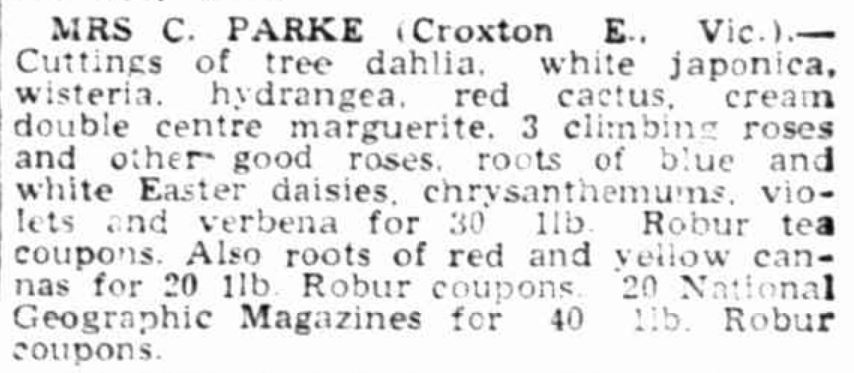
William worked as manager of Rockewei near Penshurst and Myrtle went to live with him on the property and so did Christina. By the time the 1930s arrived, Christina was seventy-five and she went to live in Cobb Street in Penshurst while William and Myrtle were off at Glenthompson managing another property (11). Next William managed a property at Croxton East, the location of Lake Linlithgow and Christina moved in again.  It’s from that time we find out more about Christiana thanks to the Weekly Times. In 1932, Christina participated in the paper’s Free Exchange Service, offering plant cuttings and National Geographic Magazines in exchange for Robour Tea coupons.

OUR WOMEN READERS’ FREE EXCHANGE SERVICE (1932, August 6). Weekly Times p. 25 (SECOND EDITION).   http://nla.gov.au/nla.news-article223813061

Also, Myrtle took a photo of her mother drying apples and sent it to “Miranda” of the “Women’s Bureau” column in the Weekly Times., the same photo held by Museums Victoria. From Myrtle’s letter, we learn about Christina riding horses and giving swimming lessons.

THE WOMAN’S BUREAU (1934, March 17). Weekly Times, p. 21.http://nla.gov.au/nla.news-article223202919

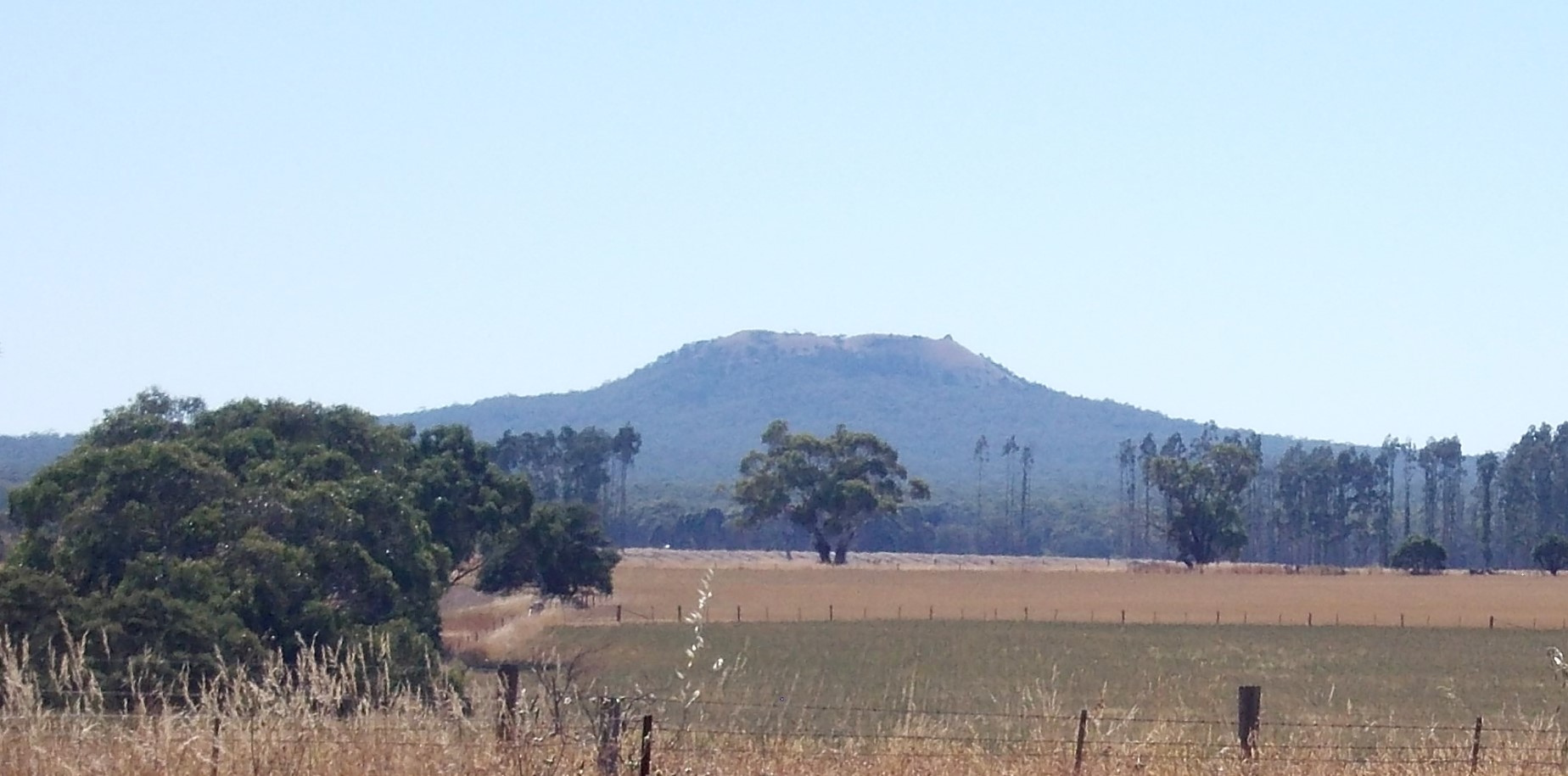
Christina was soon on the move again. Her next residence was at Buangor where William and Myrtle were also living around 1936. (12) By 1942, William had taken up the family property Ferneigh at Mount Napier and Christina went with them.

MOUNT NAPIER.

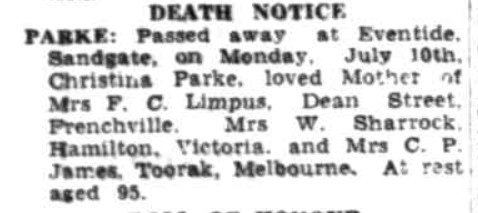
By the end of the decade and into her nineties, Christina made her longest journey, moving to Brisbane. She died on 10 July 1950, aged ninety-five while living in an Eventide Home in Brisbane leaving three daughters, Olivia Limpus of Frenchville, Queensland, Myrtle Sharrock of Hamilton, and Elizabeth James of Toorak. 

Family Notices (1950, July 17). Morning Bulletin (Rockhampton, Qld. : 1878 – 1954), p. 4.  http://nla.gov.au/nla.news-article56950418

What a life!

Sources

  1. Victorian Birth Index, Christina Arbuthnot, 1855, Registration No. 4650/1855
  2. Victorian Marriages Index, Christina Arbuthnot, 1875, Registration No. 3981/1875
  3. Victorian Birth Index, Agnes Park, 1885, Registration No,7689/1885
  4. Victorian Death Index, Agnes Parke, 1885 Registration No. 4146/1885
  5. Victorian Birth Index, Charles Clyde Parke, 1891, Registration No. 18049/1891
  6. Victoria, Australia, Rate Books, 1855-1963
  7. Victorian Birth Index, Myrtle Alpha Parke, 1896, Registration No. 18977/1896
  8. Victorian Death Index, Chas Parke, 1904, Registration No. 11812/1904
  9. Victorian Death Index, Frank Parke, 1912, Registration No. 11531/1912
  10. Victorian Death Index, George Alexander Parke, 1912, Registration No. 5236/1912
  11. Victorian Death Index, Ernest Sydney Parke, 1913, Registration No. 10202/1913
  12. Electoral Rolls, Australian Electoral Commission, Christina Parke, 1931, Penshurst, Wannon, Victoria
  13. Electoral Rolls, Australian Electoral Commission, Christina Parke, 1936, Buangor, Corangamite, Victoria

Take A Photo – Daystar

The following photo from the Museums Victoria collection was posted to the WDF Facebook page in October 2017 when the photo theme was animals.

Image courtesy of the Museums Victoria Collections https://collections.museumvictoria.com.au/items/771583

The description with the photo reads as follows, “The horse ‘Daybreak’ or ‘Daydream’ (?), a champion hunter who won many equestrian events in the Wimmera and Western district. His certificates and prizes are displayed.”  The individuals identified were named as Ethel McIntyre and John Ross and the photo was taken at Douglas (north-east of Harrow) c1920.

Using those clues, I uncovered a wonderful story of a horse called Daystar and his owner John Hugh Ross. I also found John was part of a family I was familiar with from my Byaduk research.

Born around 1900, Daystar was by the sire Timmon out of the mare Phyllis. In the years 1905 and 1906, John Ross of Douglas (also known as Salt Lakes) was racing Daystar on the flat and over steeples at meetings including Casterton, Chetwynd, Wando Vale, and Hamilton. I couldn’t find him winning a race but he did run second a couple of times.

CHETWYND RACES. (1905, June 6). The Horsham Times (Vic. : 1882 – 1954), p. 3. Retrieved October 19, 2019, from http://nla.gov.au/nla.news-article72816584

John also took Daystar on the show circuit, riding the horse in hurdle races and hunter classes and it turned out Daystar was a handy jumper. On 14 July 1909, at Douglas, John was schooling Daystar when the horse cleared a jump of 3ft 6in but it was not the height of the jump, rather the length which stood out.

From take-off to landing, Daystar jumped a width of thirty-nine feet (almost twelve metres). At the time, records dating back to 1847 were cited when another horse jumped thirty-seven feet. The current world record for a long jump by a horse across water is held by a horse called “Something” who jumped twenty-eight feet. (8.4 metres) in 1975.

A WONDERFUL JUMP. (1909, September 7). Glen Innes Examiner, p. 5.  http://nla.gov.au/nla.news-article180126153

John Ross was born at Knebsworth south-west of Byaduk in 1875. He left school and started working when he was thirteen.  In the 1890s John joined others from Victoria who travelled to the Western Australian goldfields but he was back in Victoria and living at Douglas by 1905. John was a blacksmith and purchased the Douglas blacksmith shop in 1908,  He was also a good footballer.

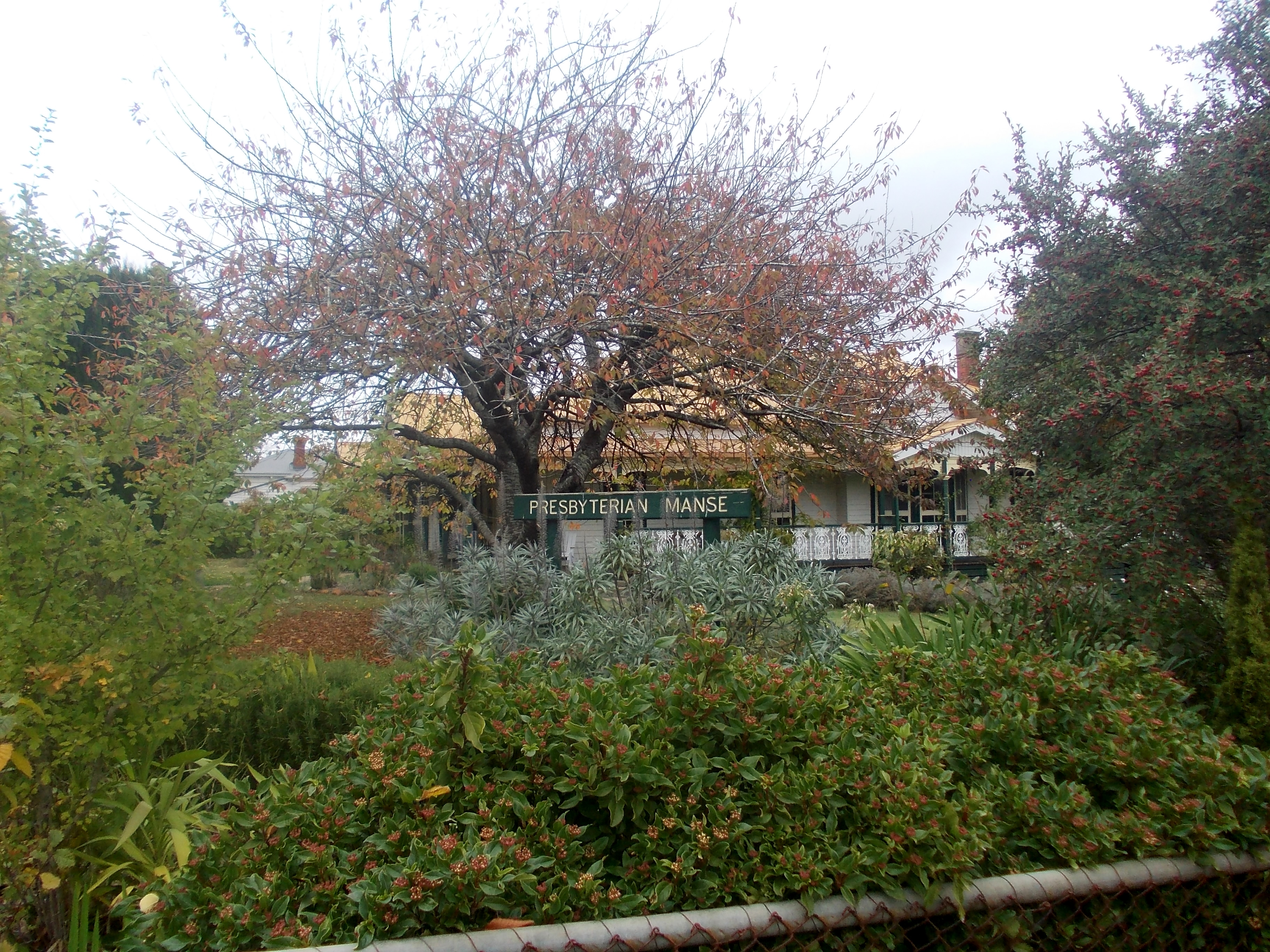
The young lady in the photo was named as Effie McIntyre. In 1913, John Ross married Effie Grace McIntyre at the Presbyterian Manse at Hamilton (below).

FORMER HAMILTON PRESBYTERIAN MANCE

The wedding ceremony was followed by afternoon tea at the Caledonian Hotel where Daniel Scullion proposed a toast to the newlyweds on behalf of their parents.  John’s wedding gift to Effie was a gold broach and Effie gave John a gold watch guard.  The couple honeymooned in Warrnambool.

On their return to Douglas, a gathering was held and John and Effie were presented with fifty sovereigns from the locals. It was there Thomas Hobbs spoke of John and Daystar’s contribution to the community.  If someone was requiring medical assistance in the night, they just had to knock on John’s window and ask him to go to Harrow for the doctor. In no time Jack would be aboard “his favourite Daystar” and on his way. John thought he was only doing what he thought was his duty to help others whenever there was a chance.  The rides to Harrow were no trouble because he loved to spend time in the saddle.

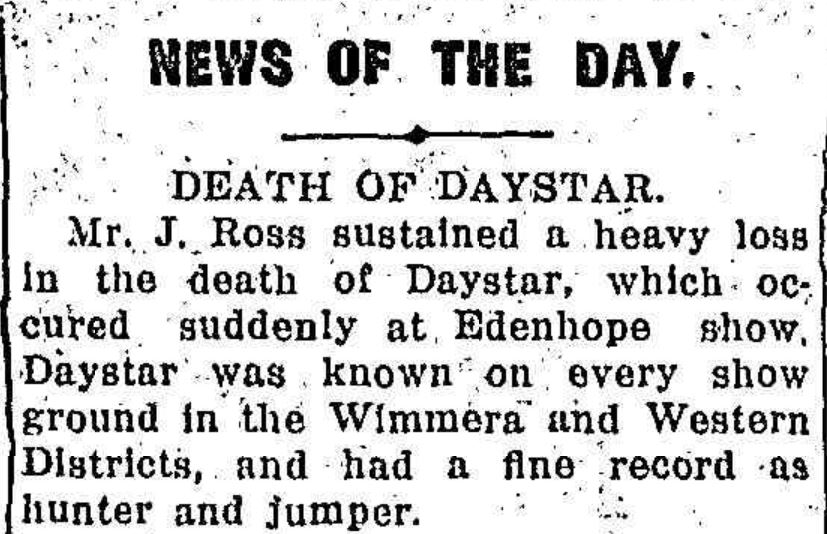
John and Daystar continued to compete but in August 1914, Daystar then aged fourteen and with John aboard, dropped dead at the Edenhope P&A show during a round of a hurdle competition.  Daystar cleared the first two hurdles well but ran out at the third jump and dropped from beneath John. A sad and sudden end for Daystar. John must have been devastated not just to lose a horse but his companion. The news of Daystar’s death spread across the country. The story led the “News of the Day” in the Warracknabeal Herald (below).

The Border Chronicle remarked on the coincidence that Daystar carrying number 13 (unlucky for some) had his first and last jumps competition at the Edenhope Show.

As for the Byaduk connection, if you’ve ever travelled through Byaduk, say going from Hamilton to Port Fairy, just past the Byaduk oval you will see the Byaduk Boer War Memorial to the right.  On it is the name of Donald Ross, killed in South Africa on 15 November 1900.

BYADUK BOER WAR MEMORIAL

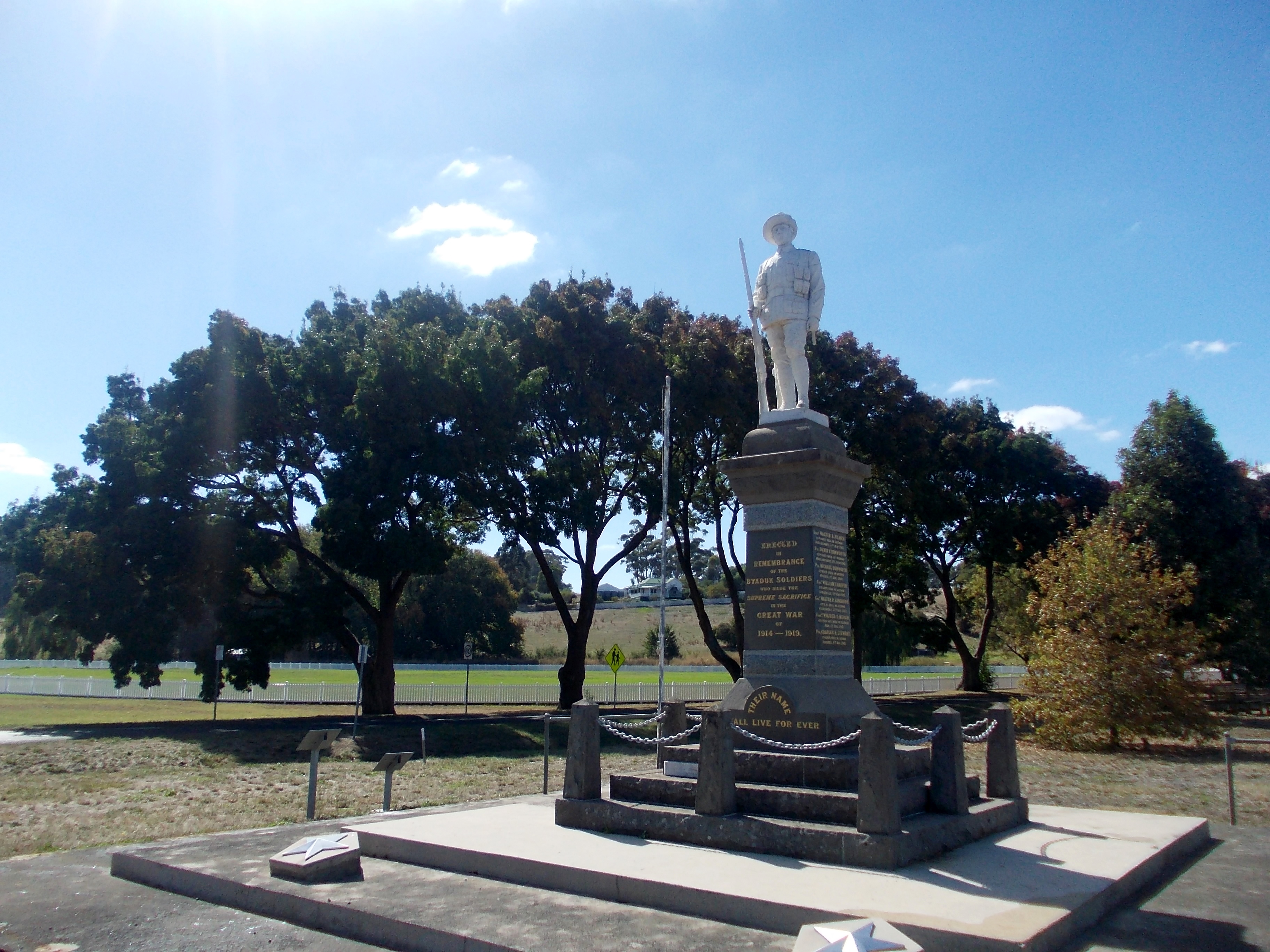
Across the road is the Byaduk War Memorial.

BYADUK WAR MEMORIAL

With the names of Andrew and Samuel Ross.

BYADUK WAR MEMORIAL

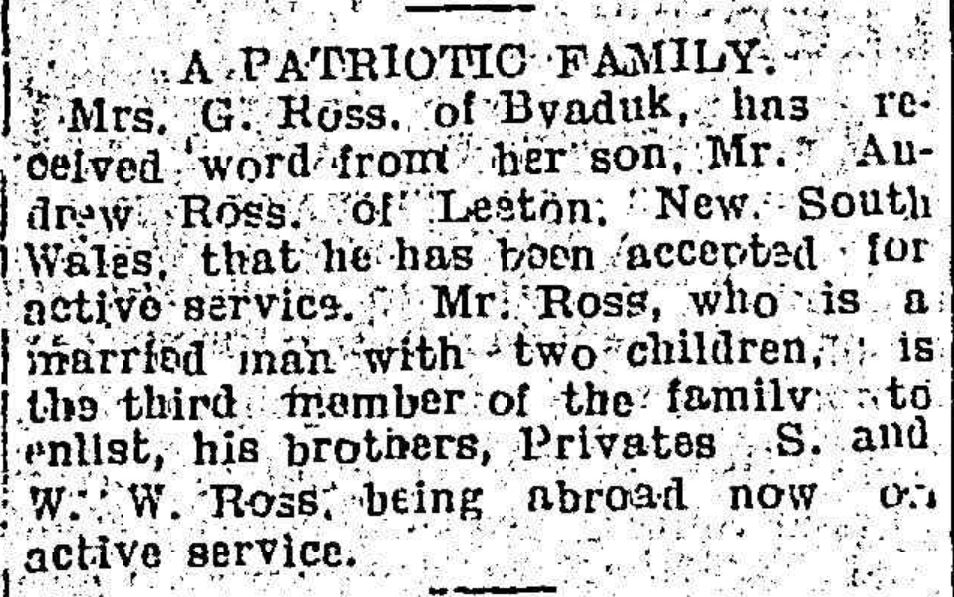
Donald, Andrew, and Samuel Ross were the sons of George Ross and Flora Cameron and younger brothers of John Ross. The boys’ father George died at Byaduk in 1895. Their mother Flora sent off son Donald to South Africa as part of the 1st Australian contingent. Three months after his return in August 1900, Donald was dead from a lung condition. When WW1 came, Flora sent three sons, Andrew, Samuel, and William. At the time of Andrew’s enlistment, the Hamilton Spectator wrote of the “Patriotic Family”

A PATRIOTIC FAMILY. (1916, June 29). Hamilton Spectator p. 4. http://nla.gov.au/nla.news-article133702199

On 7 November 1917, Samuel Ross was killed in Palestine while serving with the 11th Australian Light Horse Regiment.  Andrew Ross returned from overseas but died of bronchitis on 10 June 1919.  William returned in 1919 and died at Red Cliffs in 1963.

Meanwhile, John and Effie were running the Douglas Post Office. John had taken over duties temporarily in 1917 when the postmaster at the time enlisted. They also built a new house at Douglas in 1937

John Ross died at Douglas on 29 April 1949 aged seventy-three.  Later in the year, Effie was recognised by the people of Douglas for her service running the Douglas Post Office for over thirty years.  Effie died at Portland in 1976 aged eighty-five. 

Further Reading

Jump of “Daystar” – Gippsland Times – 9 August 1909

Wedding of John Ross and Effie McIntyre – Horsham Times – 21 February 1913

Death of “Daystar” – Terang Express – 25 August 1914

John and Effie’s House Warming – Horsham Times – 23 March 1937 

Obituary of John Ross – Horsham Times – 3 May 1949