I hope the kaf was reunited with his/her owner
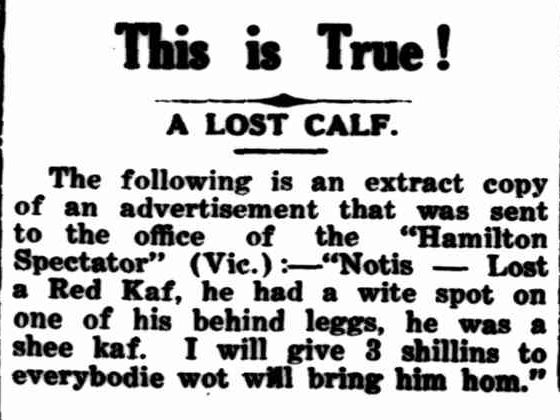
This is True!. (1939, August 17). Albany Advertiser (WA : 1897 – 1950), p. 6. Retrieved March 5, 2013, from http://nla.gov.au/nla.news-article70410510
I hope the kaf was reunited with his/her owner
This is True!. (1939, August 17). Albany Advertiser (WA : 1897 – 1950), p. 6. Retrieved March 5, 2013, from http://nla.gov.au/nla.news-article70410510

I was enjoying this story until I reached the last sentence…

FIGHT WITH A KANGAROO. (1922, November 13). Portland Guardian (Vic. : 1876 – 1953), p. 2 Edition: EVENING.. Retrieved February 25, 2013, from http://nla.gov.au/nla.news-article64026993


February Passing of the Pioneers has obituaries from some of the Western District’s early colonists. They include Fanny Fisher and John Kelly, both born in Tasmania. They each lived in Victoria for 79 years by the time of their deaths.
Alexander LEARMONTH: Died 8 February 1874 at Hamilton. The Learmonths were one of Hamilton’s most noted families. Alexander was the eldest of four brothers to immigrate to Australia and in time their paths led to Hamilton. Alexander arrived in 1857 and immediately took an interest in the town’s affairs. He founded the Hamilton municipality and was the first Mayor of the Borough, holding the office for six years. The contribution Alex Learmonth made to Hamilton in those early days was immense.

OBITUARY. (1874, February 24). Portland Guardian and Normanby General Advertiser (Vic. : 1842 – 1876), p. 6 Edition: EVENING. Retrieved February 20, 2013, from http://nla.gov.au/nla.news-article64743791
Alexander was a trustee of the Hamilton Mechanics Institute. After his death, funds raised built an extra room named the Learmonth Memorial Hall. He also served as a territorial Magistrate, Coroner, Government Auditor, and many other offices, too many to list, but all are in his full obituary.

HAMILTON MECHANICS INSTITUTE
He was buried at the Hamilton (Old) Cemetery (below)
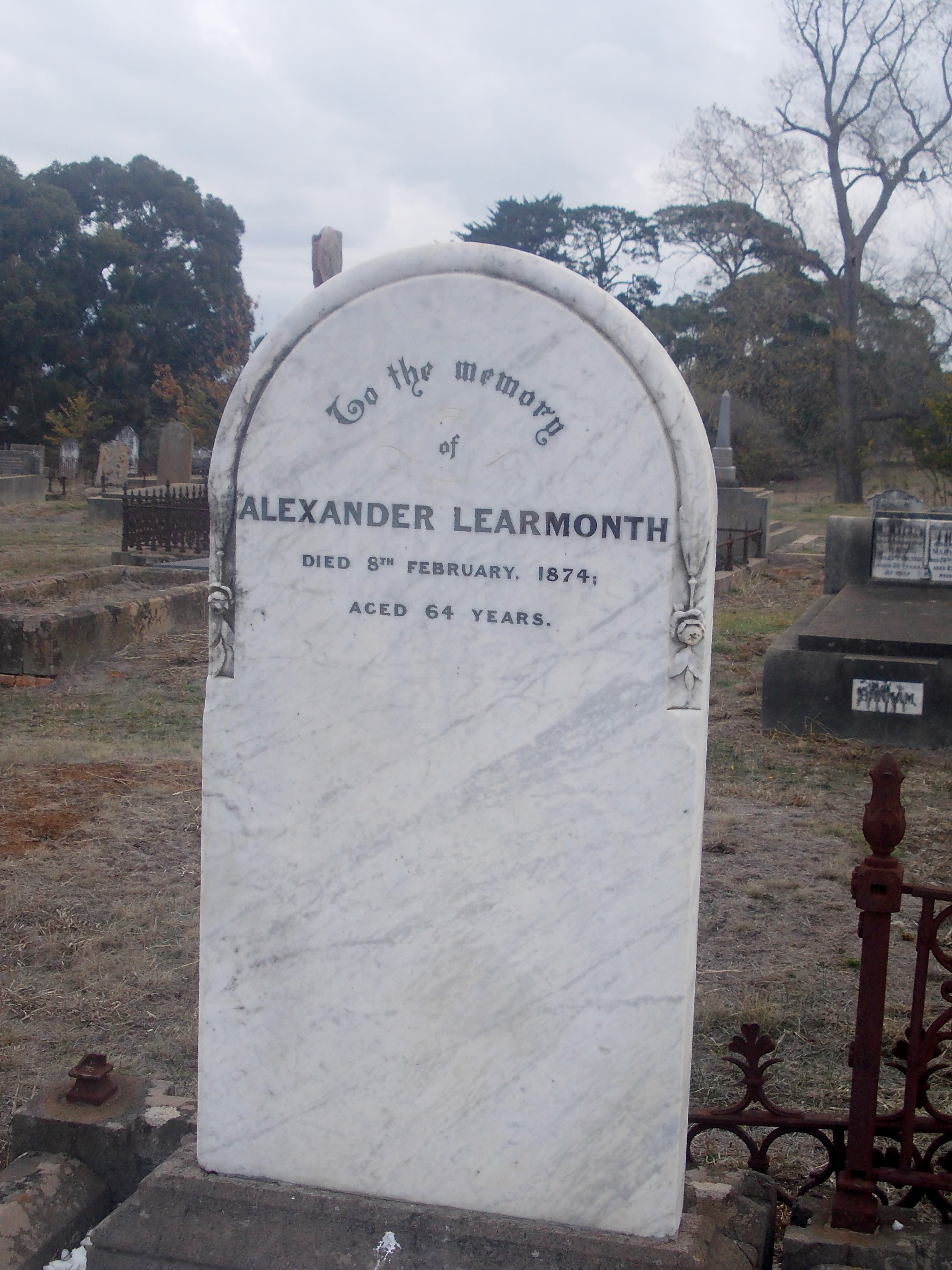
John KELLY: Died 7 February 1914 at St Helens. John Kelly, born in Tasmania, was one of the oldest residents in the Port Fairy and Yambuk district when he died in 1914. He had been in Victoria for seventy-nine years, having arrived aged three. He first resided at Casterton, then near Port Fairy and later he ran a general store at Yambuk. His wife passed away forty-one years before him and he left seven children.
John Wishart GIBSON: Died 10 February 1914 at Colac. John Gibson was a Geelong importer before purchasing a large amount of land in and around Colac. He was a keen golfer and enjoyed playing the Port Fairy Golf Links on his summer holidays. John’s wife Grace signed the 1891 Women’s Suffrage Petition at Highton. They had five children.
Fanny Mercer FISHER: Died 25 February 1914 at Dobie. Fanny Richardson was the oldest resident in the Ararat district at the time of her death, aged eighty-one. She had been in Victoria for seventy-nine years and that was also thought to qualify her as the oldest lady colonist in the state. Apparently, she shared the title with a Mrs Pearman and a Mrs Creswick until they both passed away. Fanny, born in Tasmania, was the daughter of David Fisher. He took up the position of manager for the Derwent Company bringing him, and later his family, to Geelong in 1837. A letter from David appears in Letters from Victorian Pioneers. In 1850, Fanny married James Richardson.
John Henry JACKSON: Died 2 February 1915 at Casterton. John Jackson was born in Longford, Tasmania in 1829. At fourteen, he travelled to Victoria to work for his uncles Samuel and William Jackson near Sunbury. When his uncles purchased Sandford Estate from John Henty in 1847, John rode from Sunbury to Sandford by himself aged eighteen. He remained there for the rest of his life. John married Marianne Bowtell in 1855 and they had two sons and three daughters. John was one of the earliest J.P.s in the area and was a Honourary Magistrate.
John HOWELL: Died 17 February 1915 at Orford. John Howell was born in the Port Fairy district around 1843 to Irish parents. He selected land at Orford in 1867 and remained there until his death. He never married, and due to his thrift was a donor to many worthy causes. He left three brothers and five sisters.
Reverend Mother Mary Josephine CLANCY: Died February 1915 at sea. The Reverend Mother Josephine was one of the founding members of the Brigidine Convent in Ararat, arriving around 1888 from Ireland. With guidance from the much admired Mother Josephine, the convent school, was highly regarded. Marian College still operates today. Sadly, after a trip home to Ireland, Mother Josephine passed away on the ship during the return voyage.
Hugh CAMERON: Died February 1934 at Drumborg. Born in Portland around 1855, Hugh Cameron moved around the Western District for several years, finally settling at Drumborg. He lived at Condah, Willaura, Telangatuk and Branxholme. He married Mary Cameron of Toorak and they had five boys and two girls.
Ellen McDONALD: Died 4 February 1937 at Moonee Ponds. Ellen McDonald lived in Portland for most of her 76 years but moved to Moonee Ponds for the last thirteen years of her life. During her time in Portland, where her husband Thomas Hickey ran a livery stable, Ellen attended All Saints Church. After the move to Melbourne, Ellen enjoyed returning to Portland for her annual holiday. She left Thomas, five sons, and two daughters. A son John, a veteran of the Boer War, predeceased her.
Samuel ARTIS: Died February 1938 at Port Fairy. Samuel Artis was born around 1858 and worked for the Belfast and Koroit Steam Navigation Company for many years and was at one time, foreman of the wharf. Samuel was also an expert on the history of Port Fairy.
Frederick H. BEST: Died 29 February 1940 at Winslow. Frederick was born in England in 1849 and arrived in Portland with his parents, in 1852. He began work as a tanner at fifteen and work around Australia and New Zealand for the following ten years. He married Louise Cardinal at Woolsthorpe in 1875 and set up a tannery business at Winslow. It became the biggest tannery outside the larger cities.
William McKENZIE: Died 2 February 1949 at Newfields. Born at Carranballac Station in 1868, William McKenzie was the youngest of thirteen children. He worked as a shearer through the Western District and N.S.W. before taking up dairy farming around the turn of the century. William married Augusta Schmidt in 1896.

It must be said, I am an unabashed Adam Lindsay Gordon fan. Stories of his horsemanship got me in the first time I visited Blue Lake around age seven, during the mid-1970s. As a horse girl, the idea of a man and his horse jumping over the edge of the lake was fascinating.
Unlike school children of the first half of the 20th century, Adam Lindsay Gordon’s poetry was not on the curriculum by the 1970s and 80s. Therefore, my introduction to his poetry was the 1946 edition of Poems of Adam Lindsay Gordon found in a second-hand book shop. By then I had heard of his horse racing deeds, his tragic and untimely death, and visited his cottage in the Ballarat Botanical Gardens. How did a dare-devil horseman write such tender words? How could a hardened horse-breaker, find beauty in the death of a steeplechaser in The Last Leap?
“Satin coat that seems to shine
Duller now, black braided tress,
That a softer hand than mine
Far away was wont to twine
That in meadows from this
Softer lips might kiss
..
All is over! this is death,
And I stand to watch thee die,
Brave old horse! with ‘bated breath
Hardly drawn through tight-clenched teeth
Lid indented deep, but eye
Only dull and dry”
(Extract from The Last Leap, first published: Sea Spray and Smoke Drift, Gordon, Adam Lindsay, Melbourne: George Robertson, 1867.)

ADAM GORDON. (1911, July 1). The Register (Adelaide, SA : 1901 – 1929), p. 8. Retrieved February 7, 2013, from http://nla.gov.au/nla.news-article58447919
During our recent visit to Nelson, we crossed the border into South Australia to visit nearby Port McDonnell. Just out of the town is Dingley Dell Conservation Park, site of Dingley Dell Cottage, once a holiday home of Adam Lindsay Gordon. On the day, the temperature was in the low forties and a Total Fire Ban forced the closure of the cottage. That was disappointing as the cottage houses some great ALG memorabilia, but we still could explore the grounds.

Gordon spent a lot of time writing while at Dingley Dell during the years 1864 to 1868. He published his work “The Feud” in the Border Watch in August 1864 and wrote poems such as “The Song of the Surf” inspired by the rugged limestone coast.
In 1912, ALG’s widow, Margaret Park, then Mrs Peter Low, recalled Dingley Dell in an interview published in the Chronicle (Adelaide).
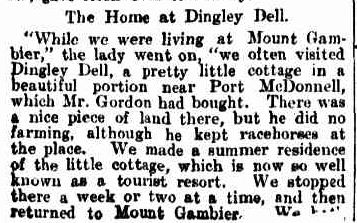
ADAM LINDSAY GORDON. (1912, March 30). Chronicle (Adelaide, SA : 1895 – 1954), p. 39. Retrieved February 8, 2013, from http://nla.gov.au/nla.news-article88693399
This is the cottage in 1891. It was still owned by the Gordon family at that time.

DINGLEY DELL circa 1891 Image Courtesy of State Library of South Australia B16893 http://images.slsa.sa.gov.au/mpcimg/17000/B16893.htm
Again, around 1907.

DINGLEY DELL, circa 1907 Image courtesy of the State Library of South Australia B45883 http://images.slsa.sa.gov.au/mpcimg/55000/B54883.htm


The day we left Nelson, we continued on the ALG trail to Mt Gambier’s Blue Lake, site of Gordon’s legendary leap. Set in a volcanic crater, Blue Lake itself is full of mystery and on the day the water was eddying and swirling. Add the tale of Adam Lindsay Gordon and it was almost haunting.

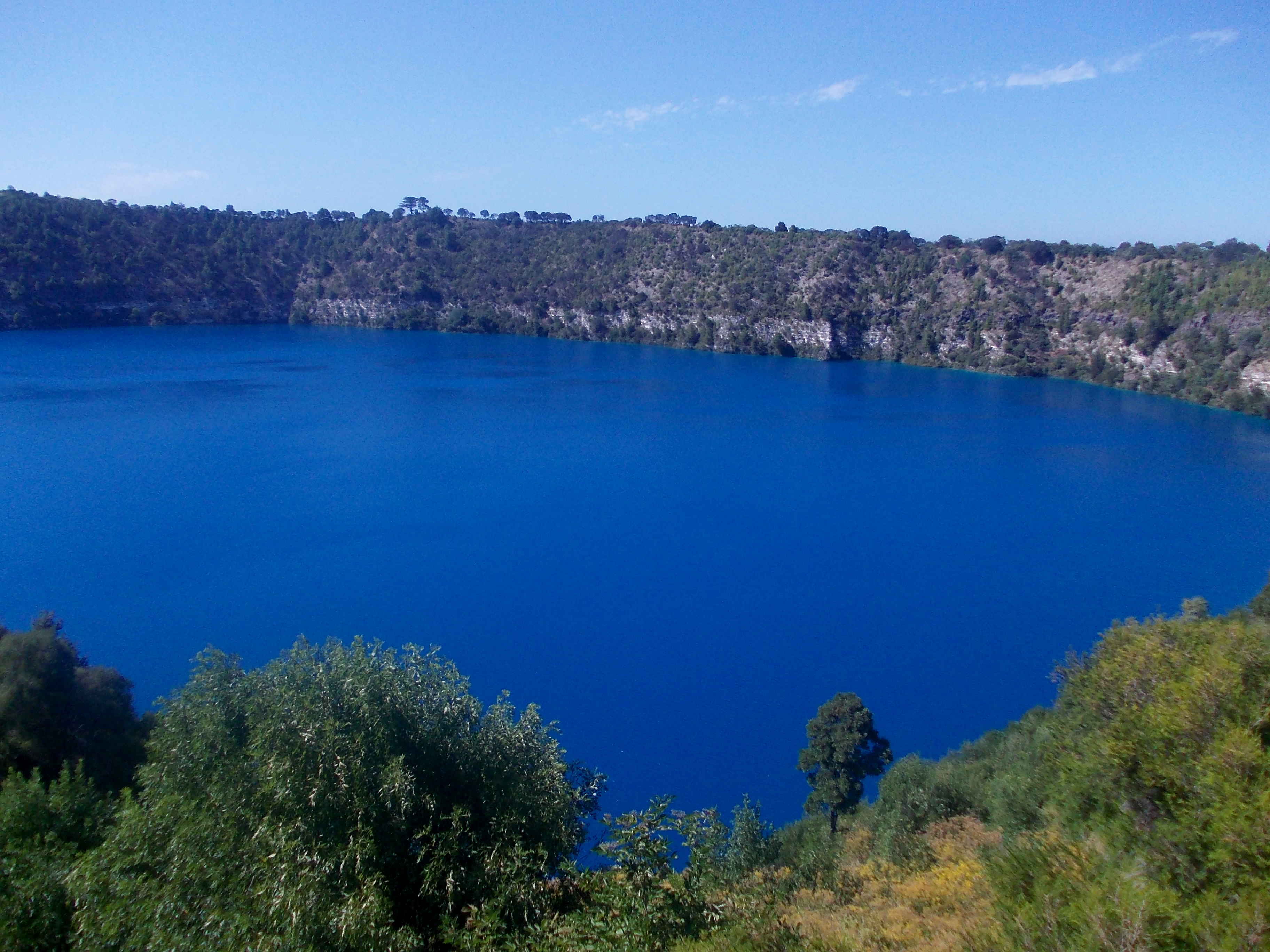
During Gordon’s life, and the early years after his death in 1870, despite having some published works, his poetry largely went unrecognised. It was publications after his death that, by the late 1870s, saw him gain critical acclaim in Australia and overseas and his star began to rise.
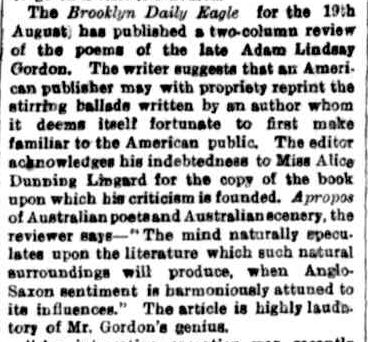
The Argus. (1877, October 18). The Argus (Melbourne, Vic. : 1848 – 1956), p. 4. Retrieved February 19, 2013, from http://nla.gov.au/nla.news-article5941600
Searching newspaper articles from his life and beyond, it was in the mid-1880s that the legend of Gordon really took off.
Try as I might, including searching the Border Watch every year from 1861 until 1885, I could not find any articles from during his lifetime about the “famous leap”. Obviously, there are limited editions of the paper, particularly through the 1860s. For example, the 30 August 1864 edition in which Gordon’s “The Feud” was published is not available.
It was 1881 before I could find any reference at all and it was written as though the leap was common knowledge. Surely I could have found some mention over 20 years, even with limited editions. Even obituaries at the time of his death did not mention “Gordon’s Leap”. The 31 December 1881 issue of the Northern Argus (Clare, S.A.) included the article Notes of a Holiday to the South East described Gordon’s feat at Blue Lake.

NOTES OF A HOLIDAY TRIP TO THE SOUTH-EAST. (1881, December 13). Northern Argus (Clare, SA : 1869 – 1954), p. 3. Retrieved February 17, 2013, from http://nla.gov.au/nla.news-article97285462
A Letter to the Editor in the Border Watch of 28 August 1886, was the next reference I found, proposed the erection of a monument to Gordon. From that time on there was rarely an article written about Adam Lindsay Gordon that didn’t mention his leap.

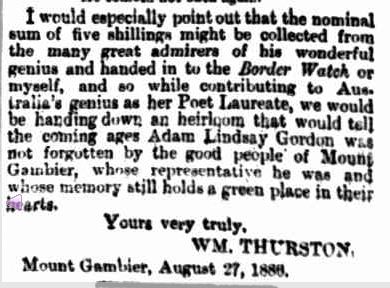
THE POET GORDON. (1886, August 28). Border Watch (Mount Gambier, SA : 1861 – 1954), p. 2. Retrieved February 16, 2013, from http://nla.gov.au/nla.news-article77547978
This touching letter from H.W. Varley of Adelaide came with “a couple of guineas” enclosed.

THE GORDON MEMORIAL. (1886, September 15). Border Watch (Mount Gambier, SA : 1861 – 1954), p. 3. Retrieved February 7, 2013, from http://nla.gov.au/nla.news-article77548266
Despite several men present on the day of “the leap”, consensus could not be reached on the exact point Gordon jumped the fence. Nor could they agree to the exact nature of the leap or the horse Gordon was riding, was it Modesty of Red Lancer? Even the exact day is unclear. The Mt Gambier Aquifer Tours website, suggests it was the day after the Border Handicap Steeplechase during the winter of 1864. I found the results of that race in the Border Watch of July 29, 1864. The race was on Wednesday 27 July 1864.

MOUNT GAMBIER RACES. (1864, July 29). Border Watch (Mount Gambier, SA : 1861 – 1954), p. 2. Retrieved February 17, 2013, from http://nla.gov.au/nla.news-article77009190
This makes sense as the leap apparently occurred after a bet was placed by Gordon on a “square up” race with the first and second placegetters, Robert Learmonth and William Trainor.

BLUE LAKE LOOKING TOWARDS THE AREA (ON LEFT) OF ADAM LINDSAY GORDON’S LEAP
The obelisk was finally placed at a site suggested by William “Billy” Trainor one of Gordon’s closest friends and confidants. It was right that the American Billy, a former circus performer, was at the laying of the foundation stone as was John Riddoch another of Gordon’s confidants. In the last years of Gordon’s life, he corresponded extensively with Riddoch sharing his deepest feelings. The letters were published in 1970 in The Last Letters 1868-1870: Adam Lindsay Gordon to John Riddoch.
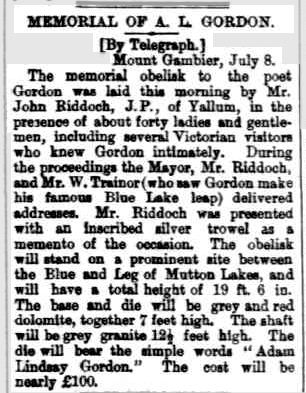
MEMORIAL OF A. L. GORDON. (1887, July 9). South Australian Register (Adelaide, SA : 1839 – 1900), p. 5. Retrieved February 8, 2013, from http://nla.gov.au/nla.news-article46794085

The same view toward the monument taken around 1930.

Image Courtesy of the State Library of South Australia B72412 http://images.slsa.sa.gov.au/mpcimg/72500/B72412.htm

From Mt. Gambier we crossed the border back into Victoria and the Western District. We were soon heading for the “Fields of Coleraine”. Coleraine racecourse was one often frequented by ALG. Part two of the five-part Hippodromania is the verse “The Fields of Coleraine“
On the fields of Col’raine there’ll be labour in vain
Before the Great Western is ended,
The nags will have toil’d, and the silks will be soil’d.
And the rails will require to be mended.
..
For the gullies are deep, and the uplands are steep.
And mud will of purls be the token,
And the tough stringy-bark, that invites us to lark,
With impunity may not be broken.
(Extract from “The Fields of Coleraine”. Published in Sea Spray and Smoke Drift, 1867)
Unfortunately, keeping with racing parlance, heads were turned for home and there was no stopping at Coleraine (I suppose I had called a rest stop at the Casterton Historical Society, 30 minutes earlier), so no photos on the trip of the obelisk in Gordon’s honour beside the Glenelg Highway, east of Coleraine. However, I have since returned to Coleraine and stopped for a photo.
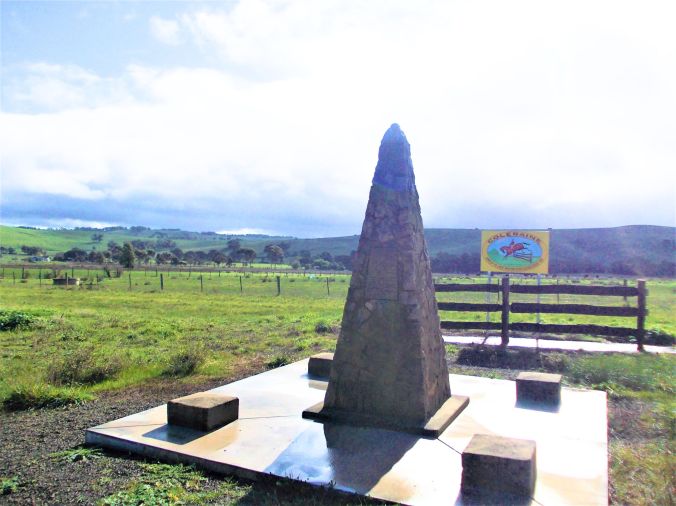
A little further on is the Coleraine Racecourse and opposite is Mt Koroit homestead, the former home of John Kirby, owner of 1911 Melbourne Cup winner The Parisian.
Before Gordons’s death, he spent time in Ballarat and that is where my ALG trail ended but where it will resume at another time. However, it was during his time in Ballarat that Gordon suffered his greatest loss, the death of his 11-month-old daughter Annie.

ALG’S BALLARAT COTTAGE, RELOCATED TO THE BALLARAT BOTANIC GARDENS IN 1934
He plunged into deep sorrow and moved to Melbourne where he wrote his last poems, his melancholy evident. Alice’s death, a bad race fall, and ongoing financial difficulties saw him sink to his lowest ebb. He eventually took his own life on Brighton Beach on 24 June 1870, at the age of thirty-six.
When Adam Lindsay Gordon died, little was written about him, save for coroner’s findings and the standard obituaries, but this moving piece, from the Australian Town and Country Journal months after his death, by the “Wandering Bohemiem”, a literary writer, brings to light a man many of his Western District contemporaries never saw, and a side only those of the “supreme brotherhood” would truly understand. The extract of verse, taken from “A Song of Autumn” published in 1870, was apparently the last he wrote. Clearly written with his dear Annie in his heart it shows the depths he had sunken to.


LITERATURE. (1871, February 18). Australian Town and Country Journal (NSW : 1870 – 1907), p. 18. Retrieved January 20, 2013, from http://nla.gov.au/nla.news-article70464980
And Eastward by Nor’ward
Looms sadly my track,
And I must ride forward,
And still I look back,—
Look back — Ah, how vainly!
For while I see plainly,
My hands on the reins lie
Uncertain and slack.
..
The warm wind breathes strong breath,
The dust dims mine eye,
And I draw one long breath,
And stifle one sigh.
Green slopes softly shaded,
Have flitted and faded —
My dreams flit as they did —
Good-night!— and — Good-bye!
(Extract from “A Basket of Flowers”, Bush Ballads and Galloping Rhymes, Bush ballads and galloping rhymes / by the author of “Ashtaroth”. [A.L. Gordon]. Melbourne: Clarson, Massina, and Co., General Printers, 1870.
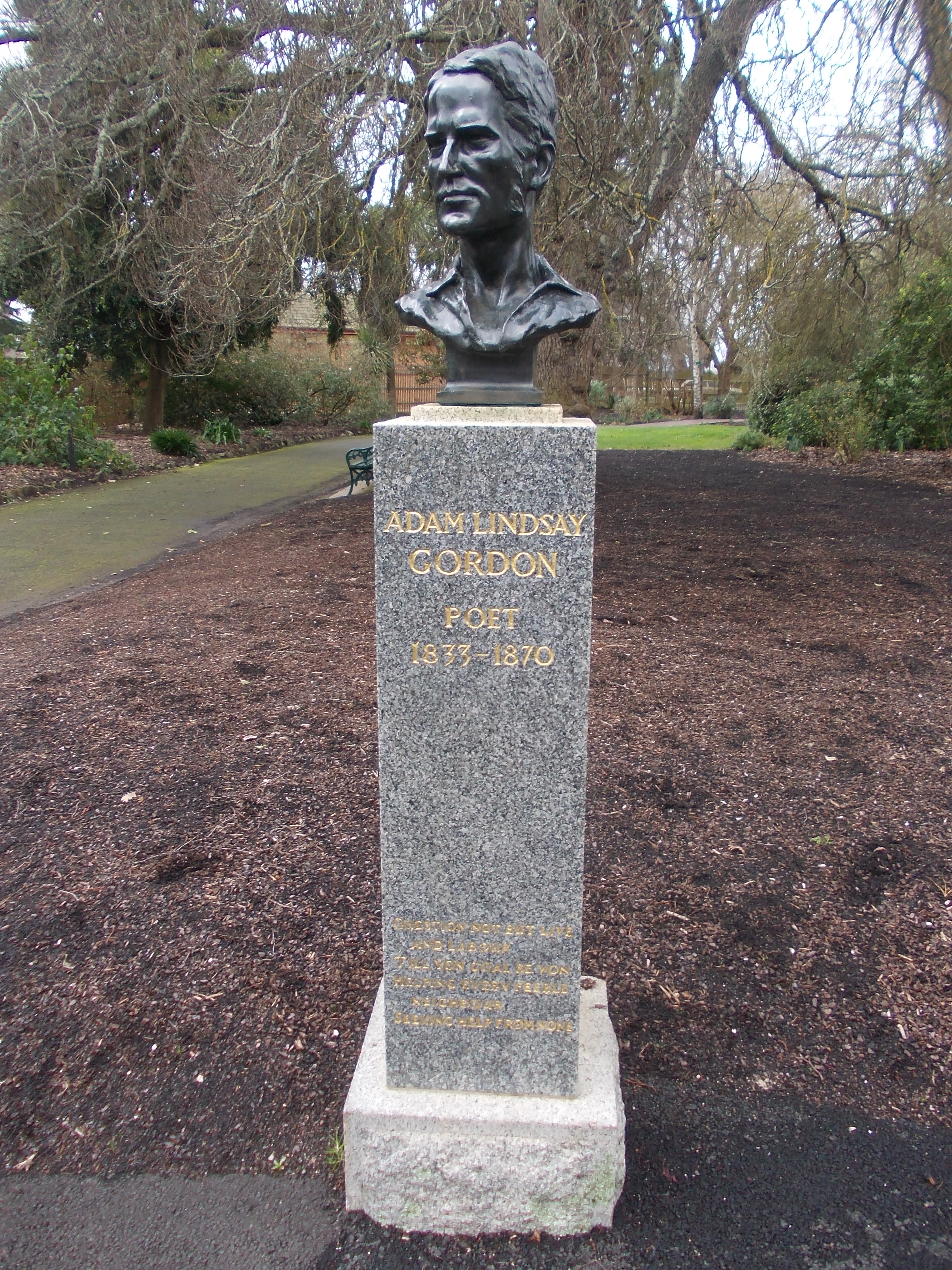
BALLARAT BOTANIC GARDENS.
SOURCES:
Adam Lindsay Gordon Craft Cottage

I have previously written about paranormal activities in Hamilton for Trove Tuesday when residents thought War of the Worlds had come to town. Now I bring you the story of the Hamilton ghost. Well, actually four stories but not all of the same ghost, and on one occasion, the Hamilton apparition drifted out of town to Macarthur.
What I like about these stories is that the ghosts were not the transparent style of apparition, but rather the classic white sheet type made popular by 19th-century theatre. There is a varying amount of tongue-in-cheek used in the reporting, but on each occasion, several people were scared out of their wits.
1941
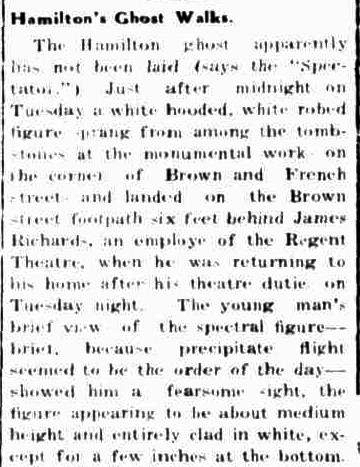
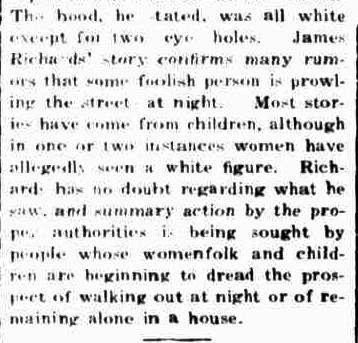
Hamilton’s Ghost Walks. (1941, July 21). Portland Guardian (Vic. : 1876 – 1953), p. 2 http://nla.gov.au/nla.news-article64401002
1922
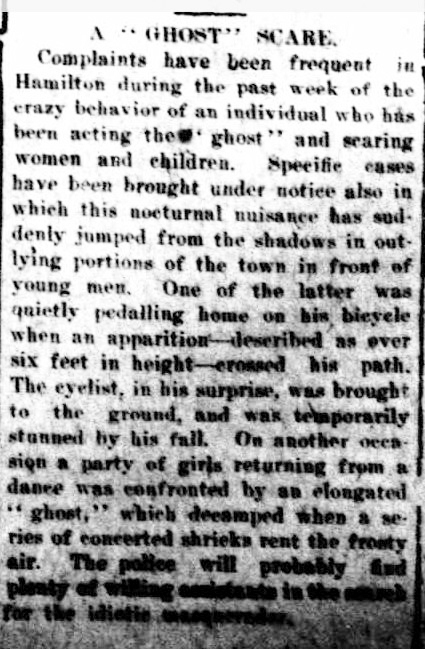
A “GHOST” SCARE. (1922, June 6). The Horsham Times (Vic. : 1882 – 1954), p. 4. http://nla.gov.au/nla.news-article72732250
1904

PLAYING THE GHOST. (1904, December 29). Hamilton Spectator (Vic. : 1870 – 1918), p. 2. http://nla.gov.au/nla.news-article225883919
1898

(1898, September 14). Portland Guardian (Vic. : 1876 – 1953), p. 2 http://nla.gov.au/nla.news-article63674221

It’s two days early but this week’s Trove Tuesday has a Valentine’s Day theme. From the Illustrated Australian News of 21 February 1883, comes “Bush Valentine”. Valentine’s Day was not the postman’s favourite day of the year as his workload increased significantly but whether he came by horse or bicycle, his arrival caused great excitement.
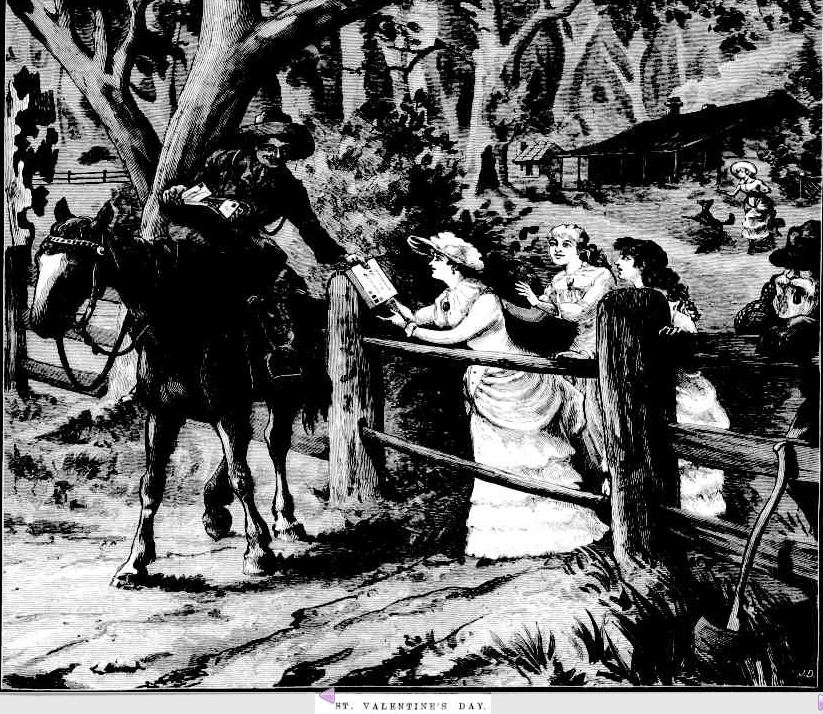
OUR ILLUSTRATIONS. (1883, February 21). Illustrated Australian News (Melbourne, Vic. : 1876 – 1889), p. 17. Retrieved February 10, 2013, from http://nla.gov.au/nla.news-article63186253
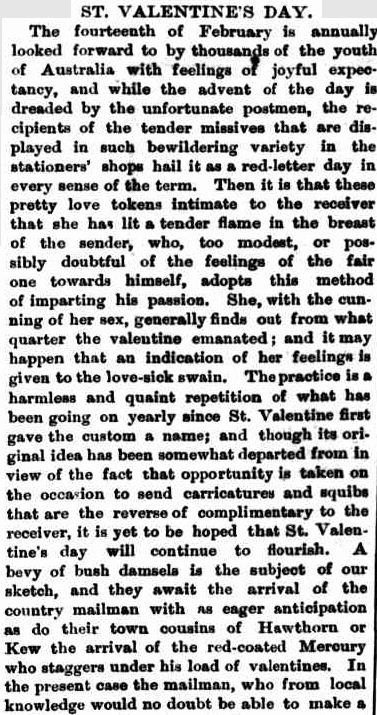

“OUR ILLUSTRATIONS.” Illustrated Australian News (Melbourne, Vic. : 1876 – 1889) 21 Feb 1883: http://nla.gov.au/nla.news-article63186253

The Casterton Historical Society newsletters, as featured in Nifty Newsletters, ran a series of extracts from the book Tales of Casterton: the Waines murder and other stories by Jack Gorman. In the September 2005 issue, Part 1 of the story stated that convicted murderer George Waines arrived in Victoria aboard the Duke of Richmond.
This is a particularly interesting find as my ggg grandmother, Margaret Diwell, who appeared as a witness at George’s murder trial, also arrived on the Duke of Richmond, along with her husband William. This answers the question has to how she came to know the Waines, other than the fact they lived reasonably close together.
I have a database of Duke of Richmond arrivals and I did a search but no George Waines. I then went to an online passenger list of the Duke of Richmond that I often refer back to. No George Waines.
So a-Troving I went. An article from the Bendigo Advertiser, reporting on the hanging of Waines, supported his arrival on the Duke of Richmond. But there seems to have been a case of mistaken identity Waines was keen to amend before his death.

EXECUTION OF THE CONVICT WAINES. (1860, July 18). Bendigo Advertiser (Vic. : 1855 – 1918), p. 3. Retrieved February 3, 2013, from http://nla.gov.au/nla.news-article87945170
I did find a George Waines in the Australian Convict Transportation Registers(1791-1868). Convicted in Warwickshire, he left England for Tasmania in 1843.
Back to the Duke of Richmond passenger list. George’s wife was Jane so I thought I would look at first names instead of surnames. Sure enough, there was a George and Jane Whainer both aged 29 from Yorkshire. George’s age matches his birth date of 1823, but Yorkshire? Both the Casterton Historical Society Newsletter and the article above, state George was born in Dorset, England, with the Bendigo Advertiser narrowing it down to Sherborne.
Back to Trove and look what I found:

POPULATION OF THE GOLDFIELDS. (1860, October 22). Bendigo Advertiser (Vic. : 1855 – 1918), p. 3. Retrieved February 3, 2013, from http://nla.gov.au/nla.news-article87947401
George was from Sherburn, Yorkshire, Sherburn as opposed to Sherborne, Dorset. This and the claim George “was one of the most notorious poachers in the district” helps support something I found on the England and Wales, Criminal Registers (1791-1892). In 1849, George Waines of Yorkshire was sentenced to three months imprisonment on a charge of larceny. Maybe he wasn’t as squeaky clean as he wanted people to believe. No matter the impression he tried to project, nothing could save him from the gallows.
Using FreeBDM I found a marriage of George Waines in 1847, registered in the Scarborough district of Yorkshire. From the same Volume, there are two Janes, Jane Winter and Jane Jewett.
That settled, back to the original aim of my post, the friendship between Margaret Diwell and the Waines, particularly Jane. So it seems they met on the Duke of Richmond, the same ship another set of ggg grandparents sailed on, James and Susan Harman. The Diwells spent around five years in Portland after arrival, then they went to Casterton in 1858. The CHS newsletter says that once in Casterton, the Diwells lived close to both the Waines and the Hunts. As the Hunts purchased land off George Waines in 1856 at Casterton, the Waines must have arrived in town before the Diwells.
It sounds like Jane Waines would have been a good friend. The CHS newsletter describes her as “a comely woman, a vivacious personality full of joy and fun…”. George was not described in such a favourable way, although he did hold Jane in high regard.
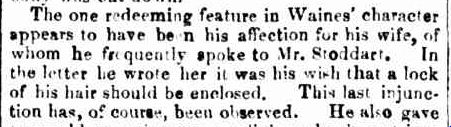
EXECUTION OF THE CONVICT WAINES. (1860, July 18). Bendigo Advertiser (Vic. : 1855 – 1918), p. 3. Retrieved February 4, 2013, from http://nla.gov.au/nla.news-article87945170
Of course, I did wonder what happened to Jane after George’s death. George had thoughts about what she should do.

THE CASTERTON MURDER. (1860, April 30). The South Australian Advertiser (Adelaide, SA : 1858 – 1889), p. 3. Retrieved February 6, 2013, from http://nla.gov.au/nla.news-article1204764
On the Victorian Marriage Index, a Jane Waines married Thomas James Brooks in 1861. From there I lose her. I can not find a death record for either Jane or a Thomas James Brooks that I can definitely say is them. I can’t get a lead on the town Jane lived in so that is making it hard to search for her at Trove. I wonder if she stayed on in Casterton? Did Margaret Diwell see her again? Did Margaret and Jane’s relationship falter during the trial period, given Margaret also knew Mrs Hunt well. So many questions.
As the Harmans were also on the Duke of Richmond, I have a picture in my mind of James Harman back in 1860, then at Muddy Creek, looking up from his paper of choice, maybe the Hamilton Spectator and Grange District Advertiser and remarking “Do you remember the Waines and the Diwells from the ship, Susan?”
This post was part three of a series of posts about the Casterton Murders. You can read the first two parts on the following links:
Part 1: Witness for the Prosecution
Part 2: Witness for the Prosecution – New Findings

This week’s Trove Tuesday article first came to my attention in The Ararat Advertiser. It was barely legible but luckily the Gippsland Mercury ran the same story on February 24, 1914.

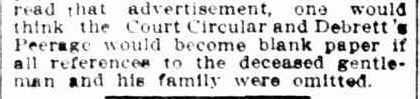
OBITUARY FRILLS. (1914, February 24). Gippsland Mercury (Sale, Vic. : 1914 – 1918), p. 4. Retrieved February 2, 2013, from http://nla.gov.au/nla.news-article88665863

The obituary of Sarah Jane Wadmore in the January Passing of the Pioneers prompted me to find out more about a booklet she co-authored for the Portland Centenary in 1934, the Portland Pioneer Women’s Book of Remembrance. I had previously read about it in newspaper reports from around the time.

Pioneer Women of Portland. (1934, May 24). Portland Guardian (Vic. : 1876 – 1953), p. 3 Edition: EVENING.. Retrieved January 29, 2013, from http://nla.gov.au/nla.news-article64285807
A Google search led me to the State Library of Victoria website and it was pleasing to see it has been digitised and is available online. I was even more pleased that ggg grandmother Margaret Ann Diwell (nee Turner) was among the pioneering women of Portland as well as some of those I have featured in Passing of the Pioneers.
The booklet begins with a forward from Alice Frances Moss, a pioneer of women’s rights. She was the first President of the National Council of Women of Australia and Chair of the Victorian Women’s Centenary Council.
After an offering of appreciation to pioneer women, there is the story of Mrs Stephen George Henty, the first European woman at Portland, to whom the booklet was dedicated. She is often called Mrs Stephen George Henty, but let us call her Jane (Pace).
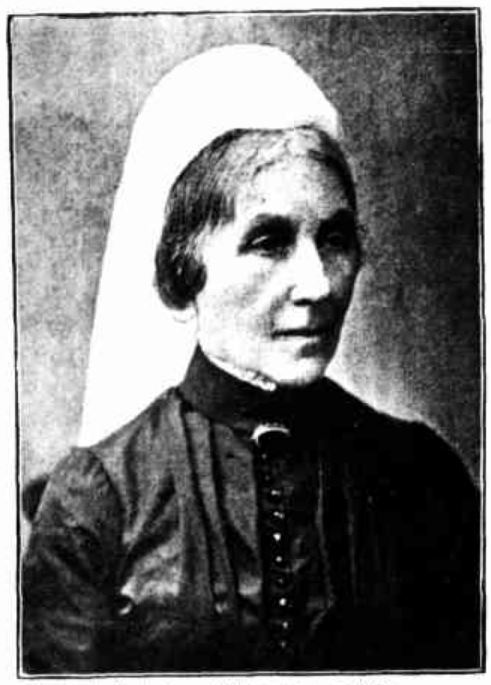
“OBITUARY” The Sydney Mail and New South Wales Advertiser, 14 February 1906
There are the recollections of Mrs George Godwin Crouch (Marianne Trangmar) spanning from 1840 to 1917. Then, a list of “Worthy Pioneers” compiled by Sarah Jane Wadmore. Included is one of my favourites, Rebecca Kittson (Mrs William Lightbody) and Mrs Fawthrop, Jane Rosevear, wife of Captain James Fawthrop the lifeboat captain.
Following is the story of Mrs Richard Charlton Hedditch and further on, a letter she wrote on Christmas Day 1848, to her parents in England. Another woman often referred to by her husband’s name, she was Rachel Forward Read.
After some local poetry comes “Belles and Beauties of the Early Days”. Those included are Misses Henty, Learmonth, Trangmar and Herbertson.
Finally is a list of Portland’s Pioneering Women with women living in Portland prior to 1864 eligible. That’s where I found Margaret. The Diwells lived in Portland for about five years from the time of their arrival on the Duke of Richmond in 1852.
Margaret appears as Mrs William Diwell and her daughter-in-law, Frances Webb, is also listed as Mrs William Diwell. Frances just scraped in as she was born in Portland in 1863 to John Webb and Margaret Smith, also listed. This is a useful list as some entries have notes and maiden names.
The oldest pioneer women, recognised separately, include Marion Nunn Jones, Emma Holmes, and Anne Beglan.
The photographs in the booklet are of Mrs Jane Henty, Mrs Marianne Crouch, Mrs Janet Laurie, Sarah Jane Wadmore and Mrs Rachel Hedditch.
The booklet also comes as an Archive CD book available from the Genealogical Society of Victoria.
Online book – Portland Pioneer Women’s Book of Remembrance

After nearly two years of Passing of the Pioneers, I am beginning to have to dig a little deeper for pioneer obituaries but I have managed to find an interesting group for January. There are members of the Black, Herbertson, and Guthridge families. Also a butcher, a baker and a newspaper maker. Then Sarah Jane Wadmore, an early Portland historian, and Mary Ann Skilbeck, a member of a family that left a legacy of value to historians today.
Don’t despair, there will still be more Passing of the Pioneers and if the Hamilton Spectator ever finds its way to Trove, well, my life will be complete.
Thomas Edwin THOMAS: Died 21 January 1909 at Casterton. Thomas Thomas was the owner of the Casterton Free Press and a former owner of the Port Fairy Gazette and was well-known for his journalism.
Mary FERGUSON: Died 24 January 1910 at Casterton. Arriving at Portland in 1861, the Dewars headed to Heathfield Station near Strathdownie where they were both employed. Later they moved to Casterton until their deaths. Mary had nine children and lived to eighty-four years.
Archibald BLACK: Died 20 January 1912 at Camperdown. Son of Western Victorian pastoralist, Niel Black MLC, Archibald was born in South Yarra and educated at Geelong Grammar, Trinity College and Cambridge. He then settled in the Western District and was one of the first landholders in the Hampden area to recognise the potential for dairy-farming, an industry the area is today renowned for. His obituary and photo can also be found at Obituaries Australia
Thomas MORRISSY: Died January 1914 at Beeac. Tipperary born, Thomas Morrissey arrived in Victoria around 1860 and farmed around Ballarat. After two years, he moved to Beeac where he farmed for the next fifty-two years. He was a member of the Colac P & A Society and took a keen interest in the affairs of the Colac Dairying Company.
Mary GREENHAM: Died 5 January 1915 at Casterton. Mary Greenham was born in Middlesex in 1833 and arrived in Victoria in 1854. She was a Casterton resident from 1855 to 1875, then Corndale for the next thirty-five years before returning to Casterton in the years before her death. With her husband George Sealey, they had a family of nine sons. One son lost his life during the Boer War. She left fifty grandchildren and twelve great-grandchildren.
Patrick KINNANE: Died 9 January 1915 at Port Fairy. A Koroit resident for many years, Patrick Kinnane was born in Limerick, Ireland around 1827. He arrived in Portland about 1854 and worked for the Koroit Borough Council. He had a large family of four sons and five daughters and was buried at the Tower Hill cemetery.
Mary Ann SKILBECK: Died 22 January 1915 at Port Fairy. Back in the 1990s, I read The Diaries of Sarah Midgley and Richard Skilbeck: A Story of Australian settlers 1851-1864, edited by H.A. McCorkell. It has a lot of Port Fairy and the Wesleyan Methodist Church, both relevant to the Harman family. Mary Ann was a sister of Richard Skilbeck, and she married William Midgley, the brother of the other diarist, Sarah Midgley. This was a great read, giving an insight into pioneering life in the south-west of Victoria. Finding Mary Ann’s obituary has reminded me I must read it again. It is available online via the Midgley family website, but I think I’ll wait until I get the hard copy from the library. The website does have a lot of both the Midgley’s and Skilbecks for those interested.
Mary Ann was born in Leeds, Yorkshire, England around 1836. In 1862, she married William Midgley, and soon after the couple travelled to Australia, taking up residence at Koroit. For many years Mary Ann was a Society Class Leader with the Methodist Church. William died in 1910 and Mary Ann in 1915. She was buried in the Tower Hill Cemetery. A further obituary was published in the Spectator and Methodist Chronicle and you can read that on the link – Mary Ann’s Obituary
Agnes Jane TODD: Died 5 January 1917 at Casterton. Agnes Todd married Herbert Lewin in 1882.
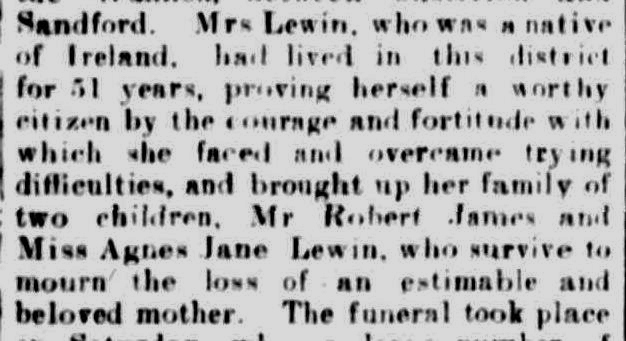
Obituary. (1917, January 8). The Casterton News and the Merino and Sandford Record (Vic. : 1914 – 1918), p. 3 Edition: Bi-Weekly. Retrieved January 26, 2013, from http://nla.gov.au/nla.news-article74488021
John TOOGOOD: Died 18 January 1917 at Hawkesdale. John Toogood was born at Princess Bridge, Melbourne in 1840. He married, for the first time, at Richmond in 1862 and he moved to Port Fairy in 1864. He then moved to Winslow near Warrnambool where his wife died. On to Hawkesdale where he ran a carrying and contracting business for some years before he turned to farming pursuits. He married a further two times, but both wives predeceased him.
Phillip ORMSBY: Died 12 January 1918 at Ellerslie.
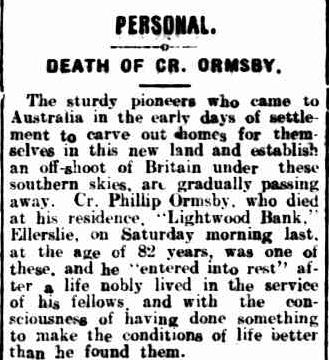
PERSONAL. (1918, January 17). Warrnambool Standard (Vic. : 1914 – 1918), p. 3 Edition: DAILY.. Retrieved January 26, 2013, from http://nla.gov.au/nla.news-article74043412
Phillip Ormsby was born in Dublin and enrolled in the Dublin University to study medicine. His sense of adventure saw him leave his studies and sail to Melbourne on the large clipper, Champion of the Seas in 1854. He got his land legs in Geelong, then he went on to the goldfields at Ballarat for three years, farmed at nearby Learmonth and then purchased land on the banks of the Hopkins River near Ellerslie in 1865.
Like, Archibald Black (above), Phillip was remembered as one of the first to see the potential for dairy-farming in the area. He was one of the co-founders of the Western District Co-Operative Factories Company and served on the Mortlake Shire Council with two years as President. He was also secretary of the Mortlake Cemetery Trust.
Phillip married Jenny McKellar and they had four sons and seven daughters. Phillip died with the knowledge that is son was killed in France only months before.
Jane ARMSTRONG: Died 29 January 1920 at Hamilton. Jane Heaney was one of Condah district’s oldest residents. She arrived from Ireland with her husband, Robert Heaney in 1856 aboard the General Hewitt. After ten years at Heywood, the Heaney’s moved on to Condah Swamp, later known as Wallacedale.
Donald McINNES: Died 9 January 1924 at Warrnambool. Donald arrived on HMS Hercules after a horrendous voyage. His first job in Victoria was at the Kangaroo station near Hotspur owned by the McKinnon brothers, uncles of Donald. He never married.
Thomas HERBERTSON: Died 17 January 1932 at Portland. The Herbertson family have a long association with Portland. Thomas was the son of Robert Herbertson an 1840s arrival at Portland. Thomas was eighty-one at the time of his death and during his years in Portland worked as a saddler, then owned a saddlery business, before purchasing Wattle Hill, where he farmed and ran a successful orchard with his sons. He married Jenny Miller of Portland and they had a family of five children.
Frederick GUTHRIDGE: Died 16 January 1933 at Ullswater. Frederick Guthridge was a member of a large family well-known for their longevity. They featured in this week’s Trove Tuesday post for that reason. Frederick was the son of Richard Guthridge and Elizabeth Pitts. He married Alice Byrne and they had four sons and four daughters. Frederick also left eight brothers and sisters and a ninety-five-year-old father.
Joseph JACKSON: Died 16 January 1940 at Camperdown. Joseph Jackson was a native of Armagh County and spent most of his years in Victoria at Camperdown. A butcher by trade, he ran a successful business for nearly forty years. He was a committee member of the Camperdown Mechanics Institute and the Camperdown Turf Club. He was the longest-serving member of the Camperdown Bowling Club and had success locally and in Melbourne.
Sarah Jane WADMORE: Died 1 January 1941 at Portland. Sarah Wadmore was a woman after my own heart.
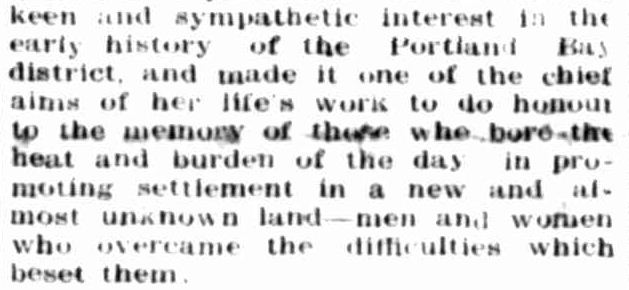
OBITUARY. (1941, January 6). Portland Guardian (Vic. : 1876 – 1953), p. 1 Edition: EVENING. Retrieved January 28, 2013, from http://nla.gov.au/nla.news-article64398666
Sarah had a great interest in the history of Portland and with the approaching centenary of the town in 1934, she and two other local’s, Mrs W.F. Hedditch and Mr E. Davis of the Portland Observer produced a booklet entitled Portland Pioneer Women’s Book of Remembrance for the event. She was also the main force behind the Pioneer Women’s statue at Portland. Sarah’s obituary gives a detailed history of her life, including the loss of her father, a Cape Bridgewater pioneer, swept off the rocks when Sarah was only one month old. Sarah was a school teacher and never married.
John Charles HAUGH: Died 12 January 1943 at Geelong. John Haugh was born at Bri Bri around 1866. In his early life, he went to Stoneyford, beginning work as a baker. He later worked for Camperdown baker, Mr G.Robertson. John was an original member of the Camperdown Brass Band and performed in local theatrical productions. He was a gate-keeper at the Camperdown Football oval for many years.

 Western District Families
You must be logged in to post a comment.