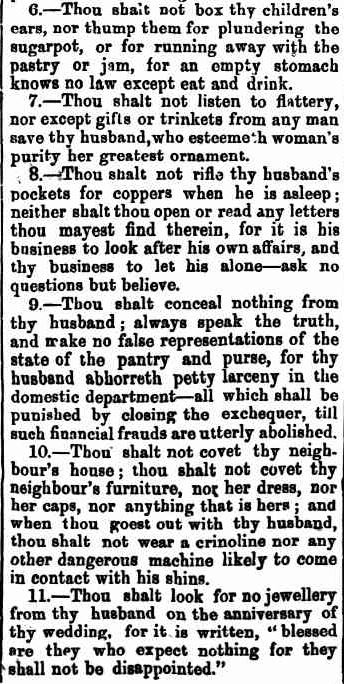
Trove Tuesday – The Husband’s Commandments

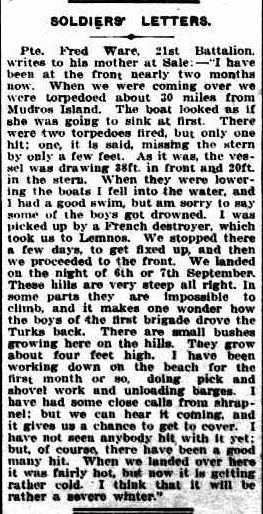
Trove Tuesday this week comes from the Bunyip of Gawler, dated May 11, 1872.

hc

THE HUSBAND'S COMMAND. (1872, May 11). Bunyip (Gawler, SA : 1863 - 1954), p. 4. Retrieved April 28, 2013, from http://nla.gov.au/nla.news-article97206557

THE HUSBAND’S COMMAND. (1872, May 11). Bunyip (Gawler, SA : 1863 – 1954), p. 4. Retrieved April 28, 2013, from http://nla.gov.au/nla.news-article97206557

Next Trove Tuesday I will share some variations of the Husband’s Commandments that ran at different times up until the 1950s.  Wives got their own back too.


Passing of the Pioneers

April Passing of the Pioneers includes members of some of Western Victoria’s well-known pioneering families including Bell, Learmonth, Trigger, Kittson, and Coulson. There is also the great character of Thomas Tattersall of Ararat, a train driving pioneer.

Edwin CUMMINGS:  Died 2 April 1892 at Portland. Edwin Cummings, originally from Tasmania, had only been in Portland around sixteen years but in that time he worked hard to improve his lot. On his arrival in Portland, he ran a successful saw-milling/cabinet-making business. Edwin then moved to farming pursuits. Using modern farming methods, he was able to improve his holding. Edwin also lost several adult children to consumption.

Thomas TATTERSALL: Died 24 April 1894 at Ararat. Lancashire born Thomas Tattersall died from fish poisoning on his birthday. He was a pioneering engine driver and his death was recognised by the  Governor of Victoria who sent a telegram of condolence to the Ararat railway station. Thomas drove the first train from Melbourne to Bendigo and was one of the first drivers to Portland. He had also driven the train for many dignitaries including the Governor and the Premier of Victoria.

Thomas BROWN: Died April 1903 at Hamilton. Thomas Brown went to Hamilton with his parents, after their arrival in Victoria from Scotland in 1852.  Thomas was an elder of the Hamilton Presbyterian Church and a long-time member of the Sons of Temperance and was also involved with other temperance movements. Active in many charities, his obituary noted that the poor of Hamilton had lost a friend in Thomas Brown.

Alfred COWLAND:  Died 27 April 1908 at Casterton. Alfred Cowland was born in Kent, England, and arrived in Victoria around 1858 aged twenty-two  He travelled with his parents, and Alfred and his father began farming at Greenwald.  Alfred married the widow of Fred Spencer, but they did not have any children.

Sophia Styche COLBY: Died 8 April 1915 at Port Fairy. Sophia Colby’s husband Harry Osmond was a partner in Osmond Bros., hotel keepers, and butchers. Sophia was the hostess at the Market Hotel, Port Fairy, and considered a most popular landlady in the Western District and if the races were on, she was there.

Thomas Ferry PEARSON:  Died 24 April 1915 at Port Fairy. Thomas Pearson was born at Newcastle-on-Tyne, England, and arrived in Portland in 1852. He married Jane Strachan there before moving to Port Fairy in 1855.  He went to work on the pilot boats under Captain Mills and then for 13 years was the keeper of the Griffiths Island lighthouse.

GRIFFITHS ISLAND, PORT FAIRY.

GRIFFITHS ISLAND LIGHTHOUSE, PORT FAIRY.

Francis Stubbs COULSON: Died 10 April 1916 at Hamilton. Francis Coulson was the husband of my gg aunt Harriet Martha Diwell. He was the son of Christopher Coulson and Mary Frances Stubbs and was born in Yorkshire, England in 1842.  He married Harriet in 1873 and they had thirteen children. Francis ran a carrying business between Portland and the inland towns. He also farmed at Rosebank Dwyers Creek and hard work saw him turn it into a “nice property”.

Mary Ann ANDREWS: Died 23 April 1918 at Port Fairy. Mary Ann Andrews was born in Somersetshire, England, and arrived in Victoria in 1852. Soon after she married Joseph Digby.  They had a large family of nine sons and daughters.  She was eighty-eight at the time of her death.

Kate CUE: Died 23 April 1917 at Port Fairy. Kate Cue was from the Casterton district. Her brother  Tom Cue, a miner, had the town Cue, Western Australia named after him. Kate married William Sutherland McPherson of Nangeela station, Casterton. They took up residence in Port Fairy and had seven children.

James MAHONEY: Died 27 April 1918 at Port Fairy. James Mahoney of Killarney was a member of one of the oldest families in the district. He was the son of Mrs Quirk and had three brothers and a sister living at the time of his death aged sixty-nine. James had travelled extensively throughout Australia and never married.

James BELL: Died April 1923 at Mt. Eckersley. James Bell was a member of the well-known Bell family of Mt Eckersley near Heywood. James, his parents, and siblings arrived in Victoria in 1841 and they settled at Mt Eckersley. He was the last surviving member of the original family known for their longevity. James was ninety-seven at the time of his death and his father John Bell lived to 101.

Jonathan HARMAN:  Died April 1930 at Heywood. Jonathan Harman, my ggg uncle was also from a family known for longevity. He died at the home of his daughter, Amelia, wife of the nephew of James Bell (above). Jonathan was ninety-two years old and a colonist of seventy-six years. Johnathon was buried with his wife Mary Oliver at the Byaduk Cemetery.

GRAVE OF JONATHON HARMAN, BYADUK CEMETERY

Kate Isabella HILL: Died April 1934 at Wodonga. Kate Hill was the daughter of John and Isabella Hill of West Portland.  She was better known as “Kitty Hill” and she and sister Lizzie were household names in their early days. John Hill was a local school teacher. Kitty married William Smith of Wodonga and was seventy-five years old when she died.

Alexander MOTT:  Died 12 April 1934 at Casterton. Alexander was born in Millicent, South Australia, and went to the Casterton district in the early 1900s. He farmed at Carapook and Bahgallah before settling in the Casterton township. His wife predeceased him and he left seven sons and daughters.

Mary Simpson LEARMONTH: Died 2 April 1939 at Hamilton. Mary Learmonth was from one well-known Hamilton family and married into another when she wed David Fraser Laidlaw in 1899. Mary was the daughter of Peter Learmonth of Prestonholme Hamilton. David’s father was David Laidlaw, a saddler who arrived in Hamilton with no money and become one of the town’s most prominent citizens.

Mary was quite the sportswoman and was seventeen times female champion of the Hamilton Golf Club. This was according to her obituary in the Portland Guardian, however, her obituary in The Argus of April 4, 1939 states she was club champion nineteen times.  She was also a talented tennis and croquet player. Other than sport, Mary was president of the Australian Women’s National League prior to her death and was a member of the Hamilton Horticulture Society.

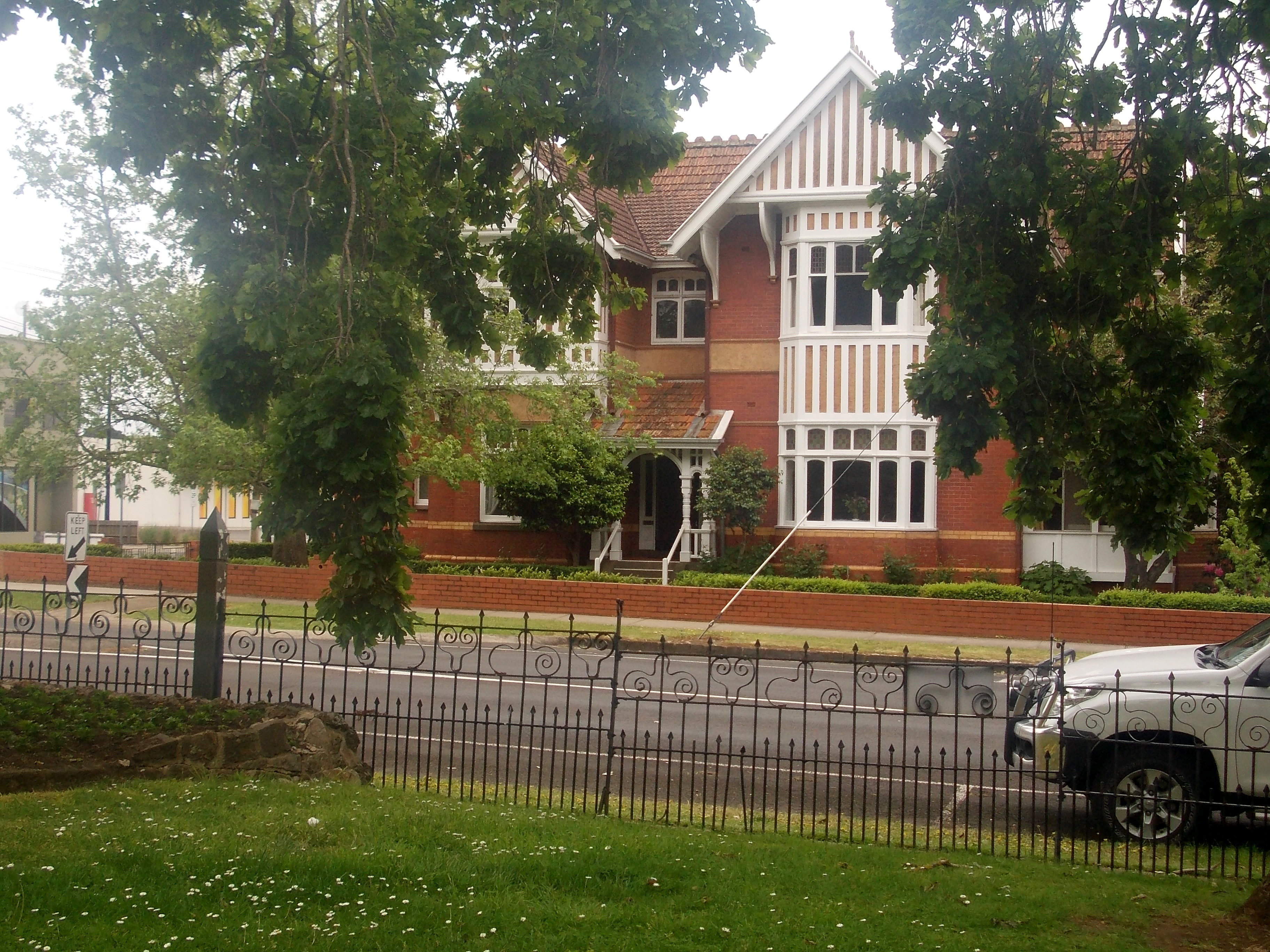
Mary died at her home Eildon on the corner of Thompson and French Street Hamilton. Everyone who has lived in Hamilton will know the Laidlaw’s former home, just on the edge of the CBD and overlooking the Hamilton Botanic Gardens.  The house, designed by Ussher and Kemp, was sold after Mary’s death to the Napier Club, a club formed by the female counterparts of the Hamilton Club.  The club, formed around 1931, still occupies Eildon today.

“Eildon”, Hamilton

Alice Maria WYATT:  Died 23 April 1940 at Hamilton. Alice Wyatt, the daughter of Mr and Mrs Thomas Lewis Wyatt, spent her childhood in Portland before moving to Hamilton around 1878 when she was twenty. She did spend some time in Melbourne working for Sir Edward Miller and his wife Lady Mary Miller. Sir Edward was a politician who made his money in finance and pastoral pursuits.  Alice spent the last twenty-five years of her life in Hamilton.

Irwin BELL: Died April 1940 at Hamilton. Irwin Bell of Dartmoor was a son of James Bell (above). Irwin was born in Portland around 1874 and lived at Mt Eckersley until the Bell family property was sold. He married Ann Letts of Heywood and together they led a life dedicated to the Church of England. They established the first Sunday School at Dartmoor and prepared parishioners for their first communion. Irwin also worked for the Department of Forestry and in later years was a Justice of the Peace. He died at KiaOra Hospital in Hamilton and was buried at Heywood cemetery.

James TRIGGER:  Died 25 April 1945 at Macarthur. James Trigger was the son of Samuel and Eliza Trigger of Warrabkook near Macarthur. Born in 1859, James selected land at Mt Eccles at a young age and he farmed there for the duration of his life.

OBITUARY. (1945, May 24). Portland Guardian (Vic. : 1876 - 1953), p. 3 Edition: EVENING. Retrieved April 27, 2013, from http://nla.gov.au/nla.news-article64404393

OBITUARY. (1945, May 24). Portland Guardian (Vic. : 1876 – 1953), p. 3 Edition: EVENING. Retrieved April 27, 2013, from http://nla.gov.au/nla.news-article64404393

James was interested in horse racing and was the owner of a number of horses. He left a widow and a son and daughter.

Robert Steven KITTSON: Died 8 April 1948 at Lower Cape Bridgewater. Robert Stephen Kittson was the son of James Kittson and Catherine Trotter and the last surviving member of the first family of Kittsons to arrive at Cape Bridgewater. A deeply religious man, he was involved in many church activities. Having had two sons serve in WW1, Robert showed an interest in returned servicemen and with his passing “ex-servicemen have lost a loyal friend”

Mary Ann ALLSOP:  Died 10 April 1953 at Port Campbell. Mary Ann was the daughter of Mr and Mrs Samuel Allsop, pioneers of the Port Campbell district. She married Thomas Wiggens at Purrumbete. After the death of Thomas, Mary Ann moved to Camperdown.  She left one son and three daughters and was buried at the Camperdown cemetery.

From Six Bob Tourist to Souvenir

This is the third year I have posted for the Trans Tasman Anzac Day Blog Challenge.  For 2013, I share the story of Leslie Herbert Combridge.

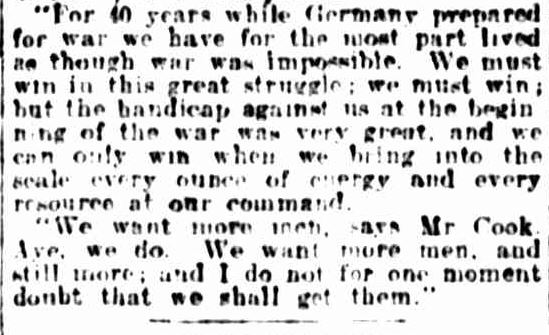
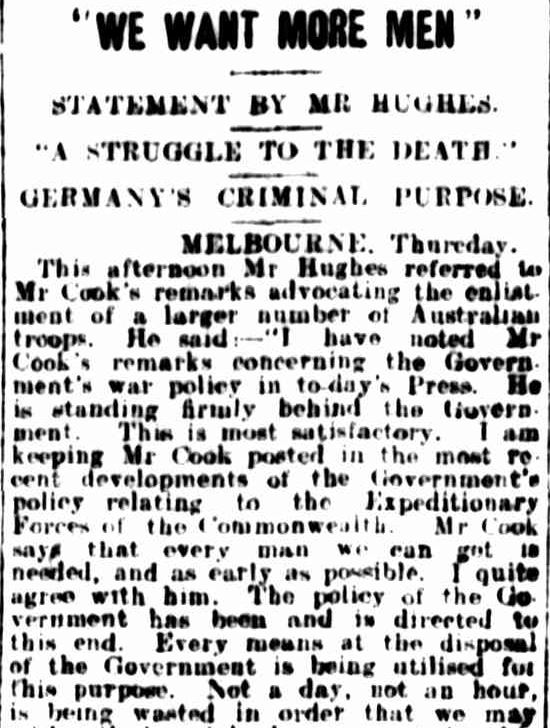
When Billy Hughes spoke to the people of Australia on January 21, 1915, something must have stirred inside Les Combridge.  It may have been pride, anger, guilt or simply his sense of adventure.
lc8lc9lc10

"WE WANT MORE MEN". (1915, January 22). The Ballarat Courier (Vic. : 1914 - 1918), p. 3 Edition: DAILY.. Retrieved April 23, 2013, from http://nla.gov.au/nla.news-article73915492

“WE WANT MORE MEN”. (1915, January 22). The Ballarat Courier (Vic. : 1914 – 1918), p. 3 Edition: DAILY.. Retrieved April 23, 2013, from http://nla.gov.au/nla.news-article73915492

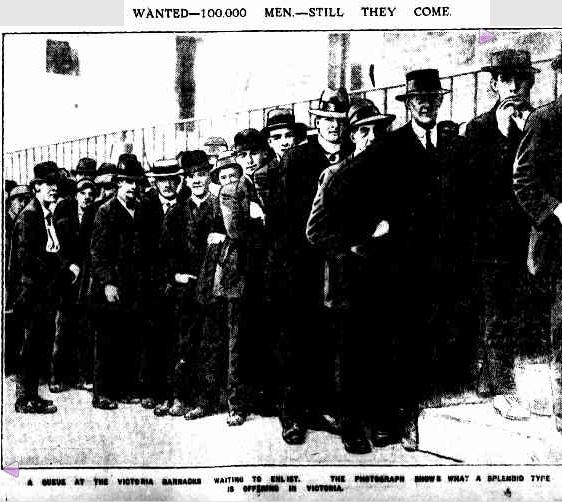
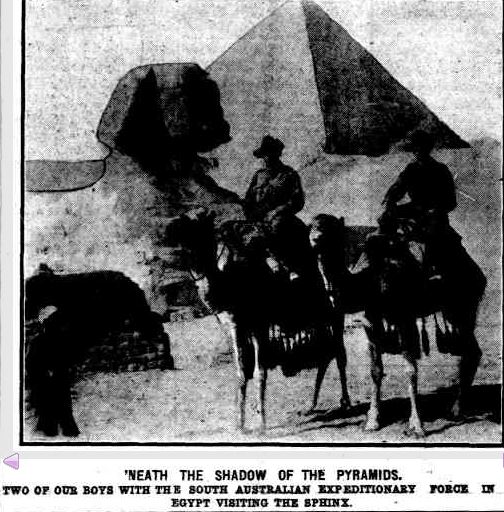
On February 2, he travelled the 40 kilometres from Grantville to Wonthaggi and enlisted in the Australian Infantry Forces.  He had nothing to lose.  He was 18½ and working on a farm in a rural area so the chance to get out and be paid to see the world must have been some incentive.  Why wouldn’t it be an adventure?  The papers were full of stories of soldiers enjoying the sights of Egypt, the Great Pyramids and the market places.  Besides, it probably would be all over by the time he got there.

WANTED—100,000 MEN.—STILL THEY COME. (1915, January 6). The Argus (Melbourne, Vic. : 1848 - 1956), p. 7. Retrieved April 20, 2013, from http://nla.gov.au/nla.news-article1488026

WANTED—100,000 MEN.—STILL THEY COME. (1915, January 6). The Argus (Melbourne, Vic. : 1848 – 1956), p. 7. Retrieved April 20, 2013, from http://nla.gov.au/nla.news-article1488026

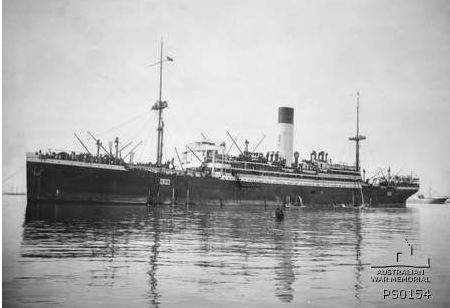
After enlisting with his father’s consent, Les was assigned to the newly formed 21st Battalion.  After training at  Broadmeadows, the Battalion left Port Melbourne on May 10, 1915 aboard the HMAT Ulssyss.

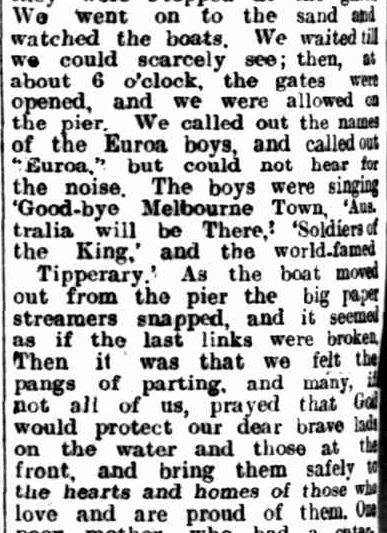
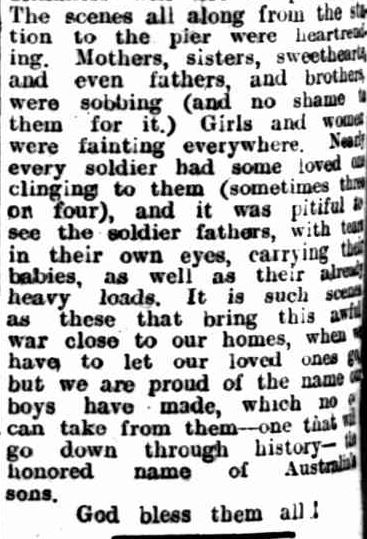
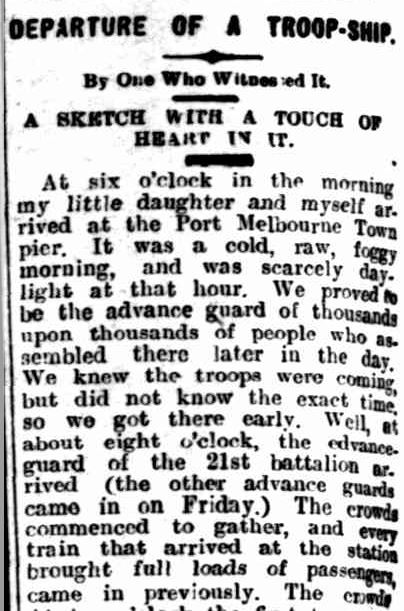
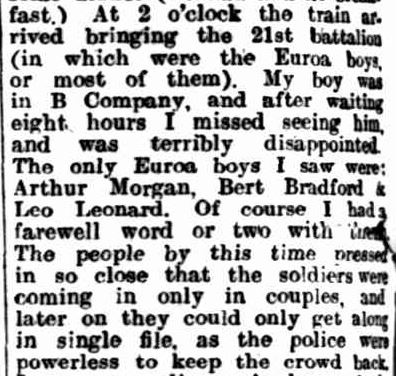
This article from the Euroa Advertiser by “One Who Witnessed It” describes the arrival of the troops at the dock, boarding and departure.
lc3

lc4

lc5

DEPARTURE OF A TROOP-SHIP. (1915, May 14). Euroa Advertiser (Vic. : 1884 - 1920), p. 2. Retrieved April 20, 2013, from http://nla.gov.au/nla.news-article70371657

DEPARTURE OF A TROOP-SHIP. (1915, May 14). Euroa Advertiser (Vic. : 1884 – 1920), p. 2. Retrieved April 20, 2013, from http://nla.gov.au/nla.news-article70371657

That account was a little different to that of A.M McNeil in his book The Story of the 21st He writes

“Embarkation was quietly carried out.  There was no fanfare of trumpets, and that night we slipped from the pier, down the bay…” (p. 7)

HMAT Ulysses  Image Courtesy of the Australian War Memorial ID NO: PS0154. Photographer Schuler, Phillip Frederick Edward  http://www.awm.gov.au/collection/PS0154/

HMAT ULYSSES. Image Courtesy of the Australian War Memorial ID NO: PS0154. Photographer
Schuler, Phillip Frederick Edward http://www.awm.gov.au/collection/PS0154/

A.R McNeil  described the voyage as “smooth” and a highlight was the arrival at the Suez Canal.

“…glorious trip through Suez Canal in daylight.  Here we saw troops on active service for the first time, as the “line” was then right on the Canal bank (p8).

Egypt lived up to the reports back home

“Our first stay in Egypt is one of our happiest memories,  In spite of the heat, and the not too good tucker, we enjoyed our time off thoroughly”  “Cairo 20 minutes by electric tram and the sights, sounds and smells of our new surroundings interested us”. (p.8)

HINDMASH PATRIOTIC FUND. (1915, January 23). The Mail (Adelaide, SA : 1912 - 1954), p. 9. Retrieved April 23, 2013, from http://nla.gov.au/nla.news-article59302494

HINDMASH PATRIOTIC FUND. (1915, January 23). The Mail (Adelaide, SA : 1912 – 1954), p. 9. Retrieved April 23, 2013, from http://nla.gov.au/nla.news-article59302494

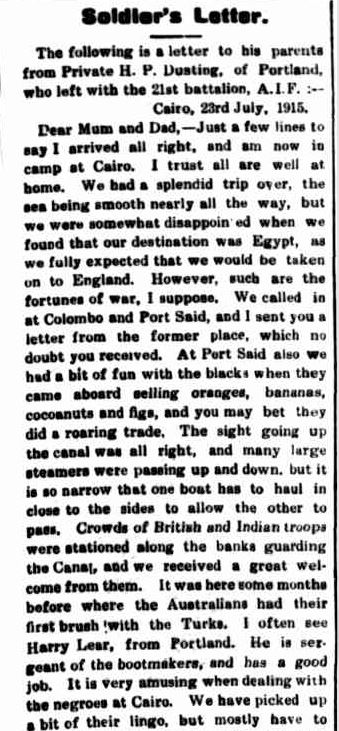
Private Dusting of Portland, with the 21st, wrote home of the sights he had seen at Columbo, Port Said and Cairo.  Like others, he was keen to get to the Dardanelles.
lc15

Soldier's Letter. (1915, August 18). Portland Guardian (Vic. : 1876 - 1953), p. 3 Edition: EVENING. Retrieved April 23, 2013, from http://nla.gov.au/nla.news-article63974309

Soldier’s Letter. (1915, August 18). Portland Guardian (Vic. : 1876 – 1953), p. 3 Edition: EVENING. Retrieved April 23, 2013, from http://nla.gov.au/nla.news-article63974309

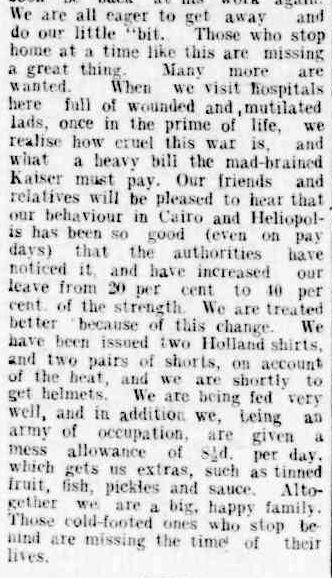
Bugler G.  Barett wrote of the training the 21st Battalion were carrying out before they moved on to Anzac Cove.  The food was good too, and a 8 pence a day allowance allowed for extras like tinned fruit and pickles.
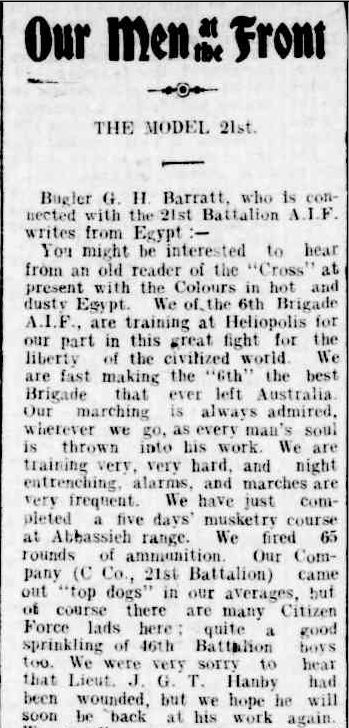
lc17

Our Men at the Front. (1915, August 21). Brighton Southern Cross (Vic. : 1914 - 1918), p. 3. Retrieved April 23, 2013, from http://nla.gov.au/nla.news-article75045296

Our Men at the Front. (1915, August 21). Brighton Southern Cross (Vic. : 1914 – 1918), p. 3. Retrieved April 23, 2013, from http://nla.gov.au/nla.news-article75045296

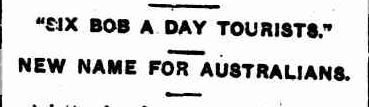
It was during this time that the term “Six Bob a Day Tourists” evolved to describe the Australian diggers.  They could earn six bob a day and see the World.

"SIX BOB A DAY TOURISTS.". (1915, June 7). The Daily News (Perth, WA : 1882 - 1950), p. 3 Edition: THIRD EDITION. Retrieved April 25, 2013, from http://nla.gov.au/nla.news-article81003870

“SIX BOB A DAY TOURISTS.”. (1915, June 7). The Daily News (Perth, WA : 1882 – 1950), p. 3 Edition: THIRD EDITION. Retrieved April 25, 2013, from http://nla.gov.au/nla.news-article81003870

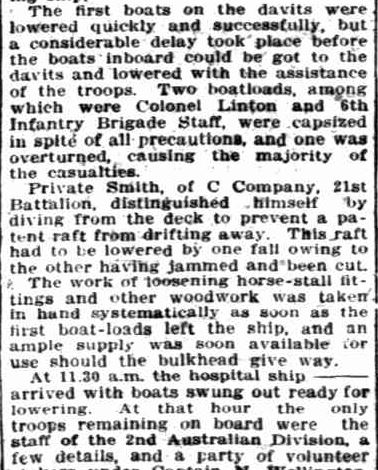
Despite the sightseeing, the boys were keen to get into action and on August 30, the 21st boarded the Southland bound for Anzac Cove.  On September 2, 1915, the troops of the 21st Battalion, including Les Combridge, got their first taste of the reality of war.  A German submarine torpedoed the cruiser and the call came to abandon ship.  Men rushed to life boats, some spent hours in the water while others drowned and they would be noted in history as the victims of the first Australian ship struck by a torpedo.  There were 14 casualties in total.

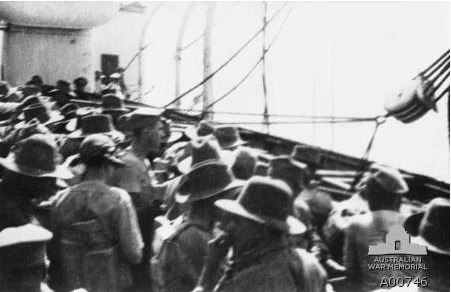
Men of 11 Platton 21st Battalion C Company IMAGE COURTESy of the Australian War Memorial.  ID No. A00746 http://www.awm.gov.au/collection/A00746/

Men of 11 Platton 21st Battalion C Company IMAGE COURTESy of the Australian War Memorial. ID No. A00746 http://www.awm.gov.au/collection/A00746/

The Southland after the torpedo attack.
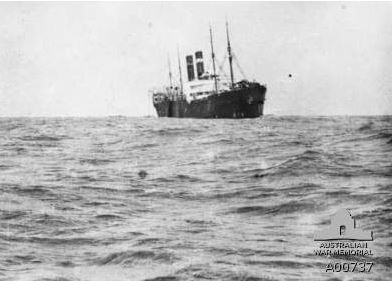
The Troopship Soutland.  Image courtesy of the Australian War Memorial Id No.A00737http://www.awm.gov.au/collection/A00737/

The Troopship Soutland. Image courtesy of the Australian War Memorial Id No.A00737http://www.awm.gov.au/collection/A00737/

Neil C. Smith in the Red & Black Diamond: the History of the 21st Battalion mentions letters home were censored after the event and the story was not officially released until two months later.  This article from November 15, 1915 was one of the first reports of the attack.
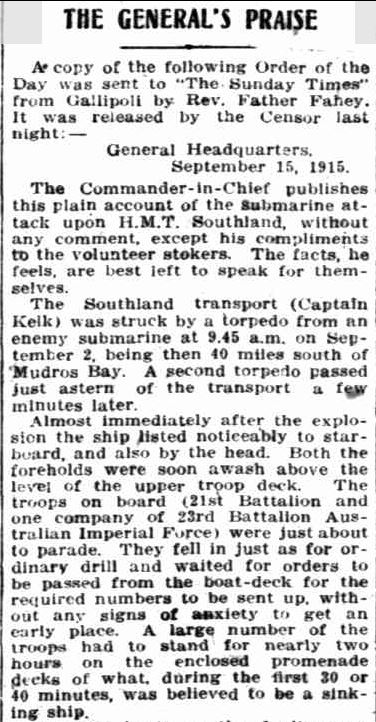
lc12

THE GENERAL'S PRAISE. (1915, November 21). Sunday Times (Perth, WA : 1902 - 1954), p. 1 Section: First Section. Retrieved April 23, 2013, from http://nla.gov.au/nla.news-article57829146

THE GENERAL’S PRAISE. (1915, November 21). Sunday Times (Perth, WA : 1902 – 1954), p. 1 Section: First Section. Retrieved April 23, 2013, from http://nla.gov.au/nla.news-article57829146

After their rescue, the 21st Battalion spent a couple of days at Lemnos Island in the Aegean Sea.   They then resumed their journey to Anzac Cove and their next big adventure began.

21st BATTALION AFTER ARRIVAL AT GALLIPOLI, MARCHING UP MONASH GULLY.  Image courtesy of Australian War Memorial ID No: A000742 http://www.awm.gov.au/collection/A00742/

21st BATTALION AFTER ARRIVAL AT GALLIPOLI, MARCHING UP MONASH GULLY. Image courtesy of Australian War Memorial ID No: A000742 http://www.awm.gov.au/collection/A00742/

Letters home described the rough terrain and the risk of Turkish snipers. At some of the posts, ropes raised soldiers up and down the steep embankments.

Our Boys at Gallipoli. (1915, December 14). Port Pirie Recorder and North Western Mail (SA : 1898 - 1918), p. 1. Retrieved April 23, 2013, from http://nla.gov.au/nla.news-article95346962

Our Boys at Gallipoli. (1915, December 14). Port Pirie Recorder and North Western Mail (SA : 1898 – 1918), p. 1. Retrieved April 23, 2013, from http://nla.gov.au/nla.news-article95346962

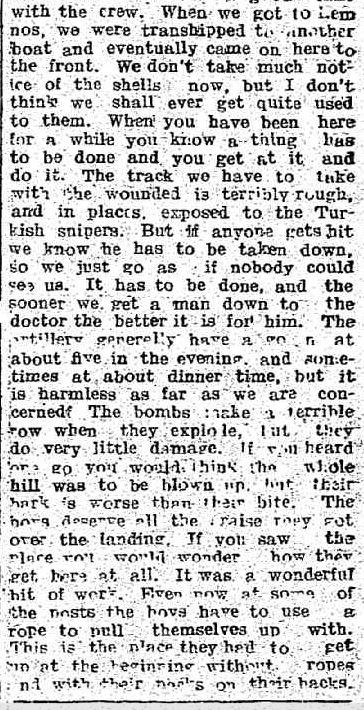
Private Fred Ware of East Gippsland also wrote home of the terrain and gave an account of the trip on the Southland.

SOLDIERS' LETTERS. (1915, December 24). Gippsland Mercury (Sale, Vic. : 1914 - 1918), p. 3 Edition: morning. Retrieved April 23, 2013, from http://nla.gov.au/nla.news-article89277160

SOLDIERS’ LETTERS. (1915, December 24). Gippsland Mercury (Sale, Vic. : 1914 – 1918), p. 3 Edition: morning. Retrieved April 23, 2013, from http://nla.gov.au/nla.news-article89277160

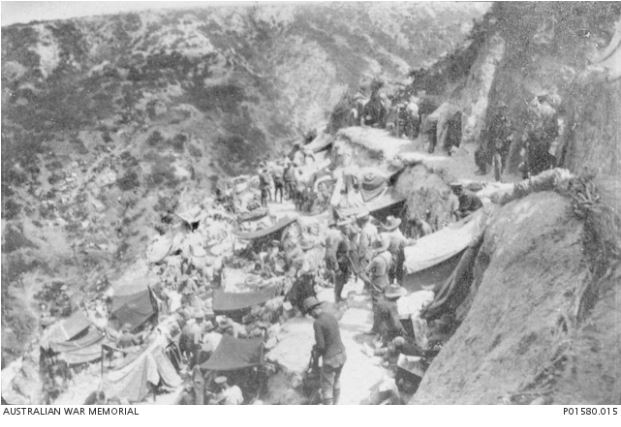
Les Combridge, with C Company, found himself stationed at Steele Post.  He  would stay in the trenches for weeks.  Steele Post looks as though it was one of the posts where ropes were necessary.

STEELES POST, GALLIPOLI 1915.  Image courtesy of the Australian War Memorial ID No:  P01580.015 http://www.awm.gov.au/collection/P01580.015

STEELES POST, GALLIPOLI 1915. Image courtesy of the Australian War Memorial ID No: P01580.015 http://www.awm.gov.au/collection/P01580.015

Conditions were harsh.  From the 21st Battalion Unit Diary on September 13, 1915 –

“Trenches infected with vermin, fleas and lice…Sanitary arrangements with regard to this Section need particular care and every endeavour is being made to perfect same”

This was no holiday.

On September 21, Les was charged with disobeying am NCO, the first of several charges during  his years of service.

On September 30 the Unit Diary recorded that,

A large percentage of the men are suffering from diarrhea of dysentery …This Battalion has been in the trenches for 23 days...”

On that day, Les was charged for being absent from his place of duty.  Maybe he was making use of the limited sanitary arrangements available to him, given the diary entry for that day.

Another charge for Les came on October 18 of sleeping at his post while sentinel, but he was found not guilty.

During December 1915,  as blizzards began to hit the coastline, the 21st Battalion was evacuated from Gallipoli with the other Australian troops and they began to make their way back to Alexandria.  They spent some time at Imbros Island and Christmas and New Year at Lemnos Island where Christmas billies from home were enjoyed.

On January 4, 1916 they began the last leg to Alexandria.

When the 21st returned to Egypt, they spent time on the banks of the Suez Canal but when the 2nd Pioneer Battalion was raised soon after, Les joined their ranks on March 16, 1916.  They sailed for Marseilles, France and began to make their way to the north of France, by train and foot.

After arriving in Morbecque, France on March 31, 1916,  the Pioneers received a demonstration about Poison gas and Weeping gas as recorded in the  2nd Pioneer Unit Diary.  They were now at the Somme, preparing to do the work the Pioneers were formed for, while still fending off the perils of war.

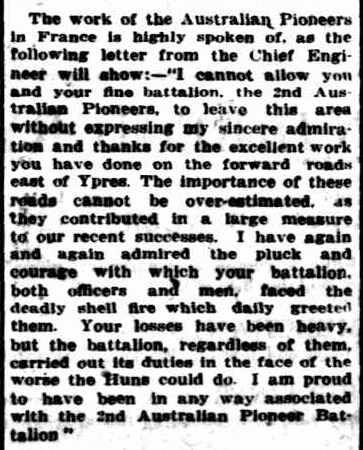
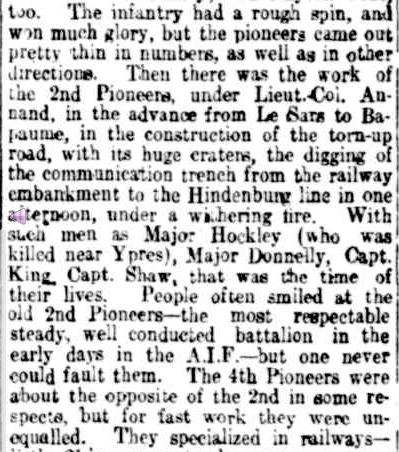
The Chief Engineer of the Australian Pioneers wrote of the work the 2nd Pioneers did near Ypres. He mentions the Battalion had suffered heavy losses.

The Chronicle. (1918, July 20). Williamstown Chronicle (Vic. : 1856 - 1954), p. 2. Retrieved April 24, 2013, from http://nla.gov.au/nla.news-article69681288

The Chronicle. (1918, July 20). Williamstown Chronicle (Vic. : 1856 – 1954), p. 2. Retrieved April 24, 2013, from http://nla.gov.au/nla.news-article69681288

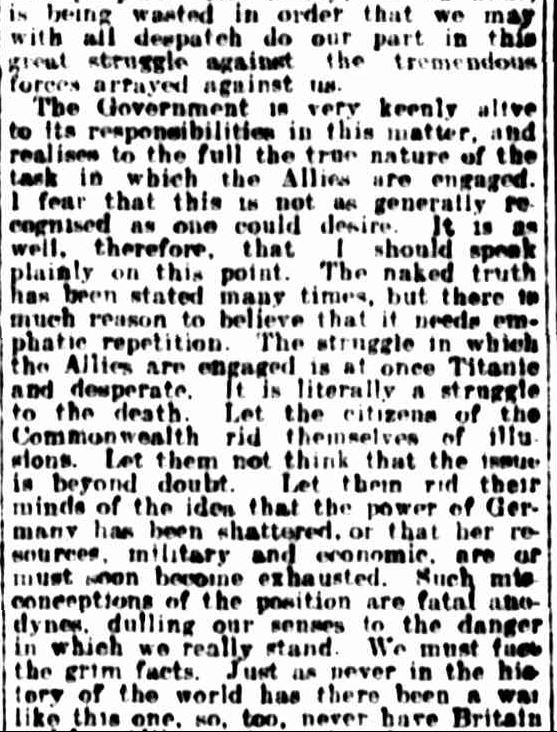
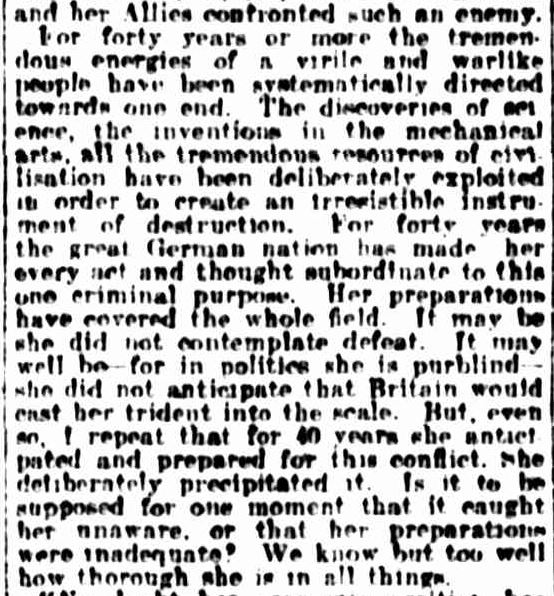
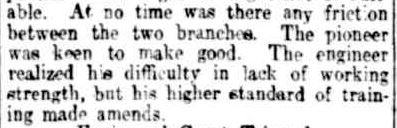
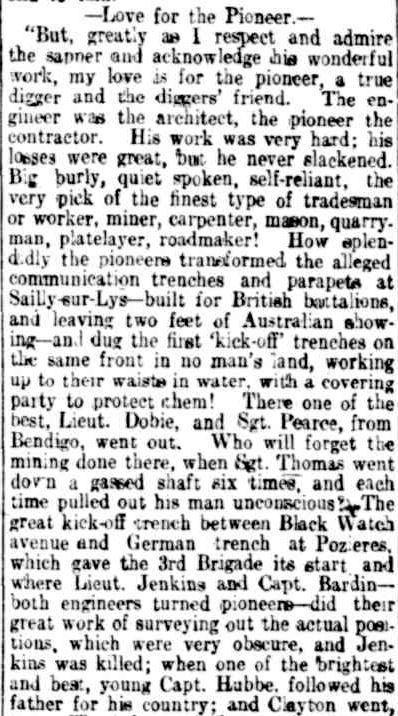
Colonel E.J.H. Nicholson wrote of the Pioneers in 1919.
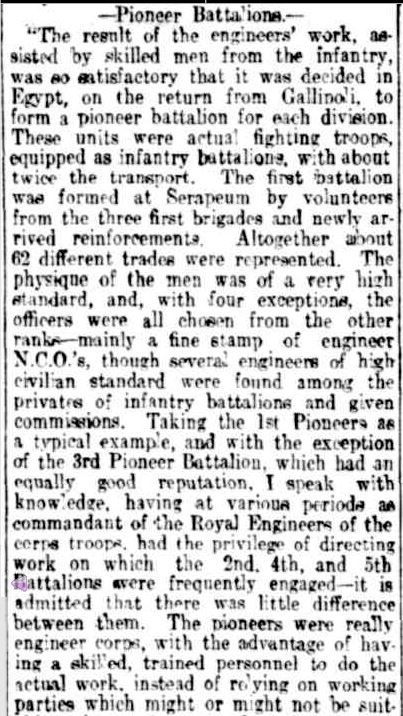
lc32

lc33

Nicholson had the greatest respect for the pioneers and considered the 2nd Pioneers “the most respectable, steady, well conducted battalion…”
lc34

AUSTRALIAN ENGINEERS AND PIONEERS. (1919, May 16). The Register (Adelaide, SA : 1901 - 1929), p. 7. Retrieved April 24, 2013, from http://nla.gov.au/nla.news-article62198709

AUSTRALIAN ENGINEERS AND PIONEERS. (1919, May 16). The Register (Adelaide, SA : 1901 – 1929), p. 7. Retrieved April 24, 2013, from http://nla.gov.au/nla.news-article62198709

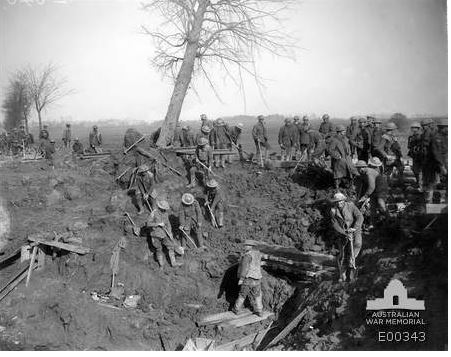
2nd Pioneer Battalion near Bapaume.  Image courtesy of the Australian War Memorial ID No:  E00343 http://www.awm.gov.au/collection/E00343/

2nd Pioneer Battalion near Bapaume. Image courtesy of the Australian War Memorial ID No: E00343 http://www.awm.gov.au/collection/E00343/

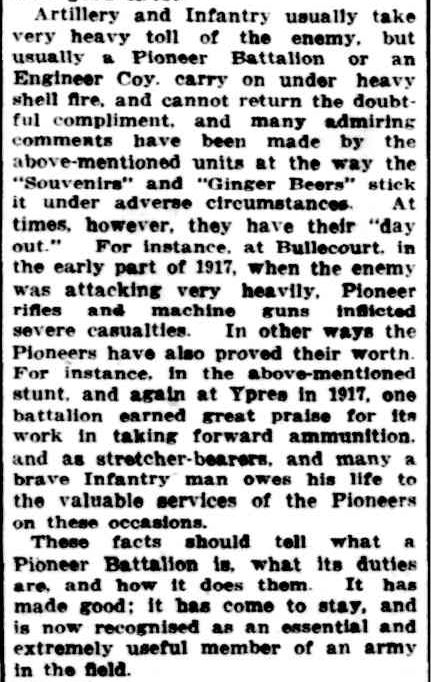
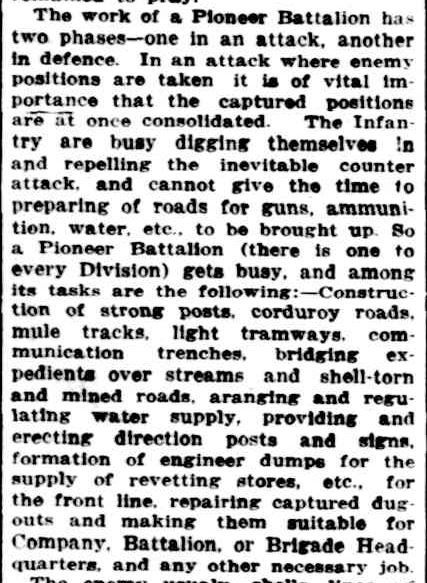
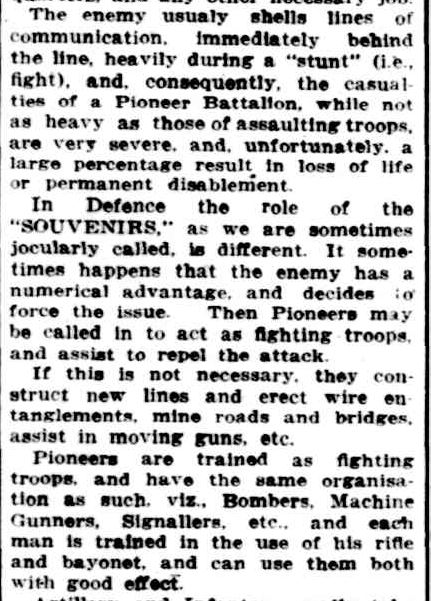
The work of the Pioneer Battalion was described in the Williamstown Chronicle.    The Pioneers were give the nickname “Souvenirs” while the Engineers were “Ginger Beers”.  The “Souvenirs” not only had to do  hard labouring work but were prepared to fight if need be.  They often worked with gun fire and bombing going on around them and as a result there were often casualties.
lc37

lc38

A PIONEER BATTALION. (1918, July 13). Williamstown Chronicle (Vic. : 1856 - 1954), p. 3. Retrieved April 24, 2013, from http://nla.gov.au/nla.news-article69681256

A PIONEER BATTALION. (1918, July 13). Williamstown Chronicle (Vic. : 1856 – 1954), p. 3. Retrieved April 24, 2013, from http://nla.gov.au/nla.news-article69681256

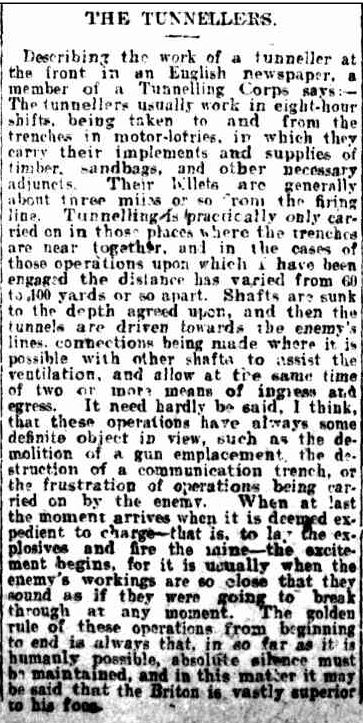
On July 14, 1916, Les was transferred to the newly formed 2nd Tunnelling Company.   On July 19, near Fromelles, the 2nd Tunnellers detonated a mine, the largest in its’ operational history, designed to shield the 32nd Battalion as they moved across No Man’s Land.

NEWS OF THE DAY. (1916, July 22). The Mercury (Hobart, Tas. : 1860 - 1954), p. 6. Retrieved April 25, 2013, from http://nla.gov.au/nla.news-article1023967

NEWS OF THE DAY. (1916, July 22). The Mercury (Hobart, Tas. : 1860 – 1954), p. 6. Retrieved April 25, 2013, from http://nla.gov.au/nla.news-article1023967

Les only had to endure digging underground for two months because on September 30 he moved back to the Pioneers, then at  Le Torquet, to continue digging above the ground.

On October 18, Les racked up another offence, charged with drunkenness.  As a result he lost two day’s pay.

On January 27, 1917  Les took sick and was transferred to hospital by the 13th Field Ambulance.  They took him to Allonville and the 39 Casualty Clearing Station.  He was then transferred on to the No 14 Stationary Hospital at Boulogne where he recovered from mumps.

Out of hospital, Les marched into the 2nd Australian Divisional Base at  Estaples on February 24, 1917, marching out again on February 27, 1917 to re-join the 2nd Pioneer Battalion on March 3.

From June 9, 1917 Les spent some time training with the 5th Army Musketry School and on August 4 he was promoted to Lance Corporal.

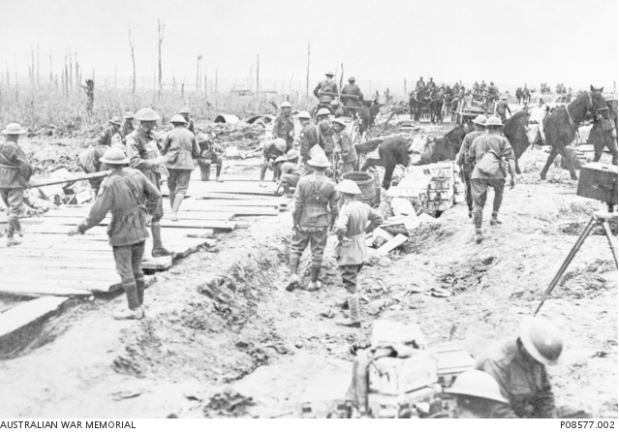
The 2nd Pioneers moved on to Ypres in October, 1917.  The following photo shows the 2nd Pioneer doing what they did best.  During the months of October and November, 1917 at Ypres the Battalion built water channels, stables and constructed a plank road as seen below at Chateau Wood.

2nd Pioneer building plank road at Chateau Wood, Ypres, Sept 26, 1917 Image courtesy of the Australian War Memorial ID NOl P08577.002  http://www.awm.gov.au/collection/P08577.002

2nd Pioneer building plank road at Chateau Wood, Ypres, Sept 26, 1917 Image courtesy of the Australian War Memorial ID NOl P08577.002 http://www.awm.gov.au/collection/P08577.002

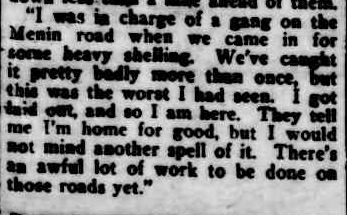
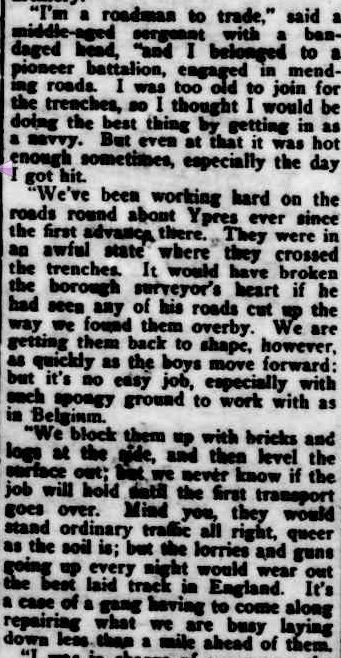
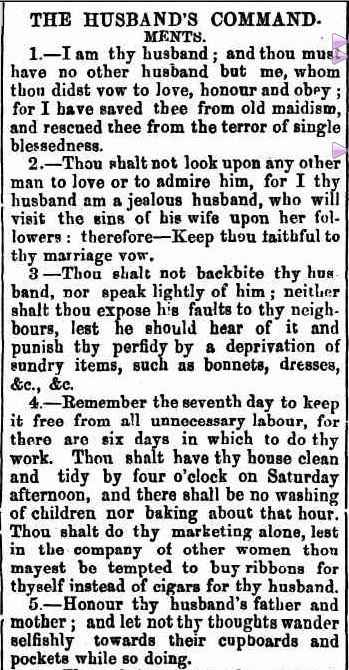
An article in the Cairns Post on December 29, 1917 included stories from the front.  One of those mentioned was of a Sergeant from one of the Pioneer Battalions, lying injured in hospital.  The Sergeant described the work his Battalion were doing on the roads near Ypres.
lc28

BATTLE STORIES FROM THE WEST FRONT. (1917, December 29). Cairns Post (Qld. : 1909 - 1954), p. 8. Retrieved April 24, 2013, from http://nla.gov.au/nla.news-article40273100

BATTLE STORIES FROM THE WEST FRONT. (1917, December 29). Cairns Post (Qld. : 1909 – 1954), p. 8. Retrieved April 24, 2013, from http://nla.gov.au/nla.news-article40273100

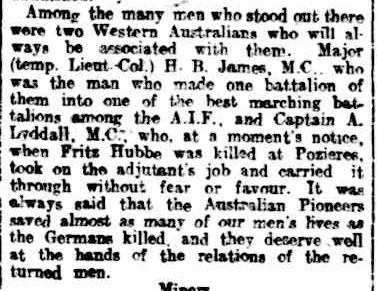
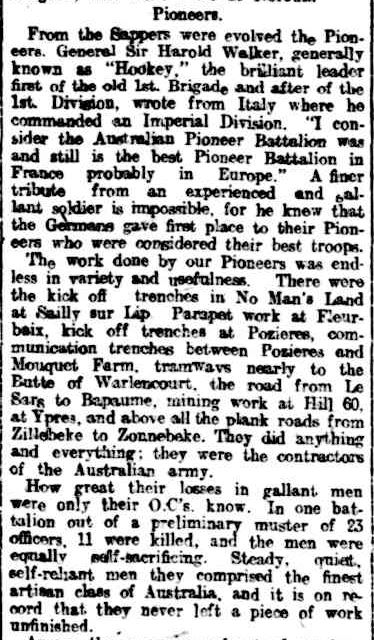
In July 21, 1919 the work of the Australian Pioneer Battalion was remembered in this article from the West Australian.
lc30

ENGINEERS, PIONEERS, AND TUNNELLERS. (1919, July 21). The West Australian (Perth, WA : 1879 - 1954), p. 9. Retrieved April 24, 2013, from http://nla.gov.au/nla.news-article27611735

ENGINEERS, PIONEERS, AND TUNNELLERS. (1919, July 21). The West Australian (Perth, WA : 1879 – 1954), p. 9. Retrieved April 24, 2013, from http://nla.gov.au/nla.news-article27611735

On  November 2, 1917, Les was wounded, receiving a bullet to his right elbow.  The injury was described as severe.   The 3rd Australian Field Ambulance,  then stationed in Wippenhoek, took him to the 3rd Casualty Clearance Station.  The 2nd Pioneer Unit Diary states that one “OR” was wounded on that day.

The following day, Les was transferred to the 5th General Hospital at Rouen France, but it was necessary to move him to England and he arrived at the 5th South General Hospital at Portsmouth on November 8.

On Februay 8, 1918 Les  was  transferred to 3rd Auxiliary Hospital at Dartford for just under a week.  Patients with war related nervous conditions were treated there.  Then on to Weymouth, Dorset to convalesce until his departure on April 10, 1918

So Les was on a ship home.  But what was going on at home, who had he left and who had arrived?

ON THE HOMEFRONT

Les Combridge was the son of Herbert John Combridge and Jane Wyatt.  Jane passed away in 1909 at Grantville,  presumablyas a result of childbirth leaving Les, aged 12 and Horace Claude (known as Claude), aged two,  the only children remaining from five pregnancies.

In 1913,  Herbert married widow Sarah Hade (nee Jackson), already a mother of a large family.  In February 1914, Herbert and Sarah welcomed Verena May.  When Les left Australia 12 months later, Sarah was pregnant again and in July 1916 Harold Herbert was born.

Herbert had given his son his consent, maybe with even a hint of envy.  In 1916, after the age for enlistment was raised, the then 43-year-old Herbert himself enlisted.  After a short time at Royal Park, he was discharged due to a weak heart.

It seems that in each story I write for Anzac Day, rumours made their way home about the welfare of a soldier abroad.  The Combridges had their own taste of this, leading to Herbert writing to the  Army requesting information about Les.

On August 30, 1915, Herbert penned a letter to Colonel Hawker.  At the same time, in Egypt, Les was three days away from boarding the Southland to Gallopoli.

“…I have had one letter from him since he arrived in Egypt and since then I have not heard there is two other families around here had sons went away at the same time and they have sent letters home stating that my son lost the use of his legs since he landed and then contracted pneumonia and was to be invalided home and as I have not heard from him I thought you may be able to give me some information about him as I am anxious and if he is unable I think some one ought to let us know I have only him and a lad of 7 years out of 5 from my first marriage losing 3 and his mother in a few years so trusting you will do me the kindness of letting me know what you can about him…”

Herbert writes with little punctuation but the worry he was feeling is not lost.  He mentioned the children and wife he lost and the thought of losing another after such a short time must have been excruciating.

On September 7, 1915, a Lieutenant H Mackintosh, officer from Base  Records, responded to Herbert to ease his mind  somewhat.  He advised Herbert that no official notification had come through about Les, but if Herbert was to send any evidence he may have to the contrary with the full details of the informant etc etc.  A typical government letter.

Herbert replied, to let Lieutenant Mackintsh know that Les had since written and all was well.  He had been in hospital with pleurisy and bronchitis but had returned to his Company.  He went on to thank Mackintosh and apologised for the trouble he may have caused.  He explained:

“..,it was sent to two different parties about him and I thought if he was to be sent back I ought have heard…”

On November 16 1917, two weeks after it occured, Herbert received the notification he had expected two years earlier.  Les had been wounded.  It was two weeks later, on December 1, that he learned that Les had been shot and was in the 5th Southern General Hospital at Portsmouth.  Almost two weeks later he heard that Les was improving.  It was looking like Christmas 1917 would be a little happier than was thought at the beginning of the month.

Herbert’s next official notification of Les’ health was mid March 1918.  Les was “progressing favourably”.

When Les returned home in May 1918, he reunited with his father and Claude and met his two-year old brother for the first time.  His step mother was pregnant again with a third child to Herbert.

POST WAR

In September 1919, Les married local Grantville girl Myrtle Rose White, daughter of Culmer Thomas White and Alice Elizabeth Hunt.  On November 12, 1920 their first child, daughter Mavis Ayleen was born at Wonthaggi.  Over the next 16 years, they would have a further three girls and a son.

Les farmed first at Grantville and  later took up a property “Hazelbrook” at nearby Alumurta .  He became involved with the Blackwood Forest Football Club.

COUNTRY NEWS. (1926, April 21). The Argus (Melbourne, Vic. : 1848 - 1957), p. 26. Retrieved April 24, 2013, from http://nla.gov.au/nla.news-article3746499

COUNTRY NEWS. (1926, April 21). The Argus (Melbourne, Vic. : 1848 – 1957), p. 26. Retrieved April 24, 2013, from http://nla.gov.au/nla.news-article3746499

By 1937, and almost 20 years after his return from Europe, it seem that Les had got on with his life.  But on June 28, Les died suddenly at Wonthaggi from heart failure.  He was only 40 years old.

' OTHER DISTRICTS. (1937, July 3). The Argus (Melbourne, Vic. : 1848 - 1957), p. 21. Retrieved April 24, 2013, from http://nla.gov.au/nla.news-article11115412

‘ OTHER DISTRICTS. (1937, July 3). The Argus (Melbourne, Vic. : 1848 – 1957), p. 21. Retrieved April 24, 2013, from http://nla.gov.au/nla.news-article11115412

The loss of Les at such a young age must have hit hard.  Myrtle had the five children, aged from two to 17 and a farm.  Also Herbert was faced with the death of yet another child.

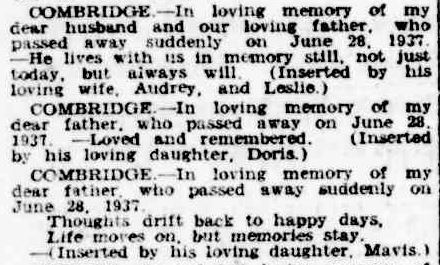
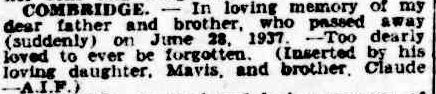
How do I know about Leslie Herbert Combridge.  He was my great-grandfather.  His eldest daughter Mavis was my Grandma and never in the 39 years I knew her, did I realise how much his death had an effect on her.  Not until I started reading newspapers at Trove, that is.  Then I found  “In Memoriam” notices she had submitted, right up until 1947, 10 years after his death,  herself then married and raising a family, living hours away from her beloved Bass Valley.

(1943, June 28). The Argus (Melbourne, Vic. : 1848 - 1957), p. 10. Retrieved April 25, 2013, from http://nla.gov.au/nla.news-page625813

(1943, June 28). The Argus (Melbourne, Vic. : 1848 – 1957), p. 10. Retrieved April 25, 2013, from http://nla.gov.au/nla.news-page625813

(1944, June 28). The Argus (Melbourne, Vic. : 1848 - 1957), p. 12. Retrieved April 25, 2013, from http://nla.gov.au/nla.news-page628551

(1944, June 28). The Argus (Melbourne, Vic. : 1848 – 1957), p. 12. Retrieved April 25, 2013, from http://nla.gov.au/nla.news-page628551

Family Notices. (1947, June 28). The Argus (Melbourne, Vic. : 1848 - 1957), p. 11. Retrieved April 25, 2013, from http://nla.gov.au/nla.news-article22436539

Family Notices. (1947, June 28). The Argus (Melbourne, Vic. : 1848 – 1957), p. 11. Retrieved April 25, 2013, from http://nla.gov.au/nla.news-article22436539

I can’t say how much WW1 played a part in the premature death of Les Combridge, but given the work he did, particularly with the Pioneers and the exposure to gas in France and the overall wear  the conditions must have had on a body, it cannot be dismissed.  Although with Herbert’s weak heart, hereditary factors were also at play, but Herbert, who didn’t serve, lived to 66, dying 18 months after Les, in 1939.

The places Les went read like a Contiki itinerary, but the hard working Pioneer was no tourist and for the most time, the sights he saw would be unforgettable but for all the wrong reasons.  His time spent collecting his nerves at Dartford before his return to Australia giveing some clue to the mind-set he was in but how much this continued to be a part of his life is not know.  If it was still there he must have kept it deep inside .

The early death of Les robbed him of time with his grandchildren and great-grandchildren.  He gave so much of his heart to Australia, there was little left for his family.

LEST WE FORGET

SOURCES

Australian War Memorial

Finlayson, Damien (2010). Crumps and camouflets : Australian tunnelling companies on the Western Front. Big Sky Publishing, Newport, N.S.W

MacNeil, A. R & 21st Battalion (A.I.F.) Association (Melbourne, Vic.) (1971). The Story of the twenty-first : being the official history of the 21st Battalion, A.I.F. 21st Battalion Association, Melbourne

National Archives of Australia

Smith, Neil C (1997). The red and black diamond : the history of the 21st Battalion 1915-18 (1st ed). Mostly Unsung Military History Research and Publications, Gardenvale, Vic

Trove Australia
Trove Tuesday – One Stop Shop

Trove really is a one stop shop for researching those that served during WW1.  Aside from a visit to the National Archives of Australia (NAA) website for service records, Trove is the place to go to find photos, books and newspaper articles.  This is even more so the case thanks to a project to digitise newspapers of the 1914-1918 period  for the lead up the 100th anniversary of WW1.
For Western Victorian researchers, newspapers that have appeared over the last 12 months, all from 1914-1918, include:

Kerang New Times

Ouyen Mail

Port Fairy Gazette

Portland Observer and Normanby Advertiser

Swan Hill Guardian and Lake Boga Advocate

St Arnaud Mercury

The Ararat Advertiser

The Ballarat Courier

The Casterton News and the Merino and Sandford Record

Warrnambool Standard

During WW1, these papers were full of war news, locals enlisting, send offs, letters homes, the work of locals to do their bit for the war effort and of course, the casualties.

Trove is a great for finding WW1 books and photos.  You can search for an individual, a battalion or a battlefield and you are bound to find something to give you a little more information about your family member’s wartime experience .  Photos held by repositories such as the Australian War Memorial are all cataloged at Trove.  One search can find so much from many places.

As it’s Trove Tuesday, I have some WW1 treasures from one of my favourite papers The Casterton News and the Merino and Sandford Record.

The first article, reported on the first Anzac Day on April 25, 1917 and how Casterton marked the occasion.

adad1

"Anzac Day.". (1917, April 26). The Casterton News and the Merino and Sandford Record (Vic. : 1914 - 1918), p. 3 Edition: Bi-Weekly. Retrieved April 23, 2013, from http://nla.gov.au/nla.news-article74489110

“Anzac Day.”. (1917, April 26). The Casterton News and the Merino and Sandford Record (Vic. : 1914 – 1918), p. 3 Edition: Bi-Weekly. Retrieved April 23, 2013, from http://nla.gov.au/nla.news-article74489110


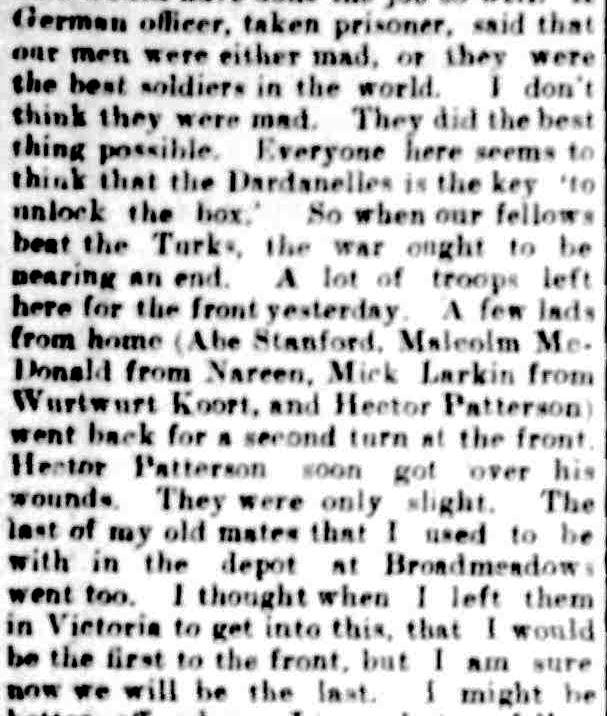
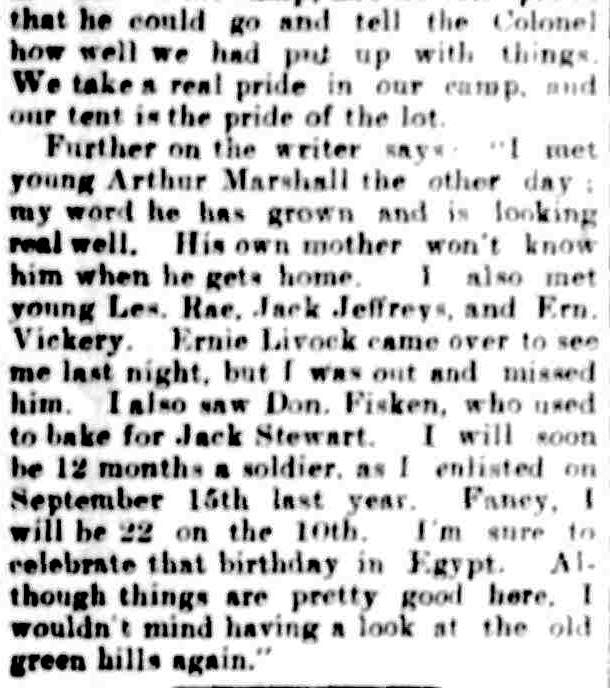
Following is a letter home by Norman Seymour to his mother in Casterton.  He wrote of his brother James, and the pride he felt that James was at “the great landing at Gallipoli”.  This is a great example of how useful these letters are.  Norman wrote of many men from the local district including Hector Patterson and his wounds.

It is a lovely letter, as many of them were, and it makes you wonder if a 21-year-old man today could write home to his mother in the same way.  I also love his closing sentence.  If you know Casterton, you will know exactly what he means.

ad3 ad4 ad5

Our Soldiers. (1915, September 16). The Casterton News and the Merino and Sandford Record (Vic. : 1914 - 1918), p. 4 Edition: Bi-Weekly. Retrieved April 23, 2013, from http://nla.gov.au/nla.news-article74766366

Our Soldiers. (1915, September 16). The Casterton News and the Merino and Sandford Record (Vic. : 1914 – 1918), p. 4 Edition: Bi-Weekly. Retrieved April 23, 2013, from http://nla.gov.au/nla.news-article74766366

I checked the NAA and brother James Seymour did come home, but only two months after the publishing of Norman’s letter.   He developed enteritis in September 1915, was hospitalised and sent home in November.

Norman Edward Seymour served with the 3rd Light Horse and did make it to Gallipoli on October 8, 1915.  In October 1917 he developed septic sores and that  led to his return home in December that year.

When I finally get my post finished for the ANZAC Day Blog Challenge,(Anzac Day 2014 the way I’m going) you will see more examples of how Trove can enhance the story of your WW1 hero.

Trove Tuesday – Beautiful Hair

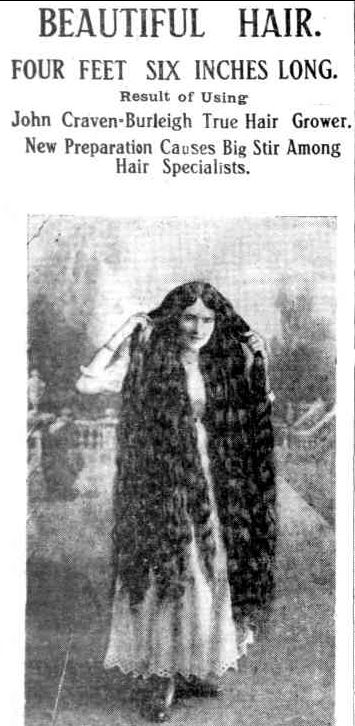
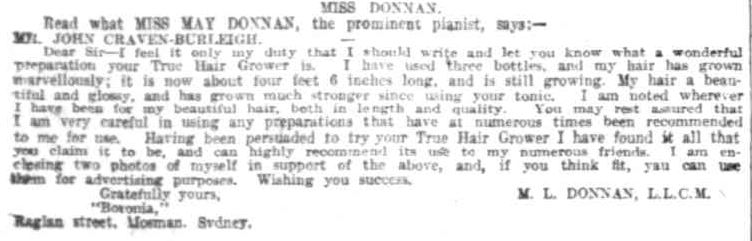
I first came across Miss May Donnan and her beautiful hair in the April 13, 1914 issue of The Ballarat Courier while I was searching for pioneer obituaries. The copy wasn’t good, so I searched Trove for her.  I found a clearer photo in The Mail of Adelaide from 1913.

May had apparently sent away for a free sample of John Craven-Burleigh’s True Hair Grower.  What a product.  Her hair grew to a length of four feet six inches.  Although described as a prominent pianist,  after some Troving it seems May’s only claim to fame was her beautiful hair.


bhbh1

Advertising. (1913, September 13). The Mail (Adelaide, SA : 1912 - 1954), p. 3 Section: FIFTH SECTION.. Retrieved April 14, 2013, from http://nla.gov.au/nla.news-article63805694

Advertising. (1913, September 13). The Mail (Adelaide, SA : 1912 – 1954), p. 3 Section: FIFTH SECTION.. Retrieved April 14, 2013, from http://nla.gov.au/nla.news-article63805694

May was not the only girl to send in a testimonial about her beautiful hair.  There were several that did the rounds of the newspapers through the 1910s but beware some of the pictures are scary…

bh3

Advertising. (1914, July 5). Sunday Times (Perth, WA : 1902 - 1954), p. 29. Retrieved April 14, 2013, from http://nla.gov.au/nla.news-article57781617

Advertising. (1914, July 5). Sunday Times (Perth, WA : 1902 – 1954), p. 29. Retrieved April 14, 2013, from http://nla.gov.au/nla.news-article57781617


bh5

Advertising. (1915, March 21). Sunday Times (Perth, WA : 1902 – 1954), p. 25. Retrieved April 16, 2013, from http://nla.gov.au/nla.news-article58586851

Advertising. (1915, August 9). The Sydney Morning Herald (NSW : 1842 - 1954), p. 12. Retrieved April 14, 2013, from http://nla.gov.au/nla.news-article15605877

Advertising. (1915, August 9). The Sydney Morning Herald (NSW : 1842 – 1954), p. 12. Retrieved April 14, 2013, from http://nla.gov.au/nla.news-article15605877


Advertising. (1917, March 5). The Advertiser (Adelaide, SA : 1889 - 1931), p. 9. Retrieved April 14, 2013, from http://nla.gov.au/nla.news-article5567352

Advertising. (1917, March 5). The Advertiser (Adelaide, SA : 1889 – 1931), p. 9. Retrieved April 14, 2013, from http://nla.gov.au/nla.news-article5567352

John Craven-Burleigh Ltd. was an international company with bases in London, Paris, New York and Sydney.  The November 24, 1930 issue of The Argus reported that the Australian branch had gone into liquidation.  I assume the whole company went under.

Two Today

It’s my blogiversary!


Considering I’ve had  plenty of other stuff going on in my life and limited time, it has sometimes been difficult to keep up with posts.   But remarkably I wrote 110 in the last 12 months and I really don’t know how I managed it.

It could have had something to do with  the genesis of Trove Tuesday thanks to Amy Houston of Branches, Leaves and Pollen.  I have prepared a post for every Trove Tuesday, a total of 33.  With so many quirky, cute and downright outrageous (thinking George Gladstone April 2  ) articles tagged at Trove, the weekly post has been reasonably easy to come up with.  Particularly so  in those weeks when I was totally lacking in inspiration.

Was it my biggest thrill for the year, having Western District Families named as one of Inside History Magazine’s Top 50 Genealogy Blogs?  This was a wonderful endorsement of the work I have put in and has inspired me to keep writing.  Thank you once again Jill Ball and Inside History Magazine.

Or maybe it was the simple fact that the history of the Western District of Victoria is full of interesting people, places and events.

I would have to say it was all the above.

TOP OF THE POPS – The Top 5 Most Viewed Posts:

Fastest Ship in the World – Holding the number place  two years running,  this post is about the clipper ship Marco Polo, often mistaken for Marco Polo the explorer.

Old Portland Cemetery – Part 1 – The interesting thing about this post is that it had over 250 more views than Old Portland Cemetery – Part 2, the forgotten chapter.

Alfred Winslow Harman – Stepping Out of the Shadows – The youngest son of Joseph and Sarah Harman not only stepped out of the shadows after his post, he stood in the spotlight.

Left Behind – Joseph and Sarah Harman left children in Cambridgshire, both living and dead, when they came to Australia.  Research for this post lead to one of my favourites for the year, Everybody Happy.

Passing of the Pioneers – It was pleasing to see one of the Passing of the Pioneers posts in the Top 5.  April 2012 Passing of the Pioneers contained obituaries of some prominent gentleman of the Western District.  There was James Dawson, the Protector of Aborigines in Victoria, pastoralist James Thomson of Monivae, near Hamilton and James Kirby of Mt Koroite station, near Casterton.  His obituary inspired me to write another of my favourite posts, A Western District Melbourne Cup.

MY FAVS:

Each of my favourite posts required more research than the rest, particularly at Trove.  There is something relaxing about Troving and a regular need to relax led to posts such as:

Everybody Happy – My 2nd cousin 3 x removed Rupert Hazell was a vaudeville and broadcasting star.  This was such an enjoyable post to write and I loved hearing from relatives of his wife Elsie Day and their memories of the couple.

On the ALG Trail – A tour of  landmarks in the South East of South Australia and Western Victoria frequented by Adam Lindsay Gordon.
Alice Hawthorne – The Western Mare The small grey mare that won races for the Chirnsides in the 1870s and raced in a match race that would lead to the first running of the Melbourne Cup, had previously been a work horse at Mt. William station when my ggg grandfather James Mortimer worked there.

A Western District Melbourne Cup – The story of 1911 Melbourne Cup winner, The Parisian was a chance to indulge in my interest in the history of Victorian horse racing.

My regular need to Trove also resulted in seasonal fashion posts, Spring, Summer and Autumn.  Hasn’t it been fun to see what our female ancestors wore through the decades?  I look forward to the Winter post in June.

Passing of the Pioneers has grown and I have now shared over 300 Western District pioneer obituaries.  I just love the stories I find, especially of the ordinary people and those that time has forgotten.

A goal I set for myself when I started Western District Families was to post twice a week.  I have achieved that in the past year but in doing so I have often broken one of the rules I set for myself, to respond to comments promptly.  Sorry if you have posted a comment and I haven’t got back yet.   I have set today aside as “comment” day and I am going to get back to each of you.  Thank you so much for your comments, I do appreciate them.   Special thanks to Anne.  Your regular comments are encouraging, informative and fun.

Thank you to the 65 followers of Western District Families.  This time last year I couldn’t  have imagined  that the blog’s followers would more than double from 29.

The question I now ask myself is can I keep up the pace?  Despite being about to embark on a Diploma of Family Historical Studies, I can see some light at the end of the tunnel time wise.  So while I  continue to find stories about our Western District Families, I will give it my best shot.

Trove Tuesday – Hometown Rivals

This Trove Tuesday, we are off to my hometown Hamilton.

Take two rival football clubs, the Hamilton Football Club and the Hamilton Imperials Football Club, merge them and what do you get?  The beginning of a new chapter in the town’s sporting history when the Hamilton Kangaroos make their debut in Round 1 of the 2013 season this Saturday 13 April.  Also, the new club will be entering a different league, the Hampden League, after both were founding members of the Western Border Football League in 1964.

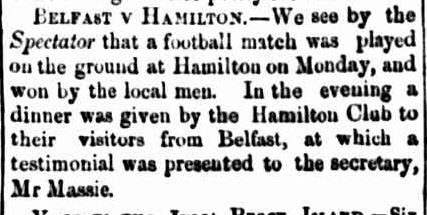
Of the two teams, the Hamilton Football Club had the longest history.  While the club may not have officially been formed at the time of this article from 1868,  it is the earliest article I can find at Trove of football played at Hamilton.

TABLE TALK. (1868, November 12). Portland Guardian and Normanby General Advertiser (Vic. : 1842 - 1876), p. 2 Edition: EVENINGS.. Retrieved April 8, 2013, from http://nla.gov.au/nla.news-article64691122

TABLE TALK. (1868, November 12). Portland Guardian and Normanby General Advertiser (Vic. : 1842 – 1876), p. 2 Edition: EVENINGS.. Retrieved April 8, 2013, from http://nla.gov.au/nla.news-article64691122

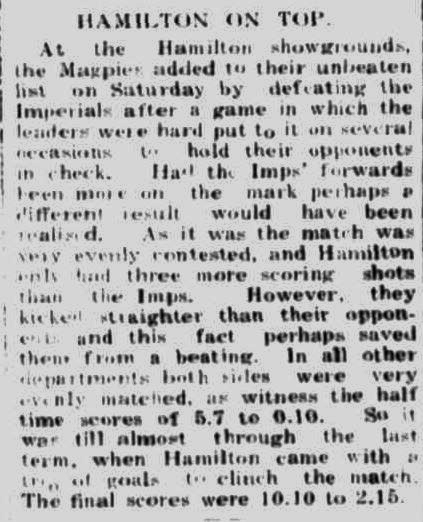
In 1948, a club formed by a breakaway group from the Hamilton Football Club made its debut in the Western District Football League.  The Hamilton Imperials Football Club was born.  In June of that year, the Magpies (Hamilton) and the Bulldogs (Imperials) met for the first time, beginning a rivalry that would endure for the next 64 years.  Hamilton easy winners.

HAMILTON ON TOP. (1948, June 10). Portland Guardian (Vic. : 1876 - 1953), p. 4 Edition: EVENING. Retrieved April 8, 2013, from http://nla.gov.au/nla.news-article64415146

HAMILTON ON TOP. (1948, June 10). Portland Guardian (Vic. : 1876 – 1953), p. 4 Edition: EVENING. Retrieved April 8, 2013, from http://nla.gov.au/nla.news-article64415146

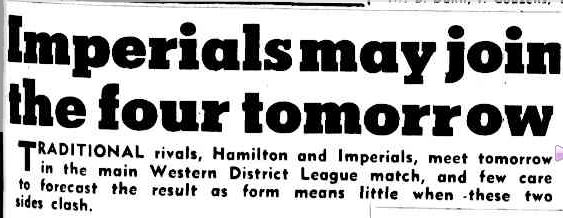
In the 1950s, they used to say that the form guide could be thrown away when Hamilton and the Imperials met.  The following headlines, all from The Argus during the 1950s, show how the rivalry had grown in just a short time.

Traditional clash in Western League HAMILTON HAS EDGE ON OLD RIVALS. (1953, July 3). The Argus (Melbourne, Vic. : 1848 - 1956), p. 10. Retrieved April 8, 2013, from http://nla.gov.au/nla.news-article23253913

Traditional clash in Western League HAMILTON HAS EDGE ON OLD RIVALS. (1953, July 3). The Argus (Melbourne, Vic. : 1848 – 1956), p. 10.  http://nla.gov.au/nla.news-article23253913

tt23

TRADITIONAL RIVALS FIGHT IT OUT. (1955, May 13). The Argus (Melbourne, Vic. : 1848 - 1956), p. 22. Retrieved April 9, 2013, from http://nla.gov.au/nla.news-article71882081

TRADITIONAL RIVALS FIGHT IT OUT. (1955, May 13). The Argus (Melbourne, Vic. : 1848 – 1956), p. 22. http://nla.gov.au/nla.news-article71882081

tt25

Imperials may jain the lour tomorrow. (1956, May 11). The Argus (Melbourne, Vic. : 1848 - 1956), p. 23. Retrieved April 9, 2013, from http://nla.gov.au/nla.news-article71802250

(1956, May 11). The Argus (Melbourne, Vic. : 1848 – 1956), p. 23. http://nla.gov.au/nla.news-article71802250

Here’s to a successful future for the Hamilton Kangaroos, but may the history of the two clubs that came before be maintained so future generations know their role, not only in Hamilton’s sporting history but its social history.

Where did my heart lie?  With the mighty Imps of course!

Gardeners in My Family

It was the Afternoons program on 774 ABC Melbourne that got me thinking about my gardening pedigree.  Presenter Richard Stubbs asked listeners how they came to take up gardening.  Was it passed on from someone else?

IMG_1329 (2)

I grew up in a gardener’s house and remember constant talk of  Spring and Autumn annuals, Marigolds, Petunias, Camellias, Dahlias, the constant moving of sprinklers and manure.

When Nana came to live with us in the late 1970s, the garden talk doubled and if my Great Auntie Rosie came to visit, well.  Auntie Rosie was Nana’s sister and they had other siblings that were keen gardeners too.

One was my great-uncle Bill Hadden.  Visiting his garden was special.  I remember fish ponds, orchids and a large television antenna tower that I had an urge to climb every time I went there.

This is a lovely photo of Uncle Bill as young man in his parent’s backyard at 78 Coleraine Road, Hamilton, planting seed in neat rows with help from his niece, Margaret.  It was about 1934.

0010

I too lived at 78 Coleraine Road.  Mum and Dad lived there when they first arrived in Hamilton after their marriage in 1967.  I came along in March 1968 and we lived there for about a year after my birth.  I wish I had have been older to remember the house, which was later pulled down, as that was the family home of my great grandparents, Thomas Hadden and Sarah Harman and where Nana and her brothers and sisters grew up.  Four generations lived in that house.

I showed Mum the photo of the backyard at 78 Coleraine Road and she was able to tell me more about it.  She said there was still a fence across the backyard when we there but it is was then made from  chook wire.   Auntie Rosie had lived there before us and she kept chooks.  After the photo, cherry plum and blood plum trees were planted and an apple tree, seen in the photo, was still there 33 years later.

Uncle Bill had his own home built after returning from WW2.  It was at 80 Coleraine Road, next door to his parents.

0112

The photo above, shows Mum and Nana, on the left, and Mum’s cousin Norma, right, in the front yard of Uncle Bill and Auntie Bess.  Although a reasonably new house, Uncle Bill already had an established garden and neat concrete and lawn driveway.  He later added a garage and sheds at the end of the driveway.

Alma, another of Nana’s sisters was also a green thumb.  When I visited her a few years ago, when she was in her late 90s, I was amazed at her beautiful potted cyclamen on her back porch. Despite almost no vision, she tended them with care.  She was often found pottering around the garden that she knew so well and was able to move around nimbly.

Advertising. (1876, July 21). Portland Guardian (Vic. : 1876 - 1953), p. 3 Edition: EVENINGS.. Retrieved March 12, 2013, from http://nla.gov.au/nla.news-article63316883

Advertising. (1876, July 21). Portland Guardian (Vic. : 1876 – 1953), p. 3 Edition: EVENINGS.. Retrieved March 12, 2013, from http://nla.gov.au/nla.news-article63316883


Before Nana came to live with us, she and my grandfather, Bill Gamble lived in Ballarat and I have great memories of visiting their house.  The backyard was small but  the space was well used .  Bill grew espalier apples, among other things, and had a shed with three sections lining the back fence.  From my memory, the left section was a fernery, the middle a utility shed that held grain to feed the occupants in the third section, the chooks.  I did like to admire the maiden hair ferns and their cool, soft foliage,  and the feed shed where I dipped my hands into oats in a large wooden barrel. But I did not go in the chook shed.

Advertising. (1936, July 30). Portland Guardian (Vic. : 1876 - 1953), p. 1 Edition: EVENING.. Retrieved March 12, 2013, from http://nla.gov.au/nla.news-article64273334

Advertising. (1936, July 30). Portland Guardian (Vic. : 1876 – 1953), p. 1 Edition: EVENING.. Retrieved March 12, 2013, from http://nla.gov.au/nla.news-article64273334

When I checked my memory against mum’s she told me the left side of the shed was interchangeable, depending on her father’s interest at the time.  He used to have budgies too and I can now remember budgie boxes in that part of the shed and attached to the fence.  She couldn’t remember the maiden hair ferns, but her father did grow Pelargoniums at one point.  That must have run in the family, as the following is a photo of one of Mum’s Pelargoniums.

039

The next photo was taken looking across the Gamble backyard.  We have several photos taken from this angle.  It must have been the “photo spot”.  Nana (centre) is  flanked by Bill’s aunt, Jane Diwell and a friend of Jane’s from Geelong.  In the front is my Uncle Peter.  Hopefully the photo shoot did not go on too long as there may have been an accident.

c

Of interest here is the espalier apple tree on the fence, the concrete garden edging my grandfather put in himself, the sack of oats and the Bergenia or “Elephant’s Ears” along the toilet wall.  Mum  used to call them “toilet flowers”.

Auntie Shirley, Bill’s sister is also a keen gardener.  We visited her in the past year and her garden was beautiful, a result of much hard work on her part.  She is now in her 80s.

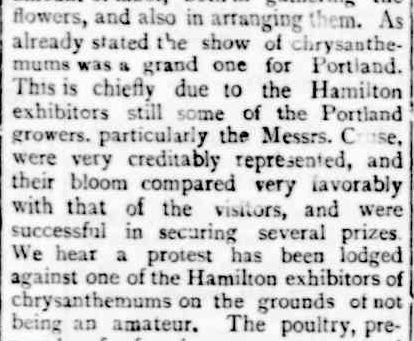
My grandfather, Auntie Shirl and Auntie Jane were descended from a keen gardener, Richard Diwell, Jane’s father.  Richard was a member of the Hamilton Horticulture Society. His specialty was chrysanthemums.  The society often attended shows in nearby towns and the following  item is from 1896 when the Hamilton growers headed to Portland to show of their blooms.  Richard won three prizes in his class.

Portland Horticultural Society. (1896, May 1). Portland Guardian (Vic. : 1876 - 1953), p. 3 Edition: EVENING. Retrieved March 12, 2013, from http://nla.gov.au/nla.news-article63635528

Portland Horticultural Society. (1896, May 1). Portland Guardian (Vic. : 1876 – 1953), p. 3 Edition: EVENING. Retrieved March 12, 2013, from http://nla.gov.au/nla.news-article63635528

The chrysanthemums exhibited by the Hamilton growers were impressive, some a little too impressive for an amateur show.

Portland Horticultural Society. (1896, May 1). Portland Guardian (Vic. : 1876 - 1953), p. 3 Edition: EVENING. Retrieved March 12, 2013, from http://nla.gov.au/nla.news-article63635528

Portland Horticultural Society. (1896, May 1). Portland Guardian (Vic. : 1876 – 1953), p. 3 Edition: EVENING. Retrieved March 12, 2013, from http://nla.gov.au/nla.news-article63635528

Richard also liked ferns and apparently had a fernery.  He was a keen photographer too, and this is one of the photos we have that he “staged” and took himself with a camera timer.  A selection of plants are in the foreground including a maidenhair fern.

Richard & Elizabeth Diwell and family

Richard & Elizabeth Diwell and family

A garden photo that interests me is from the backyard of Richard’s daughter, Edith Diwell, my great-grandmother.  The photo is of three of her sons, including Grandfather Bill on the left.  This was either at a house in Mt Napier Road, Hamilton or Skene Street, Hamilton.  Either way, they would have only been in the house a short time before the photo was taken, so the garden layout was not the work of Edith.  However, it still gives an example of a 1920s backyard.  There is a vegetable garden, with wooden edging and the boys are standing in front of a Yucca.  A fruit tree stands in the background.

x

My paternal side of the family, the Riddifords, did not have the same influence on my love of gardening.  Dad has never grown anything.  Well, at least that’s what I thought.  Mum told me how he thought cauliflowers could be a profitable venture, sometime around 1967, and planted them in the backyard at 78 Coleraine Road.  Turns out there was little market for his produce and that was the end of his gardening days.  We probably ate cauliflower with white sauce for some time afterwards.

Dad’s father, Percy Riddiford, did like to garden.  It was not until  recent years that I came to know how much.

Prior to her death, my Grandma, Mavis, gave me a binder of Your Garden magazines collected by Grandpa.  I knew he liked roses as they lined the perimeter of their front yard, but I didn’t realise his passion went as far as buying gardening magazines.  It just happened that the year the magazines were from was 1968, the year I was born.

017 021

I did enjoy visiting Grandma and Grandpa’s in Ballarat.  A sign, “The Riddifords” hung proudly on the letterbox.   A terrace garden was at the back of the steep block.  Three large steps led to the top of the terrace and I recall that as a small child, I would haul myself up the steps and teeter on the top to look across neighbouring backyards to see Sovereign Hill in its infancy, sprouting up on a nearby hill.  I would cry out that I could see the “historical park”.

IMG_1180

I recently drove past Grandma and Grandpa’s old house to see if Grandpa’s roses were still there.  I do remember them there, but look old and gnarly, not the many years ago.  They are now gone, but suckers grow were the roses were.  A little reminder of Grandpa.

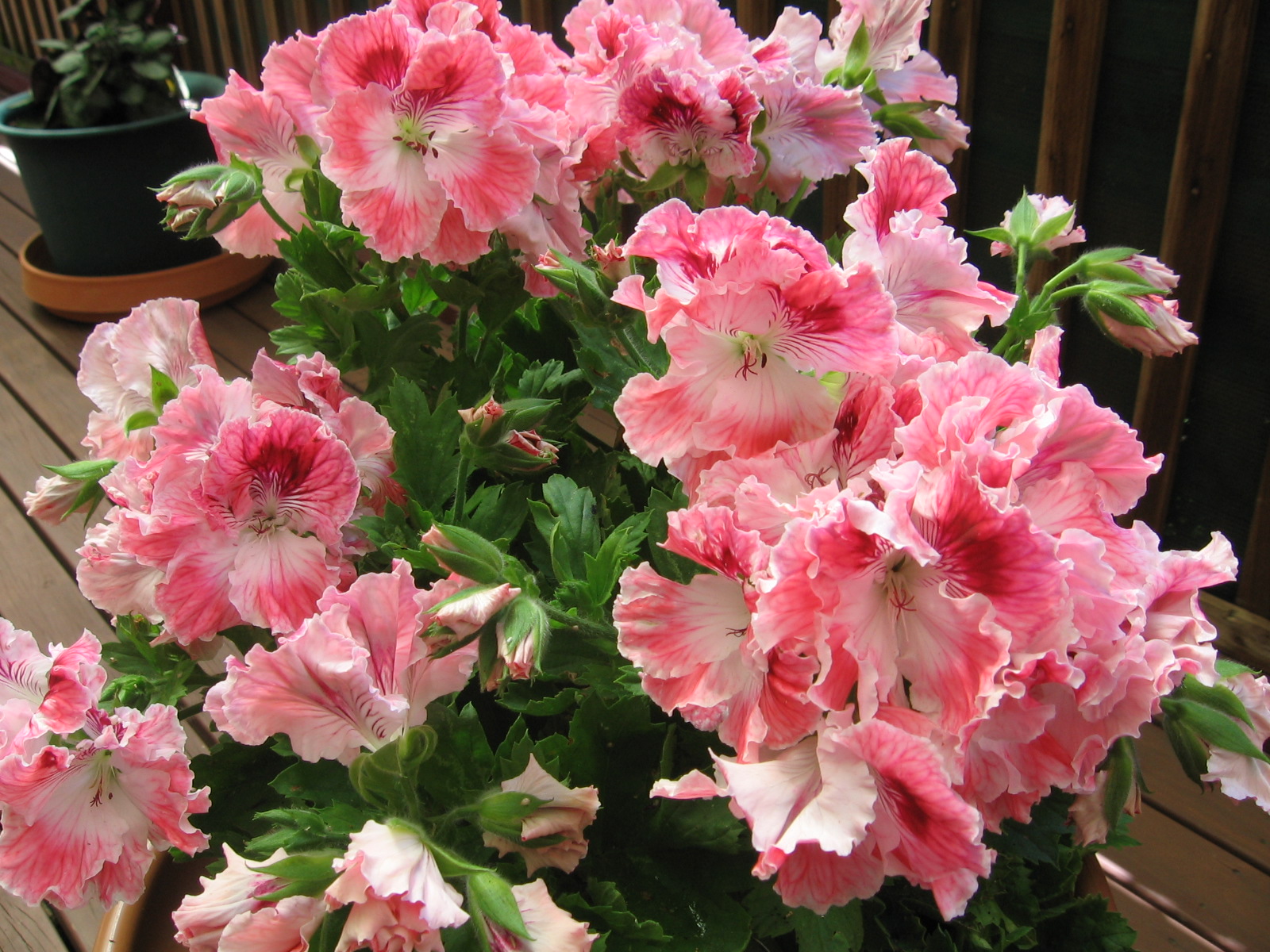
‘My gardening history started in a rented house, but now with a  home of my own, more passion is imparted.  In the 13 years we have lived here, I have gardened through a 10 year drought, dogs, goats, child and recently a plant shredding hail storm.  Inspired by Edna Walling and dispirited by Mother Nature and her creatures.

IMG_0580

My garden is probably not at the point I would like it, but it has changed over the years thanks, I suppose, to the drought.  I started with a range of cottage perennials, including some unusual varieties, but full water restrictions (no mains watering) did not help many of those thirsty English plants.  Anything that survived I have planted more of, and more natives and succulents have come in.

One of my favourite plants is the Aquilegia or “Granny Bonnet’.  It was also a favourite of Nana’s.

IMG_1200

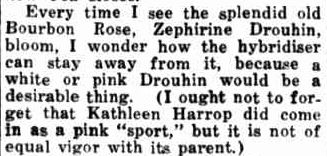
One day my “Zephirine Drouhin”  roses will cover the arch they grow beside.  But every year, just as the juicy new shoots show, two white creatures manage to break into my garden and indulge in one of their favourite delicacies.

IMG_1153and

Are We To Have More Fragrant Roses. (1930, September 5). Advertiser (Hurstbridge, Vic. : 1922 - 1939), p. 8. Retrieved March 12, 2013, from http://nla.gov.au/nla.news-article57763452

Are We To Have More Fragrant Roses. (1930, September 5). Advertiser (Hurstbridge, Vic. : 1922 – 1939), p. 8. Retrieved March 12, 2013, from http://nla.gov.au/nla.news-article57763452

The Sedum is an underrated plant and one that dates back to 19th century Australian gardens.  It transforms itself throughout the year giving ongoing variety in its form and it can cope with dry weather.  I have filled my borders with different varieties and they never disappoint.  The following description of the Sedum is from 1911.

gard8

NOTES. (1911, March 25). The Sydney Morning Herald (NSW : 1842 – 1954), p. 5. Retrieved April 6, 2013, from http://nla.gov.au/nla.news-article15231478

IMG_1579

Advertising. (1894, August 17). Portland Guardian (Vic. : 1876 - 1953), p. 4 Edition: EVENING. Retrieved March 29, 2013, from http://nla.gov.au/nla.news-article65395732

Advertising. (1894, August 17). Portland Guardian (Vic. : 1876 – 1953), p. 4 Edition: EVENING. Retrieved March 29, 2013, from http://nla.gov.au/nla.news-article65395732

If you would like to get an idea of how your ancestors’ gardens may have looked or you would like to recreate a garden from earlier times, Cottage Gardens in Australia by Peter Cuffley is a beautiful book and an excellent resource for studying Australian gardens right back to Colonial days.
IMG_1178

Trove Tuesday – Dancing Girls

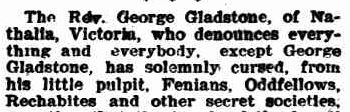
I found this article “Women at Dances” while searching for pioneer obituaries in the Portland Guardian, so I tagged it for a future Trove Tuesday post.  That day has arrived.  Today I introduce the preachings of  Reverend George Gladstone of the Holy Trinity Anglican Church, Nathalia, Victoria.

tt10

Established August 1842. (1899, June 7). Portland Guardian (Vic. : 1876 - 1953), p. 2 Edition: EVENING. Retrieved March 30, 2013, from http://nla.gov.au/nla.news-article63676343

Established August 1842. (1899, June 7). Portland Guardian (Vic. : 1876 – 1953), p. 2 Edition: EVENING. Retrieved March 30, 2013, from http://nla.gov.au/nla.news-article63676343

Surely he didn’t get  away with that. Did he?  Well, yes and no.  While the Bishop of Melbourne stood by his man, the people of Nathalia wanted to run him out of town.

That finding came from a search – George Gladstone Nathalia – at Trove.  There were pages of search results specific to the Reverend and the implications of the June 1899 sermon reported in the Portland Guardian and beyond.
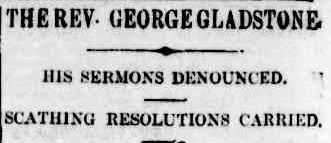
I was not surprised to read headlines like this:

The Dancing Crusade. (1899, June 24). Clarence and Richmond Examiner (Grafton, NSW : 1889 - 1915), p. 7. Retrieved March 30, 2013, from http://nla.gov.au/nla.news-article61302118

The Dancing Crusade. (1899, June 24). Clarence and Richmond Examiner (Grafton, NSW : 1889 – 1915), p. 7. Retrieved March 30, 2013, from http://nla.gov.au/nla.news-article61302118

or this:

THE REV. GEORGE GLADSTONE. (1899, June 21). The Argus (Melbourne, Vic. : 1848 - 1956), p. 8. Retrieved March 30, 2013, from http://nla.gov.au/nla.news-article9516823

THE REV. GEORGE GLADSTONE. (1899, June 21). The Argus (Melbourne, Vic. : 1848 – 1956), p. 8. Retrieved March 30, 2013, from http://nla.gov.au/nla.news-article9516823

or even this:

THE EXTRAORDINARY SERMON. (1899, June 13). The Horsham Times (Vic. : 1882 - 1954), p. 3. Retrieved March 30, 2013, from http://nla.gov.au/nla.news-article7505982

THE EXTRAORDINARY SERMON. (1899, June 13). The Horsham Times (Vic. : 1882 – 1954), p. 3. Retrieved March 30, 2013, from http://nla.gov.au/nla.news-article7505982

A public meeting was held in the Nathalia hall and the following is an example of the tone of the meeting:
THE REV. GEORGE GLADSTONE. (1899, June 21). The Argus (Melbourne, Vic. : 1848 - 1956), p. 8. Retrieved April 1, 2013, from http://nla.gov.au/nla.news-article9516823

THE REV. GEORGE GLADSTONE. (1899, June 21). The Argus (Melbourne, Vic. : 1848 – 1956), p. 8. Retrieved April 1, 2013, from http://nla.gov.au/nla.news-article9516823

A cry of “Horsewhip him” rang out as Mr W. McCormick had his say, indicating the Reverend’s sermons were receiving publicity around the world.

THE REV. GEORGE GLADSTONE. (1899, June 21). The Argus (Melbourne, Vic. : 1848 - 1956), p. 8. Retrieved April 2, 2013, from http://nla.gov.au/nla.news-article9516823

THE REV. GEORGE GLADSTONE. (1899, June 21). The Argus (Melbourne, Vic. : 1848 – 1956), p. 8. Retrieved April 2, 2013, from http://nla.gov.au/nla.news-article9516823

The Reverend did not stop. He delivered a sermon at Barmah, not far from Nathalia in September 1899, and once again spoke of the evils of dances.  He also denounced the Irish, proclaiming they the were known for “drinking, dancing and dynamiting”.  George Gladstone then had to escape through a side door and run through the bush to an awaiting buggy, hence the headline:
Sensational Lecture by a Clergyman. (1899, September 23). The Cumberland Argus and Fruitgrowers Advocate (Parramatta, NSW : 1888 - 1950), p. 5. Retrieved April 1, 2013, from http://nla.gov.au/nla.news-article85778569

Sensational Lecture by a Clergyman. (1899, September 23). The Cumberland Argus and Fruitgrowers Advocate (Parramatta, NSW : 1888 – 1950), p. 5. Retrieved April 1, 2013, from http://nla.gov.au/nla.news-article85778569

A year on he was not leaving anyone alone.

Current Notes. (1900, October 8). The North Queensland Register (Townsville, Qld. : 1892 - 1905), p. 3. Retrieved April 1, 2013, from http://nla.gov.au/nla.news-article82340469

Current Notes. (1900, October 8). The North Queensland Register (Townsville, Qld. : 1892 – 1905), p. 3. Retrieved April 1, 2013, from http://nla.gov.au/nla.news-article82340469

I was surprised to read that in 1907 George Gladstone was still in Nathalia and was still delivering sermons that led to riotous scenes.

In 1908, it all ended up in the courts after the Bishop of Wangaratta revoked Gladstone’s license to preach.  After failing in the courts, Gladstone attempted to set up his own religion, the Natalia Reformed Church of England.  The Victorian Government refused to proclaim the religion.  He passed away in 1916.
George Gladstone, while totally unrepentant, was probably lucky he was not preaching one hundred years later.  Imagine the social media uproar #horsewhiphim