Passing of the Pioneers

There is no shortage of obituaries for publicans. This edition of Passing of the Pioneers sees another two join the long list already named on the Pioneer Obituary Index. You’ll also read about the first butcher in Casterton and the story behind Camperdown’s famous clock tower. Remember to click on the underlined text to go to Trove newspaper articles and other related information.

BEATH, David Alexander – Died 21 July 1883 at Hamilton. David Beath was born around 1810 in Scotland. He became a merchant and travelled to Ireland where he married Marion Johnston in January 1837.¹ Around 1840, David and Marion arrived in Victoria. David firstly took up grazing land at Moonee Ponds west of Melbourne, then in 1842, he was granted a grazing licence at Western Port, south-east of Melbourne, near what is now Hastings. That was not a successful venture and in 1846, he applied for insolvency.    

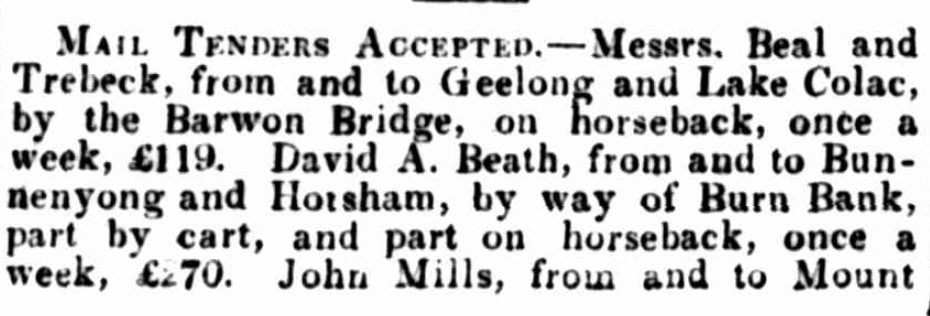
Next, David and Marion went to the Burnbank area between Ballarat and Avoca around 1847. In 1848, David accepted a mail run between Buninyong and Horsham via Burnbank, a route of over 220 kilometres.
Beath
SATURDAY MORNING, JUNE 24 (1848, June 24). Geelong Advertiser, p. 2 http://nla.gov.au/nla.news-article91457858

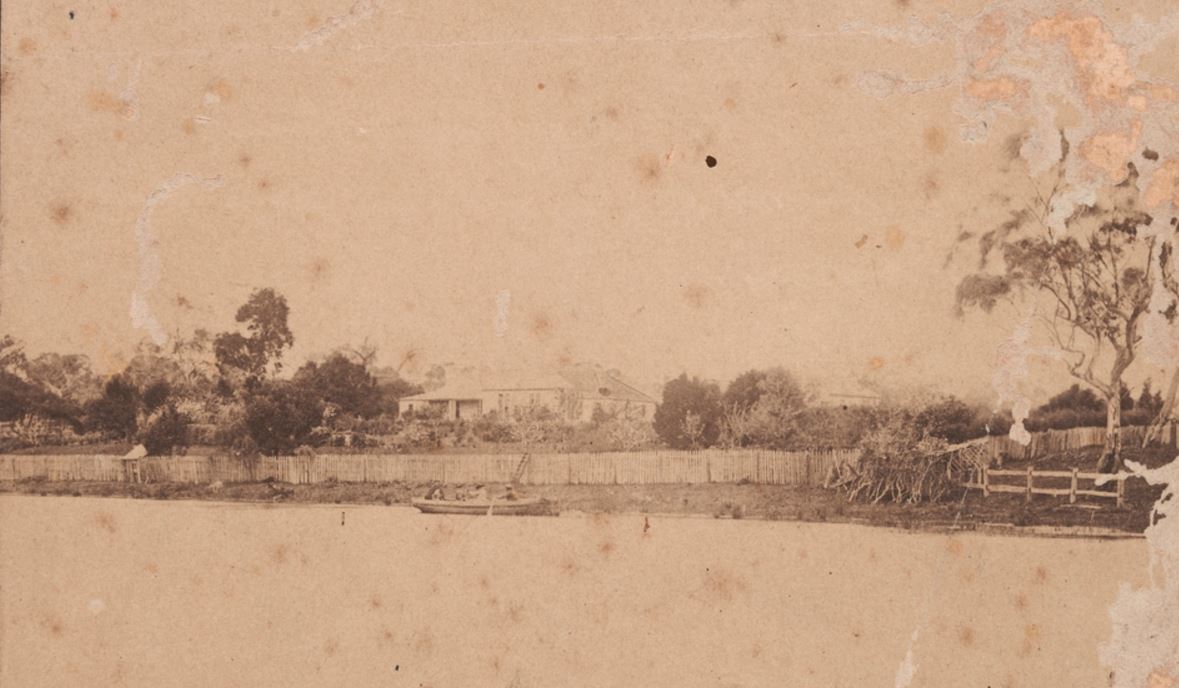
David, Marion, and their family arrived at The Grange (now Hamilton) in 1850 and took over the store of Mr. Malcolm. Then, the settlement was close to the banks of the Grange Burn between the Digby and Portland Roads.
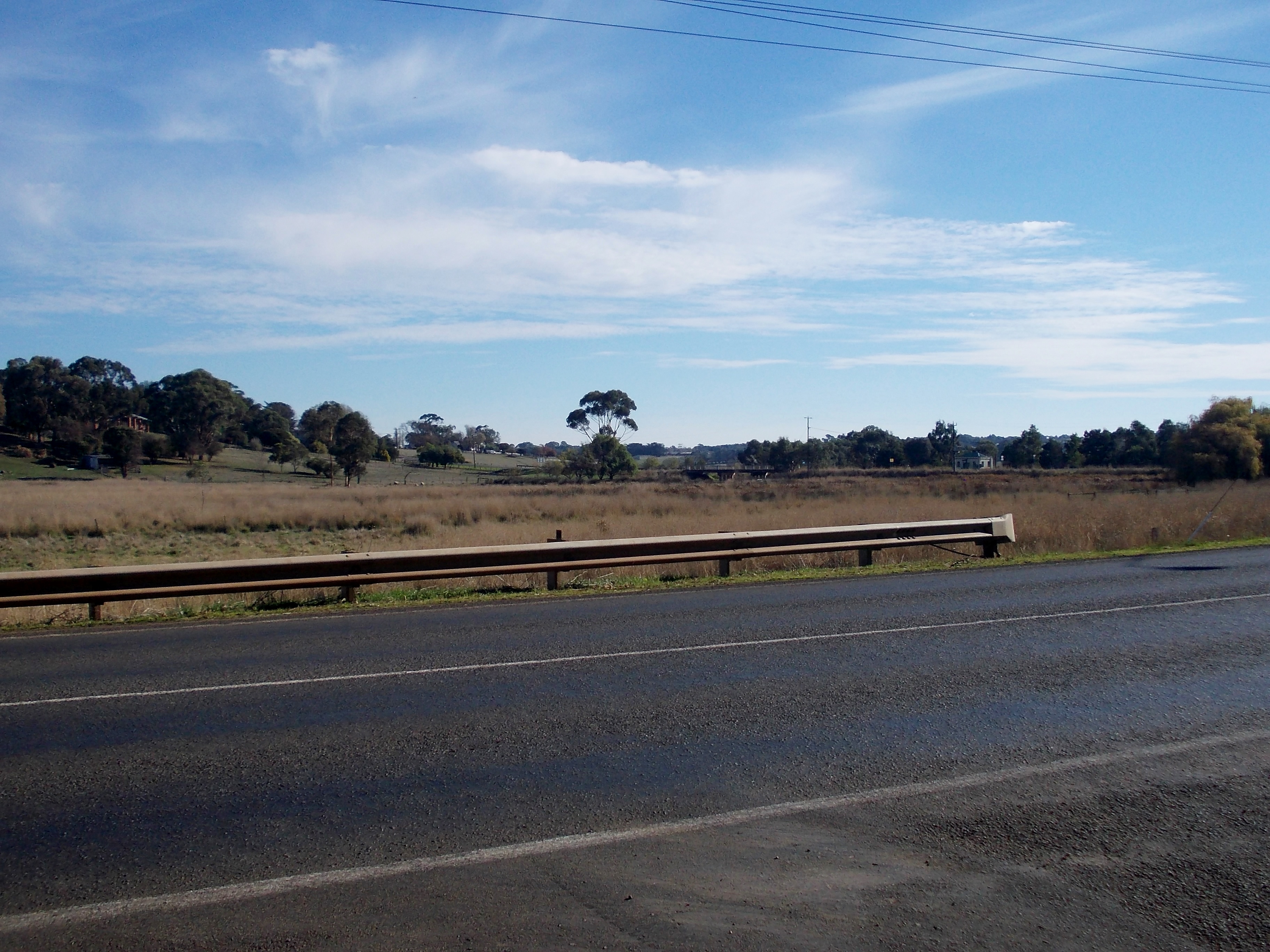
021 (2)
LOOKING TOWARD THE FORMER GRANGE SETTLEMENT, HAMILTON

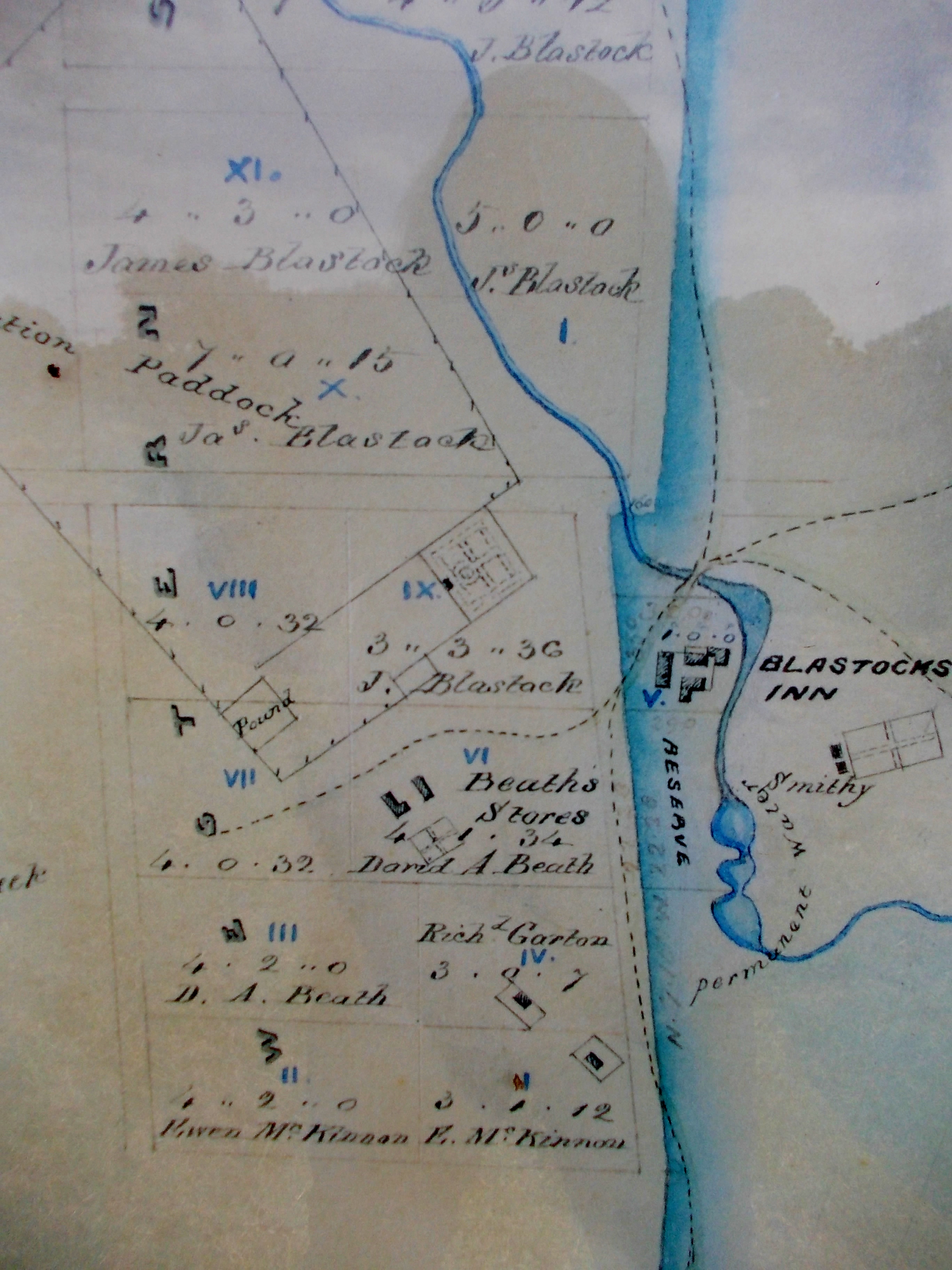
The map below shows Beath’s Store.

After the survey of the township of Hamilton, David ceased operating his store at the creek side location but remained living on the property he named Craigievar overlooking the rising new township of Hamilton.

Screenshot 2021-07-22 212821
BEATH’S STORE. Photo from the interpretive board at the Hamilton Wetlands.

David moved his store to Gray Street, Hamilton, but the name “Grange Store” remained. He also went into business with Ephraim Taylor in the buying and selling of sheepskins and greasy wool. Their partnership ended in 1862.

David was a trustee of the Hamilton Savings Bank and after the death of Alex Learmonth, he became the actuary.

Advertising (1874, March 14). Hamilton Spectator p. 1. http://nla.gov.au/nla.news-article226072789

David died in July 1883 and was buried at the Hamilton (Old) Cemetery, below.

Beath (3)
GRAVE OF DAVID AND MARION BEATH, HAMILTON (OLD) CEMETERY

1 The Belfast Newsletter, Belfast, Northern Ireland, (1828-1907), 24 Jan 1837, p. 3

DOLMAN, William – Died 17 July 1884 at Coleraine. William Dolman was born in Bristol, England around 1805.  He arrived in Victoria in the early 1840s and went to Muntham station between Coleraine and Casterton. From there, he went to Casterton and opened the first butcher shop.

In 1858, William married Uleyear Wombwell. The couple lived at Merino, where William opened another business.
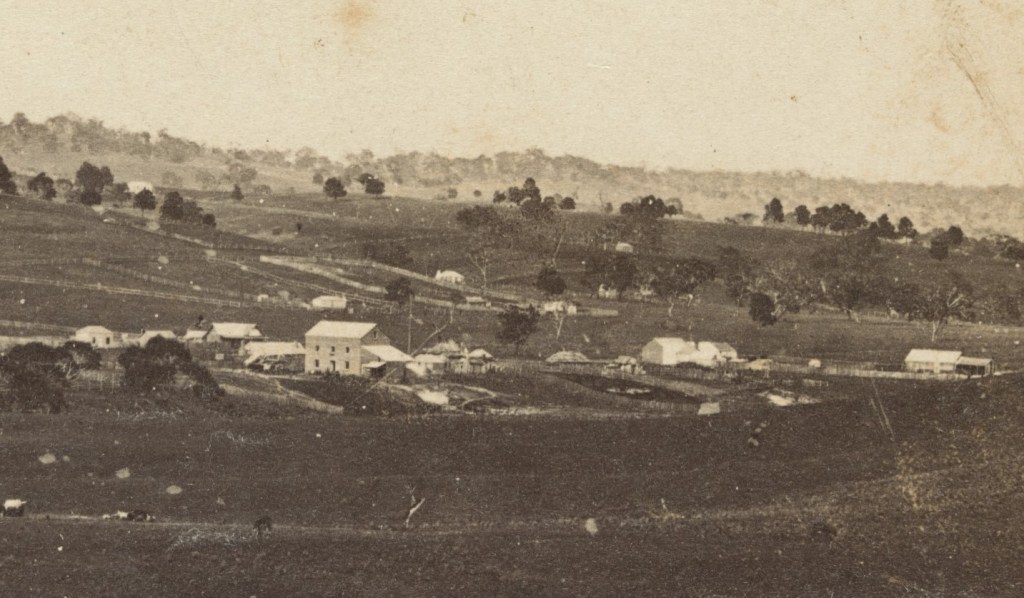
MERINO, c1859. Photographer Thomas Hannay. Image courtesy of the State Library of Victoria http://handle.slv.vic.gov.au/10381/320262

They then left for Coleraine around 1863, and William started the first butcher shop in that town. The following year, he competed in a trotting match to Hamilton with Mr. Payne.

Local News. (1864, February 26). Hamilton Spectator and Grange District Advertiser p. 2. http://nla.gov.au/nla.news-article194724238
Local News. (1864, March 11). Hamilton Spectator and Grange District Advertiser , p. 2. http://nla.gov.au/nla.news-article194723026

In 1876, William sold the butcher shop stock as he was leaving butchering. Mr. Wombwell took over the business. The following year, William opened a store in Pilleau Street Coleraine, and in 1878, he bought Coleraine’s Criterion Hotel. He sold the hotel in 1880, and as reported at the time he, “intends shortly to embark in another speculation in Coleraine”. It’s unclear if that eventuated.

William died in 1884. The funeral procession to the Coleraine Cemetery was over a kilometre long. In his time in the Western District, William never moved over twenty miles of the Muntham homestead where he started out. William’s wife Uleyear died in 1912.

MANIFOLD, Thomas Peter – Died 19 July 1895 at Melton. Thomas Manifold was born around 1865 at Purrumbete homestead near Camperdown, the second son of John and Marion Manifold.
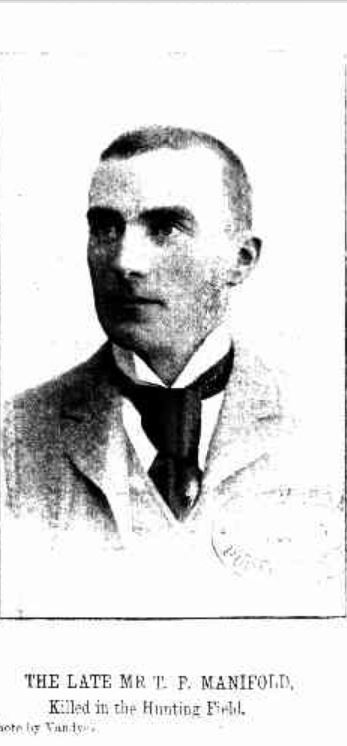
THE LATE MR T. P. MANIFOLD. (1895, July 27). Weekly Times p. 10. http://nla.gov.au/nla.news-article221169222

When Thomas was twelve, his father died and Thomas inherited the property Wiridgil (below).

Wiridgil
The Pastoralists’ review, Vol. 19 No. 4 (15 June 1909) http://nla.gov.au/nla.obj-539767932

Thomas and his brothers were keen horsemen and enjoyed racing and polo. In 1895, the brothers made up the Camperdown polo team.

MANIFOLD BROTHERS, 1 APRIL 1895. Image courtesy of the State Library of Victoria http://handle.slv.vic.gov.au/10381/256943

On 19 July 1895, Thomas rode with the Melbourne Hounds in a hunt at Melton. His horse Postscript fell at a jump, killing Thomas. He had only just mentioned to his fellow riders he had ridden the mare for five years and she never made a mistake jumping.

Thomas’ body was returned to Camperdown for his funeral, the largest seen in Camperdown.
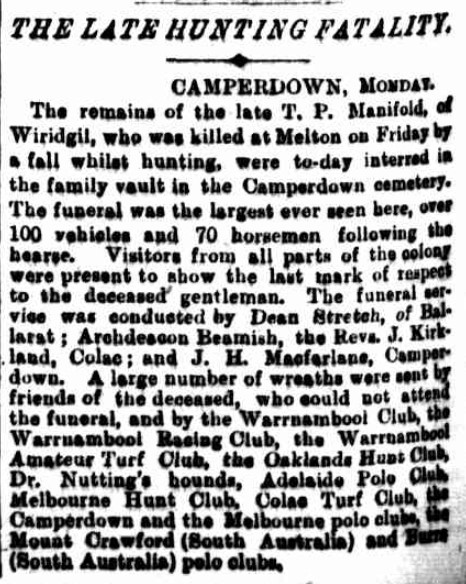
THE LATE HUNTING FATALITY. (1895, July 23). The Age, p. 6. http://nla.gov.au/nla.news-article203606884

Thomas bequeathed money to St Paul’s Anglican Church in Camperdown and the church put the money toward a church hall and Sunday School. The selected design (below) was constructed in 1896.
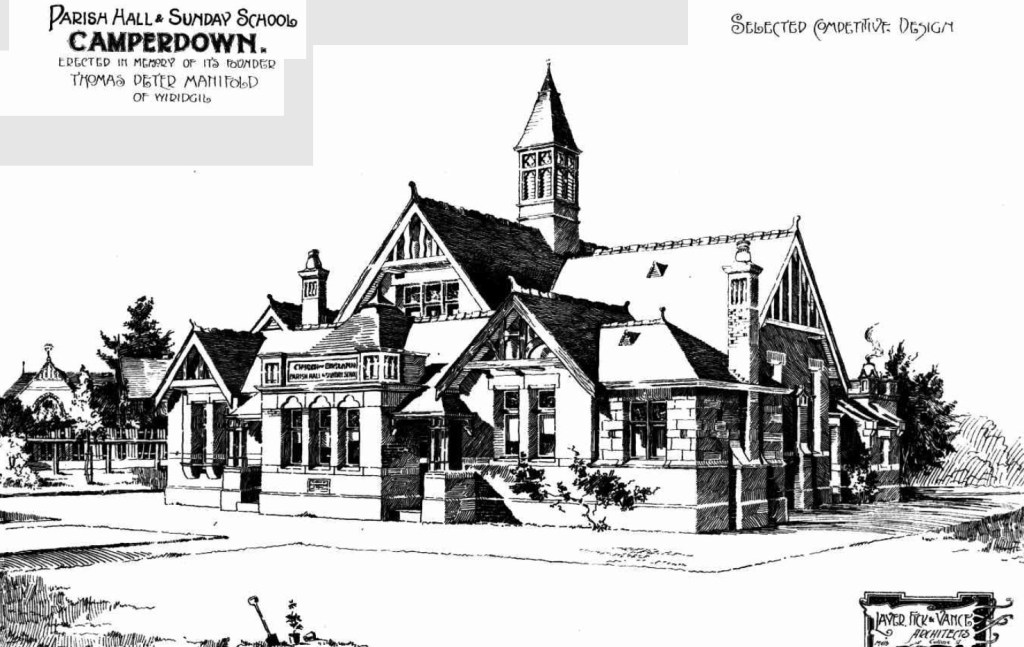
PARISH HALL & SUNDAY SCHOOL CAMPERDOWN. (1897, April 1). The Church of England Messenger for Victoria and Ecclesiastical Gazette for the Diocese of Melbourne, p. 1 http://nla.gov.au/nla.news-article197317393

In addition, Thomas bequeathed £1000 for the construction of a clock tower in Camperdown. The council agreed, and the result was the wonderful clock tower below, synonymous with Camperdown.
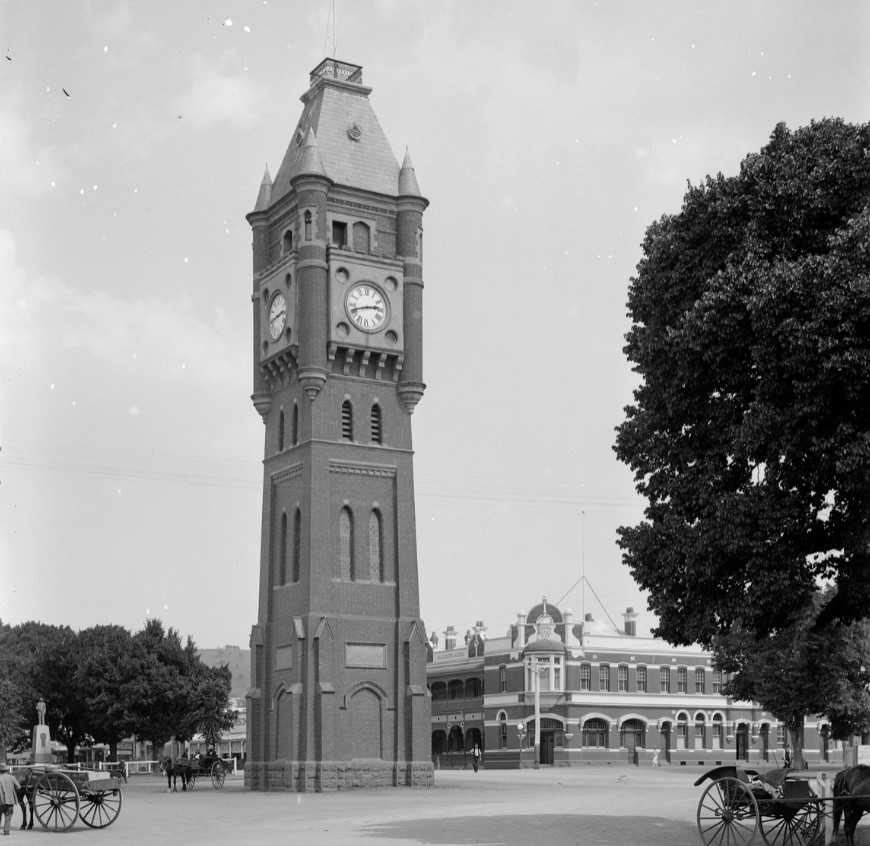
Camperdown
THE CAMPERDOWN CLOCK TOWER. Image courtesy of the State Library of Victoria

McNICOL, Donald  – Died 19 July 1903 at Camperdown. Donald McNicol was born in Oban, Scotland around 1812. He arrived in Australia in 1839 to take up work with Niel Black, who had arrived a few months earlier with Donald’s brother Duncan. With his wife and three daughters, Donald spent a few months in the area that would become Ballarat before going to the Terang district in 1840.

Lake Terang
LAKE TERANG. Image courtesy of the State Library of Victoria http://handle.slv.vic.gov.au/10381/4178389

The McNicols settled on the banks of Lake Terang and were one of the first European families in the area. After ten years, the family moved to the Camperdown district and Donald went into partnership with his brother Duncan in the properties Wuurong and Basin Banks. They dissolved their partnership around 1874, and Donald sold all but 50 acres of Wuurong to Thomas Shaw. In 1848, Donald and Duncan opened a store at Old Timboon, a settlement which gave way to nearby Camperdown, and also operated the first post office there.

Donald remained Scottish to the end and would kilt up for Caledonian Society events in Melbourne. In 1864, he attended the first Grand Highland Gathering of the Western Caledonian Society in Warrnambool.

McNicol
FASHIONABLE INTELLIGENCE. (1864, April 21). Melbourne Punch p. 6. http://nla.gov.au/nla.news-article174530107

Family was important to Donald, something that stemmed from his childhood growing up in Scotland.
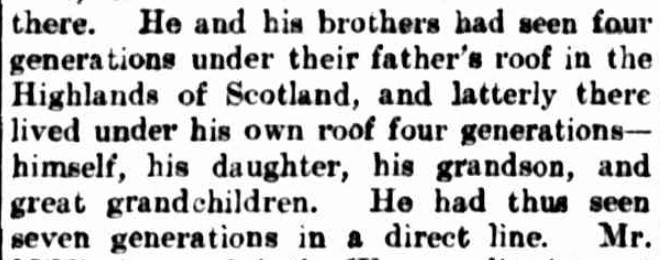
PERSONAL. (1903, July 22). The Argus (Melbourne, Vic. : 1848 – 1957), p. 5. http://nla.gov.au/nla.news-article9815401

Today, you can see a plaque dedicated to the McNicol family in Mary Bradshaw Avenue, Terang.

WINTER, Sarah – Died 12 July 1911 at Hamilton. Sarah Winter was born in Devonshire around 1838. She married Jeffery Callard, and they left England for Australia on the British Empire, arriving at Portland in 1857. They remained there until the mid-1870s when they went to Hamilton. In 1881 Thomas bought the Hamilton Tannery from butcher Thomas Brown.
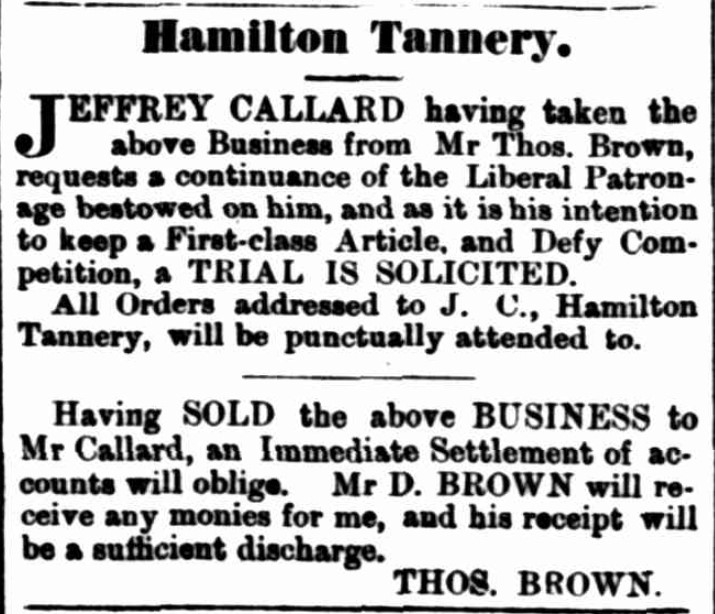
Callard
Advertising (1881, July 5). Hamilton Spectator (Vic. : 1870 – 1918), p. 3. Retrieved July 6, 2021, from http://nla.gov.au/nla.news-article226058689

Situated close to the Grange Burn at the end of Moore Street, Jeffery successfully built up the business. He died in December 1902, and with the help of her sons, Sarah continued running the tannery. 
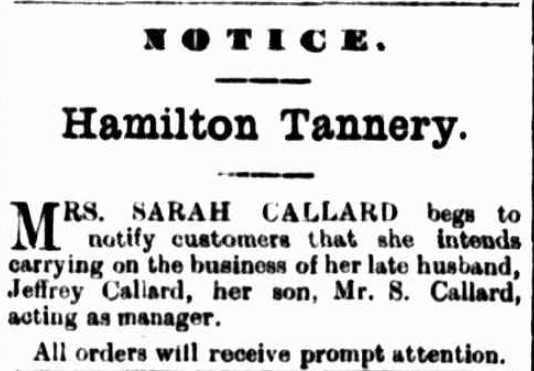
Callard

Sarah died in 1911, leaving three daughters and four sons at the time of her death. She was buried in the Baptist section of the Hamilton (Old) Cemetery with Jeffery, and their son Thomas, who died in 1898.
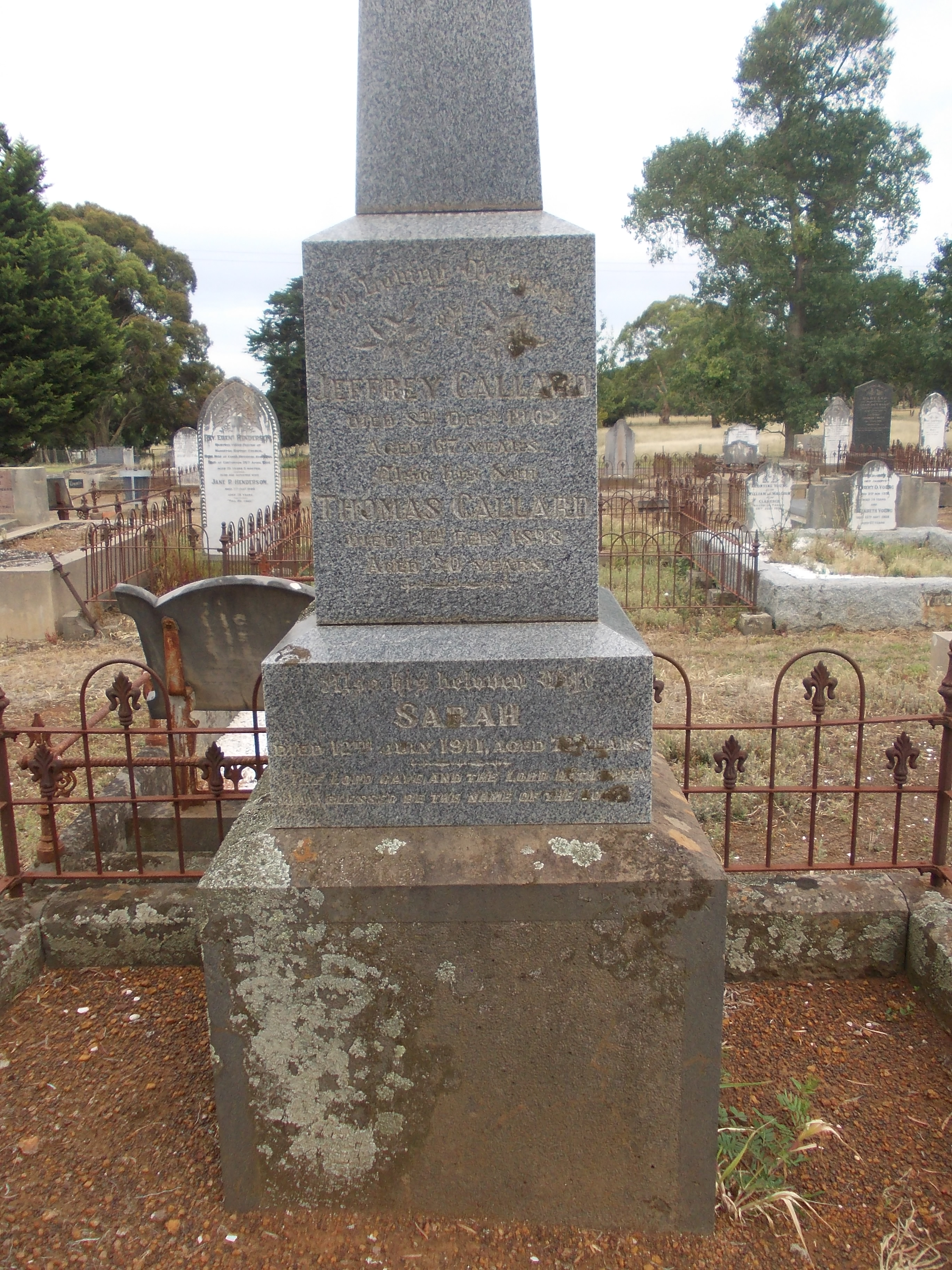
Callard
GRAVE OF SARAH CALLARD, HAMILTON (OLD) CEMETERY

HARWOOD, Louisa Jane – Died 5 July 1914 at Geelong. Louisa Harwood was born in North Cornwall in 1836. With her mother and sisters, she travelled to Australia in 1849, arriving at Adelaide. In 1854, she married Caleb Mountjoy, and they moved to Avoca in Victoria.

There was an opportunity on the coast to the south, and Caleb and his brothers, Lawrence and Thomas, took up the Loutit Bay run, later known as Lorne.

LOUTIT BAY. Image courtesy of the State Library of Victoria http://handle.slv.vic.gov.au/10381/44352

Caleb also had land at Barrabool Hills near Geelong, but he and Louisa went to live at Yan Yan Gurt at Deans Marsh for many years before retiring to Geelong. In March 1904, Louisa and Caleb celebrated their 60th wedding anniversary.
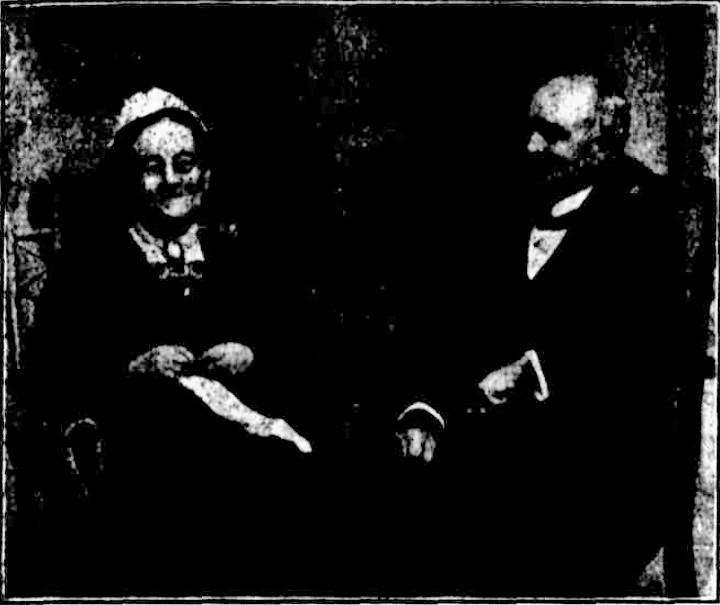
Mountjoy
Wedding Bells. (1914, April 10). Spectator and Methodist Chronicle, p. 605. http://nla.gov.au/nla.news-article154132338

In her later years, Louisa spent much of her time knitting fine lace for doilies, which were sold at church fetes and other charities. She was also a member of the Methodist Church.

Louisa died suddenly in 1914 and was buried at the Barrabool Hill Cemetery, Highton.

You can read more about the Mountjoy family on the link to Otway Life-The Mountjoys of Lorne.

DANCOCKS, Edward Bearcroft – Died 3 July 1915 at Casterton. Edward Dancocks was born around 1840 in Gloucestershire, England. In 1852, he arrived at Portland Bay with his parents, brothers Hercules and John, and sister Kate. From Portland, the Dancocks family travelled to Wando Vale before making their way to the Henty property, Merino Downs.
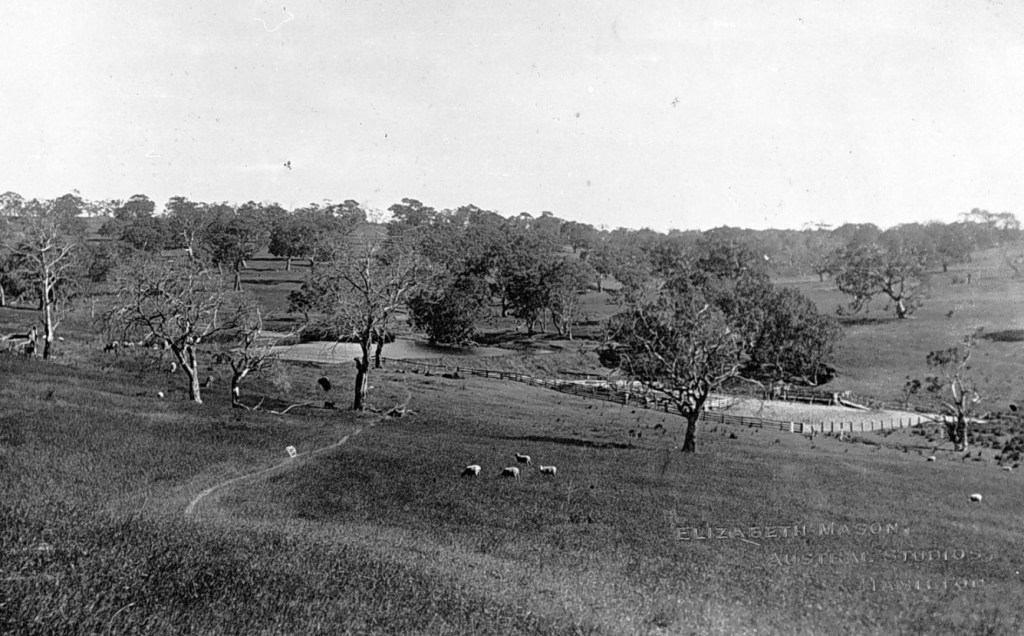
MERINO DOWNS, c1920. Photographer: Elizabeth Mason. Image courtesy of the Museums Victoria Collections https://collections.museumsvictoria.com.au/items/766481

John went to work for Edmund Kirby at Springbank near Casterton and later was the manager at adjoining stations, Pieracle and Runnymede. In 1871, Edward married Martha Foster. His two brothers had earlier married Martha’s sisters.

During the 1880s, Edward took up the Casterton Hotel and operated it for the next twenty years.
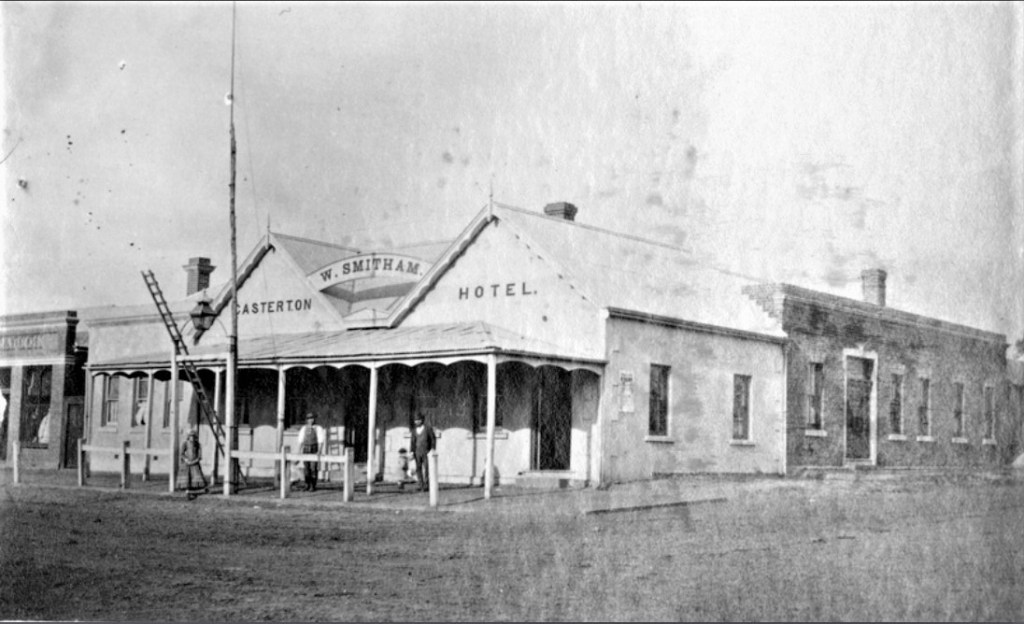
CASTERTON HOTEL, c1880. Image courtesy of the State Library of South Australia, Image no, B 21766/79 https://collections.slsa.sa.gov.au/resource/B+21766/79

In 1905, Edward retired but continued living in Casterton until his death.

SWAN, Jane – Died 29 July 1918 at Lismore. Jane Swan was born in Scotland around 1844 and arrived in Victoria aged six. Her family settled in the Windermere district near Ballarat. On 4 May 1865 at Windermere, Jane married William Oman of Browns Waterhole (Lismore) and they settled there.

Jane was a member of the Lismore Presbyterian Church, and during WW1, the local Red Cross. For the war effort, Jane knitted three pairs of socks a day until she had a fall on 18 July 1918 and broke her thigh. She died eleven days later. Jane had eleven children, and ten were still living at the time of her death. Jane’s funeral was the day following her death, and sixty cars and horse-drawn vehicles followed the hearse to the Lismore Cemetery.

DRUMMOND, Robert George – Died 13 July 1924 at Hamilton. Robert Drummond was born in 1869 at Coleraine, the son of George and Margaret Drummond. George operated Coleraine’s Shamrock Inn until 1876, then the Koroite Inn. A year after Robert’s birth, in 1870, his sister, uncle, and cousins drowned when flood water inundated their home at Coleraine. In 1882, when Robert was thirteen, George Drummond died. Robert went to school in Coleraine before working for a short time for James Trangmar in his store in Coleraine, next door to the Koroite Inn.

Trangmar
STORE OF JAMES TRANGMAR, COLERAINE. Image courtesy of the Museums Victoria Collections https://collections.museumsvictoria.com.au/items/767465

He then returned to school at Portland College. After leaving, he secured a job at the Horsham branch of the Bank of Victoria. In 1893, Robert went to Western Australia in search of gold. His mother Margaret died the following year. She had continued to run the Koroite Inn after the death of George Drummond, but she retired in 1891 and leased the property. The photo below from 1919 shows the Koroite Inn with Trangmar’s Store, next door.
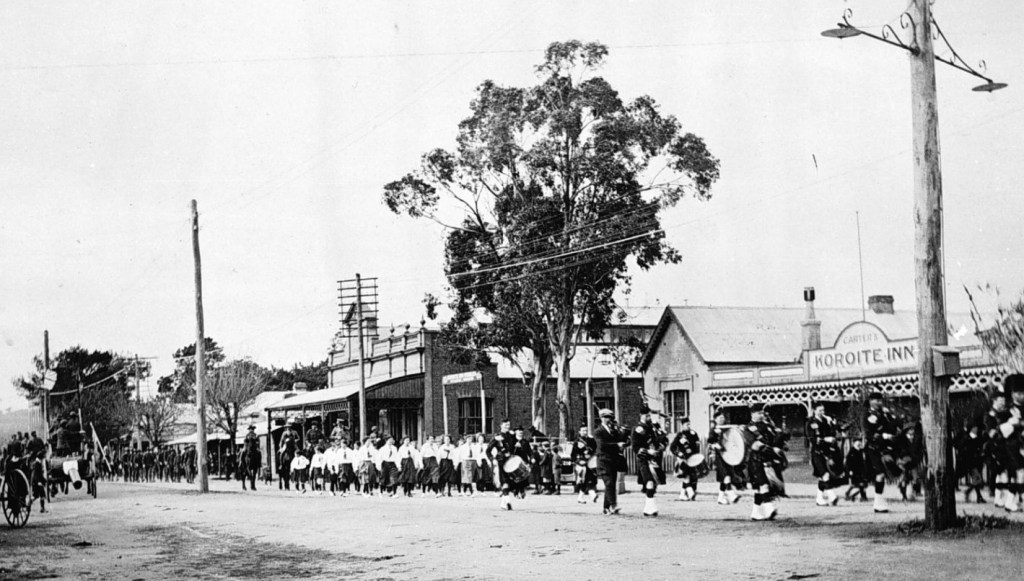
WHYTE STREET, COLERAINE INCLUDING THE KOROITE INN, 1919. Image courtesy of the Museums Victoria Collections https://collections.museumsvictoria.com.au/items/766397

Robert returned to Victoria and got work with Hepburn, Dowling, and Crawford, auctioneers at Casterton. He married Annie Fitzsimmons in 1898 and in the next year applied to take over the licence of the Koroite Inn, of which he was a part-owner.

In 1902, Robert purchased the freehold of the Victoria Hotel in Hamilton.

Victoria Hotel

Robert got involved with many community activities in Hamilton, including his election in 1907, as president of the Hamilton and Western District Licensed Victuallers’ Association. In 1920, Robert leased the hotel and the following year went into partnership with Cecil Miller in Miller and Drummond, Stock and Station agents in premises Gray Street next to the Victoria Hotel in Gray Street. You can just see the sign in the photo above.

Robert was a good singer known for his comedic performances and he took part in many theatrical productions. He was a member of the Caledonian Society and a director of the Hamilton Electricity Company. He was a vestryman of the Christ Church Anglican Church, a member of the Masonic Lodge, and a member of the directorate of the Associated Oil Corporation, Ltd.

Robert was buried at the Hamilton Cemetery and left his widow Annie and two daughters who donated a stained-glass window to Hamilton’s Christ Church Anglican Church, in his memory.

ROBERT DRUMMOND MEMORIAL WINDOW

Passing of the Pioneers

Welcome to a double Passing of the Pioneers covering April and May. You’ll find eleven obituaries of Western District pioneers and as always there are some great characters and stories. They include a butcher, a brewer, publicans, and a teacher of young ladies and they have connections to such towns as Camperdown, Coleraine, Branxholme and Byaduk. Remember if you click on the underlined text, you will go to further information about a subject.  This month, some of the links will take you to newspaper articles, cemetery records and the Victorian Heritage Database.

APRIL

McLEOD, John Norman – Died 18 April 1886 at Tyrendarra.  John McLeod arrived at Port Phillip from Tasmania in 1843 aboard the Tamar. He then went on to New South Wales and married Agnes Paterson on 20 August 1844 at Port Macquarie. The newlyweds returned to Port Phillip and John took up Borhoneyghurk station west of Geelong.  Their first child, a daughter was born at Geelong in 1845.

“PORT PHILLIP” The Melbourne Daily News (Vic. : 1848 – 1851) 14 February 1849: 4. Web. 14 May 2018 <http://nla.gov.au/nla.news-article226471840&gt;.

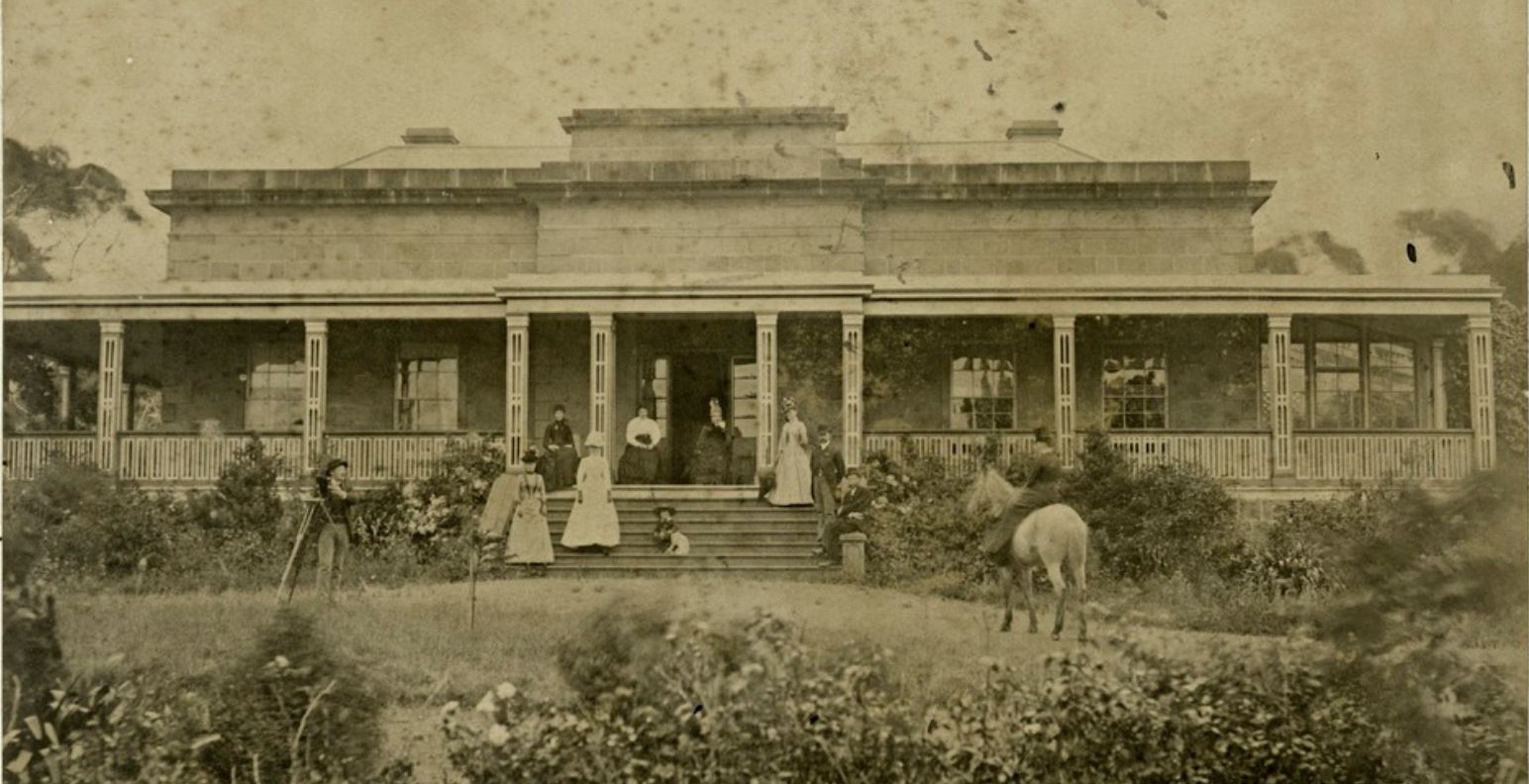
John then took up runs further west in 1850, Tahara and Winninburn located on either side of the Wannon River.  In 1853, he sold the Tahara run and purchased land at Bolwarra near Portland where he built Maretimo (below).

MARETIMO, PORTLAND c1895 Image courtesy of the State Libary of Victoria http://handle.slv.vic.gov.au/10381/266298

John continued to acquire property purchasing Castlemaddie at Tyrendarra and Mt Clay Station near Heywood. On 5 April 1865, he set off to Western Australia from Portland aboard the barque Douglas with five other locals including his brother Magnus. They took 1200 head of sheep, cattle, hay and more, in an expedition to establish grazing interests in there. By 1866, he had returned.  John sold Maretimo in 1873 and based himself at Castlemaddie.   During his life, John was a Magistrate and sat as the Portland representative in the Victorian Legislative Assembly in 1858.  After John’s death, a stained glass window was installed at St James Church, Tyrendarra in his memory.

CUE, George – Died 22 April 1897 at Casterton.  George Cue was born around 1813.  As a young man, he was a midshipman aboard the HMAS Lapwing with his uncle, Sir Thomas Ross as captain.  George then married Maria Theresa Collins and they travelled to America but returned again to London before choosing to travel to Australia.  They arrived at Melbourne aboard the Royal George in November 1850 with their five children.  During the 1850s George Cue and his family moved to Casterton when he was appointed Clerk of Courts.  He also held the role of Lands Officer and in 1872 he was appointed the Receiver of Revenue for the Casterton district.  Maria died in 1883 and George’s eldest son Thomas Cue left for Western Australia where he discovered the Cue goldfields in the early 1890s.  George was eighty-four at the time of his death in 1897 and was buried at the Sandford Cemetery.

WIGGINS, William Henry – Died April 1902 at Camperdown.  William Wiggins was born in Launceston, Tasmania around 1841 and arrived in Victoria as a child with his parents who settled at Portland. When William was older he moved to the Geelong district and completed a carpentry apprenticeship.  In 1863, he and his brother John took up the licence of the Mount Shadwell Hotel at Mortlake. John had earlier hotel experience having purchased the Buck’s Head Hotel at Drysdale with another brother James during the 1850s.  In 1867, John Wiggins purchased the Leura Hotel at Camperdown (below), and William became the manager.

WIGGINS’ LEURA HOTEL, CAMPERDOWN. Image courtesy of the State Library of Victoria http://handle.slv.vic.gov.au/10381/337215

William was a fan of the arts as a member of the Camperdown Dramatic Club but he was also a keen sportsman.  He was a founder of the cricket club and was captain for a time.  He was also a leading player for the Camperdown Football Club and participated in coursing, angling and shooting.  It appears William never married.

BROWN, Thomas – Died 27 April 1903 at Hamilton. Thomas Brown was born in Paisley, Scotland around 1844.  In 1862 at the age of eighteen, Thomas arrived in Victoria with his parents Peter Brown and Margaret McFarlane.  Thomas and his brothers started a butchering business which included a tannery and fellmongery. In 1864, Thomas opened his own shop in Thompson Street next to the Commercial Hotel.

“Advertising” Hamilton Spectator and Grange District Advertiser (South Melbourne, Vic. : 1860 – 1870) 22 April 1864: 3. Web. 20 May 2018 <http://nla.gov.au/nla.news-article194723938&gt;.

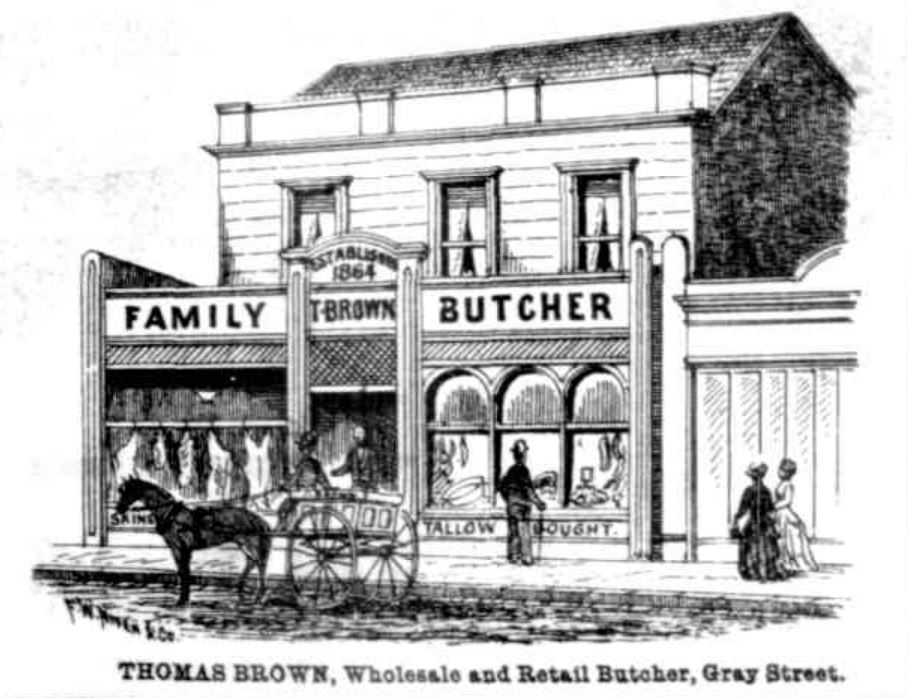
In 1867, Thomas married Mary Ann Cameron and their large family began the following year.  By 1888, Thomas had moved his butcher shop into Hamilton’s main street, Gray Street.

THOMAS BROWN’S BUTCHER SHOP Hamilton Spectator (Vic. : 1870 – 1918) 17 April 1888: 2 (SUPPLEMENT TO THE HAMILTON SPECTATOR).

Outside of business, Thomas was an elder of the Presbyterian Church and superintendent of the Sunday School.  He was associated with the temperance movement as a member of the Sons of Temperance and sat on the Hamilton Hospital committee. He was a charitable man as indicated by his obituary, “The poor of the town have lost a friend”.  Thomas left his widow, Mary Ann and seven children. Three children predeceased him.  Mary Ann died in 1928 at her home Weeroona in McIntyre Street, Hamilton.

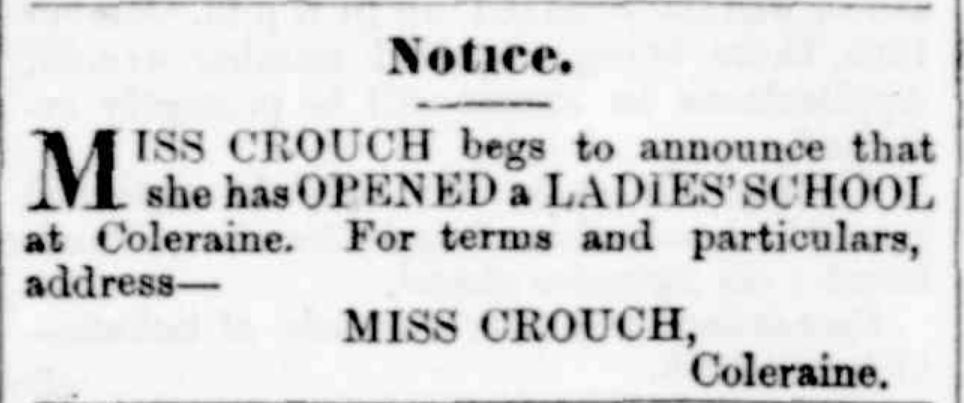
CROUCH, Emma – Died 11 April 1904 at Ballarat.  Emma Crouch was born in 1832 in England.  Emma’s brother George left for Australia and her sister Matilda married and moved to the United States where she had three children.  In 1865, Matilda died in California and her children, Kate and Arthur McCann and their younger half-sister Eustasia de Arrayave, travelled to England to live with Emma at Roxeth near Harrow, London. The following year, Emma with Kate, Arthur and Eustasia boarded the Great Britain for Melbourne arriving on 26 December 1866.  They then caught the steamer S.S. Edina to Portland to join Emma’s brother George.  Emma established a Ladies School in Hurd Street, Portland and the Portland Girls Friendly Society. She was also an active member of the St. Stephen’s Anglican Church.

“Advertising” Portland Guardian (Vic. : 1876 – 1953) 5 September 1876: 3 (EVENINGS.). Web. 20 May 2018 <http://nla.gov.au/nla.news-article63336246&gt;.

Emma’s niece Kate married James William Trangmar in 1876 and moved to Coleraine and in time, Emma moved also moved to Coleraine.  She was also active in that community, entering flower shows and Coleraine Industrial Exhibition in 1894, winning first prize with her tortoiseshell cat.  Emma also set up a school for girls in Coleraine around 1880 and was an active member of the Holy Trinity Church congregation.

“Advertising” Hamilton Spectator (Vic. : 1870 – 1918) 13 October 1881: 3. Web. 20 May 2018 <http://nla.gov.au/nla.news-article226059479&gt;.

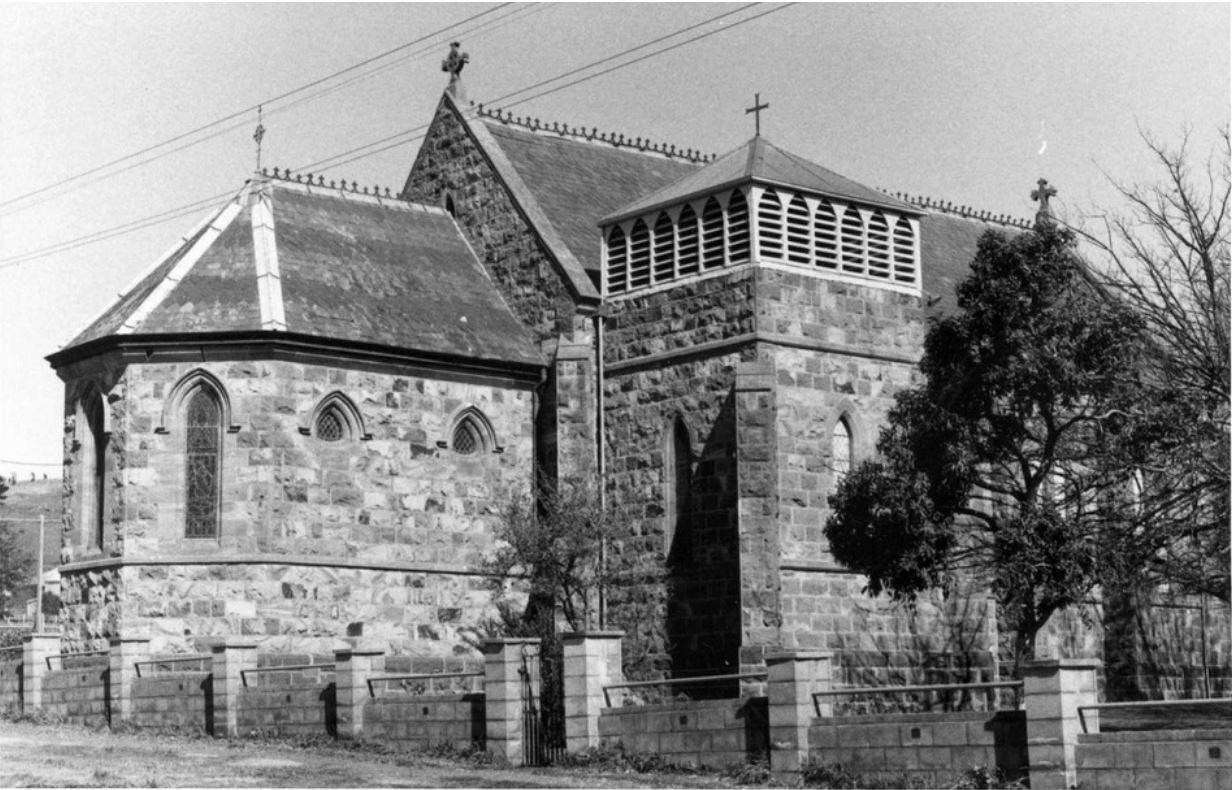
In 1904, Emma fell sick after her return to Coleraine from summer holidays in Portland. To convalesce, Emma travelled with her niece Eustasia to niece Kate’s home in Ballarat but she died on 11 April 1904. Her body was taken by train to Portland and a service was held at St Stephen’s Church before her burial at the Portland Cemetery.  On 20 December 1904, a stained glass window was dedicated to the memory of Emma at the Holy Trinity Church, Coleraine (below).

HOLY TRINITY CHURCH, COLERAINE. Image courtesy of the J.T. Collins Collection, La Trobe Picture Collection, State Library of Victoria. http://handle.slv.vic.gov.au/10381/216987

REID, Mary – Died 1 April 1912 at Branxholme.  Mary Reid was born around 1819 in Scotland.  She married Thomas Begg and they started a family.  In 1855, Mary, Thomas and their children left for South Australia on the Nashwauk.  After three months at sea, the ship crashed into the coast at the mouth of the Onkaparinga River near Noarlunga just south of Adelaide. Fortunately, the Begg family were rescued safely but they lost all their belongings. Thomas left Mary and the children in Adelaide and went to the Bendigo diggings for around fifteen months but returned no richer for his efforts.   Around 1865, Thomas selected land near Branxholme naming the property Fontus.  Thomas died in 1895 so Mary moved to the home of her daughter Agnes and her husband William Gough at Royston, Branxholme (below).  Mary remained there until her death in 1912.

ROYSTON, BRANXHOLME. Image courtesy of the J.T. Collins Collection, La Trobe Picture Collection, State Library of Victoria. http://handle.slv.vic.gov.au/10381/215598

MAY

CAMERON, Donald – Died 5 May 1879 at Portland.  Donald Cameron was born around 1810 in Scotland and arrived in Victoria after travelling overland from Sydney in 1835.  He took up the Glenroy Station at Moonee Ponds in partnership with a relative Duncan Cameron.  Donald heard of the good prospects at the Portland Bay settlement and decided to see for himself.  He arrived just in time for the first crown land sales in October 1840.  He purchased a block opposite where Mac’s Hotel now stands and built the Portland Bay Hotel (below).

THE PORTLAND BAY HOTEL. The Australasian Sketcher with Pen and Pencil (Melbourne, Vic. : 1873 – 1889) 17 December 1884: 197. Web. 30 May 2018 http://nla.gov.au/nla.news-article60620119

While the hotel business made Donald a wealthy man, his obituary alluded to an early land purchase near Harrow of £200 which brought him a profit of between £20,000 and £30,000 when he sold the property soon after buying it. From the profits, Donald bought the Oakbank estate of more than 6000 acres near Heywood in the early 1850s. He built a large homestead (below).

OAKBANK HOMESTEAD Leader (Melbourne, Vic. : 1862 – 1918) 8 September 1906: 6 (“THE LEADER ” ILLUSTRATED SHOW SUPPLEMENT.). Web. 28 May 2018 http://nla.gov.au/nla.news-article198136017

Donald then purchased the larger Hilgay near Coleraine around 1859. He married Eleanor Mary Jane Hughes on 7 April 1863 at St Mary’s Church, St Kilda and they resided at Oakbank.  Donald took an interest in politics and contributed large sums of money toward electioneering.  In May 1879, Donald travelled to Portland and took a room at Mac’s Hotel. He developed inflammation of the lungs and died at the hotel on 5 May.  His widow Eleanor died the following year on 21 June at the age of sixty-one. They had no children.

WINTER, Arbella – Died 1 May 1892 at Condah.  Arbella Winter was born at around 1821.  She arrived in Tasmania around 1839 with her brother George Winter.  During the voyage, she met fellow passenger Cecil Cooke.  Just a month after they disembarked at Launceston, Cecil and Arbella married at St John’s Church, Launceston.

“Family Notices” Launceston Advertiser (Tas. : 1829 – 1846) 23 May 1839: 2. Web. 13 Sep 2016.

Soon after, the newlyweds boarded a schooner for Victoria arriving at Portland Bay on 10 July 1839 to join Arbella’s brother Samuel Pratt Winter already in the Western District in the vicinity of the Wannon River.  Cecil travelled with his own accommodation, having brought a hut from England which he erected at Portland.  Soon after, Cecil took up a run on the Smokey River, or Crawford River as it more commonly known.  In 1842, a daughter Emily was born but she died the following year. The couple would go on to have five sons. 

Cecil was finding pioneering life tough and things were not going to plan so he went further north to Harrow in 1845 and set up the Pine Hills estate. More bad luck came when a fire went through the property in 1846.  By 1849, Cecil had sold Pine Hills to David Edgar.  He then bought Lake Condah station (below).

LAKE CONDAH HOMESTEAD c1880. Image courtesy of the State Library of Victoria. http://handle.slv.vic.gov.au/10381/334482

Arbella was very close to her brother Samuel and from the early 1870s, Arbella and her family spent more time at his property Murndal near Tahara upon Samuel’s insistence. Samuel died in 1878 and Arbella and Cecil’s son Samuel Winter Cooke inherited Murndal. Another son, Cyril Trevor Cooke became Murndal manager from 1883.

MURNDAL c1880. Image courtesy of the State Library of Victoria. http://handle.slv.vic.gov.au/10381/334528

Arbella died on 1 May 1892 at the age of seventy-one. Arbella was buried at the private cemetery at Murndal.  Arbella was a strong woman and contrasting in character to the genial Cecil.  Gordon Forth, in his paper “The Winter Cooke Papers: a valuable record of the pastoral age in Western Victoria”. (La Trobe Library Journal. 7.25 1980-04. 1-8), wrote she was “dogmatic and critical to the end”.

ARBELLA WINTER, c1864 Image courtesy of the State Library of Victoria, http://handle.slv.vic.gov.au/10381/334479

As a symbol of devotion to his wife and her Christian values, Cecil had a church built in her memory at Spring Creek (below) near Condah with the foundation stone laid on 24 March 1894.  Cecil Cooke died in 1895.

SPRING CREEK CHURCH NEAR CONDAH. Image courtesy of the J.T. Collins Collection, La Trobe Picture Collection, State Library of Victoria. http://handle.slv.vic.gov.au/10381/233693

SLOANE, Thomas – Died 22 May 1910 at Hamilton.  Thomas Sloane was born in Belfast, Ireland around 1835 and arrived at Portland when he was seventeen with his parents and three younger brothers.  Thomas’ grandfather had already arrived in Victoria and was farming near Tower Hill so Thomas went to work for him.  At the time, Victoria was in the midst of the gold rush and Thomas’ four uncles were going to the Bendigo diggings so he joined them.  He was there only six months and although having some luck he moved on to the new diggings at Mount Ararat around late 1855.  It was at Ararat he met his future wife Susan Sloan and they married in 1856.

Thomas set up a soda water business and ran that until 1867 before he and Susan moved to Portland.  Using the money acquired at the diggings, Thomas built a soda water factory, the White Horse Brewery and a bakery.

“Advertising” Portland Guardian and Normanby General Advertiser (Vic. : 1842 – 1843; 1854 – 1876) 29 March 1866: 1 (EVENING). Web. 29 May 2018 <http://nla.gov.au/nla.news-article64636152&gt;.

He sat on the Portland Council for six years and was a member of the local artillery.

Trade was tough and the Sloans moved to Hamilton in 1873 where they saw greater opportunities. Thomas took a position with brewers Younger and Hunter at the Grange Brewery.  After two years, Thomas bought out the owners.  He also purchased the North Hamilton Brewery in Pope Street from his brothers James and Robert.  In 1882, Thomas had a timber building constructed in Cox Street, Hamilton for a cordial factory.

Thomas was a member of the Portland Brass Band as a drummer and when he moved to Hamilton wasted no time in joining the band in that town.  The band practised in the local Lands Office but when it was no longer available to them, Thomas offered his cordial factory as a rehearsal room at no cost.  The band went on to rehearse there for many years.  Later, Thomas took up lawn bowling and had great success at the sport.  He was also a member of the Princess Alice Lodge of the Manchester Unity Independent Order of Oddfellows.  The Sloans lived at Whinhill  (below) in Pope Street. When Thomas died in Hamilton in 1910, Susan was still living as were three sons and four daughters.  Four children pre-deceased him.

WHINHILL, THE HOME OF THE SLOAN FAMILY, POPE STREET, HAMILTON.

CHRISTIE, Alexander – Died 4 May 1914 at Hamilton.  Alexander Christie was born at Garvald, East Lothian, Scotland around 1827.  He arrived in Melbourne in 1852 and worked as a joiner and the following year, he married Janet Fortune. On 18 March 1854, Janet died at St Kilda aged twenty-two. Alexander’s obituary mentioned Janet had died from sunstroke. It also mentioned another marriage after Janet but he again became a widower.

In 1864, Alexander joined his brothers John, Richard, and Peter and selected land at Byaduk. The brothers soon became known for their success in their pastoral pursuits and specialised in breeding Lincoln sheep.  Alexander was on the board of the Dundas Shire from 1872 until 1890 and was President in 1878, 1885 and 1889 (Dundas (Vic. : Shire). Council Dundas Shire Centenary, 1863-1963. Hamilton Spectator for the Dundas Shire Council, [Hamilton], 1963).  Alexander was also a Justice of the Peace, Magistrate and a trustee of the Byaduk North Cemetery. On 14 May 1885,  Alexander married Euphemia Forsyth and in time they moved into South Hamilton just off Digby Road.  Alexander died in 1914 and was buried at the Hamilton (Old) Cemetery.

CRIDLAND, Alice – Died 16 May 1920 at Purrumbete.  Alice Cridland was born in New Zealand around 1866. On 6 August 1886, she married Australian William Thomson Manifold from Purrumbete, Victoria. The wedding was held at St Mary’s Church, Papanui in Christchurch, New Zealand.  After the reception which included a six-tier wedding cake, the newlyweds set off on their honeymoon first to the North Island of New Zealand and then on to Europe.  William took Alice back to the Western District and the home he inherited from his father John’s estate, the Purrumbete Homestead with 10,000 acres. A son, John (below with Alice) was born in 1888.  The couple had a further two sons and two daughters.

ALICE MANIFOLD (nee CRIDLAND) WITH HER SON JOHN MANIFOLD c1890. Image courtesy of the State Library of Victoria https://trove.nla.gov.au/work/167588503

Alice was very active in the local community.  She was a supporter of St Paul’s Church and Sunday School and Matron of the St Paul’s Boys’ Club. She also supported the local grammar school and the Weerite School.

ALICE MANIFOLD (nee CRIDLAND) FRONT LEFT c1890. ALSO IDENTIFIED IS JANE MACKINNON, WIFE OF DANIEL MACKINNON OF MARIDAYALLOCK, TERANG STANDING BEHIND ALICE. Image courtesy of the State Library of Victoria http://handle.slv.vic.gov.au/10381/85387

During WW1 Alice was active with the Red Cross and other patriotic groups, but she also saw three sons go to war with one not returning.  Edward, John, and William all enlisted with the British Military. Lieutenant William Herbert Manifold was killed on 28 April 1917 in France while with the Royal Field Artillery. He was twenty-seven.  Just over three years to the day of William’s death, Alice died at the age of fifty-four.  She was buried at the Camperdown Cemetery.