Passing of the Pioneers

A new Passing of the Pioneers post is long overdue. So getting 2024 started, I bring you January Passing of the Pioneers, the obituaries of early Western Victorians who died during the month of January. The men and women in the post come from the Camperdown district, Port Fairy, Coleraine, Carpendeit, and Hamilton. Don’t forget to click on the names to read the newspaper obituary of each person, and click on other links throughout for further information. You can find previous obituaries on the link-Obituary Index

EWING, James-Died 9 January 1892 at Hamilton. James Ewing was born in Peterhead, Scotland, in 1809. He and his wife, Jane Pirie, arrived in Victoria in the early 1850s and in Hamilton by 1860. James was a plasterer by trade. He was initially in business with John Thomas, then later went out on his own.
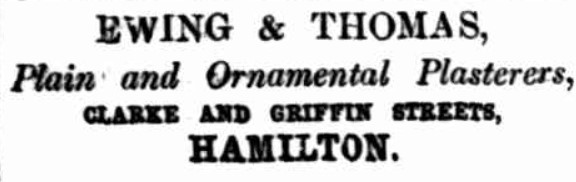
“Advertising” Hamilton Spectator and Grange District Advertiser, 12 April 1862, SUPPLEMENT TO THE HAMILTON SPECTATOR, p. 31 http://nla.gov.au/nla.news-article194859870

James worked on the construction of several large homes in Hamilton, such as Roxburgh House, built for Doctor Wylie in 1873 (below),
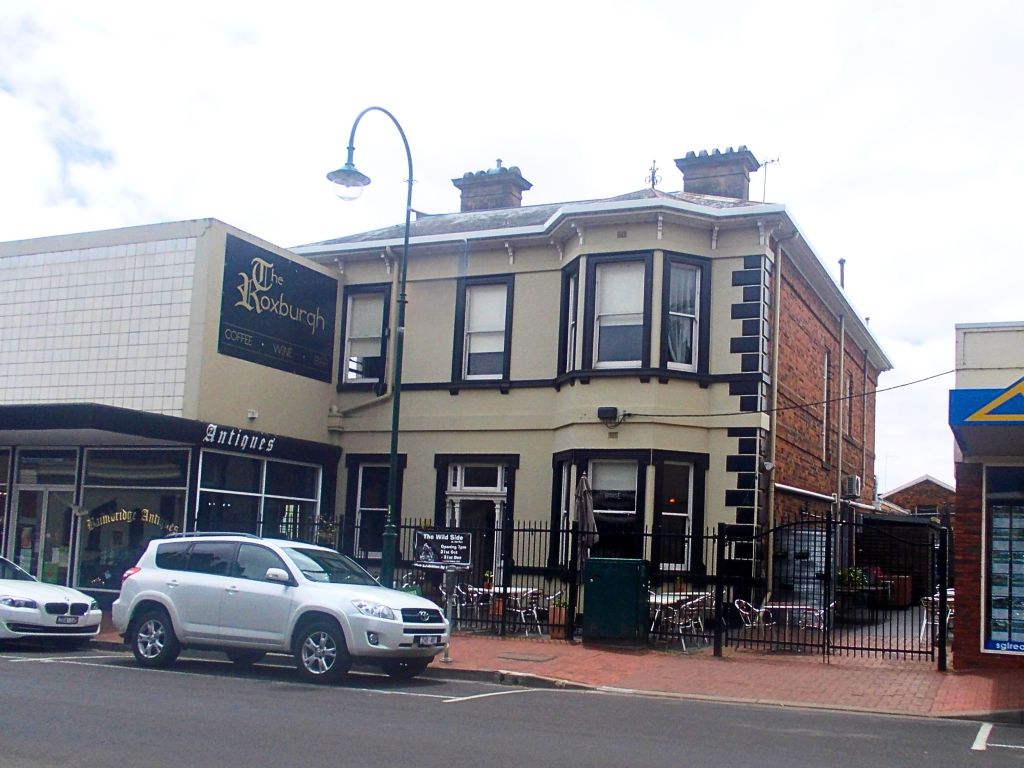
ROXBURGH HOUSE, HAMILTON

Also, Hamilton’s first Wesleyan Methodist Manse, and the Hamilton and Western District College (below)

HAMILTON & WESTERN DISTRICT COLLEGE c1910. Image courtesy of the State Library of Victoria http://handle.slv.vic.gov.au/10381/399043

James died in 1892 and was buried at the Hamilton Cemetery. His wife Jane died ten years later.

GRAVE OF JAMES AND JANE EWING, HAMILTON GENERAL CEMETERY

HAMMETT, Richard-Died 10 January 1911 at Hamilton. Richard Hammett was born in Devonshire, England around 1849. He arrived in Portland and started work as a butcher for William Lewis in that town and nearby Heywood.

When he first arrived in Hamilton, Richard worked for the well-known Hamilton butcher, Thomas Brown. He soon went into partnership with Mr Willett, before operating on his own, which he did for many years.

“Advertising” Hamilton Spectator, 23 August 1884, p.3 http://nla.gov.au/nla.news-article226049933

In 1891, Richard, with the help of his wife Bridget, operated the refreshment rooms at the Hamilton Railway Station, something they did for several years.

“Items of News.” Hamilton Spectator,12 December 1891, p. 2 http://nla.gov.au/nla.news-article226166810

Twice married, Richard lived in Goldsmith Street. He was fond of horse racing and also terrier coursing for which had some success.

HENRY, Eliza Jane-Died 14 January 1911 at Hamilton. Eliza Henry was born in Monaghan, Ireland, and arrived in Victoria in 1844 aboard the Wallace. She headed for Pleasant Creek (Stawell West), then part of the Concongella run, where she married butcher Daniel Bourke in 1845.1 Daniel, Eliza, and their family arrived in Hamilton in the 1860s and settled in Digby Road. In October 1888, Daniel died of strychnine poisoning.
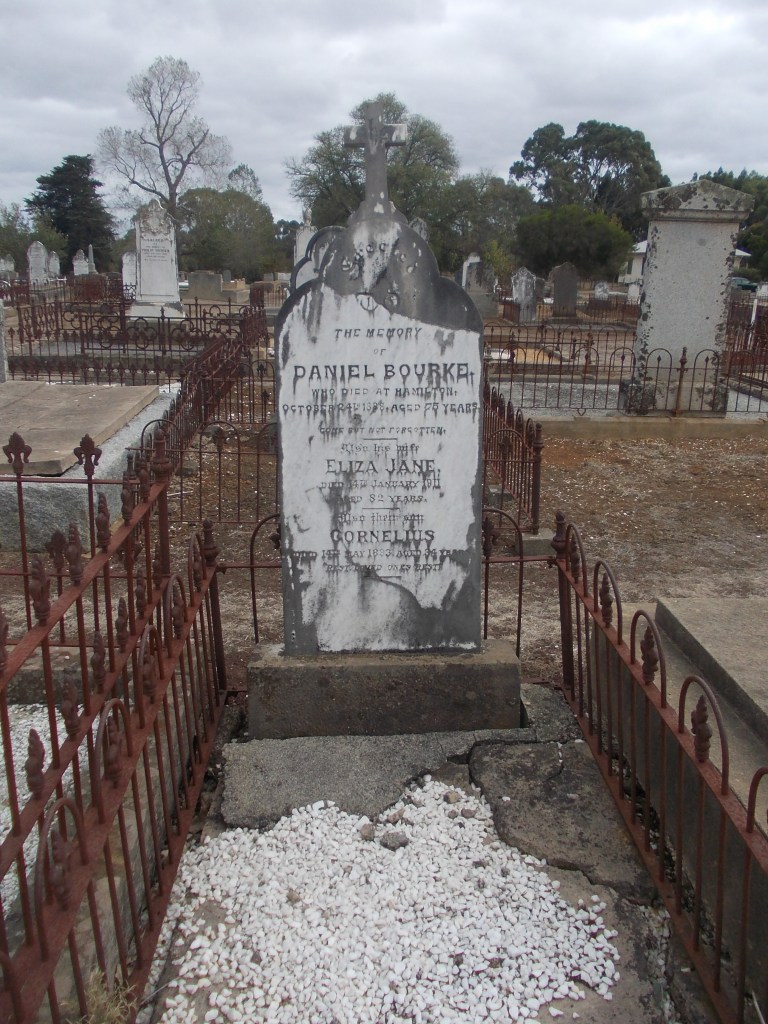
BOURKE FAMILY GRAVE, HAMILTON GENERAL CEMETERY

SILVESTER, Eugene-Died January 1912 at Malvern. Eugene Silvester was born at Balmoral around 1858 and educated at Hamilton College. Known as “Sunny Face” at school, his popularity as a child continued into adult life. He was successful academically and in sports. His academic achievements saw him eyeing a career in law and after his studies, he spent a year as an articles clerk for Anglelo Palmer, a Hamilton solicitor.

The death of Coleraine solicitor Arthur Wade in March 1881 left an opening for a solicitor in the town and in 1882 Eugene opened his own practice in the town, keeping the name of his predecessor in the business name Wade and Silvester.
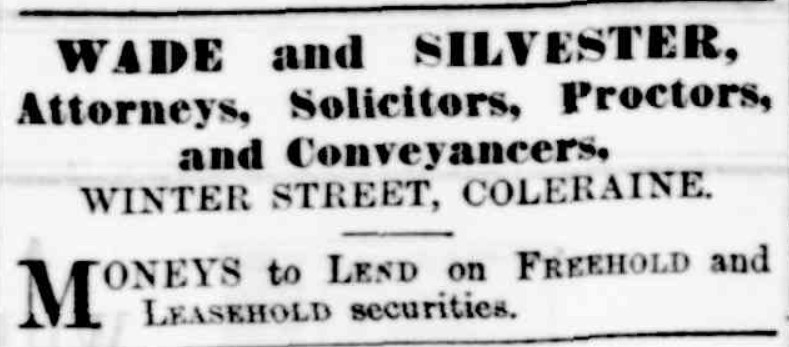
1881 ‘Advertising’, Hamilton Spectator, 28 April, p. 2., http://nla.gov.au/nla.news-article225489685

The same year, Eugene married Ethel Archer.2 They had three sons, Grenville, Eric, and Clive.

Eugene’s talent as a solicitor soon shone through and, as well as gaining many private clients, four nearby shires appointed him as their legal advisor. He later opened an office in Casterton, which his son Grenville took over when he finished his studies. The firm became known as Silvester and Silvester.

1907 ‘Advertising’, Hamilton Spectator, 28 February, p. 4., http://nla.gov.au/nla.news-article226129951

Away from work, Eugene was a vestryman of the Holy Trinity Church at Coleraine (below) and then a Church Warden.

HOLY TRINITY CHURCH, COLERAINE. J.T. Collins collection, State Library of Victoria http://handle.slv.vic.gov.au/10381/216987

Eugene was a Wannon Shire councillor, representing the Balmoral Riding and then the Coleraine Riding. He was the first president of the Coleraine Progress Association, the trustee of the Coleraine Showgrounds, a director of the Coleraine Butter Factory, a freemason, a member of the Mechanics’ Institute, and a member of the Hamilton College Old Boys Association. He also continued his love of sport. He was a champion tennis player and once captained the Hamilton Football team in a game in Ballarat. He also played golf and cricket. His sporting ability saw him called “Pocket Hercules”.

In 1911, heart troubles began for Eugene. After falling ill on a trip to Melbourne for business, he fell he was admitted to Dr. Murray’s Private Hospital. His condition gradually deteriorated, until the sad news reached Coleraine that Eugene Silvester was dead aged 54.

At Hamilton, the flag flew at half mast at the Hamilton & Western District College and in October 1913, the school unveiled a tablet in his honour. In 1916, when the Coleraine Recreation Reserve opened, it received the name “Silvester Oval” in honour of the town’s popular resident. That name remains today.

SILVESTER OVAL, COLERAINE, c1919. Image courtesy of the Museums Victoria Collections https://collections.museumsvictoria.com.au/items/766352

ANSON, Mary-Died 4 January 1914 at Carpendeit. Mary Anson was born in England around 1841 and arrived in Victoria as a girl with her parents. The Anson family settled at Birregurra, east of Colac. It was there Mary met Robert Scouller and they married. Robert operated a flour mill at Birregurra in partnership with his brother John until 1866.
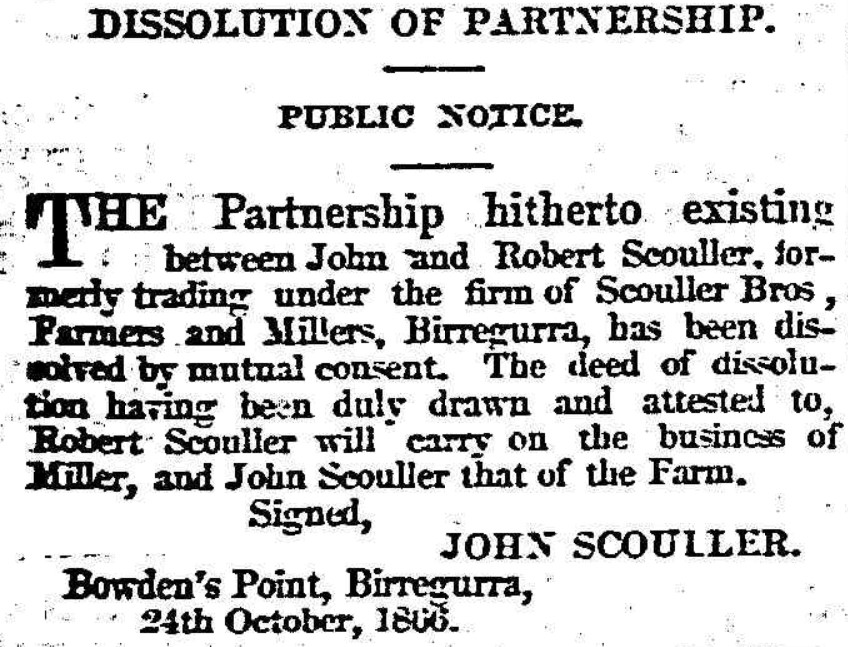
Advertising” Geelong Advertiser,  27 October 1866, http://nla.gov.au/nla.news-article148784672.

Within a few years, Robert and Mary moved to Carpendeit, between Colac and Cobden. Robert moved from a flour miller to a saw miller.

Although Mary had some illness in the years before her death, her passing came relatively suddenly while sitting at the breakfast table at her son’s home. She left nine children at the time of her death. Mary was buried at the Warrncoort cemetery on 6 January 1914.

PRIOR, Margaret-Died 5 January 1918 at Port Fairy. Margaret Prior was born in Cashel, Ireland around 1831. She married James Prior in Ireland and arrived in 1859 on board the Sarah Dixon. They settled in Port Fairy and remained there for the rest of their lives. James was a curator of the Port Fairy Botanic Gardens for 37 years.
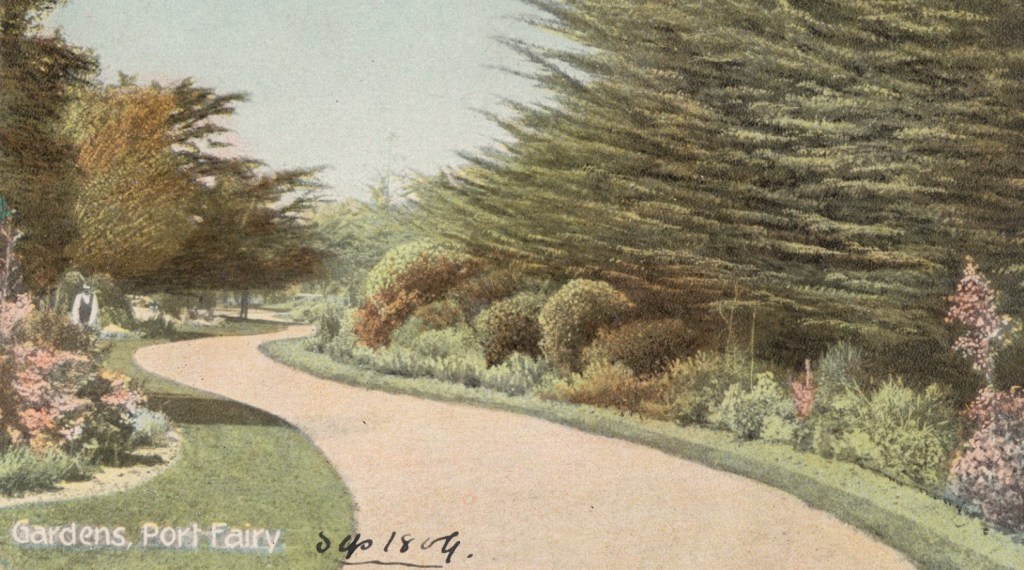
PORT FAIRY BOTANIC GARDENS. Image courtesy of the State Library of Victoria http://handle.slv.vic.gov.au/10381/385235

James died in 1911and after a long illness, during which her family cared for her, Margaret died in 1918. Two sons and three daughters survived her. Margaret’s obituary described her as “…a woman of upright principles and the possessor of a very charitable disposition. She was a most entertaining and interesting personality.”

GELLIE, James Wilson-Died 10 January 1938 at Camperdown. James Gellie spent his 91 years in the Camperdown district. He was born around 1847 at Chocolyn estate on the banks of Lake Colangulac, just north of Camperdown, and died in 1938 in Camperdown. 

On arrival in Victoria, James’ father William secured work at Chocolyn and he and his wife Hannah moved to the district after spending some time in Melbourne. William Gellie selected land after a trip to the diggings in the 1850s, including a property on what is now Gellie Street, between the town and the racecourse.

James first worked for his father, but in 1870, he purchased a team of bullocks. He traversed the district carting with his bullocks. He also went to South Australia, droving cattle and horses. In 1874, James married Margaret McKenzie at Belmont. The couple settled first at Lake View near Camperdown, a property of William Gellie. Later, they moved into town and James ran a livery stable in Manifold Street. 
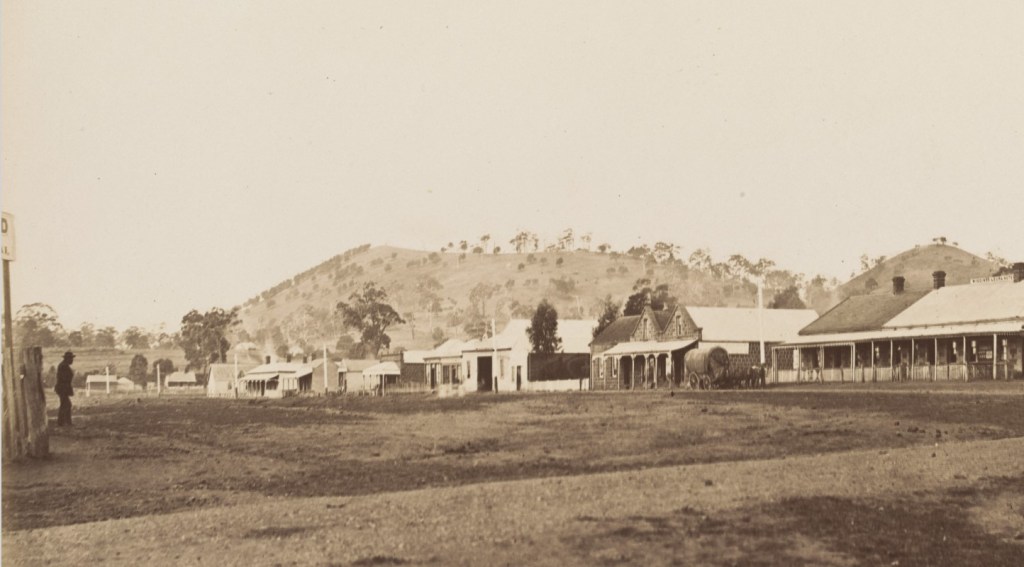
EARLY CAMPERDOWN, c1878. Image courtesy of the State Library of Victoria http://handle.slv.vic.gov.au/10381/307684

His interest in horses extended to racing and James himself trained several horses, with Rigmarole and Postboy among the best. James attended the Melbourne Cup each year and was a member of the Camperdown Racing Club. He was also a member of the Camperdown Pastoral and Agricultural Society. James was buried at the Camperdown Cemetery.

In 1932, James shared memories of his life with the Camperdown Chronicle. He recalled a visit to Mount Gambier on one of his droving trips in the 1870s. It was significant for James as he was a fan of the poet Adam Lindsay Gordon. Even in his mid-eighties, James could recite Gordon’s poem “The Sick Stockrider”,

For good undone and gifts misspent, and resolutions vain,
Tis somewhat late to trouble. This I know-
I should live the same life over, if I had to live again;
And the chances are I go where most men go.

From ‘Bush Ballads and Galloping Rhymes’ (1870).

LUCAS, William Horace-Died 12 January 1943 at Stonyford. William Lucas was born at Marida Yallock in 1866 to Richard Lucas and Harriet Prestage.3 Harriet died just two years later in 1868 and William went to live with his grandparents in Camperdown while his father continued working and later settled at Pomborneit. Richard Lucas had a carting contract with the Colac Rabbit Factory and William, while still a lad, would help his father.
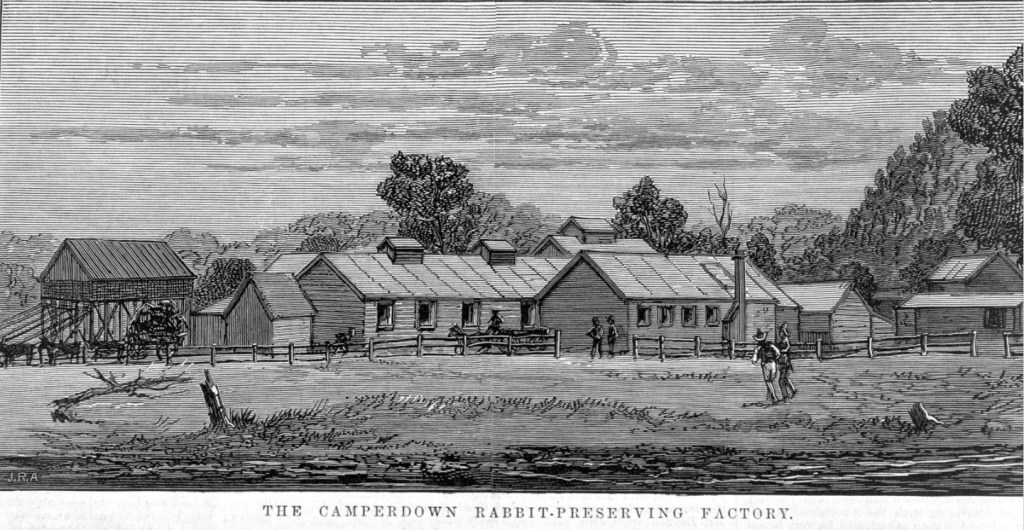
Image courtesy of the State Library of Victoria http://handle.slv.vic.gov.au/10381/257504

When William was older, he worked as a dairy farmer at Stonyford, southeast of Pomborneit. He married Ann Scouller in 1897.4 Ann gave birth to six children, but three died as infants. William and Ann are pictured below with Ila and Horace c1906.

THE LUCAS FAMILY OF ROCKY RIDGE, STONEYFORD. Image courtesy of the Museums Victoria Collections https://collections.museumsvictoria.com.au/items/769557

William was a foundation member of the South Purrumbete Debating Society and was often called on to chair meetings. He also played competitive draughts locally and in Melbourne.

William died in 1943. His funeral was large, with many floral wreaths. He left his widow Ann, two sons and one daughter, also two grandchildren who carried a wreath to his grave.

Additional Sources

  1. Victorian Marriage Index, Department of Justice, Victoria, Eliza Henry, 1845, Reg. No.: 4953/1845
  2. Victorian Marriage Index, Department of Justice, Victoria, Eugene Silvester, 1882, Reg. No. 4964/1882
  3. Victorian Birth Index, Department of Justice, William Horace Lucas, 1866, Reg. No. 20048/1866
  4. Victorian Marriage Index, Department of Justice, Victoria, William Horace Lucas, 1897, Reg. No. 3346/1897

Passing of the Pioneers

Once again an interesting band of Western Victorian pioneers were found in newspaper obituaries from February.  There is a tightrope walker, philanthropist, a motor car pioneer and several hardy pioneer women.  It continues to amaze me the lives the pioneers lived.  I mean, who could imagine a tightrope walker living in Portland in the 19th century, in fact at any time!

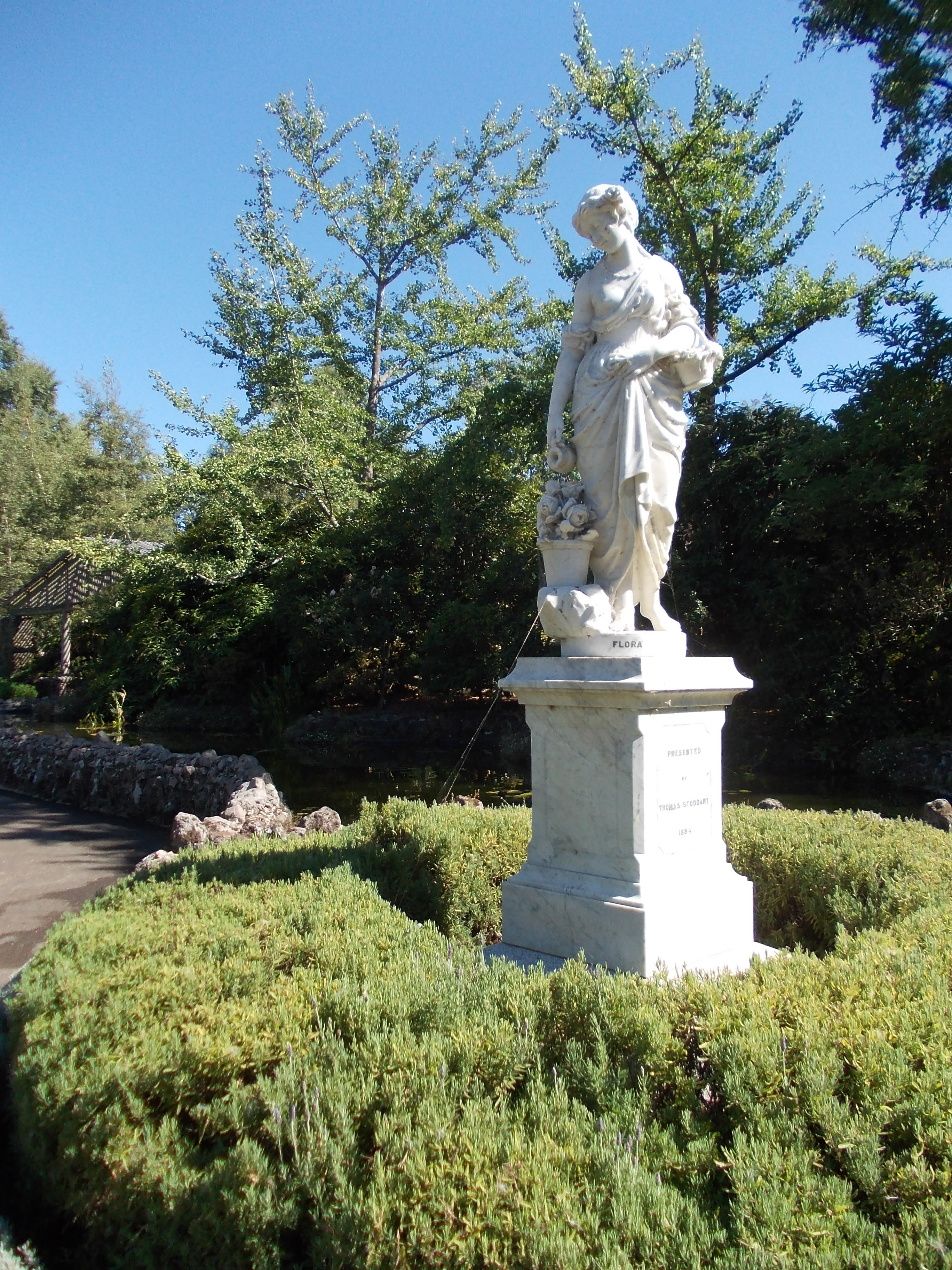
Thomas STODDART: Died 20 February 1905 at Ballarat. When next in Ballarat admiring the many statues in Sturt Street and the Botanical Gardens, thank Thomas Stoddart. He was responsible for getting the ball rolling for leading Ballarat identities to give statues or money towards statues, to the city. From digger to stockbroker, Stoddart donated twelve statues to the city of Ballarat in 1884 after a trip to Europe. This act of philanthropy saw some of Ballarat’s other wealthy citizens bequeath money to fund more statues.  In fact, John Permewan who featured in December Passing of the Pioneers donated the well know “Hebe” which stands in Sturt Street.  As well as the obituary from the Horsham Times, a lengthier obituary appeared in The Argus on February 21.

“FLORA”

“POMONA”

John COFFEY:  Died 9 February 1908 at Melbourne. John Coffey was born in Limerick, Ireland, and came to Australia with his brother in the 1860s. He first went to the Wimmera while carting between Melbourne and the Wimmera. Making a permanent home there, he worked as a farmer and a hotel keeper.  He left a wife, Catherine Almond, five daughters, and three sons.

Thomas HENNESSY: Died 19 February 1908 at Horsham. Thomas Hennessy arrived in Victoria in 1859 aboard the Royal Charter from Limerick, Ireland. He began farming around Koroit, lost a leg, and moved to the Pimpinio district, where he farmed for many years.  An accident before his death contributed to his demise.

James DAVIDSON: Died 12 February 1913 at Narrawong. James Davidson, born at Narrawong, was described as a “good all-round citizen” in his obituary. He was involved in the mounted rifles and athletics.

Matilda GILCHRIST: Died 14 February 1914 at Hawthorn.  Born in Paisley, Scotland, in 1920, she arrived on the Star of the East in 1855.  Her husband, Thomas Lang, was a well-known horticulturist in the late 19th century.  Matilda was the principal of a girls’ school in Ballarat for a time.

Mary Ann DREW: Died 15 February 1915 at Willaura.  Born in Buckinghamshire, England,  Mary Ann Drew came to Victoria in her twenties during the 1850s. She worked at Golf Hill Station at Shelford for George Russell before moving to Sandford, where she married William Lindon. Mary Ann lived at Willaura with her daughter for the last ten years of her life.

Edward Harewood  LASCELLES: Died 12 February 1917 at Geelong. Lascelles is a well-known name in Western Victoria.  Not only does his name form part of the Geelong wool broking firm Denneys Lascelles & Co., but the town of Lascelles in the Mallee was named after him.  Edward Lascelles was born in Tasmania in 1847, married Ethel Denney, and they had six children.  He was a leader in vermin extermination on his property in the Mallee and was the first to introduce share farming in Victoria.

Isabella McDONALD: Died February 1918 at Dandenong. Isabella McDonald arrived in Victoria with her widowed mother in 1863. The following year, she married journalist Mr Dudeney, who had gone to Ballarat to report on the Eureka Stockade riots. Only after a few years of marriage, Mr Dudeney passed away, and she married John Whitehead, a worker at the Ballarat Post Office and later the GPO in Melbourne

Martha MATHEWS: Died 14 February 1918 at Buninyong. Martha Mathews was a colonist of 64 years, arriving in Victoria to join her husband, Richard Phillips, on the goldfields of Ballarat. Martha enjoyed telling stories of the gold rush days.

OBITUARY. (1918, February 18). The Ballarat Courier (Vic. : 1914 – 1918), p. 6 Edition: DAILY.. Retrieved February 26, 2012, from http://nla.gov.au/nla.news-article75176846

Janet SIMPSON: Died 19 February 1920 at  Bondi, New South Wales.  Janet Simpson, her husband Robert Clark, and four children sailed for Australia in 1857. One child, Agnes, died during the journey. At the time of their arrival, the train line to Horsham was under construction, so the family took a coach to Stawell, then a bullock wagon to Horsham.  She was one of the many pioneer women who coped under tough conditions.

Obituary. (1920, February 27). The Horsham Times (Vic. : 1882 – 1954), p. 5. Retrieved February 26, 2012, from http://nla.gov.au/nla.news-article73190179

William HANLON: Died 19 February 1923 at Portland. William Hanlon was the mayor of Portland 11 times.  His interests within the municipality included the President of the Portland Free Library.

William ROBERTSON: Died 2 February 1924 at Portland.  A colonist of seventy-seven years, William Robertson, arrived in Portland as a five-year-old with his parents.  He had travelled to New Guinea and Western Australia as well, once riding in the Great Western Steeplechase at Coleraine.

Charles Francis PATTERSON: Died 17 February 1933 at Portland. Charles was born in Portland in 1857 and spent some time in Western Australia on the railways.  It was there he met his future wife, and after marriage, they returned to Portland to raise ten children.  Charles was a popular figure around the town, and he worked in the fish distribution business.

Alfred Irvine HOGAN: Died 8 February 1934 at Portland. From tightrope walker to saw miller, Alfred Hogan was an interesting chap.  Arriving in Portland as a young man, he gained notoriety as a tightrope walker performing daredevil tricks in the mould of “Blondin” the French tightrope walker.  Age must have caught up with his tightrope walking feats, and he turned to sawmilling, with his obituary crediting him as a pioneer of sawmilling in the Portland district, an industry which became one of the biggest in the area.  Alfred also had a keen interest in Australian Rules football and was one of the people behind the development of Hanlon Park, which is still home to the Portland Football Club today.

Mary Jane SPIKEN:  Died February 1934 at Warrnambool. Mary Jane Spiken’s mother, Anna Harland, arrived in Victoria with members of the Henty family.  Anna married John George Spiken, with Mary Jane born around 1861 at the Henty homestead.  Mary Jane married William Jenkins, and they had seven children.  She had a wealth of knowledge on the early days of Portland.

Fanny Ann MALSEED: Died 13 February 1936 at Myamyn. Fanny Ann was the daughter of James and Eliza Malseed of Mount Richmond.  She married Thomas Edmund Adamson around 1886 and they raised eight children.

Richard YOUNG: Died 16 February 1939 at Horsham. Richard was born at Clunes and moved to Horsham with his parents as a ten-year-old. He married Isabella Anderson, and they raised a large family. Richard was a keen footballer and played for the United Traders football club.  He was a founding member of the Horsham Football Club and was an active member of the local fire brigade.

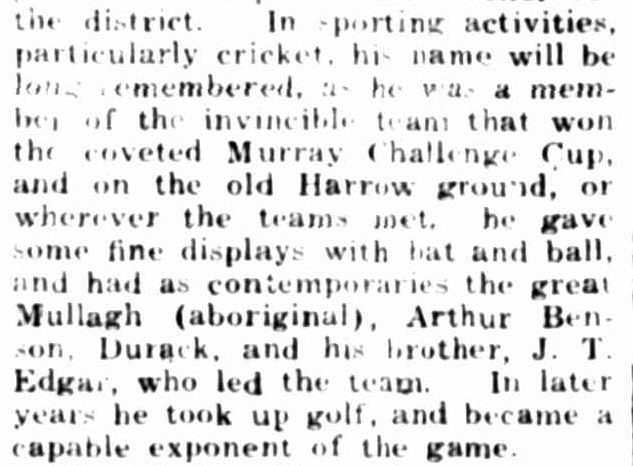
Walter Birmingham EDGAR: Died 22 February 1939 at Portland. Walter Edgar was born at Pine Hills Station at Harrow in 1856.  Educated at Hamilton College, he achieved the double honor of dux of the college and athletic champion.  Despite studying civil engineering at Melbourne University, he returned to Pine Hills to take up agriculture pursuits.  In 1882, he married Jessie Swan of Konongwootong.  In the years before his death, Walter toured England, Scotland, Norway, and Sweden with his daughter.  In his younger days, Walter was something of a cricketer and golfer.  He and his father played some part in the Aboriginal cricket team touring England in 1867.  The team included Johnny Mullagh, with whom Walter often played cricket.

Obituary. (1939, February 27). Portland Guardian (Vic. : 1876 – 1953), p. 3 Edition: EVENING.. Retrieved February 28, 2012, from http://nla.gov.au/nla.news-article64391911

Ann NIVEN: Died 24 February 1942 at Coleraine. Ann Niven came to Australia at five, but without her parents.  They arrived at a later date, but until then, Ann was under the guardianship of Mr and Mrs Christorphen.  They lived where Balmoral now stands, but then it was only bush.  She married William Bird, living at Wombelano, and then for the last thirty-two years of her life, at Coleraine.  Mrs Bird was the mother of eleven children.

Patrick HENRY: Died February 1942 at Terang. Patrick Henry, with his parents, settled in the Woodford area upon their arrival in Australia in 1866.  He began driving bullock wagons as a teenager and worked in that occupation until he was eighty-six.  When he finally retired, it was thought he was the oldest bullock wagon driver in the Western District.

Thomas Turner SHAW:  Died 1 February 1949 at Beaumaris. Thomas Shaw was the son of Thomas and Catherine Shaw. He was born in Victoria in 1864.

THOMAS TURNER SHAW c1866. Image courtesy of the State Library of Victoria. Image no. H2013.172/23 http://handle.slv.vic.gov.au/10381/235471

THOMAS TURNER SHAW c1866. Image courtesy of the State Library of Victoria. Image no. H2013.172/23 http://handle.slv.vic.gov.au/10381/235471

Thomas Shaw was not only a pioneer of fine merino wool production but also of motoring in Victoria.  He drove one of the first steam cars and was also a founding member of the Royal Auto Club (RACV).