W is for…What Else Could It Be?

Naturally, I had to rejoin the Gould Genealogy Family History Through the Alphabet Challenge at “W”.  W is for Western District and that means a lot to me not only because this blog “Western District Families”.  I was born and raised in the Western District and all the families of my maternal lines, going back six generations, chose to settle in the wonderful Western District.

One of the highlights of the Western District is the geography.  Entering from the east, the Western Plains lead to the rise of the Grampians and on to the volcanic plains and green rolling hills beyond.  To the south are the forests of the Otways, the south-west coastline and volcanic Tower Hill.  And there are the rivers, meandering through the countryside to the sea.

I will take you on a geographical journey through the Western District, just a glimpse really, beginning with two colonial artists, Nicholas Chevalier and my favourite, Eugene Von Guerard.  These artists and others traipsed around Victoria sketching and painting.  Von Guerard also travelled to Tasmania, New South Wales, South Australia and New Zealand.  Looking at their paintings reminds me of the lives they lived for the sake of their art.

Chevalier’s sketch shows the Serra Range including Mt Sturgeon and Mt Abrupt at the southern end of the Grampians.

View of the Grampians, Western District [art original] N. Chevalier.
State Library of Victoria http://handle.slv.vic.gov.au/10381/100967
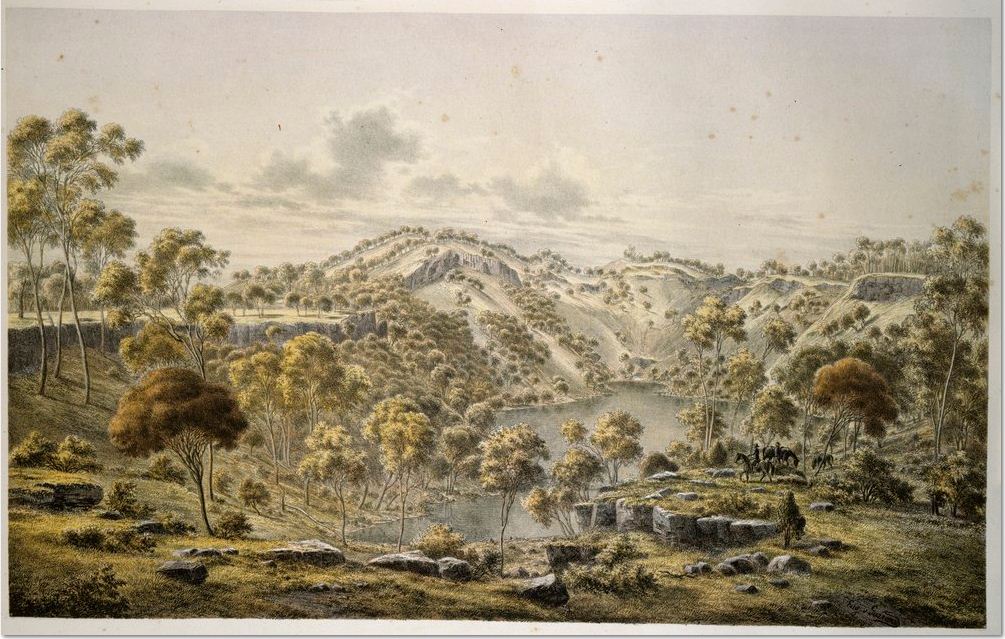
Moving south-west, dormant volcano Mt Eccles near Macarthur has played a part in my family history.  My gg grandfather Reuben James Harman, son of James Harman, owned property at Mt Eccles.  It was also a favourite fishing spot of my grandfather Bill Gamble.

Crater of Mt. Eccles, von Guerard, Eugene,1811-1901,artist.
Image courtesy of the State Library of Victoria http://handle.slv.vic.gov.au/10381/46307

I prefer von Guerard’s depiction of Lake Surprise, the crater lake of Mt Eccles, to my own (below).  I remember as a child asking about the name “Lake Surprise”.  The answer:  When you get to the top of the crater and see the lake, you get a surprise.  Fair enough.

LAKE SURPRISE, MT ECCLES CRATER LAKE

It’s the photo of my grandfather Bill Gamble during the 1930s that is my favourite.

e

A little north of Mt Eccles is the volcanic lava flow, the Harman Valley at Byaduk, named after my Harman family.  In the distance is the source of the lava, Mount Napier.

THE HARMAN VALLEY, BYADUK

South of Mount Eccles is beautiful and historic Port Fairy, the last port of call for the Moyne River, with its origins east of Macarthur, before it reaches the sea.

Port Fairy

MOYNE RIVER, PORT FAIRY


Moving east from Port Fairy is Tower Hill, another dormant volcano.

TOWER HILL

Next is Warrnambool.  The cemetery has a great view toward the Hopkins River close to the end of its 271 kilometre journey through the Western District from near Ararat to the sea at Logans Beach, one of the whale nurseries along the south-west coast,

WARRNAMBOOL CEMETERY

WARRNAMBOOL CEMETERY OVERLOOKING THE HOPKNS RIVER

South-east of Warrnambool is the famous Loch Ard Gorge, named for the Loch Ard which wrecked on the treacherous coastline.  The only two survivors, Tom Pearce and Eva Carmichael were washed on to the beach at Loch Ard Gorge.

I find standing on the beach in the Gorge a haunting experience.
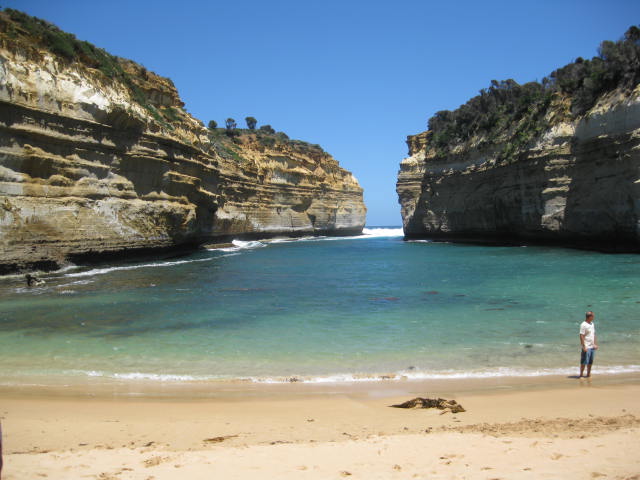
LOCH ARD GORGE

East along the coastline is one of the most iconic views, not only of Victoria but Australia.

THE 12 APOSTLES

North-west, and back where we started, are the Grampians.

HALLS GAP, GRAMPIANS

The Grampians are a perfect place to leave the subject of the Western District and move on to another “W” which has been a part of my family since the 1860s, the Wannon River…

W is for…Wannon River

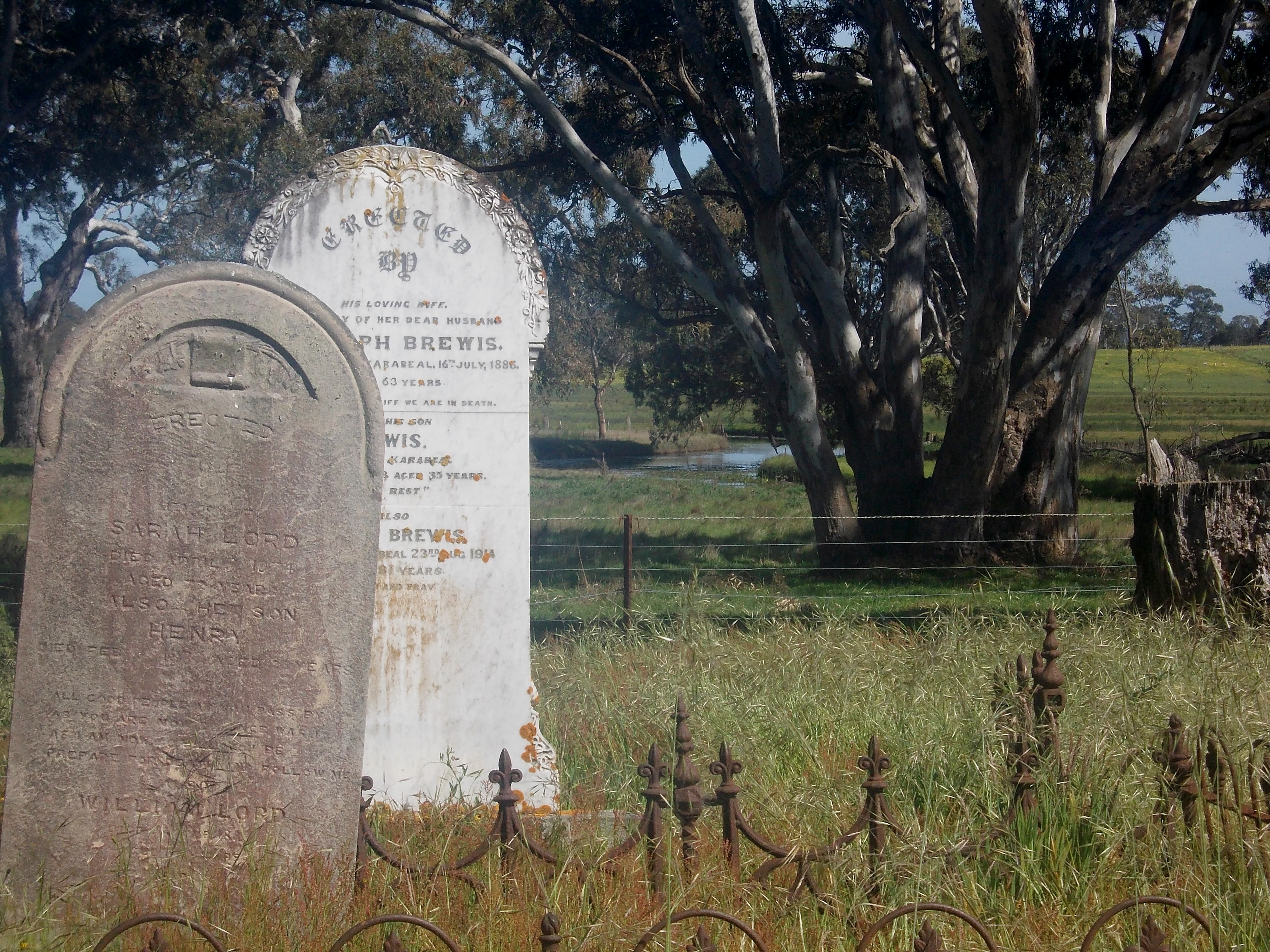
The Wannon River begins its’ flow at the base of Mt Abrupt in the Southern Grampians.  It flows toward Dunkeld, around the base of Mt Sturgeon and leaves the Grampians heading north-west toward Cavendish. Along the way, it passes by Mokanger, the workplace of both the Mortimers and Haddens.  Through Cavendish, it passes close to the cemetery, burial place of members of those two families.
DSCN1056

CAVENDISH OLD CEMETERY


From Cavendish, the river begins a southward journey toward two of the Hamilton district’s jewels, the Nigretta and Wannon waterfalls.  As the river progresses west, the Grange Burn joins the Wannon north of Morgiana, having flowed from just east of Hamilton, the city founded on the Grange.  This section of the Wannon river was another favourite fishing spot of my grandfather Bill Gamble.

On the river flows to Tahara and then Sandford. I have family links to Sandford with Julia Harman, daughter of James Harman residing there with her husband George Holmes.  Two children were born at Sandford including WW1 casualty Arthur Leonard Holmes.  My gg uncle William Diwell also spent some time around Sandford.  In 1914, he completed extensions to the St Marys Church.

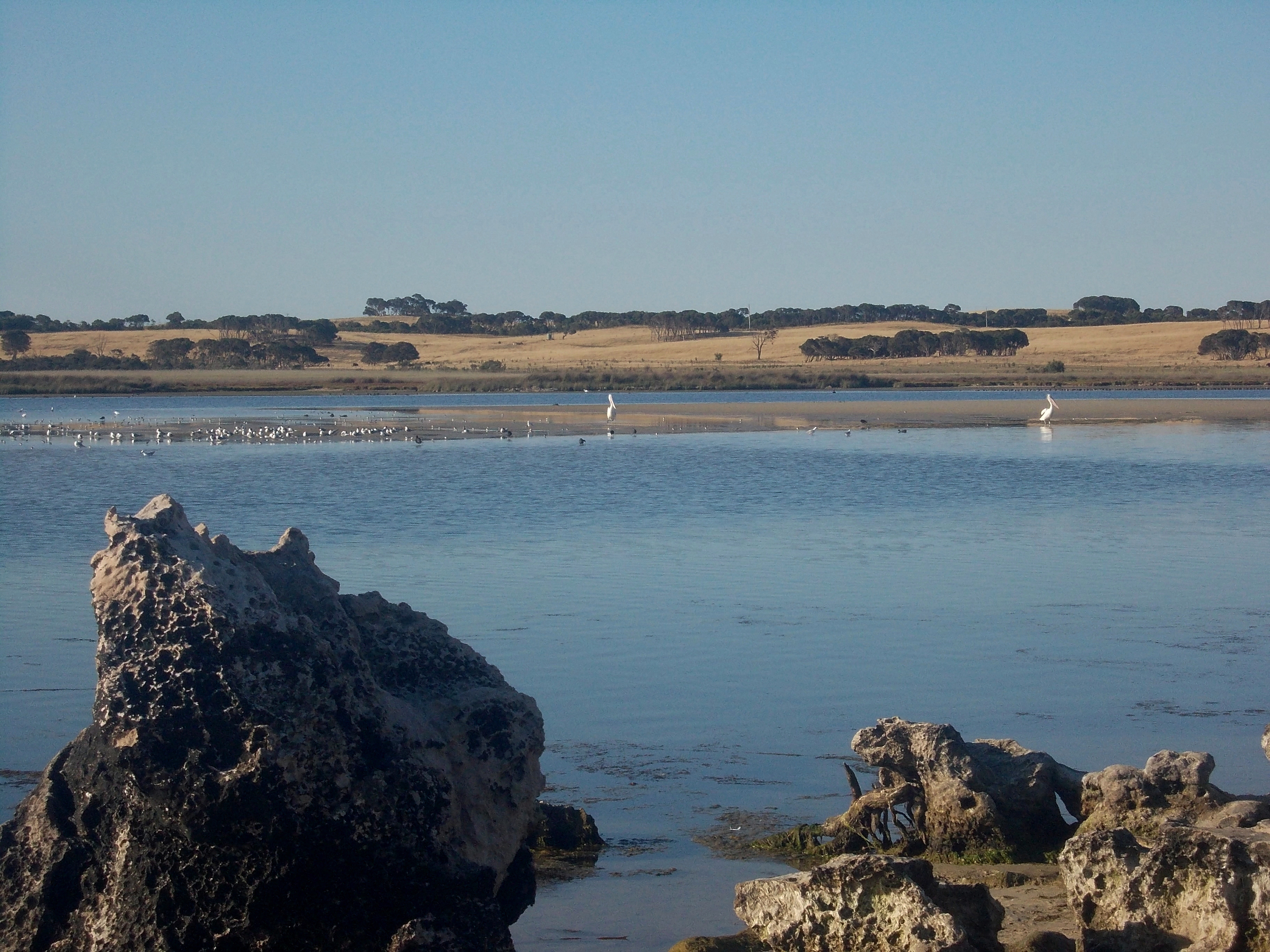
The Wannon River then joins another great river of the Western District, the Glenelg River, having passed through some of Victoria’s most beautiful countryside.  It is not surprising Joseph Hawdon, travelling overland to Adelaide with Lieutenant Alfred Miller Mundy of the 21st Regiment in 1839, endorsed Major Thomas Mitchell’s description five years earlier. Major Mitchell followed the Glenelg River from its beginnings in the Grampians through to the sea at Nelson. It is little wonder all my direct ancestors stayed in the Western District after settlement.

(1839, September 26). Launceston Advertiser (Tas. : 1829 – 1846), p. 1 Supplement: SUPPLEMENT. Retrieved October 11, 2012, from http://nla.gov.au/nla.news-page8723904

After the merge with the Wannon, the Glenelg flows on to Casterton where I have many family links.  My ggg grandfather George Jelly, the father of Elizabeth Ann Jelly, was one man who could say he had conquered the river.  His obituary read:

“He was a remarkably good swimmer and by his abilities in this direction was instrumental in saving many persons from drowning and rescuing the bodies of many others who had perished in the river” 

He even dived for the bones of Robert and Mary Hunt, murdered by George Wains in 1860.

By the time the Glenelg River reaches the sea, it, the waters of the Wannon and Grange Burn have passed by many of the places my ancestors lived, worked, fished, swam and were laid to rest.
042

NEAR THE MOUTH OF THE GLENELG RIVER, NELSON

The Wannon River between the Nigretta Falls and the Wannon Falls, about twenty kilometres from Hamilton, would be the section most frequented by myself and my family before me.  My own memories come from family visits, Sunday drives with Nana, school excursions and birthday parties.

The following views near the Wannon Falls are from the State Library of Victoria Collection and were captured around 1878 by  Thomas J. Washbourne, a Geelong photographer.

Wannon River Scene – Washbourne, Thomas J. photographer.Image courtesy of the State Library of Victoria Victorian Patents Office Copyright Collection (VPOCC) http://handle.slv.vic.gov.au/10381/53092

Wannon River Scene Washbourne, Thomas J.,photographer.
Image courtesy of the State Library of Victoria – Victorian Patents Office Copyright Collection (VPOCC) http://handle.slv.vic.gov.au/10381/52931

THE WANNON RIVER AT THE WANNON FALLS

Of the two waterfalls, I prefer the Nigretta, especially after rain.  The Wannon Falls could be described as pretty in the way the water drops off the edge, but the Nigretta Falls are, at times, spectacular.

NIGRETTA FALLS ON THE WANNON RIVER Image courtesy of the State Library of Victoria – collection: Cogger album of photographs http://handle.slv.vic.gov.au/10381/41740

The Vagabond (John Stanley James) described the Nigretta Falls in his series “Picturesque Victoria” for The Argus.  In the 4 April 1885 edition of The Argus, The Vagabond wrote of his visit to the Wannon.  He enjoyed the hospitality at the Wannon Inn and then marvelled at the “miniature Niagara”

PICTURESQUE VICTORIA. (1885, April 4). The Argus (Melbourne, Vic. : 1848 – 1956), p. 4. Retrieved October 11, 2012, from http://nla.gov.au/nla.news-article6073697

This photo taken in August this year by my friend Catherine, after some good rain, sees the Nigretta looking like the miniature Niagara Falls described by The Vagabond.

NIGRETTA FALLS – Image courtesy of Catherine Huisman

My grandfather, Bill Gamble, took the following photo in the 1930s

bg14

It was pleasing to see that the old viewing platforms still remain at the Nigretta Falls.
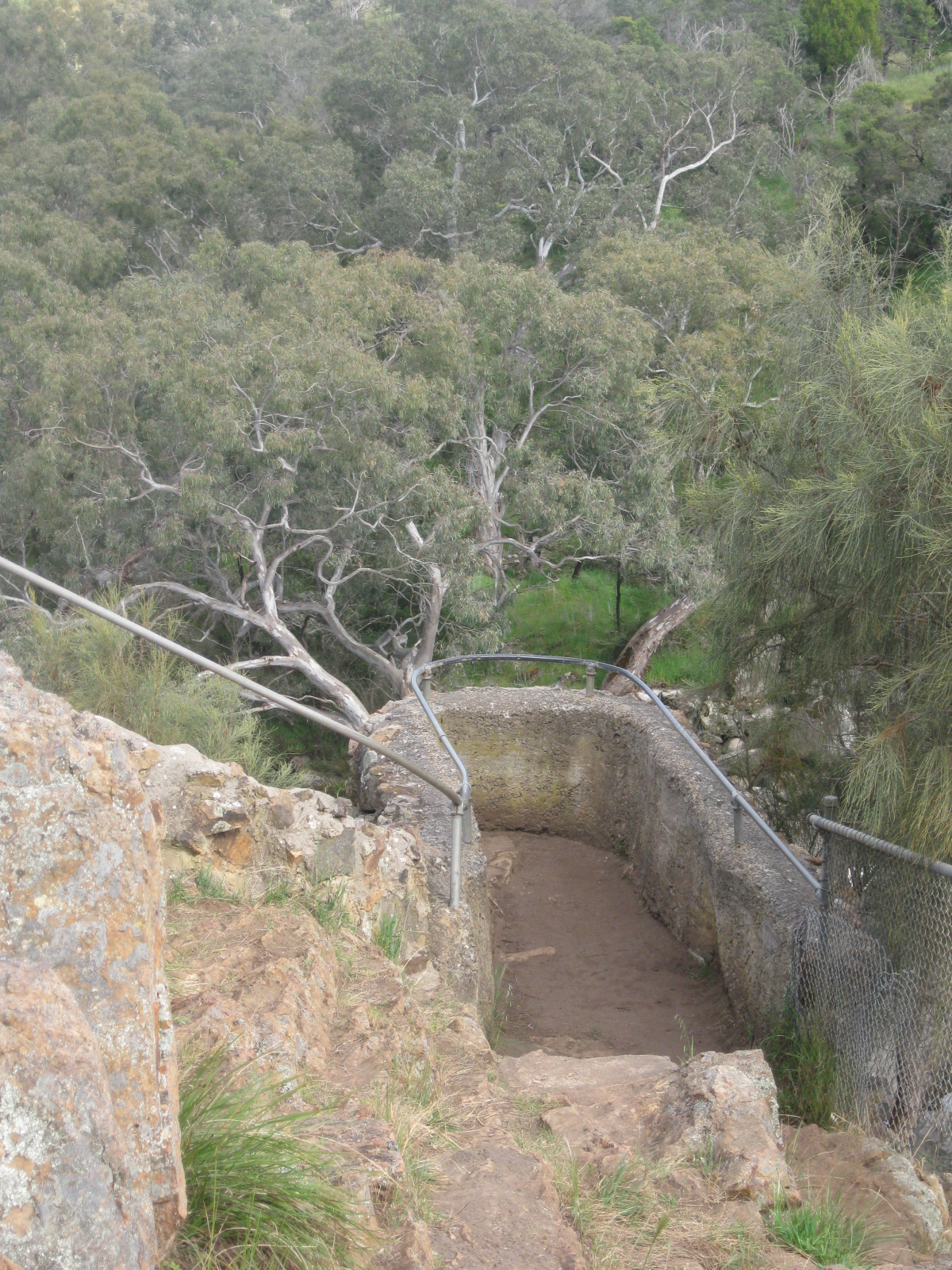
NIGRETTA FALLS VIEWING PLATFORM

An impressive wooden staircase now leads down to the falls, but the original steps remain.

The Wannon Falls (below) holds memories of walking beyond the viewing platform, down to the rocks and behind the falls, but only when they were flowing lightly as they are in this photo.  A new viewing platform now prevents such precarious escapades, even undertaken while on school excursions!

WANNON FALLS

I have two framed prints of the Wannon Falls by Louis Buveot, painted in 1872.  One hangs on a wall as a constant reminder of Hamilton, the Wannon River and the waterfalls.  The original work hangs in the Ballarat Fine Art Gallery. To see the original click on the link – Wannon Falls

The topic of the Wannon River gives me an opportunity to share my all-time favourite family photos.  As a little girl when I first saw Nana’s old photo album, these photos captured my imagination.  When Nana came to live with us she kept her photo albums in her wardrobe. I would take them down, sit on her bed and go straight to the photo below.  It was near the beginning of the album which had black, much-turned pages.

From right: Nana, (Linda Hadden), my great-grandmother (Sarah Elizabeth Harman) and my great auntie Alma’s (Nana’s sister) mother-in-law Mrs Issac William Short (Catherine Gissane Tilley). They are standing on the original lower viewing deck.   The photos from a day at the Wannon were originally very small.  It wasn’t until I enlarged them on a computer, that I noticed Nana’s coat hanging on the railing.

I think the reason I like this photo because Nana looked exactly like she did when I knew her, but with long braids and I still can’t believe she was only about fifteen.  Even the small research assistant thought Nana was the lady in the middle when he first saw it.  He only knew her as an older person and does not think of her as having been a child too.

The second photo was taken from the lower viewing deck, looking toward the upper level.  I didn’t like standing here as a child and as you can see the rail was high at the front  and difficult to see over and to the right of  Nana was a gap between the fence and the rocks.  I much preferred the lower deck.

My grandfather Bill, before he married Nana, liked to visit the Wannon Falls too, although he didn’t stick to the viewing platforms.
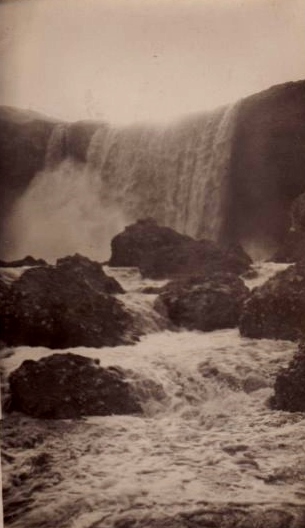
bg13

In more recent years, a rotunda was built at the Wannon Falls reserve with information about the waterfall, the local geography and history.
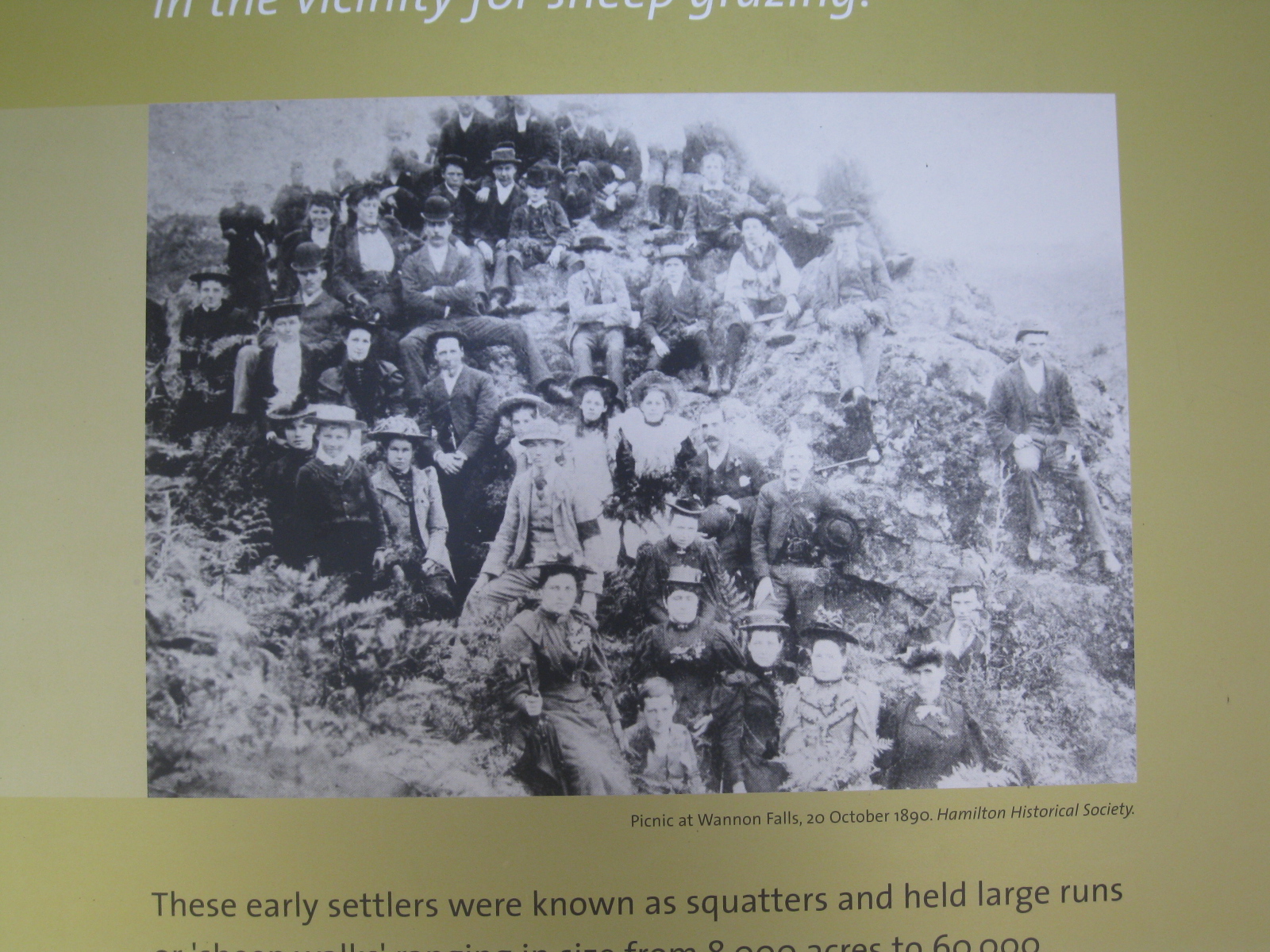
On our visit, the small research assistant said “Look Mum, they even have family history here for you”  He was right. There is a lot of my family history at the Wannon Falls.

©Merron Riddiford 2012

160 Years Ago Today…

This morning at 11.00am, I will think of my Hadden family sailing through the Heads into Port Phillip Bay, 160 years ago today.  I have previously posted about their journey on the Marco Polo, a clipper ship that altered the course taken by immigrant ships on their journey to Australia and in doing so, earned the title of Fastest Ship in the World.

Marco Polo Brodie Collection, La Trobe Picture Collection, State Library of Victoria. http://tinyurl.com/9alkahe

Landing at Hobsons Bay, the Haddens made their own way to Melbourne and for the next 14 years, I have no idea where they were.  In that time they “acquired” two daughters, Margaret and Ellen.   John’s birth in 1864 is the first clue to the Haddens being at Mokanger Station near Cavendish where Charles worked.

The children of  Charles Hadden and Agnes Dobson were:

WILLIAM: Born 1847  Haddington, East Lothian, Scotland; Marriage Mary Mortimer 1870, Cavendish; Died 1938,  Hamilton.

JAMES:  Born 1850 Haddington, East Lothian, Scotland; Died 1935, Cavendish.

MARGARET: Born circa 1854; Married James Cameron 1883; Died 1927,  Swan Hill.

ELLEN: Born circa 1861; Died 1948, Cavendish.

JOHN:  Born 1864, Cavendish; Died 1931, Cavendish.

AGNES: Born 1872, Cavendish; Died 1949, Hamilton.


I have searched records from Victoria, South Australia, and New South Wales for the births of Margaret and Ellen with no success.  Yet on their death records, they are the daughters of Charles Hadden and Agnes Dobson.  Also, the Probate Application at the time of the death of Agnes, listed among her children are Margaret Cameron of Swan Hill and Ellen Hadden of Cavendish.   To find where they were born would help me find where they were for those 14 years.  They may well have been at Mokanger Station all that time.

The Hadden children were not really the marrying kind.  Of the six children, only two, my great-great-grandfather William and his sister Margaret, married.  William must have wanted to make up the numbers with he and his wife Mary Mortimer having 10 children.  Margaret and her husband James had five children.  From the 15 grandchildren of Charles and Agnes,  I have found 47 great-grandchildren so far.

At 11.00am I will thank Charles and Agnes Hadden for deciding to leave Scotland to take the journey of a lifetime to come to Australia.  If they hadn’t, where would I be today?

H is for…

If ever there was a time to enter the Gould Genealogy Family History Through the  Alphabet challenge, that time would be now.  “H” has arrived.

When my descendants look back at my HISTORY, they will see the letter “H” recurring.

The marriage of Sarah Elizabeth HARMAN and Thomas HADDEN in 1904 brought together two of my “H”‘s.  They settled in HAMILTON and had a daughter, my nana Linda HENRIETTA HADDEN.

Thomas HADDEN & Sarah HARMAN

Sarah HARMAN was not the only one in her family to keep her initials after she married.  Her sister Ellen married a HANKS and she became Ellen HANKS of HARRIET Street HORSHAM.

HADDEN and HARMAN are two of the four main family names that make up the maternal side of my family.

HAMILTON too, features in my HISTORY.  Nana was born there and I was too.

Looking across Melville Oval, HAMILTON

I lived in HAMILTON for 18 years, the town that was formally called the Grange.  If that name had remained, my entry in this challenge may have been “G” for Grange, Gamble and the Grampians.

Nana’s middle name was HENRIETTA  which I used to find quite amusing.   Later I learnt that her name came from her great-aunt HENRIETTA HARMAN, an HONOURABLE lady but one, it would seem, with a lonely HEART.

Linda HENRIETTA HADDEN (left) & her younger sister, Enda

Another “H” which will go down as part of my HISTORY is HALLS GAP in the HEART of the Grampians.  Many HOLIDAYS were spent there and, at times, it has been a place I have called HOME.

HALLS GAP in the HEART of the Grampians

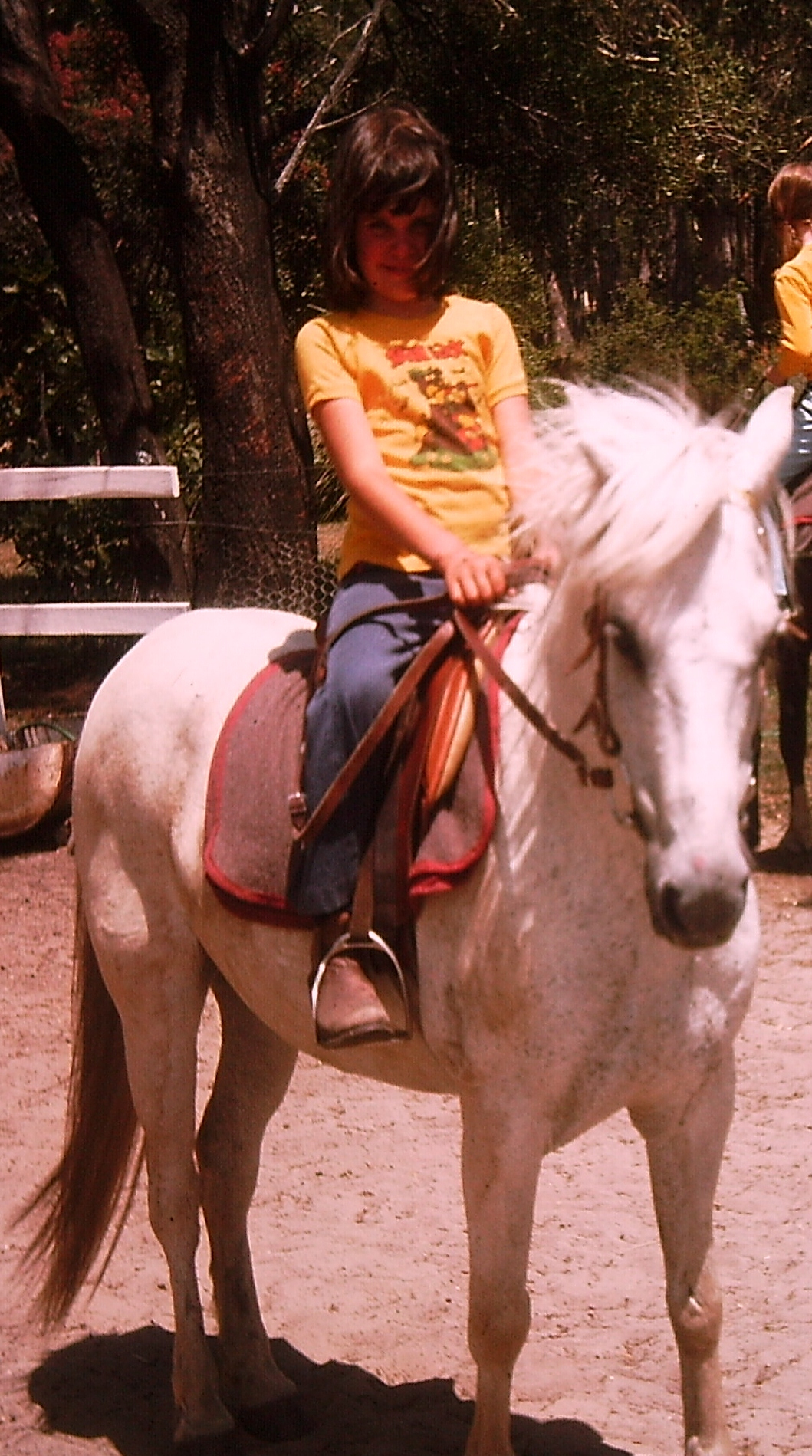
May my HISTORY also show that I liked HORSES.  It was HORSES in HAMILTON, HORSES in HALLS GAP and HORSES on HOLIDAYS in HALLS GAP, HORSES everywhere.

Finally, my HOBBIES include the HISTORY of  HADDEN, HALLS GAP, HAMILTON, HARMAN and, of course, HORSES.

HORSES in HALLS GAP

So, when I get over my obvious preference for the letters “M” and “R”, I can safely say “H” is one of my favourite letters as so much close to my HEART starts with “H”

***Apologies to the HAZELDINE, HICKLETON, HODGINS,  HOLMES, HUNT and HURRELL families to whom I also have links.

Hobbies, Passions and Devotions

The activities of my ancestors outside of their usual occupation is always of interest to me.  Their sports, pastimes, hobbies, and social activities often help define them as people and sometimes those activities are present in later generations.  Also, it can lead to further information from club records and results in newspapers.

In some cases, much spare time was devoted to the church, maybe on the committee such as William Hadden or as a lay preacher like James Harman.  James was also able to find time for his other passion, ploughing competitions, not to mention various committees, such as the local school.

Richard Diwell had an interest in the Hamilton Horticulture Society but also indulged in photography. The photo in the post about Elizabeth Ann Jelly was one of Richard’s using a camera with a timer, a new development in photography at the turn of the century.

My grandfather, Bill Gamble, grandson of Richard Diwell, had many interests, particularly before he married.  He played cornet with the Hamilton Brass band and was a committee member of the Hamilton Rifle Club and a state representative shooter.

He also loved fishing, motorcycles, and like his grandfather before him, photography.  As a result, we now have hundreds of photographs of motorbikes and fishing trips.  He even developed his own photographs.  His passions of photography and motorcycles were passed on to his son Peter.

Many of the Holmes and Diwell families were members of Brass Bands at Casterton and Hamilton.  Alfred Winslow Harman was a rifle shooter and I recently told you about Nina Harman, wiling away the hours completing tapestry carpets.

I recently found an activity that previously hadn’t been present in my family, greyhound breeding.

James Stevenson was the grandson of James Mortimer and Rosanna Buckland. He worked as a manager at Hyde Park a squatting run north of Cavendish until it was split up in 1926 for the Soldier Settlement scheme.  After this James moved to “Glen Alvie” at Cavendish where he described himself as a grazier.

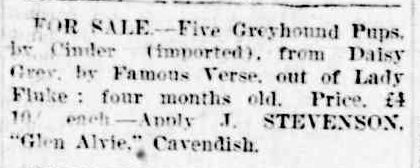
In 1927, he advertised five well-bred greyhound pups for sale.  At £4 each, he stood to earn £20 if he successfully sold them.  A seemingly profitable hobby indeed.

Advertising. (1927, February 25). The Horsham Times (Vic. : 1882 – 1954), p. 5. Retrieved June 15, 2012, from http://nla.gov.au/nla.news-article73082854

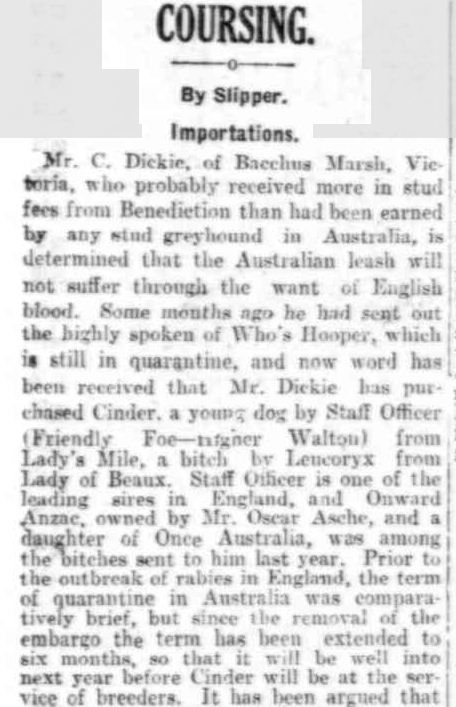
James would have needed a good return on his pups as the sire’s stud fees would have been pricey given Cinder was imported by the successful breeder, Mr. Dickie of Bacchus Marsh.  The article from the time of Cinder’s arrival in Australia in 1923, reports the dog remained in quarantine for six months.  Because of a rabies outbreak in England, there was an extension to the time spent in quarantine only a short time before his arrival.

In 1927, the time of James’ advertisement, greyhound racing using a “mechanical hare” began for the first time at the Epping course in New South Wales.  It took longer for other states to adopt the “tin hare” where they continued with the traditional field coursing.

SPORTS AND PASTIMES. (1923, September 7). The Register (Adelaide, SA : 1901 – 1929), p. 6. Retrieved June 19, 2012, from http://nla.gov.au/nla.news-article65041056


WHAT DID YOUR ANCESTORS DO IN THEIR SPARE TIME?

It’s My 1st Blogiversary!

Happy 1st Blogiversary Western District Families.  I thought we would never make it, but 84 posts and 12 months later, here we are.

What a fun year it has been.  It really was worth procrastinating about whether to blog or not to blog.  Over time I have made some great online friends, met some previously unknown family members, and found out so much more about my Western District family.  Western District Families even got a Google+ page!

I hope some of you have also found out something about your Western District family, where they lived, and the things they did through posts such as In the News and the Pioneer Christmas series.  Maybe you have found an obituary of an ancestor at Passing of the Pioneers.

I have found that the act of writing out my family history has been so useful for my research. It has helped me sort out what information I have but more importantly, what I don’t have.  Also, lining up the lives and events of siblings, in the case of the Harmans for example, has given me a better understanding of the dynamics of the family (can you tell I was a Social Sciences student?).

So what have been the most popular of the past 84 posts?

1.  The Fastest Ship in the World

2. A Tragic Night – January 24, 1882

3. Histories of  South-West Towns

4. Witness for the Prosecution

5. Only Seven More Sleeps…

Which posts have been my favourite to share?  Well it was hard to narrow them down to just five but here they are:

1 Elizabeth Ann Jelly

2. All Quiet By the Wannon

3. Halls Gap’s Cherub

4. From Stone Country to High Country

5. A Tragic Night – January 24, 1882

An Honourable Mention must go to  What the Dickens? and the follow-up post Another ‘What the Dickens” Moment.  They were both interesting and fun to write.

Over the past year, I have had made contact with Gamble and Jelly cousins and members of the Condon, Adams, and Oakley families.

I  also heard from Rosemary of Tulsa, Oklahoma. Her great grandparents were married in the original St Stephens Church in Portland.

Plenty is planned for the next 12 months.  I thought I would run out of things to write about. Instead, I am finding it difficult to keep up with all the subject ideas I have. There will be more Passing of the Pioneers and later in the year, I will look at Christmas in the early part of the 20th century.  Of course, I will have more stories about my family.  I’ve barely touched on some of the stories I had planned when I started the blog as I keep finding more great stories in the meantime.

A big thank you must go to my fellow Australian geneabloggers.  Your support and encouragement have been fantastic and you have all inspired me to keep going.   What I have learnt from each of you has been invaluable.  It was great to meet some of you at the Unlock the Past Victorian Expo at Geelong last year.  Also to the 29 followers of Western District Families, thank you for following and for your great comments.

I must also make a special mention of my maternal grandmother, Linda Gamble (nee Hadden).  Nana did not get to see my blog.  She passed away six days before I published my first post.  It was Nana that got me to this point.  Her love of the past and her family inspired me almost 20 years ago to start researching our family tree simply to find out more about them for her.  What a wonderful family she gave me.

Nana & me

A Memorial Coincidence

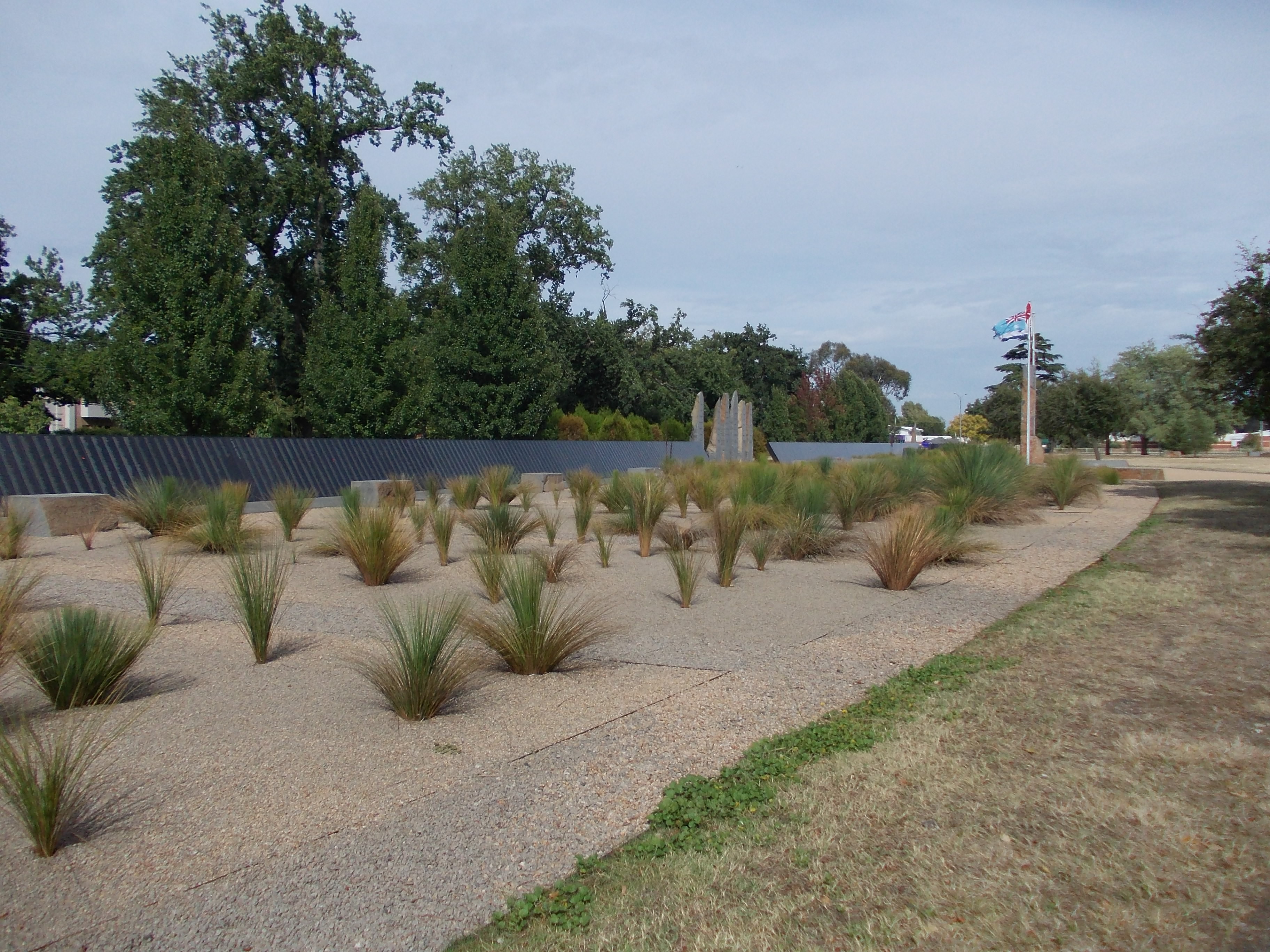
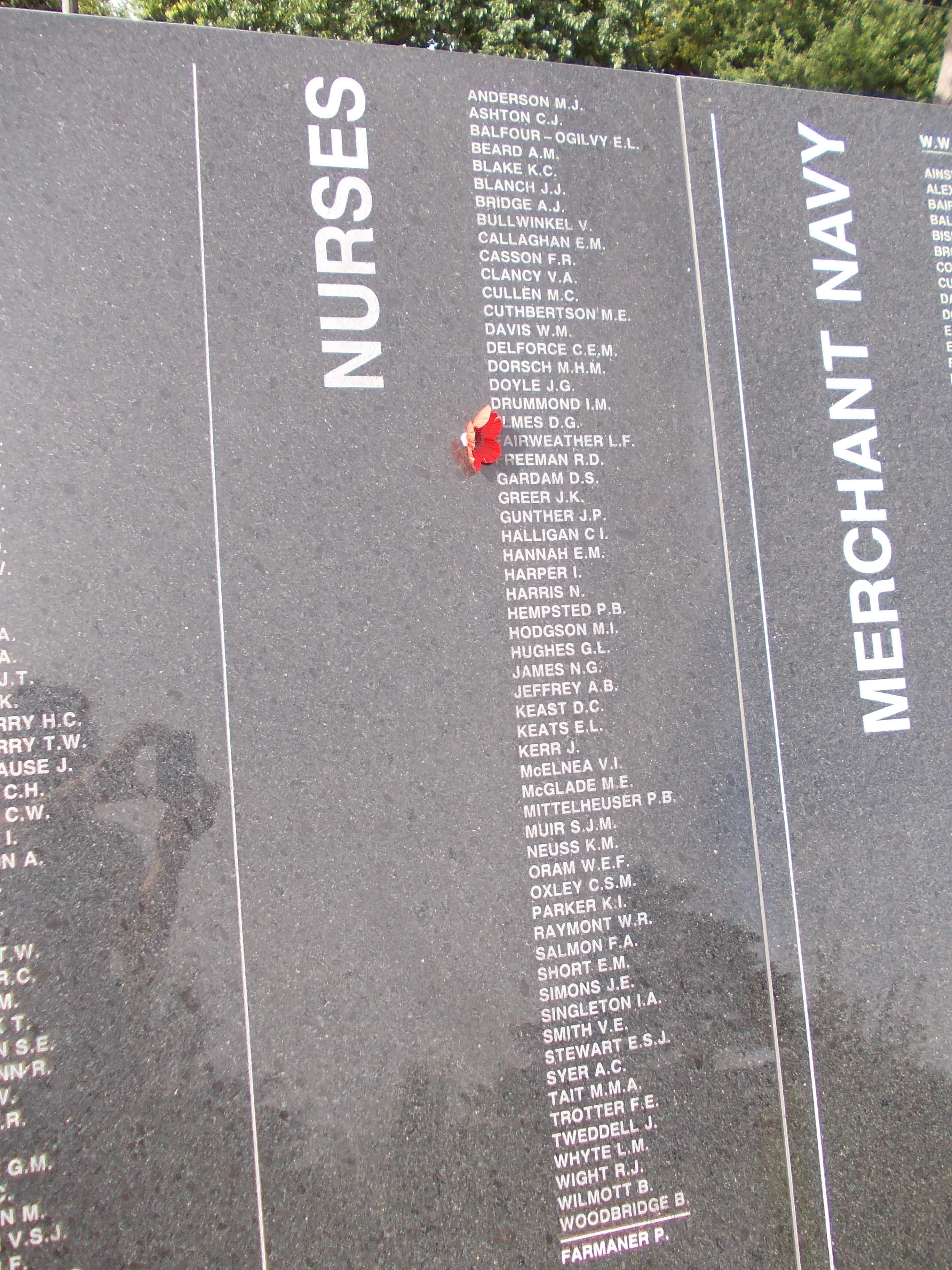
Eight years ago, almost to the day, we decided to visit the newly opened Australian Ex-Prisoners of War Memorial in Ballarat.  My great-uncle Bill Hadden was a POW in Changi and I wanted to find his name.

It was a warm evening, and I was about 8½ months pregnant and apart from another couple browsing through the names, we were the only ones there.  We walked along the row, found Uncle Bill’s name then continued to the end.  As we made the return trip, I noticed the couple had stopped near Uncle Bill’s name.  As I paused nearby for a last tribute, I overheard the couple talking.  They looked puzzled saying they couldn’t see a Bill or a William.  They were pointing right at the list of Haddens on the memorial.  I realised they were talking about Bill Hadden and I immediately understood their predicament.  Uncle Bill’s real name was Thomas Horace Hadden, not William as many people over the years probably thought.

I asked the couple if they were looking for Bill Hadden and they were.  I explained he was the T.H.Hadden on the memorial.

Who were these people?  I certainly didn’t recognise them as cousins.  As it turned out, the lady was a daughter of one of the men incarcerated with Uncle Bill in Changi and Bill had even attended her wedding.  They were en route from Birchip to Melbourne and thought they would drop in at the memorial to look for her father’s name.  Unbelievable.  To think they were there at the same time I was.  Also, if I hadn’t been there at that time, they’d have left wondering why Bill Hadden’s name was not on the memorial.

STOP PRESS!. (1942, February 16). Cairns Post (Qld. : 1909 – 1954), p. 5. Retrieved February 15, 2012, from http://nla.gov.au/nla.news-article42332207

This is a pertinent time to remember that visit eight years ago.  On 15 February 1942,  seventy years ago, Singapore fell to the Japanese and Bill Hadden of the 2/13th Australian General Hospital (2/13 AGH) was taken prisoner. In the days after, he would walk through the gates of Changi prison.

MORE NAMES OF AUSTRALIAN POW’s AT SINGAPORE. (1945, September 14). The Argus (Melbourne, Vic. : 1848 – 1956), p. 2. Retrieved February 15, 2012, from http://nla.gov.au/nla.news-article975785


BILL HADDEN

BILL HADDEN

In Malaya prior to the capture, Uncle Bill wrote a letter home to his great-aunt Henrietta Harman of Byaduk.  Answering the call of the Australian Women’s Weekly, Henrietta sent the letter into the Weekly with it published on 31 January 1942.

LETTERS FROM OUR BOYS. (1942, January 31). The Australian Women’s Weekly (1933 – 1982), p. 2. Retrieved February 15, 2012, from http://nla.gov.au/nla.news-article47812486

This is a wonderful insight into the lead-up to the events of seventy years ago today.  How could Uncle Bill ever imagine the “…greater hardships before it is over” would be over three years in Changi prison.  It has also given me a small glimpse of Henrietta’s life.  Even though I did not know her, I never would have picked her as a reader of the Women’s Weekly.  Maybe it was the incentive of a £1 prize for all letters printed.

May we also remember the brave nurses of the 2/13 AGH, evacuated from Singapore just prior to the fall.  In particular, the nurses on board the ill-fated Vyner Brooke.  The ship was attacked from the air on 14 February 1942.  Survivors found themselves on Radji beach, Banka Island.  They were discovered by Japanese troops who walked twenty-two Australian nurses and one female English civilian into the sea and shot them. One nurse, Sister Vivian Bullwinkel, survived and would herself become a POW.

AUSTRALIAN POW NURSES

Growing up, I was familiar with the name Sister Vivian Bullwinkel.  On Anzac Day, as we watched the march on television, Nana would proudly tell me Uncle Bill knew Vivian Bullwinkel during the war.  It was not until I was older I realised her heroics and the horrific acts she saw.

I also grew up familiar with the name “Changi,” again because Nana would talk of Uncle Bill being in “Changi” during the war.  It probably was not until Uncle Bill, Nana and their two sisters Rose and Alma visited Singapore and the infamous prison in 1981 that I had any inkling of what it really was.

UNCLE BILL & HIS SISTERS IN SINGAPORE

As I have read more, I have learned more about life in Changi for Uncle Bill and thousands of other Australians during that time.  I now know why Nana was so proud of her brother “Billy”.   

I  have a copy of a letter from Uncle Bill to his mother Sarah Hadden (nee Harman) written on 18 August 1945, three days after the war ended.  Bill commented on how fortunate he was to remain at Changi for the duration of his incarceration. He wrote, “I have truly a lot to be thankful for, as many hundreds who went to Thailand and Burma will never return.”


I have only touched on the sinking of the Vyner Brooke and the events on Banka Island.  The Australian War Memorial (AWM) has photos of the nurses from the Vyner Brooke and you can see them here.  It is sad scrolling through the photos of fresh-faced young women who had just enlisted and thinking they never came home.

An article from the Sydney Morning Herald of 18 September 1945 tells the story of Banka Island in Sister Vivian Bullwinkel’s words.

The AWM has articles about the Sinking of the Vyner Brooke and Sister Bullwinkel.

Surname Saturday Meme: Names, Places and Most Wanted Faces

Following the lead of U.S. genealogist Thomas MacEntee and in turn Australian genealogist Jill Ball, I decided to take part in this meme.  It interested me more than others I had seen, because not only would I get my names “out there”, I also got the chance to do a stocktake.  What an interesting exercise it was.  With some names, I did not have to look up the details as I knew them so well, others I had to refer back to my tree, and for one name, I had basically nothing.

It’s easy to develop favourite families, with some just oozing information making them more compelling to research.  The Harmans are an example of that.  The Riddiford line was probably my least favourite and despite it being my family name, I tended to pass it by. When I did start seriously researching them, I found loads of information.  This avoidance was probably due to them being 20th-century immigrants and my history interests lie in 19th century Australia.  I had no choice but to delve into 18th and 19th century English history and I have really enjoyed it and learnt a lot and I continue to do so.  I am glad I got over my previous mindset.

I also have more Irish links than I normally given myself credit for and I can now clearly see the branches I have been neglecting.

I have included the surnames of my great great grandparents, but I have taken the places and dates back a little further.  If not, I would have had entries with just a single place in Australia with no indication of where the family originated from.

To take part, just do the following at your own blog, then post a  link in the comments at Thomas’ blog post

1. List your surnames in alphabetical order as follows:

[SURNAME]: Country, (State or County, Town), date range;

2. At the end, list your Most Wanted Ancestor with details about them.

MY NAMES, PLACES AND MOST WANTED FACES:

BISHOP:  England (Dorset, Weymouth) 1825-1850; Australia (South Australia, Adelaide) 1850-1854;  Australia (Victoria, Byaduk)1854-1950

COMBRIDGE:  England (Huntingdonshire) 1833-1855;  Australia (Victoria, Geelong 1855-1935);  Australia (Victoria, Grantville) 1900-1950

DIWELL:  England (Sussex) 1825-1852;  Australia (Victoria, Casterton) 1852-1893;  Australia (Victoria, Hamilton) 1893-1940

GAMBLE:  England 1808-1840;  Australia (Victoria, Geelong) 1840-1850;  Australia (Victoria, Colac), 1850-present

HADDEN:  Scotland (East Lothian) 1823-1852;  Australia (Victoria, Geelong) 1852-1865;  Australia (Victoria, Cavendish) 1865-1975;  Australia (Victoria, Hamilton) 1900-present

HARMAN:  England (Cambridgeshire, Melbourn) 1800-1854;  Australia (New South Wales) 1852-1857;  Australia (Victoria, Port Fairy) 1852-1863;  Australia (Victoria, Byaduk) 1863-present

HODGINS:  Ireland (Fermanagh) 1816-1853;  Australia (Victoria, Colac) 1853-1940

HUNT:  England (Middlesex, Poplar) 1834-1854;  Australia (Victoria, Geelong) 1854-1865; Australia (Victoria, Collingwood) 1867- ;  Australia (Victoria, West Gippsland) 1880-1936

JELLY:  Ireland (Down, Drumgooland) 1815-1845;  England (Lancashire, Manchester) 1845-1854;  Australia (Victoria, Casterton) 1854-1900

KIRKIN:  England (London, Lambeth) 1859-1940;

MORTIMER:  England (Berkshire, White Waltham) 1823-1852;  Australia (Victoria, Cavendish) 1865-1930

PIDDINGTON:  England (Buckinghamshire, Cuddington) 1700s-1880

RIDDIFORD:  England (Gloucestershire, Thornbury) 1600s-present; England (Buckinghamshire, Cuddington) 1846-present;  England (London, Lambeth) 1896-1913; Australia (Victoria, Ballarat) 1913-present

WEBB:  England (Surrey, Clapham) 1845-1878; England (London, Lambeth) 1878-1900

WHITE:  England (Kent, Broadstairs) 1857-1876;  Australia (Victoria, Grantville) 1876-1950

WYATT:  ???

MOST WANTED ANCESTOR:

When I started this I thought my most wanted ancestor would be gg-grandmother Mary Jane HODGINS.  She was born in Ireland around 1849, immigrated with her parents West HODGINS  and Martha BRACKIN in 1853 aboard the Marion Moore. She married Matthew GAMBLE in 1871 at Colac.  That is all I know except for the accident which saw Mary Jane lose the top of her finger, as mentioned in the post Misadventures, Deaths and Near Misses.

However, when I looked at the completed list it seemed clear it had to be Jane WYATT, another gg grandmother and second wife of Herbert John COMBRIDGE.

I had previously found a birth for a Jane Wyatt born 1882, St Arnaud but this did not really add up, mainly because my Jane Wyatt married Herbert Combridge in 1895 in Gippsland.  If I searched the Australian Death Index 1787-1985, I find the death of Jane COMBRIDGE in 1909 at Grantville but with no approximate birth year or parents.

As I was writing this post, I decided to have a look around for Jane again.  I checked for people researching Combridges at Ancestry.com and found a reference to Jane’s birth in 1873.  I searched again with this birth date and that threw up something interesting.  There is a Jane Wyatt listed on the Victorian Index to the Children’s Register of State Wards, 1850-1893.  Her birth date is given as 1873, but no birthplace.  This could be my Jane and it could explain the lack of parent names and birth year on the Death index.

So, thanks to this exercise, I may have come a step closer to finding Jane Wyatt, but if she was a ward of the state, I may not be able to find anything else about her.  So if anyone has information on Mary Jane HODGINS and her family, I would love to hear from you!

Histories of South-West Towns

I often look at the ABC Local radio websites, but usually only a page a link has led me to.  Recently I found myself on the ABC South West Victoria website and decided to look around.  I discovered a series of radio interviews by Jeremy Lee entitled A-Z of the South West.  Recorded in 2010, the aim was to highlight the history of towns in the region.  The good news is that there are 45 towns featured, not just 26.  The towns include Macarthur, Caramut, Port Campbell, Branxholme, and Casterton.

They are great interviews with local residents and historians, some have lived in their town all their life.  Topics covered include town beginnings, past businesses, local attractions, prominent residents, and the future outlook. I enjoyed Jim Kent talking about Casterton and his own contribution to the local population, 11 children, 40 grandchildren, and 16 great-grandchildren.  There are photos of each town too.

An understanding of local history is important when researching a family. It can explain why a family chose to settle in a town.  For example, Peter Watt talks of how Cavendish was a town of workers.  Many residents, both male, and female worked for the large stations close to the town such as Mokanger and Kenilworth.  Aside from a sawmill,  a couple of shops, and a pub, there was no other employment opportunities except for the stations.  Two of my families, the Haddens and Mortimers, went to Cavendish primarily to work at Mokanger station and they remained there most of their working lives.

The various ABC websites are a great resource.  I have since looked closer at some of the other ABC local radio websites and found that you can search by topic.  Clicking on the  “Community & Society” tab brings up a list of sub-topics, including “History”.  ABC Western Victoria currently has 86 history-related stories available.  I have also subscribed to an RSS feed of stories tagged “history” so I don’t miss any.  Or take 15 months to stumble across.

To listen to the interviews follow the link:

http://www.abc.net.au/local/stories/2011/06/03/3234418.htm?site=southwestvic

All Quiet By The Wannon

I first heard of the Mortimers when I asked Nana her grandparents’ names so I could start a family tree.  Her grandmother was Mary Mortimer from Cavendish, Victoria on the banks of the Wannon River.  Mortimer was not a name I was familiar with while growing up in Hamilton or a name mentioned with regard to relatives, but I soon found Mary’s birth at Mt William, her parents James and Rosanna.  I also managed to find her siblings, but not without some searching as it seems that with each birth registered, the spelling of the Mortimers’ names changed particularly Rosanna’s.

I was trying to form a picture of them, but like the family, Mary married into, the Haddens, they were not ones to get in the newspaper, commit crimes, buy land, or all those other ways that can help tell a story.  Some of my other ancestors, such as the Harmans, seem to get a mention everywhere.  Both the Mortimers and the Haddens were labourers, station hands and the like and they worked hard and more to the point, they kept to themselves, a trait that continued through the generations.

WANNON RIVER

WANNON RIVER

James Mortimer married Rosanna Buckland in 1844 in Cookham, Berkshire.  They immigrated on the “Bombay” which arrived in Port Phillip in December 1852.  They had four children aged one to eight.  In total, 24 passengers died on the voyage, typhoid the most common cause.   The ship was quarantined on arrival.

VICTORIA. (1852, December 24). South Australian Register (Adelaide, SA : 1839 – 1900), p. 4. Retrieved September 25, 2011, from http://nla.gov.au/nla.news-article38459768

Mary was born at Mt William station in 1853, and the remaining children were born at Cavendish.   James worked at Mokanger Station near Cavendish and was a ploughman when Mary married William Hadden.   Mary also worked at Mokanger as a servant and William Hadden worked as a station hand as did his father, CharlesMokanger station was one of many runs owned by the Chirnside brothers, Andrew and Thomas.

The next reference I found of  James Mortimer was his death on November 3, 1895.  An application for probate was made by Cavendish store owner, Robert Young.  James’ occupation at the time of his death was a carrier and his total assets were to the value of £86.

I don’t know if Rosanna was dead or alive at this point.  I have never been able to find a record of her death which has proved a little frustrating.  Even trying all variations of her name, and there were many, I have come up with nothing.

Some variations found so far:

Rosannah BUCKLANDEngland Births & Christenings, 1538-1975

Rosanna BUCKLAND – England/Wales Marriage Record 1844, Cookham, Berkshire, England

Roseanna MORTIMER – 1851 Census, White Waltham, Berkshire, England

Rosannah BUCKLEN – birth record of Harriet, 1862 Cavendish, Victoria.  Family name listed as Mortimore

Rosanna BUCKLIN – birth record of Henry, 1868 Cavendish, Victoria.  Family name listed as Mortimore

Rossana BUCKLIN – marriage certificate of Mary Mortimer and William Hadden 1870 Cavendish, Victoria.

Extract from Marriage Certificate of William Hadden & Mary Mortimer, Victoria 1870

Rosannah BUCKLAND – death record of Annie Mortimer, 1879

At the entrance of the Cavendish Old Cemetery, a plaque lists the names of those buried without a headstone.  Five Mortimer names are listed:

MORTIMER – 1895

MORTIMER, Baby of Mr H Mortimer – 1891

MORTIMER, W –  1889

Mrs MORTIMER  – 1898

Mrs MORTIMER –  1899

“Mortimer 1895” would be James.  Could Rosanna be one of the Mrs Mortimers?  If so, it would have to be “Mrs Mortimer 1899” as “Mrs Mortimer 1898” would most likely be Caroline wife of Stephen Mortimer, Rosanna, and James’ son.  Caroline died in 1898.

Just when I thought this was as exciting as the Mortimers were going to get, I found two newspaper articles.  The Portland Guardian & Normanby General Advertiser reported on July 22, 1862, that John Mahoney had faced the Hamilton Police Court charged with firing a gun at bullock driver, James Mortimer with the intent to do grievous bodily harm.  On October 2, 1862, Mahoney’s trial was heard by His Honour Mr Justice Williams.

The court heard James Mortimer was a bullock driver for the Chirnsides.  Heading to a sawmill near Hamilton, he was passing through a public section of the Mt Sturgeon station when confronted by Mahoney.  Using what the prosecution described as “very colonial epithets”,  Mahoney accused James of removing a part of the fence.  James told him he was a fool, but Mahoney said he would make him fix the fence.  James’ reply was “…it would take a better man than you to do that”.  It was then that Mahoney produced a pistol and shot at James, missing him.  Mahoney was found not guilty.

These two articles have given me a better idea of James’ character and helped confirm his work for the Chirnsides.  Given his location at the time of the incident, and his intended destination,  he could not have come from Cavendish, but probably one of the Chirnsides’ other runs, Mt William Station.  Mary Mortimer’s birth certificate gives her birthplace as Mt William, so this must mean the Mt William station.  Therefore James was there from 1852 to 1862.  Interestingly, the year of the Mahoney incident is the same year in which the Mortimers appear in Cavendish.  Maybe James decided to move across to the Chirnsides’ Mokanger station near Cavendish to avoid further run-ins with John Mahoney.  We will never know.  He would not have told anyone.

Mr Mortimer’s Daughters

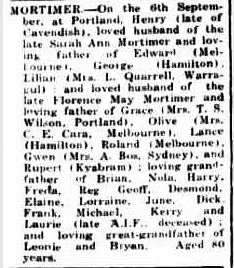
Once again the Trove digitised newspapers have helped me out.  A casual search of “Mortimer” in The Portland Guardian threw up the death notice of Henry Mortimer published on September 13, 1948. Henry Mortimer was the younger brother of Mary Mortimer, my gg-grandmother who married William Hadden.  Henry was born at Cavendish in 1868 and married Sarah Ann Duggan in 1887.  They had four children, Edwin, George, Queenie, and Lillian.  Queenie died as a baby.  In 1898, Sarah died leaving three children under 11.  The following year Henry remarried to Florence May Hardy and they had a further eight children, Grace, Amy, Beryl, Lance, Gilbert, Gwenda, David, Frances.  Florence died, in 1915, possibly as the result of the complications of childbirth as David was born in the same year.  She was only 38.

Up to that point, I had found that of the female children, Lillian had married Leslie Quarrel, Grace married David Wilson, Amy married John Taggart, Beryl had passed away as a baby and I had not found a marriage for Gwenda.

When I found the notice, there were two things that stood out.  Olive (Amy Olive on her birth record) was not married to John Taggart and Gwen was married. Olive was also known as June Olive just to complicate things.  I had previously found her married name, Taggart, via the death records and on the Australian Electoral Rolls, where I found John William Taggart’s full name.  Who then was C. E. Cara?

Family Notices. (1948, September 13). Portland Guardian (Vic. : 1876-1953), p. 2 Edition: EVENING. Retrieved June 21, 2011, from http://nla.gov.au/nla.news-article64416130

Another search of the Australian Death indexes found Clarence Edgar Cara who died in 1947, while a further search of Trove found his notice of probate.

Advertising. (1947, May 9). The Argus (Melbourne, Vic. : 1848-1954), p. 16. Retrieved June 21, 2011, from http://nla.gov.au/nla.news-article22425225

This was most interesting and lead me to the National Archives of  Australia site to search naval records.  I found him there as a member of the Royal Australian Naval Reserve with the rank of Lieutenant.  It shows Clarence was born on June 11, 1899 at Penzance, Cornwall (this brought visions of rollicking pirates!), and his wife was listed as June Olive Cara.

At the time of his enlistment in the Reserve, they were living at 65 Victoria Street, Sandringham.  By the time he died in 1947 they had moved to 11 Ebden Avenue, Black Rock, where June later lived with John Taggart.  It states that Clarence had died on April 6, 1947 but no reason was given except that Repatriation had accepted that his death was due to the war and that June would receive a pension.

A Google search of Clarence Cara found him on the Australian National Maritime Museum website.  It listed the registration of Clarence’s Certificate of Competency on December 31, 1920 in Adelaide.

I thought I would search Trove for John Taggart.  I found his and June’s engagement notice.  June was proving she was not one to settle for the local Portland lads. Her fiancé was not just John William Taggart but Captain John William Cray-Taggart of London and Rangoon!

Family Notices. (1949, July 25). The Argus (Melbourne, Vic. : 1848-1954), p. 6. Retrieved June 21, 2011, from http://nla.gov.au/nla.news-article22766958

I also found two notices of Hotel transfer in The Argus.  The first was the transfer of the license of the Yambuk Hotel to John and June in 1950 and the second was the transfer of licence for the same hotel in 1951 by Olive and John to Phillip Harrison.  The 1954 Electoral Roll finds them at back at 11 Ebden Avenue, Black Rock and John’s occupation was listed as Saloon keeper.

HOTEL TRANSFER. (1951, December 6). Portland Guardian (Vic. : 1876-1953), p. 3 Edition: MIDDAY. Retrieved June 22, 2011, from http://nla.gov.au/nla.news-article64430297

Gwendoline Lorna May Mortimer was and still remains difficult to find.  She was born in Hamilton in 1908.  My next encounter with her was the 1931 census, where she was living at the Homeopathic Hospital in South Melbourne which in 1934 became Prince Henry’s Hospital.  Her occupation was home duties.

Henry’s death notice gave the lead to the surname Bos.  I found Gwen on the 1942 Electoral Roll living in Brighton but no other person with the name Bos at the address.  Again in 1954, she is the only Bos living at 24 Spencer Road, Killara, New South Wales.  There are, however, others with the Bos name living in the area.  After searching death records, Trove, and WW2 records, I still have not found Mr A. Bos.  I am suspecting that he may not have enrolled to vote.  I am leaning toward an Abel Bos who died in Victoria in 1970.  I have not been able to find Gwen’s passing.  But the search continues.

Without Henry Mortimer’s death notice, I would not have discovered much of this.  I would not have known of June’s (Olive, Amy) first marriage or of Gwen’s marriage to Mr Bos.  Aside from this Henry’s notice offers the place of residence for his children at the time of his death and names of his grandchildren and great children that would have been difficult to find otherwise. From this information, further searching of the newspapers has given me leads to Naval and hotel records and more.  Thanks again Trove!