Passing of the Pioneers

There is no shortage of obituaries for publicans. This edition of Passing of the Pioneers sees another two join the long list already named on the Pioneer Obituary Index. You’ll also read about the first butcher in Casterton and the story behind Camperdown’s famous clock tower. Remember to click on the underlined text to go to Trove newspaper articles and other related information.

BEATH, David Alexander – Died 21 July 1883 at Hamilton. David Beath was born around 1810 in Scotland. He became a merchant and travelled to Ireland where he married Marion Johnston in January 1837.¹ Around 1840, David and Marion arrived in Victoria. David firstly took up grazing land at Moonee Ponds west of Melbourne, then in 1842, he was granted a grazing licence at Western Port, south-east of Melbourne, near what is now Hastings. That was not a successful venture and in 1846, he applied for insolvency.    

Next, David and Marion went to the Burnbank area between Ballarat and Avoca around 1847. In 1848, David accepted a mail run between Buninyong and Horsham via Burnbank, a route of over 220 kilometres.
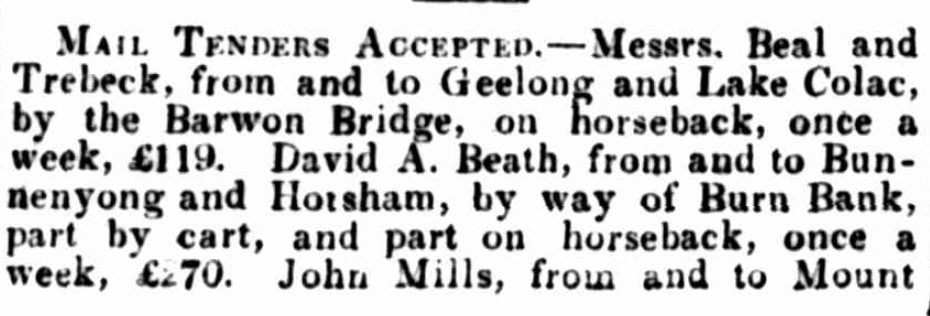
Beath
SATURDAY MORNING, JUNE 24 (1848, June 24). Geelong Advertiser, p. 2 http://nla.gov.au/nla.news-article91457858

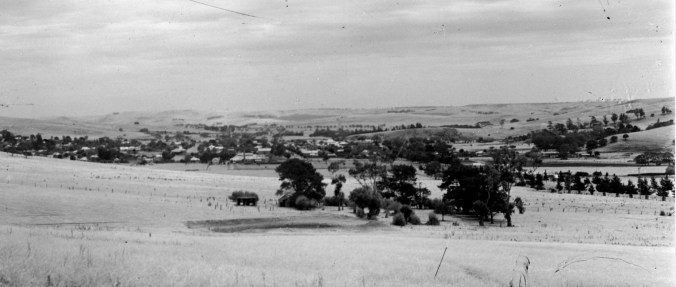
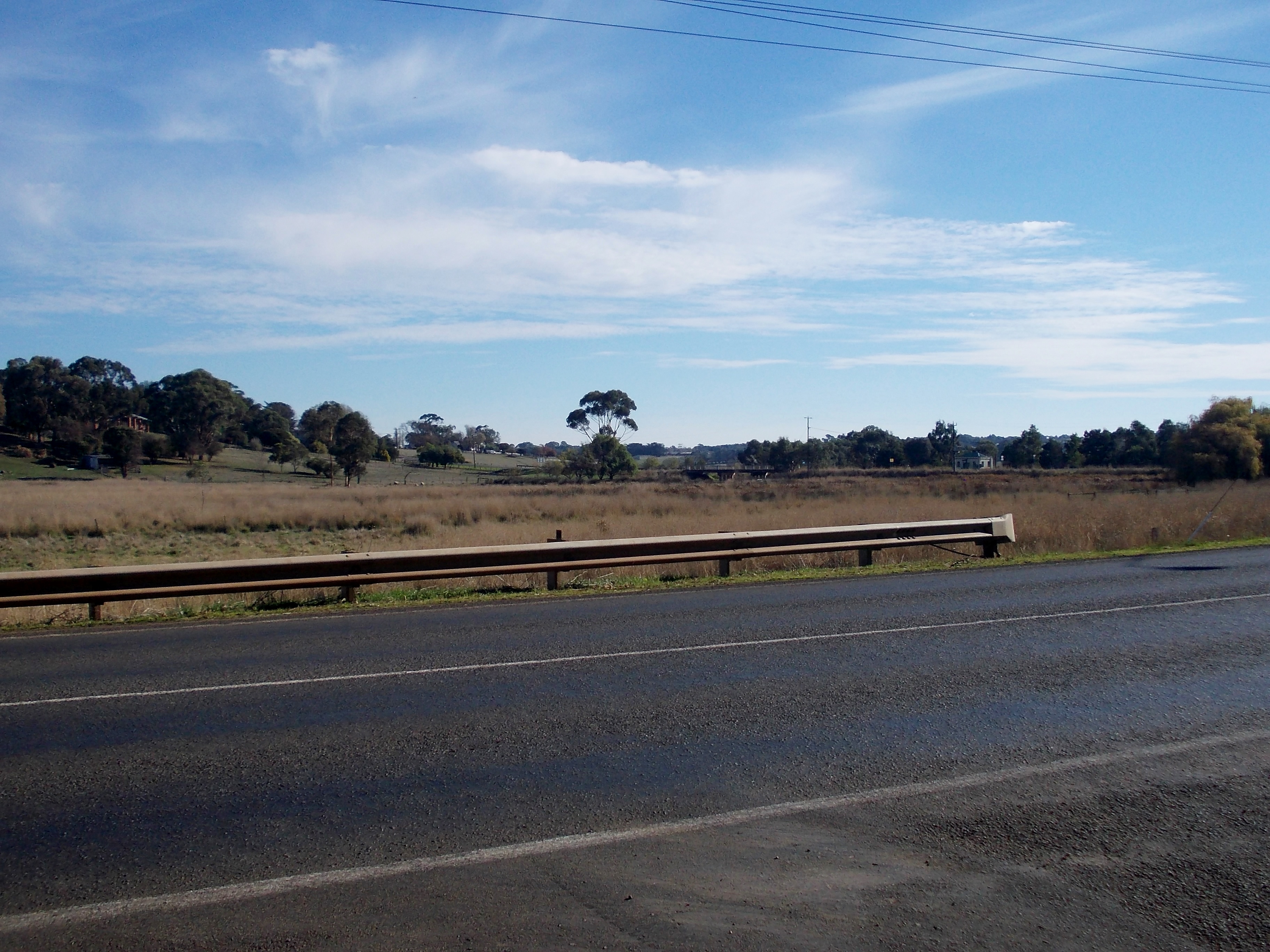
David, Marion, and their family arrived at The Grange (now Hamilton) in 1850 and took over the store of Mr. Malcolm. Then, the settlement was close to the banks of the Grange Burn between the Digby and Portland Roads.
021 (2)
LOOKING TOWARD THE FORMER GRANGE SETTLEMENT, HAMILTON

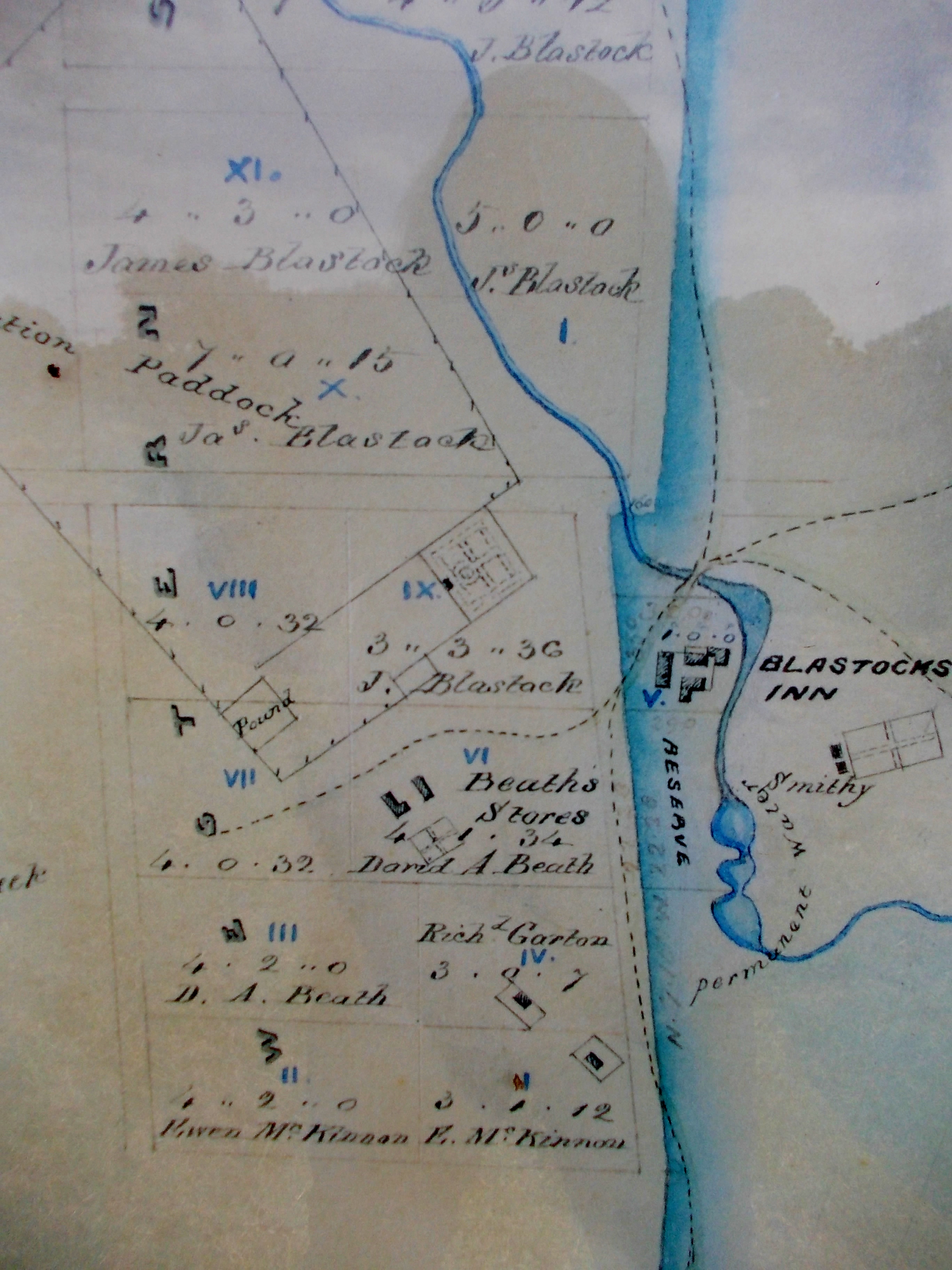
The map below shows Beath’s Store.

After the survey of the township of Hamilton, David ceased operating his store at the creek side location but remained living on the property he named Craigievar overlooking the rising new township of Hamilton.

Screenshot 2021-07-22 212821
BEATH’S STORE. Photo from the interpretive board at the Hamilton Wetlands.

David moved his store to Gray Street, Hamilton, but the name “Grange Store” remained. He also went into business with Ephraim Taylor in the buying and selling of sheepskins and greasy wool. Their partnership ended in 1862.

David was a trustee of the Hamilton Savings Bank and after the death of Alex Learmonth, he became the actuary.

Advertising (1874, March 14). Hamilton Spectator p. 1. http://nla.gov.au/nla.news-article226072789

David died in July 1883 and was buried at the Hamilton (Old) Cemetery, below.

Beath (3)
GRAVE OF DAVID AND MARION BEATH, HAMILTON (OLD) CEMETERY

1 The Belfast Newsletter, Belfast, Northern Ireland, (1828-1907), 24 Jan 1837, p. 3

DOLMAN, William – Died 17 July 1884 at Coleraine. William Dolman was born in Bristol, England around 1805.  He arrived in Victoria in the early 1840s and went to Muntham station between Coleraine and Casterton. From there, he went to Casterton and opened the first butcher shop.

In 1858, William married Uleyear Wombwell. The couple lived at Merino, where William opened another business.
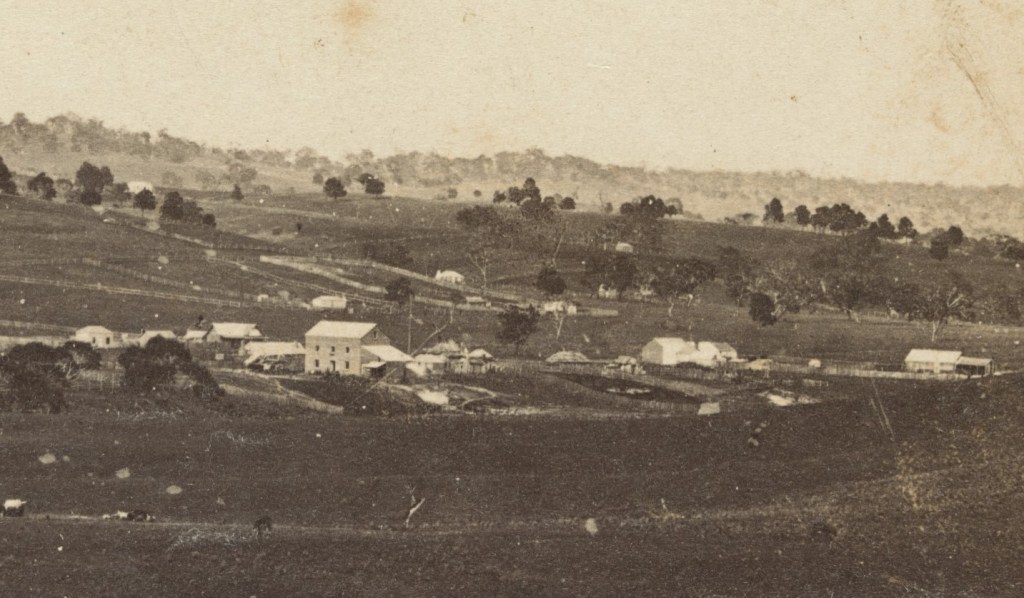
MERINO, c1859. Photographer Thomas Hannay. Image courtesy of the State Library of Victoria http://handle.slv.vic.gov.au/10381/320262

They then left for Coleraine around 1863, and William started the first butcher shop in that town. The following year, he competed in a trotting match to Hamilton with Mr. Payne.

Local News. (1864, February 26). Hamilton Spectator and Grange District Advertiser p. 2. http://nla.gov.au/nla.news-article194724238
Local News. (1864, March 11). Hamilton Spectator and Grange District Advertiser , p. 2. http://nla.gov.au/nla.news-article194723026

In 1876, William sold the butcher shop stock as he was leaving butchering. Mr. Wombwell took over the business. The following year, William opened a store in Pilleau Street Coleraine, and in 1878, he bought Coleraine’s Criterion Hotel. He sold the hotel in 1880, and as reported at the time he, “intends shortly to embark in another speculation in Coleraine”. It’s unclear if that eventuated.

William died in 1884. The funeral procession to the Coleraine Cemetery was over a kilometre long. In his time in the Western District, William never moved over twenty miles of the Muntham homestead where he started out. William’s wife Uleyear died in 1912.

MANIFOLD, Thomas Peter – Died 19 July 1895 at Melton. Thomas Manifold was born around 1865 at Purrumbete homestead near Camperdown, the second son of John and Marion Manifold.
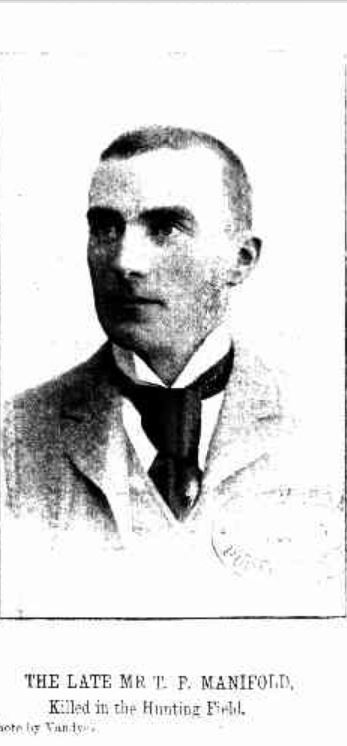
THE LATE MR T. P. MANIFOLD. (1895, July 27). Weekly Times p. 10. http://nla.gov.au/nla.news-article221169222

When Thomas was twelve, his father died and Thomas inherited the property Wiridgil (below).

Wiridgil
The Pastoralists’ review, Vol. 19 No. 4 (15 June 1909) http://nla.gov.au/nla.obj-539767932

Thomas and his brothers were keen horsemen and enjoyed racing and polo. In 1895, the brothers made up the Camperdown polo team.

MANIFOLD BROTHERS, 1 APRIL 1895. Image courtesy of the State Library of Victoria http://handle.slv.vic.gov.au/10381/256943

On 19 July 1895, Thomas rode with the Melbourne Hounds in a hunt at Melton. His horse Postscript fell at a jump, killing Thomas. He had only just mentioned to his fellow riders he had ridden the mare for five years and she never made a mistake jumping.

Thomas’ body was returned to Camperdown for his funeral, the largest seen in Camperdown.
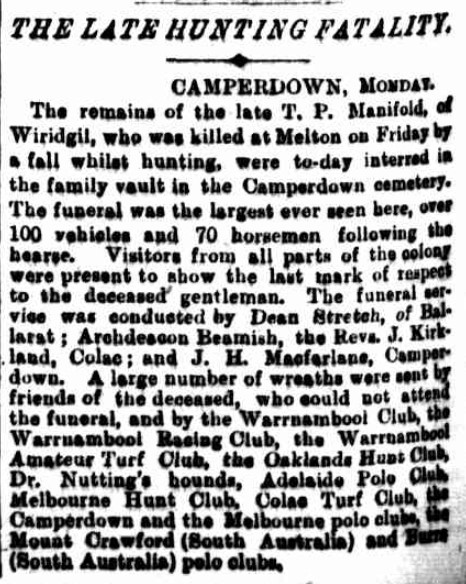
THE LATE HUNTING FATALITY. (1895, July 23). The Age, p. 6. http://nla.gov.au/nla.news-article203606884

Thomas bequeathed money to St Paul’s Anglican Church in Camperdown and the church put the money toward a church hall and Sunday School. The selected design (below) was constructed in 1896.
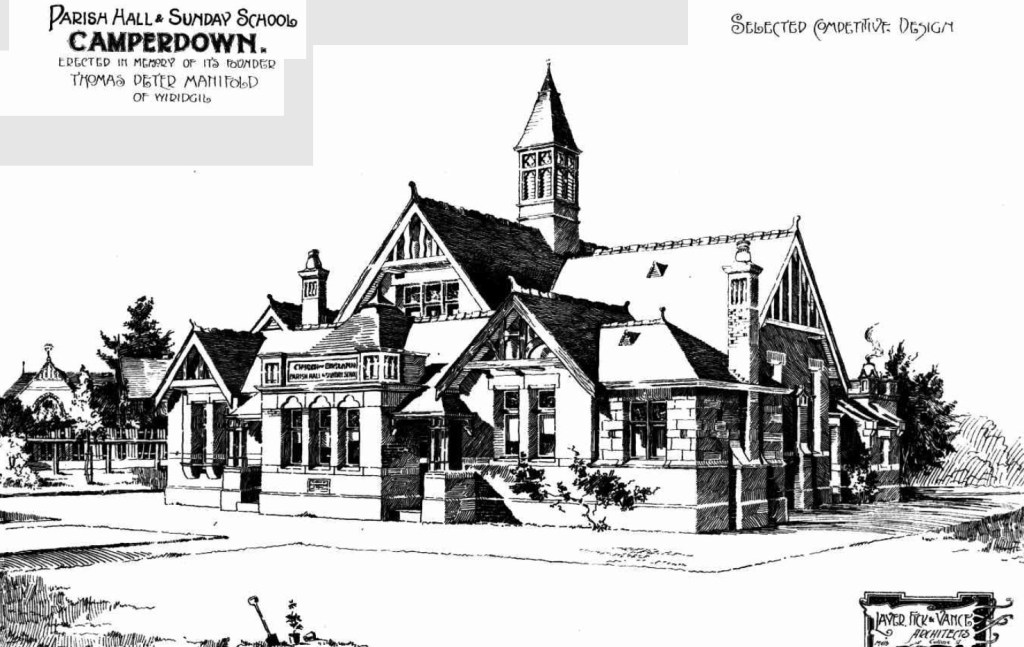
PARISH HALL & SUNDAY SCHOOL CAMPERDOWN. (1897, April 1). The Church of England Messenger for Victoria and Ecclesiastical Gazette for the Diocese of Melbourne, p. 1 http://nla.gov.au/nla.news-article197317393

In addition, Thomas bequeathed £1000 for the construction of a clock tower in Camperdown. The council agreed, and the result was the wonderful clock tower below, synonymous with Camperdown.
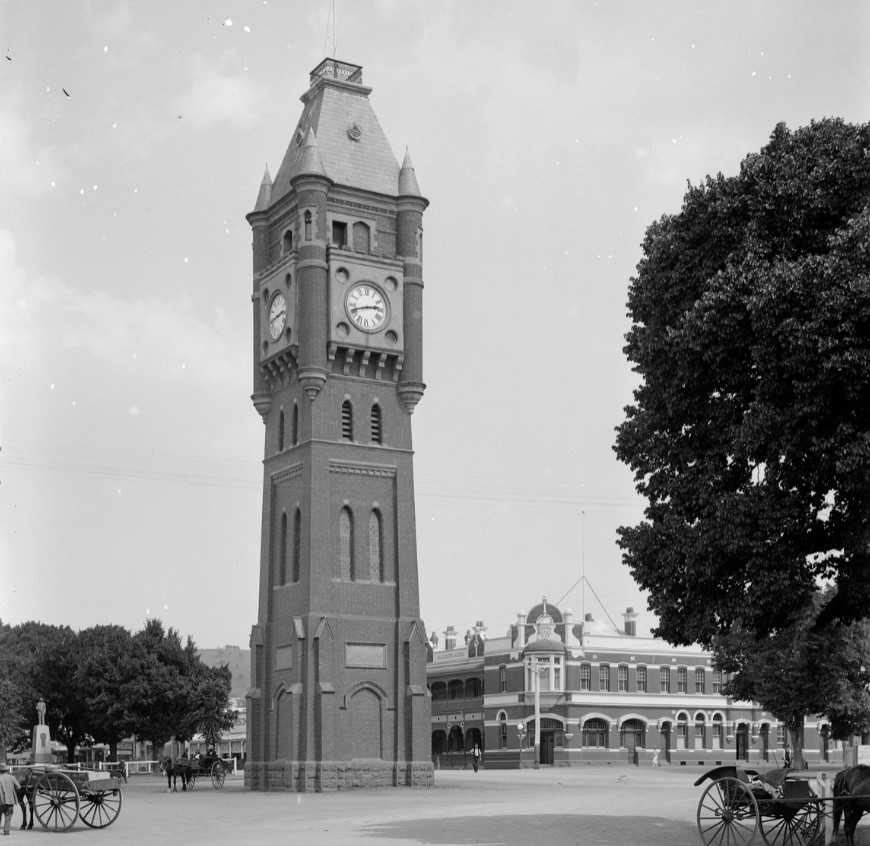
Camperdown
THE CAMPERDOWN CLOCK TOWER. Image courtesy of the State Library of Victoria

McNICOL, Donald  – Died 19 July 1903 at Camperdown. Donald McNicol was born in Oban, Scotland around 1812. He arrived in Australia in 1839 to take up work with Niel Black, who had arrived a few months earlier with Donald’s brother Duncan. With his wife and three daughters, Donald spent a few months in the area that would become Ballarat before going to the Terang district in 1840.

Lake Terang
LAKE TERANG. Image courtesy of the State Library of Victoria http://handle.slv.vic.gov.au/10381/4178389

The McNicols settled on the banks of Lake Terang and were one of the first European families in the area. After ten years, the family moved to the Camperdown district and Donald went into partnership with his brother Duncan in the properties Wuurong and Basin Banks. They dissolved their partnership around 1874, and Donald sold all but 50 acres of Wuurong to Thomas Shaw. In 1848, Donald and Duncan opened a store at Old Timboon, a settlement which gave way to nearby Camperdown, and also operated the first post office there.

Donald remained Scottish to the end and would kilt up for Caledonian Society events in Melbourne. In 1864, he attended the first Grand Highland Gathering of the Western Caledonian Society in Warrnambool.

McNicol
FASHIONABLE INTELLIGENCE. (1864, April 21). Melbourne Punch p. 6. http://nla.gov.au/nla.news-article174530107

Family was important to Donald, something that stemmed from his childhood growing up in Scotland.
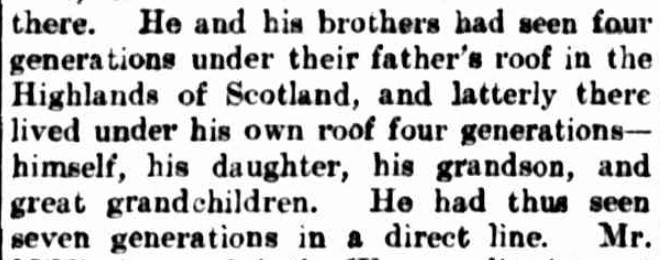
PERSONAL. (1903, July 22). The Argus (Melbourne, Vic. : 1848 – 1957), p. 5. http://nla.gov.au/nla.news-article9815401

Today, you can see a plaque dedicated to the McNicol family in Mary Bradshaw Avenue, Terang.

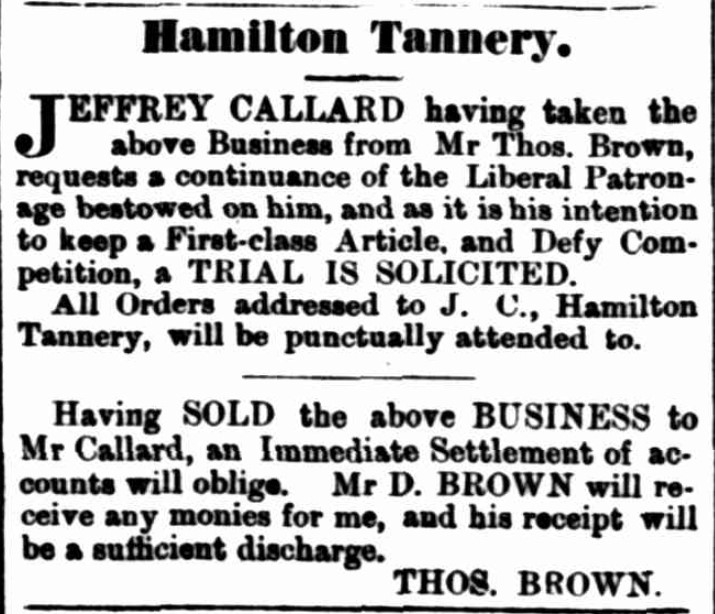
WINTER, Sarah – Died 12 July 1911 at Hamilton. Sarah Winter was born in Devonshire around 1838. She married Jeffery Callard, and they left England for Australia on the British Empire, arriving at Portland in 1857. They remained there until the mid-1870s when they went to Hamilton. In 1881 Thomas bought the Hamilton Tannery from butcher Thomas Brown.
Callard
Advertising (1881, July 5). Hamilton Spectator (Vic. : 1870 – 1918), p. 3. Retrieved July 6, 2021, from http://nla.gov.au/nla.news-article226058689

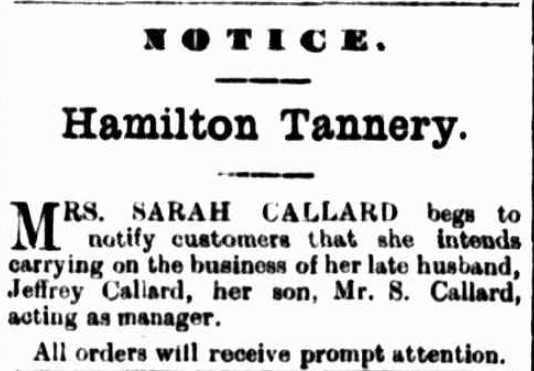
Situated close to the Grange Burn at the end of Moore Street, Jeffery successfully built up the business. He died in December 1902, and with the help of her sons, Sarah continued running the tannery. 
Callard

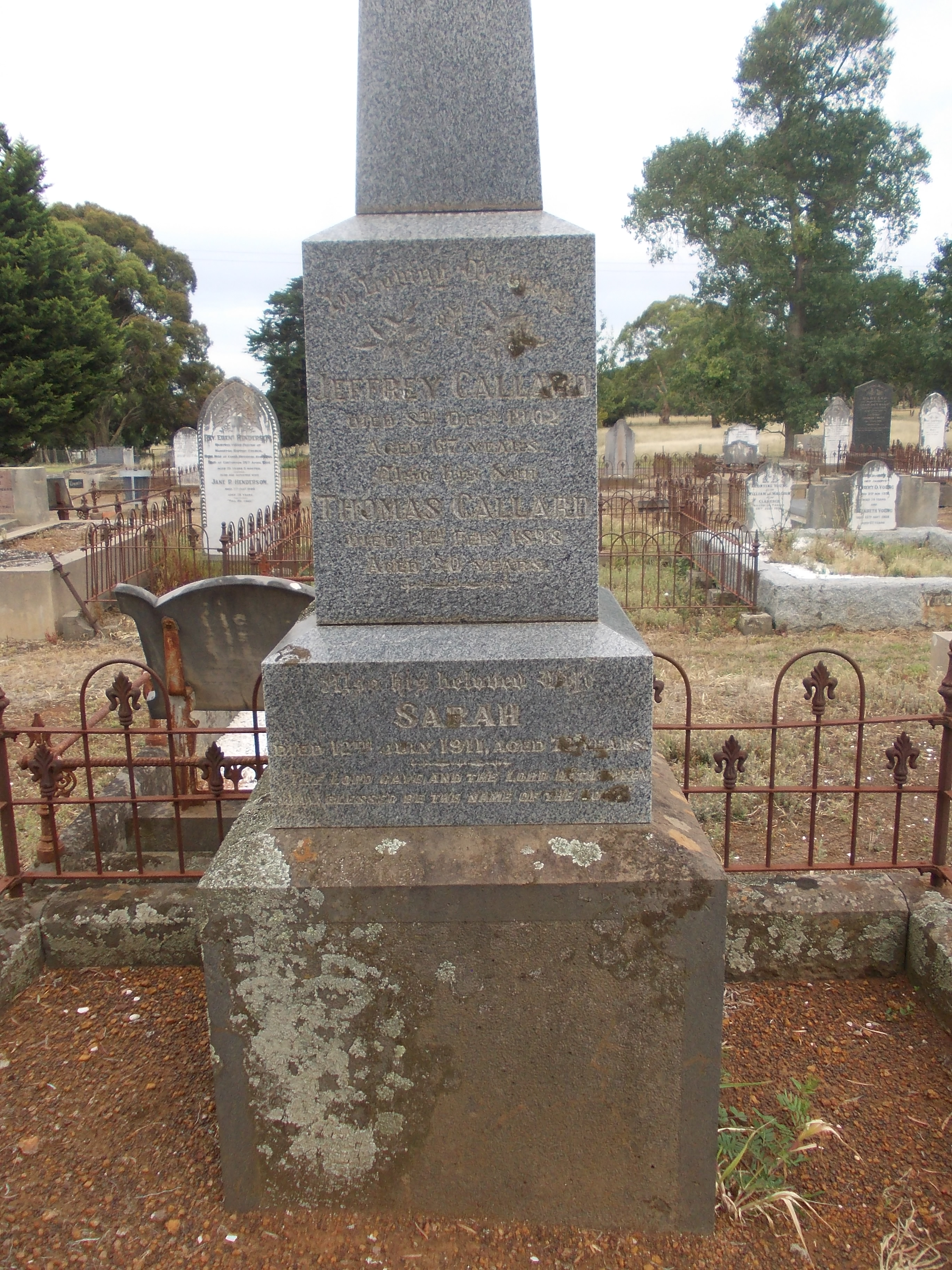
Sarah died in 1911, leaving three daughters and four sons at the time of her death. She was buried in the Baptist section of the Hamilton (Old) Cemetery with Jeffery, and their son Thomas, who died in 1898.
Callard
GRAVE OF SARAH CALLARD, HAMILTON (OLD) CEMETERY

HARWOOD, Louisa Jane – Died 5 July 1914 at Geelong. Louisa Harwood was born in North Cornwall in 1836. With her mother and sisters, she travelled to Australia in 1849, arriving at Adelaide. In 1854, she married Caleb Mountjoy, and they moved to Avoca in Victoria.

There was an opportunity on the coast to the south, and Caleb and his brothers, Lawrence and Thomas, took up the Loutit Bay run, later known as Lorne.

LOUTIT BAY. Image courtesy of the State Library of Victoria http://handle.slv.vic.gov.au/10381/44352

Caleb also had land at Barrabool Hills near Geelong, but he and Louisa went to live at Yan Yan Gurt at Deans Marsh for many years before retiring to Geelong. In March 1904, Louisa and Caleb celebrated their 60th wedding anniversary.
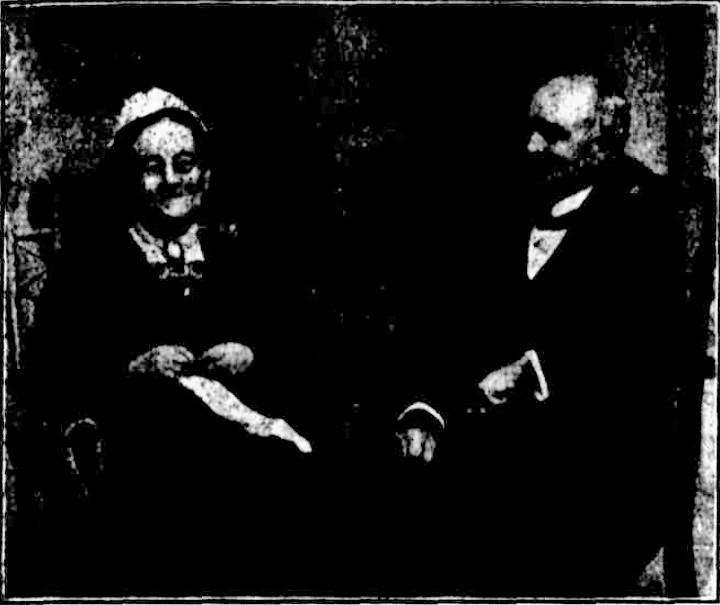
Mountjoy
Wedding Bells. (1914, April 10). Spectator and Methodist Chronicle, p. 605. http://nla.gov.au/nla.news-article154132338

In her later years, Louisa spent much of her time knitting fine lace for doilies, which were sold at church fetes and other charities. She was also a member of the Methodist Church.

Louisa died suddenly in 1914 and was buried at the Barrabool Hill Cemetery, Highton.

You can read more about the Mountjoy family on the link to Otway Life-The Mountjoys of Lorne.

DANCOCKS, Edward Bearcroft – Died 3 July 1915 at Casterton. Edward Dancocks was born around 1840 in Gloucestershire, England. In 1852, he arrived at Portland Bay with his parents, brothers Hercules and John, and sister Kate. From Portland, the Dancocks family travelled to Wando Vale before making their way to the Henty property, Merino Downs.
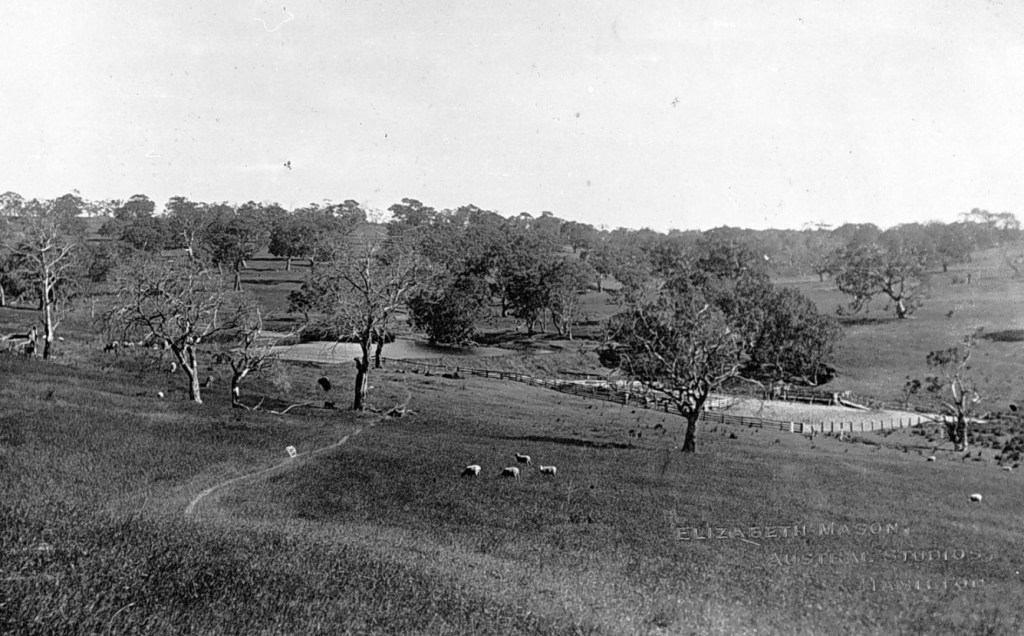
MERINO DOWNS, c1920. Photographer: Elizabeth Mason. Image courtesy of the Museums Victoria Collections https://collections.museumsvictoria.com.au/items/766481

John went to work for Edmund Kirby at Springbank near Casterton and later was the manager at adjoining stations, Pieracle and Runnymede. In 1871, Edward married Martha Foster. His two brothers had earlier married Martha’s sisters.

During the 1880s, Edward took up the Casterton Hotel and operated it for the next twenty years.
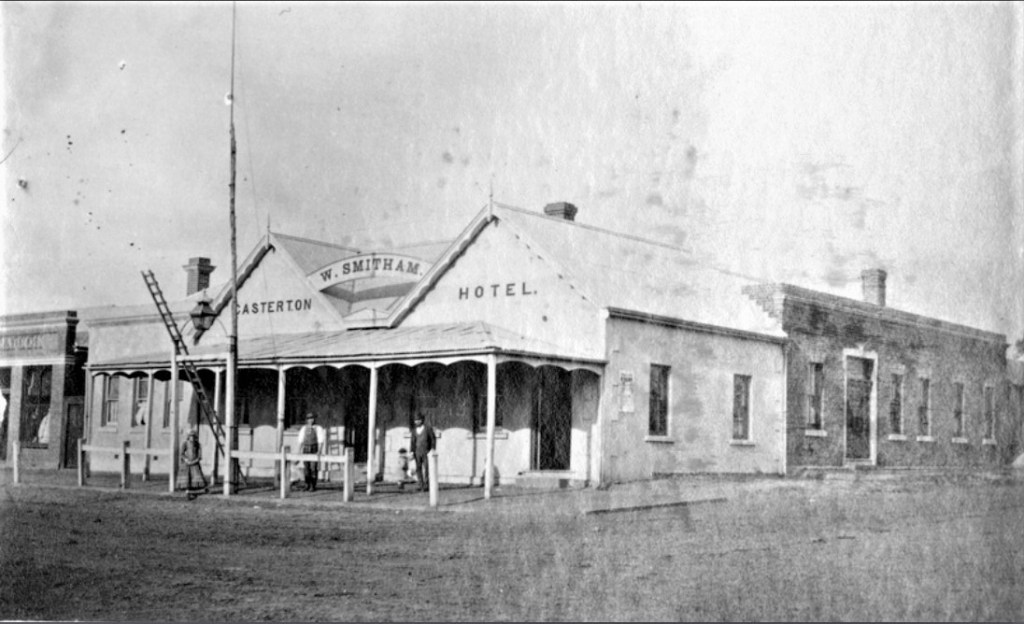
CASTERTON HOTEL, c1880. Image courtesy of the State Library of South Australia, Image no, B 21766/79 https://collections.slsa.sa.gov.au/resource/B+21766/79

In 1905, Edward retired but continued living in Casterton until his death.

SWAN, Jane – Died 29 July 1918 at Lismore. Jane Swan was born in Scotland around 1844 and arrived in Victoria aged six. Her family settled in the Windermere district near Ballarat. On 4 May 1865 at Windermere, Jane married William Oman of Browns Waterhole (Lismore) and they settled there.

Jane was a member of the Lismore Presbyterian Church, and during WW1, the local Red Cross. For the war effort, Jane knitted three pairs of socks a day until she had a fall on 18 July 1918 and broke her thigh. She died eleven days later. Jane had eleven children, and ten were still living at the time of her death. Jane’s funeral was the day following her death, and sixty cars and horse-drawn vehicles followed the hearse to the Lismore Cemetery.

DRUMMOND, Robert George – Died 13 July 1924 at Hamilton. Robert Drummond was born in 1869 at Coleraine, the son of George and Margaret Drummond. George operated Coleraine’s Shamrock Inn until 1876, then the Koroite Inn. A year after Robert’s birth, in 1870, his sister, uncle, and cousins drowned when flood water inundated their home at Coleraine. In 1882, when Robert was thirteen, George Drummond died. Robert went to school in Coleraine before working for a short time for James Trangmar in his store in Coleraine, next door to the Koroite Inn.

Trangmar
STORE OF JAMES TRANGMAR, COLERAINE. Image courtesy of the Museums Victoria Collections https://collections.museumsvictoria.com.au/items/767465

He then returned to school at Portland College. After leaving, he secured a job at the Horsham branch of the Bank of Victoria. In 1893, Robert went to Western Australia in search of gold. His mother Margaret died the following year. She had continued to run the Koroite Inn after the death of George Drummond, but she retired in 1891 and leased the property. The photo below from 1919 shows the Koroite Inn with Trangmar’s Store, next door.
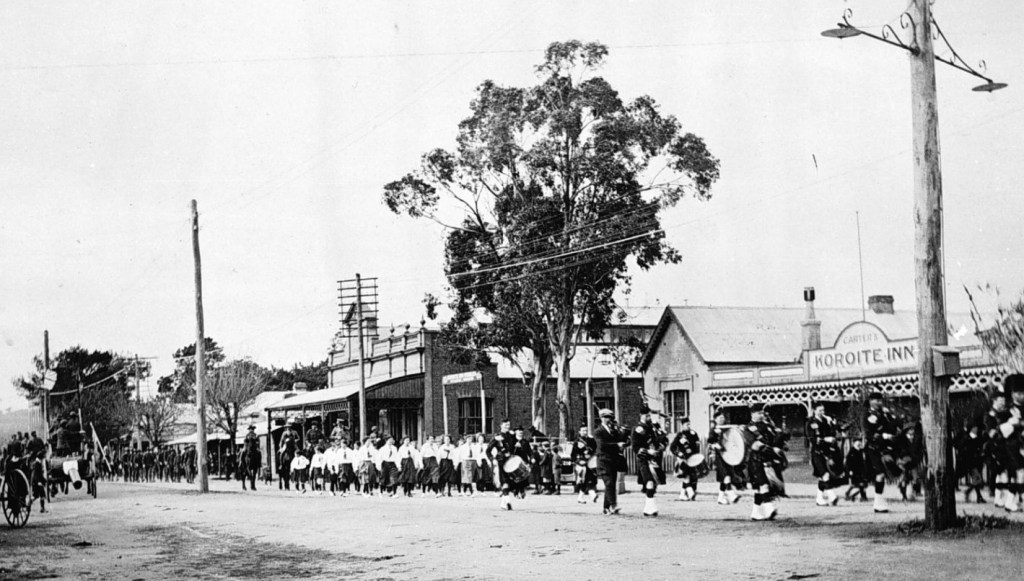
WHYTE STREET, COLERAINE INCLUDING THE KOROITE INN, 1919. Image courtesy of the Museums Victoria Collections https://collections.museumsvictoria.com.au/items/766397

Robert returned to Victoria and got work with Hepburn, Dowling, and Crawford, auctioneers at Casterton. He married Annie Fitzsimmons in 1898 and in the next year applied to take over the licence of the Koroite Inn, of which he was a part-owner.

In 1902, Robert purchased the freehold of the Victoria Hotel in Hamilton.

Victoria Hotel

Robert got involved with many community activities in Hamilton, including his election in 1907, as president of the Hamilton and Western District Licensed Victuallers’ Association. In 1920, Robert leased the hotel and the following year went into partnership with Cecil Miller in Miller and Drummond, Stock and Station agents in premises Gray Street next to the Victoria Hotel in Gray Street. You can just see the sign in the photo above.

Robert was a good singer known for his comedic performances and he took part in many theatrical productions. He was a member of the Caledonian Society and a director of the Hamilton Electricity Company. He was a vestryman of the Christ Church Anglican Church, a member of the Masonic Lodge, and a member of the directorate of the Associated Oil Corporation, Ltd.

Robert was buried at the Hamilton Cemetery and left his widow Annie and two daughters who donated a stained-glass window to Hamilton’s Christ Church Anglican Church, in his memory.

ROBERT DRUMMOND MEMORIAL WINDOW

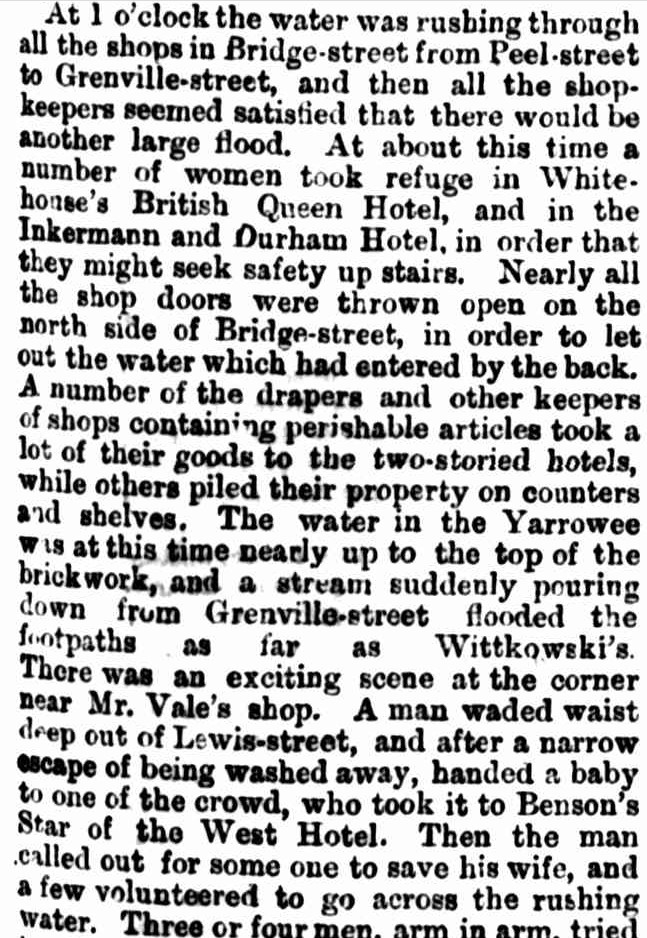
The Great Flood of 1870

The year 1870 was wet across Australia. In January, summer storms brought flooding to Ballarat and Bendigo. Then, for several months, floods plagued NSW and Queensland. Winter came and the Western District received more than its share of rain.  

PENSHURST. (1870, August 27). Hamilton Spectator (Vic. : 1870 – 1918), p. 3. http://nla.gov.au/nla.news-article196303848

The rain continued into spring and the Hamilton Spectator reported on 10 September 1870, “The present extraordinary season, according to many of the oldest inhabitants, has not been equalled in the Western District of Victoria for the last eighteen years.” That came after 1½ inches fell across 4 and 5 September, causing the Grange Burn at Hamilton to swell. Mail to the town was blocked for two days, with creeks along the route on the rise. 

The Hopkins River was up and water lapped the back door of the Hexham Hotel.  Mail couldn’t get through to Warrnambool from Melbourne and at Allansford, not only had the old bridge washed away but also the new bridge under construction. 

LATEST INTELLIGENCE. (1870, September 13). The Ballarat Star (Vic. : 1865 – 1924), p. 3. Retrieved October 26, 2020, from http://nla.gov.au/nla.news-article218798397

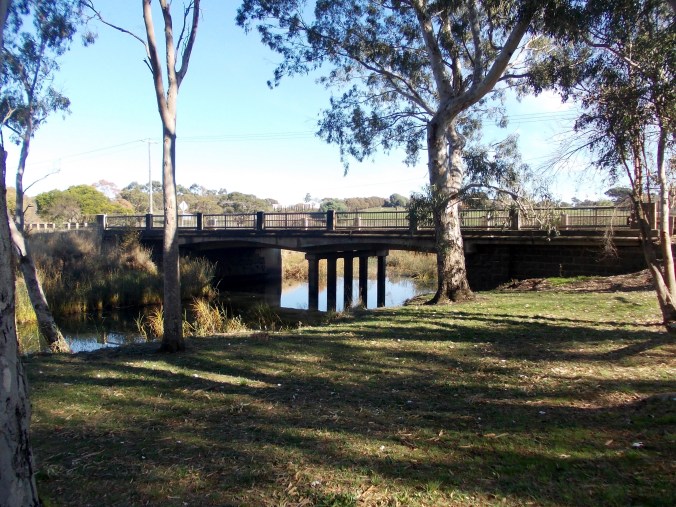
The Wannon River (below) was raging and there were reports of trees going over the Wannon Falls. Further downstream, the road from Sandford to Casterton was cut and a bridge at Sandford was washed away.

WANNON RIVER, OCTOBER 2020

Streatham saw the largest flood the inhabitants could remember with families evacuated and the telegraph office flooded. At Skipton, the rise of Mount Emu Creek soon saw the streets flooded.

THE SKIPTON SHOW. (1870, September 14). Hamilton Spectator (Vic. : 1870 – 1918), p. 3. Retrieved October 16, 2020, from http://nla.gov.au/nla.news-article196301671

At Coleraine, settled on the banks of Bryan Creek,* the water rose rapidly.  

TOWNSHIP OF COLERAINE, Victorian Office of Lands & Survey, Image courtesy of the State Library of Victoria http://handle.slv.vic.gov.au/10381/93052

The Hamilton Spectator‘s Coleraine correspondent summed up the town’s experience during the rains of September 1870, pointing to the rapid rise of the water and the plight of the McCaskill family.  He offered a grim assessment…”if the stream had not suddenly fallen, that a coroner’s inquest in the locality would have taken place.”

COLERAINE. (1870, September 10). Hamilton Spectator p. 3.  http://nla.gov.au/nla.news-article196305637

Bryan Creek, a tributary of the Wannon River, rises up near Vasey about thirty-five kilometres north-east of Coleraine, not far from the Dundas Ranges. Several small creeks run into it as it flows through the valleys of rolling hills. Those open hills enhance the beauty of the district but as Adam Lindsay Gordon wrote in his famous poem “The Fields of Coleraine”, “…the gullies are deep, and the uplands are steep” expediting water runoff into the creek. 

COLERAINE. Image courtesy of the State Library of Victoria http://handle.slv.vic.gov.au/10381/63291

By the end of September 1870, farmers were lamenting the wet weather as potatoes rotted in the ground and shearing was delayed.

COLERAINE. (1870, October 1). Hamilton Spectator (Vic. : 1870 – 1918), p. 3. Retrieved October 8, 2020, from http://nla.gov.au/nla.news-article196307121

Unsettled weather continued throughout October. On Friday 28 October 1870 in Coleraine, it was humid with a squally wind.  

[B 21766/52 State Libary of South Australia https://collections.slsa.sa.gov.au/resource/B+21766/52

As the day moved into night, clouds appeared and lightning illuminated the sky like nothing the residents had seen before. Thunder rumbled for two hours. Rain began to fall “gentle and warm” and then, when it seemed to have past, the people of Coleraine “went to repose, fearing nothing from the weather”.

Among them was Emma Laird, who lay down with her sleeping infants James and Isabella. She lived in a cottage behind the Albion newspaper office (below). The Drummond family, David, Margaret and their children were her neighbours. David’s niece Janet was staying over for the night.

Closer to the creek, carrier William Lewis, William Weaven, and another man were camped on what they thought was high ground near the bridge.  There was no sleeping under the stars for them that night, instead they made their beds under the dray of William Lewis to shelter from the storm.

As the town went to sleep, little did they know what they thought was the sound of gale force winds roaring through the trees was actually water raging along Bryan Creek.  Heavy rain in the catchment area was rapidly entering the waterway.  At Gringegalong close to the creek’s headwater, water was knee-deep within an hour. By midnight Bryan Creek was “a roaring torrent and inundated the sleeping town” having risen five feet in two hours. There was chaos. People ran between houses trying to wake the occupants and soon a crowd was gathering near the lowest part of the town where the cottages were submerged in water. 

THE FLOODS. (1870, November 3). Portland Guardian and Normanby General Advertiser (Vic. : 1842 – 1843; 1854 – 1876), p. 2 (EVENINGS). Retrieved October 20, 2020, from http://nla.gov.au/nla.news-article65423451

The Coleraine correspondent for the Hamilton Spectator opened his front door only to be almost swept off his feet by the rush of incoming water. He managed to close the door again, but only with the help of another person. He said outside it was “a sea, roaring and boiling, and crushing all in its course.”

Such was the commotion, the order in which the events of that night occurred differ slightly between eye-witness accounts from the likes of the Hamilton Spectator‘s correspondent and the Coleraine Albion reporter.  Piecing the various reports together, I believe this is how it all unfolded.

Around 12.30 am, an attempt was made to rescue residents on the low ground, including those at the residence of Robert Wright, the brickmaker on the banks of the creek, and dressmaker Betsy Gillies. In the nick of time, the Wright family got themselves across the deluge to safe ground. Miss Gillies was woken from her slumber and also escaped. In both cases, another few minutes, and the outcome would have been disastrous. 

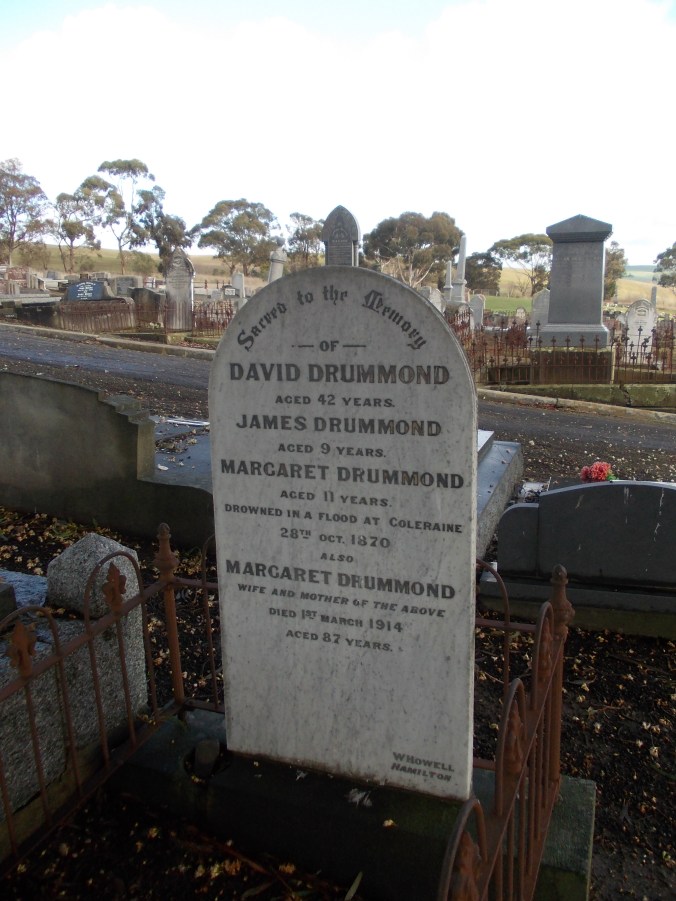
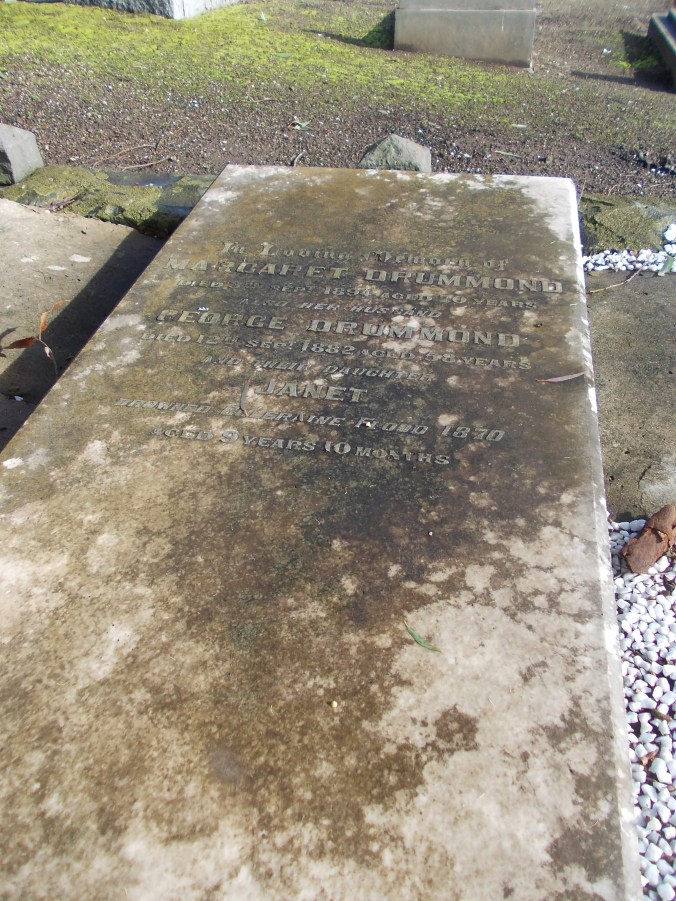
Attention then turned to the two cottages behind the Albion office, that of the Drummonds and Lairds. By now, the water was knee-deep and the current was too fast to safely cross. Constable James Mahon made a dash for it but was carried away. Fortunately, he managed to land on top of a pigsty and was able to get back to safety.  He tried again and was able to save one of the children.  Storekeeper Louis Lesser also headed across the water and rescued another child.  He was also able to lift Mrs Margaret Drummond out of the water and on to the roof of a cowshed.  Her husband, David Drummond got three children to safety and went back for three more, James and Margeret Jr and his niece Janet. He had one on his back and one in each arm as he made his way across.  Suddenly, the current caught him, and all four were swept away.  

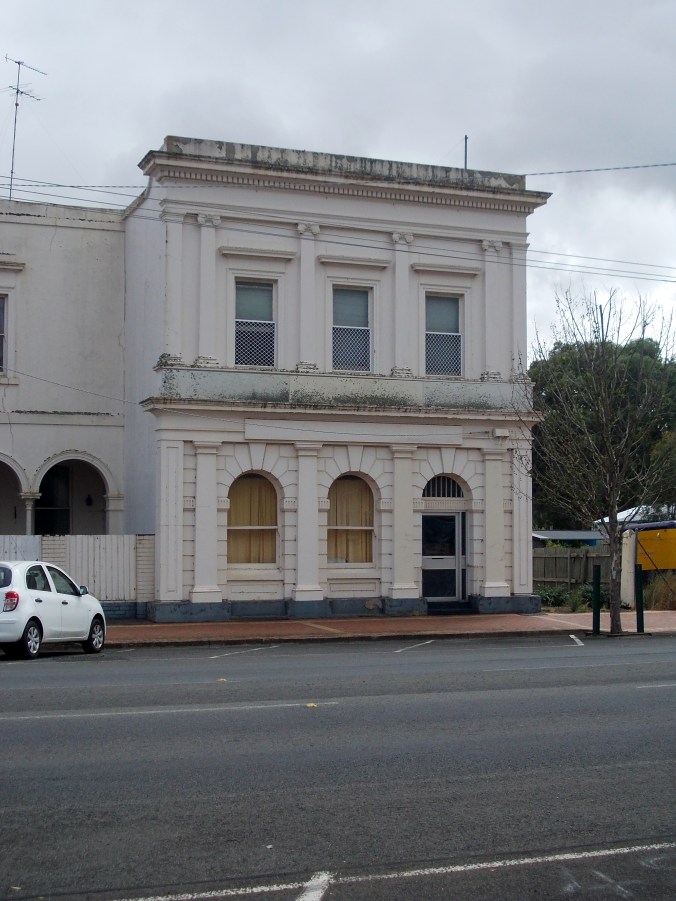
Charles Loxton, the young accountant from the National Bank of Australasia (below). attempted to cross on his horse.  They were both swept away, and it was then the rescue was abandoned.

FORMER NATIONAL BANK OF AUSTRALASIA, WHYTE STREET, COLERAINE.

Around 1.00 am the water had fallen enough for another attempt to cross to the cottages.  Margaret Drummond was found sitting on the cowshed but the rescuers’ worst fears were soon realised.  During all the commotion, Emma Laird and two of her children had washed away on their beds as they slept. William Lewis and William Weaven camped by the creek were swept away from beneath the dray. Their friend managed to get himself to safety.

By 8.00 am on Saturday morning, the creek had “assumed its natural proportions” and the horse of Charles Loxton grazed nonchalantly by the creek. It was as though nothing had happened.

WHYTE STREET, COLERAINE. Image courtesy of the State Library of Victoria http://handle.slv.vic.gov.au/10381/385977

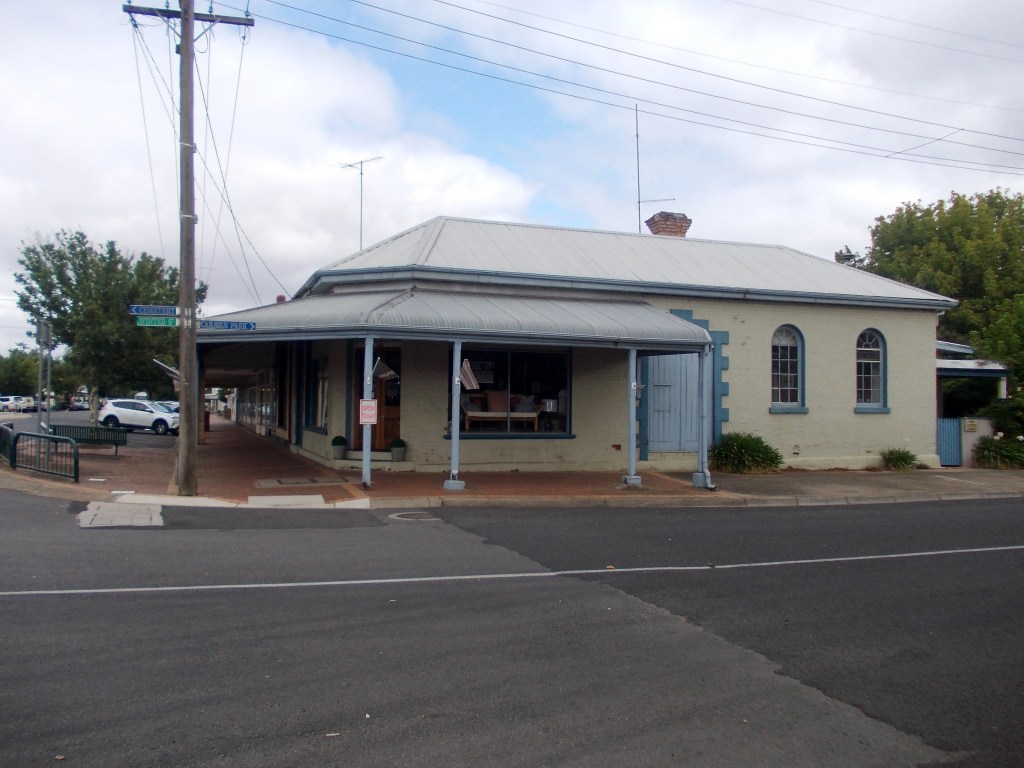
But looking around the town, it was anything but normal. It was devastating. “The scene when morning dawned was heartrending. Men, women, and children were found on chimneys and housetops; and all sorts of property was floating about”. The water was three feet deep in McLean’s timber yard and the store of Edmond Dacomb (below) was also flooded.

Also flooded was the store of Abraham Lesser (below) and his brother Louis, a hero only hours earlier.

The bridge over Bryan Creek on the Penola road was destroyed, and the streets were a mess.  Almost ominously, headstones at Alfred Priest’s monumental yard were scattered.  There was slime everywhere the water had been.  Logs, bales of wool and a haystack had washed down the creek.  Further downstream, Murdoch McCaskill’s farm once again suffered damage.  

The harrowing task of searching for bodies began at first light, with the whole town turning out even though very few had slept. Holes were checked and logs were turned over. By 6.00 pm on Saturday evening, five bodies had been recovered, all of them children.  Five adults were still missing. On Sunday, the bodies of Emma Laird and William Lewis were found. Later, the searchers noticed a piece of clothing pocking out from under a huge log. It took around fifty men to remove the log and expose the body of Charles Loxton 

As they were found, the bodies were laid out in McKnight’s “old courtroom” and family gathered around their lost loved ones. George Trangmar, the coroner, issued the certificates of burial. The funeral for eight of the victims took place on Monday 31 October at 6.00 pm. The coffins left McKnights for the cemetery with the Oddfellows in the lead, two abreast, then a hearse with some of the coffins, followed by a wagon with the rest. There was a very large cortege and to emphasise the tragedy, reports mentioned there were thirty to forty women in attendance. It was not customary for women to attend funerals in those times.

COLERAINE CEMETERY

The body of William Lewis was taken to Sandford for burial.

The Portland correspondent for the Hamilton Spectator told of how the news of the lives lost at Coleraine came in by telegram subsequently casting a gloom over his town.  He hoped a suitable monument would be erected to remember the bravery of Charles Loxton and David Drummond.

A week on and William Weaven’s body had not been found, but his family kept searching along the creek for him but to no avail.  During September 1872, human remains were found in Bryan Creek about five kilometres downstream from the bridge at Coleraine. The local police decided an inquest was unnecessary as it seemed almost certain the remains were those of William Weaven.

THE VICTIMS 

DAVID DRUMMOND and his children James and Margaret DRUMMOND.

David Drummond married Margaret Watson in Tillicoultry, Scotland on 12 June 1852 (1) and they boarded the Chance at Liverpool, England on 23 July 1852 (2). It was a difficult journey with forty-six deaths and on arrival in Melbourne on 28 October 1852, the ship was quarantined and remained so for almost three weeks.  Once on dry land, the couple made their way to the Geelong district.  A son James was born in 1853 but sadly he died the next year (3). Another son Richard was born in 1854 (4) and a daughter Margaret in 1857 (5).  James was born in 1862 at Duck Ponds near Geelong (6).

The family moved west to join other members of the Drummond family sometime after 1862 with John born at Casterton in 1867 (7). It was there in the same year, Margaret Jr, aged ten, faced the Casterton Court of Petty Sessions. Her charges of stealing a pocketbook were eventually dismissed.  It was also the year David Jr died at Sandford, aged seven (8). The following year, baby John died, also at Sandford. (9) In 1869, another son was born and named David (10).  He was born at Dundas suggesting the family had moved to Coleraine, within the Shire of Dundas.  

After the tragic death of her husband and children in 1870, Margaret Drummond continued to live in Coleraine. In her old age, she lived with her son Richard. She died on 1 March 1914 her life punctuated with tragedy. She was buried at the Coleraine Cemetery with David, James, and Margaret (11). Richard died on 17 July 1932 at Coleraine (12).  Margaret’s other surviving son David Jr. settled at Streatham. He died in 1941 at Sebastopol (13).

Janet DRUMMOND

Janet, the niece of David and Margaret Drummond was born at Branxholme in 1861, the daughter of George Drummond and Margaret Scott (14).  Her father owned the Shamrock Inn at Coleraine from the early 1870s and then the Koroite Inn from February 1876.

Emma Jane LAIRD and her children James and Isabella

Emma Jane Laird was born around 1842 as Emma Jane Till. Emma arrived from Middlesex, England in 1861 aboard the Oithona and went to work as a housemaid at Dundas station for Samuel Proudfoot Hawkins (15). She married James Laird in 1864 (16). The following year, a daughter Louisa Matilda was born at Coleraine (17). Isabella Jane was born in 1867 (18) followed by a son James Alexander in 1869 (19). James Snr and Louisa were not mentioned in newspaper reports of the flood.  James appears to have worked for a contractor and may have been away working, maybe the same reason Louisa went into the care of her grandparents at Casterton in the years after the flood. That, however, soured when in 1876 Alexander Laird took his son James to court for costs incurred for the board and lodging of Louisa. At the age of eighteen, Louisa married John McCreddan in 1883 (20). She died at Noradjua in 1887 aged just twenty-one (21).

Charles Arthur LOXTON 

Charles Loxton was born in Liverpool, Lancashire in 1847, a son of George Loxton and Catherine Holland (22).  The Loxton family including eight children arrived on the Catharine Mitchell when Charles was three in 1853 (23).  It’s not clear when twenty-two-year-old Charles went to Coleraine for work but it may not have bee long before the flood. The National Bank of Australasia where he was an accountant was opened in 1870. Charles’ brother Holland Loxton was the town clerk at Kew. In 1948, Charles’ grave at the Coleraine Cemetery was restored using money donated by then-current and past residents. More about the grave can be seen on the link to Monument Australia – Grave of Charles Arthur Loxton

William LEWIS

William Lewis was a son of Thomas Lewis and Rebecca Braham and was born in Tasmania in1843 (24). At some point, the family travelled to Victoria and settled at Sandford, and William worked as a carrier. On Saturday 22 October 1870, he departed the stores of Stephen Henty in Portland with goods for Coleraine.  It would be his last job. William was twenty-seven at the time of his death.

William Eric WEAVEN

William Weaven was a son of Thomas Weaven and Christiana Butcher and was born at Portland in 1844 (25). 

FLOODING IN OTHER AREAS OF THE WESTERN DISTRICT

At Brung Brungle Station at Redruth (Wannon) close to Coleraine, and owned by John B, Hughes, employee William DUNTON was drowned while trying to save the station’s stud rams.  He fell from his horse into the water and, despite being a strong swimmer and struggling for some, exhaustion saw him and succumb to the waters.  William was a local boy born around 1853, a son of William Dunton and Elizabeth Edwards.  He was buried at the Coleraine Cemetery on 4 November 1870.

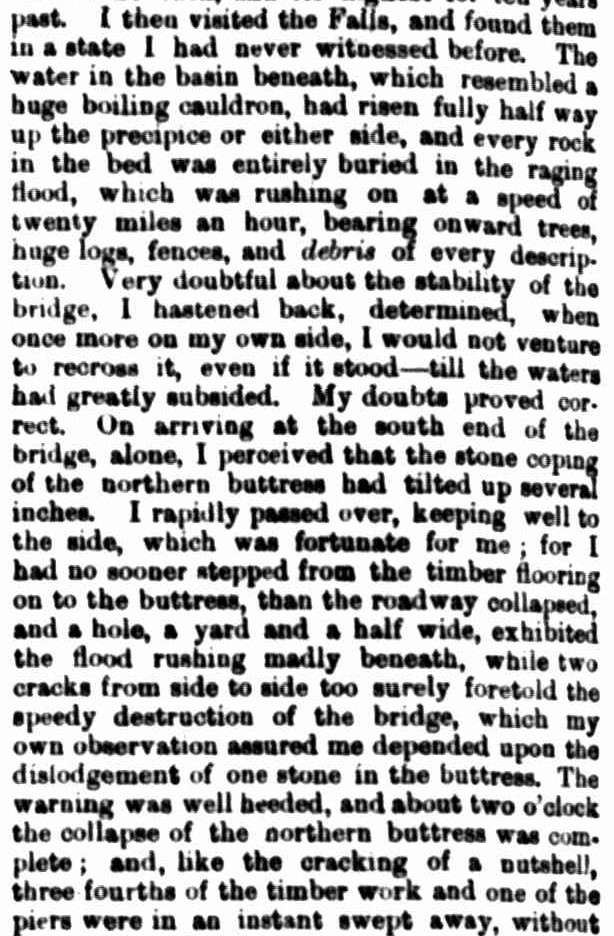
Also at Redruth, trees were washing down the Wannon River and hitting the bridge on the main road to Coleraine. On Saturday afternoon 29 October at about 2.30 pm the bridge, only six years old was washed away.  Trees were going over the Nigretta and Wannon Falls.  The local correspondent for the Hamilton Spectator ventured to the Wannon Falls and found a “huge boiling cauldron” beneath.  Trees from further up the river lay below.  He then went to see the bridge on the main road. It was on its last legs and soon it washed down the river towards the Wannon Falls.

REDRUTH. (1870, November 2). Hamilton Spectator (Vic. : 1870 – 1918), p. 2. Retrieved October 9, 2020, from http://nla.gov.au/nla.news-article196303182

With the bridge out, the only way to get the mail through was a rope over the river or behind the path of the falls (below).  

At Hilgay not far from Coleraine, John MOFFAT was drowned. A number of horses on the property were in hobbles and stranded in deep water.  The owners of two of the horses offered £1 each to anyone who would go underwater and cut the hobbles. Shortly after, John Moffat asked one of the owners for a knife and a pipe of tobacco. He didn’t say he was going to free the horses but instead just “strolled away. Later it was noticed he was missing, and a search was made.  His clothes were found on the river bank by his friends, but his body couldn’t be found.

At Roseneath on the Glenelg River north of Casterton, eleven-year-old Lewis Frank Russel RALSTON, a son of Robert Ralston and Jane Ross was drowned in the river. 

There was an electrical storm at Casterton and subsequent floods were considered the “greatest floods ever” or at least since 1851.  Stores and homes were flooded while at nearby Sandford, the bridge over the Wannon River washed away. At Balmoral, the “old” bridge was gone and around Harrow, the water offered “an almost uninterrupted swim”.

At Hamilton, communications were down and the Hamilton Spectator said it “rained in torrents for hours”.

THE WEATHER AND THE TELEGRAPH.— (1870, October 29). Hamilton Spectator (Vic. : 1870 – 1918), p. 2. Retrieved October 1, 2020, from http://nla.gov.au/nla.news-article196304024

One report suggested around 34 mm of rain fell in a short time. The bridge over the Grange Burn on Dunkeld Road (now Ballarat Road) was partially washed away. Further downstream, the Grange Inn on the banks of the creek was in more than a metre of water resulting in the kitchen breaking away and washing down the creek. One of the abutments on the nearby Portland Road bridge had washed away and the roadway had fallen in. 

PORTLAND ROAD BRIDGE, HAMILTON

To the east, sheep washes were swept away at Strathkellar and around 600 sheep were drowned at Warrayure. At Portland, the storm was spectacular and around 17mm of rain fell.

OUR LETTER HOME. (1870, November 5). Hamilton Spectator (Vic. : 1870 – 1918), p. 4. Retrieved October 3, 2020, from http://nla.gov.au/nla.news-article196303362

A horse was struck by lightning at Streatham and at Colac, the heaviest rain in years fell. Murray Street was like a river and Lake Colac was rising. 

DISASTROUS FLOODS. (1870, October 31). The Age (Melbourne, Vic. : 1854 – 1954), p. 3. Retrieved October 22, 2020, from http://nla.gov.au/nla.news-article189331161

At Ballarat,  the rain brought the worst flood in memory. 

BALLARAT. (1870, October 29). The Herald (Melbourne, Vic. : 1861 – 1954), p. 3. Retrieved October 2, 2020, from http://nla.gov.au/nla.news-article244717929

There were cries of “Not October storms again” as people recalled the floods in the town the year prior. Then Bridge Street was a river (below) but in 1870, the water level exceeded that high mark.

DISASTERS AT BALLARAT. (1869, December 1). Illustrated Adelaide Post (SA : 1867 – 1874), p. 4. Retrieved October 15, 2020, from http://nla.gov.au/nla.news-article245004026

COLERAINE’S FLOOD HISTORY

The people of Coleraine have been no strangers to flooding over the years. For example, there was 1893, 1906, 1983, and more recently 2016, the worst flooding since 1946, the year of ‘The Big Flood‘ across the Western District.  Even earlier this month while writing this account, two days of almost constant rain saw the Bryan Creek once again rise, resulting in some minor flooding. 

The flood of October 1870 was disastrous and possibly the worst in the town’s history, but as there weren’t official records kept for rainfall and the creek levels, it is difficult to compare. The only comparison can be made with the number of fatalities and fortunately, there has never been a repeat of the loss of life seen in 1870. 

You can find more about the history of flooding at Coleraine from the following video prepared for the Southern Grampians Shire Council investigation into the 2016 Coleraine floods.  You can read the full report on the link – Coleraine Flood Investigation

*  Bryan Creek – While researching the 1870 floods, I came across several variations of the name of the creek which passes by Coleraine, Bryan Creek, Bryan’s Creek, Bryants Creek, Koroite Creek, and Koroite Rivulet. The use of Koroite comes from the Koroite run. The homestead stood on the northern bank of the creek just west of the township once known as Bryan’s Creek from the name of the run taken up by John Bryan in 1837 and later his brother Samuel.  In 1937, the Portland Guardian claimed Samuel Pratt Winter said in the Hamilton Spectator in 1878, also the year of his death, that somewhere along the line someone had added a”t”. 

Pioneers of Wannon Country. (1937, December 20). Portland Guardian (Vic. : 1876 – 1953), p. 2 (EVENING.). Retrieved October 27, 2020, from http://nla.gov.au/nla.news-article64277877

However, going back to 1849 and a description of the boundaries of the Koroite run, both Bryan’s Creek (possibly the aforementioned pastoral run) and Bryant’s Creek are referred to. 

Advertising (1849, March 5). Port Phillip Gazette and Settler’s Journal (Vic. : 1845 – 1850), p. 4. Retrieved October 29, 2020, from http://nla.gov.au/nla.news-article223156343

SOURCES

1.  Scotland, Marriages, 1561-1910, FamilySearch, David Drummond, 1852, FHL Film No. 1040210

2.  PROV, Assisted British Immigration Index, VPRS 14, Book 7, Page 54, Chance, 1852

3.   Victorian BDM’s Death Index, James DRUMMOND, 1854, Reg. No. 3277/1854

4.   Victorian BDMs  Birth Index, Richard DRUMMOND, 1854, Reg. No. 6918/1854

5.   Victorian BDMS Birth Index, Margaret DRUMMOND, 1857, Reg. No. 15416/1857

6.   Victorian BDMs Birth Index, James DRUMMOND, 1862, Reg. No.  1963/1862

7.   Victorian BDMs  Birth Index, John DRUMMOND, 1867, Reg. No. 7017/1867

8.   Victorian BDM’s Death Index, David DRUMMOND, 1867, Reg. No. 9949/1867

9.   Victorian BDM’s Death Index, John DRUMMOND, 1868, Reg. No. 545/1868

10. Victorian BDMs  Birth Index, David DRUMMOND, 1869, Reg. No. 7703/1869

11. Victorian BDM’s Death Index, Margaret DRUMMOND, 1914, Reg. No. 1220/1914

12.  Victorian BDM’s Death Index, Richard DRUMMOND, 1932, Reg. No. 8881/1932

13.  Victorian BDM’s Death Index, David DRUMMOND, 1941, Reg. No. 2076/1914

14.  Victorian BDMs  Birth Index, Jennet DRUMMOND, 1861, Reg. No.3467/1861

15.   PROV, Assisted British Immigration Index, VPRS 14, Book 13A, Page 141, Oithona, 1861

16.  Victorian BDMs, Marriage Index, Emma Jane Till, 1864, Reg. No. 3529/1864

17.  Victorian BDMs  Birth Index, Louisa Matilda LEARD, 1865, Reg. No.4907/1865

18.  Victorian BDMs  Birth Index, Isabella Jane LAIRD, 1867, Reg. No. 20916/1867

19.  Victorian BDMs  Birth Index, James Alexander LAIRD, 1869, Reg. No. 21412/1869

20.  Victorian BDMs, Marriage Index, Louisa Matilda LAIRD, 1883, Reg. No. 3794/1883

21.  Victorian BDM’s Death Index, Louisa Matilda McCREDDEN, 1887, Reg. No. 3417/1887

22. Liverpool Record Office; Liverpool, England; Liverpool Church of England Parish Registers; Reference Number: 283 PET/2/37

23.  PROV, Unassisted Passenger List, Catharine Mitchell, Fiche 27, p. 7, Charles LOXTON

24. Libraries Tasmania, Name Index: 1089108, Births, William Lewis, 1843, Resource: RGD32/1/3/ no 2271

25.  Victorian BDMs  Birth Index, William WEAVEN, 1844, Reg. No. 30623/1844

Newspapers

Hamilton Spectator – 10 September 1870

The Herald – 12 September 1870

Hamilton Spectator – 14 September 1870

The Age – 31 October – 1870

The Ballarat Star – 31 October 1870

The Portland Guardian and Normanby General Advertiser – 31 October 1870

Hamilton Spectator – 2 November 1870 

Portland Guardian – 2 November 1870

The Herald – 3 November 1870

Portland Guardian and Normanby General Advertiser – 3 November 1870

Portland Guardian & Normanby Advertiser – 3 November 1870

The Age – 3 November 1870

The Argus – 3 November 1870

Mount Alexandra Mail – 4 November 1870

Hamilton Spectator – 5 November 1870

Weekly Times – 5 November 1870

Border Watch – 9 November 1870

Hamilton Spectator – 21 September 1872

Hamilton Spectator – 19 February 1873

Time Fillers

Social distancing is nothing new. This photo shows my Nana, Linda Gamble (nee Hadden) as a nineteen-year-old isolating at Cherrypool in 1938 with friends and family.  Cherrypool is a location on the Henty Highway between Hamilton and Horsham. All from Hamilton, the group camped out to protect themselves from a polio outbreak in early 1938.  When Nana talked of the photo she always laughed because isolating themselves was basically useless because a number of Hamilton people made the eighty-five-kilometre trip to visit during their time there.

As we’ve seen over the past weeks social distancing has led to novel ways to fill in time. That was no different out at Cherrypool.  The campers came up with the idea of a mock wedding with Nana as the bride.  That’s when this photo was taken.  A mock wedding in the bush is not an option for us at this time but we can learn about our past and Western District Families is a good place to start.

The main section of Western District Families has more than 430 posts.  You can simply start at this post and start scrolling or you can view the posts by category such as Western District History and Cemeteries.  In the right sidebar of this page, you will see the drop-down box for categories. You will also see the Pioneer Obiturary Category and from there you can read the seventy-nine Passing of the Pioneers posts from the most recent.  Or if you are looking for the obituary of a specific person, go to the tabs at the top of the page you will find the Pioneer Obituary Index.  There you can find a person within the alphabetical lists. Click on their name and you will go their Passing of the Pioneers entry.

Another tab at the top of the page is the Western District Links.  There are some useful links for websites if you are interested in researching Western District family history or local history including Facebook groups and pages.  You will also find links to all the Western District newspapers digitised at Trove.

There is also Hamilton’s WW1 with 160 biographies of men and women who served.  Hamilton’s WW1 is divided into Enlistments, Women, and Memorials., Whichever you choose, just click on the underlined names to read a biography.  There are nine new biographies available.  They are:

William Charles Boyd

Thomas Brown

John Leslie Connor

Duncan Brown Cowan

Edmund Dohle

Robert William Drummond

Gertrude Agnes Grewar

Thomas Leslie O’Neil

John James Affleck Younger

A handy tip while reading the posts and pages at Western District Families is to click on any underlined text which will take you to further information on a subject.  It may be a website like, Trove or the Australian Directory of Biography or it may be a related WesternDistrict Families post.

If you’ve made it through all that, you could check out the Western District Families or the Hamilton’s WW1 Facebook pages.  You don’t even have to be a Facebook member to view them either.  On the Western District Families page recently I’ve been posting links to books about Western District history you can read for free online.  Plus there are 1000s of photos you can browse through.  You will find links to both pages in the right-hand sidebar of this page.

If after all that you find yourself twiddling your thumbs again, try the Western District Families YouTube Channel.  You can view nine videos I’ve made including the Western District Families 2018 Album made up of photos shared to the WDF Facebook page.

Or you can view the playlist I’ve put together including sixty-seven history-themed videos from across the Western District such as ‘Mrs Funk and the Dunkeld and District CWA Cookbook’. Aged 100 in 1910, Mrs Funk reads through the cookbook and is reminded of people, recipes, and stories from her past in Dunkeld.  You will find that video and more on the link – WDF YouTube Playlist.

Happy reading and viewing.